Most private boating and rental use in Greece does not require a license if you stay under a certain horsepower and within a short distance from shore. Beyond that, you need the Greek high-speed craft operator license, and rental companies will check for either that or an accepted foreign equivalent before handing over the keys. The sections below walk through how to get one, what visitors with foreign licenses can use instead, and what charter operators actually require.
En bref :
- A high-speed craft operator license is required in Greece for boats over 30 horsepower or when venturing beyond three nautical miles from shore.
- The license process involves completing at least six hours of theory and practical training, booking an exam at least seven days in advance, and paying a 65 € fee.
- Foreign licenses like the ICC are often accepted but require a certified Greek translation and supporting documentation to prevent delays.
- Renting small boats under 30 HP within three miles of shore typically does not require a license, and skippered charters handle licensing for occupants.
- For short-term holidays, booking a skippered or crewed charter can bypass licensing and paperwork, offering a hassle-free experience with professional navigation and local knowledge.
Table des matières
- Boat License Greece: Which Rules Apply to You
- How to Get a Greek Boat License: Training, Exam, and Fees
- Can I Use My Foreign Boat License in Greece?
- What Charter Companies Require Beyond a License
- Transit Log and Import Rules for Visiting Boats
- Where to Apply: Port Authorities, Gov.gr, and the Online Licensing System
- What a Greek Boat License Costs and How Long It Lasts
- Why Sailarmada Often Recommends a Skippered Charter Instead
- Sail Greece Without the Licensing Hassle
- Sources
- FAQ
Boat License Greece: Which Rules Apply to You
Greece splits recreational boating into a few clear categories, and figuring out which one applies to you is mostly a matter of horsepower and distance from shore.
Le high-speed craft operator license is the workhorse credential. It covers most powerboats, ribs, and motor cruisers that exceed the small-engine exemption. If your boat’s engine is rated above 30 horsepower, or you plan to venture beyond three nautical miles from the coastline, you need this license to operate legally in Greek waters.
There’s also a separate authorization for amateur recreational voyages on vessels longer than 10 meters but no more than 12 meters. This one is issued through gov.gr and comes with its own four-year validity window, distinct from the high-speed craft license.
A few practical thresholds matter more than the paperwork itself:
- The 30 HP / 3-mile exception: engines at or under 30 horsepower operating within three nautical miles of shore generally don’t need a license.
- Minimum age: applicants for the high-speed craft license must typically be at least 18.
- Vessel size: larger recreational vessels (over 10 meters) trigger the separate amateur voyage authorization rather than the standard operator license.
If you’re renting a small dinghy for an afternoon near a beach resort, you likely fall inside the exemption. If you’re chartering a 40-foot motor yacht for a week around the Cyclades, you’re squarely in license territory.
How to Get a Greek Boat License: Training, Exam, and Fees
Getting the high-speed craft operator license follows a defined path through your local Port Authority, and it moves faster than most people expect once the paperwork is in order.
- Confirm eligibility. You need to be at least 18, meet basic health standards, and in most cases complete minimum training hours before sitting the exam.
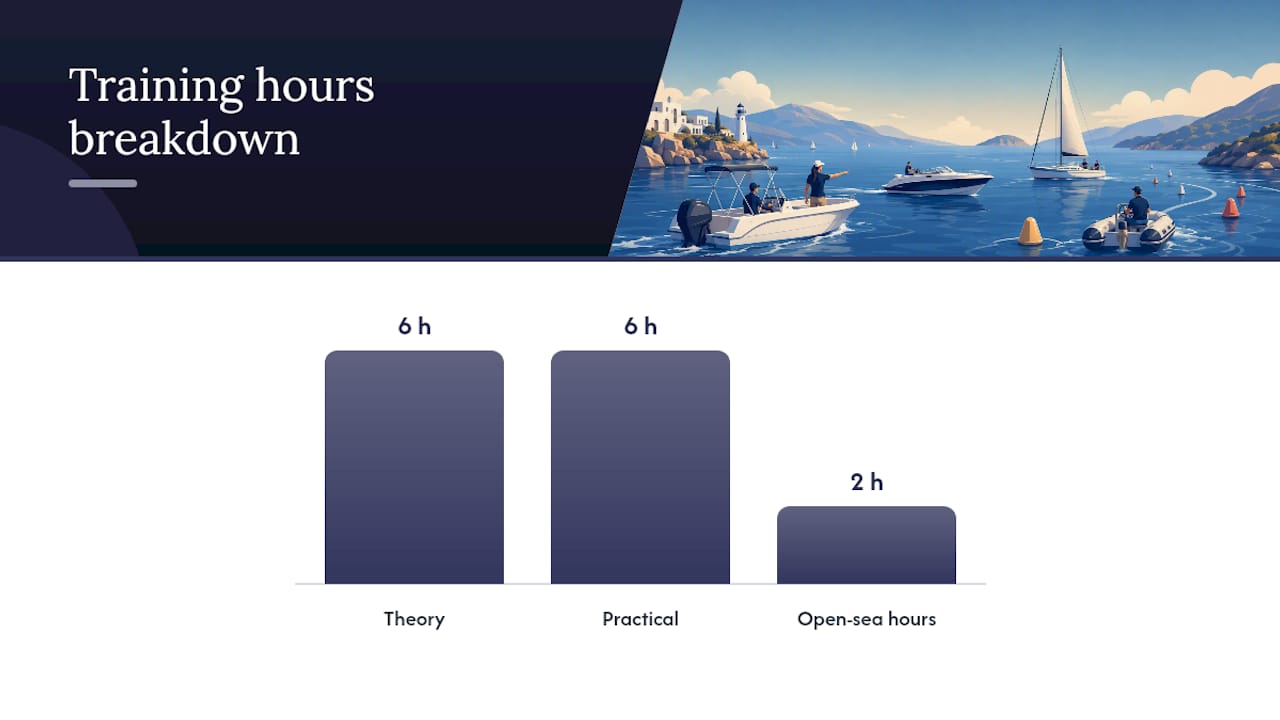
- Complete training. Approved schools require at least six hours of theory and six hours of practical instruction, including two hours specifically at open sea.
- Book your exam. Reservations go through the High-Speed Craft Operator Licensing Information System, and applications must land at least seven calendar days before your chosen exam date.
- Sit the written and practical exam. A three-member Port Authority board administers both. Pass thresholds are set officially, and the practical portion tests real handling skills, not just theory.
- Receive your temporary certificate. Pass, and you get a certificate valid for 60 days while the physical license is printed and delivered.
- Get your card. The finished license arrives through the centralized system, which also allows retakes within a three-year window if you fail on the first attempt.
The official examination fee is 65 €, a figure confirmed on the Gov, with additional administrative e-fees depending on how you submit. Most applicants complete the whole process, training included, within about a month.
Conseil de pro : Book your exam slot as soon as your training school confirms your practical hours are done. Popular Port Authority offices fill exam calendars fast in the summer season, and the seven-day minimum notice period means last-minute planning rarely works.
Can I Use My Foreign Boat License in Greece?
Yes, in many cases, but Greece has not adopted IMO Resolution 40, the international framework some countries used to streamline recognition of foreign certificates. That means acceptance is handled case by case rather than automatically.
The International Certificate of Competence (ICC) is widely accepted by charter companies and generally recognized by Port Authorities, as are several national EU boating licenses. Where things get complicated is documentation. Foreign certificate holders are strongly advised to carry:
- A certified Greek translation of the original license, since presenting an English or other foreign-language certificate alone can trigger delays at the marina.
- A letter from your embassy or consulate confirming the competence of the body that issued your license, requested in some cases, particularly for less common national licenses.
- Original identification and the physical certificate, not just a photo or scan on your phone.
Skipping the translation is the single most common reason visiting sailors get turned away at check-in. Sort it before you fly, not after you land.
What Charter Companies Require Beyond a License
Chartering in Greece adds a layer of rules on top of whatever license you’re carrying, and reputable operators enforce these strictly regardless of what paperwork you present.
For a affrètement coque nue (no skipper included), companies typically require the primary licensed skipper to show a valid operator’s license or ICC, plus at least one additional competent crew member over 18 who can assist with docking, anchoring, and basic maneuvers. Many operators also expect familiarity with VHF radio procedures, and holding an SRC (Short Range Certificate) helps, even where it isn’t strictly mandatory.
Expect these standard requirements across most reputable charter fleets:
- Proof of insurance or a security deposit, sometimes both, held against damage.
- A security deposit that’s refunded after the boat is returned undamaged and fueled.
- A sailing resume or logged experience for larger or more complex yachts.
A charter avec skipper sidesteps all of this. The professional skipper holds the license, handles the paperwork, and takes responsibility for navigation, which is why it’s the default choice for visitors without local certification.
Conseil de pro : If your group’s collective sailing experience is thin, a skippered charter isn’t a downgrade. It’s the difference between spending your holiday second-guessing anchoring technique and actually relaxing on deck.
Transit Log and Import Rules for Visiting Boats
If you’re bringing your own boat into Greece from outside the EU, the paperwork shifts from licensing to customs. Non-EU private pleasure boats fall under the Transit Log temporary import regime administered by AADE, Greece’s tax authority.
A limited Transit Log is generally valid for 18 months and can be extended, with submission handled digitally through AADE’s online transit log system rather than paper forms at the dock. Boats intended to stay in Greece permanently face different VAT and import obligations entirely, so temporary admission only applies to genuinely visiting vessels.
Keep this document set on board at all times:
- Operator license plus its Greek translation if issued abroad.
- Vessel registration papers.
- Proof of insurance.
- Passport or national ID for everyone aboard.
- Transit Log, if your boat is registered outside the EU.
Port Authority spot checks happen more often than most first-time visitors expect, especially around busy marinas in high season.
Where to Apply: Port Authorities, Gov.gr, and the Online Licensing System
Every step of the Greek boat license process now runs through digital government channels, which makes the whole thing considerably less painful than it was a decade ago.
Start at the gov.gr licensing portal, the official entry point maintained by the Ministry of Maritime Affairs and Insular Policy alongside the Hellenic Coast Guard. From there, most functional tasks route through adeies.hcg.gr, the High-Speed Craft Operator Licensing Information System, which handles:
- Exam date calendars by Port Authority region.
- Electronic application submission with random, system-generated theoretical exam questions.
- Status checks on pending applications and temporary certificate printing.
Log in using your TaxisNet credentials for most online submissions. Book your exam slot at least seven calendar days ahead, and if you’d rather handle things face to face, your local Port Authority office still accepts in-person applications.
What a Greek Boat License Costs and How Long It Lasts
Budgeting for a Greek boat license comes down to a handful of fixed and variable costs, plus knowing when you’ll need to renew.
The official examination fee is 65 €, with modest additional e-administrative fees for electronic submission through the licensing system. Training school costs vary by provider and region, so treat any number you see quoted online as a rough estimate rather than a fixed price.
- Temporary certificate: valid 60 days after passing, while your physical card is printed.
- Amateur voyage authorization (for vessels over 10 up to 12 meters): valid four years.
- Age-triggered renewal: license holders over 65 typically face renewal requirements tied to health checks.
- Health and swimming ability: basic prerequisites for most license categories.
- Greek Tax Identification Number (TIN): required for some applications, particularly for non-residents applying directly.
The 65 € exam fee stands out as remarkably modest compared to the training and insurance costs that surround it, which is worth remembering when you’re weighing whether a license makes sense for a one-week holiday versus a long-term boat purchase.
Why Sailarmada Often Recommends a Skippered Charter Instead
Honestly, for a one or two week holiday, chasing down a Greek license rarely makes sense. Sailarmada’s skippered sailing holidays put an experienced local skipper in charge of navigation and paperwork, so you get the freedom of a private yacht without the exam, the translation headaches, or the marina check-in stress.
- Voile
Sail Greece Without the Licensing Hassle
If everything above sounds like a lot to sort out before a two-week holiday, it’s because it is. Chasing a Greek high-speed craft license, arranging certified translations, and satisfying charter company insurance requirements makes sense for residents planning to own or operate a boat long-term. It’s overkill for a family or group of friends who just want a week on the water.
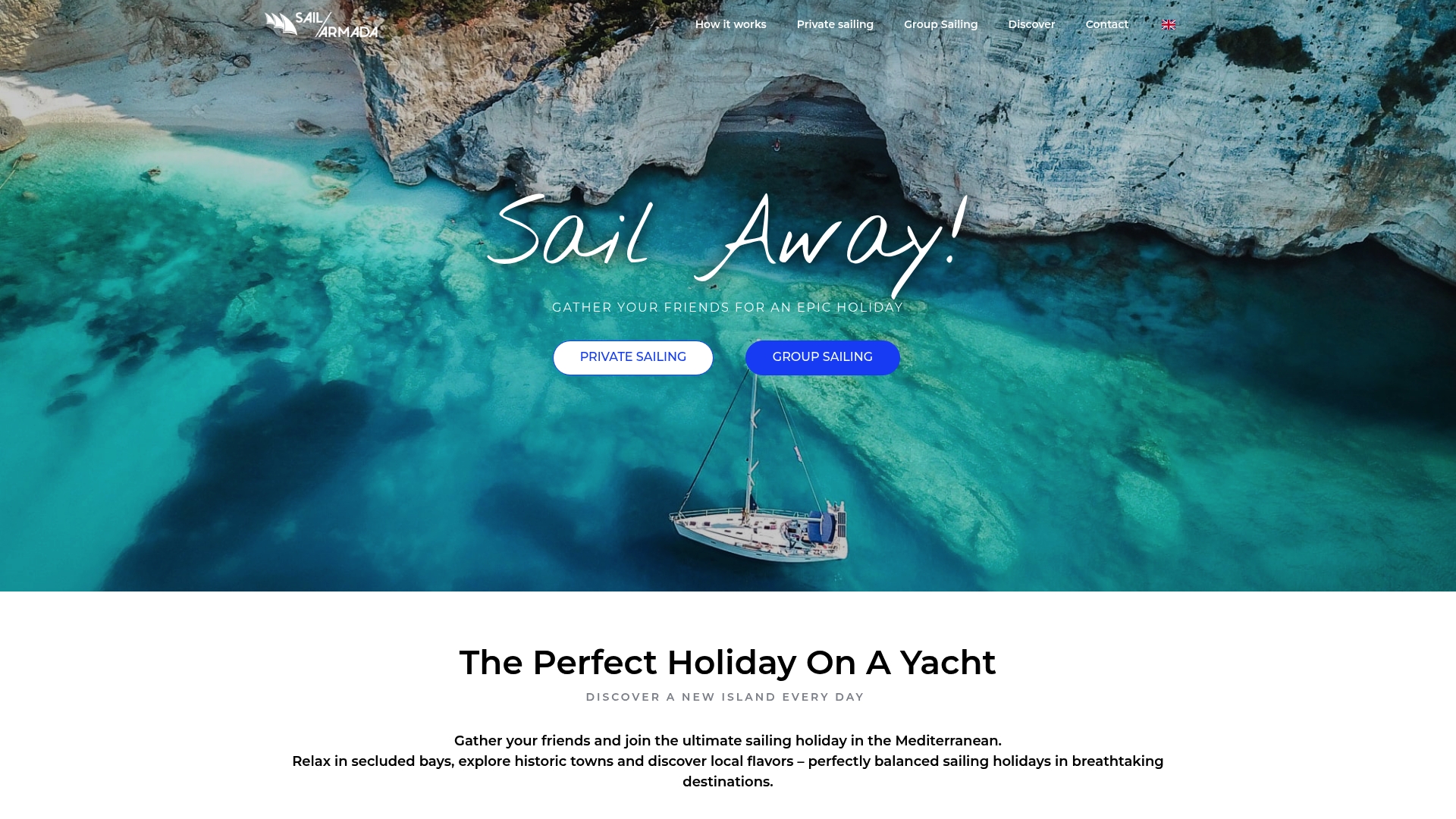
Sailarmada’s vacances privées en voilier put a professional skipper in charge of the license, the navigation, and the local know-how, which means you skip the entire application process described above. You still get a private yacht or catamaran, a custom route around the islands you actually want to see, and none of the paperwork risk that trips up first-time visitors at the dock. If you’re set on owning or chartering bareboat long-term, you’ll still need the local license and documentation covered earlier. For a holiday, Sailarmada’s crewed and skippered options are built for exactly this situation. Check available dates and yacht types on the pricing and booking page to see what fits your group and travel window.
Sources
For verification straight from the source, start with the gov.gr licensing page and the High-Speed Craft Operator Licensing Information System for exam bookings and fees. Non-EU boat owners should check AADE’s Transit Log guidance, while foreign license holders benefit from the RYA’s Greece-specific advice on translations and consular letters.
- High-speed craft operator licence
- Gov
- Καλώς ήρθατε (High-Speed Craft Operator Licensing Information System)
- Special Procedure for Temporary Importation of private pleasure boats in Greece | ΑΑΔΕ
FAQ
How do I get a boating license in Greece?
Complete approved training (at least six hours theory, six hours practical), book an exam through the High-Speed Craft Operator Licensing Information System at least seven days ahead, and pass the written and practical Port Authority exam.
How much does a boat license cost in Greece?
The official examination fee is 65 €, plus modest e-administrative fees and variable training school costs depending on your provider.
Do I need a license to drive a boat in Greece?
You need the high-speed craft operator license if your engine exceeds 30 horsepower or you travel beyond three nautical miles from shore; smaller engines within that limit are generally exempt.
Can I rent a boat in Greece without a license?
Yes, for small boats under the 30 HP / 3-mile exemption, or for any size vessel if you book a skippered charter, since the professional skipper holds the required license instead of you.
Is my foreign boat license valid in Greece?
Often yes, especially an ICC, but Greece has not adopted Resolution 40, so carrying a certified Greek translation and, in some cases, a consulate letter confirming your license’s validity is strongly recommended.