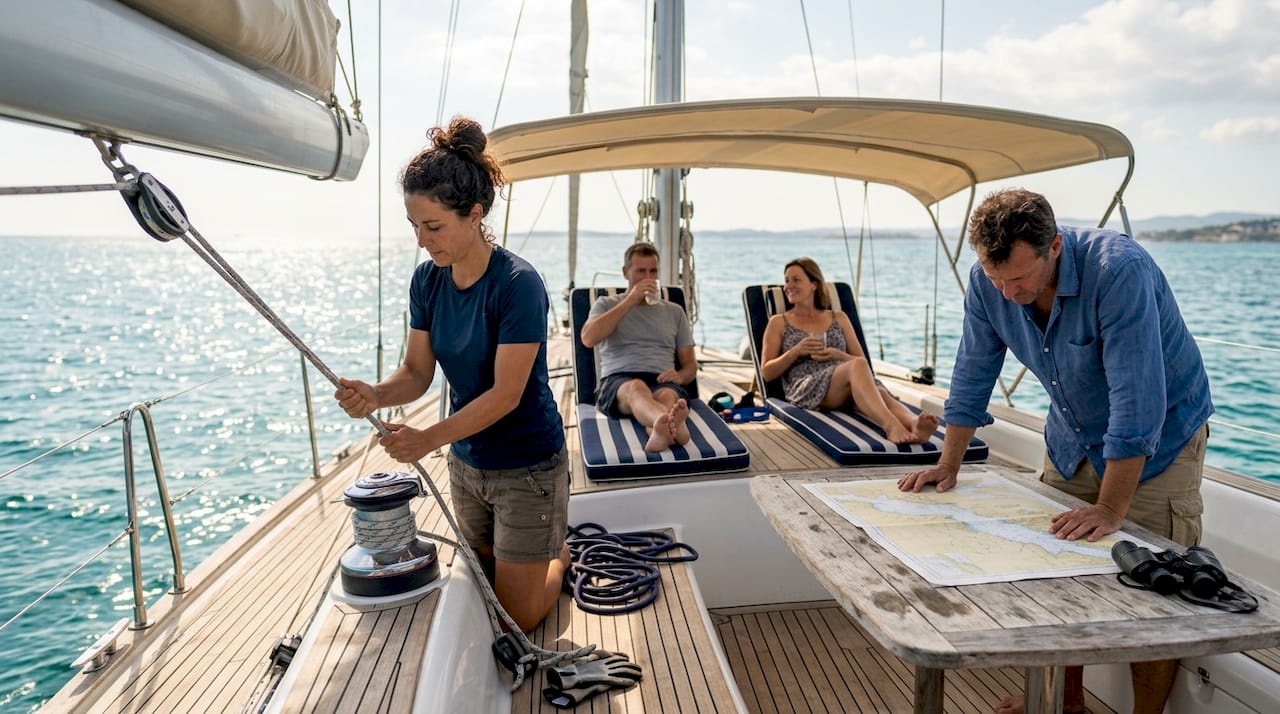
Une croisière à la voile offre ses meilleurs moments lorsque la météo, le confort, la personnalisation et les activités s’harmonisent parfaitement. Savoir comment profiter au maximum d’une croisière à la voile ne se résume pas à se présenter au quai avec de la crème solaire. Il s'agit de choisir la bonne fenêtre de vent, de préparer son corps aux mouvements de la mer, d'élaborer un itinéraire qui correspond réellement aux envies de votre groupe et de remplir chaque journée d'activités adaptées à votre niveau d'énergie. Si vous maîtrisez ces quatre facteurs, une semaine en mer deviendra l'un de ces voyages dont on parle encore des années plus tard.
Comment profiter au maximum de vos sorties à la voile : commencez par choisir les bonnes conditions
Le facteur le plus déterminant pour le plaisir de la voile, c'est le vent. Vents réguliers de 10 à 18 nœuds trouver le juste équilibre pour profiter pleinement de la navigation. Trop peu de vent, c'est naviguer au moteur toute la journée, ce qui brise rapidement la magie. Trop de vent, c'est une source de stress pour l'équipage et cela limite les pauses baignade.
La pluie a autant d'importance que le vent. Une pluie persistante empêche de faire de la plongée libre, de prendre le soleil et de participer aux excursions à terre. Quelques nuages de passage ne posent pas de problème, mais c'est un ensoleillement constant et une température agréable qui permettent de garder le moral au beau fixe et de maintenir un bon niveau d'activité tout au long de la semaine.
La température de la mer est la troisième variable que la plupart des voyageurs négligent. Une eau chaude, généralement supérieure à 72°F, vous permet de vous baigner sans hésitation à chaque mouillage. En Méditerranée, des destinations comme la Grèce, la Croatie et la Sardaigne offrent ces températures de fin mai à septembre. Les îles Vierges britanniques et la Thaïlande proposent quant à elles une eau chaude toute l'année.
Organiser votre voyage pendant l'intersaison est l'une des meilleures décisions que vous puissiez prendre. De mi-mai à mi-juin et en septembre, vous bénéficierez de vents réguliers, de températures clémentes et d'une affluence nettement moindre dans les meilleurs mouillages. Les prix baissent également par rapport aux semaines de haute saison estivale, ce qui vous permettra de consacrer votre budget à de meilleurs repas, à des activités nautiques ou à une soirée supplémentaire en ville.
Conseil de pro : Consultez les données historiques sur le vent de votre destination à l'aide d'outils tels que Windfinder ou PredictWind avant de réserver votre semaine de location. Une semaine avec des vents moyens compris entre 12 et 16 nœuds est presque toujours plus agréable qu'une semaine en haute saison, marquée par des rafales et des conditions imprévisibles.
| État | Plage idéale | Pourquoi c'est important |
|---|---|---|
| Vitesse du vent | 10 à 18 nœuds | Une navigation agréable et sans stress |
| Température de l'air | 75–88 °F | À l'aise sur le pont comme à terre |
| Température de la mer | 72 °F et plus | Encourage la pratique de la natation à chaque étape |
| Précipitations | Minime | Permet de maintenir un niveau d'activité et une bonne humeur élevés |
| Niveau de la foule | Saison de l'épaule | Plus d'espace d'amarrage, à moindre coût |
Comment éviter le mal de mer et passer une semaine agréable
Le mal de mer est le principal ennemi des voyages, mais il peut être presque entièrement évité grâce à une bonne préparation. La qualité du sommeil avant l'embarquement C'est le facteur le plus important que la plupart des gens négligent. La fatigue aggrave considérablement les symptômes du mal de mer ; veillez donc à arriver bien reposé et évitez de veiller tard la veille de votre première journée en mer.
L'alimentation et l'alcool jouent également un rôle direct. Prenez un repas léger avant de partir, évitez les plats gras ou copieux les jours de mer agitée, et consommez l'alcool avec modération. L'alcool altère votre équilibre et rend votre oreille interne plus sensible aux mouvements. Un verre de trop la veille d'une longue traversée, c'est la garantie d'une matinée difficile.
Une fois à bord, votre position sur le bateau a plus d'importance que la plupart des gens ne le pensent. En vous asseyant près du milieu du bateau, vous ressentirez moins le tangage. C'est à la proue que le tangage est le plus marqué, et la poupe peut s'avérer inconfortable lorsque la mer est au vent. Le cockpit, situé près du centre du bateau, est l'endroit idéal où se trouver par temps agité.
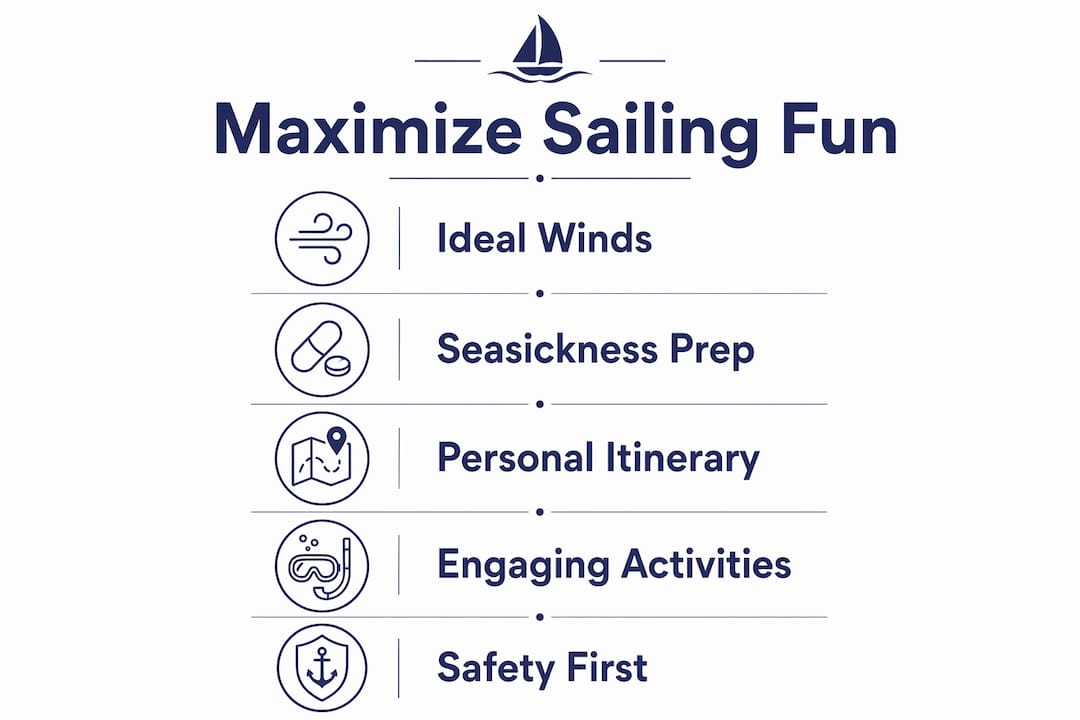
Rester sur le pont et regarder l'horizon permet de réduire le décalage sensoriel entre ce que vos yeux voient et ce que perçoit votre oreille interne. Descendre sous le pont pour lire ou utiliser votre téléphone est le moyen le plus rapide d'avoir le mal de mer. Si vous êtes sujet au mal de mer, renseignez-vous auprès de votre skipper sur les médicaments disponibles, tels que le Stugeron ou les patchs à la scopolamine, et prenez-les avant l'apparition des premiers symptômes.
La protection solaire est l'autre élément essentiel au confort que l'on a tendance à sous-estimer lorsqu'on est sur l'eau. L'intensité des rayons UV à la surface de l'eau est nettement plus élevée que sur la terre ferme en raison de la réverbération de la surface. Utilisez un indice de protection solaire (SPF) de 50 ou plus, portez un rashguard à manches longues et faites des pauses à l'ombre sous le bimini pendant les heures d'ensoleillement maximal.
- Assurez-vous de passer une bonne nuit de sommeil avant votre première journée de voile
- Mangez léger, évitez les plats gras et limitez votre consommation d'alcool les jours de traversée
- Asseyez-vous dans le cockpit, près de la partie centrale du bateau
- Gardez les yeux rivés sur l'horizon et restez sur le pont
- Appliquez une crème solaire avec un indice de protection SPF 50+ toutes les deux heures et portez des vêtements protecteurs.
- Prenez un médicament contre le mal de mer avant l'apparition des symptômes, et non après.
Comment personnaliser votre itinéraire de croisière pour garantir la satisfaction maximale de votre groupe
Un itinéraire standard est le moyen le plus sûr de faire en sorte que la moitié de votre groupe s'ennuie. Fiches de préférences avant le voyage Les questionnaires remplis quelques semaines avant le départ constituent le meilleur moyen d'organiser un voyage qui plaira à tout le monde. Ils permettent de recenser les besoins alimentaires, les préférences en matière d'activités, le rythme souhaité et les destinations incontournables, fournissant ainsi à votre skipper toutes les informations nécessaires pour planifier chaque journée en fonction de votre groupe.
Le fossé entre un groupe avide d'aventures et un groupe plus détendu est plus grand que la plupart des gens ne le pensent. Certains voyageurs veulent naviguer à un rythme soutenu, parcourir de longues distances et découvrir un nouveau port chaque jour. D'autres préfèrent jeter l'ancre dans une baie magnifique, se baigner tout l'après-midi et bien manger. Savoir à quelle catégorie appartient votre groupe avant de quitter la marina permet d'éviter bien des frictions dès le deuxième jour.
La nourriture occupe une place plus importante dans l'expérience de la voile que ne le pensent la plupart des débutants. Discuter à l'avance de vos besoins alimentaires et de vos préférences culinaires vous permettra de bien planifier vos provisions et de prévoir des haltes dans les marchés locaux ou les restaurants en bord de mer. La cuisine locale est un élément essentiel de l'expérience de voyage, et une croisière à la voile vous permet de découvrir des villages de pêcheurs et des ports que la plupart des touristes n'ont jamais l'occasion de visiter. Ce poulpe grillé, servi dans une petite taverne du port d'une île grecque, n'est pas le genre de chose que l'on trouve dans un circuit organisé.
L'approche de Sailarmada en matière de des vacances en yacht sur mesure Pour les groupes et les familles, l'organisation repose justement sur ce type de préparation avant le départ. Plus votre skipper en saura sur votre groupe avant le départ, plus chaque journée sera réussie.
- Veuillez nous indiquer vos restrictions alimentaires et vos préférences culinaires avant le départ
- Choisissez le rythme : un itinéraire au rythme soutenu ou des journées de mouillage tranquilles et détendues
- Citez vos trois destinations ou expériences incontournables
- Déterminez qui souhaite pratiquer des sports nautiques dynamiques et qui préfère prendre un bain de soleil
- Signalez tout besoin en matière de mobilité ou de confort susceptible d'influencer le choix du bateau ou du mouillage
Quelles sont les activités qui rendent une croisière à la voile vraiment inoubliable ?
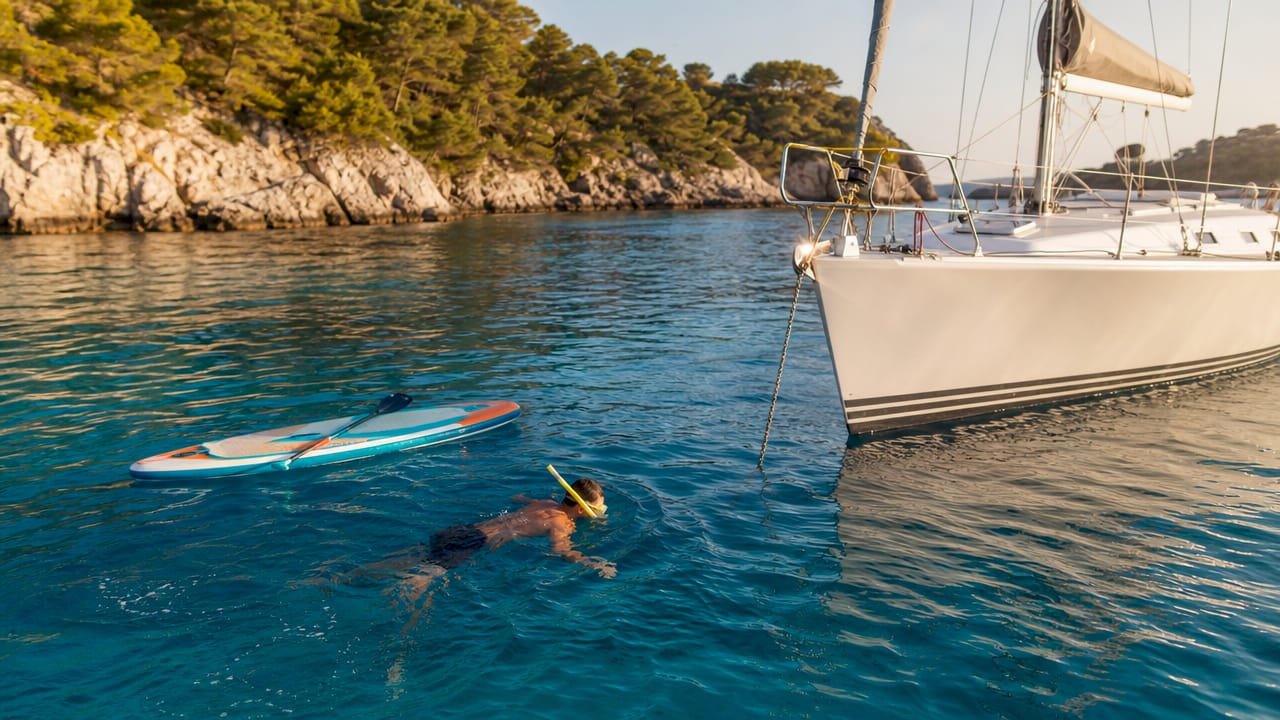
Les meilleures croisières allient à parts à peu près égales les activités nautiques, les moments de détente à bord et la découverte des côtes. La plongée avec tuba, la natation, le paddle et la pêche constituent les principales activités nautiques qui permettent de rester en forme tout au long de la journée. La plupart des yachts de location disposent d’un équipement de plongée avec tuba de base, et beaucoup proposent des planches de stand up paddle ou des kayaks en supplément. Vérifiez ce qui est inclus dans votre location avant de faire vos valises.
Les jeux à bord et les concours en groupe apportent une touche de bonne humeur inattendue, surtout lors des longues traversées. Les jeux de cartes, les soirées quiz et même de simples concours, comme celui qui consiste à repérer le premier dauphin, permettent au groupe de rester soudé et de s’amuser. Ces moments deviennent souvent des anecdotes que les participants se racontent encore longtemps après la fin du voyage.
La nuit, lors d’une croisière à la voile, est un moment vraiment unique. Ancrés loin de la pollution lumineuse, on peut admirer un ciel étoilé extraordinaire. Certains groupes allument de petits feux sur des plages isolées, partagent une bouteille de vin local et contemplent le ciel d’une manière tout simplement impossible dans un complexe hôtelier. Sailarmada’s Guide des loisirs nautiques explique comment intégrer ces moments dans votre itinéraire sans surcharger votre programme.
- Plongée en apnée et natation Au mouillage : plongez à chaque escale dans une eau cristalline
- Planche à pagaie et kayak: partez à la découverte de criques et de côtes inaccessibles aux bateaux plus grands
- Pêche: demandez à votre skipper de vous indiquer les meilleurs spots du coin et préparez vos prises pour le dîner
- Jeux à bord: jeux de cartes, quiz et défis en groupe pour les journées de passage
- Observer les étoiles depuis la terrasse: jetez l'ancre loin des lumières de la ville pour admirer un ciel nocturne à couper le souffle
- Excursions à terre: se perdre dans les ruelles, flâner sur les marchés locaux et manger là où mangent les habitants
Conseil de pro : Attribuez un rôle à chaque personne à bord, même minime soit-il. Laisser un novice prendre la barre pendant 20 minutes par temps calme, ou désigner quelqu’un comme guetteur officiel pour repérer la faune, permet de susciter l’implication de chacun dans le voyage et de forger une véritable camaraderie.
La sécurité est le pilier discret qui sous-tend tout cela. Passez en revue les consignes de sécurité avec votre skipper dès le premier jour, repérez l'emplacement des gilets de sauvetage et établissez des règles claires concernant la baignade à proximité du bateau. A Liste de contrôle pour la sécurité lors de vacances à la voile Il est conseillé de le consulter avant l'embarquement, surtout si vous voyagez avec des enfants ou des personnes qui montent à bord pour la première fois.
Principaux enseignements
Pour profiter pleinement d'une croisière à la voile, il faut des conditions de vent favorables, des mesures efficaces contre le mal de mer, un itinéraire sur mesure et un programme d'activités adapté à l'énergie de votre groupe.
| Point | Détails |
|---|---|
| Visez des vents de 10 à 18 nœuds | Cette gamme offre une navigation confortable et passionnante, sans stress ni recours au moteur. |
| Privilégiez le sommeil avant de prendre la mer | La fatigue est le principal facteur aggravant du mal de mer et gâche les premiers jours d'un voyage. |
| Utilisez les fiches de préférences avant le départ | En partageant ses préférences en matière d'alimentation et d'activités plusieurs semaines à l'avance, on s'assure que tout le monde apprécie le voyage. |
| Les jours de mer agitée, asseyez-vous au milieu du bateau | C'est au milieu du bateau que le tangage est le plus faible, ce qui réduit considérablement l'inconfort. |
| Alternez l’activité physique et le repos | En alternant sports nautiques, excursions à terre et journées tranquilles au mouillage, on garde le moral au beau fixe toute la semaine. |
Ce que j'ai appris au fil de mes nombreuses sorties en voilier
Le conseil que je donne à chaque groupe avant l'embarquement est simple : ne vous accrochez pas trop à l'itinéraire. Les meilleures journées de navigation sont souvent celles qui ne sont pas planifiées. Un pêcheur local vous indique une crique cachée. Le vent tourne et vous vous retrouvez dans un port que vous n'aviez pas prévu de visiter. C'est cette flexibilité qui distingue des vacances à la voile de tout autre type de voyage.
De petits détails de confort ont un impact considérable sur le moral du groupe. Une glacière bien remplie, un bon système d’ombrage et un skipper qui sait quand continuer et quand jeter l’ancre plus tôt que prévu peuvent transformer un après-midi fatigant en une soirée inoubliable. Ce ne sont pas des luxes. C’est ce qui fait la différence entre une bonne sortie et une sortie exceptionnelle.
La dynamique de groupe est la variable que la plupart des guides de planification négligent. Sur un bateau, on se retrouve ensemble d’une manière que ni un hôtel ni un complexe touristique ne peut imposer. Cette proximité fait tout le charme de la voile, mais elle nécessite un peu d’attention. Prenez des nouvelles des membres les plus discrets du groupe. Prévoyez des moments en solo au mouillage. Assurez-vous que le rythme convienne à tout le monde, et pas seulement à la personne la plus volubile du groupe.
Mon conseil sincère : n’essayez pas de tout voir. Choisissez moins de destinations et passez plus de temps dans chacune d’elles. Les marins qui reviennent les plus pleins d’énergie ne sont presque jamais ceux qui ont parcouru le plus de milles.
- Voile
Organisez votre semaine de voile avec Sailarmada
Prêt à mettre ces conseils en pratique sur l'eau ? Sailarmada fabrique sorties en voilier privées autour précisément du type d'organisation sur mesure décrit dans cet article. Des fiches de préférences qui permettent de définir votre itinéraire avant même de quitter le port, aux skippers qui connaissent les meilleurs mouillages en Grèce, en Croatie, en Italie et au-delà, chaque détail est pensé en fonction de votre groupe.
Que vous recherchiez une aventure trépidante en mer Égée ou une semaine de farniente au soleil en mer Adriatique, Sailarmada vous propose le yacht, l'itinéraire et l'équipage qui vous conviennent. Les groupes et les familles peuvent Découvrez les formules de location privée et en groupe et vous faire une idée précise de ce à quoi ressemble réellement une semaine en mer. Votre plus belle sortie en voilier commence par un simple échange.
FAQ
Quelle est la vitesse de vent idéale pour une sortie à la voile agréable ?
Des vents de 10 à 18 nœuds offrent le meilleur compromis entre vitesse et confort. En dessous de 10 nœuds, vous naviguez au moteur la majeure partie de la journée ; au-delà de 20 nœuds, les conditions deviennent pénibles pour la plupart des groupes.
Quel est le meilleur moment pour réserver une croisière à la voile en Méditerranée ?
La saison intermédiaire, plus précisément de mi-mai à mi-juin ou en septembre, offre des températures clémentes, un vent régulier, moins de monde et des prix plus avantageux que pendant les semaines de haute saison estivale.
Comment éviter le mal de mer lors d'une sortie en voilier ?
Restez sur le pont, observez l'horizon, asseyez-vous près du milieu du bateau et prenez vos médicaments avant l'apparition des premiers symptômes. Se présenter bien reposé et éviter de consommer de l'alcool les jours de traversée permet également de réduire considérablement les risques.
Quelles activités peut-on pratiquer lors d'une croisière à la voile ?
La plongée avec tuba, la natation, le paddle, la pêche, les jeux à bord, l'observation des étoiles et les excursions à terre dans les ports locaux comptent parmi les activités les plus prisées lors d'une croisière. La plupart des yachts de location disposent d'un équipement de base pour les sports nautiques.
Comment personnaliser un itinéraire de croisière pour un groupe ?
Avant le départ, remplissez une fiche de préférences indiquant vos besoins alimentaires, vos goûts en matière d'activités, votre rythme de croisière et les destinations incontournables. En la transmettant à votre skipper plusieurs semaines à l'avance, vous lui permettez de créer un itinéraire qui reflète ce que votre groupe souhaite réellement.
Recommandé
- Comment profiter au maximum des loisirs en yacht pendant les vacances
- Idées de vacances à la voile en famille : Charters privés et itinéraires ludiques
- 4 raisons de partir en vacances à la voile | Sail Armada - Top Sailing Holidays in Greece, Italy and Croatia
- Comment personnaliser les vacances en yacht pour les groupes et les familles