
A great sailing trip with friends comes down to three non-negotiables: the right boat for your group size, clear money and roles agreements made before anyone pays a deposit, and a flexible itinerary with safety basics baked in from day one. Get those three right, and the rest of the trip practically plans itself.
Boat Tomorrow recommends booking peak summer slots well in advance, since the best yachts for July and August fill up fast. Shoulder season gives you more breathing room with shorter lead times. At a typical cruising speed, a 25-nautical-mile passage takes several hours underway, so daily distance goals matter as much as destination choices. Sailarmada’s curated charters are built around exactly this kind of practical planning, which is why groups who book through them tend to spend less time arguing and more time swimming.
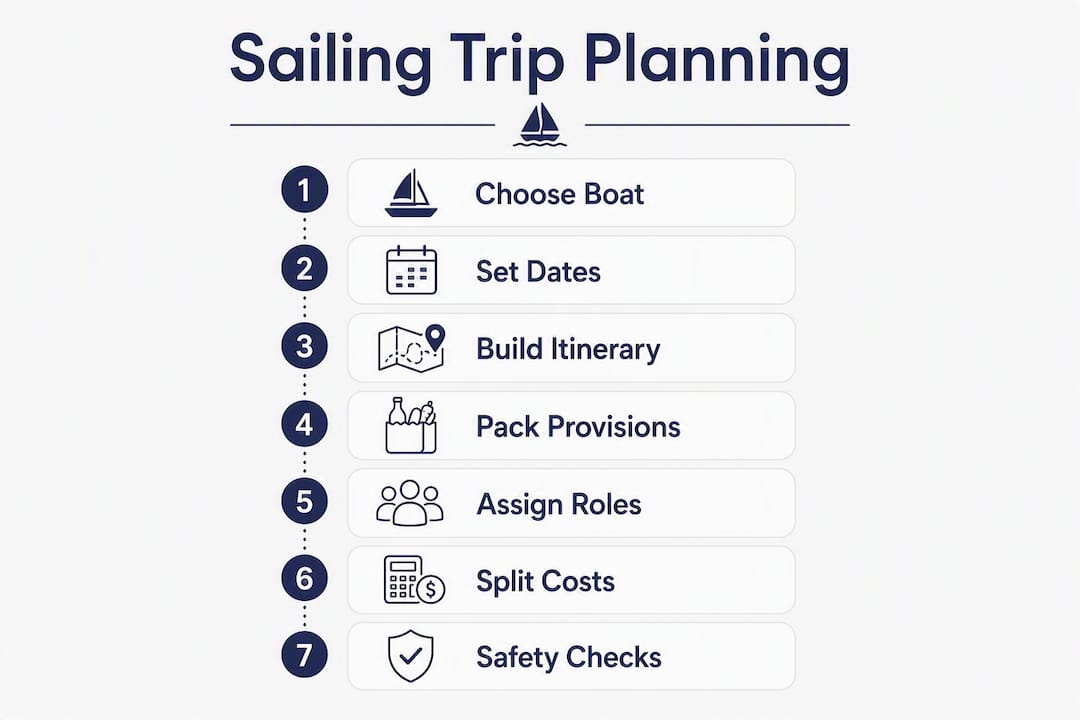
Your quick-start checklist:
- Book your charter well in advance for peak season, and with shorter lead time for shoulder season.
- Agree on a shared budget and cost-split method before collecting deposits
- Choose your boat type: monohull for 6, catamaran for 8
- Assign roles (skipper, provisioning lead, safety officer, treasurer)
- Schedule a pre-departure safety briefing for the whole crew
Table des matières
- Your guide to sailing with friends starts with dates and a real itinerary
- How do you choose the right boat for a group sailing trip?
- What should you pack and how do you provision for a week at sea?
- What safety checks should every group run before leaving the dock?
- How do you keep group life on board running smoothly?
- What activities make a sailing trip with friends unforgettable?
- How do you split charter costs fairly among friends?
- What questions should you ask your charter operator before booking?
- How does “structured flexibility” reduce conflict on group trips?
- Who does what? Roles and responsibilities on board
- What legal and permit requirements apply to sailing in popular areas?
- How do you handle health, seasickness, and first aid on a sailing trip?
- Principaux enseignements
- What actually goes wrong on group sailing trips (and how to prevent it)
- Sailarmada makes group sailing genuinely easy to book
- Useful sources and further reading
Your guide to sailing with friends starts with dates and a real itinerary
When to book and how to build your timeline
Locking in dates is the first decision that cascades into everything else. For peak Mediterranean summer, top yachts book out many months in advance. June and September offer calmer seas, lower prices, and more availability with shorter lead time. Check the best time for a group sailing trip before you commit to a month.
A realistic pre-trip milestone timeline looks like this:
- 6–8 months out: Group video call to confirm who’s in, agree on a budget range, and shortlist destinations
- 5–6 months out: Choose boat type and charter operator; pay holding deposit
- 3 months out: Collect individual deposits; finalize the provisional itinerary
- 6–8 weeks out: Book flights and airport transfers; confirm provisioning plan
- 4 weeks out: Collect final balances; share the float plan with a shore contact
- 1 week out: Final crew briefing call; confirm skipper contact and arrival logistics
How to build a 7-day itinerary that actually works
The biggest mistake groups make is over-scheduling. Plan 5 days loosely and leave 2 days open for wind changes, a hidden anchorage someone discovers, or simply a day where everyone votes to stay put and swim. That margin is what separates a relaxed trip from a stressed one.
A sample 7-day framework:
- Days 1–2: Short passages (15 NM or less) to settle the crew and find your rhythm
- Days 3–4: Longer sailing days (20–25 NM) to reach a highlight destination
- Jour 5 : Flexible day, decided by group vote the night before
- Jour 6 : Slow sail back toward base, with a final anchorage stop
- Jour 7 : Return to marina, end-of-charter cleaning, and departure
Conseil de pro : Use a free polling tool like Doodle or a WhatsApp poll to let the group vote on the day’s destination each morning. It takes 2 minutes and prevents one person from feeling like they’re being dragged somewhere.
Group size affects how smoothly daily decisions go. Six people on a medium-sized monohull is a comfortable number for private cabins and easy consensus. A slightly larger catamaran works well for value and stability with more people, though decisions take a little longer.
How do you choose the right boat for a group sailing trip?
The monohull vs. catamaran question is really a question about what your group values most.
Monohull (40–42 ft, ideal for 6 people):
- Lower charter cost per week
- More authentic sailing feel with heel and motion
- Narrower cockpit means tighter social space
- Easier to dock in busy marinas
Catamaran (42–44 ft, ideal for 8 people):
- Flat, stable platform — far less motion sickness risk
- Wide cockpit and dual helm stations create a natural social hub
- More storage and a larger saloon for group meals
- Higher charter cost, but split across more people it often evens out
When it comes to skipper vs. bareboat, the honest answer is: hire a professional skipper unless at least one person in your group holds a recognized coastal or offshore sailing qualification and has recent experience in the region. A guided sailing tour removes the stress of navigation, docking, and weather decisions entirely, letting everyone relax and enjoy the trip.
Booking checklist for the boat itself:
- Cabin count matches or exceeds the number of couples/individuals (never book exactly equal)
- At least one head (bathroom) per two cabins
- Saloon is NOT listed as a sleeping berth in the advertised capacity
- Tender/dinghy included for shore access at anchor
- Adequate storage for soft luggage (hard suitcases don’t work on boats)
Conseil de pro : When your group includes multiple couples, prioritize boats with equal-sized cabins. Nothing creates tension faster than one couple getting a master cabin while others squeeze into a V-berth.
What should you pack and how do you provision for a week at sea?
Packing for a sailing trip is different from packing for a hotel stay. Space is genuinely limited, and soft duffel bags are the only practical option since hard suitcases can’t be stowed in lockers.
Core packing categories:
- Safety and foul weather: lightweight waterproof jacket, non-slip deck shoes, sunscreen (SPF 50+), polarized sunglasses
- Swim and daywear: 2–3 swimsuits, quick-dry shorts and shirts, a light layer for evening
- Medical: personal prescriptions, motion sickness medication (more on this below), blister plasters, antihistamines
- Tech: waterproof phone case, portable charger, universal adapter, a small dry bag for electronics on the water
- Small-boat essentials: headlamp, reusable water bottle, a small daypack for shore excursions
For provisioning, the smartest approach is to buy 3–4 days of food at the start of the trip and resupply mid-week at a larger marina town. Designate two people as provisioning shoppers — they go to the market together with a shared list while the rest of the crew handles boat tasks. Check out Sailarmada’s shopping guide for a week of sailing for a detailed grocery breakdown.
Budget a moderate amount per person per day for onboard meals, and allocate extra for several dinners ashore during the week. Pre-order or confirm with your charter operator: skipper provisions (if applicable), any special dietary items, extra fuel canisters, and outboard fuel for the dinghy.

What safety checks should every group run before leaving the dock?
Safety on a charter yacht is not optional, and a 20-minute briefing before you leave the marina is the single highest-value investment of the trip. A thorough pre-trip checklist should cover engine service items, rigging, sails, electrical systems, and all life-saving equipment.
Mandatory pre-departure checks:
- Lifejackets: one per person, correct size, inflation mechanism tested
- EPIRB: registered, battery valid, hydrostatic release intact
- Life raft: service date current, painter line attached and accessible
- Flares: in-date, stored in a dry, accessible location
- Fire extinguishers: charged, mounted in galley and engine compartment
- First aid kit: stocked, including any prescription medications for the crew
- Engine: oil level, coolant, impeller last replaced, belts checked
- Fuel and water: full tanks confirmed before departure
Pre-departure briefing script (assign these roles out loud):
- Homme à la mer : Who calls the alert, who throws the life ring, who takes the helm
- Grounding: Who drops anchor, who calls the charter base, who checks for hull damage
- Medical emergency: Who manages the first aid kit, who contacts coast guard on VHF Channel 16
- Engine failure: Who deploys the anchor, who raises sails, who calls for assistance
Create a float plan — a simple document listing your route, expected anchorages, crew names, and emergency contacts — and leave copies with your shore contact, the charter base, and one trusted person at home.
Conseil de pro : Assign one person to own the medical kit for the whole trip and one person to check the weather forecast every morning at 8 AM. Rotating these jobs sounds democratic but leads to no one doing them.
How do you keep group life on board running smoothly?
Constant proximity on a yacht can test even the closest friendships, which is why experienced skippers consistently advise setting domestic expectations before you leave the dock.
Cabin allocation options:
- Equal pricing: Everyone pays the same and draws lots for cabins
- Tiered pricing: Larger or more private cabins cost slightly more; smaller cabins cost less
- Simple negotiation: Works for groups of close friends who trust each other’s fairness
One firm rule: never use the saloon as a sleeping berth. It privatizes the shared social space and creates resentment by day three.
Chores and watch rotation:
- Rotate cooking and cleaning in pairs, posted on a visible schedule in the saloon
- Assign a daily “boat captain” role that rotates (they make final calls on minor decisions)
- Agree on quiet hours (typically 11 PM to 7 AM) before the trip starts
A simple onboard agreement covers:
- Water use (showers are short — 2 minutes max)
- Charging priority for devices
- Guest-ashore rules (can crew invite people aboard at anchor?)
- Noise and music levels, especially at anchor near other boats
Conseil de pro : Hold a 15-minute video call two weeks before departure to run through the onboard agreement together. Then print it and tape it inside a galley cabinet on day one. Groups that do this almost never have the arguments that groups who skip it always have.
What activities make a sailing trip with friends unforgettable?
The magic of a sailing holiday is that your venue changes every day. You wake up to a new anchorage, a new village, a new stretch of crystal-clear water. The activities that work best are the ones that need almost no planning.
High-reward, low-effort activities:
- Snorkeling directly off the boat at anchor (bring your own masks and fins)
- Paddleboarding at sunrise before the wind picks up
- Coastal hikes to a clifftop or a hilltop village during a shore stop
- Local food nights: one person researches the best taverna or trattoria in each port
- Simple onboard games (cards, dice, trivia) for evenings at anchor
Balance active shore days with full-anchor relaxation days. A day where the plan is literally “swim, eat, read, swim again” is often the one people remember most. For shore experiences in Greece, authentic local hospitality can turn a quick port stop into a genuine cultural memory.
Gear worth packing for group fun:
- Snorkel sets (one per person, or rent at the base)
- Inflatable paddleboard (many charter bases offer these as an add-on)
- Basic fishing kit for slow afternoons at anchor
- Enceinte Bluetooth étanche
- Clip-on LED lights for the cockpit at night
Pour Mediterranean cultural experiences worth building into your route, Sailarmada’s destination guides are a good starting point.
How do you split charter costs fairly among friends?
Charter costs have several distinct lines, and knowing them upfront prevents the awkward “wait, what does that include?” conversation at the end of the trip.
Typical cost breakdown:
- Base charter fee: The largest line item; covers the boat for the week
- Frais de skipper : Varies by destination and experience level; confirm before booking
- Fuel: Weekly estimate varies significantly with engine use and distance covered
- Marina fees: Typically €30–€100 per night depending on location and season
- End-of-charter cleaning fee: Usually €100–€200; often non-negotiable
- Provisionnement : Onboard food and drinks for the week
- Damage deposit: Held by the charter company; returned after inspection
Split methods:
- Equal shares: Simplest and fairest for groups of similar income and cabin size
- Cabin-weighted: Larger cabins pay a slightly higher share; works well for mixed groups
- Organizer discount: The person who did the booking work gets a small reduction (5–10%) as a thank-you
Collect individual deposits at least 3 months before departure and final balances 4 weeks out. Using a shared payment tool — Splitwise, Tricount, or a shared Google Sheet — to log every expense in real time eliminates the largest source of post-trip conflict.
Conseil de pro : Never have one person front the entire charter cost on a personal credit card. Set up a group payment from the start. The person who pays everything and then chases reimbursements for months is never happy about it.

What questions should you ask your charter operator before booking?
A good charter operator answers these questions clearly and quickly. Vague or evasive answers are a red flag.
Booking checklist — ask before you commit:
- What is the exact berth count, and does it include saloon conversions?
- What does the damage deposit cover, and how is it held?
- What is the skipper’s experience in this specific sailing area?
- What is the cancellation policy, and is trip insurance available?
- What is the fuel policy (full-to-full or fixed fee)?
- What is the ratio of marina nights to anchor nights in a typical week?
- Is provisioning support available, and can dietary requirements be accommodated?
- What is the arrival time and where does the pre-boarding briefing take place?
Red flags to watch for:
- Listing says “sleeps 8” but includes two saloon conversions
- Inventory photos are inconsistent or clearly from a different boat
- Cancellation terms are vague or buried in fine print
- No clear policy on cleaning fees or fuel
How does “structured flexibility” reduce conflict on group trips?
Research and expert advice consistently point to one framework that works: structured flexibility. You build a shared itinerary with clear backup anchorages, and you deliberately leave 1–2 days unplanned on a week-long trip.
Compatibility checklist to run before booking:
- Sleeping styles: early risers vs. night owls (this matters more than you’d think)
- Tolerance for sea motion: who gets seasick, and how badly?
- Activity priorities: sailing miles vs. beach days vs. cultural stops
- Budget expectations: are everyone’s spending levels genuinely aligned?
Sample poll questions to run with your group:
- “Name your three wishes for this trip” (each person lists three; build the itinerary around the 70% overlap)
- “How many hours underway per day feels right to you?”
- “How many marina nights vs. anchor nights do you prefer?”
Conseil de pro : Take the three-wishes exercise seriously. Collect everyone’s answers before the planning call, identify the common themes, and build the itinerary around those. The remaining 30% of wishes become the “open days” where anything goes.
Who does what? Roles and responsibilities on board
Assigning roles before departure is one of the most practical things a group can do. It removes ambiguity and prevents the “I thought you were watching the depth sounder” moment.
| Fonction | Responsibility |
|---|---|
| Skipper / Navigator | Final say on route, weather calls, docking, and safety decisions |
| First Mate | Assists skipper, manages lines during docking, runs safety briefing |
| Provisioning Lead | Manages shopping lists, coordinates mid-week resupply, tracks food budget |
| Treasurer | Logs all shared expenses, manages the group payment app, handles marina fees |
| Safety Officer | Owns the first aid kit, checks weather each morning, maintains the float plan |
| Social Coordinator | Researches shore activities, books restaurants, keeps the group energy up |
Rotate cooking and cleaning daily, but keep the above roles fixed for the whole trip. Rotating critical roles like safety officer or treasurer creates gaps.
What legal and permit requirements apply to sailing in popular areas?
The legal requirements for sailing vary by destination, and getting them wrong can result in fines or being turned away from a marina.
Key areas to check before departure:
- Skipper qualifications: Most Mediterranean countries require the skipper to hold a recognized certificate (ICC, RYA Coastal Skipper, or equivalent). The U.S. Coast Guard license is not universally accepted abroad; confirm with your charter operator.
- Cruising permits: Some areas require a transit log or cruising permit. Croatia, Greece, and Turkey each have their own entry and cruising documentation requirements. Your charter base handles most of this, but confirm before arrival.
- Marine protected areas: Many popular anchorages in the Mediterranean are inside marine parks with anchoring restrictions. Check local charts and ask your skipper.
- VHF radio license: Operating a marine VHF radio legally requires a Ship Station License and, for the operator, a Restricted Radiotelephone Operator Permit (RR) issued by the FCC for U.S.-flagged vessels.
- Insurance: Confirm the charter’s third-party liability coverage and whether a damage deposit waiver is available.
For dispute resolution or consumer rights questions related to European charter operators, the EU Online Dispute Resolution platform is the relevant authority. Always confirm current rules with your charter operator and, where needed, a maritime attorney.
How do you handle health, seasickness, and first aid on a sailing trip?
Medical preparation is the part most groups skip until someone is green-faced on day two. Don’t skip it.
Seasickness management:
- Scopolamine patches and over-the-counter antivertigo medications are the most effective options; start them before symptoms appear, not after
- Ginger chews and acupressure wristbands help mild cases
- Keep susceptible crew members on deck, focused on the horizon, and away from the galley during passages
- Avoid heavy meals and alcohol before a long passage
First aid kit essentials for a week afloat:
- Wound care: antiseptic, sterile dressings, butterfly closures, medical tape
- Pain and fever: ibuprofen, acetaminophen
- Gut health: antidiarrheal medication, oral rehydration salts
- Skin: high-SPF sunscreen, aloe vera gel, antihistamine cream for stings
- Eyes: saline wash (salt spray is relentless)
- Personal prescriptions: bring double the quantity you think you need
Pre-trip health steps:
- Check that all crew members are up to date on tetanus
- Confirm any crew allergies and whether an EpiPen is needed on board
- Identify the nearest hospital or medical clinic at each planned stop before you leave
This is general information, not medical advice. Confirm current health requirements and medication regulations with a qualified healthcare provider before your trip.
Principaux enseignements
A great sailing trip with friends requires the right boat, clear money rules, and a structured-but-flexible itinerary built around your group’s real priorities.
| Point | Détails |
|---|---|
| Réservez à l'avance | Peak season charters book 6–8 months ahead; shoulder season charters can be secured with 3–4 months lead time. |
| Match boat to group size | Six people fit comfortably on a 40–42 ft monohull; eight suit a 42–44 ft catamaran better. |
| Agree money upfront | Collect individual deposits at least 3 months before departure, and secure final balances 4 weeks out; use a shared payment app throughout. |
| Assign fixed roles | Skipper, treasurer, safety officer, and provisioning lead should be named before departure. |
| Sailarmada for group bookings | Sailarmada offers curated yacht charters with experienced skippers and flexible itineraries for groups. |
What actually goes wrong on group sailing trips (and how to prevent it)
The single most preventable source of friction on a group sailing trip is not bad weather or a mechanical problem. It’s unspoken expectations. Someone assumed the skipper was included in the charter price. Someone else assumed marina nights would be rare. A third person thought the budget covered dinners ashore.
The groups that have the best trips are the ones that had an honest, slightly awkward conversation before they ever stepped on a boat. Budget, cabin fairness, sailing hours, quiet time, and who makes the final call when the group is split: get all of that on the table early, and the trip itself becomes what it should be — genuinely one of the best vacations you’ll ever take with people you care about.
The “three wishes” exercise is the most practical tool for this. It takes ten minutes, it surfaces real priorities, and it gives the itinerary an emotional foundation that a spreadsheet never can.
Sailarmada makes group sailing genuinely easy to book
Planning a sailing holiday with friends is exciting right up until the moment you realize how many moving parts there are: the right boat, the right dates, a skipper you can trust, an itinerary that works for eight different opinions. That’s exactly the problem Sailarmada solves.
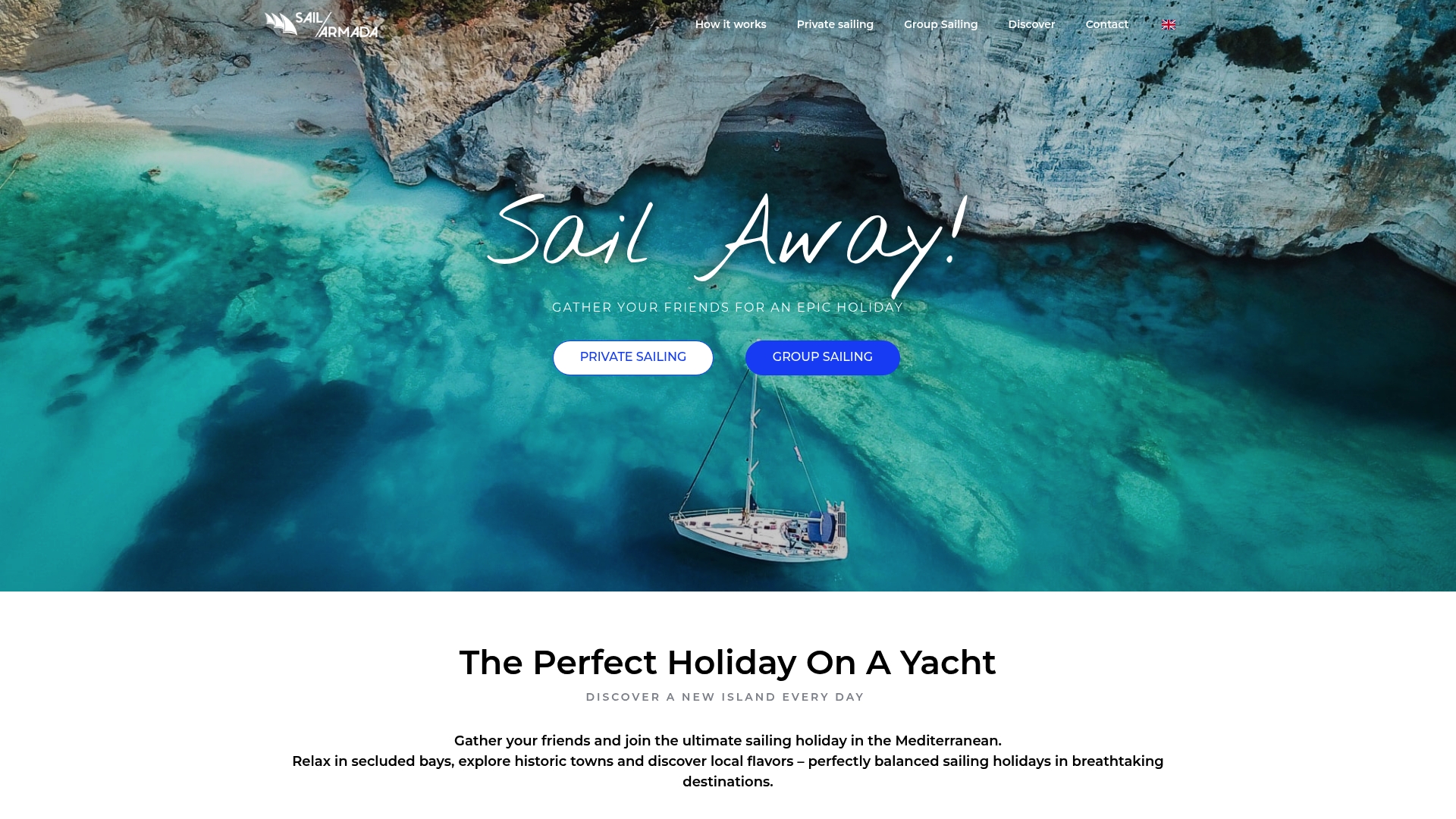
Sailarmada propose curated yacht charters and group sailing holidays across the Mediterranean, with experienced skippers, pre-built itineraries you can adapt, and a team that handles the logistics so your group can focus on the fun. Whether you’re a group of six friends looking for a private monohull in Greece or eight people ready for a catamaran week in Croatia, Sailarmada’s group booking service walks you through every step from deposit to departure. Browse destinations, compare yacht options, and get your trip on the water at sailarmada.com.
Useful sources and further reading
- 10 Things to Know Before Bareboat Chartering a Sailboat With Friends — Unsinkable 2
- How to Plan a Sailing Trip: Your Ultimate Guide — Salé et venteux
- How to plan a group sailing holiday in the Mediterranean — Sailarmada
- Curated Mediterranean sailing itineraries for groups — Sailarmada