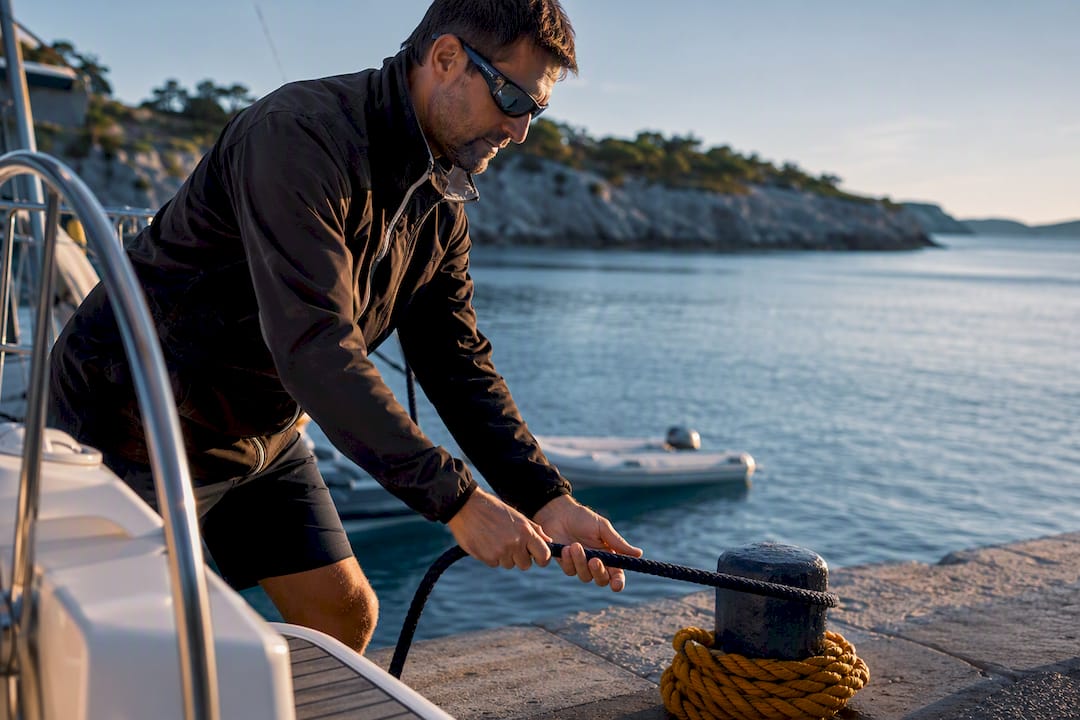
The skipper runs the boat, plans the route, and makes every final call on safety, and that authority is non-negotiable the moment you step aboard. Beyond navigation and vessel handling, everything else, cooking, cleaning, personal errands, is a separate conversation you need to have before departure, not during it. Guests who set clear expectations around rest, provisioning, and daily rhythm tend to have the smoothest weeks on the water.
En bref :
- Most charter contracts specify the skipper’s responsibilities, including safety and navigation, while excluding hospitality tasks like cooking and cleaning unless paid separately.
- Confirm whether the charter price includes the skipper’s accommodation, provisioning, fuel allowances, maximum overnight guests, and night sailing restrictions before signing the agreement.
- Skippers conduct daily checks, route planning, mooring, and manage safety, often briefing guests on the next day’s plan and weather, while their authority on safety is absolute.
- Hospitality duties such as meal preparation, cabin cleaning, personal errands, and acting as tour guides are generally not the skipper’s obligation unless explicitly arranged in advance.
- Most groups prefer to tip 5 to 10 percent of the total charter cost, pooled at the end, with good reviews and referrals also valuable for skipper reputation.
Table des matières
- Skipper Duties on Charter: Where the Rules Live in Your Contract
- What a Skipper Actually Does Each Day on a Sailing Charter
- What Skippers Are Not Expected to Do on a Charter
- Skipper Accommodation and Sleeping Arrangements Explained
- Who Feeds the Skipper? Provisioning and Meal Arrangements
- How to Communicate With Your Skipper for a Smoother Week
- Safety Authority: When the Skipper’s Word Is Final
- Tipping Your Skipper: What’s Customary and What’s Not
- Should You Hire a Skipper or Go Bareboat?
- Booking Smart: A Pre-Departure Checklist for Skippered Charters
- A Straightforward Take on Skippered Charters
- Book a Skippered Charter Without the Guesswork
- Sources
- FAQ
Skipper Duties on Charter: Where the Rules Live in Your Contract
Before you ever step on deck, the charter agreement is already defining who does what. Most guests skim past the fine print and focus on the yacht photos, then get surprised later by a fuel bill or a fee they didn’t know existed. The contract, not the brochure, is where skipper duties on charter actually get spelled out.
Read it for three things specifically. First, find the clause listing what the skipper is responsible for and what falls outside that scope, since charter checklists commonly separate navigation and safety duties from hospitality extras. Second, confirm who covers fuel, marina fees, and what happens if there’s damage during the week; deductible amounts and excess-waiver options vary widely between operators. Third, look for any clause on night sailing or maximum passenger counts, since some charter companies restrict overnight passages or cap headcount below what the boat’s berths suggest.
A few checks worth doing before you sign anything:
- Ask whether the quoted price includes skipper accommodation, food, and standard provisioning, or whether those are billed separately.
- Confirm who’s liable for damage to sails, tender, or hull, and what the deductible looks like.
- Check if there’s a fuel allowance included or if you’re billed for actual consumption.
- Verify the maximum number of overnight guests allowed under the vessel’s certification.
- Ask directly whether night passages are permitted or restricted by company policy.
None of this takes more than a few minutes, and it saves the kind of end-of-week argument that ruins an otherwise great trip.
What a Skipper Actually Does Each Day on a Sailing Charter
A charter skipper’s day starts before you’ve had coffee and often doesn’t end until the anchor’s set for the night. Understanding the rhythm helps you know what’s happening around you and why the skipper sometimes seems glued to a weather app or the chart plotter.
Here’s the typical daily sequence:
- Morning safety and systems check. Engine, rigging, bilge, batteries, and safety gear get a quick inspection before anyone casts off.
- Weather and passage planning. The skipper checks forecasts, wind direction, and sea state, then decides the day’s route and any backup anchorages if conditions shift.
- Departure briefing. Especially on day one, expect a walkthrough of safety gear, engine start procedure, and house rules for moving around the boat underway.
- Active sailing and navigation. Through the day, the skipper handles helm decisions, sail trim calls, and course adjustments, sometimes with guest involvement if people want to learn.
- Mooring or anchoring. Arriving at a bay or marina, the skipper manages the approach, drops anchor or ties up, and checks holding before declaring the boat secure.
- Evening systems check and next-day planning. Before dinner, most skippers glance at tomorrow’s forecast and confirm the anchorage is holding overnight.
Skippers also field basic mechanical issues as they come up, a stuck winch, a fouled anchor chain, a temperamental outboard on the dinghy, and they typically coordinate with a host or chef if one is aboard, dividing labor so hospitality and vessel operation don’t collide. Charter industry guidance confirms this routine of pre-departure checks, passage planning, and mooring management as the backbone of a skipper’s charter week.
Conseil de pro : Ask your skipper for a five-minute rundown of the next day’s plan the night before. It gives you a head start on what to wear, what to bring ashore, and whether it’s an early departure or a lazy morning.
What Skippers Are Not Expected to Do on a Charter
The most common source of friction on a skippered charter isn’t navigation, it’s mismatched expectations about hospitality. A skipper’s job is running the boat safely, not running your kitchen.
Standard exclusions unless specifically arranged and paid for in advance:
- Cooking meals or managing a provisioning list for the whole group.
- Cleaning cabins, making beds, or doing laundry.
- Running personal errands like grocery shopping trips ashore on your behalf.
- Acting as a full-time tour guide beyond basic local knowledge and recommendations.
- Childcare or acting as a babysitter during off-boat excursions.
Charter guidance is consistent on this point: skippers are not normally obligated to cook or clean cabins unless that’s pre-arranged as part of the booking. If you want someone handling meals and cabin turnover, that’s a hostess or chef role, and it’s typically booked as an add-on with its own daily rate. Most charter companies can arrange this if you ask early enough, since last-minute staffing requests during peak season often go unfilled.
The upside of this division is that it keeps the skipper focused on the one job that actually keeps you safe: the boat.
Skipper Accommodation and Sleeping Arrangements Explained
Skippers need somewhere to sleep, and it’s rarely the guest’s business to decide where, but it does affect how you plan your own week aboard. Most charter yachts either include a dedicated skipper cabin, often a smaller berth near the helm or in the bow, or reserve one of the standard cabins specifically for crew use.
Rest matters more than most guests realize. A skipper who’s been up managing an overnight passage or a tricky mooring in a crowded harbor needs real downtime to stay sharp for the next day’s decisions. Vessel listings and skipper role descriptions consistently note that private cabin or reserved berth arrangements are standard practice across charter markets, precisely because rest affects safety.
A few things worth keeping in mind:
- Confirm at booking whether the skipper has a private cabin or shares reserved space with a host or crew member.
- Avoid scheduling loud late-night activities near crew sleeping areas during turnaround nights.
- Respect quiet hours once the skipper has called it a night, especially before an early departure.
Planning your evening activities with this in mind isn’t just courtesy. It directly protects the person making tomorrow’s safety calls.
Who Feeds the Skipper? Provisioning and Meal Arrangements
Feeding the skipper is almost always the guests’ responsibility, either through shared provisioning or a small daily fee built into the charter cost. This isn’t hidden fine print, it’s standard practice, but it catches first-time charter guests off guard if nobody mentions it upfront.

Charter guidance confirms guests typically provide food for the skipper or cover a provisioning allowance as part of the overall arrangement. If your group is doing a shared-meal setup, the skipper usually eats what everyone else eats, so flag any dietary restrictions or allergies early when building the provisioning list.
A short checklist for stocking before departure:
- Ask the charter company whether skipper meals are included in the price or billed as a daily allowance.
- Build the skipper’s preferences into your grocery run, especially if they’ve got dietary needs.
- Provision two to three days ahead if you’re departing from a smaller port with limited shops.
- Keep basics stocked, coffee, water, and simple breakfast items, since skippers are often up before everyone else.
Getting this sorted before you leave the dock avoids an awkward first-morning scramble for supplies nobody thought to buy.
How to Communicate With Your Skipper for a Smoother Week
The best charters run on a short, honest conversation on day one, not a series of assumptions that unravel by Wednesday. Setting expectations early, itinerary preferences, off-boat plans, how the group feels about alcohol on board, saves everyone friction later.
Start with a simple check-in once bags are stowed:
- Share your group’s priorities: swimming stops, nightlife, quiet anchorages, or a mix of everything.
- Ask what flexibility exists in the route if weather or group mood shifts mid-week.
- Mention any medical conditions, allergies, or mobility issues that affect planning.
- Clarify the boat’s policy on alcohol, especially around departure times and swimming.
- Ask for local recommendations, most skippers know which taverna or beach bar is worth the walk.
If you want to change the itinerary mid-week, ask rather than assume it’s automatic; weather, fuel range, and daylight hours all factor into whether a request is realistic. Respecting the skipper’s downtime, their cabin, their off-hours, and their final call on safety, keeps the relationship easy for everyone, and a guide on communicating with your skipper covers this in more depth if you want scripts for tricky conversations.
Safety Authority: When the Skipper’s Word Is Final
A skipper’s authority over safety isn’t a suggestion, it’s the entire point of hiring one. Their core responsibilities include navigation, weather judgment, and final decision-making for the vessel and everyone aboard, which means they can, and must, refuse to sail if conditions turn dangerous, even if guests are eager to leave port.
This authority is backed by real accountability. Professional skipper roles require licensing and compliance with maritime regulations, and job descriptions consistently emphasize voyage planning, equipment operation, and safety management as core, non-negotiable duties, not optional extras layered on top of hospitality.
A few practical safety points worth knowing before you charter:
- The skipper decides when conditions are unsafe to sail, and that call overrides guest preference every time.
- Lifejacket rules, engine checks, and man-overboard procedures are standard parts of the pre-departure briefing.
- Passenger limits matter: charter yachts are commonly capped so carrying more than 12 paying passengers triggers stricter commercial passenger-ship certification.
- Insurance and damage-liability terms should be checked in your charter contract before you sail, not after something breaks.
Behind the number: the 12-person threshold isn’t arbitrary paperwork, it’s the line where a private charter yacht crosses into passenger-vessel regulation, which is why reputable operators enforce it strictly regardless of how many berths the boat has.
If a storm rolls in or equipment fails mid-passage, the skipper’s judgment on rerouting, sheltering, or calling for assistance takes priority over the day’s plan. That’s the deal you’re actually paying for.
Tipping Your Skipper: What’s Customary and What’s Not
Tipping isn’t mandatory, but it’s common practice, and most groups tip somewhere in the range of 5 to 10 percent of the total charter cost when the week has gone well. This usually gets pooled by the group rather than handled individually, since it’s simpler to collect once at the end of the week than to sort out who gave what.
A few norms worth knowing:
- Tips are typically given at the end of the charter, once you’ve disembarked or on the final evening.
- Group pooling is more common than individual tipping, especially with larger charter parties.
- Cash is still the most practical method in most Mediterranean ports.
- A genuine thank-you, a good review, or recommending the skipper to friends matters too, and it’s free.
If budget is tight, a heartfelt review posted with the charter company goes further than people expect. Skippers build their reputation on repeat bookings and referrals, not just tips.
Should You Hire a Skipper or Go Bareboat?
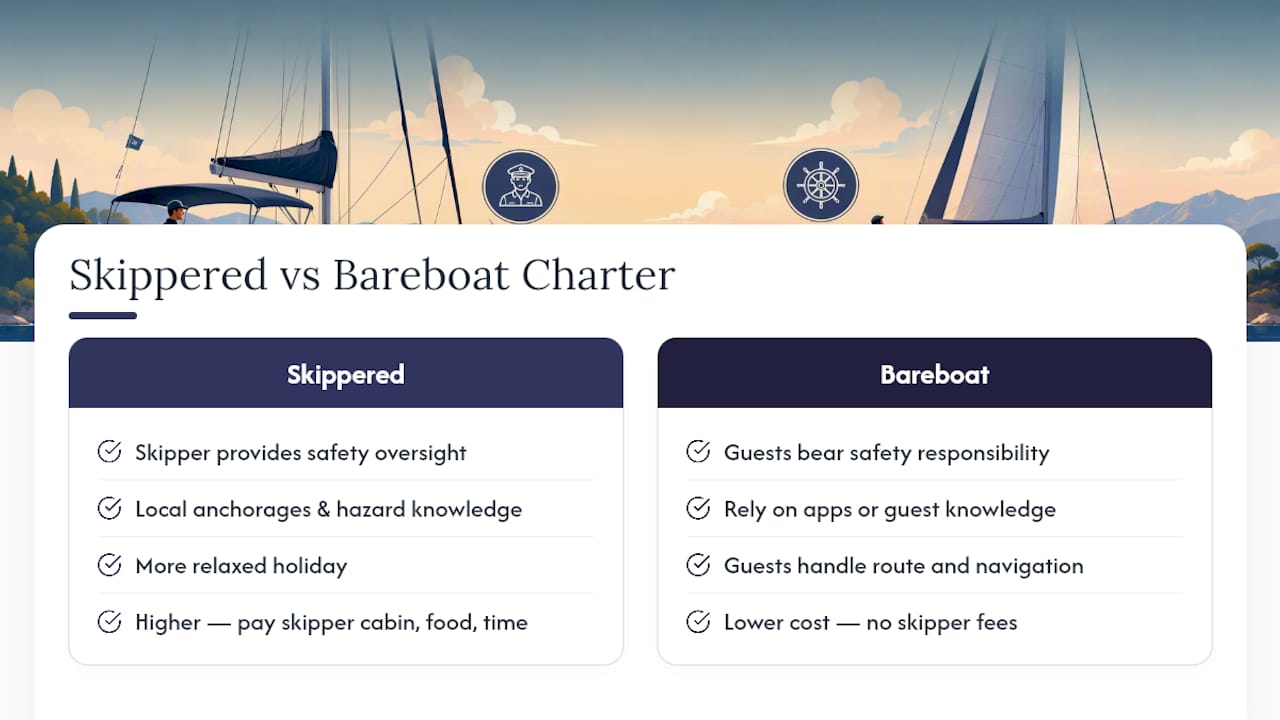
A skippered charter makes sense for anyone who wants the sailing experience without the liability, the learning curve, or the stress of route planning in unfamiliar waters. First-time charter guests, families with kids, and groups without a qualified sailor among them are the clearest candidates.
The value shows up in three places: safety oversight from someone accountable for the boat, local knowledge of anchorages and hazards that no app fully replaces, and a genuinely more relaxed holiday since nobody’s stuck reading charts instead of swimming. The trade-off is cost, a skippered week runs higher than a affrètement coque nue since you’re paying for the skipper’s cabin, food, and time. For most first-timers, that’s money well spent, and it’s the reason skippered sailing remains the more popular choice for groups without an experienced sailor aboard.
Booking Smart: A Pre-Departure Checklist for Skippered Charters
Getting the skipper relationship right starts before you ever board, at the booking stage, when you can still ask questions and adjust the contract. A short checklist covers most of what causes friction later.
Before booking, confirm:
- Whether the skipper has a private cabin included in the listed price or as an add-on.
- What provisioning is included and what guests are expected to supply.
- What time the charter actually starts, since “day one” sometimes means afternoon boarding, not morning departure.
- What’s covered under the charter inclusions, fuel, mooring fees, cleaning at turnover, and what isn’t.
On day one, run through a short briefing checklist together: safety equipment locations, the day’s rough itinerary, emergency contact details for the charter company, and any medical considerations your group wants the skipper aware of. Getting this right in the first hour sets the tone for the whole week.
Sailarmada builds its skippered charters around this kind of upfront clarity, vetting skippers through experienced sailing partners and confirming inclusions with guests before departure, so nobody’s guessing what’s covered once they’re at sea.
A Straightforward Take on Skippered Charters
Most charter frustration isn’t about bad skippers, it’s about guests and skippers operating on different assumptions. A five-minute conversation on day one, about meals, rest, and the itinerary, prevents nearly every conflict we’ve seen described in charter complaints. Respect the skipper’s authority on safety, and the rest of the week tends to take care of itself.
- Voile
Book a Skippered Charter Without the Guesswork
Sailarmada builds its skippered charters around the exact clarity this article just walked through, vetted skippers, defined inclusions, and flexible itineraries agreed before you ever step aboard. Instead of piecing together a bareboat trip and hoping your group has the sailing chops to handle it, you get an experienced skipper who handles navigation and safety while your itinerary still bends around what your group actually wants to do.
Le Grèce - Go Private route starts from €560 per week per person and includes the kind of curated planning that comes from working with skippers trained through CAPETAN.club, real sailors who know these waters, not just a name on a crew list. If Italy or Turkey fits your dates better, the Italie - Go Private itinerary starts from €870 per week per person. Whichever route you’re eyeing, check the listing for exactly what’s included, skipper accommodation, provisioning terms, and departure times, before you book, so your week starts on the same page as your crew.
Sources
For deeper detail on specific pieces of this topic, these are worth a read:
- What Is a Skipper? Meaning, Duties & Skipper vs Captain
- Skipper Jobs | Yacht and Charter Skipper Work Explained
- Skipper Job Description, Duties, Skills & Career Path | Jinn
FAQ
What Are the Responsibilities of a Skipper?
A skipper is responsible for navigation, weather decisions, vessel safety, and final authority over the boat and everyone aboard, covering everything from pre-departure checks to daily passage planning. Hospitality tasks like cooking or cabin cleaning fall outside standard duties unless arranged separately.
What Is a Skipper Charter?
A skipper charter, often called a skippered charter, is a yacht rental that includes a qualified skipper to handle navigation and safety, letting guests enjoy sailing without needing their own sailing certification. It’s the most common setup for groups and families booking through operators like Sailarmada.
What Is the 12 Person Rule on a Yacht?
The 12 person rule limits a charter yacht to 12 paying passengers before it must meet stricter commercial passenger-ship certification. Charter companies enforce this regardless of how many berths a yacht technically has.
Can You Charter a Boat With a Day Skipper Qualification?
A Day Skipper qualification typically allows you to bareboat charter smaller yachts in daylight and moderate conditions, but requirements vary by charter company and region. If you don’t hold that or a higher certification, booking a skippered charter with a professional skipper is the more common and reliable route.
Recommandé
- Les avantages de la croisière avec skipper : pourquoi les vacanciers l' choisissent-ils ?
- Comment communiquer avec un skipper pendant vos vacances à la voile
- Compétences indispensables pour la location de yacht : votre guide des vacances avec skipper
- Customs on Sailing Holidays: A Skipper’s Clearance Checklist