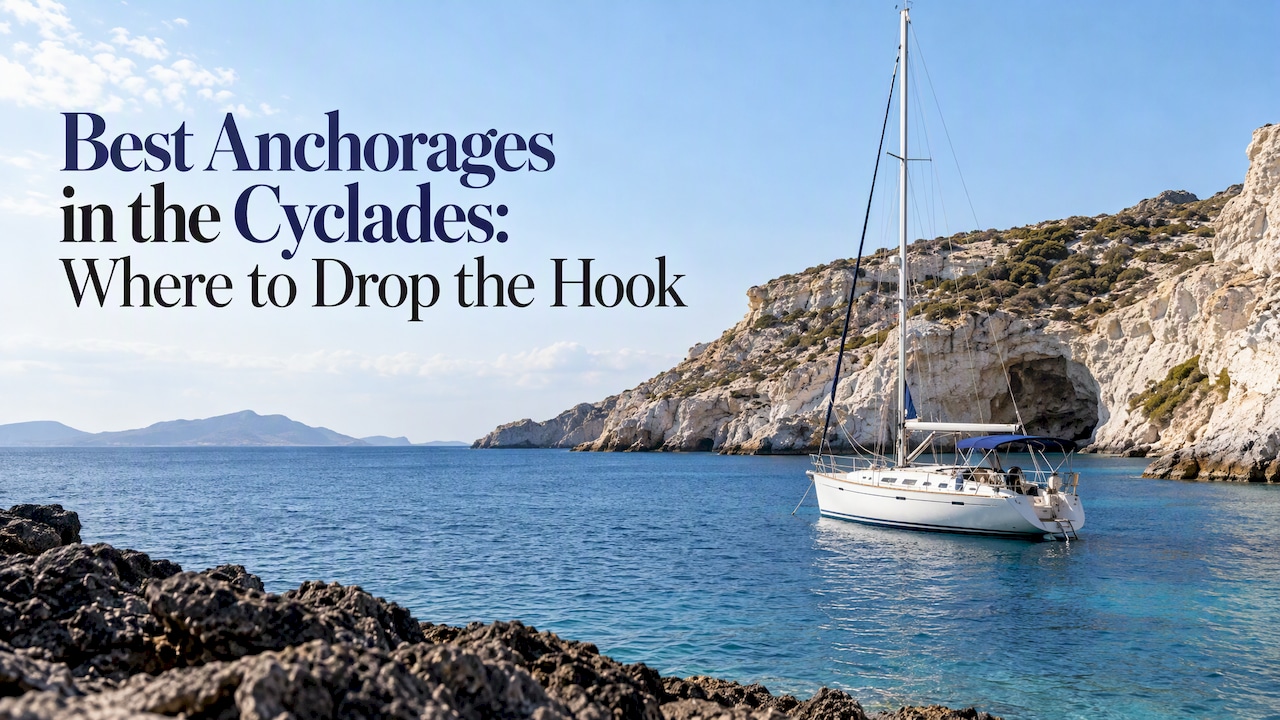
The best anchorages in the Cyclades are the ones that match the wind you actually have. Vathi on Sifnos, Kleftiko and Provatas on Milos, Naoussa Bay on Paros, Ormos Agios Georgios on Antiparos, Parianos on Koufonisi, Livadi on Serifos, Karavostasis on Folegandros and Ormos Finikas on Syros all show up again and again in cruising guides to the Cyclades. Below we tell you what makes each one special, which wind spoils it, and how to pick your spot for the night like a skipper.
TL;DR
- Start with the wind, not the postcard. Choose the bay that is protected from tonight’s forecast direction, then admire the view.
- Sifnos (Vathi), Milos (Kleftiko, Provatas), Paros (Naoussa) and Antiparos (Agios Georgios) are great first stops for a one-week Cyclades route.
- Seabeds here are patchy: Posidonia seagrass is widespread, so look for sand and snorkel over your anchor before you relax.
- Always keep a Plan B harbor within an hour or two of sailing, especially when the Meltemi is blowing.
- Not a skipper? A private week with a skipper aboard, or a guided group week, takes the anchoring decisions off your plate.
Table des matières
- What makes a great Cyclades anchorage
- The best anchorages in the Cyclades, island by island
- Quick comparison
- Reading the seabed before you drop anchor
- The Meltemi: how it decides your anchorage
- A skipper’s checklist before you commit for the night
- Our view: Anchor for the night you have, not the one you imagined
- Sail the Cyclades with us
- FAQ
- Sources
What makes a great Cyclades anchorage
Picture it: you swim off the back of the boat into water so clear you can see your anchor, and the only sound is a distant goat bell. That is the dream. The reality is that the Cyclades sit in the path of a strong northerly summer wind, and many of the prettiest bays are open to it.
A great anchorage here ticks five boxes:
- Shelter from the wind you have tonight. A bay that is perfect in a light southerly can be a washing machine in a northerly.
- Good holding. Sand or sandy mud, not bare rock or thick seagrass.
- Room to swing. Depth, space and a sensible distance from other boats. Our guide to anchoring etiquette in Greece covers the unwritten rules.
- A way ashore. A taverna, a beach or a village to wander is half the fun. Our list of Greek tavernas you can reach by boat helps here.
- An exit. If the forecast changes at 3 a.m., you want to know where you will go.
The best anchorages in the Cyclades, island by island
The western Cyclades are the classic starting point for a week: they are closer to Athens-area bases, the hops are short, and the islands are varied. We have grouped the best-known anchorages by island so you can build a route.
Sifnos: Vathi and Kamares
Vathi, on the west coast of Sifnos, is the one most sailors name first. It is a deep, enclosed bay with a sandy beach, a handful of tavernas and a small mini-market, and it has a reputation as one of the more comfortable overnight stops in the area. Kamares, the main port, is the practical alternative. It has more shops and services, but local cruising notes warn that it can be rolly when the northerly swell finds its way in, so we treat it as a provisioning stop more than a place to sleep.
If you are comparing the sheltered spots on Sifnos with a bit of time on dry land, it is worth looking at Naxos holiday packages for a few nights ashore on a neighboring Cycladic island.
Milos: Kleftiko and Provatas Bay
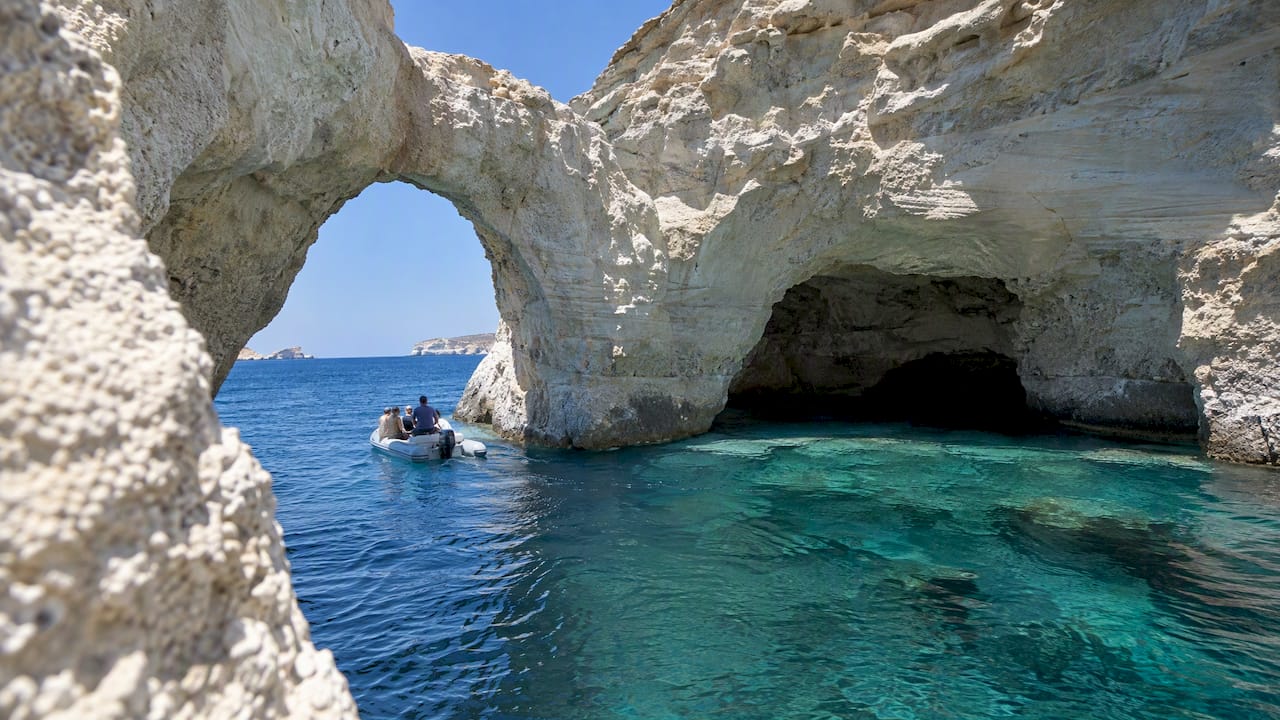
Kleftiko is the poster child of Cyclades sailing: bright white volcanic rock, arches and sea caves that you explore by dinghy or by swimming. It is a daytime stop in most conditions, because it is exposed and the surrounding water gets busy with day boats. Provatas Bay, on the south coast of Milos, is the calmer option when the wind is in the right quarter, with a long sandy beach and a relaxed beach-bar feel.
The big natural harbor of Adamas (Milos) is the bad-weather refuge for this part of the chain, which is exactly why we like to sleep at Provatas when the forecast allows and keep Adamas as our fallback.
Kimolos and Polyaigos: the wild neighbors
Just northeast of Milos, Kimolos is quieter and slower. Its municipality invites visitors arriving by sea craft to explore the island and the secluded beaches on its northern part. A mile or so beyond lies Polyaigos, which the municipality describes as an uninhabited island of about 18 km², the largest uninhabited island in the Aegean, and an attractive destination for private craft.
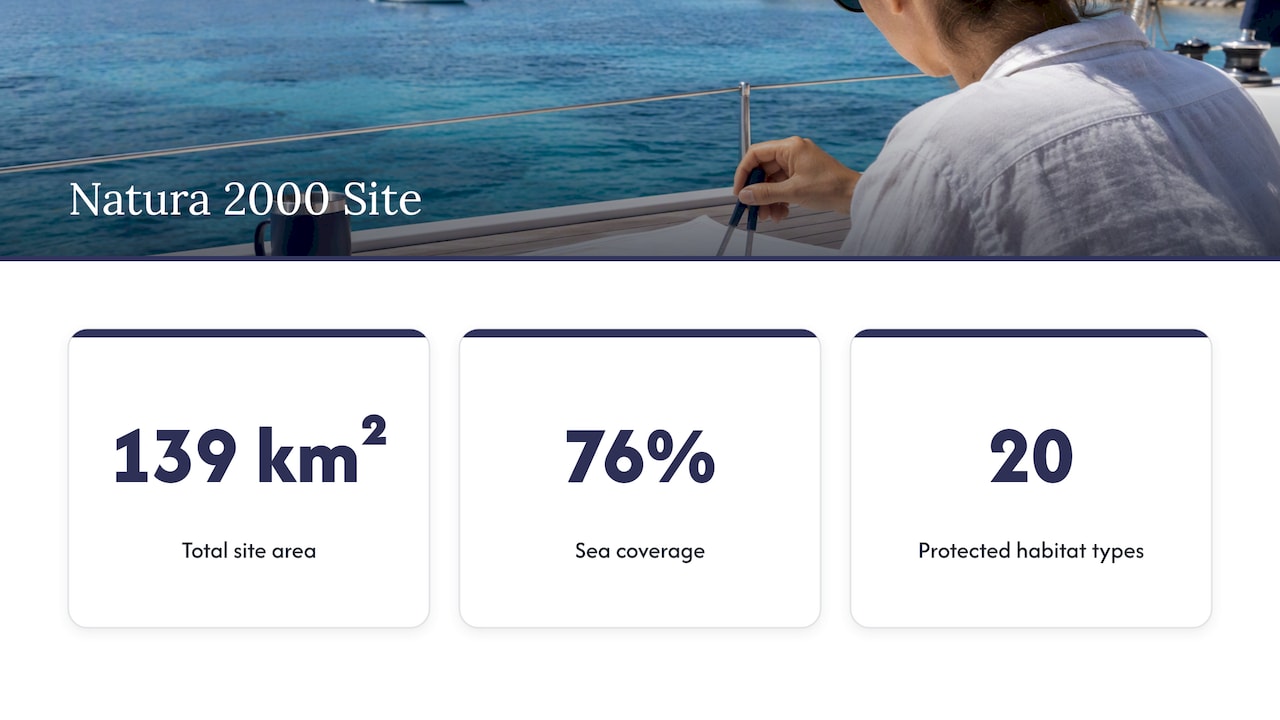
There is a catch worth knowing: the marine area around Polyaigos and Kimolos is a protected Natura 2000 site. The EUNIS factsheet lists it as GR4220006, covering 139 km², of which 76% is sea, and protecting 20 habitat types. In practice that means anchoring gently, avoiding seagrass and leaving nothing behind but ripples.
Paros and Antiparos: Naoussa and Agios Georgios
Naoussa Bay on Paros is a lively fishing village with a pretty harbor, lots of restaurants and an easy walk to everything. It is a favorite for groups who want a night out after a few quiet bays. Across the narrow channel, Ormos Agios Georgios on Antiparos looks toward the small island of Despotiko, whose ancient sanctuary ruins are one of the nicest rainy-day (or hot-afternoon) excursions in the area.
Koufonisia: turquoise water in the Small Cyclades
Parianos on Koufonisi is where the Small Cyclades earn their reputation. The water has the turquoise color you see in the brochures, the beaches are short walks apart and the village is tiny and friendly. Anchoring spots here can be tight in high season and the seabed is a mix of sand and rock, so arrive early in the afternoon and take your time choosing.
Serifos, Folegandros and Syros
- Livadi, Serifos: a convenient, sandy-beached bay below the hilltop Chora. Good for a first or last night on a route from the mainland.
- Karavostasis, Folegandros: a small port under a dramatic cliff. Great for walking up to the Chora at sunset, though the harbor is small and fills quickly.
- Ormos Finikas, Syros: a sheltered inlet on the southwest coast and a handy base for exploring Ermoupoli, the island’s elegant capital.
Quick comparison
| Anchorage | Île | Meilleur pour | Watch out for |
|---|---|---|---|
| Vathi | Sifnos | A sheltered night and tavernas on the beach | Fills up in peak weeks |
| Kamares | Sifnos | Provisioning and shops | Swell can make a night uncomfortable |
| Kleftiko | Milos | Swimming through caves and white rock | Exposed, so best by day |
| Provatas Bay | Milos | Long sandy beach, calm evenings | Open to some wind directions |
| Naoussa Bay | Paros | Nightlife and restaurants | Busy harbor in summer |
| Ormos Agios Georgios | Antiparos | Despotiko ruins and quiet water | Check depth and bottom |
| Parianos | Koufonisi | Turquoise water, small beaches | Limited space in high season |
| Livadi | Serifos | Easy stop with village above | Check forecast for northerlies |
| Karavostasis | Folegandros | Sunset walk to the Chora | Small harbor, fills early |
| Ormos Finikas | Syros | Access to Ermoupoli | Plan your arrival time |
Treat this as a menu, not a rulebook. Shelter always depends on the day’s wind, and we explain how to read it below.
Reading the seabed before you drop anchor
The Cyclades look easy from the surface, but the bottom is trickier. Posidonia meadows are widespread, and an anchor on seagrass can drag, besides damaging a protected habitat. A simple routine works well:
- Motor slowly through the bay before choosing a spot and look for pale, sandy patches among the dark seagrass.
- Drop the anchor in sand and let out plenty of chain. Many skippers aim for several times the depth, more if wind is forecast.
- Reverse gently to set it, then check your position against two fixed landmarks.
- Put on a mask and snorkel over the anchor. In water this clear, you will see exactly how it is lying.
- Set an anchor alarm on your phone or plotter, and check again after dark if the wind shifts.
Swimming over your own anchor is also the best excuse for a swim you will ever find.
The Meltemi: how it decides your anchorage
The Meltemi is the dry northerly wind of the Aegean summer. It builds in the high season, and in open channels between islands it can reach force 7 or 8. In straits, the funnel effect makes things worse: according to MeteoNav (the Greek meteorological service’s navigation guide), the Venturi effect accelerates the wind by 25% to 40% and waves become short, steep and often cross strong local currents.
What that means for your anchorage choices:
- Look for land to the north of you. A bay with a high ridge on its northern side is your friend; a bay open to the north is a daytime swim stop only.
- Beware of gusts coming off hills. Wind can funnel down valleys and hit boats at anchor, even in bays that look sheltered on the chart. Cruising guides also warn that gusts and wind-driven swell can develop overnight when the Meltemi is up.
- Plan your route around it. Many skippers go north first, while the crew is fresh, and ride the wind back south. We go deeper in our guide to Naviguer dans le Meltemi en Grèce.
- Keep a Plan B. Before you commit to an overnight spot, know which sheltered harbor is one or two hours away and be ready to go there.
A skipper’s checklist before you commit for the night
Here is the routine we run through every afternoon, in about ten minutes:
- Check the forecast. Use the official Greek national meteorological service and a second source. Look at tonight and tomorrow morning, not only now.
- Pick the direction first. Which way will the wind blow overnight, and which bays are protected from it?
- Check your boat. Reef early, stow loose gear and make sure the dinghy is secured.
- Choose your arrival time. Popular anchorages fill up by late afternoon, so arrive early or have a second choice nearby.
- Respect protected areas. If you are in a marine park or Natura 2000 area, follow the local rules and avoid seagrass.
- Brief the crew. Everyone should know where the anchor alarm is, who is on watch and what you will do if the wind turns.
Want a ready-made route that links these stops with short, comfortable hops? Our skipper-itinéraire de navigation des Cyclades testé lays it out day by day. If you are curious about quieter corners, see our pick of the best lesser-known Greek islands for sailing, or weigh up Dodecanese versus Cyclades if you cannot decide where to go.
Our view: Anchor for the night you have, not the one you imagined
We have a simple rule on every Sail Armada route: fall in love with a bay in the morning, then decide in the afternoon whether you can sleep there. The Cyclades reward flexibility. A day that starts with a swim at Kleftiko can end in a calm, sandy bay on the south coast of Milos, or in the big harbor if the wind has other ideas.
That is why our routes are built by experienced, professionally trained skippers from CAPETAN.club who know which bay holds up when the forecast turns, and who care as much about your evening at the taverna as your anchor angle. Private weeks give you the freedom to change the plan on a whim. Group weeks give you the company and a skipper who has done the thinking in advance. Either way, the point is the same: you should spend your holiday swimming, eating and laughing, not staring nervously at a chain.
- Voile
Sail the Cyclades with us
If you would rather enjoy the anchorages than worry about them, take a look at our La semaine Grèce Go Private, which starts from €560 per week per person. You choose the boat and the vibe, and we help you shape a route with a skipper who knows these bays. Prefer company? Our vacances en groupe à la voile bring together like-minded travelers on guided routes.
Not sure which format suits you? Our guide to choosing between a private or group sailing holiday walks you through it.
FAQ
What is the best anchorage in the Cyclades for a first night?
Vathi on Sifnos is a popular answer, because the bay is enclosed, has a sandy beach and offers tavernas and a mini-market within walking distance. Livadi on Serifos is another easy first or last night. Whichever you choose, check the forecast for the night first, since shelter always depends on wind direction.
Can I anchor anywhere in the Cyclades?
Mostly yes, but not everywhere. Some areas are protected, such as the Natura 2000 site around Polyaigos and Kimolos, and seagrass meadows should be avoided. Ask your skipper or check local rules before dropping anchor in a marine park.
How do I deal with the Meltemi when anchoring?
Choose a bay with land to the north, expect gusts even in sheltered spots, and set an anchor alarm. Keep a backup harbor within one or two hours of sailing. In straits, the wind can be much stronger than in the open sea, so plan crossings for the calmer part of the day.
Do I need a skipper to sail the Cyclades?
If you are not experienced with anchoring, strong wind and short, steep seas, a skipper is the stress-free choice. On our private and group weeks, an experienced skipper handles the route and anchoring choices while you relax. You can read more in our piece on why guided sailing tours suit groups and families.
Sources
- Best Anchorages in the Cyclades, Greece (Safety Anchor Alarm)
- Island of Polyaigos, Municipality of Kimolos
- Official website of the Municipality of Kimolos
- EUNIS site factsheet, Nisos Polyaigos – Kimolos
- MeteoNav: Meltemi navigation strategies in the Cyclades