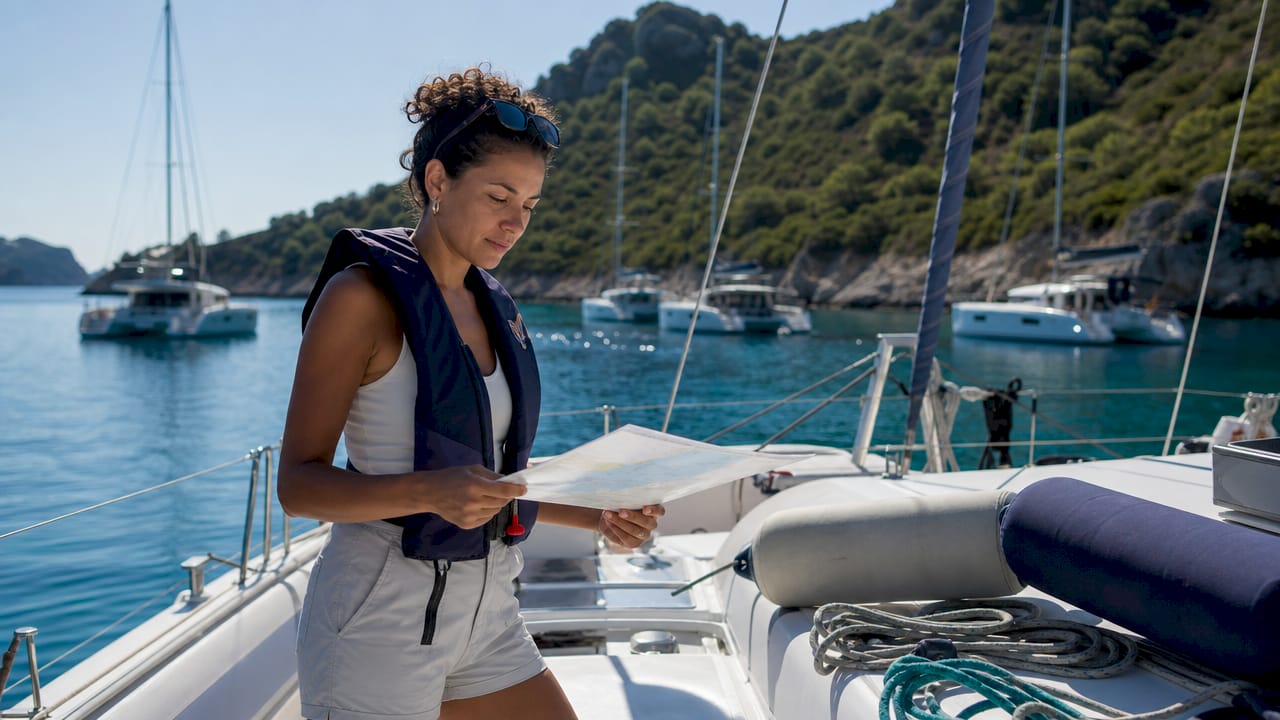
A flotilla week itinerary is a seven-day sailing schedule where a fleet of yachts follows a shared Mediterranean route led by a professional support crew. You sail your own boat, make your own decisions on deck, and still enjoy the safety net of experienced guides and a ready-made social group. This format is the industry standard for group sailing holidays, and it suits everyone from first-time charterers to seasoned skippers who simply want company on the water. If you have been wondering what to expect on a flotilla trip, this guide covers every detail from arrival day to final departure.
What does a flotilla week itinerary look like day by day?
A flotilla week itinerary follows a clear rhythm: briefing, sailing, leisure, and socializing repeat across seven days with a different anchorage each night. The structure keeps logistics smooth without locking you into a rigid program.
Arrival day (day 1)
You arrive at the base marina, usually on a saturday. The lead crew handles boat handovers, walks you through safety equipment, and runs a welcome briefing that covers the week ahead. Most groups share a group dinner that evening, which is a great way to meet the other crews before the sailing begins.
A typical sailing day (days 2–6)
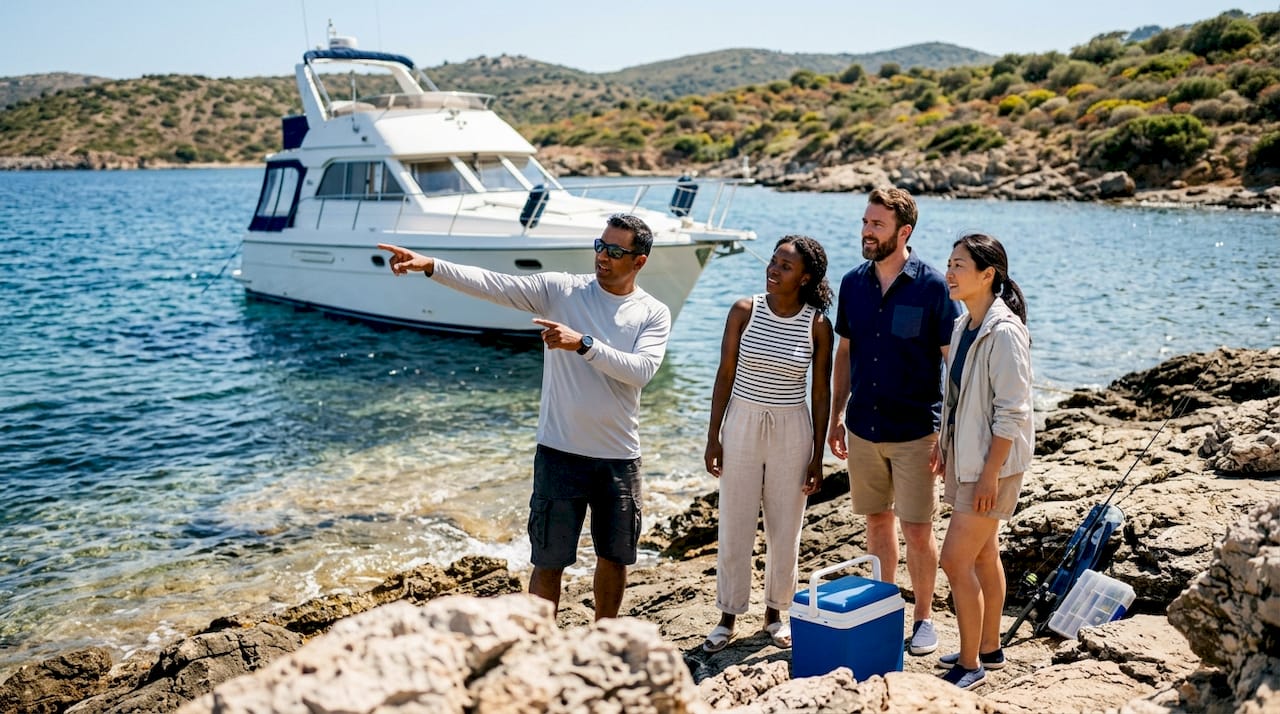
Each morning, the lead crew holds a briefing around 9 AM covering weather conditions, the day’s route, distances, and mooring options at the destination. That briefing is your daily compass. After that, you cast off and sail. Participants typically cover 2–5 hours of sailing per day, which leaves plenty of afternoon time for swimming off the boat, snorkeling in crystal clear coves, or wandering through a whitewashed village.
Evenings are where the flotilla really comes alive. Groups gather at a local taverna, organize a beach barbecue, or throw a deck party on the boats. The social energy is one of the biggest surprises for first-timers. You get the freedom of your own yacht and the warmth of a shared adventure.
- Matin : Lead crew briefing at 9 AM, weather and route update
- En milieu de matinée : Cast off and sail your chosen course to the day’s destination
- L'après-midi : Anchor in a bay, swim, snorkel, or explore a local village
- Soirée : Group dinner at a taverna or onboard social gathering
Conseil de pro : Book a table at the local taverna early in the afternoon. The lead crew often knows the best spots and can call ahead, saving you a long wait when the whole flotilla arrives hungry.
Final day (day 7)
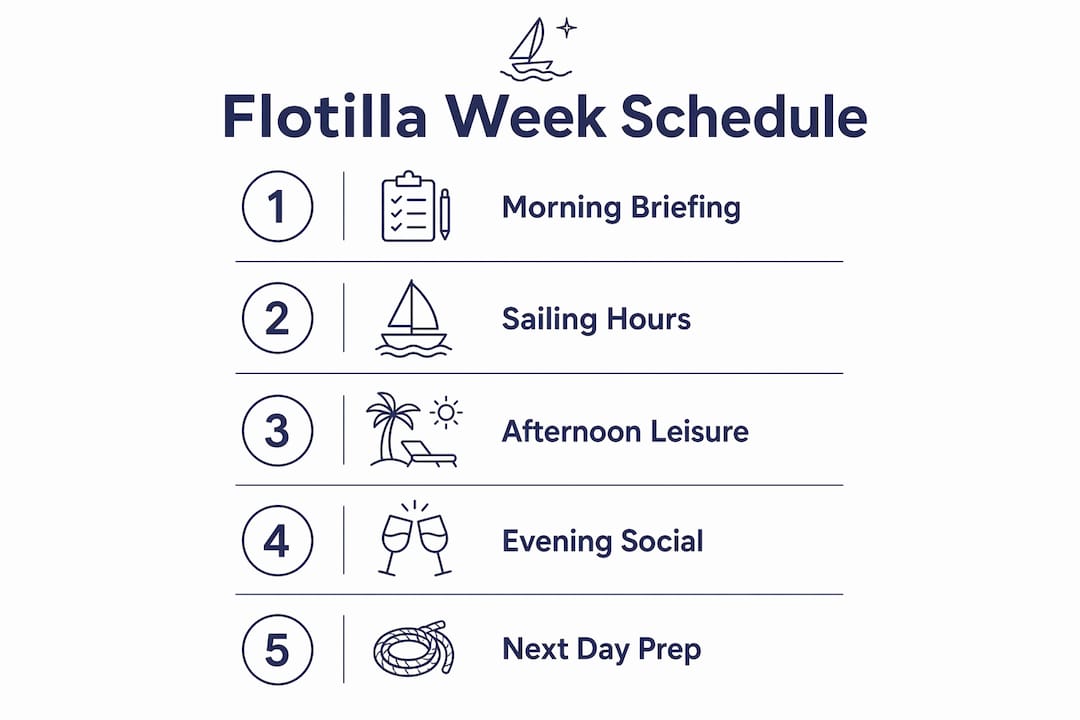
The last day is typically a saturday return to the base marina. You clean the boat, return equipment, and settle any fuel or mooring fees. Many groups extend the celebration with a final group dinner ashore before flying home.
What is the role of the lead crew in a flotilla week?
The lead crew is the backbone of any flotilla sailing itinerary. A standard flotilla fleet runs 6–20 yachts, and the lead crew manages the logistics for every single one of them. Their team typically includes a skipper, a mechanic, and a hostess, each covering a distinct area of support.
The skipper plans daily routes, monitors weather, and guides the fleet into harbors. The mechanic handles any technical issues on your boat, from a stuck winch to an engine hiccup. The hostess coordinates social events, handles provisioning questions, and keeps the group connected. Together, they function as a local concierge, a safety team, and a social director rolled into one.
“Experienced flotilla leaders emphasize their role in authentic local dining advice and navigating crowded harbors.” — Sailing and Sunshine
Their local knowledge is genuinely hard to replicate. They know which anchorage fills up by noon, which beach bar stays open late, and which narrow channel requires extra caution. That insider knowledge transforms a good sailing week into a great one. The lead crew also secures mooring priority in busy ports, which matters enormously in peak season when marinas fill fast.
- Skipper : Daily route planning, weather monitoring, harbor entry guidance
- Mechanic: On-call technical support for all boats in the fleet
- Hostess: Social coordination, local recommendations, group communication
- Full team: Safety backup, mooring assistance, cultural immersion support
What activities can you expect during a flotilla week?
A flotilla week schedule packs a remarkable variety of experiences into seven days. The combination of island hopping, cultural stops, and group socializing is what separates this format from a standard beach holiday.
Here are the core experiences that shape most Mediterranean flotilla weeks:
- Island hopping: You wake up in a different anchorage every morning. Greece’s Ionian Islands, Croatia’s Dalmatian Coast, and the Turkish Aegean each offer a new backdrop daily.
- Swimming and snorkeling: Afternoons at anchor give you direct access to Destinations de navigation en Méditerranée with clear water, sea caves, and marine life right off the stern.
- Village exploration: Getting lost in narrow cobblestone streets, visiting a hilltop fortress, or browsing a local market adds real cultural depth to the trip.
- Group dinners and parties: Evening gatherings at waterfront tavernas are a flotilla staple. Some groups organize themed nights, deck parties, or beach barbecues mid-week.
- Private relaxation: You always have the option to skip the group plan and spend a quiet afternoon reading in the cockpit or sailing to a secluded bay on your own.
Conseil de pro : Pack a good snorkel mask and fins. The best underwater spots are often right where you anchor for lunch, and you will regret not having gear when the water is that clear.
The balance between group activities and personal freedom is one of the most appealing aspects of the flotilla format. You are never obligated to join every event, but the social pull is real. Most participants describe the evening gatherings as the highlight of their week.
How to plan and prepare for a successful flotilla week
Solid flotilla trip planning before you leave home makes the difference between a smooth week and a stressful one. These are the decisions that matter most.
Choosing the right yacht
A mid-sized yacht in the 34–38 foot range is the recommended choice for flotilla sailing. Larger boats offer more cabin space but become difficult to maneuver in tight Mediterranean marinas. A 34–38 foot boat handles well, fits comfortably in most berths, and gives a crew of 4–6 people enough room to live aboard for a week without friction.
Picking the best season
Shoulder seasons, specifically may, june, and september, offer the best conditions for a flotilla vacation. Winds are steady, temperatures are warm, crowds are thinner than in july and august, and pricing is noticeably better. July and august deliver reliable sun but also packed marinas, higher costs, and stronger afternoon winds that can make sailing more demanding.
Sailing qualifications and learn-on-flotilla programs
Most flotilla operators require at least a basic sailing qualification such as an RYA Day Skipper or equivalent. If your crew is new to sailing, many operators offer a learn-on-flotilla program where the lead crew provides hands-on instruction throughout the week. This makes the flotilla format genuinely accessible to beginners, which is one reason flotilla participants typically include first-time charterers, families, and mixed-ability crews.
What to pack
| Catégorie | Essentials |
|---|---|
| Vêtements | Lightweight layers, swimwear, non-marking boat shoes |
| Safety | Sunscreen SPF 50+, polarized sunglasses, personal flotation device |
| Navigation | Offline chart app, handheld VHF radio, paper backup charts |
| Comfort | Seasickness remedy, reusable water bottle, dry bag for electronics |
| Social | Cash for tavernas and markets, a good book, a speaker for deck evenings |
Booking strategy
Book as a group and communicate your social preferences to the operator upfront. Flotillas with 8–12 boats tend to offer better social cohesion than very large fleets. Arrange provisioning before departure so your boat is stocked for the first two days. After that, most ports have local markets where you can restock fresh produce, bread, and local wine.
Principaux enseignements
A flotilla week itinerary gives you independent sailing with professional support, a built-in social group, and a structured daily rhythm across seven days in the Mediterranean.
| Point | Détails |
|---|---|
| Daily structure | Briefing at 9 AM, 2–5 hours of sailing, afternoon leisure, evening group socializing |
| Lead crew value | Skipper, mechanic, and hostess handle safety, mooring, and local recommendations |
| Best seasons | May, june, and september offer the best balance of weather, crowds, and pricing |
| Yacht size | A 34–38 foot yacht handles Mediterranean marinas well for crews of 4–6 |
| Participant profile | Flotillas suit first-timers, families, and mixed-ability crews equally well |
Why the flotilla format works better than most people expect
I have seen a lot of sailing formats over the years, and the flotilla week consistently surprises people in the best possible way. The most common reaction from first-timers is that they expected more restriction and got far more freedom than they anticipated.
The structure is real, but it is light. The morning briefing takes 20 minutes. After that, you are on your own boat, making your own calls, sailing at your own pace. The lead crew is a radio call away, not a shadow over your shoulder. That balance is genuinely rare in group travel.
What I find most underrated is the social dynamic. You arrive as strangers and leave as friends who have shared sunsets, navigated tricky harbors together, and laughed over dinner in places most tourists never reach. The flotilla sailing community that forms over seven days is unlike anything you get from a resort or a cruise ship.
My honest advice: do not overthink the sailing qualifications. If you can handle a boat in moderate conditions, the lead crew fills the gaps. The flotilla format exists precisely because not everyone needs to be an expert to have an extraordinary week on the water.
- Voile
Sailarmada’s curated flotilla weeks in the Mediterranean
Sailarmada designs flotilla sailing weeks across Greece, Croatia, Italy, and Turkey, with routes built for groups and families at every experience level. Every departure includes a professional lead crew, curated stops, and flexible yacht options from catamarans to monohulls.
Whether you want a social flotilla with 10 other boats or a more private sailing experience, Sailarmada matches the format to your group. Skippers are available for those who prefer not to take the helm, and all itineraries are designed to balance sailing time with genuine cultural exploration ashore. Visit the Sailarmada sailing holidays page to browse available dates, yacht options, and group booking details for your Mediterranean week.
FAQ
What is a flotilla week itinerary?
A flotilla week itinerary is a seven-day sailing schedule where a group of 6–20 yachts follows a shared Mediterranean route led by a professional support crew. Each boat sails independently but follows the same daily briefings, stops, and social program.
Do I need sailing experience to join a flotilla?
A basic qualification such as an RYA Day Skipper is typically required, but many operators offer learn-on-flotilla programs for beginners. The lead crew provides hands-on guidance throughout the week, making the format accessible to mixed-ability groups.
How much does a flotilla week cost?
Booking a flotilla sailing holiday starts around €2,500–€4,000 per week for a 38-foot yacht, excluding provisions, fuel, and mooring fees. Costs vary by yacht size, season, and the services included in the package.
What is the best time of year for a flotilla sailing trip?
May, june, and september are the optimal months for a flotilla week. These shoulder seasons offer steady winds, warm temperatures, fewer crowds, and better pricing compared to peak summer months.
Combien y a-t-il généralement de bateaux dans une flottille ?
A standard flotilla runs 6–20 yachts, with most operators preferring groups of 8–12 boats for the best balance of social energy and logistical ease.