Yes, you can learn to sail on a Greek holiday with zero experience, and the easiest way is to sail with an experienced skipper on board. You hoist, trim and steer when you feel like it, and you relax when you don’t. We run skippered private and group sailing weeks in Greece, so this guide covers what we would tell a friend booking their first one: which format suits a beginner, where and when to go, what it costs, and what to check before you pay.
TL;DR
- You don’t need a license or any experience to join a skippered sailing week in Greece. The skipper holds the responsibility, and you take as much of the sailing as you like.
- Beginners do best in the Ionian or the Saronic Gulf, in June or September, when the wind is gentler than in the Aegean peak season.
- Our private Greece weeks start from 560 € per week per person, shared across a group of friends or a family.
- Choose between three formats: a private skippered boat, a group holiday with other travelers, or a flotilla. Each suits a different kind of beginner.
- A formal sailing certificate is a separate project. A holiday teaches you the feel of the boat, which is what makes the course later much easier.
Table des matières
- What “learning to sail on holiday” really means
- Can you sail with no experience?
- Three ways to sail as a beginner in Greece
- Where in Greece should a beginner sail?
- When to go: the best months for a first trip
- What does a beginner sailing week cost?
- How to choose your beginner trip: a short checklist
- Notre perspective
- Ready to book your first week?
- FAQ
- Sources
What “learning to sail on holiday” really means
There are two quite different things behind this search, and it helps to know which one you want.
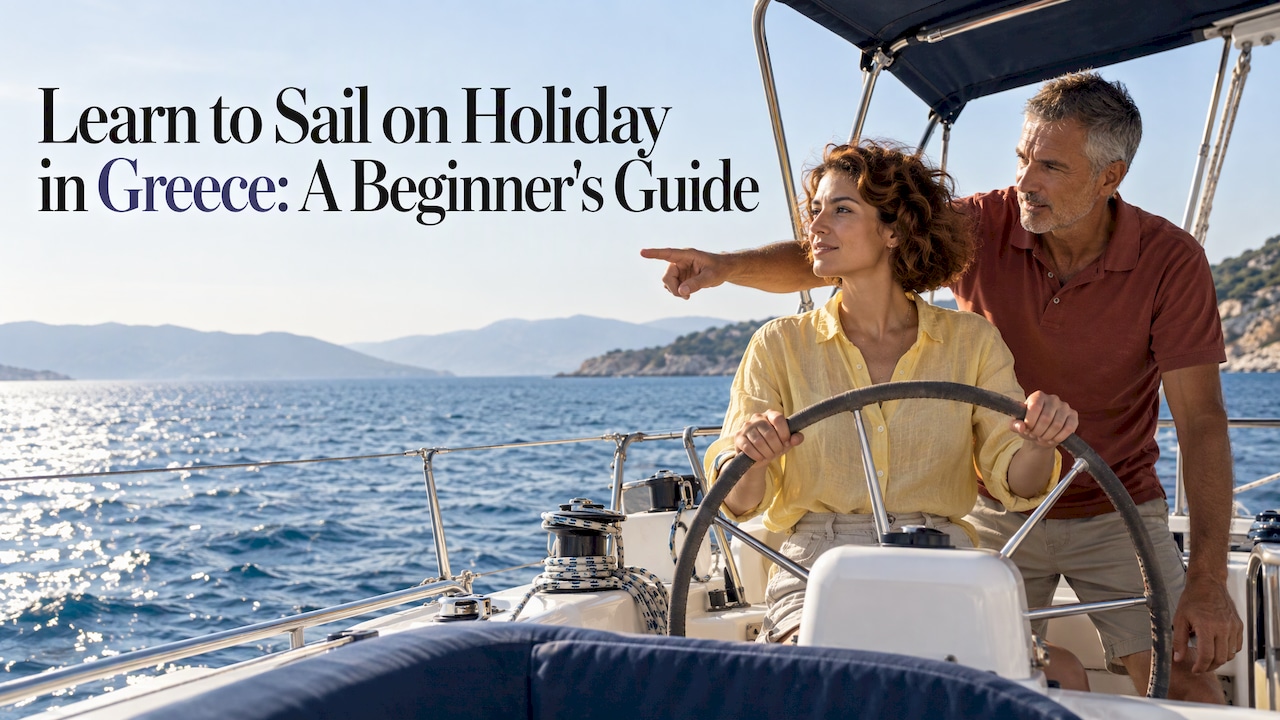
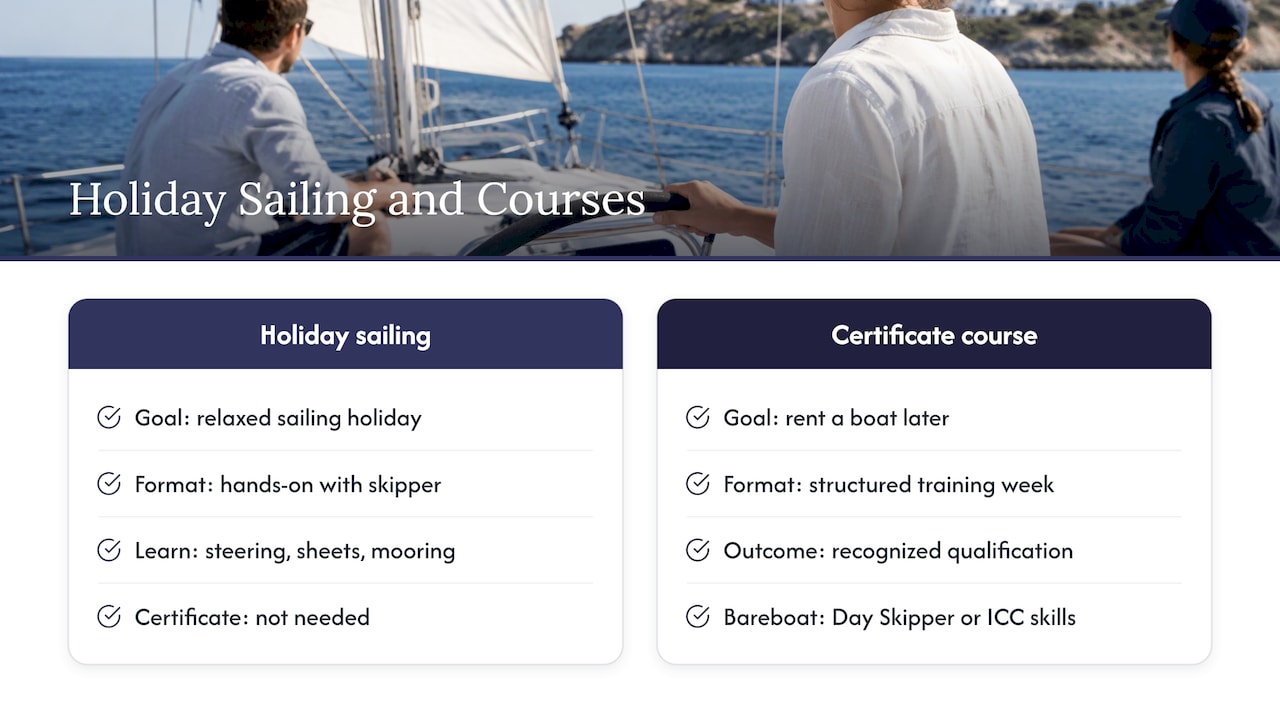
The first is learning by sailing. You join a boat with a skipper, a catamaran or sailing boat, and you get hands-on time: steering, pulling the sheets (the ropes that control the sails), helping with mooring, reading the wind. You return home knowing what a tack is, why a boat heels, and whether you love it. This is the holiday route, and it is what most of our guests want.
The second is working toward a certificate. These are structured courses that end in a qualification you can show a charter company. They are worthwhile if you want to rent a boat yourself later, but they are a training week, not a relaxed holiday. Most charter companies that rent boats without a skipper (a bareboat charter) want at least one person aboard with Day Skipper or ICC-level skills, according to Yacht Charter Guide’s overview of Greek sailing holidays. The ICC is the International Certificate of Competence, a license that covers small pleasure craft in European waters.
If your goal is a great week with friends and some real sailing in it, you don’t need a certificate. You need the right boat, the right skipper and the right waters.
Can you sail with no experience?
Yes. On a skippered charter the skipper is the legally and practically responsible person on board. They plan the route around the weather, pick the anchorages, handle the tricky maneuvers in tight harbors and keep an eye on safety. Your job is to be a willing crew member.
That is why a skippered format works so well for newcomers. You aren’t sitting in a classroom, and you aren’t thrown into a bareboat with a chart and a prayer. You are learning next to someone who sails these waters all the time. On our routes, the skippers are experienced, professionally trained sailors from CAPETAN.club, and our promise is personalized support from actual sailors at every step, from choosing the boat to the final briefing.
A few things you can expect to try in a week of that kind:
- Steering by compass and by sight, which is easier than it looks.
- Trimming the sails as the wind shifts.
- Helping with lines and fenders when you pull into a harbor.
- Understanding why the skipper chooses one bay over another.
- Sitting at the helm of a catamaran or sailboat while someone calm tells you what to do next.
You don’t have to do any of it. Plenty of guests start by watching and end the week asking to take the helm into the bay.
Three ways to sail as a beginner in Greece
Greece is the easiest place in Europe to start, with short hops between islands and sheltered bays. How you go matters more than where, so here are the three formats side by side.
| Format | Who it suits | What you get | Beginner fit |
|---|---|---|---|
| Location de bateau avec skipper privé | Friends or families who want their own boat and schedule | Your own yacht or catamaran with a skipper, your own route and pace | Excellent: the skipper is all yours |
| Group sailing holiday | Solo travelers, couples, small groups who want company | A set route and dates, shared with other guests | Excellent: social and structured |
| Flottille | Confident groups where someone has some skills | Several boats sailing together behind a lead boat | Good, with the right crew |
Location de bateau avec skipper privé
This is the format we’d point most groups of friends and families toward. You pick the boat, you choose the dates, and you decide how much to sail and how much to swim. The skipper adapts to your level, so a group where one person has sailed once and three have never touched a rope works perfectly well.
Cost is shared. Our La Grèce se privatise weeks start from 560 € per week per person. For a breakdown of what a skippered week adds up to and what sits on top, see our guide to the cost of a skippered charter in Greece. If you are unsure how a captain fits on a catamaran, this explanation of chartering a catamaran with a captain il y marche.
Group sailing holiday
Traveling alone, as a couple, or with a small group? A group week puts you on a boat with other guests and a fixed route. It is a good way to learn because everyone is in the same position, and the skipper teaches the whole crew at once. You can compare our current group departures on the page des vacances en mer en groupe, and if you are weighing the two styles, our short piece on private versus group sailing lays out the trade-offs.
Flottille
A flotilla is a small fleet of yachts sailing the same route, usually with a lead boat in front. According to Yacht Charter Guide, flotillas typically have 5 to 10 yachts, and Ionian legs run about 10 to 20 nautical miles a day. A nautical mile is about 1.15 land miles, so that is a relaxed morning or afternoon of sailing.
The catch for total beginners is that operators usually want someone aboard with Day Skipper or ICC-level skills. Many can add a skipper to your boat if nobody has them, which is a perfectly good way in. If you are a skipper yourself and want to join a fleet, our guide to why skippers enjoy flotilla holidays is the place to start.
Where in Greece should a beginner sail?
Greece has several sailing areas with very different personalities. For a first trip, two stand out.
The Ionian: the gentle classroom
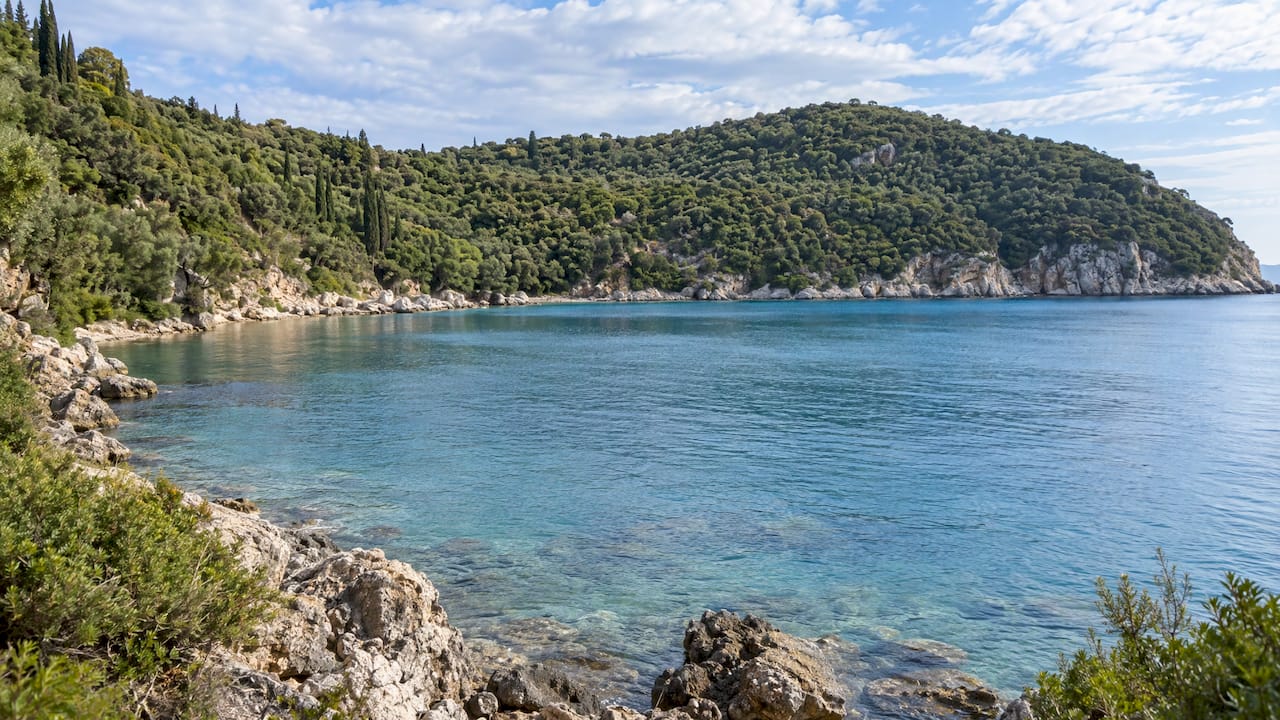
On Greece’s west coast, the Ionian islands have calmer winds and short distances between sheltered bays. Yacht Charter Guide recommends the Ionian or the Saronic for beginners. The Ionian is green, blue and forgiving, and a good place to get your first sunburnt shoulders and your first confident turn at the helm.
The Saronic Gulf: close to Athens
The Saronic islands sit just south of Athens, so you can land, drop your bags and be on board the same day. Hydra, Poros, Aegina and Spetses are a short sail from each other, with lovely harbors for dinner ashore. Our Itinéraire dans le golfe de Saronique pour 7, 14 ou 21 jours shows how those islands link up in a week and beyond.
The Cyclades: save them for round two
Santorini, Mykonos, Paros and Milos are gorgeous, but the Cyclades are exposed to the meltemi, the strong northerly summer wind of the Aegean. It can blow for days and is best saved for experienced crews, as the same Yacht Charter Guide overview notes. We’ve written about how it behaves in our pages on the meltemi in Greece and on Cyclades sea conditions by season. If your heart is set on the Cyclades, a skipper who knows how to plan around the wind is the reason to book skippered, and shoulder-season dates are a smart choice.
When to go: the best months for a first trip
For beginners, June and September are the sweet spots in the Ionian and Saronic: warm sea, lighter winds, fewer crowds and easier harbor spots than in the peak weeks of July and August. That is also the pattern in the Yacht Charter Guide recommendation, which names June or September for first-timers.
Do you want a holiday you can still swim through? The sea is at its warmest in late summer, so September pairs gentle sailing with a pleasant sea temperature. If you are choosing between several months for a group, our guide to the best time for a group sailing trip in the Mediterranean compares the seasons.
A small footnote for the curious: Greece’s official tourism site mentions that sailing continues in winter too, and points to the “Alkyonides” days, a spell of calm, sunny weather in mid-January, as the best period for it (Visiter la Grèce). For a first holiday, though, summer remains the happy default.
What does a beginner sailing week cost?
Cost depends on the boat, the number of people sharing it, the season and whether you go private or group. Here are the numbers we can stand behind.
| Offer | Price as published |
|---|---|
| La Grèce, passe à la gestion privée | à partir de 560 € par semaine par personne |
| Croatie, devenez privé | à partir de 560 € par semaine par personne |
| La Turquie, passe à l'état privé | à partir de 530 € par semaine par personne |
| L'Italie, devenez privé | à partir de 870 € par semaine par personne |
| Découvrez les îles Éoliennes (groupe) | 1287 € par semaine par personne |
| Wild Route Turkey (groupe) | 1147 € par semaine par personne |
| Flottille de voile pour enfants | à partir de 1247 € par semaine par cabine |
For a wider market picture, Yacht Charter Guide gives a rough range for a skippered week in Greece of €600 to €1,000 per person before flights, on a 45-foot monohull shared by six. That is a one-source estimate, so use it as orientation and not as a quote. Flights, food ashore, marina fees and fuel are extras on most charters, so ask what is in any price before you compare.
Sharing is the key to value. Six friends splitting one boat pay far less each than a couple on a hotel-style package, and you get your own floating villa with a sea view on tap.
How to choose your beginner trip: a short checklist
Work through these in order, and the decision usually makes itself.
- Qui vient ? A family, a group of friends, a couple or you alone. Groups of four to eight friends or families suit a private boat. Solo travelers and couples suit a group week.
- Does anyone hold a sailing qualification? If not, choose skippered or a group holiday, not bareboat. A flotilla is possible if the operator can add a skipper.
- How much do you want to sail? If you want hands-on time every day, tell the skipper at the start. If you want mostly swimming and beaches, say that instead. A skippered week bends to either.
- Which waters? Ionian or Saronic for a first trip. Cyclades once you have some miles behind you, or with a skipper planning around the wind.
- Which month? June or September for gentler conditions, July and August if you want peak summer and are happy to accept more wind and busier harbors.
- What is your budget per person? Divide the boat cost by the number of guests, then add flights and food ashore.
- Is there a route you can read? A day-by-day outline tells you how many hours you sail and how many you swim. Short hops are better for beginners.
Safety and the skipper: what to confirm
Before you pay for any skippered trip, make sure the skipper is named and professionally qualified, that the boat comes with the standard safety equipment (life jackets in the right sizes, including for children, a liferaft, flares and a first aid kit), and that you receive a safety briefing on day one. Greek yachts used for charter are also subject to Greek rules on licensing and safety, handled through the Hellenic Professional Yacht Owner Association and the authorities, as Visiter la Grèce points to. If anyone in your group has a medical condition, is pregnant or has a child under a few years old, talk to your doctor before booking and tell your skipper in advance so the route and the boat can suit them.
The people on board are what make a first sailing trip feel safe, which is why we put so much weight on the skipper.
Notre perspective
We built Sail Armada around one idea: the best way to fall in love with sailing is to do it with people who sail for a living and are happy to share it.
Most beginners worry they’ll be in the way. They aren’t. On a skippered week you are crew, guest and student all at once, and nobody is grading you. The route is curated by experienced skippers from CAPETAN.club, which means the days are paced so that you sail, swim, explore a village and eat well, without anything feeling rushed.
We offer both private and group formats because beginners are different. Some want a boat for their own gang of friends. Others want to meet people. We would rather help you pick the right one than sell you the wrong one, and you deal with actual sailors from the first question to the last.
Pricing is transparent, boat options are detailed, and departure dates can be custom. For a first trip, that flexibility is the thing that turns “maybe someday” into a week you’ll talk about for years.
Voile
Ready to book your first week?
If you’re a group of friends or a family, a private skippered week is the simplest first step. La Grèce se privatise starts from 560 € per week per person, with a skipper, a choice of yacht or catamaran and dates that fit your calendar. If you’d rather meet fellow travelers, browse our vacances en groupe à la voile. And if you’re still picking a destination, our overview of vacances en mer en Grèce is a good place to see the islands.
Want to understand the reasoning behind chartering here at all? Our short piece on why charter in Greece covers privacy, value and the sailing itself.
FAQ
Where can I learn to sail for a holiday in Greece?
The Ionian islands and the Saronic Gulf are the friendliest places to start, thanks to shorter distances and gentler winds. A skippered private week or a group holiday lets you learn on the water while someone experienced handles the responsibility. If you want a formal certificate, that is a separate course, and a holiday is a great way to find out whether you want one.
Can I sail with no experience?
Yes. On a skippered charter, the skipper runs the boat and you join in as much or as little as you like. Many beginners start with small jobs, such as pulling a rope or helping with mooring, and take the helm later in the week. Flotillas are more demanding, since operators usually want at least one person aboard with Day Skipper or ICC-level skills, though many can add a skipper for you.
How much does a sailing holiday cost?
Our Greece private weeks start from 560 € per week per person, and group holidays are priced per route, for example 1287 € per week per person for the Aeolian Islands. Extras such as flights, food and marina fees depend on your trip. Splitting a boat among more friends brings the per-person price down.
What is the best month to sail in Greece as a beginner?
June and September are the best choices for a first trip in the Ionian or the Saronic: warm weather, lighter winds and calmer harbors. July and August are the strongest meltemi months in the Aegean, so they suit more experienced crews, or groups with a skipper who plans around the wind.
Sources
- Sailing Holidays in Greece: Skippered, Flotilla or Bareboat (Yacht Charter Guide)
- Sailing in Greece (Visit Greece)