For a 7 to 10-day trip, pick the southern arc out of Rhodes (Rhodes, Symi, Nisyros, Kos, Tilos, Chalki) or the northern Kos loop (Kalymnos, Leros, Lipsi, Patmos) as your backbone. The meltemi wind is the deciding factor: sail May, June, or September for lighter breeze, and use east coasts for shelter if the wind builds. Both hubs, Rhodes and Kos, have airports and marinas, and Sailarmada runs curated skippered and private charters from either.
En bref :
- The southern arc route covers about 145 nautical miles, with a mix of shorter and longer legs, ideal for mixed-ability crews.
- The northern Kos loop is approximately 75 to 90 nautical miles, suited for calmer sailing, children, or first-time sailors.
- Both routes should be adjusted for the meltemi wind, favoring east coasts during strong north winds to avoid choppy open waters.
- Extending to 8 or 10 days allows for additional nights or a one-way trip, avoiding strenuous final-day passages against the wind.
- Planning should prioritize moderate daily distances, flexible routing, and weather updates to ensure a relaxed and safe sailing experience.
Table des matières
- Recommended Dodecanese Sailing Routes: 7, 8, and 10-Day Plans
- How Do You Plan a Dodecanese Sailing Route Around the Meltemi?
- Island Highlights and Harbor Notes for Every Stop
- Charter Vitals: Licenses, Insurance, and Budgeting Basics
- How to Choose the Right Itinerary for Your Group
- Why These Routes Work for Groups and Families
- What Actually Matters When You Plan a Dodecanese Route
- Book a Dodecanese Sailing Week With Sailarmada
- Sources
Recommended Dodecanese Sailing Routes: 7, 8, and 10-Day Plans
Choosing a Dodecanese sailing itinerary usually comes down to one question: do you want the drama of open water and volcanic scenery, or the calmer, closer hopping of a northern circuit? Both work beautifully for a week aboard. Here’s how to build each one, leg by leg, with realistic mileage so you’re not fighting the clock every afternoon.
The 7-day southern arc: Rhodes to Symi, Tilos, Nisyros, Kos, and back
This route puts you in the Dodecanese’s most photogenic corner: sheer cliffs, an active volcanic crater, and one of the prettiest harbor towns in Greece.
- Day 1: Rhodes to Symi. Symi’s horseshoe harbor is postcard material, but berths vanish fast. Arrive before noon or you’ll be swinging on the hook outside the bay.
- Day 2: Symi to Tilos. Livadia Bay has a manageable town quay and a much quieter pace than Symi.
- Day 3: Tilos to Nisyros. Short enough to leave the whole afternoon free for the crater walk at Mandraki.
- Day 4: Nisyros to Kos. Kos Marina gives you full provisioning, fuel, and a proper night out if the crew wants one.
- Day 5: Kos to Chalki via a Rhodes coastal detour, or direct to Chalki. This is the longest leg of the week, so start early.
- Day 6: Chalki to Rhodes (Lindos anchorage stop). Break the passage with a swim stop under Lindos’s acropolis before the final push.
- Day 7: Return to Rhodes Marina. Short hop, fuel up, and hand back the boat.
That’s roughly 145 nm across the week, front-loaded with shorter legs and one longer passage mid week, which is exactly how a mixed-ability crew should schedule a trip.
The 7-day northern Kos loop: Kalymnos, Leros, Lipsi, and Patmos
Quieter water, shorter hops, and a strong argument for anyone traveling with kids or first-time sailors.
- Day 1: Kos to Kalymnos. Pothia town quay is straightforward and close enough that you’ll have the afternoon for a swim at Vlychadia.
- Day 2: Kalymnos to Leros. Leros has several protected bays; Lakki is the practical berthing choice.
- Day 3: Leros to Lipsi. Tiny, low-key, and a good rest-day anchor if your crew wants one.
- Day 4: Lipsi to Patmos. This is the cultural high point of the loop, so give it a full day and night.
- Day 5: Patmos exploration day (no passage). Visit the Monastery of St. John before the midday closure; hours are tight and worth checking the day before.
- Day 6: Patmos to Leros or Kalymnos. A flexible day depending on wind direction.
- Day 7: Return to Kos. An easy morning sail before flights.
Total distance runs closer to 75 to 90 nm for the week, which leaves generous margin for weather days or an extra night somewhere you fall in love with. The SailingIssues Dodecanese itinerary guide recommends building at least one spare day into any week-long plan for exactly this reason.
Extending to 8 or 10 days, and one-way alternatives
An 8-day version simply adds a night. The most common addition is a second night in Kos or an extra day around Nisyros to combine the crater with a swim stop at Pali. Sample 8-day write-ups from Frontier Yachting confirm this pacing works well for May through June departures, when daily mileage can stay modest without losing any highlights.
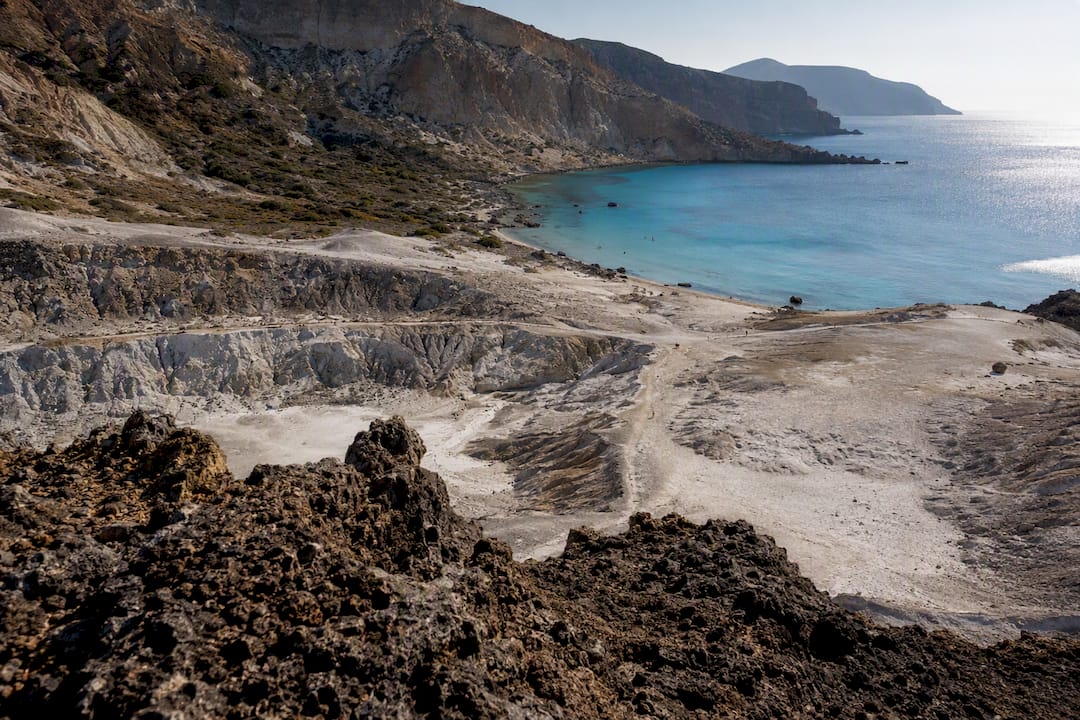
A 10-day itinerary lets you combine both circuits: run the southern arc from Rhodes through Kos, then continue north into Kalymnos, Leros, and Lipsi before finishing in Kos rather than backtracking to Rhodes. This one-way structure, often called a Rhodes to Kos or Kos to Rhodes charter, avoids the single biggest planning headache in the Dodecanese: a long final-day passage against the meltemi to get the boat back to its starting marina. Most charter companies, including Sailarmada’s curated Greece routes, offer one-way options between these two hubs, which makes for a far more relaxed final week.
If you’re short on days, shortening the southern arc to skip Chalki and returning directly from Tilos to Rhodes trims the week to a comfortable 5 or 6 sailing days without losing Symi or Nisyros.
How Do You Plan a Dodecanese Sailing Route Around the Meltemi?
The meltemi is a northerly wind that builds through summer and dictates almost every smart decision in Dodecanese route planning. It typically strengthens from July into August, sometimes hitting 25 to 30 knots in exposed channels, then eases considerably by mid-September.
East coasts of most islands sit in the wind’s shadow when the meltemi is blowing from the north, which is why experienced skippers favor east-facing anchorages and harbors once the wind picks up. West coasts and open channels between islands, by contrast, can turn into a washing machine of chop and swell on a strong meltemi day.
Daily targets matter more than most first-time charterers expect. A comfortable day for a mixed-ability crew is 15 to 25 nm, roughly 3 to 5 hours of sailing, leaving time to arrive, settle into a berth, and actually enjoy the island. Ambitious crews with more sailing experience can push to 35 or 40 nm, but that only works if everyone aboard is comfortable reefing early and adjusting the plan on the fly.
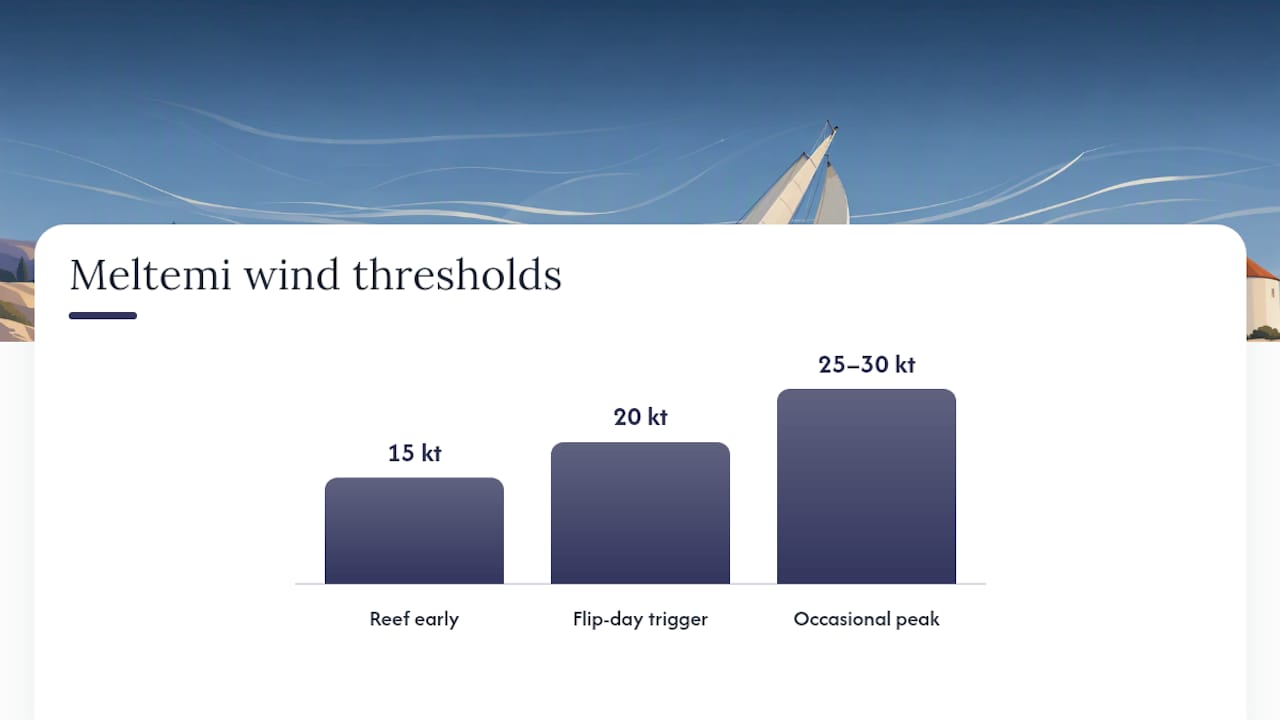
Conseil de pro : Check the forecast the night before and again at first light. If the GRIB files show meltemi building past 20 knots for your planned route, flip the day: sail the sheltered leg first and save the exposed passage for early morning, when winds are typically lightest.
A short pre-departure routine keeps surprises to a minimum:
- Check a marine forecast app or GRIB download for wind direction and strength, not just speed.
- Confirm your planned anchorage’s depth and bottom type using EMODnet’s bathymetry charts before committing to it.
- Brief the whole crew on the day’s route, bailout options, and VHF channel 16 procedure.
- Reef early rather than late. A sail shortened at 15 knots is a non-event; the same sail shortened at 25 knots in a crowded harbor entrance is not.
Roughly 65% of Dodecanese sailing days in peak summer see some meltemi influence, according to practitioner guides covering the region, which is exactly why May, June, and September remain the preferred months for a first Dodecanese charter.
Island Highlights and Harbor Notes for Every Stop
Each island in the Dodecanese has its own personality, and its own berthing quirks. Here’s the practical shorthand.
- Symi: Neoclassical harbor houses stacked above the water; town quay berths are scarce, so arrive before noon or plan to anchor in Panormitis Bay instead.
- Nisyros: The volcanic crater at Mandraki is the headline attraction; anchor off Pali or Palloi, since the main harbor gets crowded with day-trip ferries.
- Kos: The Dodecanese’s provisioning hub. Full marina services, fuel, supermarkets, and repairs. Restock here before heading anywhere quieter.
- Kalymnos: Sponge-diving heritage and excellent rock climbing ashore; Pothia town quay is straightforward with reasonable berth availability.
- Leros: Multiple protected bays, notably Lakki, with an interesting mix of Italian-era architecture from its wartime naval history.
- Lipsi: Tiny and low-key. Provisioning is limited to a couple of small markets, so shop up in Kos or Patmos first.
- Patmos: Home to the Monastery of St. John the Theologian; check monastery hours before you plan your day, since they close at midday.
- Tilos: Quiet, underrated, and a good rest stop between the busier anchorages of Symi and Nisyros.
- Chalki: Small and sleepy, with a manageable town quay and far less competition for space than Symi.
- Makronisi: Uninhabited and a favorite for solitude seekers, but bring everything you need. There are no facilities, and provisioning has to happen at the nearest inhabited island first.
- Pserimos: A single small settlement between Kos and Kalymnos, useful as a quiet lunch-stop anchorage rather than an overnight base.
Charter Vitals: Licenses, Insurance, and Budgeting Basics
Most charter companies require a recognized bareboat sailing qualification, such as an ICC or RYA certificate, if you want to skipper the boat yourself. If nobody aboard holds one, a skippered charter is the easier and often safer route, especially for a first Dodecanese trip navigating meltemi conditions.
Charter insurance deserves real attention before you sign anything. Providers like Pantaenius point out that charterer’s liability cover varies significantly between companies, and it’s worth confirming exactly what’s included before you board, not after something goes wrong.
Budgeting for a Dodecanese week typically includes three add-ons beyond the base charter rate: the APA (Advance Provisioning Allowance, usually covering fuel, dockage, and provisioning), local marina fees, and VAT, which applies to charter rates in Greek waters. Rhodes and Kos both have full-service marinas with fuel docks, water, and repair services, making them sensible embarkation points for restocking mid-trip too.
Conseil de pro : Build your provisioning list before you land, not after. A quick pre-trip shopping checklist saves you from discovering on day three that nobody packed sunscreen or spare batteries.
How to Choose the Right Itinerary for Your Group
Match the route to your crew, not the other way around. Run through this quick checklist before booking:
- Rate crew experience honestly. A boat full of first-timers should lean toward the northern Kos loop’s shorter legs.
- Decide your pace preference. Want more sailing, less lounging? The southern arc’s longer passages reward that.
- List shore-activity priorities. Crater walks, monastery visits, and sponge-diving history each favor different stops.
- Flag provisioning or medical needs. Kos and Rhodes both have hospitals; smaller islands don’t.
- Check flight logistics. Fly into Kos, end in Kos. Fly into Rhodes, consider the one-way option to avoid backtracking.
Small adjustments fix most mismatches: shorten the Chalki to Rhodes leg by cutting Chalki entirely, add a rest day at Lipsi if the crew is flagging, or swap an exposed west-coast passage for a sheltered east-coast alternative when the meltemi forecast looks unfriendly.
Why These Routes Work for Groups and Families
Sailarmada builds its Dodecanese offering around exactly this problem: matching route ambition to crew reality. The southern arc and the northern Kos loop both reflect years of local knowledge about where boats can actually berth, not just where a map suggests a nice hop.
Skippered charters solve the license question outright, and private bookings let a family or friend group set their own pace without merging with strangers. Sailarmada’s team handles provisioning coordination, local logistics, and route customization, so a family debating between the volcanic drama of Nisyros and the calmer waters around Lipsi doesn’t have to guess. That’s the value of local practitioner knowledge over a generic map exercise.
What Actually Matters When You Plan a Dodecanese Route
Most itinerary advice online treats the Dodecanese like a checklist of pretty harbors to visit in sequence. That misses the point entirely. The real skill is sequencing legs around wind, not romance, and letting the romance happen once you’re safely tied up.
The conventional wisdom oversells long, ambitious passages as the mark of a “real” sailing trip. In practice, the crews who enjoy their week most are the ones who kept daily legs modest, built in a spare day, and treated the meltemi forecast as the trip’s actual itinerary author. A 15-nm day that ends with a swim off Tilos beats a white-knuckle 40-nm slog every time, particularly with kids or nervous sailors aboard.
If there’s one thing to prioritize first, it’s flexibility in the plan itself. Pick a route structure, not a rigid schedule, and leave room to flip a leg or add a rest day when the wind says so.
- Voile
Book a Dodecanese Sailing Week With Sailarmada
Sailarmada is the practical alternative to piecing together a Dodecanese trip yourself, boat rental here, skipper search there, provisioning guesswork on arrival. Every route above maps directly onto Sailarmada’s curated Greece charters, whether you want a fully private week or a skippered boat that takes the licensing question off the table entirely.
Start with Sailarmada’s private sailing page if you want full control over dates and crew size, or browse curated Mediterranean itineraries for groups if you’re coordinating a larger party across multiple cabins. Booking includes route customization around your dates, a skipper option if nobody aboard holds a bareboat qualification, and help with provisioning and airport transfers so your first day starts on the water instead of in a supermarket line. Check current availability for Rhodes or Kos departures and request a custom Dodecanese itinerary through Sailarmada’s Greece destinations page today.
Sources
A handful of reference sources are worth bookmarking before you commit to a final plan:
- Pantaenius — Charter insurance
- EMODnet Bathymetry tiles preview
- Sailing itineraries Dodecanese — SailingIssues