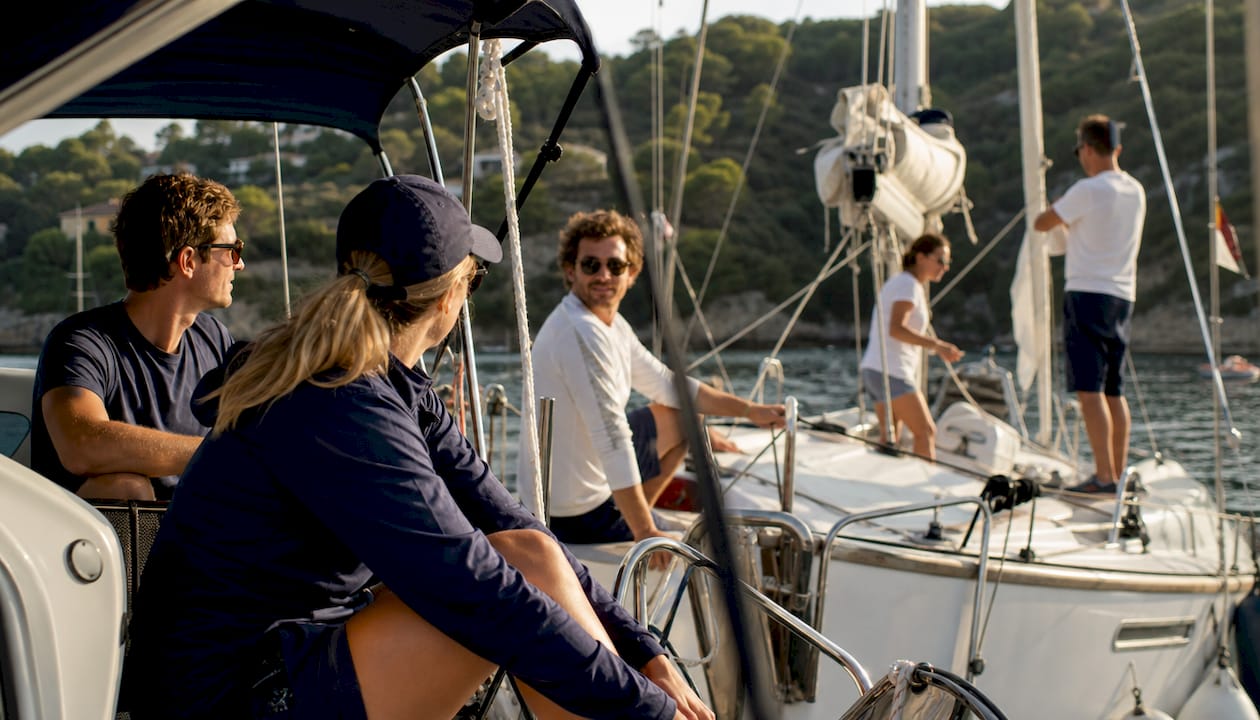
La navigation en flottille consiste à naviguer à bord de son propre yacht au sein d'un groupe, encadré par un bateau de tête et un équipage professionnels, tandis que la navigation sans équipage signifie louer un yacht par ses propres moyens sans équipage, sans provisions et sans assistance extérieure. Ces deux approches représentent les deux extrêmes du spectre de la location de voiliers : l’une vous offre une sécurité, l’autre vous procure une liberté totale. Le choix entre la navigation en flottille et la navigation en bateau nu dépend de votre niveau d’expérience, de la confiance de votre équipage et du type de vacances que vous souhaitez réellement passer. L’American Sailing Association (ASA) reconnaît ces deux formats de location comme légitimes, chacun exigeant des compétences et des mentalités différentes. Faites le bon choix, et votre semaine en mer restera un souvenir dont vous parlerez pendant des années.
En quoi consiste la navigation en flottille ?
Navigation en flottille Cela signifie que vous barrez vous-même votre yacht, mais qu’un bateau-pilote professionnel accompagne votre groupe et coordonne l’ensemble du voyage. Chaque matin commence par un briefing au cours duquel l’équipage du bateau-pilote vous communique l’itinéraire du jour, les conditions météorologiques et les consignes de sécurité éventuelles. Vous naviguez en toute autonomie pendant la journée, mais le bateau-pilote reste toujours à portée de radio si vous avez besoin d’aide.
L'aspect convivial de la navigation en flottille est véritablement l'un de ses principaux attraits. Vous rencontrez vos compagnons de navigation lors des mouillages en soirée, partagez des repas dans des tavernes locales et échangez des anecdotes autour d'une boisson fraîche. Si votre groupe comprend des personnes de niveaux différents, une flottille est la formule idéale, car les skippers moins expérimentés peuvent prendre la barre d’un véritable voilier de croisière tout en bénéficiant d’un soutien professionnel à proximité. C’est cette combinaison entre une véritable responsabilité à la barre et un encadrement rassurant qui rend les flottilles si populaires auprès des familles et des groupes novices en matière de location de voiliers.
La navigation en flottille implique certains compromis en matière de spontanéité. Les itinéraires fixés et les points de rendez-vous obligatoires font qu’il n’est pas possible de décider sur un coup de tête de ne pas rejoindre le mouillage du groupe pour mettre le cap sur une baie isolée. Le bateau de tête coordonne l’ensemble de la flottille ; la cohésion du groupe prime donc sur les impulsions individuelles. Pour la plupart des marins, cette organisation constitue un compromis acceptable en échange de la tranquillité d'esprit qu'elle procure.
En ce qui concerne les coûts, les séjours en flottille comportent un supplément pour le bateau de tête, qui s'ajoute au prix de base de la location du yacht. Les tarifs des séjours en flottille incluent généralement le carburant, les frais d'amarrage, le ménage de fin de séjour et une caution remboursable dans le prix forfaitaire. Ce forfait facilite l'établissement d'un budget, même si le prix affiché semble plus élevé qu'un devis de location coque nue.
Aperçu des principales caractéristiques de la flottille :
- Briefings quotidiens le matin avec les dernières informations sur l'itinéraire et la météo
- Un bateau-guide professionnel reste joignable par radio VHF tout au long de la journée
- Mouillages et points de rendez-vous prévus à l'avance chaque soir
- Communauté sociale intégrée permettant d'échanger avec les autres équipages de la flotte
- Frais supplémentaires inclus : frais d'amarrage, carburant et nettoyage de fin de séjour
- Idéal pour les équipages aux niveaux d'expérience variés et les groupes qui font leur première sortie en charter
Conseil de pro : Si vous naviguez en groupe d'amis aux niveaux de compétence variés, réservez dès le matin le créneau consacré au briefing de la flottille. La connaissance du lieu qu'a le skipper en chef, notamment en matière de mouillages et de fenêtres météorologiques, vaut bien plus que n'importe quel guide touristique.
En quoi consiste la navigation à la voile sans équipage ?
La location coque nue consiste à louer un yacht entièrement équipé, sans équipage, sans skipper et sans provisions incluses. Vous prenez les commandes dès la signature des documents de remise du bateau. Les skippers en location coque nue planifient leur propre itinéraire, fixent leur propre programme et prennent toutes les décisions de manière autonome. Cette liberté est exaltante, mais elle s'accompagne d'une responsabilité totale vis-à-vis du bateau, de l'équipage et de toutes les situations pouvant survenir en mer.
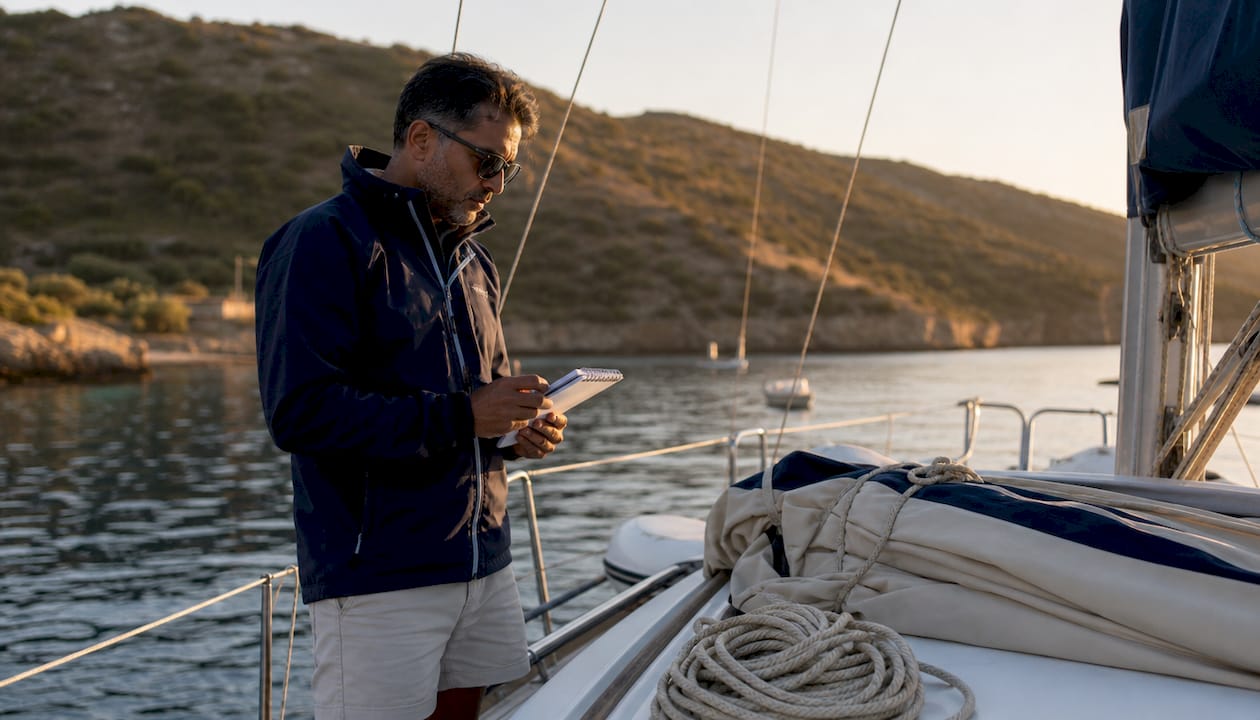
Les compétences requises pour la navigation en bateau sans équipage sont réelles et incontournables. Vous devez posséder de solides compétences en matière de planification de traversée, être à l’aise pour jeter l’ancre et accoster, et avoir une connaissance pratique des systèmes mécaniques et électriques du yacht. Des certifications telles que l'ASA 104 (Bareboat Cruising) ou le RYA Coastal Skipper constituent les références reconnues du secteur pour attester de votre aptitude à naviguer sans équipage. La plupart des sociétés de location réputées exigent une preuve de qualification avant de vous remettre les clés.
Voici les priorités des skippers expérimentés en navigation sans équipage avant le départ :
- Inspection de la coque et du pont. Vérifiez s'il y a des dommages visibles, notamment au niveau des taquets, des chandeliers et des passe-coques.
- Gréement et voiles. Vérifiez l'état d'usure du gréement dormant, des drisses, des écoutes et des systèmes d'enroulement.
- Moteur et systèmes d'alimentation en carburant. Faites tourner le moteur, vérifiez les niveaux d'huile et de liquide de refroidissement, puis vérifiez la quantité de carburant.
- Direction et navigation. Vérifiez la précision du gouvernail, du pilote automatique, du traceur de cartes et du compas.
- Équipement de sécurité. Vérifiez que les gilets de sauvetage, les fusées de détresse, les extincteurs et le radeau de sauvetage sont en règle et facilement accessibles.
- Ancre et annexe. Testez le guindeau, vérifiez la longueur de la chaîne d'ancre et démarrez le moteur hors-bord du canot.
Le le processus de passation est essentiel et prend souvent plusieurs heures sur une location bien organisée. Le fait de sauter des étapes lors de la prise en charge du bateau est la cause la plus fréquente de stress évitable en cours de location. Un moteur hors-bord de canot défectueux ou un système d'enrouleur bloqué découvert trois jours après avoir quitté le port de plaisance est un problème bien différent de celui détecté dès l'accostage.
Les marins expérimentés préfèrent la location sans équipage pour l'intimité qu'elle offre, la liberté de changer de programme sur un coup de tête et la satisfaction de mettre pleinement à l'épreuve leurs compétences. Se réveiller dans une baie aux eaux cristallines que l'on a choisie soi-même, sans briefing à suivre ni flotte à rejoindre, c'est vivre des vacances vraiment différentes. Pour ceux qui ont acquis une certaine assurance en mer, il n'y a rien de mieux.
Conseil de pro : Demandez toujours à la base de location de vous faire une présentation complète des systèmes, même si vous êtes un skipper expérimenté. Chaque bateau a ses particularités, et 30 minutes supplémentaires à quai peuvent vous éviter des heures de frustration en mer.
Quelles sont les différences entre la navigation en flottille et la navigation en bateau sans équipage ?
La différence fondamentale entre ces deux formules réside dans l’équilibre entre accompagnement et liberté. La navigation en flottille offre une sécurité grâce à l'accompagnement d'un bateau de tête, ce qui réduit l'anxiété lors de moments stressants comme l'accostage en port de plaisance ou les changements météorologiques soudains. La navigation en bateau sans équipage fait peser l'ensemble des risques et des avantages sur les épaules du skipper. Aucune des deux options n'est meilleure en soi. Le choix qui vous convient dépend entièrement de votre personnalité et de ce que vous attendez de votre séjour en mer.
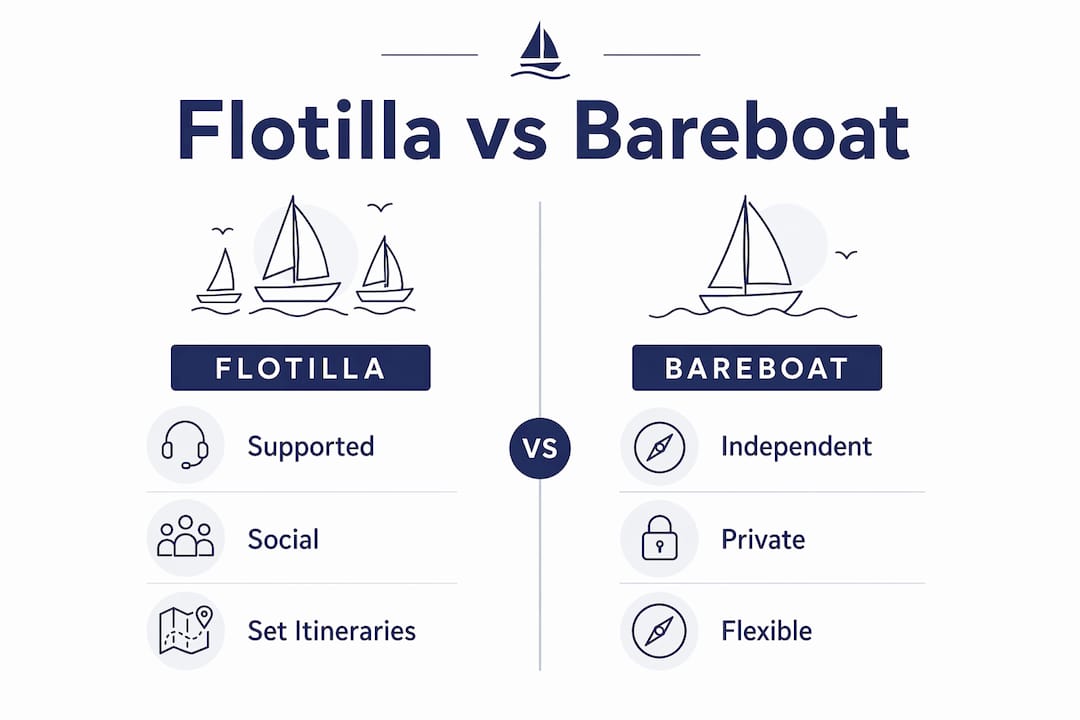
Pour les groupes et les familles, la navigation en flottille offre une richesse sociale que la location sans équipage ne peut tout simplement pas égaler. Vous partagez les couchers de soleil avec les autres équipages, les enfants se font des amis sur les différents bateaux, et l'équipe d'organisation organise souvent des dîners de groupe à terre. Pour les navigateurs solitaires ou les équipages expérimentés très soudés, la location sans équipage offre la sérénité et l'autonomie qui font de la voile une véritable évasion.
| Facteur | Navigation en flottille | Voile sans équipage |
|---|---|---|
| Expérience requise | Débutant à intermédiaire | Niveau intermédiaire à avancé |
| Liberté et flexibilité | Itinéraire structuré avec des arrêts prédéfinis | Contrôle total des itinéraires et des horaires |
| Assistance disponible | Bateau de tête disponible à tout moment | Pas d'assistance externe |
| Ambiance sociale | Communauté de groupe intégrée | Expérience privée, réservée à l'équipage |
| Structure des coûts | Suppléments inclus, supplément pour bateau de tête | Loyer de base plus frais supplémentaires distincts |
| Niveau de stress | En contrebas, avec un point de secours à proximité | Responsabilité accrue et totale |
| Idéal pour | Groupes de niveaux mixtes, familles, premières chartes | Des skippers sûrs d'eux, des équipages expérimentés |
Les coûts d'une sortie en flottille sont légèrement supérieurs à ceux d'une location sans équipage en raison du supplément lié au bateau de tête, mais ce surcoût vous garantit une véritable tranquillité d'esprit et une expérience sociale plus enrichissante. Les locations sans équipage peuvent sembler moins chères à première vue, mais les frais d'amarrage, le carburant et l'approvisionnement en provisions s'accumulent rapidement lorsqu'ils sont payés séparément. Comparez toujours le coût total du voyage plutôt que les prix de location indiqués.
Pour avoir une vision plus globale de la manière dont normes relatives à l'expérience client Bien que les conditions varient selon les types de contrats de location, des comparaisons indépendantes permettent de mieux cerner ce à quoi on peut s'attendre de la part des différents opérateurs.
Comment se préparer à votre location de bateau, qu'il s'agisse d'une flottille ou d'une location sans équipage
C'est la préparation qui fait la différence entre des vacances à la voile réussies et des vacances stressantes, quel que soit le type de séjour que vous choisissez. A liste de contrôle exhaustive avant le départ La vérification de la coque, du gréement, du système de gouvernail, de l’ancre, du moteur, des équipements de sécurité et des systèmes de navigation constitue la base d’une location en toute sécurité. Négliger cette étape est l’erreur la plus courante commise par les locataires novices.
Pour les navigateurs participant à une flottille, la préparation est un peu différente. Lisez l'article documents d'information sur la flottille Envoyez ces informations avant le départ, familiarisez-vous avec les procédures radio VHF et assurez-vous que chaque membre d'équipage connaisse son rôle sur le pont. Le bateau de tête ne pourra pas vous aider si votre équipage ne maîtrise pas les tâches élémentaires lors d'une manœuvre d'accostage délicate.
Étapes clés de préparation pour les deux formats :
- Vérifiez les rôles de chacun au sein de l'équipage et désignez un second avant de quitter le quai
- Emportez une carte imprimée de votre zone de navigation en complément de la navigation numérique.
- Prévoyez un jour supplémentaire par rapport à la durée prévue de votre voyage, au cas où des retards liés aux conditions météorologiques surviendraient
- Informez votre équipage des procédures d'urgence, notamment en cas d'homme à la mer et d'incendie
- Consultez les prévisions météorologiques provenant de plusieurs sources la veille de chaque journée de navigation.
Conseil de pro : Pour les locations de bateau sans équipage, prenez des photos de chaque rayure, bosse et élément usé lors de la visite de remise du bateau et envoyez ces photos par e-mail à la société de location avant de quitter la marina. Cela vous permettra de protéger votre caution et d'éviter tout litige au moment de la restitution du bateau.
La planification en fonction des conditions météorologiques mérite une attention particulière. La saison de navigation en Méditerranée s'étend de mai à octobre, le vent Meltemi soufflant en mer Égée et créant des conditions difficiles en juillet et août. Les bateaux de tête de la flottille surveillent la météo en permanence et informent la flotte. Les skippers de bateaux sans équipage doivent le faire de manière autonome, ce qui implique de consulter quotidiennement les sites NOAA, Windy ou Passage Weather.
Principaux enseignements
La navigation en flottille convient aux groupes et aux navigateurs moins expérimentés qui souhaitent vivre une véritable expérience de voile avec un accompagnement professionnel, tandis que la navigation en bateau sans équipage offre aux skippers confirmés et qualifiés une liberté totale et une intimité totale.
| Point | Détails |
|---|---|
| La flottille offre un filet de sécurité | Un bateau de tête assure une assistance à la demande lors des manœuvres d'accostage, en cas de changement de conditions météorologiques et en situation d'urgence. |
| La location sans équipage exige une préparation parfaite | Les skippers doivent posséder des qualifications reconnues et bénéficier d'un briefing complet avant le départ. |
| La comparaison des coûts est nuancée | La formule « Flotilla » comprend des prestations supplémentaires ; la location coque nue semble moins chère, mais les frais supplémentaires font grimper la facture. |
| L'expérience sociale diffère considérablement | La flottille favorise les liens entre les équipages ; la location sans équipage offre une tranquillité exclusive, réservée aux membres de l'équipage. |
| La préparation n'est pas négociable | Une liste de contrôle complète avant le départ permet de réduire le stress et de protéger votre acompte, quel que soit le format choisi. |
Mon avis sincère sur la navigation en flottille par rapport à la navigation en bateau sans équipage
Après des années de vacances à la voile en Grèce, en Croatie et dans les Îles Vierges britanniques, je suis arrivé à la conclusion que la plupart des navigateurs sous-estiment tout ce que l'on peut apprendre en naviguant en flottille. On pense souvent que la navigation en flottille n'est qu'un lot de consolation pour les débutants, une étape avant d'atteindre la “ véritable ” autonomie en navigation sans équipage. Ce point de vue est erroné.
Les briefings quotidiens du bateau de tête sur les mouillages locaux, les conditions météorologiques et les particularités des ports de plaisance contiennent des connaissances qu’il faudrait des années à acquérir par soi-même. J’ai vu des marins expérimentés, au sein de flottilles, acquérir en une seule semaine des connaissances locales qu’ils n’auraient tout simplement pas pu trouver dans un guide de navigation. Le format de la flottille n’est pas une béquille. C’est un véritable cours de maître sur la navigation régionale, dispensé par des personnes qui connaissent ces eaux sur le bout des doigts.
Cela dit, dès que vous vous sentez vraiment à l’aise avec les manœuvres d’accostage, le mouillage et la planification de la traversée dans des conditions inconnues, la navigation en bateau sans équipage vous offre une liberté d’un tout autre genre. Il n’y a rien de tel que de jeter l’ancre dans une baie isolée que vous avez repérée sur la carte, sans horaire de flotte à respecter ni briefing auquel assister le lendemain matin. Le silence et l’autonomie procurent une profonde satisfaction.
Mon conseil sincère : ne précipitez pas la transition. Passer une ou deux semaines en flottille dans une nouvelle région de navigation avant de partir en bateau sans équipage n’est pas un pas en arrière. C’est la meilleure préparation que vous puissiez faire. Sailarmada’s options de navigation privée ou en groupe vous permettent d'essayer facilement ces deux formats, en Méditerranée et au-delà, afin que vous puissiez acquérir de l'expérience à votre rythme.
- Voile
Organisez votre prochaine aventure à la voile avec Sailarmada
Que vous soyez attiré par l'ambiance conviviale d'une flottille ou par la liberté qu'offre la navigation en pleine mer à bord d'un bateau sans équipage, Sailarmada vous propose des vacances à la voile sur mesure, adaptées à vos envies. Notre équipe élabore des itinéraires à travers la Grèce, la Croatie, l'Italie, la Sardaigne et la Turquie, en choisissant les types de yachts et les dates de départ en fonction de l'expérience et des ambitions de votre équipage.
Sailarmada’s vacances en groupe à la voile Nos offres vont des semaines de croisière en flottille guidée à bord de catamarans aux locations de bateaux sans équipage entièrement privées destinées aux équipages expérimentés. Vous bénéficiez d’une planification d’itinéraire par des experts, de yachts soigneusement sélectionnés et d’un processus de réservation simple et clair. Découvrez l’ensemble de nos formules de vacances à la voile et trouvez celle qui correspond le mieux à votre prochaine aventure sur l’eau.
FAQ
Quelle est la principale différence entre la navigation en flottille et la navigation en bateau nu ?
La navigation en flottille consiste à barrer son propre voilier au sein d'un groupe encadré, mené par un bateau-guide professionnel, tandis que la navigation en bareboat consiste à piloter un voilier de manière totalement autonome, sans équipage ni accompagnement extérieur.
La navigation en flottille est-elle adaptée aux débutants ?
Oui. La navigation en flottille est spécialement conçue pour les navigateurs qui souhaitent acquérir une expérience pratique sans avoir à assumer l'entière responsabilité, ce qui en fait une formule idéale pour les skippers moins expérimentés ou les groupes aux niveaux variés.
Les locations de bateau sans équipage comprennent-elles un équipage ou une assistance ?
Non. Une location coque nue comprend uniquement le yacht, sans équipage, sans provisions et sans assistance professionnelle. Le skipper prend toutes les décisions relatives à la navigation et en assume l'entière responsabilité de manière indépendante.
Quelle option coûte le plus cher : la navigation en flottille ou la location de bateau sans équipage ?
La navigation en flottille coûte généralement plus cher en raison du supplément lié au bateau de tête, mais le prix comprend les frais d'amarrage, le carburant et le nettoyage. Les locations sans équipage ont un tarif de base moins élevé, mais facturent ces suppléments séparément ; le coût total peut donc s'avérer comparable.
Quelles sont les qualifications requises pour louer un bateau sans équipage ?
La plupart des sociétés de location exigent un diplôme de voile reconnu, tel que l'ASA 104 « Bareboat Cruising » ou le « RYA Coastal Skipper », ainsi qu'un CV de navigateur attestant d'une expérience pertinente en mer.