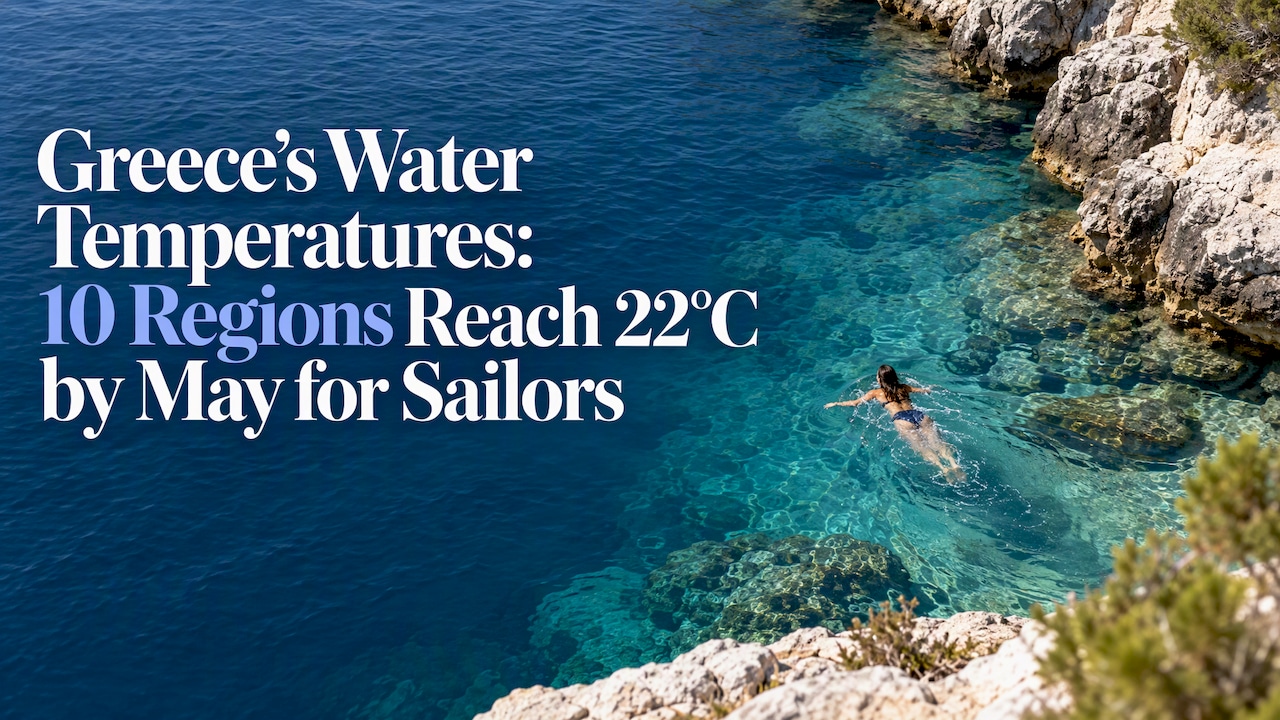
If you’re planning a swim-friendly sailing trip, the water around Greece is comfortably warm from late May through October, with July and August bringing the warmest conditions at temperatures often well above 22 degrees Celsius. September often comes close to that peak warmth while the crowds thin out. The Ionian Sea, the Dodecanese around Rhodes, and southern Crete tend to warm up earliest and hold their heat the longest, while the northern Aegean and some of the more exposed Cyclades cool off sooner.
En bref :
- The Ionian reaches 25 to 27°C in summer, while the North Aegean stays near 22 to 24°C; choose sheltered Ionian bays for warmer swims.
- Ten of 12 coastal regions reach at least 22°C in May, all 12 do so by June, and seven remain at that level in September.
- Meltemi winds can make the Cyclades feel cooler and rougher than temperatures suggest; families and nervous swimmers should favor sheltered Ionian bays or southern Crete.
- For October swims, Rhodes and southern Crete retain warmth longest, with Greek waters typically 20 to 23°C, while northern anchorages cool sooner.
Table des matières
- Regional Water Temperature Ranges Across Greece
- When the Water Actually Feels Swimmable Month by Month
- What to Expect at Popular Greek Sailing Destinations
- How We Use Water Temperature to Plan Smarter Routes
- How Sea Temperature Affects Sailing Conditions and Safety
- Water Temperature and the Marine Life You’ll Spot Along the Way
- How Water Temperature Shapes Route and Port Choices Through the Season
- Picking Peak Warmth or Quieter Water: A Simple Framework
- Let Us Plan Your Greece Sailing Week Around the Warmest Water
- FAQ
- Sources
Regional Water Temperature Ranges Across Greece
Greece isn’t one climate zone on the water. Each sea basin has its own rhythm, shaped by depth, currents, and how exposed it is to wind. Knowing the typical range for each region helps you pick a destination that matches how warm you want the water to be.
- Ionian Sea (Corfu, Zakynthos, Lefkada): Summer highs around 25 to 27°C, among the calmest and warmest waters in the country thanks to its sheltered position.
- South Aegean and Crete: Southern coasts often reach 26 to 28°C in peak summer, staying swimmable well into autumn.
- Cyclades (Mykonos, Santorini, Paros): Summer temperatures of 23 to 26°C, though the meltemi winds can make the water feel cooler than the number suggests.
- North Aegean (Thasos, Lesvos, Limnos): Generally cooler, with summer ranges closer to 22 to 24°C.
- Dodecanese and Rhodes: Some of the warmest water in Greece, often 25 to 28°C through summer and into early fall.
- Athens and the Saronic Gulf: Quick to warm up each spring, typically 23 to 26°C in high summer.
These figures reflect climatological monthly averages built from long-term data rather than a forecast for any single day. A high-resolution atlas built on SeaDataNet records shows a seasonal swing of about 9°C between January and July across the Mediterranean, which explains why the gap between a chilly spring swim and a balmy August one feels so dramatic.
When the Water Actually Feels Swimmable Month by Month
Numbers only matter if you know what they mean for your toes in the water. Here’s how the season typically unfolds:
- May (19 to 21°C): Brisk but doable, especially for confident swimmers who don’t mind a quick in-and-out.
- June (21 to 24°C): This is where most people start to relax into longer swims and snorkeling sessions.
- July and August (24 to 28°C): Peak warmth across nearly every region, ideal for lingering in the water.
- September (22 to 25°C): Often the sweet spot, nearly as warm as August with noticeably fewer boats in the anchorages.
- October (20 to 23°C): Variable, but southern regions like Crete and Rhodes often stay swimmable.
A regional month-by-month tracker shows that 10 of 12 Greek coastal regions reach 22°C or warmer by May, and all 12 hit that mark by June, staying there through August before dropping to 7 of 12 in September. That’s a useful shorthand: 22°C is roughly the threshold where most swimmers stop noticing the cold and start enjoying the water.
What to Expect at Popular Greek Sailing Destinations
Picking an island isn’t just about scenery. Water temperature shapes how much time you’ll actually spend swimming, snorkeling, or just dangling your feet off the back of the boat.
- Rhodes and the Dodecanese: Among the warmest waters in Greece well into October, making this a strong pick for late-season trips.
- Crete: A big island with real range. Southern coasts warm up earlier in the year, giving you a dependable option across the whole summer.
- Cyclades : Gorgeous and generally warm, but the meltemi winds can stir up chop that makes the water feel cooler than the thermometer says.
- Ionian and Corfu: Often the calmest and warmest combination in the country, with sheltered bays that suit families and first-time snorkelers.
- Athens and the Saronic Gulf: Waters here warm quickly each spring, perfect for a shorter trip without traveling far from the capital.
Conseil de pro : If you’re sailing with kids or nervous swimmers, aim for the Ionian or a sheltered southern bay in Crete, where calmer water and warmer temperatures make the first jump in a lot less intimidating.
How We Use Water Temperature to Plan Smarter Routes
Knowing the numbers is one thing. Turning that into a great week on the water is where experience counts. Our skippers lean on years of local knowledge to put guests in the warmest, calmest spots at the right time of day.
- We tuck into south-facing coves and shallow bays, which warm up faster than open water and give new swimmers a gentler, calmer entry point.
- September earns a lot of love from our skippers: the sea is still close to its summer peak, but marinas and anchorages are far quieter.
- For snorkeling, we favor boat-accessible coves where shallow, sheltered water stays clearer and warmer than exposed coastline, a tip you’ll find echoed on our snorkeling spots guide.
These aren’t guesses. They’re patterns we’ve built an entire season’s worth of routes around, and they shape which anchorages make it onto our itineraries.
How Sea Temperature Affects Sailing Conditions and Safety
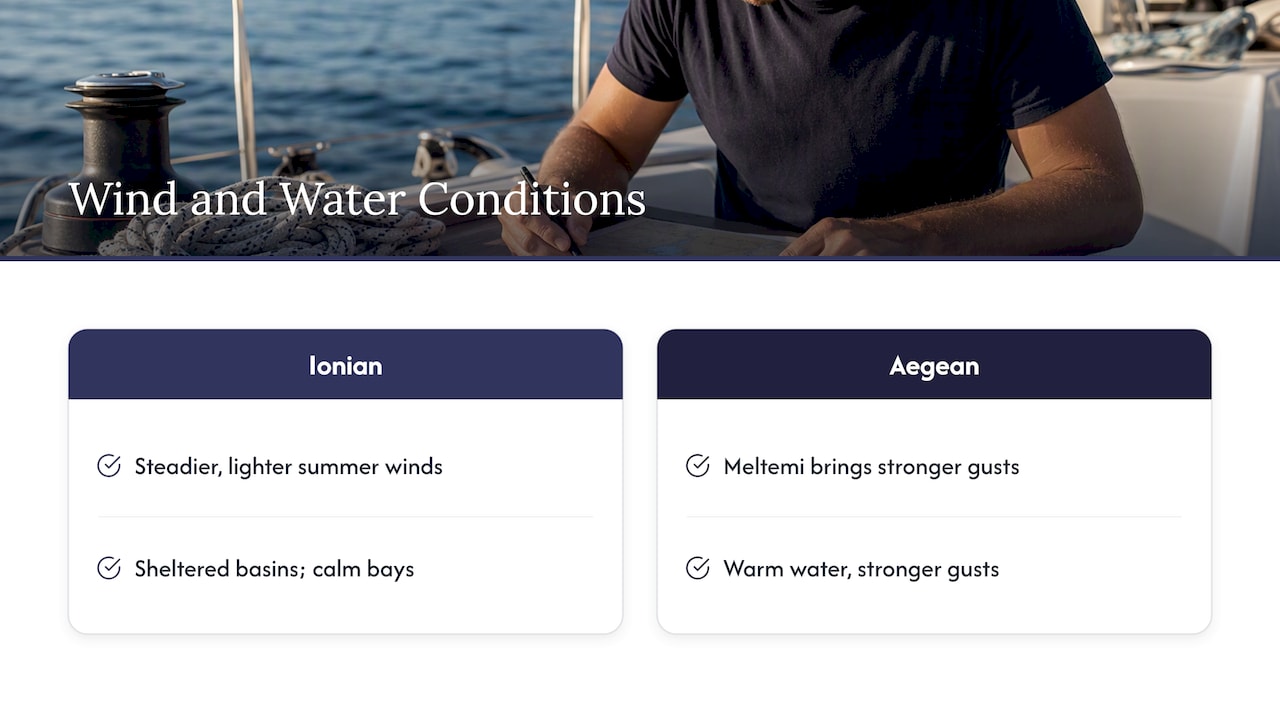
Warmer water isn’t just about comfort. It plays into how a sailing week actually feels on board. Warmer seas in summer are often paired with lighter, steadier winds in sheltered basins like the Ionian, while the meltemi season in the Aegean can bring stronger gusts even when the water itself is warm. That combination of wind and water temperature affects everything from anchoring choices to how long guests spend swimming off the boat.
Cooler water in spring and late autumn also means a slightly different safety calculus. A quick fall overboard in 19°C water is far more manageable than the same event in 14°C water, but it’s still cooler than most people expect, so crews brief guests on wearing a life jacket during water activities regardless of the season. Warmer water in peak summer also means swimmers can comfortably stay in longer, which is part of why skippers build more swim stops into July and August itineraries than into May ones.
Route planning accounts for both factors together. A sheltered, warm bay on a windy Aegean day gives guests the best of both worlds: calm water to swim in and protection from chop that would otherwise make snorkeling unpleasant. That’s the kind of local knowledge that turns a good itinerary into a great one.
Water Temperature and the Marine Life You’ll Spot Along the Way
Warmer coastal water in summer tends to bring more visible life close to the surface, which matters if spotting fish, octopus, or the occasional sea turtle is part of why you’re snorkeling in the first place. Shallow, sun-warmed coves in the Ionian and southern Crete often hold the clearest visibility, since calmer water lets sediment settle and sunlight penetrate deeper.
As water cools into autumn, some marine life moves to deeper water, which is part of why late-season snorkeling in the Cyclades can feel quieter than a July session in the same spot. That doesn’t make October snorkeling bad, it just shifts what you’re likely to see and where. Sheltered, boat-accessible coves tend to hold onto warmer shallow water longer into the season, which is exactly why our skippers favor them for snorkeling stops even after the broader regional average has started to dip.
How Water Temperature Shapes Route and Port Choices Through the Season
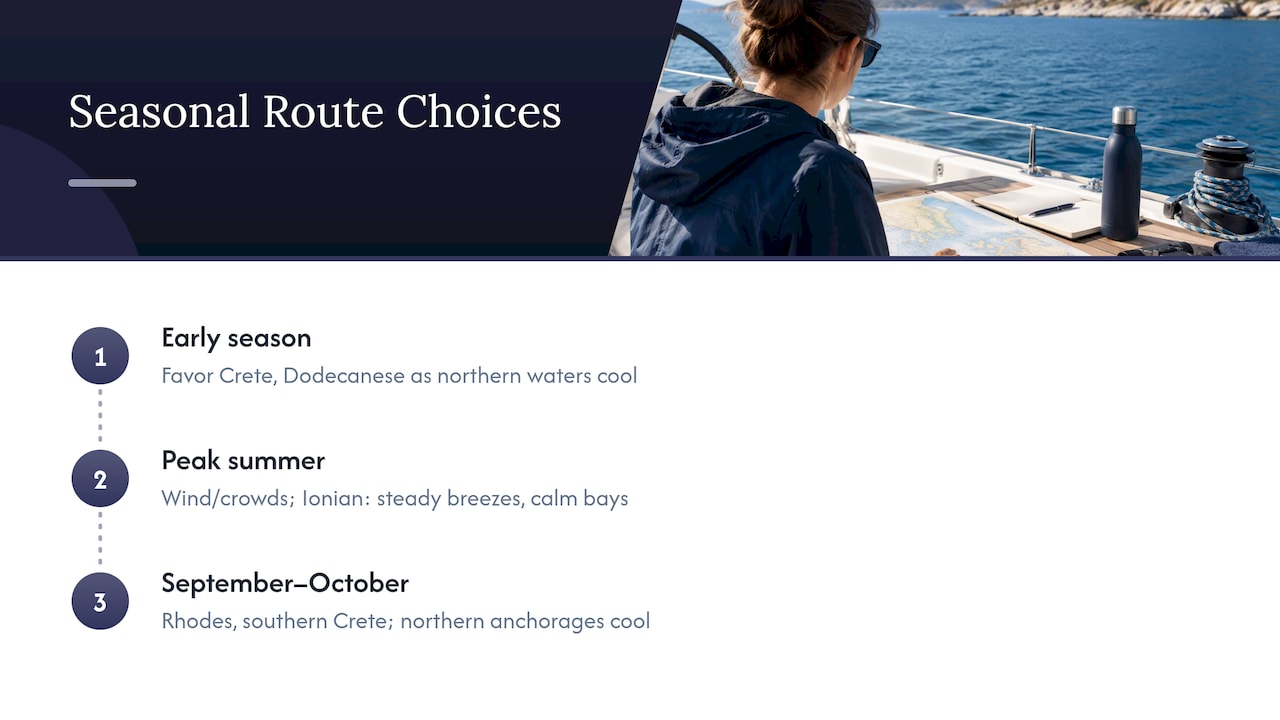
The time of year changes more than just how warm the water feels. It changes where a smart itinerary actually goes. Early in the season, when northern waters are still cool, routes tend to favor southern stretches like Crete and the Dodecanese, where the water warms up first and swim stops are more rewarding.
By peak summer, nearly every region is swimmable, so route choices shift toward wind and crowd levels rather than temperature alone, which is why the Ionian’s steady breezes and calm bays make it such a popular pick for families in July and August. Come September and October, routes tend to drift back south again, chasing the water that’s still holding onto its summer warmth in places like Rhodes and southern Crete, while northern anchorages start to feel more like early autumn than late summer.
Picking Peak Warmth or Quieter Water: A Simple Framework
If guaranteed peak warmth matters most, book July or August. If you’d rather trade a degree or two for thinner crowds and quieter anchorages, September is hard to beat. Families and less confident swimmers do best in the Ionian or a sheltered southern bay, where calm water matters as much as the number on the thermometer. If warmth is your top priority above all else, look at the southern Dodecanese or Crete in early autumn.
- Voile
Let Us Plan Your Greece Sailing Week Around the Warmest Water
We build every Greece itinerary around the same local knowledge we just walked you through: which bays warm up first, which coves stay sheltered when the meltemi picks up, and which stretches of coast reward a late-September booking with warm water and quiet anchorages. Our skippers, trained through CAPETAN.club, turn that knowledge into a route that actually matches how you want to spend your days on the water.
Whether you’re after a family-friendly week in the Ionian or a late-season swim in the Dodecanese, our Greece – Go Private sailing holidays have custom dates and routes that consider the warm water you’re chasing. Check available weeks or get in touch for help picking the right month for your group.
FAQ
What is the water temperature in Rhodes?
Rhodes and the wider Dodecanese typically see summer water temperatures between 25 and 28°C, among the warmest in Greece. That warmth often holds into October, making Rhodes a strong choice for late-season swimming.
Is May warm enough to swim in Greece?
Yes, May water temperatures generally sit around 19 to 21°C, which feels brisk but swimmable for most people. A regional tracker shows 10 of 12 Greek coastal regions already reach 22°C or warmer by May, so some areas feel noticeably warmer than others that month.
Is the Cretan Sea warm?
The sea around Crete warms up earlier than many other Greek regions, with southern coasts often reaching 26 to 28°C in peak summer. That makes Crete a dependable choice across the entire swim season, from early summer through early autumn.
Is the water warm enough to swim in Greece in October?
October water temperatures typically range from 20 to 23°C, with warmer conditions holding longest in the south. Rhodes and southern Crete are generally your best bets for a comfortable October swim.
Sources
- High-resolution atlas of temperature and salinity for the Mediterranean Sea (SeaDataNet-based)
- Greece month by month – sea, weather and daylight