Yes, you can sail with an infant, and it can genuinely be one of the sweetest holidays your family ever takes. The trip works when you commit to three things without exception: continuous adult supervision, a correctly fitted infant PFD, and secure containment on deck. Get those right, and the rest of this guide walks you through the gear, boat choice, and routines that turn a nervous first trip into a relaxed one.
En bref :
- Short, sheltered legs of two to four hours are safest for sailing with an infant, avoiding long crossings and overnight passages unless the baby is very well-prepared.
- Catamarans are generally better suited for families with infants due to their stability and wider decks that allow easier childproofing and supervision.
- Infant safety measures, including correctly fitted lifejackets, protective netting, and secure sleep areas, are crucial to prevent falls and manage on-deck risks.
- Pack essential safety and health gear in a bright, dedicated dry bag, including a first-aid kit, infant medications, sun protection, and extra clothing for quick access.
- Route planning should prioritize calm waters, quick shoreline access, and nearby medical facilities, with flexibility to adapt plans based on your baby’s needs and weather conditions.
Table des matières
- What Do You Need Before Sailing With Infants?
- Which Boat Type and Trip Length Suit an Infant?
- How Do You Keep an Infant Safe on Deck?
- How Do You Manage Sleep, Feeding, and Health at Sea?
- Who Watches the Baby While the Boat Sails Itself?
- What Should You Pack for Each Type of Trip?
- How Should You Plan Routes and Anchorages With a Baby Aboard?
- How Does SailArmada Support Families Sailing With Infants?
- A Realistic Take on Sailing With a Baby
- Ready to Plan a Family-Friendly Sailing Week?
- Sources
- FAQ
What Do You Need Before Sailing With Infants?
Before your baby’s feet touch the deck, your bag needs to be packed with the right things, not just the obvious things. Most first-time sailing parents overpack clothes and underpack safety gear. Flip that ratio.
Here’s what actually has to be aboard before you cast off:
- Infant lifejacket rated for your baby’s exact weight, plus a harness and tether for the cockpit, and safety netting rigged along every open lifeline.
- Baby first-aid kit with an infant thermometer, any prescription medication (in original packaging), and basic fever and dehydration remedies.
- Sleep and feeding gear: a secure nap pod or infant car seat that straps down, plus bottles, formula or expressed milk, and a sterilization method that works without shore power.
- Grab-and-go bag: spare outfits, wide-brim hat, baby-safe sunblock, and a dry bag to keep it all protected from spray.
Conseil de pro : Pack the first-aid kit and lifejacket in a bright, dedicated dry bag that never gets buried under towels and snorkeling gear. In an emergency, you don’t want to be digging.
None of this is about turning the boat into a hospital ward. It’s about removing the guesswork so that when your baby is tired, hungry, or startled by a wave, you already have the answer within arm’s reach.
Which Boat Type and Trip Length Suit an Infant?
A catamaran is usually the better call for a family with an infant aboard. The twin-hull design cuts down on the side-to-side rolling that makes monohulls feel like a cradle gone rogue in a chop, and the flatter motion means fewer spills, easier nappy changes, and a baby who’s more likely to nap instead of fuss. Catamarans also tend to have wider deck saloons and cockpits, which gives you more room to childproof and more visual line of sight to wherever your baby is playing or sleeping.
Trip length matters just as much as boat type. Short hops of two to four hours, with plenty of stops in calm, sheltered bays, work far better for infants than long point-to-point passages. Family sailing reports consistently recommend short segments with frequent breaks precisely because they reduce stress for both the baby and the adults managing the boat. An overnight passage with a newborn is rarely worth the trade-off in sleep and supervision quality.
There are also health situations where postponing the trip is the smarter move:
- A birth involving a C-section or complications, where the mother’s recovery isn’t far enough along to handle boat motion and physical demands.
- An infant under six weeks old who hasn’t had their first pediatric checkup yet.
- Any recent illness, ear infection, or fever in the days leading up to departure.
- A baby who hasn’t had routine vaccinations appropriate for travel to your destination.
If any of those apply, a short delay costs you nothing compared to what you gain in peace of mind. Sailing with a healthy, well-rested baby beats sailing on a tight schedule every time.
How Do You Keep an Infant Safe on Deck?
Deck safety is where most of your prevention effort should go, because falls and slips are the realistic risk on a boat, not dramatic emergencies. Installing protective netting along the guardrails and pushpit is the single most effective modification you can make. It creates a soft, enclosed perimeter that lets a crawling or toddling child move around under supervision without a gap wide enough to squeeze through.
Follow these steps to get your deck genuinely infant-ready:
- Inspect the netting before every trip. Check for gaps larger than four inches, worn lashings, or sagging sections, especially where it attaches to stanchions.
- Fit the infant lifejacket correctly. Look for a supportive head float (essential for babies who can’t yet hold their head steady in water), a crotch strap that prevents the jacket riding up, and a sturdy grab handle on the back for quick recovery.
- Attach harnesses and tethers to dedicated jackline or padeye points, never to lifelines or guardrails, which aren’t rated for sudden loads.
- Use tethers during manoeuvres, not constant wear. A baby secured in a cockpit seat during anchoring or docking is safer than one wearing a harness while unsupervised elsewhere on deck.
- Run tender transfers as a two-person handover, one adult on the mothership passing the baby directly into the arms of a second adult already seated in the tender, never handed across open water.
Avoid using a soft baby carrier on deck in rough conditions. It shifts your center of gravity and makes you less steady on your feet exactly when you need to be most sure-footed, so secure your baby below or in a tethered seat instead when the water gets lumpy.
Conseil de pro : Rehearse the tender handover on calm water before you actually need to do it in a swell. Muscle memory beats improvisation when a boat is bobbing under your feet.
How Do You Manage Sleep, Feeding, and Health at Sea?
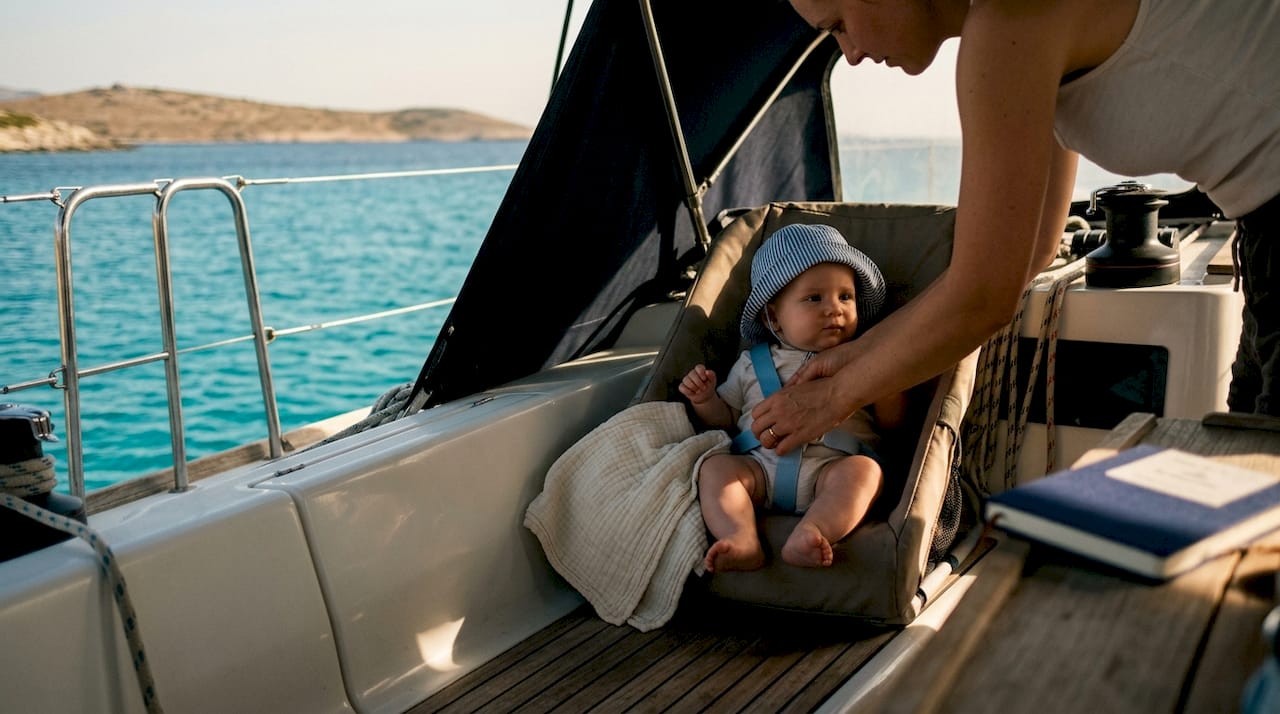
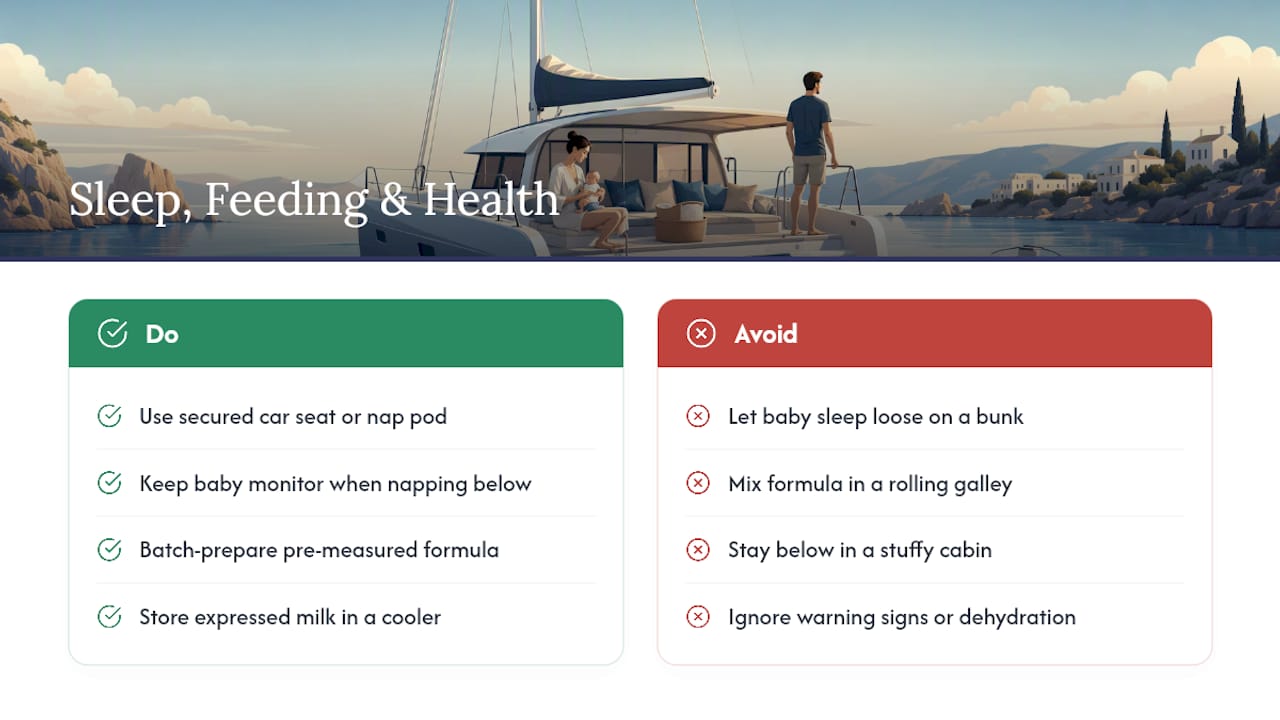
Infants often sleep remarkably well aboard, and family trip accounts frequently mention that the gentle rocking and fresh air work in your favor rather than against it. That doesn’t mean you can skip the setup work. A secured infant car seat or a nap pod wedged with lee cloths creates a safe sleeping zone that won’t slide with the boat’s motion. Never let a baby sleep loose on a bunk without a barrier, and always keep a baby monitor running if they’re napping below while you’re on deck.
Feeding on board is manageable with a bit of planning. Breastfeeding travels well since it needs no equipment beyond a comfortable, braced seat. If you’re bottle-feeding, batch-prepare formula in individual, pre-measured containers so you’re not mixing powder in a rolling galley, and store expressed milk in a small cooler with ice packs rather than relying on limited fridge space. Sterilizing bottles without shore power usually means a UV sterilizer, sterilizing tablets, or simply boiling water on the stove for a few minutes, all of which are worth testing at home before you leave the dock.
Seasickness in infants is uncommon before around six months, since their vestibular system is still developing, but fussiness, poor feeding, or unusual lethargy can be early signs worth watching. Keep your baby hydrated, get fresh air into the cockpit rather than staying below in a stuffy cabin, and watch for warning signs that need medical attention: persistent vomiting, a fever, refusal to feed for several hours, or noticeably fewer wet diapers. Many cruising families subscribe to a telemedicine or offshore medical support service for exactly this reason. It’s cheap reassurance when you’re a few hours from the nearest clinic.
Your baby first-aid kit should go beyond the basics. Pack an infant thermometer, saline nasal drops, infant pain and fever medication at the correct dose for their weight, rehydration sachets, plasters, and any prescribed medication with clear dosing instructions written out. Store it somewhere dry, accessible, and known to every adult on board, not buried in a locker only one person remembers.
Who Watches the Baby While the Boat Sails Itself?
The biggest logistical question on a short-handed family boat is simple: who’s minding the baby when the boat needs hands? The answer is a strict rule, not an improvisation. One adult stays on infant duty during every manoeuvre, meaning departures, arrivals, anchoring, and reefing, while the other manages the boat.
Making that rule workable comes down to rigging the boat so one person really can sail it alone for short stretches:
- Lead all lines aft to the cockpit so sail trim and reefing don’t require someone leaving the helm to go forward.
- Set up the autopilot before you need it, not scrambled together mid-manoeuvre, so the helm essentially runs itself while you handle sheets or fenders.
- Pre-plan your reefing points based on forecast wind, so you’re not making that decision on the fly with a baby fussing below.
- Designate a fixed ‘safety seat’ in the cockpit, a secured, harnessed spot for the baby during docking and anchoring, so there’s never a question of where they go when hands get busy.
Cruising families who rig their boats for simplified, one-adult handling report it’s what actually makes solo watches with an infant workable rather than stressful. For overnight legs, if you ever attempt one, a strict sleep rotation between adults matters as much as any piece of gear. Nobody sails safely, or parents safely, on no sleep.
What Should You Pack for Each Type of Trip?
Your packing list should scale with how long you’re out and how far you are from a shop or a marina, not just default to “everything.”
For a day sail, keep it lean: diapers, wipes, a wide-brim hat, baby-safe sunblock, one full change of clothes, and a compact grab bag with your first-aid essentials. You’re never more than a few hours from your base, so there’s no need to overpack.
Un overnight trip adds real logistics. Bring the travel cot or nap pod, extra bedding for lee-cloth setups, a few days’ buffer of any medication, and your full sterilization kit rather than relying on finding supplies ashore.
A multi-day passage raises the stakes further:
- A secured sleep setup that doesn’t depend on calm anchorage conditions, since you may be underway overnight.
- A backup harness and tether in case one gets wet or damaged.
- A backup power source or battery pack to keep a phone or monitor charged if shore power isn’t available for days.
- Extra hydration supplies for both baby and nursing parent, since access to fresh water may be more limited.
Keep everything organized in labeled dry bags by category, feeding, sleeping, first aid, so nobody’s rummaging through three lockers during a fussy 2 a.m. wake-up. Comprehensive family packing guides typically list more than 20 infant-specific items worth having aboard, and having a system beats having a pile.
How Should You Plan Routes and Anchorages With a Baby Aboard?
Route planning with an infant comes down to picking legs and stops that keep you close to help, not just close to a nice view.
- Favor short legs between protected bays. A destination two hours away by calm water beats one that’s an hour closer but exposed to open swell.
- Set conservative weather limits before you leave the dock, such as canceling or postponing if forecast wind exceeds a threshold you and your skipper agree on in advance, and stick to it even if the itinerary shifts.
- Choose anchorages near a marina or village with road access, so if you ever needed a pharmacy or a clinic, you’re not hours from the nearest dinghy ride.
- Keep your emergency plan documented and waterproof: nearest ports, VHF channels, EPIRB location, and your baby’s medical details, all in one folder everyone on board knows how to find.
None of this needs to feel like over-preparation. It’s the same instinct that makes you pack a diaper bag before a car trip, just applied to open water.
How Does SailArmada Support Families Sailing With Infants?
Every family charter Sailarmada arranges starts with a conversation about who’s coming aboard, and an infant in the group changes the plan from the first email. Routes get built around short hops and sheltered anchorages instead of long open crossings, and the yacht or catamaran selection leans toward layouts that make sense for nap schedules, secure sleeping spaces, and easy movement below deck. Skippers working with Sailarmada come through CAPETAN.club, which means the person at the helm already understands the difference between sailing for thrills and sailing for a family with a baby aboard.
Here’s what Sailarmada typically coordinates when a family with an infant books a trip:
- Route and anchorage selection prioritizing calm water and quick access to shore.
- Boat prep advice on cabin layout, secure sleeping spots, and deck safety setups.
- Optional extras like cots, extra bedding, or adjusted provisioning for infant feeding needs.
- Flexible departure dates that let you plan around nap schedules rather than fight them.
If you’re weighing whether a catamaran layout in the Mediterranean actually suits your baby’s routine, the practical answer usually comes down to cabin placement, cockpit shade, and how close your anchorage stops are to a pharmacy, and those are exactly the details worth sorting out before you book, not after.
A Realistic Take on Sailing With a Baby
Sailing with an infant works best when you treat it as a string of small, forgiving days rather than one big voyage. Plan for a short hop, a calm bay, and an early dinner ashore, and let the itinerary bend around a nap that runs long or a feed that takes longer than planned. That flexibility does more for your sanity than any piece of gear on this list.
That said, be honest with yourself about timing. If your baby is under six weeks old, if you’re still recovering from a difficult birth, or if the forecast keeps shifting in the wrong direction, a different kind of holiday this year isn’t a failure. It’s just good judgment, and the water will still be there next season.
If you’re on the fence, talk it through with the charter company before you book. A real conversation about your baby’s age, your comfort level, and your ideal route will tell you more than any checklist ever could.
- Voile
Ready to Plan a Family-Friendly Sailing Week?
The company builds family itineraries around the people actually coming aboard, which means a trip with an infant looks different from trips built for groups of friends. Customers can expect private charters, knowledgeable skippers who prioritize short legs and calm anchorages, and advance boat preparation conversations.
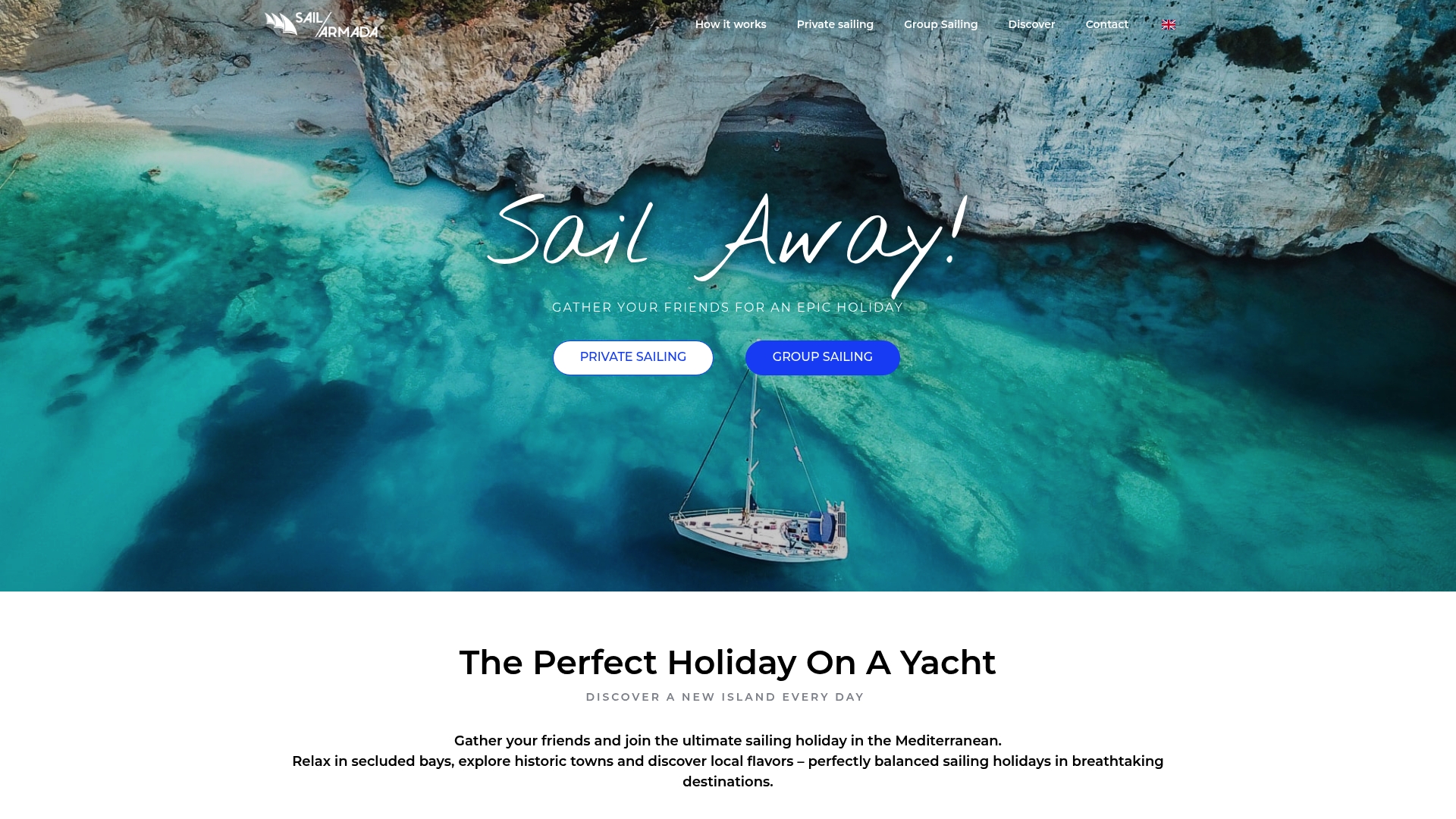
Parents planning a first sailing holiday with a baby can request infant-friendly arrangements directly, from cabin layout to a gentler route with more time in sheltered water. The Grèce - Go Private package starts from €560 per week per person and is built exactly for this kind of flexible, private family trip. If you’d rather see the full range of yacht layouts and family-friendly features first, the family yacht guide is a good next stop. When you’re ready, reach out with your baby’s age and your ideal dates, and Sailarmada will help you shape a route that fits.
Sources
This guide draws on hands-on family sailing reporting and safety advice from established sailing publications and family-travel resources:
- Yachting Monthly: Sailing with family (short passages and planning)
- YachtWorld: Bluewater sailing with young children
- We Are Explorers: How to sail the Whitsundays with a baby
- Families Afloat: Going sailing with an infant on a boat
FAQ
Can I take my 7-month-old on a boat?
Yes, an infant older than a newborn is generally easier to sail with since routines are more established and many babies begin sitting up or crawling, which makes cockpit containment more predictable. Stick to short legs, sheltered anchorages, and a correctly fitted infant lifejacket, and the trip should go smoothly.
What is the 3-6-9 rule for babies?
The 3-6-9 rule is a general developmental guideline some parents use to think about milestones at various infant ages, but it isn’t a standardized sailing or travel safety rule. For sailing specifically, six weeks is a more relevant marker, since most pediatricians want a first checkup done before travel, and an age around six months is often cited as comfortable for calmer water exposure.
Can a 2-month-old baby go in the sea?
Most guidance recommends waiting until after a baby’s first vaccinations and pediatric checkup before any sea exposure, and even then, a two-month-old should never be submerged or exposed to open water without extremely close supervision. On a boat, a baby this young is far better suited to secured, shaded time on deck than actual swimming.
Why can’t babies under 6 months go on a cruise?
The concern with babies under six months usually centers on limited on-board medical facilities, immature immune systems, and the physical demands of a longer, less flexible itinerary that a large cruise ship follows. A short, private sailing charter is different, since Sailarmada builds routes around short hops and sheltered stops rather than a fixed schedule, which gives families with young infants far more flexibility to adjust or pause the trip as needed.
Recommandé
- Le catamaran en Europe : votre guide de navigation en famille en Méditerranée
- Planifiez votre voyage privé en voilier : guide pour les familles et les groupes
- Idées de vacances à la voile en famille : Charters privés et itinéraires ludiques
- Principales destinations de navigation en Méditerranée pour les groupes et les familles