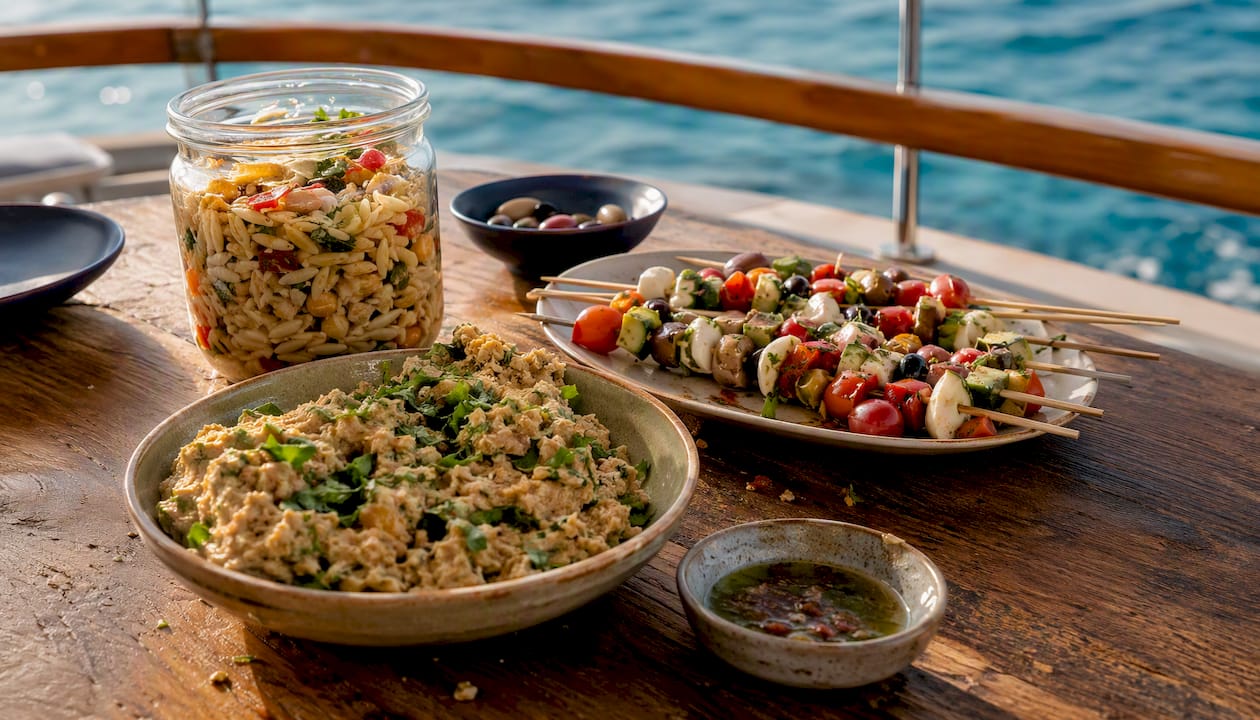
The best yacht food ideas are compact, low-mess, and mostly no-cook or make-ahead dishes that hold beautifully in a cooler. Think Mediterranean tuna smashes, tight wraps, charcuterie skewers, chilled grain bowls, and shelf-stable snacks that survive heat, wind, and a rocking deck without falling apart. As a one-line packing rule: pack wet and dry components separately, keep perishables at or below 40°F following USDA food-safety guidance, and plan to eat the most perishable items first.
Here’s a quick snapshot of what works best:
- Mains: No-cook Mediterranean smashes, chilled pasta salads, grain bowls
- Handhelds: Tight wraps, pinwheels, pressed sandwiches, stuffed pita
- Finger foods: Skewers, mini hummus cups, charcuterie bites, chilled seafood
- Desserts and snacks: Fruit skewers, no-bake granola bars, hard cheeses, nuts, dried fruit
- Emergency backups: Canned tuna, crackers, nut butter packets, shelf-stable protein bars
No-cook recipes are increasingly popular among cruisers because they cut galley heat and simplify provisioning in warm climates — a real advantage when you’d rather be swimming than sweating over a stove.
Table des matières
- What are the best yacht food ideas for every type of outing?
- No-cook and make-ahead mains that travel well
- Grill and galley-friendly quick-cook ideas for when heat is available
- Desserts and snacks that won’t melt, get soggy, or make a mess on deck
- How do you keep food fresh and safe on a boat?
- How do you handle dietary needs and picky eaters on board?
- Sample meal plans and provisioning quantities for day trips vs. charters
- Serving, plating, and staying safe on a rocking boat
- How Sailarmada helps charter guests plan provisioning and menus
- Principaux enseignements
- What a skipper actually thinks about feeding guests at sea
- Planning a charter? Sailarmada makes provisioning part of the experience
- Useful sources for food safety and provisioning gear
What are the best yacht food ideas for every type of outing?
Matching your food to the type of trip makes everything easier. A quick day sail calls for something totally different than a sunset cocktail cruise or a week-long Mediterranean charter.
No-cook and make-ahead mains that travel well
No-cook meals are the gold standard for hot-weather sailing — they keep the galley cool, reduce prep time underway, and often taste better after a few hours in the cooler. Here are three recipes that hold up beautifully on board.
1. Mediterranean tuna and chickpea smash
Prep time: 10 minutes | Servings: 4
Combine one 5-oz can of tuna packed in olive oil (drained), one 15-oz can of chickpeas (rinsed), the juice of one lemon, two tablespoons of capers, a handful of crumbled feta, and a drizzle of extra-virgin olive oil. Season with black pepper and fresh parsley if you have it. Smash roughly with a fork so it holds together but keeps some texture.
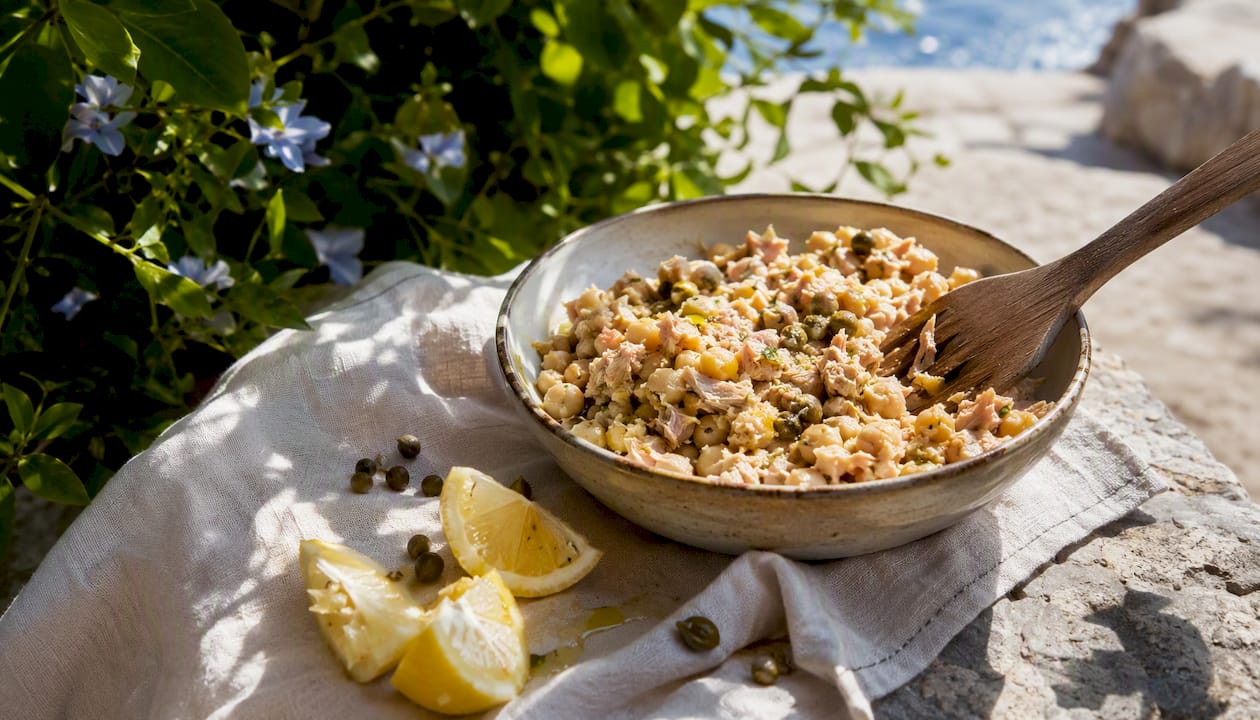
This Mediterranean tuna and chickpea smash works so well on board because it uses oil and acid rather than mayo, which means it holds safely in a cooler for up to 24 hours at 40°F without any spoilage risk. Pack it in a sealed container and serve on crackers, in pita, or straight from the jar.
2. Chilled orzo salad with sun-dried tomatoes and artichokes
Prep time: 20 minutes (cook pasta the night before) | Servings: 6
Cook orzo al dente, rinse in cold water, and toss with sun-dried tomatoes, marinated artichoke hearts, Kalamata olives, fresh basil, and a lemon-olive oil vinaigrette. Orzo holds its texture far better than leafy greens or delicate pasta shapes, so it stays appealing after a night in the cooler.
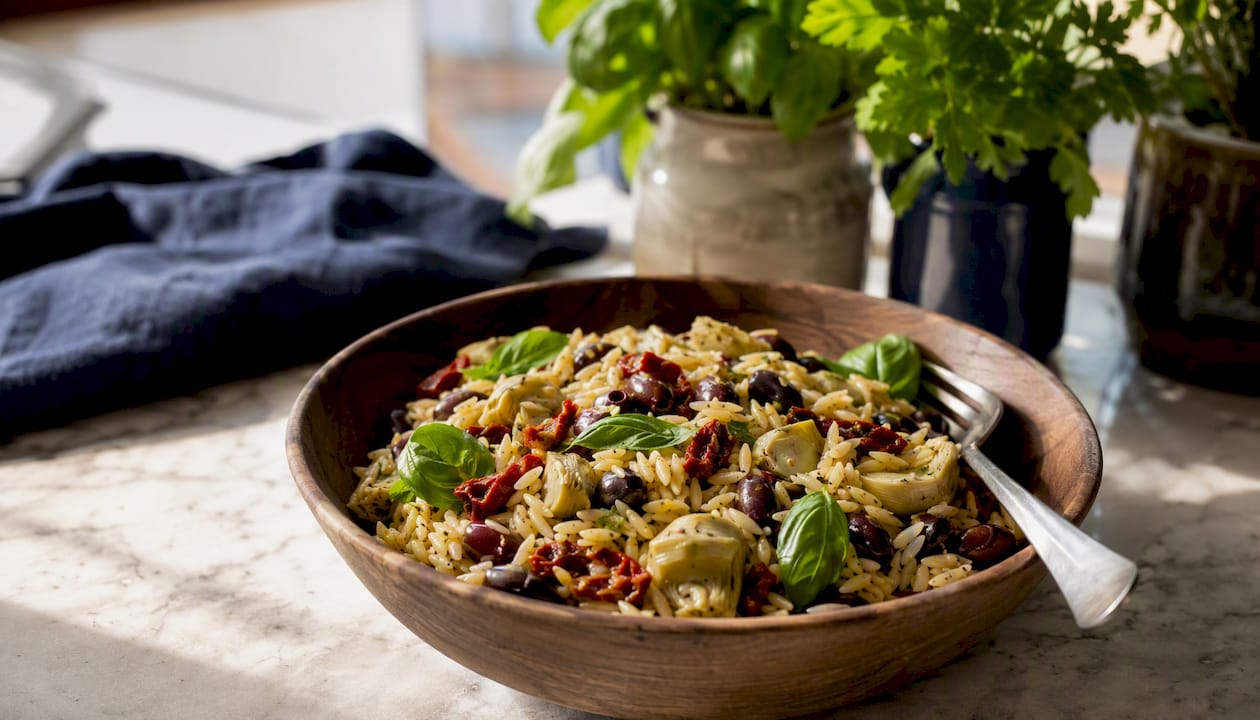
The vinaigrette acts as a preservative, keeping the salad fresh for up to 36 hours at 40°F. Avoid adding fresh mozzarella until serving, since it softens and weeps liquid over time. Pack the salad in a wide-mouth mason jar or a sealed container with a tight lid.
3. Farro and roasted chickpea grain bowl
Prep time: 15 minutes (using pre-cooked farro) | Servings: 4
Combine cooked farro, a can of roasted chickpeas, diced cucumber, halved cherry tomatoes, and a generous spoonful of tahini thinned with lemon juice and water. Farro is one of the most boat-friendly grains because it stays firm and chewy even after hours in dressing.
Store the tahini dressing separately and toss just before serving to keep the texture right. This bowl holds well for up to 24 hours in a cooler at 40°F.
Conseil de pro : Assemble all three of these the evening before departure. They taste better after the flavors meld overnight, and you’ll spend zero time in the galley on departure morning.
Grill and galley-friendly quick-cook ideas for when heat is available
Cooking underway is rarely practical, but anchored in a calm cove? A rail-mounted grill or compact galley stove opens up a whole new world of easy yacht meals. The key is keeping cook time short and prep done in advance.
Recipe 1: Grilled fish skewers with lemon and herbs
- Cut firm white fish (swordfish, mahi-mahi, or halibut) into 1.5-inch cubes and marinate in olive oil, lemon zest, garlic, and oregano for at least 30 minutes (do this at home or in the marina).
- Thread onto pre-soaked wooden skewers, alternating with cherry tomatoes and zucchini rounds.
- Grill on a preheated rail-mounted grill for 3–4 minutes per side until the fish is opaque.
- Serve with a squeeze of lemon and a side of the orzo salad from earlier.
Total cook time: under 10 minutes once the grill is hot.
Recipe 2: Foil packet veggies and protein
- Lay a large sheet of heavy-duty foil flat and pile on sliced bell peppers, zucchini, cherry tomatoes, and your protein of choice (shrimp, chicken sausage, or chickpeas for a vegan option).
- Drizzle with olive oil, season generously, and fold the foil into a sealed packet.
- Place on the grill or galley burner over medium heat for 12–15 minutes, turning once.
- Open carefully (steam escapes fast) and serve directly from the foil to eliminate dishes.
Safety note: Always secure your grill to the rail with its mounting bracket before lighting it, and never grill while underway. Cook only when anchored or moored in calm conditions. Propane connections should be checked before each use. Charter dining guidance consistently recommends finishing grilled items quickly at anchor rather than attempting complex cooking while the boat is moving.
Galley timing tip: If you’re using a small two-burner galley stove, cook one-pot meals that need minimal attention. A simple boat-friendly recipe collection focused on one-pot formats can cut your galley time dramatically and leave more time for the water.
Desserts and snacks that won’t melt, get soggy, or make a mess on deck
Sun, heat, and a rocking boat are not kind to chocolate cake or ice cream. The desserts and snacks that actually work on board are the ones built for durability.
Durable dessert ideas:
- Fruit skewers with melon, pineapple, and grapes: naturally hydrating, no utensils needed, and they hold their shape for hours
- French macarons: surprisingly sturdy when kept in a cool box, and they feel genuinely luxurious for a sunset cruise
- No-bake granola bars: made with oats, honey, and dried fruit, they hold at room temperature for a full day without getting soft
- Citrus gels or panna cotta in small jars: set in individual portions before departure, they travel without spilling and feel like a proper dessert
Snack list for cruising:
- Mixed nuts and dried fruit (trail mix stays fresh for days)
- Hard cheeses like aged cheddar or Parmesan (hold well without refrigeration for several hours)
- Snap peas and baby carrots (sturdy enough to survive a cooler without turning limp)
- Rice crackers or pita chips (less crumbly than regular crackers in wind)
- Individual nut butter packets (no spoon needed, shelf-stable)
Pour boating snacks in warm conditions, keep desserts in the coolest part of the cooler (bottom, near the ice) and pull them out only at serving time. Anything chocolate should stay refrigerated until the last possible moment.
How do you keep food fresh and safe on a boat?
Food safety on a boat is non-negotiable. Without a proper refrigerator, you’re relying on your cooler to do serious work, and a poorly packed cooler can turn a great trip into a miserable one.
| Food Type | Safe Hold Temp | Max Hold Time in Cooler | Best Container |
|---|---|---|---|
| Prepared salads (no mayo) | 40°F or below | 24–36 hours | Sealed glass or BPA-free plastic |
| Cooked proteins (chicken, fish) | 40°F or below | 24 hours | Airtight container |
| Deli meats and soft cheeses | 40°F or below | 3–5 days | Vacuum-sealed bags |
| Hard cheeses | 40°F or below | 5–7 days | Wax paper, then sealed bag |
| Canned proteins (opened) | 40°F or below | 24 hours | Transfer to sealed container |
| Fresh fruit and vegetables | 40–45°F | 3–5 days | Breathable bag or open container |
Cooler packing checklist:
- Start with a pre-chilled cooler (fill with ice the night before, drain, then repack with food)
- Use block ice or dry ice on the bottom layer; block ice lasts significantly longer than cubed ice
- Layer food with the most perishable items (proteins, dairy) closest to the ice
- Keep the cooler in the shade and out of direct sun at all times
- Drain meltwater regularly to prevent food from sitting in water
- Use gel packs as a secondary layer to extend hold time without the mess of melting ice
- Keep a separate cooler for drinks so the food cooler stays closed longer
Conseil de pro : To get a 24-hour ice hold in warm weather, pre-freeze your food containers before packing. A frozen block of leftover pasta or a frozen water bottle acts as an additional ice source and keeps the cooler temperature stable longer.
If your onboard fridge fails mid-charter, move to canned proteins, crackers, hard cheeses, and shelf-stable items immediately. Canned meats, crackers, and simple one-pot options are reliable five-minute backup meals that require no refrigeration at all.
How do you handle dietary needs and picky eaters on board?
Feeding a mixed group on a yacht is one of the real logistical puzzles of charter life. The good news is that most boat-friendly foods adapt easily to common dietary needs with a few simple swaps.
Common swaps:
- Vegan protein: Replace tuna or chicken with roasted chickpeas, white beans, or marinated tofu in grain bowls and wraps
- Gluten-free carriers: Swap flour tortillas for corn tortillas or large lettuce leaves; use rice crackers instead of pita chips
- Dairy-free creamy options: Use hummus, avocado, or cashew cream instead of cream cheese or feta in wraps and dips
- Nut-free snacking: Replace trail mix with seed mixes (pumpkin seeds, sunflower seeds) and dried fruit
Kid-friendly tweaks:
- Cut wraps and sandwiches into small rounds or triangles so little hands can manage them
- Stick to mild flavors (skip the capers and anchovies for kids’ portions)
- Fruit skewers are universally popular with children and require zero convincing
- Pre-portion snacks into small bags so kids can grab and go without making a mess
For allergen management on board, keep allergen-free items in clearly labeled, separate containers. A simple color-coded system (a green lid for nut-free, a blue lid for gluten-free) takes 30 seconds to set up and prevents confusion during a busy meal service. For personalizing meals for groups with mixed dietary needs, planning two or three base components that everyone can eat and then offering add-ons works far better than cooking separate meals.
Sample meal plans and provisioning quantities for day trips vs. charters
Day trip sample menu (6 guests)
| Meal | Menu | Calendrier |
|---|---|---|
| Pre-departure snack | Fruit skewers, nut mix, sparkling water | Before casting off |
| Déjeuner | Mediterranean tuna smash in pita, orzo salad | Anchored at noon |
| Afternoon snack | Hummus cups, veggie sticks, crackers | — |
| Sunset bite | Charcuterie skewers, smoked salmon rounds | On the way back |
3–7 day charter sample menu framework (6–8 guests)
| Jour | Déjeuner | Dîner | En-cas |
|---|---|---|---|
| Day 1–2 | Fresh fish tacos, green salad | Grilled fish skewers, orzo salad | Fresh fruit, soft cheese |
| Day 3–4 | Grain bowls with tahini | Foil packet chicken and veggies | Hard cheese, crackers, nuts |
| Day 5–7 | Canned tuna smash, pita | One-pot pasta with canned tomatoes | Dried fruit, nut butter, rice crackers |
Grocery quantity guidance (6 guests, 7 days):
Le Set Sail Cookbook recommends building grocery lists around groups of 6–8 and calculating quantities with a 10–20% overage buffer to account for unexpected delays, bigger appetites, or a spontaneous extra guest. As a practical baseline, plan roughly 0.5 lbs of protein per person per meal, 1 cup of grains or pasta per person per meal, and 2–3 snack portions per person per day.
Order perishables (fresh fish, leafy greens, soft cheeses, fresh bread) for the first two days. Shift to heartier produce (cabbage, carrots, apples, citrus) and pantry staples for the middle days, and plan a local market stop mid-charter to restock fresh items. Letting the itinerary drive ingredient choices, picking up local catch and seasonal produce at each port, keeps meals feeling fresh and connects you to the places you’re visiting.
Serving, plating, and staying safe on a rocking boat
Even the most beautiful food becomes a hazard on a moving vessel if it’s not served thoughtfully. A few simple rules make the difference between a relaxed meal and a cleanup disaster.
Serving rules:
- Favor single-handed foods that guests can eat without a knife or fork
- Use covered beverage cups or bottles with lids to prevent spills from waves or wakes
- Serve in smaller portions more frequently rather than large platters all at once
- Avoid loose, rolling items (whole olives, cherry tomatoes without skewers, round crackers) on open trays
Plating and tray tips:
- Place non-slip liners (damp towels or silicone mats) under every tray and cutting board
- Use weighted or rubberized serving trays that won’t slide on fiberglass surfaces
- Covered serving boxes protect food from wind, spray, and insects between rounds
- Individual portions in cups, jars, or on skewers eliminate the need for serving utensils entirely
Conseil de pro : Keep a small first-aid kit and a dedicated spill-cleanup kit (paper towels, club soda, a mild stain remover) in the cockpit locker. Spills happen fast on a boat, and club soda on a fabric stain within the first 60 seconds prevents most permanent damage.
For guests prone to seasickness, ginger-based snacks (ginger chews, ginger ale, crystallized ginger) are a genuinely helpful addition to your provisioning list. Avoid serving heavy, greasy foods to guests who are feeling the motion, and keep a few plain crackers on hand as a gentle stomach settler.
How Sailarmada helps charter guests plan provisioning and menus
Sailarmada works with charter guests before departure to make sure provisioning is as stress-free as the sailing itself. Here’s the kind of checklist Sailarmada uses when advising guests on food planning:
Sailarmada provisioning checklist:
- How many guests, and what are their dietary restrictions or allergies?
- What is the trip duration, and how many meals will be prepared on board vs. eaten ashore?
- What is the galley setup (number of burners, fridge size, grill availability)?
- Are there young children or guests with specific medical needs?
- What is the provisioning budget, and are local market stops planned mid-charter?
- Which days are likely to be underway vs. anchored (affects cooking complexity)?
Sailarmada’s skippers and trip planners are familiar with local markets, seasonal produce, and the best spots to pick up fresh catch along Mediterranean sailing routes. That local knowledge means guests can provision smarter, waste less, and eat better without spending hours researching what’s available at each port.
For groups with complex dietary needs or large guest counts, Sailarmada’s group booking planning support includes itinerary-aware provisioning advice so you know exactly what to buy, when to buy it, and where to find it. Author proof points and specific client feedback will be added to this section as they become available.
Principaux enseignements
The most reliable yacht food strategy combines no-cook make-ahead mains, individually portioned finger foods, and a well-packed cooler that stays at or below 40°F throughout the trip.
| Point | Détails |
|---|---|
| Prioritize no-cook mains | Oil and acid-based dishes like tuna smash and grain bowls hold safely for 24–36 hours at 40°F. |
| Separate wet and dry components | Pack sauces, dressings, and wet fillings separately; combine only at serving time to prevent sogginess. |
| Skewer and portion individually | Individual skewers and jar portions prevent rolling, reduce waste, and speed service on a moving boat. |
| Plan perishables by day | Eat fresh fish, soft cheeses, and leafy greens in the first two days; shift to pantry staples mid-charter. |
| Buffer your quantities | Plan a 10–20% overage on all grocery quantities to cover delays, extra guests, or bigger appetites. |
| Sailarmada provisioning support | Sailarmada’s skippers offer itinerary-aware provisioning advice and local market guidance for charter guests. |
What a skipper actually thinks about feeding guests at sea
The food conversation on a charter almost always starts with ambition and ends with simplicity, and that’s a good thing.
Guests arrive with grand plans: a full dinner party spread, elaborate cocktails, a three-course lunch. Then the first afternoon at sea happens, the sun comes out, someone jumps off the bow, and suddenly nobody wants to spend 45 minutes in a hot galley. What they actually want is something cold, something they can eat with one hand while dangling their feet over the side, and something that tastes like the Mediterranean even if it came out of a can.
The skippers who’ve been doing this for years will tell you the same thing: the meals people remember aren’t the complicated ones. They remember the tuna smash eaten on the bow at anchor in a crystal-clear bay. They remember the charcuterie board that appeared at sunset with a glass of cold rosé. Simple food, served at the right moment, in the right place, beats a restaurant-quality production every single time.
The real skill in provisioning isn’t cooking. It’s timing. Knowing when to anchor, when to pull out the snacks, when to fire up the grill, and when to just let people graze. Get that right, and the food takes care of itself.
Planning a charter? Sailarmada makes provisioning part of the experience
Good food on a yacht doesn’t require a professional chef or a fully stocked galley. What it requires is a smart plan, and that’s exactly where Sailarmada comes in.
Sailarmada’s private sailing charters are built around the idea that every detail of your trip, including what you eat and when, should feel effortless. Whether you’re planning a day sail for eight or a week-long flotilla through the Greek islands, Sailarmada’s experienced skippers and trip planners help you think through provisioning before you ever leave the dock. That means knowing which local markets to hit, which days to cook on board versus eat ashore, and how to keep a mixed group of dietary needs happy without turning the galley into a catering operation.
For groups ready to plan their sailing holiday, Sailarmada offers itinerary-aware provisioning guidance as part of the booking process. Check available dates and start planning your charter today.
Useful sources for food safety and provisioning gear
Before you provision for any trip, it’s worth spending a few minutes with these authoritative resources. They cover the food-safety standards and practical gear guidance that underpin everything in this article.
- Quick Easy Boat Lunch: No-Cook Mediterranean Tuna & Chickpea Smash
- No‑Stove, No‑Sweat: Cool & Easy Recipes for Hot Days
- Set Sail Cookbook | Meal Planning For Bareboat Charters | Yacht Provisioning Guide
- Charter Yacht Dining 2026: Onboard Chef Menu Planning Guide | GetBoat Blog
- What Food to Bring on a Yacht Charter in Marina del Rey: The 2026 Guide
- Meals in a Hurry — The Boat Galley
- Boating Snacks & Food Ideas
Checking the USDA and FDA resources before you provision is the single best way to confirm that your storage timelines and temperature targets are current and accurate. Rules and recommendations do get updated, so verify before each trip rather than relying on memory from a previous season.
This article provides general food planning and provisioning information. For specific food-safety requirements, always verify current guidelines with the USDA or FDA directly.