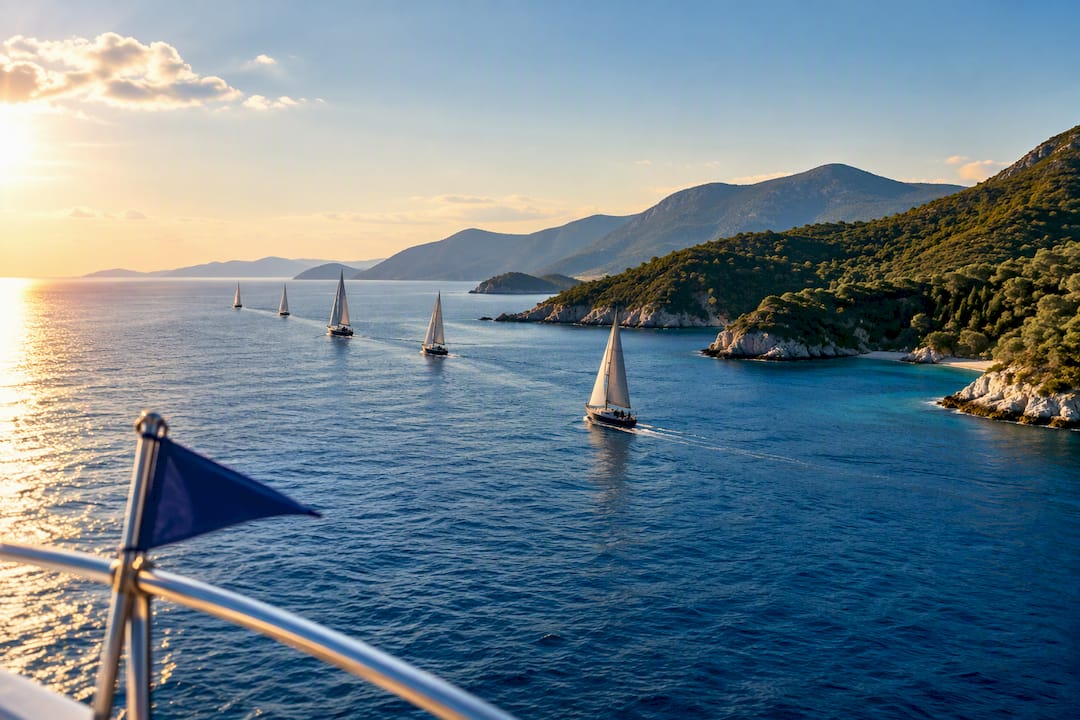
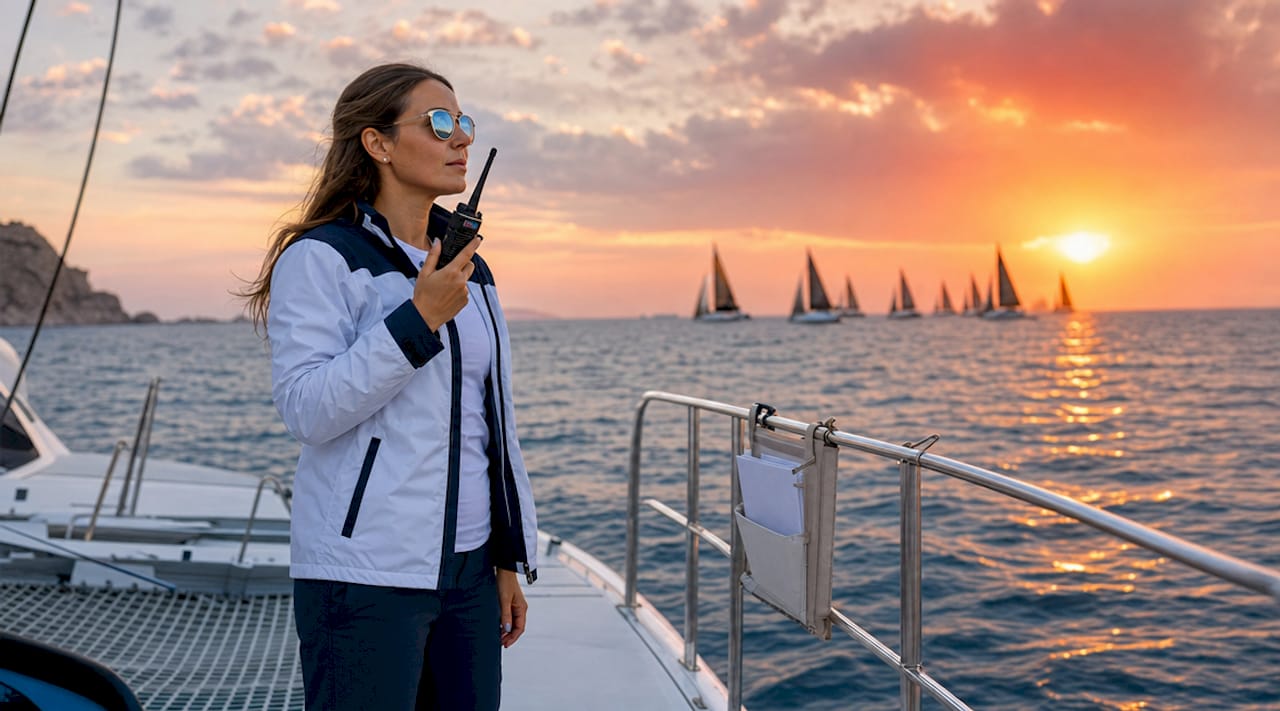
La coordination de locations de plusieurs yachts implique d'organiser la communication, les itinéraires, le calendrier et l'expérience des passagers à bord de plusieurs bateaux afin de créer une aventure nautique fluide et partagée. Le terme utilisé dans le secteur pour désigner ce type de navigation est un flottille, où un groupe de voiliers navigue ensemble sur un itinéraire commun, souvent avec un bateau de tête qui donne le rythme. Que vous organisiez une flottille dans les îles grecques, un événement d'entreprise au large de la Croatie ou une réunion de famille sur l'Adriatique, les principes sont les mêmes : des rôles bien définis, une communication fiable et un programme suffisamment souple pour faire face aux imprévus. Si vous maîtrisez ces trois éléments, tout le groupe naviguera dans la bonne humeur.
Comment coordonner la location de plusieurs yachts : des outils de communication qui fonctionnent vraiment
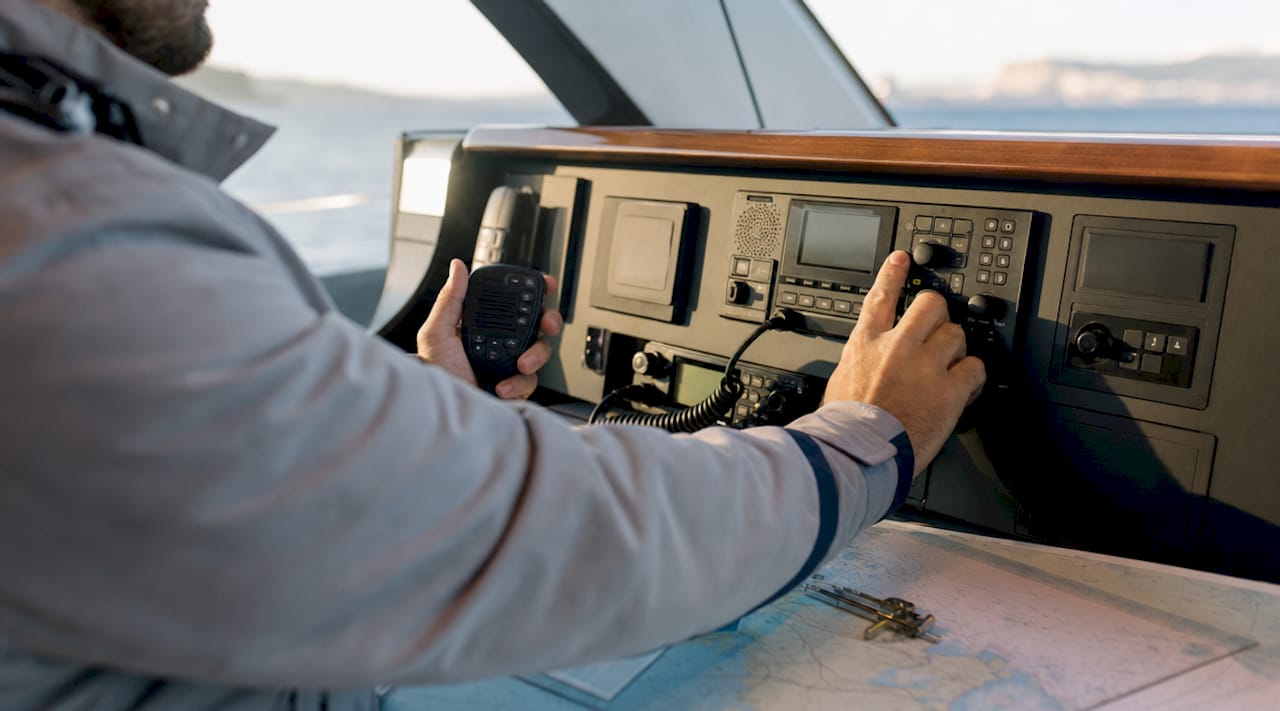
La communication radio est la clé de voûte de toute flottille qui se veut réussie, et la La RYA recommande les radios VHF comme norme pour les communications en mer entre navires. Les appareils VHF fixes installés sous le pont offrent une portée de 20 à 40 miles et intègrent la fonctionnalité DSC (Digital Selective Calling), qui permet d’envoyer un signal de détresse ou d’appeler directement un navire spécifique d’une simple pression sur un bouton. Les appareils VHF portatifs ont une portée plus courte, mais s’avèrent indispensables lorsque les membres d’équipage sont éloignés de la radio principale, par exemple lorsqu’ils se rendent à terre en annexe ou travaillent sur le pont. Chaque yacht de votre flottille devrait en posséder au moins un de chaque type.
Les radios équipées du système DSC vous permettent d’envoyer des alertes de sécurité ciblées aux bateaux à proximité, ce qui change la donne lorsqu’un bateau de votre groupe a besoin d’une assistance urgente. L'intégration de l'AIS (système d'identification automatique) apporte une sécurité supplémentaire, en permettant aux skippers de visualiser en temps réel la position de chaque bateau de la flottille sur un traceur de cartes. Ces outils ne sont pas des options facultatives. Ils constituent la base d'une coordination sûre des sorties en flotte.
Les applications comme WhatsApp sont vraiment utiles pour coordonner l'expérience des passagers, partager des photos et échanger des informations informelles entre les bateaux. Cependant, la radio VHF reste indispensable pour la sécurité opérationnelle et ne devrait jamais être remplacée par une application de messagerie instantanée. La couverture mobile disparaît dès que vous contournez un cap dans la mer Ionienne ou que vous jetez l'ancre dans une baie isolée des Îles Vierges britanniques. Prévoyez en conséquence.
| Outil | Gamme | Utilisation optimale | Limitation |
|---|---|---|---|
| Radio VHF fixe | 20 à 40 miles | Coordination entre skippers, sécurité | Nécessite une installation |
| Radio VHF portable | 5 à 8 miles | Équipage à terre, opérations de navette | Autonomie réduite, en fonction de la batterie |
| WhatsApp / applications de messagerie | Couverture mobile uniquement | Mises à jour concernant les invités, coordination des réseaux sociaux | Offshore peu fiable |
| AIS / traceur de cartes | Ligne de visée | Localisation en temps réel de la flotte | Nécessite un matériel compatible |
| Appareil de communication par satellite (par exemple, Garmin inReach) | Mondial | Sauvegarde d'urgence | Coût : abonnement requis |
Conseil de pro : Convenez avant le départ d'un canal VHF commun, distinct du canal 16 (le canal international de détresse et d'appel). Le canal 72 est un choix courant pour les communications entre yachts dans les eaux européennes.
Comment planifier les itinéraires, les horaires et les points de rendez-vous pour votre flottille
C'est souvent au niveau de la logistique que les locations de plusieurs yachts se réussissent ou échouent. Les coordinateurs expérimentés soulignent cartographier l'intégralité du parcours, du début à la fin, en incluant chaque point de mouillage, chaque escale en port de plaisance et chaque point de rendez-vous du groupe. Un itinéraire bien planifié itinéraire Il ne s'agit pas d'un programme rigide. C'est un cadre commun qui permet au groupe de rester en lien tout en laissant à chaque bateau la liberté d'explorer.
Voici une procédure pratique, étape par étape, pour organiser la logistique de votre flottille :
- Choisissez un bateau de tête et un bateau de queue. Le bateau de tête donne le rythme et est le premier à rejoindre les nouveaux mouillages. Le bateau de ferme-file suit en dernier et s'assure que personne n'est laissé derrière. Cette organisation suffit à elle seule à éviter la plupart des problèmes de timing.
- Définissez des points de passage quotidiens, et pas seulement des destinations. Déterminez pour chaque journée les points d'amarrage, les haltes pour faire le plein et les lieux où déjeuner. Communiquez ces informations sous forme de coordonnées GPS, et non pas simplement sous forme de noms de lieux, afin que tous les skippers disposent des mêmes informations.
- Définissez des plages horaires de départ, et non des heures précises. Convenez d’une plage horaire de départ de 30 à 60 minutes chaque matin. Cela permet de tenir compte des différentes habitudes de réveil des membres d’équipage sans créer de stress ni de conflit.
- Réservez à l'avance vos places en port de plaisance et vos mouillages pour les nuits de forte affluence. En Croatie, en Grèce et en Sardaigne, les mouillages les plus prisés se remplissent rapidement en juillet et en août. Le coordinateur du bateau de tête doit appeler la veille pour réserver des places pour toute la flottille.
- Prévoyez au moins un rendez-vous de groupe par jour. Il peut s'agir d'un déjeuner pris tous ensemble au mouillage, d'un apéritif au coucher du soleil sur le bateau de tête ou d'un dîner en groupe à terre. Ce sont ces moments-là qui font qu'une flottille ressemble davantage à une aventure partagée qu'à un simple convoi.
- Prévoyez une journée de marge. Le temps change. Quelqu'un a le mal de mer. Un bateau a besoin d'une petite réparation. Une journée de marge au milieu du voyage permet au groupe de faire face aux retards sans compromettre le programme global.
Conseil de pro : Avant le départ, communiquez à chaque skipper l'itinéraire complet, y compris les points de passage et les contacts d'urgence. Un document Google Docs partagé ou une fiche d'information imprimée feront parfaitement l'affaire. Ainsi, si un bateau perd le contact radio, tous les skippers sauront toujours où se dirige le groupe.
Quels sont les rôles et les responsabilités qui permettent d'assurer la coordination entre plusieurs yachts ?
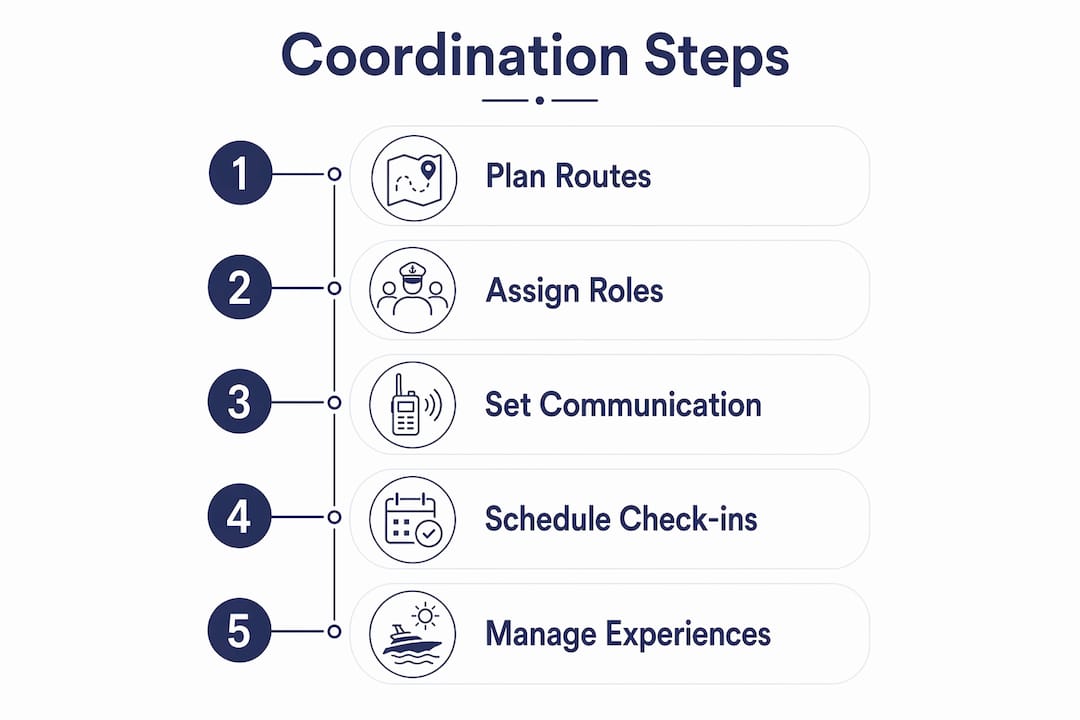
Attribution de rôles distincts C'est le moyen le plus efficace pour éviter toute confusion et garantir une expérience client homogène sur tous les yachts. Lorsque chacun sait qui est responsable de quoi, les décisions sont prises plus rapidement et les problèmes sont résolus avant même que les clients ne s'en rendent compte.
Les rôles clés au sein de toute flottille sont les suivants :
- Coordinateur de flotte. Cette personne a une vue d'ensemble de la situation. Elle gère le planning global, assure la communication avec les ports de plaisance, gère les éventuelles modifications d'itinéraire et fait office de point de contact unique pour tous les skippers. Idéalement, le coordinateur de flotte navigue à bord du bateau de tête.
- Skippers individuels. Chaque skipper est responsable de la sécurité et de la navigation de son propre bateau. Il suit l'itinéraire convenu mais dispose d'une totale autonomie sur son bateau. Les skippers communiquent directement avec le coordinateur de la flotte par VHF.
- Responsable de liaison (un par yacht). Il s'agit d'un invité ou d'un membre d'équipage présent sur chaque bateau, chargé d'assurer la communication entre son yacht et le coordinateur de la flotte. Il transmet les dernières informations à son groupe, recueille les besoins alimentaires et les préférences en matière d'activités, et signale rapidement tout problème éventuel.
- Responsable des événements ou des expériences. Pour les événements d'entreprise ou les flottes plus importantes, un responsable événementiel coordonne les activités de groupe, les excursions à terre et la restauration sur l'ensemble des yachts. Les équipes événementielles efficaces travaillent de manière transversale pour gérer simultanément les réservations, les relations avec les invités et le service sur place.
- Responsable de la sécurité. Au sein des flottes plus importantes, une personne doit être désignée pour suivre les prévisions météorologiques, localiser tous les navires via l'AIS et gérer les protocoles d'urgence. Dans les groupes plus petits, ce rôle peut être assumé par le coordinateur de la flotte.
La clarté des échanges est tout aussi importante que la définition des rôles. Les skippers communiquent avec le coordinateur de la flotte. Les responsables de liaison communiquent avec leur skipper. Les invités communiquent avec leur responsable de liaison. Cette hiérarchie permet de préserver la clarté du canal VHF et d'éviter la surcharge d'informations.
Comment gérer et personnaliser les expériences de groupe sur plusieurs yachts
L'un des véritables plaisirs d'une flottille réside dans le fait que chaque yacht peut avoir sa propre personnalité tout en faisant partie de la même aventure. Partage des préférences des invités Une communication préalable avec chaque membre d'équipage, notamment concernant les exigences alimentaires, les centres d'intérêt en matière d'activités et les besoins en matière de mobilité, constitue le moyen le plus direct d'offrir une expérience cohérente et personnalisée sur l'ensemble de la flotte.
Voici quelques moyens concrets de personnaliser l'expérience à bord des différents bateaux :
- Demandez aux passagers de remplir un formulaire de préférences avant le départ. Demandez à chaque participant s'il a des besoins alimentaires particuliers, quelles sont ses activités préférées (plongée avec tuba, randonnée, stand up paddle) et s'il présente des limitations physiques. Transmettez ces informations à chaque skipper et à chaque animateur.
- Variez le programme d'activités selon le bateau. Les passagers n'ont pas tous les mêmes envies. Un yacht peut jeter l'ancre près d'un site de plongée tandis qu'un autre met le cap sur un bar de plage. Coordonner différentes activités pour chaque bateau, tout en réunissant le groupe pour des repas en commun, permet de satisfaire pleinement tout le monde.
- Coordonner la restauration pour l'ensemble de la flotte. Si vous devez approvisionner plusieurs yachts, utilisez une liste de courses commune pour éviter les doublons et répondre à tous les besoins alimentaires. Pour les dîners de groupe à terre, réservez à l'avance dans des restaurants pouvant accueillir l'ensemble du groupe.
- Créez des moments de partage qui marquent les esprits. Un toast synchronisé au coucher du soleil sur tous les yachts, une baignade en groupe dans une baie isolée ou un barbecue entre amis sur la plage : voilà les souvenirs dont les invités parlent encore des années plus tard. Ces moments ne sont pas le fruit du hasard. Ils nécessitent une bonne organisation.
- Utilisez des stratégies de personnalisation pour gérer les imprévus avec souplesse. Lorsqu'un client a un besoin imprévu, une équipe bien informée peut y répondre sans heurts, car les informations ont été communiquées à l'avance.
Quelles sont les erreurs courantes à éviter lors d'une location de plusieurs yachts ?
Un mauvais timing et des problèmes de coordination sont les causes les plus fréquentes des déboires lors des croisières en flotte. Les points de rendez-vous manqués, les départs retardés et les coupures de communication entraînent un effet domino qui gâche l'expérience de tout le groupe. La bonne nouvelle, c'est que la plupart de ces problèmes peuvent être entièrement évités.
Les erreurs les plus courantes et comment y remédier :
“ La pratique de la radio maritime et de la VHF est essentielle pour assurer la sécurité des communications, bien au-delà des applications de messagerie instantanée. ” — Communications à bord selon la RYA
Se fier uniquement à WhatsApp pour la coordination est l'erreur numéro un. Lorsque la couverture mobile est interrompue, le groupe perd complètement le fil de ses communications. Considérez toujours la VHF comme le canal principal et les applications comme un complément.
Ne pas assister à la réunion d'information préalable au départ est la deuxième erreur la plus courante. Chaque skipper et chaque hôte de liaison doit se rencontrer en personne ou par visioconférence avant le premier jour afin de se mettre d'accord sur les itinéraires, les rôles, les contacts d'urgence et la fréquence VHF commune. Ces 30 minutes consacrées à cette réunion permettent d'éviter des heures de confusion en mer.
Un autre piège consiste à surcharger le programme. Les groupes essaient souvent de caser trop d’escales dans chaque journée, ce qui fait que la flottille est constamment en retard et que les skippers se sentent obligés de continuer malgré la dégradation des conditions météorologiques. Prévoyez une marge de manœuvre chaque jour et laissez la mer dicter le rythme.
Conseil de pro : Fixez une heure de pointage quotidien, par exemple à 8 h chaque matin sur la fréquence VHF convenue, au cours de laquelle chaque skipper confirmera sa position et son programme pour la journée. Cette simple habitude permet à toute la flotte de rester en contact et de repérer les problèmes avant qu’ils ne s’aggravent.
Principaux enseignements
Pour assurer la bonne coordination d'une croisière en flotte, il est indispensable de disposer d'une communication VHF fiable, d'une répartition claire des rôles et d'un plan de route détaillé mais flexible, communiqué à tous les bateaux avant le départ.
| Point | Détails |
|---|---|
| La radio VHF est indispensable | Les appareils VHF fixes et portables constituent le pilier de la sécurité ; les applications viennent en complément, elles ne les remplacent pas. |
| Désigner un coordinateur de flotte | Le fait qu'une seule personne ait une vue d'ensemble permet d'éviter toute confusion et de veiller à ce que tous les skippers restent sur la même longueur d'onde. |
| Marquez des points de passage, pas seulement des destinations | Partagez les coordonnées GPS de chaque escale afin que tous les skippers disposent d'informations identiques et exploitables. |
| Personnalisez selon votre bateau, unissez-vous pour partager des moments ensemble | Recueillez à l'avance les préférences des invités et organisez aussi bien des activités individuelles que des expériences en groupe. |
| Prévoir un délai de sécurité | Un planning souple permet de faire face aux retards dus aux conditions météorologiques et aux réparations sans perturber l'ensemble de la flottille. |
Ce que j'ai appris au fil des années en observant les succès et les échecs des flottilles
Les groupes qui s'amusent le plus lors d'une croisière en flotte ne sont presque jamais ceux qui ont les programmes les plus élaborés. Ce sont ceux qui communiquent le plus clairement et qui font preuve de la plus grande décontraction face à l'imprévu. J'ai vu des itinéraires magnifiquement détaillés tomber à l'eau parce qu'un skipper ne savait pas quel canal VHF le groupe utilisait. J'ai également vu des flottilles informelles et décontractées en Grèce offrir des semaines véritablement magiques parce qu'une personne avait pris en charge le briefing quotidien et tenait tout le monde informé.
Ce que la plupart des organisateurs novices de flottilles sous-estiment, c’est l’énergie que demande l’aspect humain de la coordination, et non l’aspect nautique. Mettre d’accord douze personnes réparties sur trois voiliers pour choisir un lieu où dîner est plus difficile que de manœuvrer dans un mouillage délicat. Désigner sur chaque bateau un responsable de la liaison, quelqu’un qui a de l’aisance en société et qui aime sincèrement coordonner les gens, résout presque entièrement ce problème.
Mon conseil sincère : consacrez votre temps de préparation à la mise en place de protocoles de communication et à la définition claire des rôles avant de passer ne serait-ce qu’une heure sur l’optimisation de l’itinéraire. Un itinéraire bien conçu mais une mauvaise communication rendent le voyage stressant. Un itinéraire simple mais une excellente communication rendent le voyage inoubliable. Et si vous voulez comprendre l'ensemble du processus de création d'une association à but non lucratif Avant de s'engager dans une flottille, ces connaissances s'avèrent très utiles sur l'eau.
- Voile
Organisez votre aventure en flotte avec Sailarmada
Sailarmada est spécialisée dans ce type d’expériences de navigation en groupe, qu’il s’agisse de petites flottilles de deux ou trois voiliers ou d’aventures en grande flotte à travers la Grèce, la Croatie, la Sardaigne et au-delà. L’équipe se charge de la planification des itinéraires, de la coordination des skippers et de l’approvisionnement, afin que vous puissiez vous concentrer sur le plaisir du voyage plutôt que sur la gestion logistique. Chaque réservation s'accompagne de skippers expérimentés qui connaissent bien les eaux et les mouillages, et la plateforme permet de Réservez vos vacances en voilier en groupe avec des formules flexibles adaptées à différents types de yachts et à différentes dates de départ. Si vous souhaitez comprendre pourquoi une flottille privée est plus intéressante qu'un séjour en complexe hôtelier pour les groupes, la réponse se trouve sur le Page sur les avantages de la location privée. Votre flottille vous attend.
FAQ
Quel est le meilleur outil de communication pour les locations de plusieurs yachts ?
La radio VHF est l'outil de communication le plus fiable pour coordonner plusieurs voiliers en mer, grâce à des appareils fixes offrant une portée de 20 à 40 miles et à la fonctionnalité DSC permettant d'envoyer des alertes de sécurité ciblées. Les applications de messagerie telles que WhatsApp sont utiles pour la coordination des passagers, mais ne doivent en aucun cas se substituer à la radio VHF pour les communications opérationnelles et de sécurité.
Combien de personnes faut-il pour coordonner une flottille ?
Chaque flottille doit compter au moins un coordinateur de flotte à bord du bateau de tête, ainsi qu'un responsable de liaison à bord de chaque yacht. Pour les groupes de quatre yachts ou plus, la présence d'un responsable dédié à l'événement ou à l'expérience améliore considérablement la satisfaction des participants et allège la charge de travail des skippers.
Comment faites-vous pour que plusieurs yachts respectent le même planning ?
Prévoyez des plages horaires de départ plutôt que des horaires fixes, convenez d'un pointage quotidien par VHF et réservez à l'avance les mouillages afin que le bateau de tête ait toujours une destination confirmée. Une planification détaillée de l'itinéraire, avec des waypoints GPS partagés, permet à tous les skippers de rester sur la même longueur d'onde sans pour autant perdre en flexibilité.
Qu'est-ce qu'un séjour en voilier en flottille ?
Une flottille est un groupe de yachts naviguant ensemble sur un itinéraire commun, généralement avec un bateau de tête à bord duquel se trouve un skipper expérimenté ou un coordinateur chargé de guider la flotte. Elle allie la liberté d'un yacht privé à la convivialité d'un voyage en groupe, et constitue le format classique pour organisation de sorties en groupe en yacht dans la Méditerranée.
Combien de temps à l'avance faut-il prévoir pour organiser une location de plusieurs yachts ?
Réservez au moins six mois à l'avance pour la haute saison estivale en Grèce, en Croatie ou en Sardaigne, où les mouillages et les ports de plaisance les plus prisés se remplissent rapidement. Ce délai vous laisse également le temps de recueillir les préférences des passagers, de répartir les tâches et de briefer chaque skipper avant le jour du départ.