The moment you cross into foreign territorial waters, hoist the yellow “Q” flag and keep everyone aboard until customs and immigration officially clear the vessel. That single rule causes more confusion (and more fines) than almost anything else in international cruising, according to guidance from the RYA. Once you’re flying the Q flag, your next job is finding the right port-of-entry authority and having your paperwork ready before anyone asks for it.
Here’s what needs to happen in the first hour after you spot land:
- Fly the yellow Q flag the instant you enter foreign territorial waters, and don’t take it down until you’ve cleared in.
- Head for a recognized port of entry. Not every marina or anchorage is authorized to process arrivals, so check ahead.
- Report to the correct authority. Depending on the country, that might be customs, immigration, the harbor master, or a combination of all three, and some nations expect electronic pre-notification before you even arrive.
- Have originals ready: passports for every person on board, vessel registration, proof of insurance, and a crew list. These four documents get requested more than anything else, per European Commission and national customs guidance.
Do not lower the Q flag or let anyone step ashore, including for a quick photo on the dock, until the skipper has completed the formal check-in process. Officials in busy sailing regions treat this rule seriously, and ignoring it is one of the fastest ways to turn a relaxing arrival into a paperwork nightmare.
Principaux enseignements
Clearing customs on a sailing holiday comes down to flying the Q flag on arrival, carrying original documents in an organized folder, and confirming port-specific rules before you leave the dock.
| Point | Détails |
|---|---|
| Fly the Q flag immediately | Hoist it on entering foreign waters and keep crew aboard until officially cleared. |
| Carry a complete clearance pack | Bring original passports, vessel registration, insurance proof, and a multi-copy crew list. |
| Know your 18-month window | Non-EU yachts get up to 18 months of VAT-free temporary admission under EU rules. |
| Verify the exact port before arrival | Confirm office hours and entry-point status locally rather than trusting outdated forum advice. |
| Let preparation do the talking | Organized, courteous skippers clear faster than those who argue procedure. |
| Plan routes that reduce friction | SailArmada pre-checks ports of entry and documentation needs on curated itineraries. |
Table des matières
- How Do You Navigate Customs on Sailing Holidays With the Right Documents?
- Where Do You Actually Clear Customs on a Sailing Trip?
- What Are the EU’s Temporary Admission Rules for Yachts?
- What Is the Step-by-Step Customs Clearance Process?
- What Mistakes Get Sailors Fined or Delayed?
- How Do Special Cases Change Your Customs Approach?
- How Do You Confirm Local Customs Rules Before You Arrive?
- What Should Your Crew List and Exit Documents Look Like?
- Let SailArmada Handle the Paperwork Headaches for You
- Where to Verify the Latest Customs Rules
- Questions fréquemment posées
- Sources
How Do You Navigate Customs on Sailing Holidays With the Right Documents?
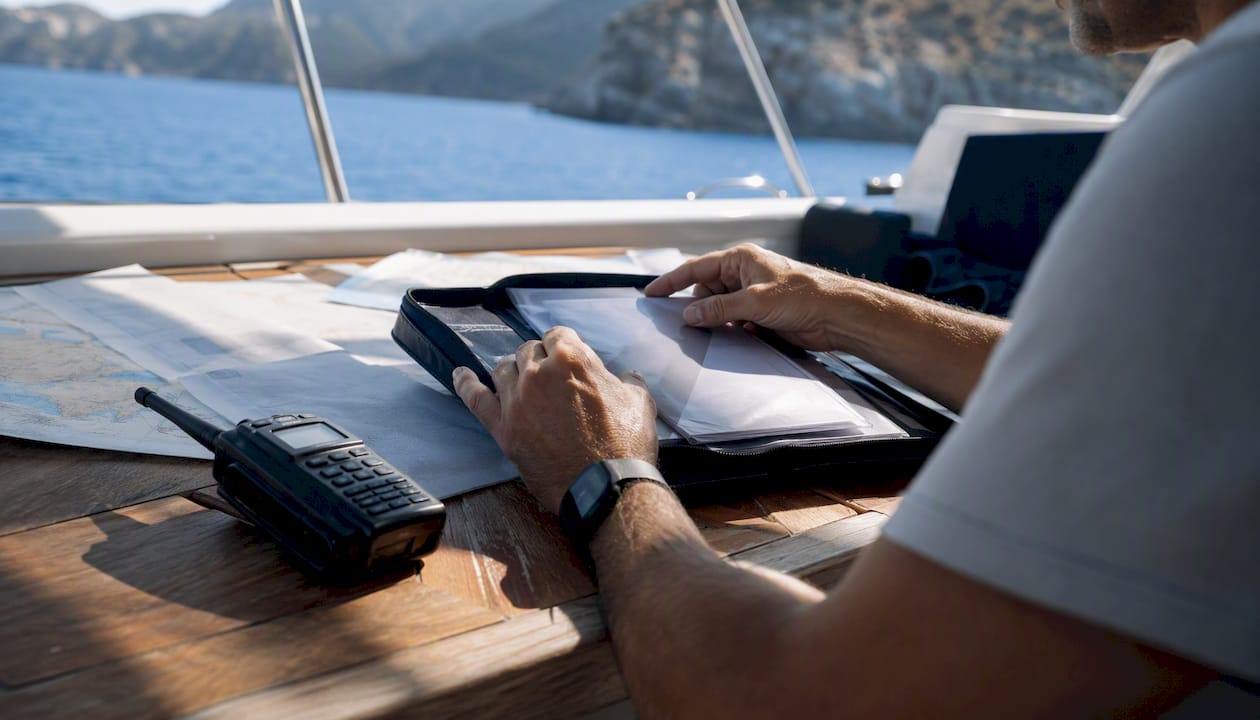
Clearing customs smoothly comes down to one thing: having a complete, organized “clearance pack” before you ever step off the boat. Officers move faster when they don’t have to chase you for missing paperwork, and a well-prepared skipper often clears in minutes instead of hours.
Your essential originals should include:
- Passports for every single person on board, valid and undamaged.
- Vessel registration or proof of flag state, showing who legally owns and operates the boat.
- Proof of third-party liability insurance, current and clearly dated.
- A notarized owner authorization letter if the skipper isn’t the registered owner. Many charter operations skip this and pay for it later with delayed clearance.
Beyond those four essentials, officials frequently ask for a few operational extras. A detailed crew list with full names, dates of birth, and passport numbers is close to universal. Some countries want your radio license on hand. Others ask for proof of your previous port clearance, sometimes called a “Zarpe,” which confirms you legally departed your last stop. If you’re unfamiliar with terms like Zarpe or “pratique,” it’s worth reviewing basic sailing holiday terminology before you leave the dock.
Bring more copies than you think you need. A practical skipper checklist for Caribbean clearance recommends keeping three to five copies of the crew list on hand, since customs, immigration, and port authorities often each want their own set. Store originals in a dedicated, waterproof folder, and keep digital scans on your phone or a cloud drive as backup, but never treat a photo of a passport as a substitute for the physical document.
Conseil de pro : Print your crew list the night before arrival, not the morning of. Officers notice when a boat shows up organized, and a tidy folder handed over calmly moves you to the front of an unofficial queue almost every time.
If you’re still assembling your onboard document kit, a broader liste de contrôle pour une sortie en voilier can help you pack smart well before customs even enters the picture.
Where Do You Actually Clear Customs on a Sailing Trip?
Not every pretty anchorage is legally allowed to process your arrival. A “port of entry” is a specific, designated location where customs and immigration officers are authorized to clear incoming vessels, and arriving somewhere else can leave you technically unlawfully in the country even if nobody stops you at the dock.
You’ll typically deal with several different authorities, sometimes in the same visit:
- Customs officers, who focus on the vessel, its cargo, and any goods you’re bringing in.
- Immigration or border control, who process the people on board, separately from the boat itself.
- The port or harbor master, who often coordinates logistics and berthing for arriving yachts.
- Health or agricultural inspectors, occasionally involved when animals, food, or specific cargo are aboard.
Clearing people through immigration does not automatically clear your boat through customs. Expect separate procedures and separate stamps for each, and don’t assume you’re done just because your passport got stamped.
Contact methods vary widely by region. Some ports have a dedicated marina office that handles the paperwork on your behalf. Others expect a phone call to the harbor master before you tie up. A growing number of countries, the UK among them, now run electronic pre-arrival systems where you submit vessel and crew details online ahead of time, which speeds up processing once you’re actually standing at the counter.
What Are the EU’s Temporary Admission Rules for Yachts?
If your yacht is registered outside the EU and used privately, you can typically bring it into EU waters for up to 18 months without paying VAT or import duty, under the temporary admission procedure described in European Commission guidance. This is the framework governed by the Union Customs Code, and it exists specifically so visiting sailors can cruise the Mediterranean without triggering a full import.
The math behind the 18-month figure matters more than most sailors realize. Total time under temporary admission cannot exceed 10 years, except in genuinely unforeseeable circumstances, but the standard window resets each time you formally re-export the vessel and re-enter later. Extensions beyond 18 months are possible, though customs treats them as exceptions rather than a routine option, so don’t plan around getting one.
VAT and duty become a real problem in a few specific situations:
- Permanent import. If you decide to keep the boat in the EU beyond the temporary admission window, customs treats it as a permanent import and VAT becomes due.
- Change of ownership. Selling the yacht while it’s under temporary admission, without properly clearing customs first, can trigger duty and VAT liability.
- Failure to re-export on time. Missing the 18-month deadline without an approved extension puts you outside the rules entirely.
- Guarantee requirements. Customs may require a financial guarantee or a specified entry route before granting temporary admission, particularly for higher-value vessels.
The practical fix is simple, even if the bureaucracy behind it isn’t: use the temporary admission procedure correctly from your first entry, keep proof of every exit stamp or Zarpe from ports you’ve left, and ask your entry-point customs office directly whether they require an advance guarantee or specific paperwork for your vessel’s flag state.
Conseil de pro : Keep a running paper trail of every entry and exit stamp in one folder, in chronological order. If a customs officer questions your 18-month clock two countries later, that folder answers the question faster than any explanation you could give verbally.
If you’re chartering rather than owning outright, temporary admission questions get more complicated fast, and it’s worth reading up on maritime registration and compliance rules before you commit to a specific flag state or ownership structure.
What Is the Step-by-Step Customs Clearance Process?
Clearing in and out of a foreign port follows a fairly predictable sequence once you know what to expect. Here’s how it typically unfolds, start to finish.
Before you arrive:
- Confirm your intended port is an official port of entry, not just a convenient marina.
- Check whether pre-arrival electronic notification is required. Some countries mandate it 24 to 48 hours ahead.
- Verify customs and immigration office hours. Local office hours are famously fluid in some cruising regions, and confirming actual working patterns via the marina or radio beats trusting a posted schedule.
- Assemble your clearance pack: passports, registration, insurance, crew list, and prior port clearance if applicable.
On approach and arrival:
- Hoist the Q flag before entering territorial waters, and leave it flying.
- Proceed directly to the designated customs dock or official entry point, not a random slip.
- The skipper typically goes ashore alone with the clearance pack. In many jurisdictions, only the skipper is expected to visit the offices while everyone else stays aboard, though in a handful of ports, officers board the vessel instead.
- Present your documents calmly and in the order requested. Don’t volunteer extra paperwork nobody asked for.
During and after inspection:
Officers generally process passports first, stamping each one and logging arrival details. The vessel inspection, when it happens, comes separately and may include a quick check of safety equipment, cargo, or provisions depending on the country. Some destinations issue a cruising permit at this stage, which you’ll need to produce again when you leave.
Keep every stamp and clearance document you receive. You’ll need proof of legal departure, sometimes the Zarpe mentioned earlier, when you check into your next port. Losing that paperwork mid-trip can mean re-explaining your entire route to a skeptical officer who’s never heard of your last stop.
Conseil de pro : Efficiency at the counter often comes down to attitude as much as paperwork. Skippers who are organized, prepared, and courteous tend to get processed faster than those who argue about the rules, even when the argument is technically correct.
Departure follows a mirror-image process: notify the relevant office you’re leaving, present your documents again, and get your exit stamp before you head to open water. Skipping this step because “nobody checked on the way in” is a common and costly assumption.
What Mistakes Get Sailors Fined or Delayed?
Most customs problems trace back to the same handful of errors, repeated by sailors who assumed the rules were simpler than they actually are.
- Lowering the Q flag or letting crew go ashore before official clearance, even briefly.
- Arriving at an anchorage or marina that isn’t a designated port of entry.
- Typos or mismatches on pre-arrival forms, especially passport numbers or arrival timings, which can flag your file for extra scrutiny.
- Sloppy or missing goods declarations, particularly around alcohol, firearms, or large quantities of duty-free items.
- Assuming one country’s customs rules apply everywhere else in the region.
The consequences range from mildly annoying to genuinely expensive: fines, confiscated goods, extended inspections, or in some cases outright refusal of entry. Advance reporting accuracy matters more than most first-time skippers expect, since a single mistyped digit on an electronic pre-notification can trigger a manual review that eats an entire afternoon.
The biggest misconception among visiting sailors is that customs procedures are roughly the same from port to port. In reality, enforcement and paperwork requirements are often set at the local level, and what worked at your last stop may not work at the next one.
Reducing risk isn’t complicated. Double-check every entry on pre-arrival forms before you submit them. Carry extra copies of your core documents. And where a port offers an official pre-clearance portal or a local agent, use it, especially at your first stop in an unfamiliar country.
How Do Special Cases Change Your Customs Approach?
Standard advice covers most cruisers, but a few situations need extra preparation.
Non-EU flagged yachts entering EU waters face closer scrutiny around temporary admission eligibility, and customs may ask for a guarantee before granting entry, particularly on higher-value vessels or unusual flag states.
Commercial and bareboat charters carry different obligations than private cruising. Charter contracts, commercial registration documents, and sometimes separate crewing paperwork all come into play, and the rules that apply to a privately owned yacht often don’t apply the same way to a chartered one.
Pets traveling aboard need their own document trail entirely: current vaccination certificates, microchip records, and often a health certificate issued shortly before departure. Agricultural inspectors sometimes get involved specifically because of animals on board, and showing up without the right paperwork can mean quarantine or outright refusal for the animal, not just a delay for the crew.
- Confirm your flag state’s temporary admission status before entering EU waters.
- Carry charter contracts and commercial registration alongside standard crew documents if you’re on a bareboat or crewed charter.
- Get pet paperwork sorted well before departure, not the morning you leave.
How Do You Confirm Local Customs Rules Before You Arrive?
Rules shift from port to port more than most sailors expect, and relying on secondhand cruiser forums is how outdated advice spreads. Regulations vary at the local level, so the smart move is checking official channels directly rather than trusting what worked for someone else last season.
Reliable sources include your national customs authority’s website, the RYA’s boating-abroad pages, European Commission guidance on entry to the EU customs territory, and a direct call to the marina office at your intended destination.
Run these checks 24 to 48 hours before arrival:
- Confirm the office’s actual working hours, not just the posted schedule.
- Verify the marina or anchorage is genuinely an official port of entry.
- Ask whether advance electronic reporting is mandatory for your flag state.
- Get a direct phone number for the customs or immigration office, not just a general marina line.
For small or low-traffic ports, complex visa situations, or destinations where language could cause real confusion, hiring a local agent or using a marina concierge service is often worth the modest fee.
What Should Your Crew List and Exit Documents Look Like?
A usable crew list needs five fields per person: full name, date of birth, passport number, nationality, and role on board. A sample line might read: Smith, Jane, 04/12/1988, Passport #123456789, British, Crew.
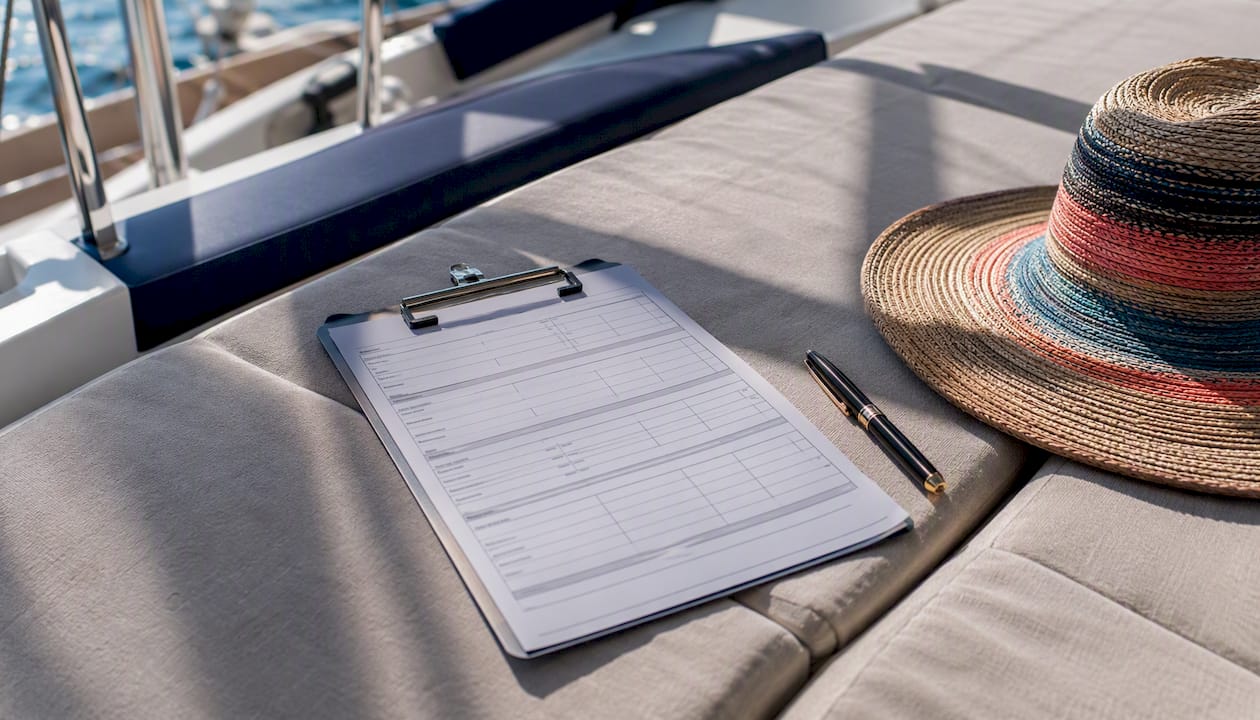
For an oral customs declaration, something as simple as “Nothing to declare beyond personal effects and standard provisions” covers most straightforward cruising arrivals, though always answer truthfully if asked about alcohol, firearms, or larger quantities of goods. A Zarpe or exit note typically states your departure port, destination, date, and vessel registration number, confirming you left your last stop legally.
Bring originals for officers, two paper copies in your folder, and a digital backup accessible by email in case anything gets misplaced.
A Skipper’s Note on Etiquette and Patience
Officials respond to preparation, not persistence. A calmly organized folder and a friendly greeting usually gets you through faster than any argument about technicalities ever will. Expect “island time” in some regions and treat the wait as a chance to review your next leg rather than a frustration. Pre-filling your crew list the night before, keeping passports in one dedicated folder, and staying relaxed when officers step aboard are small habits that consistently save real time. Good onboard etiquette extends well beyond your fellow guests.
Let SailArmada Handle the Paperwork Headaches for You
Planning a Mediterranean sailing holiday shouldn’t mean becoming a part-time customs expert. SailArmada builds itineraries around ports that are genuinely straightforward to clear, and our team checks entry requirements for your specific route before you ever step aboard.
That means fewer surprises at the dock: your skipper already knows which offices to visit, what documentation each stop typically expects, and where a local agent might smooth things over on a tight schedule. For group trips especially, coordinating everyone’s passports and crew details in advance avoids the scramble that causes most clearance delays. If you’re weighing a private charter against a group departure, our guide on private or group sailing holidays breaks down which setup fits your crew, and getting your dates and yacht sorted now means one less thing to think about once the Q flag comes down.
Where to Verify the Latest Customs Rules
Bookmark these sources rather than relying on last season’s cruiser forum thread, since procedural details change without much fanfare.
- Le RYA’s boating-abroad pages for entry and exit formality basics.
- European Commission guidance on temporary admission for pleasure craft.
- Gov if you’re arriving in UK waters.
- Your destination country’s national customs authority site for the most current local requirements.
Government portals cover the legal framework reliably. For real-time practicalities, like whether the customs office is actually open today, a quick call to the marina office still beats any website.
Questions fréquemment posées
Do I need to clear customs at every port, or just my first stop in a country?
Just your first port of entry in a country, in most cases. Once cleared, you typically cruise domestically without repeating full customs formalities, though some countries require checking in again at specific regional boundaries.
What happens if I arrive outside official office hours?
You still fly the Q flag and wait aboard until an officer is available, even if that means anchoring overnight. Some ports allow phone or radio contact to arrange an out-of-hours clearance, but never assume you can go ashore just because nobody showed up immediately.
Can I clear customs online before arriving?
Some countries, including the UK through its pleasure craft reporting system, allow or require electronic pre-notification. Where available, it genuinely speeds up processing once you’re at the dock, since officers verify submitted details rather than filling out forms on the spot.
Does the 18-month EU temporary admission clock reset if I leave and come back?
Generally yes, provided you properly re-export the vessel with documented proof, like an exit stamp, before re-entering. Total cumulative time under temporary admission still caps at 10 years except in unusual circumstances.
What if I’m chartering rather than sailing my own boat?
Bareboat and commercial charters often carry additional paperwork requirements, including charter contracts and commercial registration documents, on top of standard passport and crew list requirements.
This article is general information, not a substitute for advice from a qualified lawyer. Consult a qualified legal professional about your own circumstances before acting on anything here.
Sources
- Entry and Exit Formalities | Boating Abroad
- Yacht clearance rules for the Caribbean: practical skipper checklist
- Guidance on pleasure craft—European Commission / Taxation and Customs Union
- Gov
- Boat Immigration Procedures: Arrival Rules for Cruisers
Recommandé
- Votre liste de contrôle pour une sortie en voilier : préparez vos bagages intelligemment et naviguez en toute liberté
- Compétences indispensables pour la location de yacht : votre guide des vacances avec skipper
- Terminologie des vacances à la voile : Votre guide essentiel
- Guide des vacances en voilier pour les familles et les amis, étape par étape