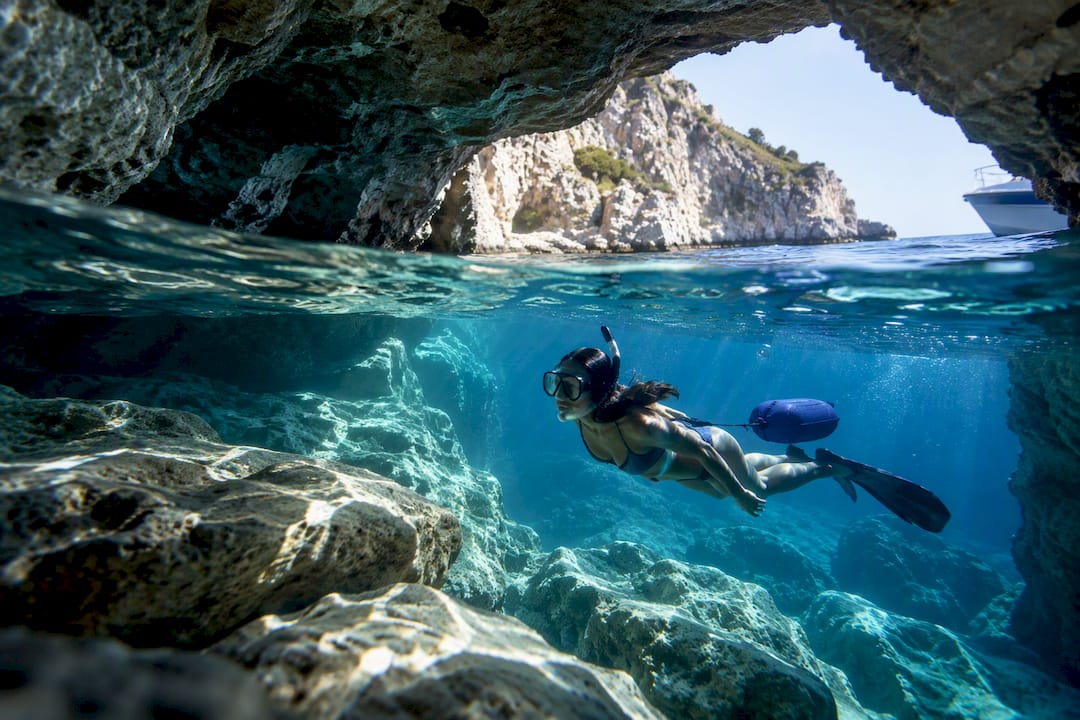
Greece’s finest snorkeling happens away from crowded beaches: at Kleftiko’s sea caves in Milos, the turtle-filled bay of Marathonisi, the caverns of Limni Keriou, Balos Lagoon’s shallow turquoise flats, and the cliff coves near Paleokastritsa and Anthony Quinn Bay. Almost all of them share one rule: get there by boat, and get there early, before wind and day-trippers churn up the water. Expect seagrass meadows, limestone caves, wrasse and octopus, not tropical coral.
Pe scurt:
- Most prime snorkeling locations in Greece are accessible only by boat and require early departure to avoid crowds and choppy water.
- Expect clear waters, limestone caves, and seabeds with seagrass rather than coral reefs, with sightings of octopus, wrasse, and occasional dolphins.
- Zakynthos and Kefalonia are the best regions for turtle sightings, with nesting activity mainly in summer months and special protected zones to respect wildlife.
- Crete offers shallow lagoons, offshore islets, and a boat industry that makes many top spots easily reachable without personal boats.
- Private sailing charters provide flexible timing and local expertise, enabling visitors to visit distant coves and caves before day-trippers arrive.
Cuprins
- The Top Snorkeling Spots in Greece Worth Planning a Trip Around
- How the Ionian, Crete, Cyclades, and Dodecanese Compare for Snorkelers
- What You’ll Actually See Underwater in Greece
- Timing Your Trip: Meltemi Winds and the Morning Window
- What to Pack and How to Snorkel Responsibly in Greece
- Currents, Crowds, and the Rules You Won’t Find on a Map
- A Morning at Kleftiko, Seen From the Deck
- Book a Private Sailing Route That Puts You at These Spots First
- Where to Read More Before You Go
- Surse
- FAQ
The Top Snorkeling Spots in Greece Worth Planning a Trip Around
Greece doesn’t hand you its best water on a platter. The spots that make people gasp through their snorkel tend to sit around a headland, inside a cave mouth, or off an island nobody drives to. Here’s where to point your fins.
-
Kleftiko, Milos. White volcanic arches rise straight out of the sea, and the water underneath them runs an almost unnatural shade of blue-white. Kleftiko is accessible only by sea, with no road, no facilities, and no shortcut. Boats start arriving by mid-morning, so the smart move is arriving on the first run out of Milos’s harbor. This spot rewards confident swimmers who like exploring cave mouths and rock tunnels, and it’s one of the clearest arguments in the entire country for why boat access beats beach access.
-
Limni Keriou (Keri Caves), Zakynthos. This bay on Zakynthos’s southwestern tip regularly clocks exceptional visibility, which is extraordinary even by Ionian standards. Local operators run inflatable snorkel trips into the sea caves for guests who aren’t divers, and on certain summer nights the bay lights up with bioluminescent plankton. It’s boat-first territory, though a short swim from the southern shore gets confident swimmers into the outer caves too.
-
Marathonisi (Turtle Island), Zakynthos. This crescent-shaped islet in Laganas Bay sits inside a protected marine zone and hosts nesting loggerhead turtles (Caretta caretta) through the summer. Boats are required to keep their distance from nesting beaches, and swimmers should never approach a turtle head-on or touch one. The snorkeling itself is easy and shallow, which makes Marathonisi one of the better family-friendly snorkeling spots in Greece for kids who are still building confidence in open water.
-
Balos Lagoon, Crete. Balos looks photoshopped: pink-tinted sand, ankle-deep shallows, and a sandbar that stretches out toward Gramvousa islet. It’s reachable by a rough dirt track or, far more comfortably by boat from Kissamos. The lagoon itself is shallow and calm, ideal for beginners and young kids, though the more interesting fish life sits around the rockier edges near Gramvousa.
-
Dia Island, Crete. A short boat hop north of Heraklion, Dia is an uninhabited islet with rocky coves, decent visibility, and far fewer boats than the mainland coast. It suits intermediate snorkelers who want a change from sandy-bottom bays, with enough underwater structure to hold schools of bream and the occasional octopus den.
-
Chrissi Island, near Ierapetra. This flat, cedar-forested islet off Crete’s southern coast is a protected natural reserve reachable only by daily excursion boats from Ierapetra. The eastern side has soft sand and calm water good for beginners; the western tip has rockier structure and better fish activity for anyone wanting more than a gentle paddle.
-
Antisamos, Kefalonia. Backed by pine-covered hills and famous from the film Captain Corelli’s Mandolin, Antisamos has shore access, which makes it one of the easiest quality snorkeling spots to reach without a boat at all. Morning light through the clear water shows off a rocky seabed thick with small fish, and it’s a solid choice for families staying on Kefalonia who don’t want to book a charter.
-
Paleokastritsa, Corfu. A series of coves cut into Corfu’s northwest coast, Paleokastritsa mixes shore access with excellent boat-trip options that push out to nearby caves and cliffs. Morning calm here is dramatic: glassy water, dramatic cliff shadows, and enough underwater rock structure to keep intermediate snorkelers occupied for hours.
-
Anthony Quinn Bay, Rhodes. Named for the actor who reportedly fell for the spot while filming nearby, this Dodecanese cove has easy shore access down a short staircase and consistently good visibility over a rocky, fish-rich bottom. It’s one of the more accessible top diving spots Greece offers for snorkelers who want reef-like structure without chartering a boat.
-
Alonissos and the National Marine Park. Greece’s largest marine protected area surrounds Alonissos and its satellite islets, with strict rules around boat speed, anchoring, and wildlife distance, particularly for the endangered Mediterranean monk seal. Snorkeling here means slower, quieter exploration, and operators running trips into the park generally brief guests on protected-area etiquette before anyone gets in the water.
-
Paxos and Antipaxos sea caves. South of Corfu, Paxos’s sea caves and the Antipaxos lagoon produce some of the most photographed turquoise water in the Ionian. Both islands are effectively boat-only for the best coves, and the calmest, clearest window is the first hour or two after sunrise, before afternoon boat traffic and breeze roughen the surface.
How the Ionian, Crete, Cyclades, and Dodecanese Compare for Snorkelers
Picking an island base comes down to what kind of underwater scenery and access you want.
- The Ionian (Zakynthos, Kefalonia, Corfu, Paxos) offers sheltered bays, some of the calmest water in Greece, and the country’s best-known turtle-nesting sites. Kefalonia’s coastline alone mixes protected seagrass fields with nesting beaches near Skala and Katelios.
- Creta has the widest variety: shallow lagoons like Balos, offshore islets like Dia and Chrissi, and a mature boat-excursion industry that makes almost every good spot reachable without owning a boat yourself.
- The Cyclades (Milos, Santorini) run on volcanic drama rather than gentle bays. Kleftiko and Santorini’s White Beach, with its pale volcanic rock and sharp underwater stone, are largely boat-access spots where reef shoes aren’t optional.
- The Dodecanese and Rhodes favor cliff coves with easy shore access, like Anthony Quinn Bay, alongside a solid roster of day-boat operators for anyone wanting to go further afield.
If your itinerary is still open, a spread across two or three of these regions gives you both the shore-access convenience and the boat-only spots that make Greece worth the extra planning.
What You’ll Actually See Underwater in Greece
Set your expectations correctly and Greece delivers one of the more interesting snorkeling experiences in the Mediterranean. Set them wrong, expecting a coral reef, and you’ll be disappointed for no good reason.
There are no shallow, reef-building corals in Greek waters. What you get instead are Posidonia oceanica meadows, rocky limestone shelves, and cave systems, all of which support a surprising density of life once you know what you’re looking at. Deep-water red coral (Corallium rubrum) does exist in Greek seas, but it lives far below any snorkeler’s reach.
Typical sightings include:
- Wrasse and bream darting around rocky ledges
- Damselfish in shallow, sunlit shelves
- Octopus tucked into crevices, especially near Dia and Antisamos
- Moray eels in cave systems like Kleftiko and Limni Keriou
- Scorpionfish camouflaged against rock, worth spotting but never touching
- Occasional dolphin sightings from a boat en route to a snorkel stop
Turtle encounters are seasonal and site-specific. Zakynthos, particularly around Laganas Bay and Marathonisi, and parts of Kefalonia’s southern coast are the most reliable places to spot loggerhead turtles, with nesting activity running through the summer months. Respectful distance isn’t just courtesy; it’s often a legal requirement inside protected zones.
Timing Your Trip: Meltemi Winds and the Morning Window
The single biggest variable in Greek snorkeling isn’t the spot, it’s the clock. Morning conditions and afternoon conditions can feel like two different seas.
- Late spring through early autumn gives the warmest water and the most stable weather window for snorkeling trips.
- Mornings are almost always calmer and clearer, since the meltemi, the strong, dry summer wind that sweeps the Aegean, typically builds through the afternoon and can noticeably reduce surface visibility and comfort for small boats.
- The Ionian Sea sees a gentler version of this pattern than the Aegean, which is part of why Zakynthos and Corfu often feel calmer later in the day than Milos or Santorini.
- Shore access has real limits: many of the best coves simply have no road, which is why private charters and small-boat tours consistently reach cleaner water than anything accessible by car.
- Large day boats get you to the headline spots but usually arrive mid-morning alongside everyone else; a private or small-group boat can leave at dawn and beat both the crowds and the wind.
What to Pack and How to Snorkel Responsibly in Greece
Good gear and a bit of local know-how make the difference between a great day in the water and a frustrating one.
- Get the mask fit right before you leave the dock. Press it to your face without the strap and inhale gently through your nose; if it stays sealed, it fits. A leaking mask ruins caves and currents alike.
- Wear reef shoes at rocky sites. Spots like Kleftiko and White Beach have sharp volcanic stone underfoot, and reef shoes prevent the kind of cut that ends a trip early.
- Bring a flotation aid if you’re not a strong swimmer. A simple pool noodle or vest lets less confident swimmers enjoy caves and deeper coves without anxiety.
- Use the buddy system, always. Even calm-looking bays can carry a current near headlands or cave mouths.
- Plan your entry and exit point before getting in, especially on rocky shorelines where climbing back out is harder than getting in.
- Respect protected-area rules. Marine parks like Alonissos and turtle zones around Zakynthos restrict boat speed, anchoring, and how close you can approach wildlife.
- Never touch, chase, or collect anything. That includes shells, urchins, and especially turtles.
Sfat profesional: Pack a reusable mesh bag for your gear and a separate one for trash, and use the second one. Plenty of the best coves have no bins for miles, and what you bring in should leave with you.
Currents, Crowds, and the Rules You Won’t Find on a Map
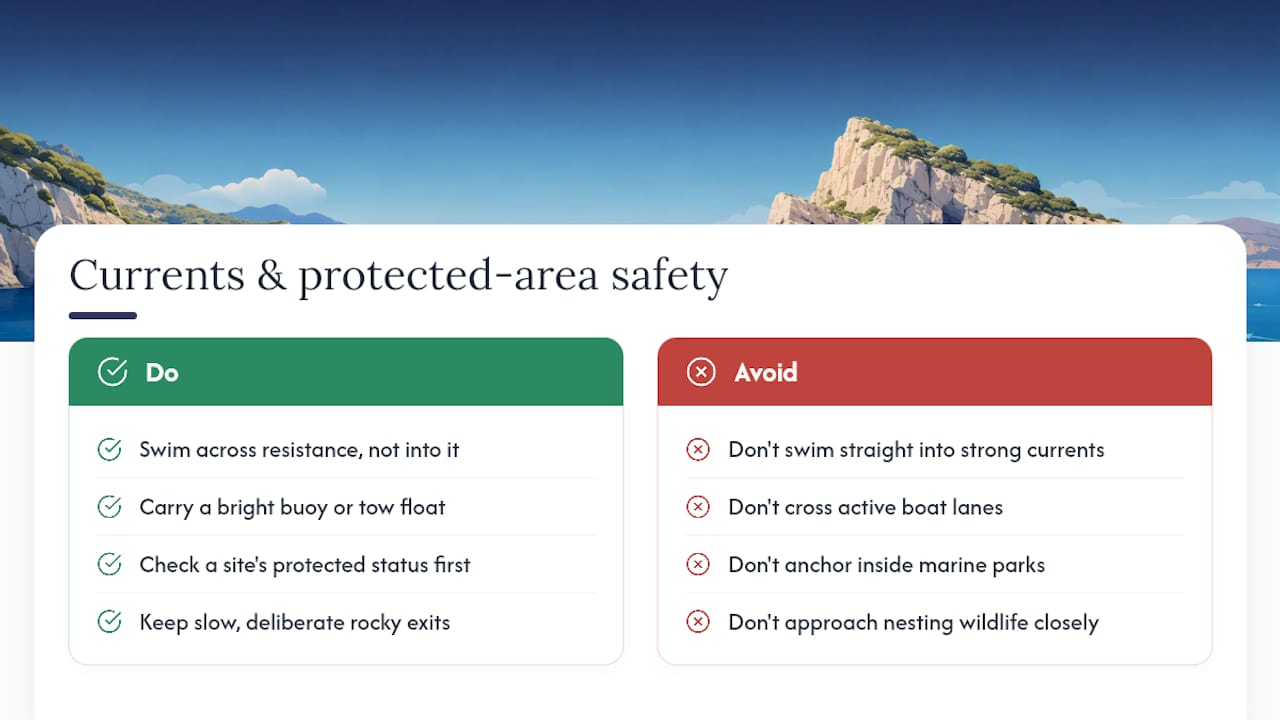
Beyond gear, the practical risks in Greek waters are almost always about timing and terrain rather than marine life. Rocky entry points, common at Kleftiko, Paleokastritsa, and Dia, demand a slow, deliberate exit; rushing onto slick limestone is where most minor injuries happen. Boat traffic is the other real hazard, particularly at popular anchorages by midday, so swimmers should stay visible with a bright buoy or tow float and avoid crossing boat lanes.
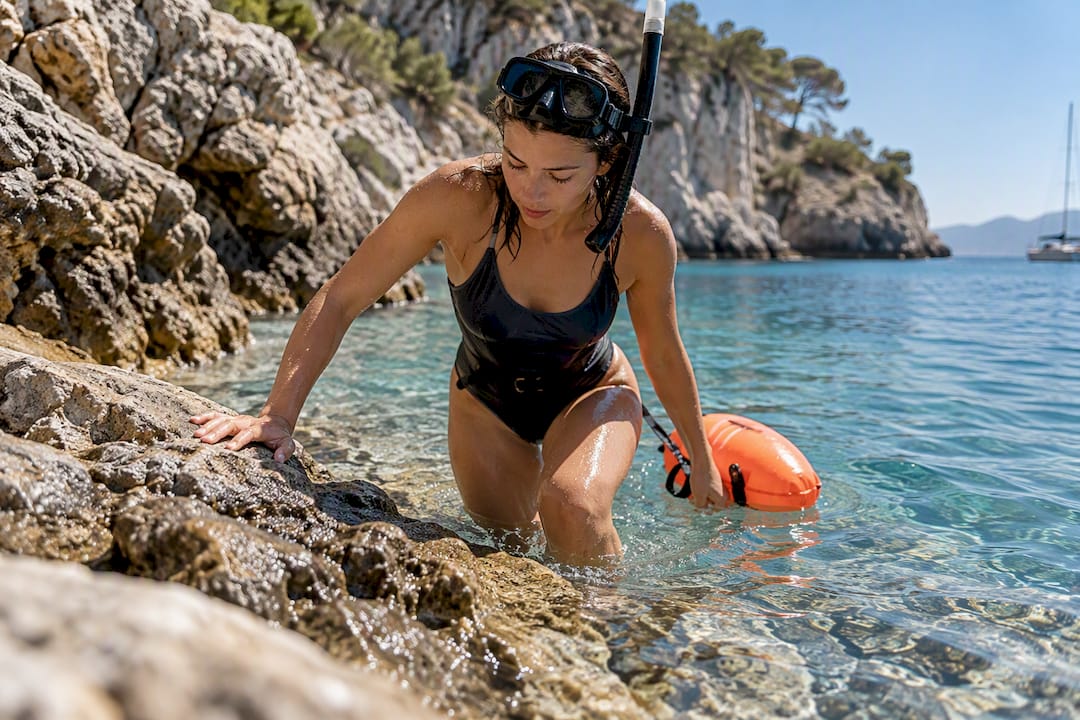
Currents around headlands and cave mouths can be stronger than they look from the surface, especially at Limni Keriou’s caves and the narrower channels near Antipaxos. If you feel resistance building, swim across the current rather than straight into it. Protected-area rules add another layer worth knowing before you go: marine parks and turtle-nesting zones, including Alonissos and parts of Zakynthos, restrict anchoring, set minimum approach distances for wildlife, and in some cases limit scuba activity while still allowing snorkeling, as is the case at Peristeronisi near Toroni. Checking a site’s protected status before you pack the boat saves an awkward conversation with a park ranger later.
A Morning at Kleftiko, Seen From the Deck
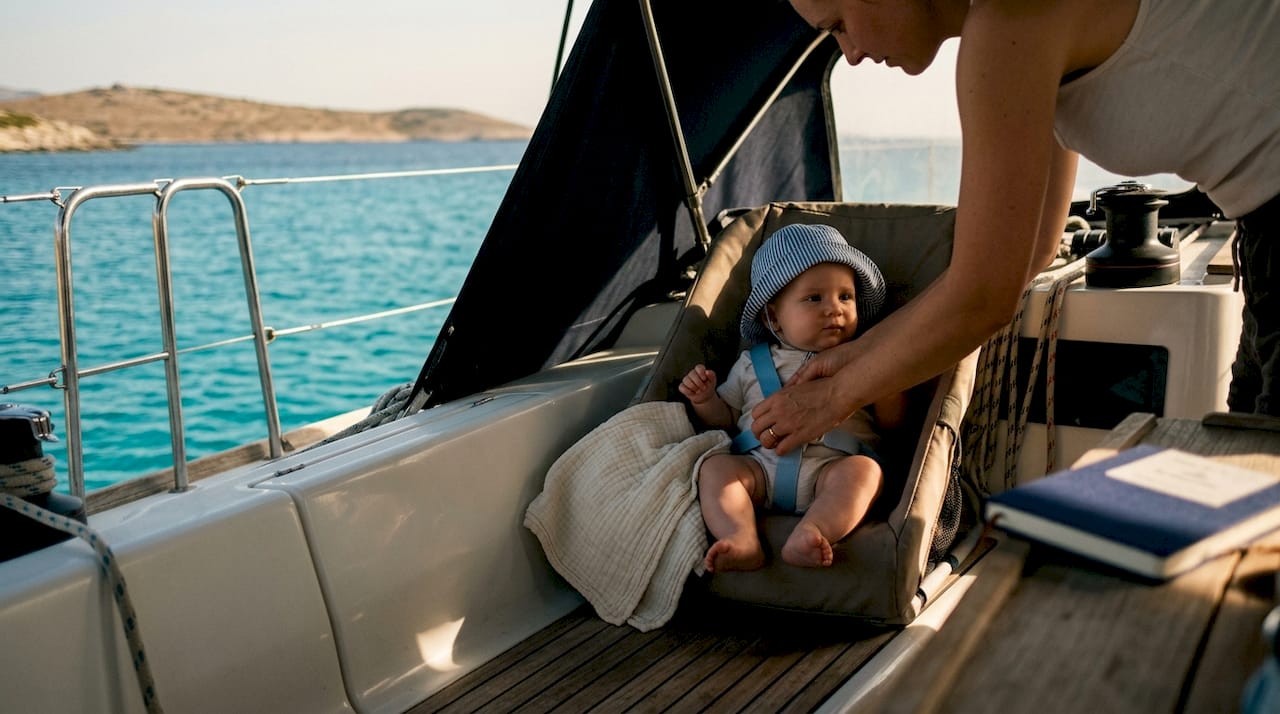
There’s a particular quiet that happens when you anchor at Kleftiko before the first day-tripper boats arrive: flat water, white rock glowing pink in the early light, and nobody else in the caves. That’s the version of Greek snorkeling worth chasing, and it only happens with an early departure and someone who knows the anchorage. On a well-run sailing day, mixed-ability groups, confident swimmers and nervous first-timers alike, get equal time to enjoy it, because the boat waits until everyone’s ready rather than the other way around.
- Sail
Book a Private Sailing Route That Puts You at These Spots First
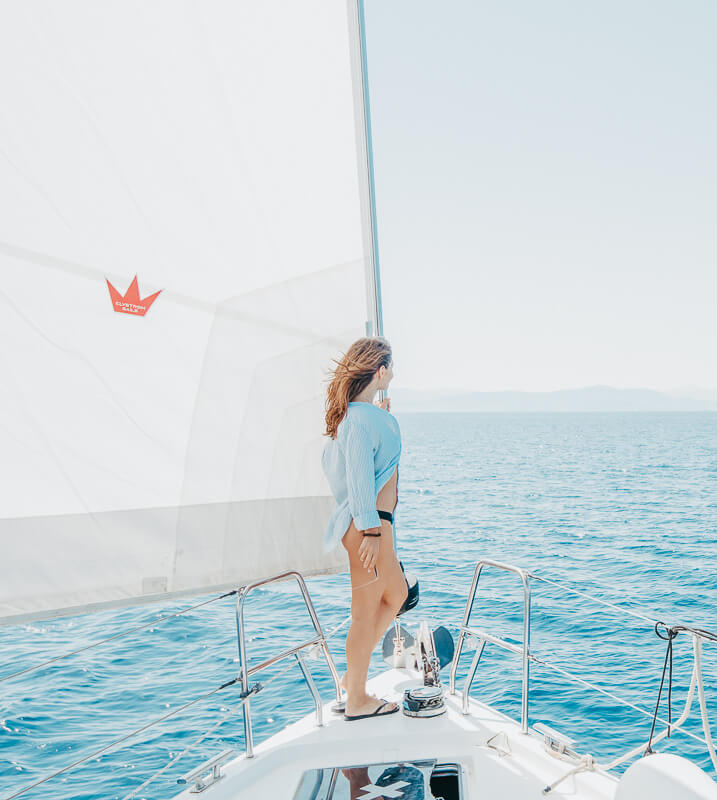
Most of the coves on this list share the same catch: no road gets you there, and the day-boat crowd beats you to the good light if you’re not moving early. A private charter solves both problems at once. Sailarmada’s Grecia - Go Private route, from €560 per week per person, is built around exactly that: skippers who know which cove is calm at 8 a.m. and which one turns choppy by noon, and a schedule flexible enough to chase the morning window instead of fighting it.
Every route is guided by a professionally trained skipper through CAPETAN.club, so snorkel stops come with local knowledge of currents, protected-area boundaries, and the sheltered anchorages that don’t show up on a rental map. Groups can mix confident swimmers with total beginners on the same itinerary, and the boat itself becomes base camp between stops. If Kleftiko, the Keri Caves, or a quiet Ionian cove has been on your list, check available dates on the Greece private sailing page and build a week around them.
Where to Read More Before You Go
- White Beach in Santorini, for a first-hand read on visibility and rocky footing at one of the Cyclades’ standout sites.
- Limni Keriou — Keri Caves guide, for detail on cave trips and bioluminescence nights in Zakynthos.
- The Kleftiko Sea Caves Guide, for boat-only access notes and crowd timing in Milos.
- Peristeronisi snorkeling guide, for protected-area rules near Toroni.
- Corfu boat snorkeling spots, for Paxos and Antipaxos cave routes.
- Kefalonia snorkeling overview, for turtle nesting beaches and Posidonia habitats.
Surse
- White Beach in Santorini
- Limni Keriou — Keri Caves (Zakynthos Guide)
- The Kleftiko Sea Caves Guide: Milos | Beaches for Kings
- Peristeronisi — Toroni snorkeling (DiveJourney)
FAQ
Is snorkeling in Greece worth it?
Yes, particularly if you get to the boat-only coves and sea caves rather than sticking to crowded beaches. The payoff is limestone caves, seagrass habitats, octopus, and, in the right season and location, sea turtles, rather than a tropical reef.
Are there any coral reefs in Greece?
No. Greece has no shallow, reef-building coral; the underwater scenery instead comes from Posidonia oceanica seagrass meadows and rocky limestone formations, with deep-water red coral living far below snorkel depth.
Where in Greece is like the Maldives?
Balos Lagoon in Crete comes closest, with shallow, pale turquoise water and a sandbar stretching toward Gramvousa islet. It lacks the coral reef life of the Maldives but matches the color and calm shallows people associate with it.
Where to see turtles in Greece?
Zakynthos, especially Laganas Bay and Marathonisi (Turtle Island), is the most reliable spot for loggerhead turtle sightings, with nesting activity through the summer. Parts of Kefalonia’s southern coast, near Skala and Katelios, also see regular turtle activity.
Do I need to book a boat to snorkel the best spots in Greece?
For sites like Kleftiko, Limni Keriou, and the Paxos sea caves, yes, there’s no shore route in. A private charter such as Sailarmada’s Greece sailing holidays also lets you time arrivals for the calm morning window before wind and crowds build.