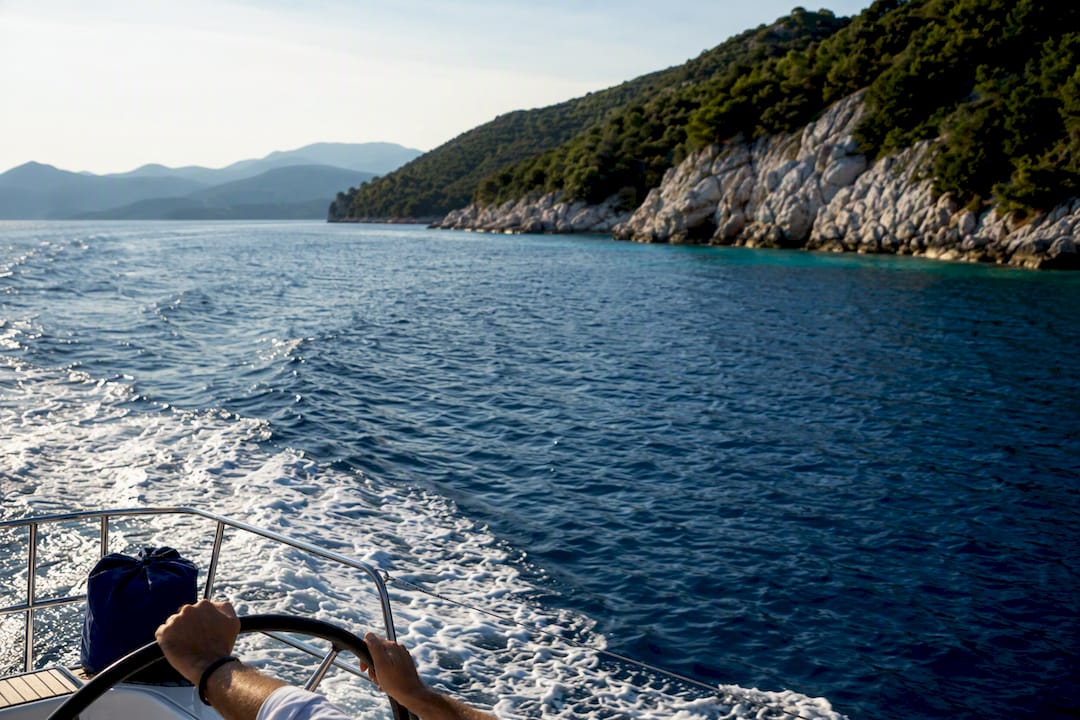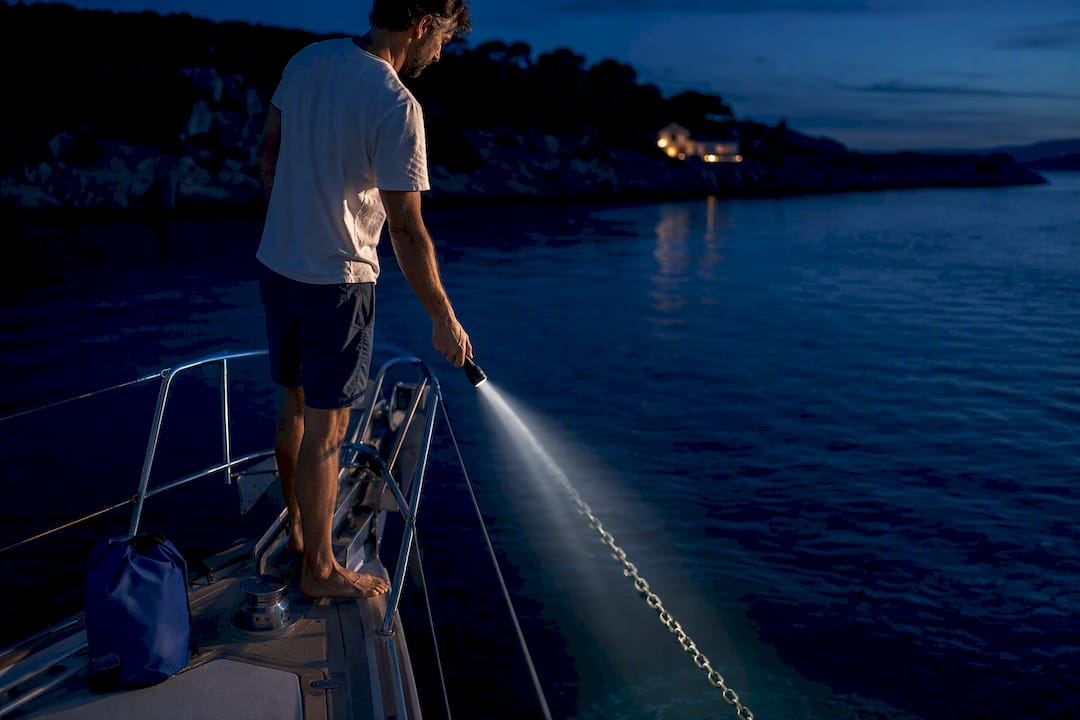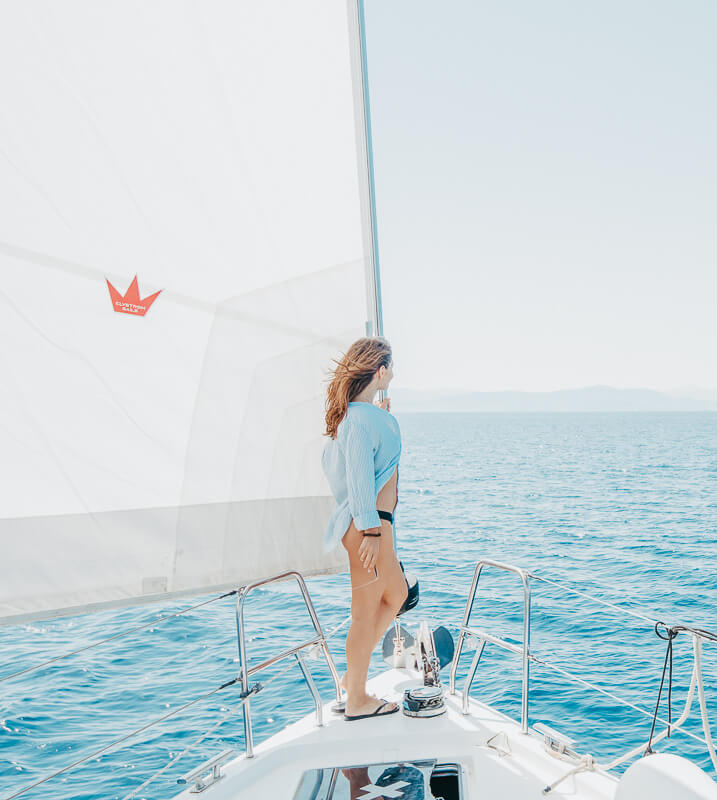
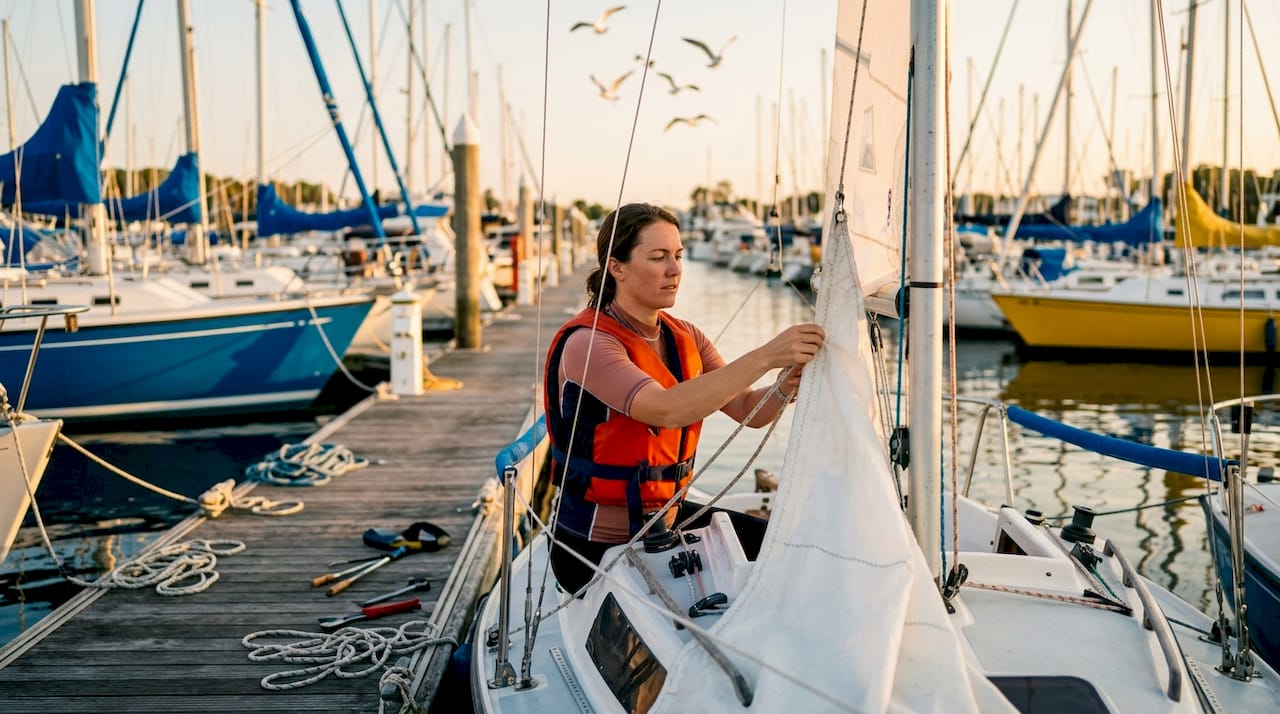
First time sailing is defined as your maiden voyage on a sailboat, where you learn to read the wind, handle lines, and move through open water under sail power. Most beginners enter through crewed charters or flotilla sailing, which require zero prior experience and put a professional skipper in charge of safety. Certifications like ASA (American Sailing Association) and RYA (Royal Yachting Association) offer structured paths for those who want to progress further. Course durations range from 2-day “Start Yachting” intensives to 5-day “Competent Crew” programs. That range means you can get a real taste of sailing in a single weekend, or commit to a full week and come away with genuine skills.
What does a first time sailing guide actually cover?
A solid beginner sailing guide covers four things: the vocabulary of sailing, how a boat moves, how to prepare for a trip, and how to pick the right destination. Skip any one of these and your first experience will feel confusing instead of freeing. The good news is that none of it is complicated once someone explains it clearly. You do not need a license to enjoy your first sail. Affrètements en flottille et avec équipage allow novices to enjoy sailing without any prior experience.
Essential sailing basics every beginner should know
Sailing has its own language, and learning it is not optional. Sailing terminology is mandatory for safe, clear communication onboard. When your skipper shouts “ready about,” you need to know that a tack is coming and to duck your head. Misunderstanding a command at the wrong moment can cause real problems.
Here are the core terms every beginner should memorize before stepping aboard:
- Arc = front of the boat; stern = back
- Port = left side when facing forward; starboard = right side
- Halyards = lines that raise and lower sails
- Sheets = lines that control the angle of the sails
- Tacking = turning the bow through the wind to change direction
- Gybing = turning the stern through the wind (more forceful, requires care)
- Points of sail = the angles at which a boat can sail relative to the wind
Beyond vocabulary, you need to understand how a sailboat actually moves. Wind hits the sail, creates lift (similar to an airplane wing), and pushes the boat forward. The angle between the boat and the wind determines your point of sail, from close-hauled (sailing nearly into the wind) to a broad reach (wind coming from behind). You cannot sail directly into the wind, so you zigzag upwind in a technique called beating.
Reading invisible wind dynamics on the water is often more challenging than learning knots. It requires hours of on-water experience that no textbook can replace. Watch the ripples on the surface, feel the pressure on your cheek, and look at the telltales (small ribbons attached to the sail) to understand what the wind is doing.
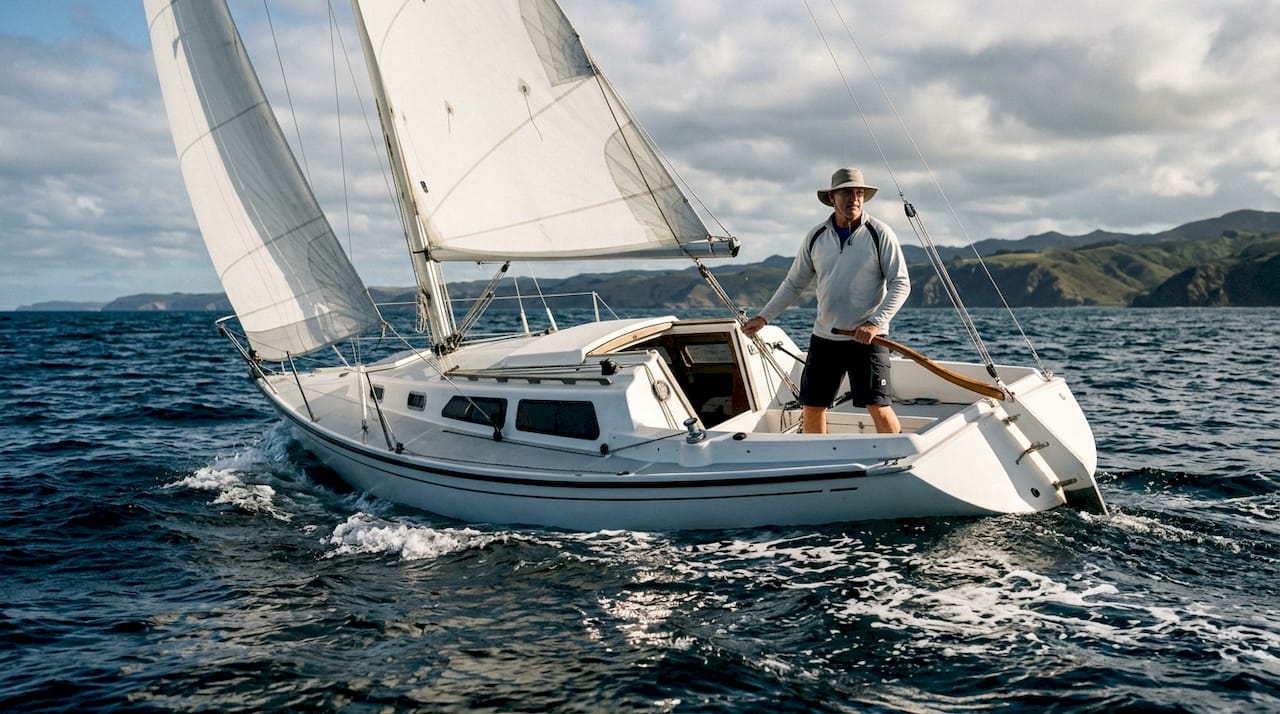
Conseil de pro : Before your trip, spend 20 minutes on Sailarmada’s boat terminology guide to learn the parts of a sailboat. Arriving with that knowledge makes your first day on the water dramatically more enjoyable.
How do you prepare for your first sailing trip?
Preparation separates a stressful first sail from a genuinely great one. The right gear, a basic course, and a few mental habits make all the difference. Structured, in-person coaching accelerates learning and prevents knowledge gaps that self-teaching leaves behind. Even a single day with a qualified instructor teaches you more than a week of YouTube videos.
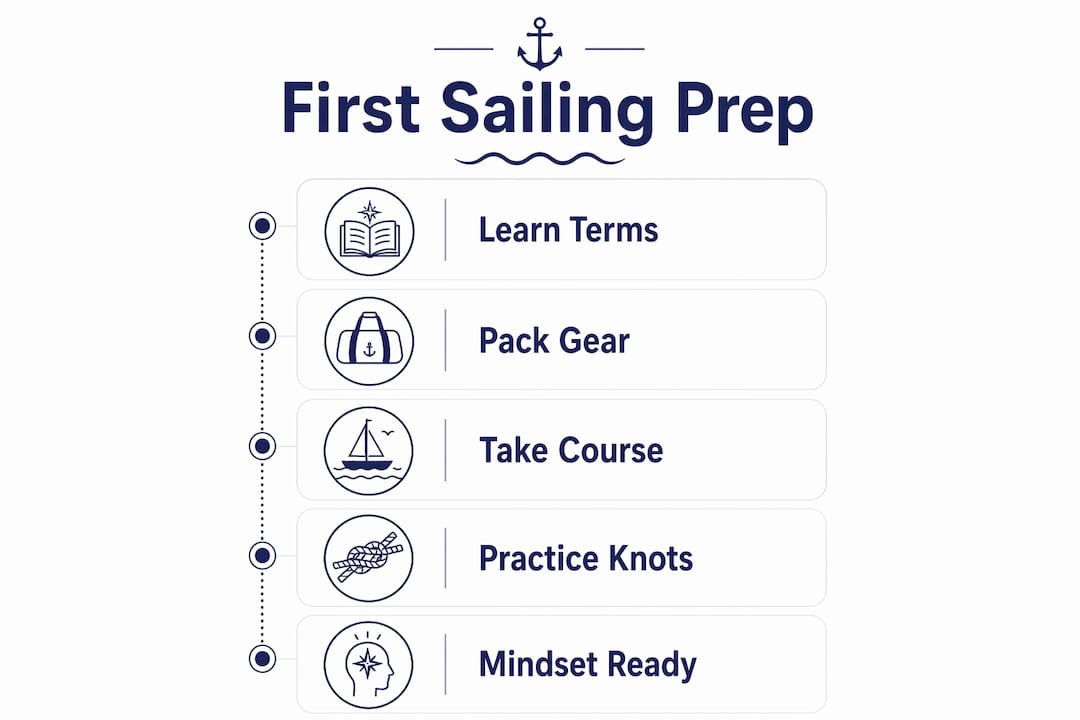
Gear checklist for your first sailing trip
Pack with function in mind, not fashion. The sea is unpredictable, and comfort directly affects how much you enjoy yourself.
- Non-marking, rubber-soled shoes (deck shoes or sailing boots): protects the boat and keeps you from slipping
- Waterproof, breathable layers: mornings on the water are cold even in summer; pack a fleece and a waterproof jacket
- Protection solaire: UV reflection off water is intense; bring SPF 50+ sunscreen, a hat, and UV-blocking sunglasses
- Dry bag: keeps your phone, passport, and valuables safe from spray
- Seasickness remedies: green apples, soda crackers, and over-the-counter medication all help; even experienced sailors can suffer seasickness, so pack remedies regardless of how confident you feel
For a broader packing framework, this guide to travel packing essentials covers items that translate well to sailing trips too.
Skills and mindset before you go
Sailing is a use-it-or-lose-it skill. Weekly practice builds muscle memory far faster than one big outing every few months. If you can take a short course before your trip, do it. Programs like US Sailing Basic Keelboat or RYA Competent Crew cover 5–15 knot wind conditions, which is exactly the range you will encounter on a beginner-friendly charter.
Mentally, accept that you will make mistakes. Lines will tangle. You will pull the wrong sheet. That is completely normal. The skipper has seen it all before. Your job on day one is to observe, ask questions, and stay curious.
Conseil de pro : Practice tying a bowline knot at home before your trip. It is the most useful knot in sailing, and being able to tie it confidently gives you an immediate sense of competence on board.
What type of sailing trip is best for beginners?
Choosing the right trip format matters as much as choosing the right destination. The three main options for beginners are crewed charters, bareboat charters, and flotilla sailing.
| Trip type | Ce que cela signifie | Meilleur pour |
|---|---|---|
| Charters avec équipage | A professional skipper (and sometimes a cook) runs the boat | Complete beginners who want to relax and observe |
| Affrètement sans équipage | You rent the boat and sail it yourself | Sailors with at least basic certification |
| Navigation en flottille | A group of boats sails together with a lead boat providing support | Beginners who want guidance with some independence |
For most first-timers, a crewed charter or flotilla is the right call. You get the full sailing experience without the pressure of being responsible for the vessel. Sailarmada’s private or group sailing holidays cover both formats, with experienced skippers leading every trip.
Beginner-friendly destinations
Protected waters with short passages create a far more enjoyable first sailing experience. The Ionian Islands in Greece, the Croatian Adriatic, and the British Virgin Islands (BVI) are the three most recommended beginner destinations in the world. All three offer calm, sheltered anchorages, reliable summer winds, and short daily passages of 2–4 hours. You spend more time swimming in crystal-clear water and exploring gorgeous coastal villages than you do grinding upwind.
Monohull vs. catamaran: which is better for beginners?
A catamaran offers more stability, more deck space, and less heeling (the tilting sensation when sailing). That makes it the more comfortable choice for first-timers who are nervous about motion sickness or tight spaces. A monohull is more traditional, more responsive to the wind, and generally cheaper to charter. Both work well for beginners on protected waters. If you are traveling with a family or a group of friends who have never sailed before, a catamaran’s wide deck and multiple cabins make the experience feel more like a floating vacation home.
Basic sailing techniques and etiquette for your first voyage
Once you are on the water, a few core techniques and behaviors will make you a valued crew member rather than a passenger.
- Learn the points of sail first. Close-hauled, beam reach, broad reach, and running are the four positions you will hear most. Each requires a different sail trim, and understanding them helps you anticipate what the skipper will ask next.
- Tacking and gybing. A tack turns the bow through the wind; a gybe turns the stern. Gybing is more powerful and requires everyone to duck as the boom swings across. Always confirm with the skipper before either maneuver.
- Trim the sails, do not just set them. Sails need constant small adjustments as the wind shifts. Watch the telltales: if they flutter on the leeward side, ease the sheet slightly. If they flutter on the windward side, pull it in.
- Respect the skipper’s authority. On a boat, the skipper’s word is final. This is not a hierarchy thing; it is a safety thing. Follow instructions immediately and ask questions afterward.
- Keep the boat tidy. Coil lines after use, stow gear below when underway, and never leave anything loose in the cockpit. A cluttered deck is a trip hazard.
Common beginner mistakes include pulling the wrong line, standing in the wrong spot during a maneuver, and forgetting to look for other boats. The fix for all three is the same: stay aware, stay curious, and keep your eyes moving. Sailarmada’s sailing holiday terminology guide is a great reference to review the night before each day on the water.
Conseil de pro : When in doubt, stay low and hold on. Moving around a boat in motion is the most common cause of minor injuries for beginners. Crouch, grip the rail, and move deliberately.
Principaux enseignements
The single most effective approach to first time sailing is combining structured instruction, beginner-friendly trip formats, and protected-water destinations before attempting anything more demanding.
| Point | Détails |
|---|---|
| Learn the language first | Sailing terminology prevents dangerous miscommunication and builds confidence from day one. |
| Start with a crewed charter or flotilla | These formats give beginners full sailing exposure without the pressure of skippering independently. |
| Choose protected waters | Destinations like the Ionian Islands, Croatian Adriatic, and BVI offer calm conditions ideal for first trips. |
| Practice regularly after your trip | Weekly sailing builds muscle memory far faster than occasional outings. |
| Pack for function, not fashion | Waterproof layers, non-marking shoes, and seasickness remedies are non-negotiable on your first sail. |
What I have learned after years of watching beginners find their sea legs
Most first-time sailors arrive worried about the wrong things. They stress about knots and navigation charts when the real challenge is much simpler: learning to trust the boat. A well-rigged sailboat wants to sail. It is designed to work with the wind, not against it. Once you stop fighting the heel and start feeling the rhythm of the water, something clicks.
The biggest mistake I see is people skipping structured instruction because they think they can figure it out on the water. You can, eventually. But face-to-face instruction prevents bad habits that take years to unlearn. One good day with a qualified skipper is worth more than ten self-guided outings.
The other thing nobody tells beginners? Wind awareness is the hardest skill to develop, and it never fully stops being a challenge. Reading wind patterns on water requires practical observation that surpasses any theoretical study. The sailors who improve fastest are the ones who spend time just watching the water, even when they are not sailing.
My honest advice: book a flotilla or crewed charter for your first trip, pick a gorgeous destination with calm summer winds, and give yourself permission to be a beginner. The freedom you feel when a sail fills and the boat surges forward for the first time is genuinely unlike anything else. That moment is worth every knot you fumbled and every wrong line you pulled.
- Voile
Your first sailing adventure starts here
Ready to turn this guide into a real trip? Sailarmada offers private and group sailing holidays across Greece, Croatia, Italy, and beyond, with experienced skippers who make first-time sailors feel completely at home on the water.
Whether you want a relaxed crewed charter in the Ionian Islands or a sociable flotilla week along the Croatian coast, Sailarmada has a format that fits your comfort level. Every trip comes with curated routes, local knowledge, and the kind of on-water support that turns a nervous beginner into someone who books their second sailing trip before the first one ends. Browse Destinations de navigation en Méditerranée and find the trip that feels right for you.
FAQ
Do I need a license for my first sailing trip?
No license is required for leisure sailing as a crew member. Crewed charters and flotilla sailing put a licensed skipper in charge, so you can enjoy the full experience without any certification.
How long does it take to learn to sail?
Beginners can grasp basic boat handling in a 2-day weekend course, but independent skippering typically requires weeks to months of consistent practice beyond that initial introduction.
What is the best destination for a first sailing trip?
The Ionian Islands in Greece, the Croatian Adriatic, and the BVI are the top choices. All three offer protected waters and short passages that make conditions forgiving and enjoyable for beginners.
What is the difference between a flotilla and a bareboat charter?
A flotilla is a group of boats sailing together with a professional lead boat providing daily support, making it ideal for beginners. A bareboat charter means you rent and skipper the boat yourself, which requires at least basic sailing certification.
How do I avoid seasickness on my first sail?
Pack soda crackers, green apples, and over-the-counter medication before you go. Stay on deck, focus on the horizon, and stay hydrated. Even experienced sailors get seasick occasionally, so preparation is the best defense.