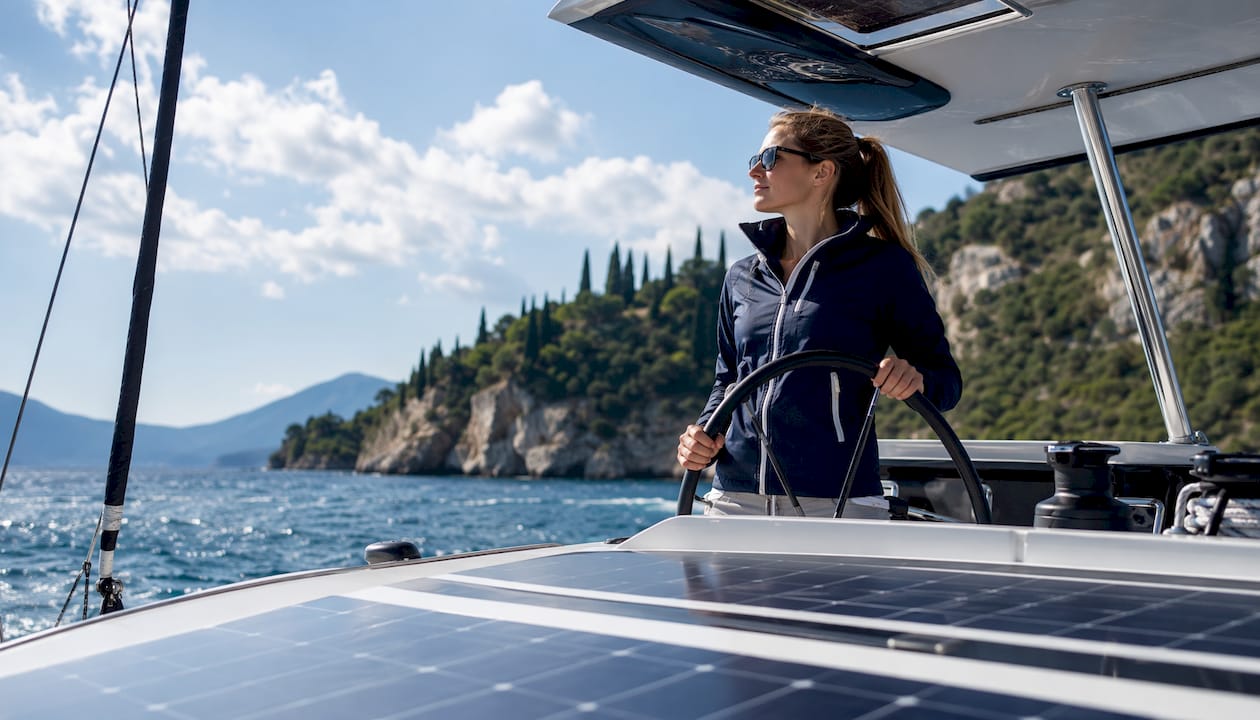
Le voyage en yacht durable consiste à explorer la Méditerranée à bord d’un yacht tout en minimisant son empreinte environnementale grâce à des bateaux respectueux de l’environnement, des comportements responsables et des technologies vertes. Le secteur qualifie cette approche de “ tourisme maritime responsable ”, et elle englobe tous les aspects, du choix du bateau à la manière dont on jette l’ancre dans une baie isolée. La Méditerranée est l’une des mers les plus riches en biodiversité au monde, et elle subit une pression réelle due au tourisme, à la pollution et au changement climatique. La bonne nouvelle, c’est que vous pouvez naviguer sur ses eaux cristallines, vous imprégner des magnifiques cultures locales, tout en laissant ces eaux dans un meilleur état que celui dans lequel vous les avez trouvées.
Quelles sont les principales caractéristiques des yachts écologiques ?
La manière la plus efficace de réduire votre empreinte environnementale commence avant même que vous ne quittiez le quai. Tout commence par le navire lui-même.
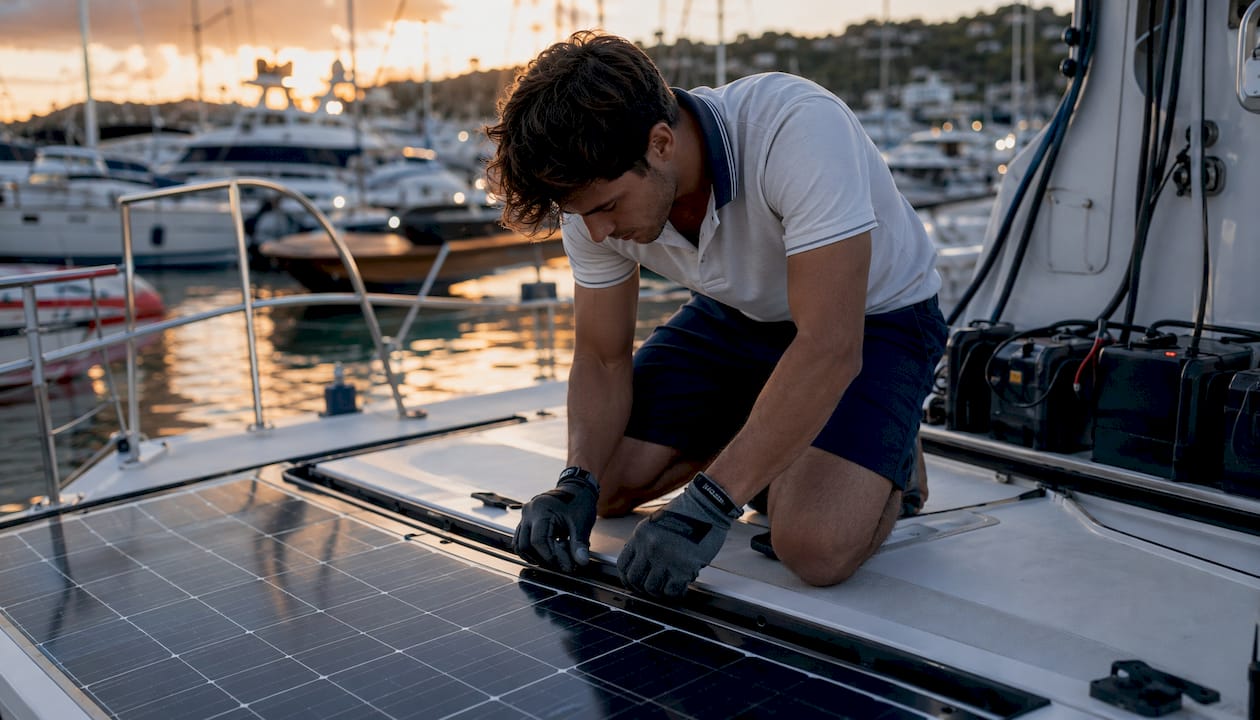
Les yachts écologiques modernes associent l'énergie solaire, la propulsion hybride et des matériaux durables afin de réduire considérablement les émissions. Le Sunreef 100 Eco, par exemple, est équipé d’un ensemble de batteries d’une capacité de 770 kWh qui alimente les systèmes de réfrigération, d’éclairage et de navigation sans consommer la moindre goutte de carburant fossile pendant la journée. C’est là la preuve concrète que luxe et développement durable ne sont pas incompatibles.
Voici les critères à prendre en compte lors du choix d'un yacht écologique :
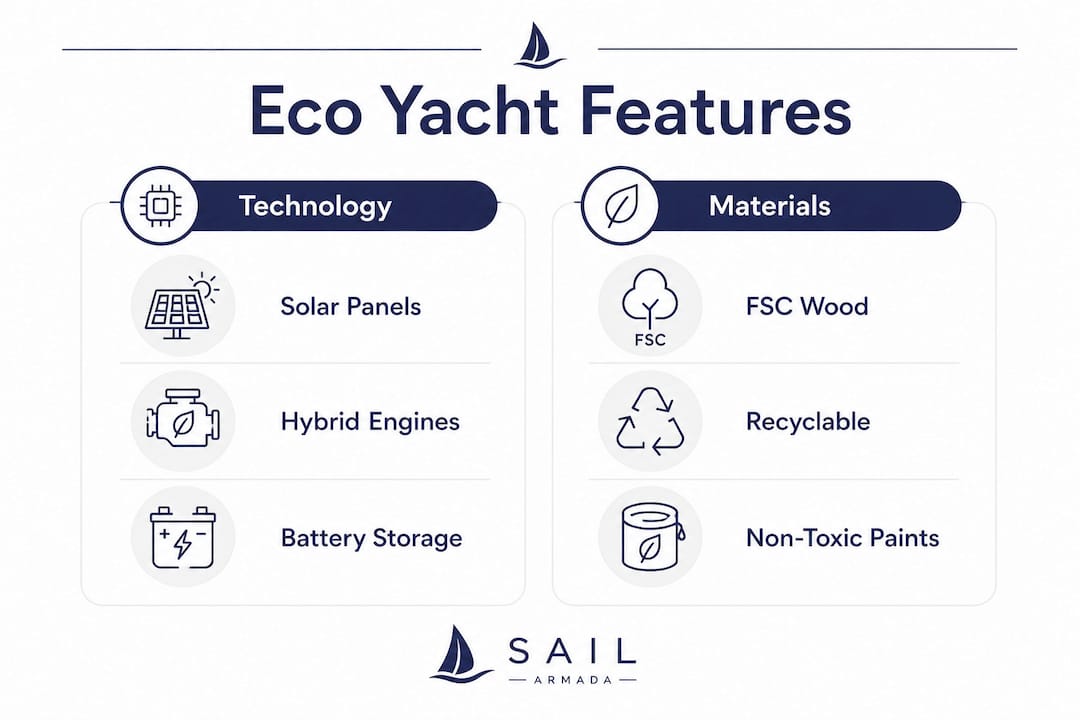
- Systèmes solaires photovoltaïques : Des panneaux intégrés aux voiles ou aux surfaces du pont rechargent d'importants parcs de batteries au lithium, qui alimentent les équipements de bord sans émettre de gaz à effet de serre.
- Propulsion hybride : Les moteurs électriques assurent les manœuvres dans les ports et la navigation à faible vitesse, tandis qu'un moteur diesel prend le relais pour les longues traversées. Cela permet de réduire considérablement la consommation de carburant.
- Matériaux durables : Composites recyclables et bois certifié FSC sont désormais la norme dans la construction navale d'avant-garde. Ces matériaux permettent d'éviter que les bateaux ne finissent à la décharge en fin de vie.
- Gestion intelligente de l'énergie : Les systèmes qui tamisent automatiquement l'éclairage, régulent la climatisation et surveillent la consommation électrique permettent de maintenir celle-ci à un faible niveau sans que vous ayez à lever le petit doigt.
- Propulsion électrique : Les bateaux électriques se caractérisent par un fonctionnement silencieux, un rendement élevé et un entretien réduit par rapport aux navires traditionnels fonctionnant uniquement au diesel.
Les catamarans méritent ici une mention particulière. Leurs coques larges et stables permettent de transporter efficacement des panneaux solaires, et leur faible tirant d'eau vous permet d'accéder à des mouillages isolés inaccessibles aux yachts à moteur plus imposants. Si vous souhaitez comprendre pourquoi les catamarans sont le choix idéal pour des voyages écologiques, le Guide de location de catamarans Sur Sailarmada, tout est expliqué très clairement.
| Fonctionnalité | Avantage environnemental |
|---|---|
| Panneaux solaires + parc de batteries | Zéro émission pendant les périodes de consommation diurne des hôtels |
| Propulsion hybride ou électrique | Réduction de la consommation de carburant et de la pollution sonore |
| Bois et matériaux composites certifiés FSC | Un cycle de vie durable, moins de déchets mis en décharge |
| Gestion intelligente de l'énergie | Réduction de la consommation énergétique globale à bord |
Conseil de pro : Avant de réserver, demandez à votre société de location le bilan énergétique du yacht ou ses certifications en matière de développement durable. Un opérateur sérieux vous communiquera ces informations sans hésitation.
Comment adopter des comportements respectueux de l'environnement lors d'une croisière en Méditerranée
Choisir un navire respectueux de l'environnement n'est qu'une partie de l'équation. Ce que vous faites à bord et à terre a tout autant d'importance.
Voici les habitudes les plus efficaces à adopter pendant votre voyage :
- Utilisez une crème solaire respectueuse des récifs coralliens. On estime que 30–50% des récifs coralliens ont déjà été perdues, en partie à cause du blanchiment chimique provoqué par les crèmes solaires classiques. Optez pour des formules minérales à base de zinc ou de titane non nanométriques, certifiées par la norme « Protect Land + Sea ».
- Jetez l'ancre avec précaution. Le balayage de la chaîne d'ancre racle les fonds marins en décrivant un large arc, arrachant les herbiers marins et les coraux. Veillez à toujours poster un observateur à la proue pour repérer une zone sablonneuse, ou utilisez une bouée d'amarrage lorsqu'elle est disponible.
- Gérez correctement vos déchets. Ne rejetez jamais d'eaux usées non traitées à moins de trois milles marins de la côte. Utilisez des sacs compostables pour les déchets alimentaires et triez les déchets recyclables à chaque escale dans un port de plaisance.
- Optez pour des savons biodégradables. Les liquides vaisselle et les shampoings classiques contiennent des tensioactifs nocifs pour la faune marine. Les alternatives biodégradables se décomposent sans danger dans l'eau de mer.
- Remplacer les éponges synthétiques. Les éponges synthétiques libèrent des microplastiques à chaque fois que vous frottez. Les éponges naturelles en cellulose ou les éponges de mer remplissent la même fonction sans rejeter de particules de plastique dans l'eau.
- Empêcher la propagation des espèces envahissantes. Avant de se déplacer d'un mouillage à l'autre, vérifiez votre équipement et vidangez l'eau de cale. Retirez toute végétation présente sur la coque, la chaîne d'ancre et le canot. Ce simple geste permet de réduire l'une des plus grandes menaces écologiques qui pèsent sur les milieux aquatiques méditerranéens.
- Économisez l'eau et l'électricité. Prenez des « douches de marine » (se mouiller, se savonner, se rincer en moins de deux minutes), éteignez les lumières dans les cabines inoccupées et ne faites fonctionner le dessalinisateur que lorsque le banc de batteries est complètement chargé.
- Respectez les zones marines protégées. La Grèce, la Croatie et l'Italie ont toutes mis en place des parcs marins soumis à des règles strictes en matière de mouillage et de pêche. Consultez les cartes marines et respectez-les.
Conseil de pro : Emportez un petit sac en filet pour les opérations de nettoyage de la plage. Ramasser quelques morceaux de plastique à chaque fois que vous vous baignez ne vous coûte rien et fait une différence visible pour les endroits que vous aimez.
Si vous vous posez également des questions sur ce que vous mangez à bord, concilier la voile durable avec une alimentation saine pendant les fêtes C'est plus simple que vous ne le pensez. Acheter des produits locaux sur les marchés portuaires permet de réduire les déchets d'emballage et de soutenir les communautés que vous visitez.
Comment organiser un itinéraire méditerranéen respectueux de l'environnement
Un itinéraire bien pensé est la clé de voûte de toute croisière responsable. Les destinations choisies, les dates de départ et les prestataires auprès desquels vous dépensez votre argent ont tous une incidence sur votre empreinte environnementale.
- Privilégiez les ports de plaisance labellisés « Pavillon bleu » et les ports certifiés écologiques. Le programme « Pavillon bleu » certifie les plages et les ports de plaisance qui respectent des normes strictes en matière d'environnement, de sécurité et de qualité de service. En séjournant dans des ports de plaisance certifiés, vous avez l'assurance que vos déchets sont traités correctement et que vos frais contribuent au financement d'infrastructures durables.
- Choisissez des destinations où la protection du milieu marin est rigoureuse. Le parc national des Kornati en Croatie, les îles Éoliennes en Italie et le parc national marin d’Alonissos en Grèce offrent tous des expériences de navigation à couper le souffle, tout en bénéficiant de mesures de protection écologique rigoureuses. Ces lieux récompensent les visiteurs attentifs et respectueux.
- Prévoyez votre voyage de manière à éviter les périodes sensibles pour la faune. Les tortues caouannes pondent sur les plages grecques et turques de juin à août. Évitez de jeter l'ancre près des plages de nidification pendant ces mois-là et limitez le bruit la nuit à proximité du rivage.
- Soutenez les commerces locaux à chaque étape de votre voyage. Mangez dans des tavernes familiales, achetez du miel et de l'huile d'olive sur les marchés de village et faites appel à des guides locaux pour des visites culturelles. Cela permet de faire profiter la communauté des retombées économiques du tourisme, plutôt que de les voir profiter aux grands opérateurs internationaux.
- Réservez auprès d'agences de location qui accordent la priorité au développement durable. Demandez si l'opérateur dispose d'une certification environnementale, quelle est sa politique en matière de déchets et si ses skippers ont suivi une formation à la préservation du milieu marin. Sailarmada sélectionne avec soin Itinéraires de navigation en Méditerranée en gardant précisément ces considérations à l'esprit.
- Naviguez davantage à la voile, moins au moteur. Organisez vos traversées de manière à tirer parti des vents dominants. Le Meltemi en mer Égée et le Mistral en Méditerranée occidentale sont puissants et prévisibles. En les mettant à profit, vous réduisez votre consommation de carburant et rendez votre voyage encore plus exaltant.
La transition structurelle vers le développement durable dans le secteur nautique est désormais portée par la réglementation, l'innovation et la prise de conscience des plaisanciers. En choisissant des destinations et des opérateurs qui s'inscrivent dans cette transition, vous investissez votre argent là où cela compte le plus.
Quelles sont les erreurs les plus courantes en matière de navigation de plaisance durable ?
Même les marins les mieux intentionnés commettent des erreurs qui auraient pu être évitées. Les connaître à l'avance vous évite de réduire à néant tout le bon travail que vous avez déjà accompli.
- Sous-estimer les dégâts causés par les ancres. De nombreux marins jettent l'ancre sans vérifier la nature du fond. Depuis le cockpit, une zone sablonneuse ressemble à s'y méprendre à une prairie sous-marine. Utilisez toujours un observateur ou un masque de plongée pour vérifier la nature du fond avant de jeter l'ancre.
- Utiliser des produits d'entretien inadaptés. Les produits nettoyants à base d'eau de Javel et les dégraissants synthétiques polluent directement la colonne d'eau. Le programme « Florida Clean Boater », l'un des modèles les plus souvent cités pour éducation à la prévention de la pollution, recommande les produits certifiés « Safer Choice » par l'EPA comme norme minimale pour le nettoyage à bord.
- Négliger l'entretien du moteur. Un moteur diesel mal réglé consomme davantage de carburant et émet davantage de particules. Faites réviser votre moteur avant chaque saison et vérifiez la turbine, les filtres à carburant et les injecteurs.
- Ne pas tenir compte du principe “ ne laissez aucune trace ” au-delà des déchets. En navigation de plaisance, le principe « Ne laissez aucune trace » ne se limite pas au ramassage des déchets. Il implique également de ne pas introduire d’espèces envahissantes, de ne pas perturber la faune sauvage et de ne pas ramasser de coquillages ou d’animaux marins en guise de souvenirs.
- Considérer le développement durable comme une question de « tout ou rien ». Il n'est pas nécessaire de posséder un super-yacht entièrement électrique pour voyager de manière responsable. Les petits gestes quotidiens, pris avec constance, finissent par faire la différence. Opter pour une crème solaire respectueuse des récifs, utiliser des bouées d'amarrage et acheter des produits alimentaires locaux sont autant de mesures qui comptent.
“ La mer se moque de vos intentions. Elle ne retient que vos actes. Chaque ancre que vous jetez dans une herbière marine cause de réels dégâts, quel que soit l’amour que vous portez à l’océan. La chose la plus importante qu’un marin puisse faire, c’est de ralentir, de regarder autour de lui avant de jeter l’ancre et de toujours opter pour la bouée d’amarrage. ”
Principaux enseignements
Pour voyager en yacht de manière durable en Méditerranée, il faut choisir des bateaux respectueux de l'environnement, adopter des comportements responsables à bord et planifier des itinéraires qui protègent les écosystèmes marins et soutiennent les communautés locales.
| Point | Détails |
|---|---|
| Choisissez un bateau respectueux de l'environnement | Avant de réserver, vérifiez que l'établissement dispose de panneaux solaires, d'un système de propulsion hybride et de matériaux certifiés FSC. |
| Jetez l'ancre de manière responsable | Utilisez un guide d’amarrage ou des bouées d’amarrage pour éviter d’endommager les herbiers marins et les coraux. |
| Optez pour des produits respectueux des récifs coralliens | Utilisez à bord des crèmes solaires certifiées « Protect Land + Sea » et des savons biodégradables. |
| Préparez un itinéraire respectueux des spécificités culturelles | À chaque étape, privilégiez les ports de plaisance labellisés « Pavillon Bleu », les parcs marins et les commerces locaux. |
| Empêcher la propagation des espèces envahissantes | Avant de changer de mouillage, vérifiez le matériel, vidangez l'eau de cale et retirez les débris végétaux. |
Pourquoi la navigation durable change votre regard sur la Méditerranée
Honnêtement, ce qui m’a le plus surpris dans la navigation durable, c’est à quel point l’expérience s’en trouve enrichie. Quand on prend le temps de scruter les fonds avant de jeter l’ancre, on aperçoit alors les herbiers marins, les poulpes cachés dans les rochers et les petits poissons qui filent entre les maillons de la chaîne d’ancre. On cesse de se précipiter de port en port et on commence à remarquer ce qui rend chaque baie véritablement unique.
Les voyageurs qui profitent le plus d'une croisière en Méditerranée ne sont pas ceux qui possèdent le plus grand yacht ou qui ont l'itinéraire le plus long. Ce sont ceux qui passent une heure de plus dans un petit village de pêcheurs, qui achètent leurs légumes au marché du matin et qui naviguent à la voile plutôt qu'au moteur lorsque la mer est calme et plate. Durabilité et plaisir ne sont pas antinomiques. Ils vont dans le même sens.
Mon conseil sincère : n'attendez pas d'avoir le yacht écologique parfait pour vous lancer. Choisissez deux ou trois habitudes parmi celles présentées dans cet article, appliquez-les avec constance, et partez de là. La Méditerranée vous en récompensera, un mouillage à couper le souffle après l'autre.
- Voile
L'approche de Sailarmada en matière de navigation écologique en Méditerranée
Organiser des vacances à la voile respectueuses de l'environnement ne signifie pas pour autant renoncer au confort ou à l'aventure. Sailarmada est spécialisée dans la location de yachts sur mesure en Grèce, en Croatie, en Italie, en Sardaigne et en Turquie, avec des itinéraires conçus pour vous faire découvrir le meilleur de chaque destination tout en limitant votre empreinte écologique.
Que vous organisiez un voyage en voilier privé Que ce soit pour votre famille ou pour organiser un voyage entre amis soucieux de l'environnement, Sailarmada vous aide à trouver le bateau, l'itinéraire et le skipper qui vous conviennent. L'équipe peut vous proposer un programme sur mesure pour votre semaine, en passant par des ports de plaisance certifiés écologiques, des parcs marins et des découvertes culturelles locales. Vous pouvez également explorer formules de vacances en yacht sur mesure pour organiser un voyage qui corresponde à vos valeurs et au style de votre groupe. La Méditerranée vous attend, et c’est en la traitant avec respect qu’elle se révèle sous son meilleur jour.
FAQ
Qu'est-ce que le tourisme nautique durable ?
Le tourisme nautique durable consiste à naviguer tout en minimisant l'impact environnemental grâce à des bateaux respectueux de l'environnement, à un mouillage responsable, à la gestion des déchets et au soutien aux communautés locales. Le terme utilisé dans le secteur pour désigner cette approche est « tourisme maritime responsable ».
Qu'est-ce qui fait qu'un yacht est respectueux de l'environnement ?
Un yacht respectueux de l'environnement utilise des panneaux solaires, une propulsion hybride ou électrique, ainsi que des matériaux durables tels que du bois certifié FSC et des composites recyclables. Le Sunreef 100 Eco en est un excellent exemple : il alimente ses installations hôtelières grâce à un parc de batteries de 770 kWh, sans recourir aux combustibles fossiles.
Comment protéger les récifs coralliens lorsque je fais de la voile ?
Utilisez une crème solaire respectueuse des récifs, certifiée conforme à la norme « Protect Land + Sea » ; évitez de jeter l'ancre sur des coraux ou des herbiers marins ; et remplacez les éponges synthétiques par des alternatives naturelles à base de cellulose afin de prévenir la pollution par les microplastiques.
Quel est le meilleur moment pour naviguer en Méditerranée de manière durable ?
Les saisons intermédiaires, notamment de mai à juin et de septembre à octobre, sont idéales. Vous évitez ainsi les affluences de haute saison, réduisez la pression sur les mouillages les plus prisés et évitez les périodes de nidification des tortues caouannes sur les plages grecques et turques.
Comment puis-je éviter de propager des espèces envahissantes d'un mouillage à l'autre ?
Inspectez tout votre équipement, vidangez complètement l'eau de cale et retirez toute végétation présente sur la coque et la chaîne d'ancre avant de vous rendre à un nouvel endroit. Cette pratique est reconnue comme l'un des moyens les plus efficaces de protéger les écosystèmes aquatiques.