The easiest way to experience the Aeolian Islands is a 7-day mixed land-and-boat itinerary based from Lipari or Salina, with June or September as your travel window. If you have less time, a 3-day trip hits Lipari and Vulcano hard, a 5-day trip adds a boat excursion, and 10 to 14 days lets you reach quiet Filicudi and Alicudi. A curated sailing week removes the ferry puzzle entirely.
Pe scurt:
- Base yourself on Lipari for the most ferry connections, and confirm that return ferries run that day before booking excursions, since seas can disrupt service.
- Travel in June or September for full ferry schedules without July and August crowds; outside that window, smaller island services and businesses may close.
- For Stromboli, stay overnight and confirm trail access locally before booking a hike; restricted routes make an offshore night boat the alternative.
- Allow 10 to 14 days for Filicudi and Alicudi, where ferries run less often; carry cash on Alicudi because card readers are unreliable.
Cuprins
- The 3-day sample itinerary: compact and doable
- The 5-day sample itinerary: islands plus a boat day
- The 7-day sample itinerary: the canonical week
- The 10 to 14 day slow itinerary: Filicudi and Alicudi included
- The 7-day sailing itinerary: a boat-based alternative
- Getting there and getting around: ports, timetables, and seasonality
- How to choose your base and avoid common planning mistakes
- When a curated sailing week beats a self-planned itinerary
- The seven main islands and what each one offers
- What to pack for the Aeolian Islands’ climate and activities
- What to budget for accommodation, transport, food, and activities
- Alternative ways to move between the islands
- Staying flexible: weather, opening hours, and island rhythms
- Festivals and local events worth building a day around
- My pick for first-time visitors
- Book a curated Aeolian sailing week instead of planning it yourself
- FAQ
- Surse
The 3-day sample itinerary: compact and doable
Three days is tight, but it works if you base yourself on Lipari, the archipelago’s transport hub, and keep your sights narrow. Fly into Catania or Palermo, shuttle to Milazzo, and catch a hydrofoil before midday so you land with real daylight left.
- Ziua 1: Arrive in Milazzo, hop the hydrofoil to Lipari (45 minutes to 1.5 hours depending on the vessel type and stops), check into your base, and spend the afternoon wandering Lipari Town’s castle quarter and the Marina Corta waterfront.
- Ziua 2: Take the short morning hydrofoil to Vulcano, climb the crater trail before the heat sets in, then cool off in the sulfur mud baths or a black-sand cove before returning to Lipari by early evening.
- Ziua 3: Either sleep in and browse Lipari’s obsidian and pumice quarries on a slow morning, or book a full-day boat excursion that loops past Vulcano’s coastline and back in time for your return ferry.
Buy your return hydrofoil ticket a day ahead in high season, since afternoon departures sell out fast. Pack light: a rolling bag is awkward on hydrofoil gangways and cobbled lanes, so a soft duffel travels easier. If your flight home leaves from Catania, build in at least a three-hour buffer between your last ferry and your shuttle departure, since late-afternoon sea conditions can push hydrofoil times back.
The 5-day sample itinerary: islands plus a boat day
Five days gives you room to breathe and still see two or three islands properly. Lipari works as a base for its connections and restaurant choice, while Salina suits travelers who want a quieter, greener feel with vineyards and capers instead of day-trip crowds.
- Ziua 1: Arrive via Milazzo, settle into Lipari or Salina, and spend the afternoon at a low pace: a swim, a walk through town, an early dinner.
- Ziua 2: Day trip to Vulcano for the crater hike and mud baths, returning for dinner at your base.
- Ziua 3: Book a full-day boat excursion to Panarea and Stromboli’s coastline, or further out to Filicudi and Alicudi if your base is Salina and the operator runs that route that week.
- Ziua 4: If based on Salina, rent a scooter or small car to visit the Malvasia vineyards and the caper terraces around Pollara, famous as the filming location for Il Postino.
- Ziua 5: A relaxed final morning and transfer back to Milazzo in time for your onward connection.
Book your excursion boat two or three days out in peak season, since the better skippers fill up fast. A scooter is the most flexible way to cover Salina’s hills, but a local bus works fine on Lipari if you’d rather skip the traffic.
The 7-day sample itinerary: the canonical week
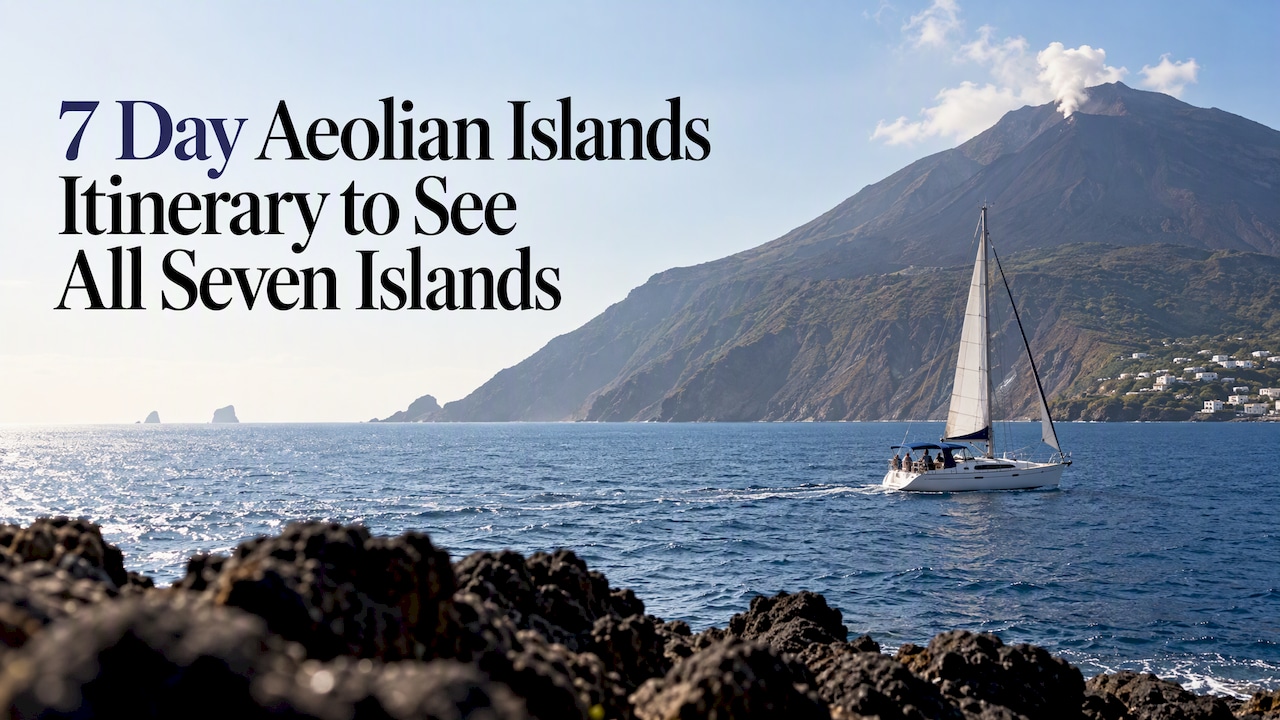
Seven days is the itinerary most travelers searching for an Aeolian Islands plan actually want, and it’s enough to see all seven islands without feeling rushed. The smartest strategy is a single central base, usually Lipari, with one planned overnight near Stromboli for the volcano visit. A typical 7-day route covers the archipelago in short hops of roughly 10 to 25 nautical miles between islands, which keeps each transit manageable even on a slower ferry.
- Ziua 1: Arrive via Milazzo, settle into Lipari, and ease in with an afternoon at Marina Corta and the archaeological museum.
- Ziua 2: Vulcano for the crater hike and mud baths, back to Lipari by evening.
- Ziua 3: Hydrofoil to Salina for Pollara, the Malvasia vineyards, and a caper-focused lunch.
- Ziua 4: Boat or hydrofoil to Panarea, the glossiest of the islands, for a swim at Cala Junco and a slow lunch.
- Ziua 5: Transfer to Stromboli and stay overnight. Daytime beaches and the black Ficogrande shore come first; evening lava viewing is the main event.
- Ziua 6: Depending on current access rules, either hike partway up Stromboli’s slopes with a licensed guide or join a night boat that circles offshore to watch the Sciara del Fuoco from the water, which is often the better option when trail access is restricted.
- Ziua 7: Return hydrofoil to Lipari, a final swim or market stroll, then back to Milazzo for your departure.
Sfat profesional: Check Stromboli’s current access rules with the local tourist office before booking a guided hike, since volcanic activity can close upper trails with little notice.
If Filicudi and Alicudi interest you but seven days feels full already, swap one Panarea morning for an early boat out west instead of adding a day, since both islands are reachable on a long day trip from Lipari when sea conditions cooperate.
The 10 to 14 day slow itinerary: Filicudi and Alicudi included
A slower trip is where the Aeolian Islands reward patience. Two weeks lets you add overnight stays on Filicudi and Alicudi, the two quietest islands, where ferry frequency drops and life runs on its own schedule.
- Spend 2 to 3 nights each on Lipari and Salina as your anchor points, then 2 nights on Filicudi for the Grotta del Bue Marino sea cave and some of the best snorkeling in the archipelago.
- Add 1 to 2 nights on Alicudi, which has no cars and only a handful of guesthouses, for long hikes up terraced hillsides and genuine quiet.
- Build in an overnight on Stromboli for lava viewing, plus a buffer day somewhere central in case a ferry gets canceled for weather.
- Pack extra cash and a paper map for Alicudi, since card readers and reliable signal are inconsistent, and provisions on the smaller islands can run short outside peak season.
This pace suits divers, long-distance hikers, and anyone who wants to feel the difference between a tourist island and a working one.
The 7-day sailing itinerary: a boat-based alternative
Sailing the Aeolians changes the whole rhythm of the trip: instead of chasing hydrofoil windows, you move with the wind and anchor where you like. A typical boat itinerary uses short hops similar to the land-based ferry pattern, generally 10 to 25 nautical miles between stops, which keeps sailing days relaxed rather than grueling.
- Day 1 to 2: Depart from a Sicilian marina, sail to Vulcano, anchor for the crater hike and mud baths, then a short hop to Lipari for the night.
- Ziua 3: Sail to Salina, overnight in a sheltered bay near Rinella or Santa Marina for the vineyard visit ashore.
- Ziua 4: Day stop at Panarea, often the prettiest anchorage of the week, before continuing toward Stromboli.
- Day 5 to 6: Overnight near Stromboli for lava viewing from the water, a safer option when shore trails are restricted, then a slower return leg west.
- Ziua 7: Return sail back to the mainland marina, with a buffer built in for wind or sea-state delays.
A skippered boat absorbs weather changes better than a land itinerary does, since the skipper can simply reroute to a calmer anchorage instead of canceling a ferry ticket outright.
Getting there and getting around: ports, timetables, and seasonality
There are no airports on the Aeolian Islands, so every itinerary starts the same way: fly into Catania or Palermo, then shuttle or bus to Milazzo, the main gateway port. From Milazzo, hydrofoils and ferries run to all seven islands, with hydrofoils faster but pricier and ferries slower but cheaper and better for luggage or a vehicle.
- Milazzo to Lipari runs roughly 45 minutes on a fast hydrofoil to 1.5 hours on a slower service, depending on stops along the route.
- Liberty Lines publishes the authoritative seasonal timetable for hydrofoil and ferry service, and schedules shift through the year, so check the current version before booking anything else.
- June and September are the sweet spot: steady weather and full ferry schedules without the July and August crowds.
Off-season service drops sharply, and some hotels and restaurants on smaller islands close outside the June to September window. Build a buffer day into any itinerary that depends on a specific ferry connection, since weather cancellations happen even in good months.
How to choose your base and avoid common planning mistakes
Lipari offers the most ferry connections and restaurant variety, Salina trades some connectivity for vineyards and quiet, and Panarea suits travelers chasing atmosphere over logistics; for ideas on local excursion planning, see Exploring Provence from Salon: seven day trips under an hour. Pick one or two bases and stick with them.
- Limit yourself to one or two homebases; island-hopping every single night burns hours on ferries you’d rather spend swimming.
- Don’t try to visit all seven islands in under a week, since transit time alone eats a full day if you push it.
- Always check same-day return ferry times before booking a day trip, not just the outbound schedule.
- Ask any excursion operator what happens to your booking if the sea state turns rough.
Sfat profesional: Book your first and last hydrofoil legs online in advance during July and August, when same-day tickets at the Milazzo counter can sell out by mid-morning.
When a curated sailing week beats a self-planned itinerary
A skippered sailing week removes the ferry-timing puzzle entirely, as the skipper handles navigation and mooring, so your group spends time on the water instead of at a ticket counter. This fits families and groups who want island-hopping without managing six separate bookings. Our Italy sailing routes follow this same model across Mediterranean destinations, built around flexible days and shared decision-making on board.
The seven main islands and what each one offers
Each of the seven islands has its own character, and knowing the differences helps you build a route around what you actually want to do.
- Lipari is the largest and liveliest, with the best ferry connections, restaurants, and an archaeological museum worth an hour.
- Salina is green and quiet, known for Malvasia wine, caper terraces, and the Pollara bay from Il Postino.
- Vulcano centers on its active crater hike and the sulfur mud baths at its base, best visited as a day trip.
- Stromboli is the volcano everyone comes to see, with nightly eruptions visible from the water or, access permitting, from a guided trail.
- Panarea is the glossiest island, with upscale restaurants and the clear-water cove at Cala Junco.
- Filicudi is quieter and rugged, home to the Grotta del Bue Marino sea cave and some of the archipelago’s best snorkeling.
- Alicudi has no cars, just a handful of guesthouses and steep paths, and suits travelers who want real isolation.
The archipelago’s volcanic landscape, including Stromboli and Vulcano, is recognized by UNESCO for its outstanding record of ongoing island-building and destruction, which also explains why so much of the itinerary planning here revolves around volcano access and timing.
What to pack for the Aeolian Islands’ climate and activities
Summers run hot and dry with strong sun off the water, so pack accordingly rather than assuming a standard beach trip will cover it.
- Reef-safe sunscreen and a wide-brim hat, since shade is scarce on crater hikes and boat decks alike.
- Sturdy closed-toe shoes for the Vulcano and Stromboli trails, where loose volcanic gravel punishes sandals.
- A light long-sleeve layer for evening boat trips and the cooler night air around Stromboli’s lava viewing.
- A dry bag or waterproof pouch for your phone and documents on any boat excursion.
- Cash in small denominations, since card machines are unreliable on Alicudi and parts of Filicudi.
- A reusable water bottle, since plastic bottle prices climb fast on the smaller islands in peak season.
Pack soft-sided luggage rather than a hard suitcase, since hydrofoil gangways and narrow stone streets make wheeled bags more trouble than they’re worth.
What to budget for accommodation, transport, food, and activities
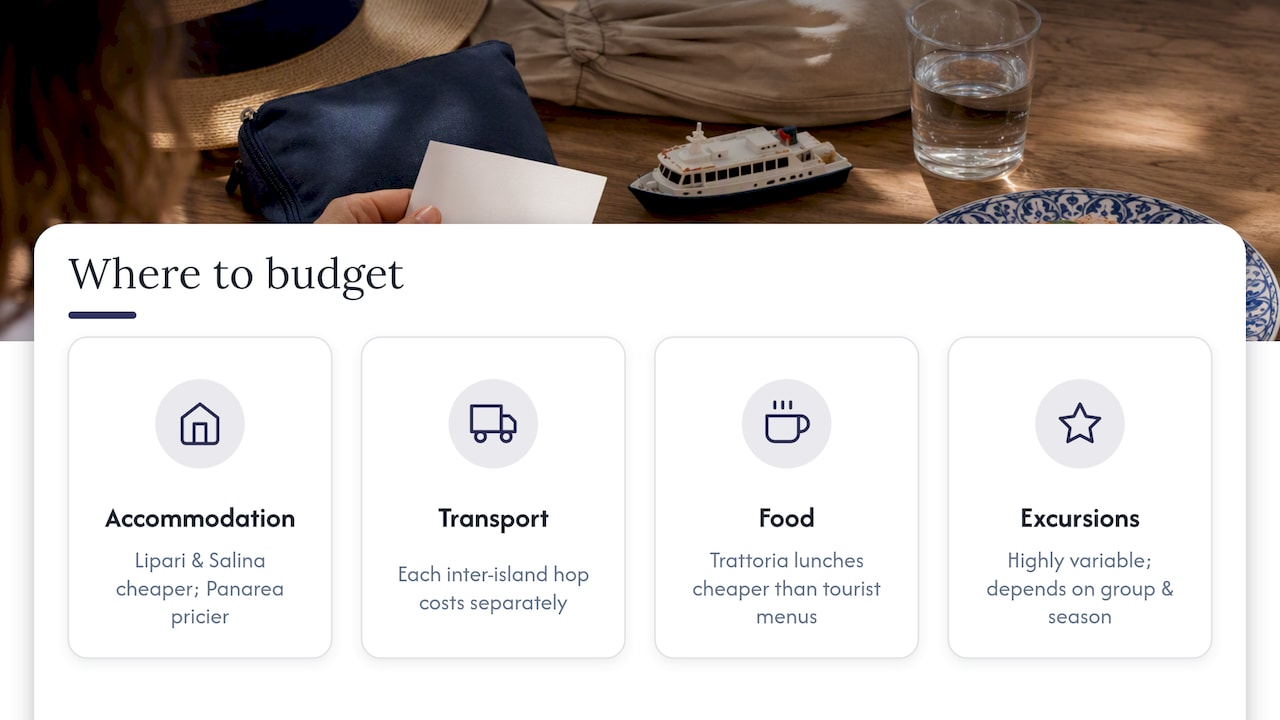
Costs vary by island and season, with Lipari generally cheaper than Panarea and shoulder months cheaper than August across the board. Accommodation ranges from simple guesthouses on Lipari and Salina to pricier boutique stays on Panarea, with Stromboli and Alicudi sitting somewhere in between depending on how far ahead you book.
Ferry and hydrofoil tickets add up fastest on a multi-island itinerary, since each inter-island hop is its own fare. Food costs stay reasonable if you eat where locals eat: a simple trattoria lunch on Lipari or Salina costs a fraction of a tourist-menu dinner on Panarea. Excursions, whether a Vulcano crater guide, a Stromboli boat tour, or a full-day sailing charter, are the most variable line item, since prices shift with group size and season. Booking excursions directly with local operators rather than through a hotel concierge often saves money, though it takes more legwork to arrange.
Alternative ways to move between the islands
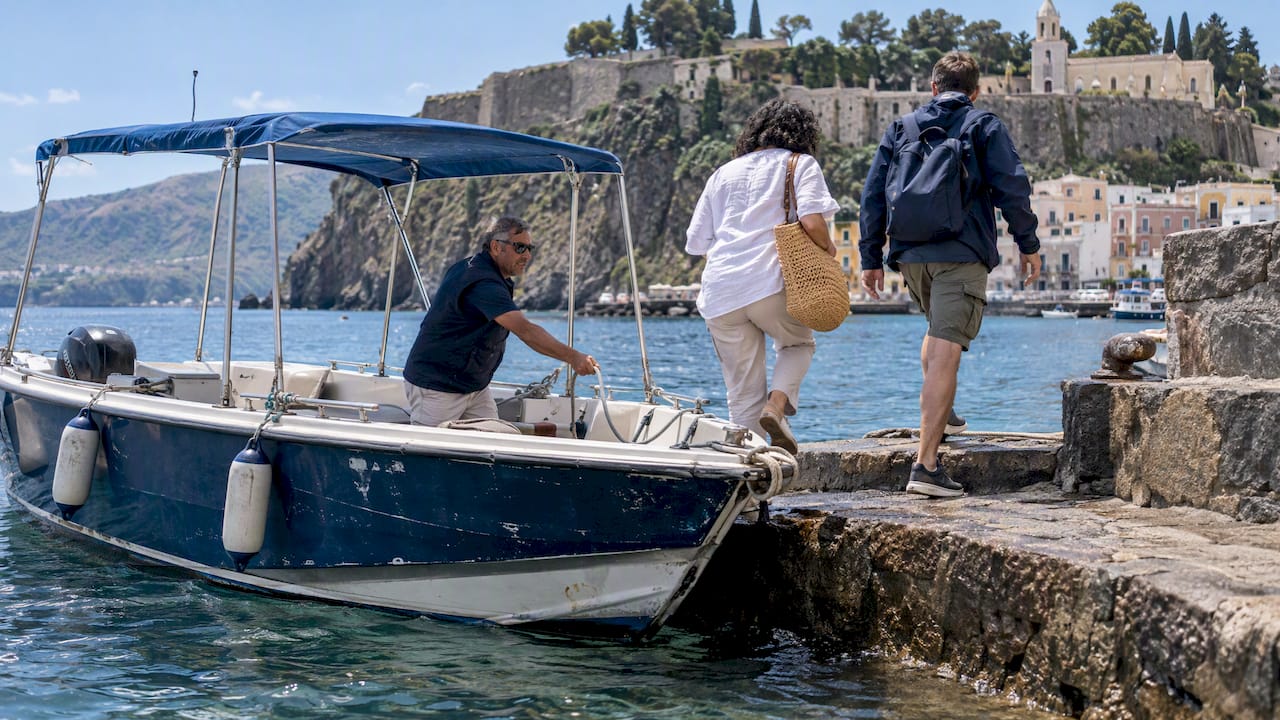
Hydrofoils and ferries cover the main routes, but they’re not the only option once you’re in the archipelago. A private water taxi makes sense for a small group that wants to skip a crowded public hydrofoil or reach a cove no scheduled boat visits. Chartering a half-day or full-day boat with a local skipper gives you control over timing, which matters most on Stromboli and Panarea days when the light for photos or swimming is everything.
On Lipari, a local bus network covers the main towns and beaches cheaply, while Salina has a similar though sparser bus route connecting its villages. Scooter rental is the most popular way to cover Salina and Lipari independently, since both islands have enough paved road to make it worthwhile. Vulcano and Panarea are small enough to walk, and Alicudi has no vehicles at all beyond a few service carts.
Staying flexible: weather, opening hours, and island rhythms
Build slack into every itinerary, because wind and sea state can cancel a hydrofoil with almost no warning, especially on the exposed Stromboli and Panarea legs. Treat any single-day plan involving a boat as provisional until the morning of, and have a land-based backup ready, such as swapping a Panarea boat trip for a Lipari museum morning if the sea turns rough.
Opening hours on the smaller islands follow their own logic: shops and restaurants on Alicudi and Filicudi often close for a long midday break and may shut entirely outside the June to September season. Museums and archaeological sites on Lipari keep more consistent hours, but confirm before planning around them, since schedules can shift without notice in shoulder months.
Festivals and local events worth building a day around
If your trip lines up with it, Lipari’s summer calendar often includes local patron saint festivals with street processions, fireworks over the harbor, and extended evening markets, worth checking against your dates when you book. Salina’s wine and caper harvest season in late summer brings small local celebrations tied to the Malvasia grape, which can add an unplanned but memorable evening to a Day 3 or Day 4 stop there. These events shift year to year, so confirm timing with the local tourist office once you have firm travel dates rather than building a whole day around an assumption.
My pick for first-time visitors
For a first trip, the 7-day Lipari-based itinerary with a Stromboli overnight is the one to book. It balances variety against ferry fatigue better than any shorter plan, and it leaves room to swap a day if weather forces your hand. Always confirm Stromboli’s trail access before you commit to a hike.
- Sail
Book a curated Aeolian sailing week instead of planning it yourself
If the logistics above sound like more juggling than vacation, that’s exactly the gap a curated sailing week closes. Our Italia - Go Private routes and the Discover Aeolian Islands week run with a trained skipper handling navigation, moorings, and route changes for weather, so your group’s only job each morning is deciding where to swim.
What’s included on these weeks:
- An experienced skipper handling navigation and mooring logistics at every stop.
- A flexible route that adjusts for wind and sea state without canceling your plans outright.
- Options for private charter or group sailing departures.
- Transparent pricing and boat options laid out before booking, with support from the booking team throughout.
If you’ve been comparing the self-planned itineraries above against a turnkey option, Italy – Go Private starts from 870 € per week per person, and it’s worth checking current availability for your travel dates.
FAQ
Which is the prettiest Aeolian island?
Panarea is widely considered the most polished of the seven, with clear coves like Cala Junco and an upscale feel, though Salina’s green hills and Stromboli’s glowing crater each have their own strong case depending on what you’re after.
Is it worth going to the Aeolian Islands?
Yes: the archipelago’s volcanic landscape is recognized by UNESCO as an outstanding record of ongoing island formation, and the combination of active volcano hikes, clear water, and quiet island life is hard to match elsewhere in Sicily.
How many days do you need in Lipari?
Two to three days covers Lipari’s highlights comfortably, including the castle quarter, the archaeological museum, and a day trip to Vulcano, though many travelers use Lipari as a base for a full week covering several islands.
How do I get to the Aeolian Islands?
There are no airports on the islands themselves, so travelers fly into Catania or Palermo, shuttle or bus to the port of Milazzo, and then take a hydrofoil or ferry to their chosen island, with Milazzo to Lipari taking roughly 45 minutes to 1.5 hours depending on the service.
Surse
- Aeolian Islands sailing week — Ship Ohoi
- Isole Eolie (Aeolian Islands) – UNESCO World Heritage Centre
- Aeolian Islands ferry timetables — Sicily Review
- Liberty Lines — Aeolian Islands timetable PDF
Recomandate
- Itinerarii de navigație de 7 până la 10 zile în Dodecanez pentru echipaje cu niveluri mixte de experiență
- 7 Day Lefkada Loop: Skipper Led Ionian Flotilla for Beginners
- Itinerariu de 7 zile cu familia în Sporade, 130–155 nmi, testat de skipper
- Circuit de 7 zile în Lefkada: ITINERARIU DE NAVIGAȚIE ÎN IONIAN PENTRU AMBARCAȚIUNI ÎNCHIRIATE