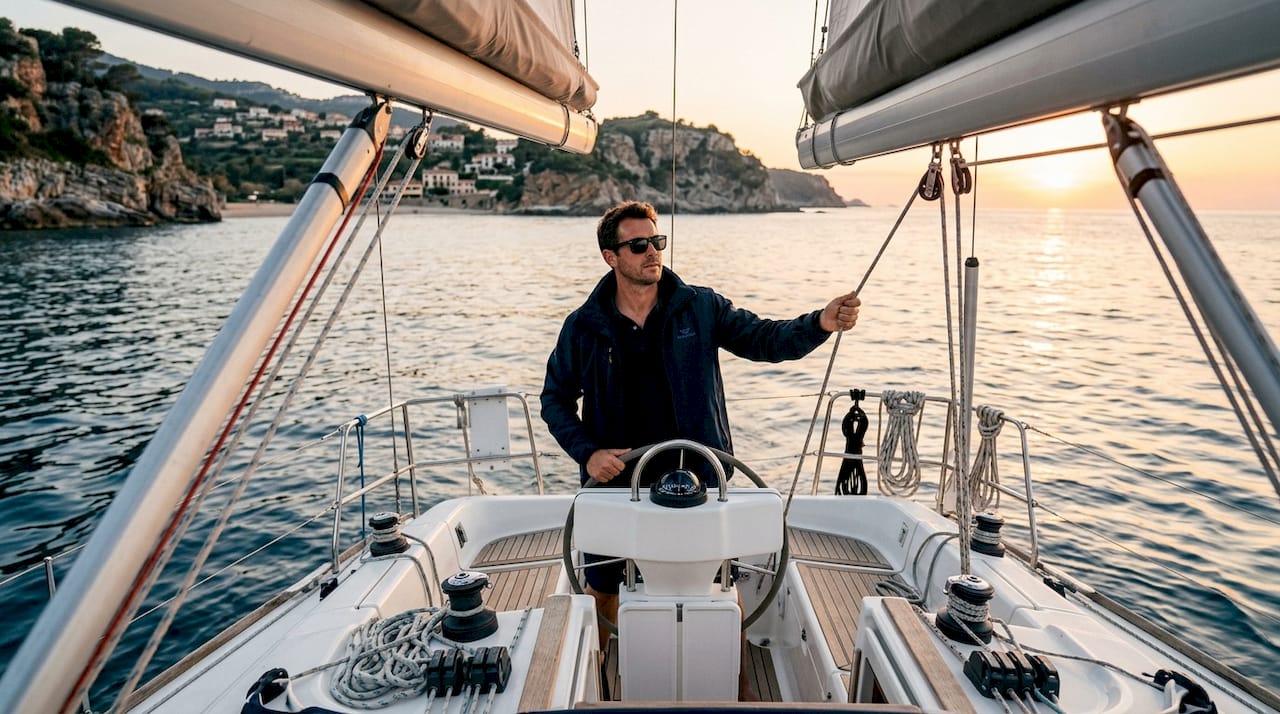
Independent sailing within a flotilla is defined as operating your own yacht autonomously while sailing as part of a coordinated group led by a professional lead crew. You hold the helm, make your own decisions, and choose your pace. At the same time, a lead boat provides daily briefings, weather updates, and safety backup. This model is the sweet spot between the total freedom of a bareboat charter and the hand-holding of a fully skippered trip. Whether you’re an experienced skipper or a confident newcomer, the Ionian Islands and broader Mediterranean offer some of the world’s best conditions for this kind of sailing.
What is independent sailing within a flotilla?
A flotilla is a group of 6–20 yachts independently skippered but coordinated by a professional lead crew aboard a dedicated lead boat. Each yacht operates on its own. You decide when to raise the sails, where to anchor for lunch, and how fast to push your boat. The lead crew doesn’t sail with you. They sail ahead, scout conditions, and meet the group at each evening’s harbor.
The daily rhythm works like this:
- Morning briefing: The lead crew gathers all skippers at the dock to review the day’s route, weather, and points of interest.
- Daytime sailing: Each yacht departs independently, following the general route at its own pace.
- Evening gathering: The fleet reunites at a harbor or anchorage, often sharing dinner at a local taverna.
- On-demand support: The lead boat is reachable by VHF radio throughout the day for navigation questions or emergencies.
This structure is fundamentally different from a skippered charter, where a professional skipper lives aboard and runs your boat for you. It’s also distinct from a fully independent bareboat charter, where you sail with zero group support. The flotilla model sits right in the middle, and that’s exactly what makes it so appealing.
Sfat practic: If you’re new to Mediterranean sailing, ask your flotilla operator which lead crew members specialize in your destination. A lead crew with deep local knowledge of, say, the Ionian Islands will give you far richer briefings than a generalist.
How does flotilla sailing compare to bareboat and skippered options?
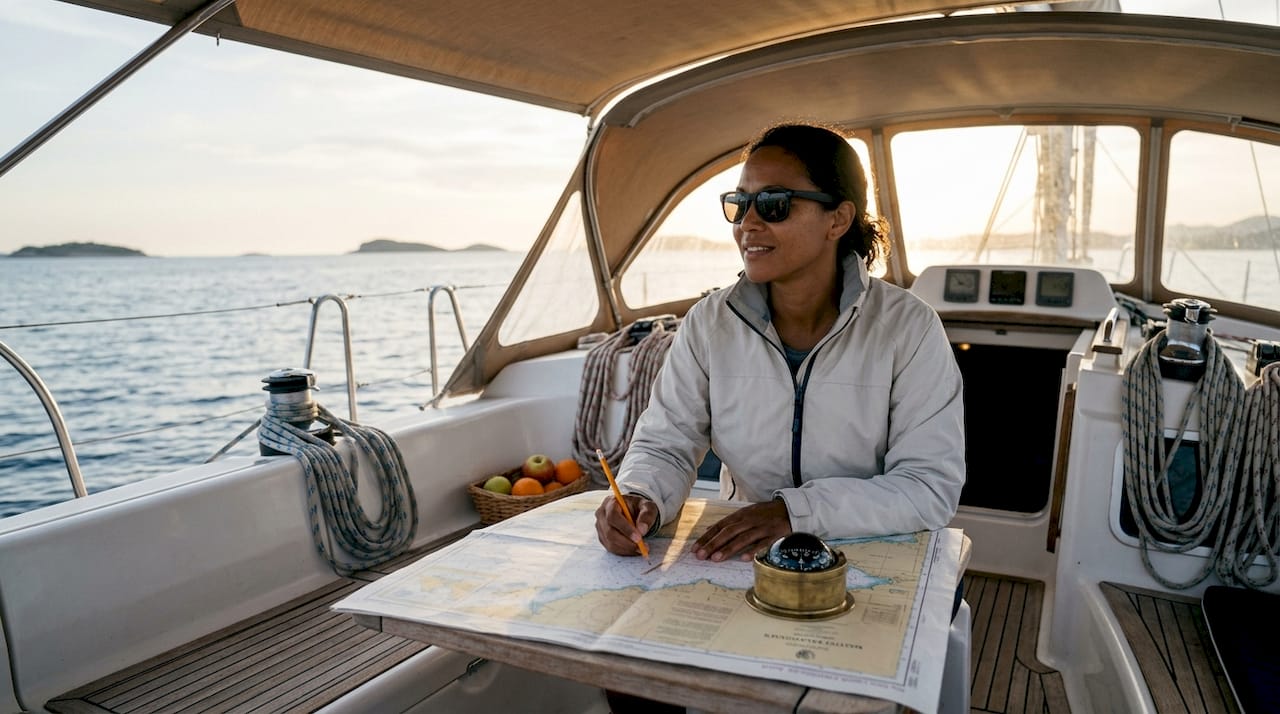
The core difference comes down to how much support you want alongside your independence. Chartere fără echipaj mean fully independent sailing with no lead boat, no group, and no safety net beyond your own skills. You plan every route, handle every problem, and navigate every anchorage on your own. That’s pure autonomy, and it’s fantastic if you have strong experience and a reliable crew.
Skippered charters sit at the opposite end. A professional skipper runs the boat, and you’re essentially a passenger who can help if you want. There’s nothing wrong with that, but you don’t get the satisfaction of actually sailing the yacht yourself.
Flotilla sailing occupies the middle ground. You helm your own yacht and follow set itineraries, but you benefit from group cohesion and professional assistance when you need it. The table below shows how the three options compare across key factors.
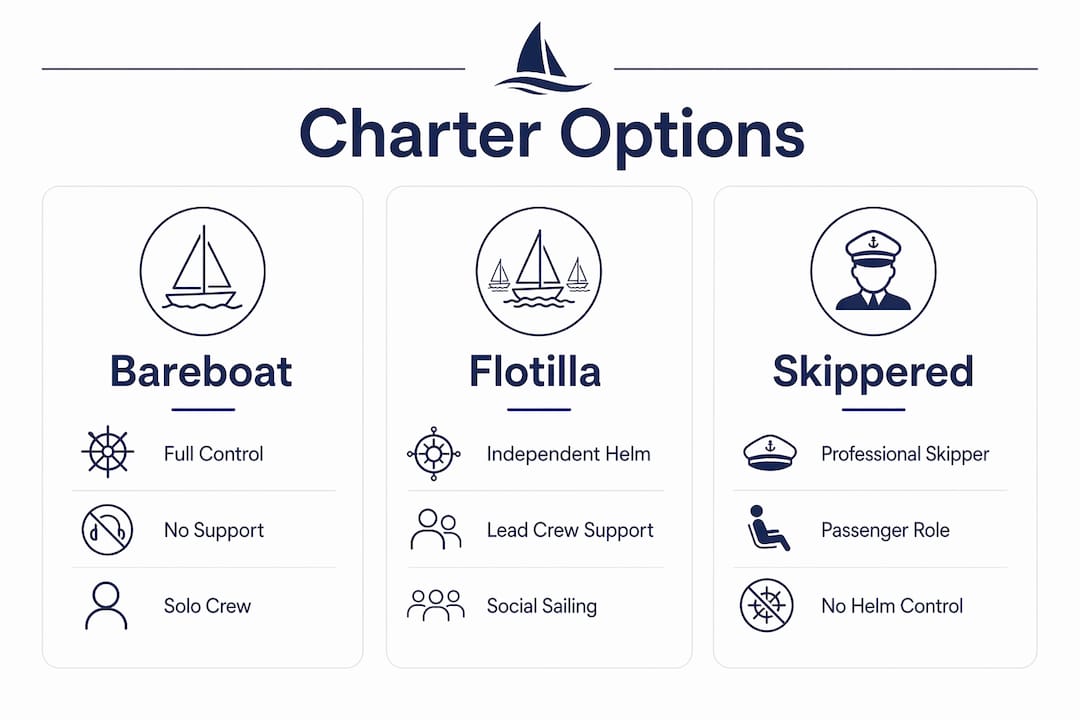
| Factor | Charter fără echipaj | Flotila de navigatie | Carta cu skipper |
|---|---|---|---|
| Skipper control | tine | tine | Skipper profesionist |
| Lead crew support | Niciuna | Yes, daily | N/A |
| Social structure | Niciuna | Strong group dynamic | Depinde de grup |
| Experience required | Înaltă | Moderat | Scăzut |
| Cel mai bun pentru | Marinari experimentați | Mixed experience levels | Beginners or relaxation seekers |
The right choice depends on your goals. Pure autonomy favors bareboat. Social interaction combined with sailing autonomy makes flotillas the better fit for most travelers. Skippered charters work best when relaxation is the priority over active sailing.
Sfat practic: If you’ve done a few bareboat charters and want more social energy without giving up the helm, a flotilla is the natural next step. It’s also a great way to build confidence before going fully independent.
How can solo travelers join an independent flotilla?
Solo sailors face one practical challenge: most yacht charters require a minimum crew for safety reasons. The good news is that two clear solutions exist, and both work well in the Mediterranean flotilla context.
-
Book a cabin charter. Many flotilla operators offer individual cabin bookings on shared yachts. You join a boat with other travelers, share the costs, and still experience the full flotilla structure. This is the fastest and most affordable way to get on the water as a solo traveler.
-
Use a crew-finding platform. Posting a clear trip description with your experience level on a crew-finding platform attracts qualified sailors who want to join your charter. This lets you skipper your own boat within the flotilla while splitting costs with compatible crewmates.
-
Join a rally-style event. Long-range events like the Oyster World Rally show how fully independent sailing can coexist with expert logistical support and a strong community. Smaller Mediterranean versions of this format exist and welcome solo participants.
-
Partner with another solo traveler. Flotilla operators often connect solo bookings with each other. Two solo travelers can share a yacht, split the cost, and each bring their own sailing experience to the boat.
-
Choose a flotilla with a strong social program. The evening meet-ups at harbors and tavernas that define flotilla culture make solo sailing far less isolating than a bareboat trip. You sail independently during the day and connect with a ready-made community every evening.
For solo travelers with limited experience, flotillas are genuinely the safest entry point into independent yacht cruising. The lead crew provides a safety layer that a solo bareboat charter simply cannot offer.
What practical tips help you get the most from a flotilla?
Preparation makes the difference between a good flotilla trip and a great one. These are the areas that matter most.
Choose the right operator. Not all flotilla operators run the same quality of lead crew or itinerary. Look for operators with experienced lead crews who know your destination well and who provide detailed daily briefings rather than generic route sheets.
Understand your qualifications. Most flotilla operators require a Day Skipper certificate or equivalent for the person at the helm. Some accept a strong logbook of sailing hours in place of formal certification. Check the requirements before you book, not after.
Prepare your boat before departure. Walk through the yacht’s systems on the first day: engine, VHF radio, chart plotter, safety equipment, and anchor gear. Flotilla lead crews are available to help, but knowing your own boat saves time and builds confidence.
- Review the chart plotter and paper charts for the week’s route before the first briefing.
- Test the VHF radio on the lead boat’s working channel.
- Locate all safety equipment: life jackets, flares, fire extinguisher, and first aid kit.
- Stock provisions for at least two days in case weather delays a harbor stop.
- Confirm your boat’s fuel and water capacity relative to the day’s planned distance.
Attend every morning briefing. The lead crew’s briefings contain the day’s weather window, waypoints, anchorage depths, and local hazards. Missing one briefing can mean missing a critical piece of information about a tricky entrance or a shift in wind conditions.
Sfat practic: Bring a small notebook to every morning briefing. Jot down the key waypoints, the VHF channel, and the evening’s harbor name. When you’re focused on sailing, details from a briefing can fade fast.
For a full preparation checklist, Sailarmada’s flotilla voyage guide covers qualifications, packing, and on-board systems in detail.
Where are the best Mediterranean destinations for flotilla sailing?
The Mediterranean offers the most accessible and rewarding conditions for self-guided flotilla trips anywhere in the world. Calm summer winds, clear water, and a dense network of harbors make it ideal for independent sailors of all experience levels.
| Destinație | Cel mai bun sezon | Principalul punct de atracție |
|---|---|---|
| Insulele Ionice, Grecia | mai–octombrie | Steady afternoon winds, sheltered anchorages, vibrant village culture |
| Croația (Coasta Dalmată) | iunie–septembrie | Hundreds of islands, crystal-clear water, excellent marina infrastructure |
| Turkey (Aegean Coast) | aprilie–octombrie | Warm weather, uncrowded anchorages, rich history |
| Ciclade (Grecia) | June–August | Dramatic scenery, strong meltemi winds, iconic island stops |
The Ionian Islands are the most popular starting point for first-time flotilla sailors. The winds are predictable, the passages are short, and the harbors are well-equipped. Croatia’s Dalmatian Coast is equally popular, with diverse sailing routes across hundreds of islands that reward both relaxed day-sailors and more ambitious skippers. Turkey’s Aegean coast offers a quieter, more secluded experience with longer passages between stops.
Seasonal timing shapes the experience significantly. May and june offer cooler temperatures and fewer crowds. July and august bring stronger winds and more social energy in the harbors. September is widely considered the best balance of good weather, manageable winds, and quieter anchorages.
Principalele concluzii
Independent sailing within a flotilla gives you full helm control, daily professional support, and a built-in social community, making it the most accessible form of autonomous sailing in the Mediterranean.
| Punct | Detalii |
|---|---|
| Flotilla structure | A lead crew of professionals guides 6–20 independently skippered yachts through daily briefings and VHF support. |
| Solo participation | Solo travelers can join via cabin charters, crew-finding platforms, or operator-matched partnerships. |
| Flotilla vs. bareboat | Flotillas add social structure and safety support without removing skipper control, unlike fully independent bareboat charters. |
| Cele mai bune destinații | The Ionian Islands, Croatia, and Turkey’s Aegean coast offer the most accessible routes for flotilla sailors. |
| Preparation priority | Attend every morning briefing, know your boat’s systems, and hold a Day Skipper certificate or equivalent. |
Why flotillas changed how I think about sailing freedom
People often assume that joining a flotilla means giving something up. I used to think the same thing. The idea of following a group itinerary felt like it would clip the wings of real sailing independence. What I found was the opposite.
The lead crew handles the logistical weight that quietly drains energy on a bareboat trip: weather routing, harbor reservations, local knowledge, and emergency coordination. When that weight lifts, you actually sail more freely. You focus on the water, the wind, and the people on your boat rather than worrying about whether the anchorage ahead has room or whether the forecast is reliable.
The social element is also underrated. Pulling into a harbor and recognizing the other boats from your flotilla feels genuinely warm. You share stories over dinner, swap tips about the next day’s route, and build friendships that often outlast the trip. That’s something a solo bareboat charter almost never delivers.
My honest advice: if you’ve been hesitating between a bareboat and a flotilla because you don’t want to feel “managed,” try a flotilla first. You’ll be surprised how much freedom you actually have, and how much better the experience is for having a safety net you rarely need to use.
- Sail
Sailarmada’s curated flotilla options for independent sailors
Sailarmada specializes in curated Mediterranean sailing holidays that give you real independence on the water without leaving you to figure everything out alone. Whether you’re a solo traveler looking for a cabin on a shared yacht or an experienced skipper ready to lead your own boat through the Greek islands, Sailarmada has options built around your level and goals.
From the Ionian Islands to Croatia and Turkey, Sailarmada’s Destinații mediteraneene de navigație cover the best flotilla routes in the region, with expert guidance built into every itinerary. If you’re ready to see what a week on the water actually looks like, the opțiuni private de navigație page is a great place to start. Reach out to the Sailarmada team to find the right format for your experience level and travel style.
Întrebări frecvente
What is independent sailing within a flotilla?
Independent sailing within a flotilla means you skipper your own yacht autonomously while sailing as part of a coordinated group. A professional lead crew provides daily briefings, weather updates, and safety support without taking control of your boat.
Do I need a sailing license to join a flotilla?
Most flotilla operators require a Day Skipper certificate or a strong logbook of sailing experience for the person at the helm. Requirements vary by operator and destination, so confirm before booking.
Can a solo traveler join a flotilla?
Yes. Solo sailors can book individual cabins on shared boats or use crew-finding platforms to assemble a team and charter their own yacht within the flotilla.
How much does a flotilla sailing holiday cost?
Flotilla costs vary by destination, boat size, and season. Prices generally start around £1,869 for a 7-day yacht charter for two people, with additional mandatory costs for diesel, cleaning, and security deposits.
What is the best Mediterranean destination for a first flotilla?
The Ionian Islands in Greece are the top choice for first-time flotilla sailors. Predictable winds, short daily passages, and well-equipped harbors make the region forgiving and rewarding for sailors of all experience levels.