Imagine arriving at the marina in Göcek, sun blazing, kids excited, bags piled high, only to discover that half your documents are soaking wet, nobody knows where the life jackets are stored, and you missed the provisioning window by two hours. That scenario plays out more than you’d think, and it can turn the first day of a dream holiday into a logistical nightmare before you’ve even left the dock. The good news? Every single one of those missteps is completely preventable. This guide covers everything your group needs to know about timing, safety, paperwork, provisioning, and expert itinerary planning so your Turkish sailing adventure starts smooth and stays that way.
Table of Contents
- Understanding Turkey’s sailing season and ideal times to go
- Key safety and child-friendly yacht practices
- Documentation, insurance, and logistics: Smooth sailing on arrival
- Provisioning and planning your onboard experience
- What experienced crews wish families knew before boarding
- Plan an unforgettable Turkish sailing holiday with expert support
- Frequently asked questions
Key Takeaways
| Point | Details |
|---|---|
| Time your trip for family comfort | Sailing in May, June, or September offers the best conditions for groups and kids in Turkey. |
| Prioritize safety on board | Establish deck rules, supervise children, and schedule safety briefings for stress-free sailing. |
| Prep logistics and documents | Have all travel documents and insurance waterproofed and ready before you board. |
| Plan provisioning strategically | Coordinate food and gear shares with the crew and create comfortable onboard routines from day one. |
| Leverage expert support | Expert guides and curated itineraries streamline group and family sailing holidays in Turkey. |
Understanding Turkey’s sailing season and ideal times to go
With the importance of proper preparation in mind, let’s start with the key factor that shapes every group trip: timing your holiday for the best conditions.
Turkey’s turquoise coastline is genuinely one of the most gorgeous sailing grounds in the Mediterranean sailing destinations world. But not every month feels the same out on the water. The official sailing season runs from roughly April through October, and within that window, conditions vary quite a bit depending on when you go.
If you check seasonal sailing comparisons from other Mediterranean routes, you’ll notice a pattern: peak summer months bring predictable wind but also packed anchorages, higher prices, and scorching midday heat. Turkey follows a very similar rhythm.
Here’s a quick breakdown of what each part of the season looks like:
| Month | Water temp | Wind strength | Crowd level | Best for |
|---|---|---|---|---|
| April | 17-19°C | Moderate, variable | Low | Experienced sailors |
| May | 20-22°C | Light to moderate | Low | Families, first timers |
| June | 23-25°C | Steady Meltemi building | Medium | Groups, families |
| July | 27-29°C | Strong Meltemi | High | Confident sailors |
| August | 28-30°C | Strong Meltemi | Very high | Those who love buzz |
| September | 26-28°C | Easing winds | Medium | Families, groups |
| October | 22-24°C | Light, variable | Low | Relaxed explorers |
Sailing in Turkey is most balanced during the shoulder months. According to data on the best time to sail Mediterranean, Turkey’s most balanced times are the shoulder months of May, June, and September, with warm water and manageable conditions making September particularly great for families.
For groups with children, here’s a quick guide to priorities when choosing your month:
- Wind: Aim for light to moderate conditions (around 10-15 knots) so passages feel relaxed, not white-knuckled.
- Water temperature: September’s 26-28°C water means kids can swim all day without complaining of cold.
- Crowds at anchorages: May and early June give you more secluded bays to yourselves, which feels magical.
- School calendars: Late June through August is peak family season if schedules demand it.
Pro Tip: If you’re traveling with younger children under ten years old, September is genuinely the sweet spot. The Meltemi wind that can make July and August feel choppy has usually eased off, and the water is still wonderfully warm for endless swimming.
Key safety and child-friendly yacht practices
Once your timing is set, the next non-negotiable aspect for group holidays, especially with kids, is safety. Here’s how to make it seamless and stress-free.
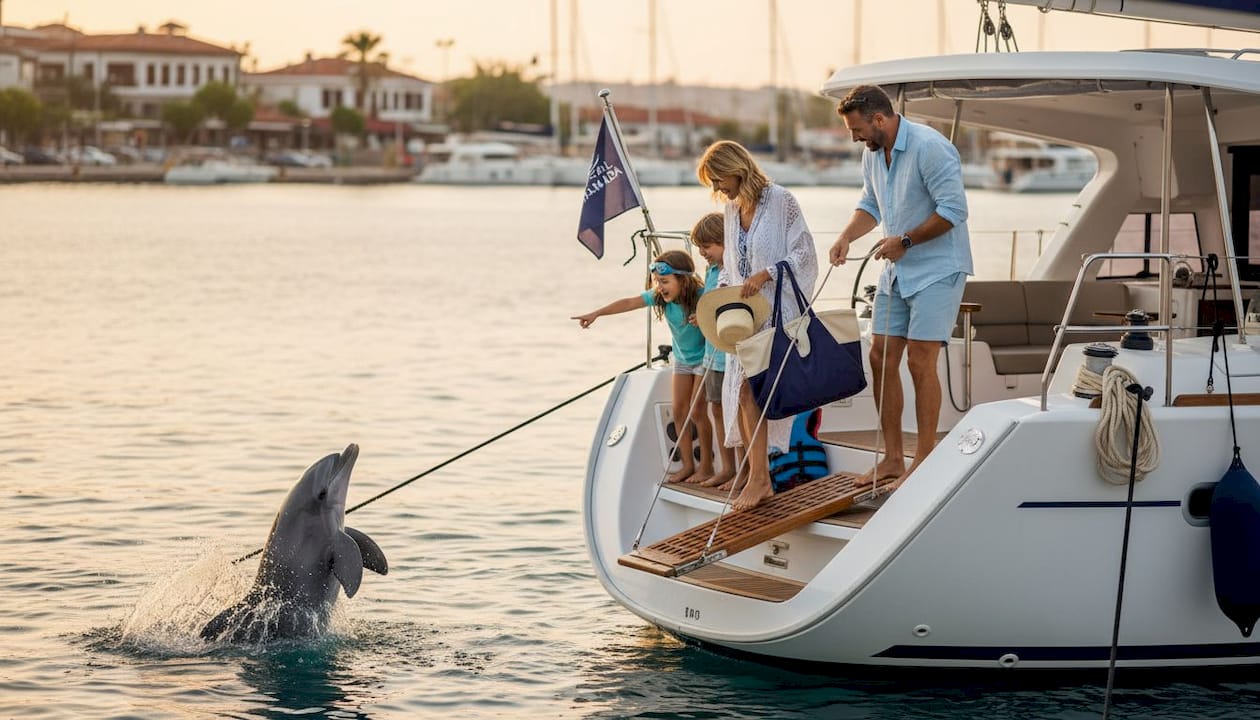
Safety on a yacht is different from safety anywhere else on vacation. The deck moves. The water is right there. And kids, being kids, want to explore every inch of the boat the moment they step aboard. Before anyone unpacks a bag, your group needs to run through the safety basics together.
“The sea doesn’t care how relaxed your itinerary is. A few simple rules enforced consistently from day one keep every family holiday safe and enjoyable.” — Experienced charter skipper, Turkish coast
According to child yacht safety guidelines, established child-safety practices on yachts include no running on deck, no climbing on railings, continuous adult supervision, secure swim rules, and non-slip footwear at all times. These aren’t optional suggestions. They’re the rules that prevent the kind of accidents that ruin trips.
Your family charter ideas will look very different depending on whether you choose a crewed or bareboat (self-skippered) yacht. Here’s a side-by-side look:
| Feature | Crewed charter | Bareboat charter |
|---|---|---|
| Skipper on board | Yes, always | No, you’re in charge |
| Safety briefings | Professional, structured | Self-led |
| Supervision support | Built in | Your responsibility |
| Best for families with young kids | Strongly recommended | Better for experienced sailors |
| Emergency response | Immediate skipper support | You handle it |
| Provisioning help | Often included | All on you |
For most groups and families, a crewed charter removes enormous pressure. Your skipper knows the coastline, handles the anchoring, runs safety drills properly, and manages emergencies calmly. It’s not just convenience. It’s genuine peace of mind.
When you do your boat safety tips review on day one, make sure the walk-through covers:
- Location of all life jackets, including correctly sized ones for children
- How the VHF radio works and what channel to monitor
- Man overboard procedure, practiced at least verbally before leaving dock
- Emergency flare storage and when to use them
- Where the first aid kit is and what it contains
Pro Tip: Get kids involved in the safety briefing in a fun, age-appropriate way. Ask them to find their life jacket, put it on, and show you how it works. They feel important, and you feel confident they actually know what to do.
Documentation, insurance, and logistics: Smooth sailing on arrival
With safety culture in place, smooth logistics and paperwork will help your group start the trip relaxed and ready for adventure.
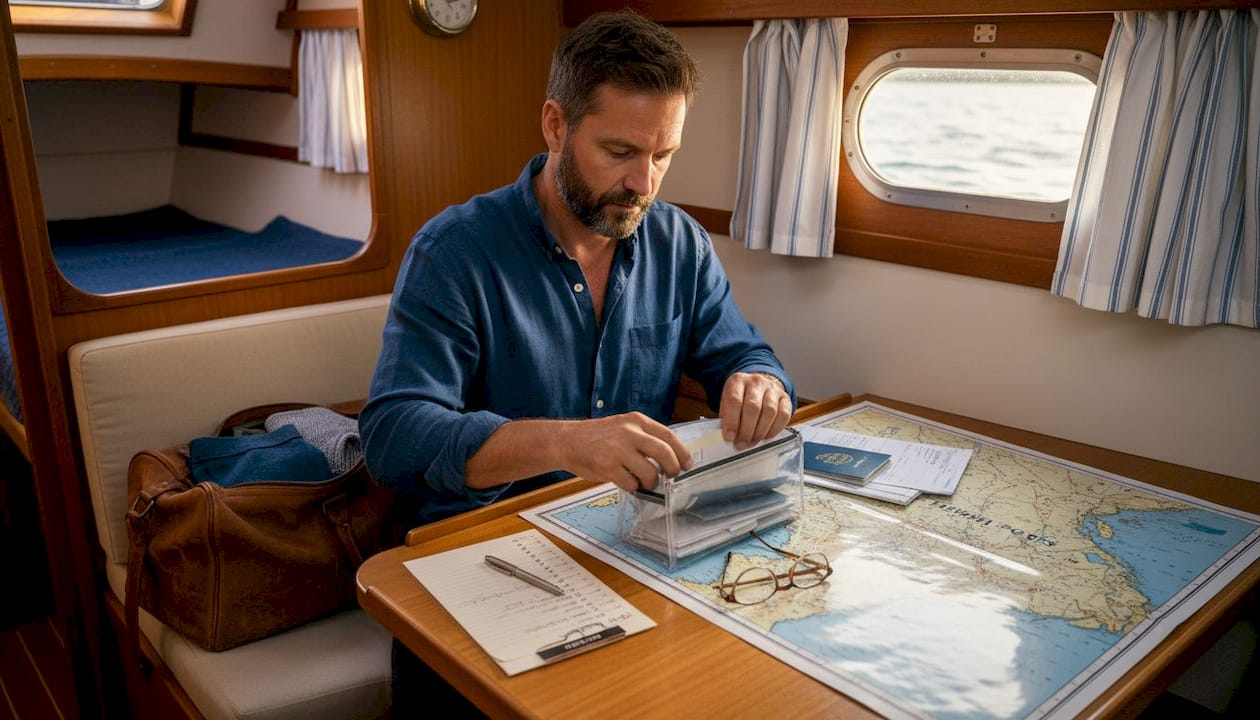
Nothing deflates pre-trip excitement faster than scrambling for documents at the marina. Turkey has specific entry requirements and charter regulations, and your group needs everything organized before you fly.
A solid approach to travel documents for sailing starts with creating a shared digital folder plus a waterproofed physical copy of every important document. One forgotten passport or missing insurance certificate can delay your departure by hours. Following expert advice on the best time to sail Mediterranean, every group should require all documents and insurance in waterproof form and plan a structured safety briefing plus equipment walk-through on day one.
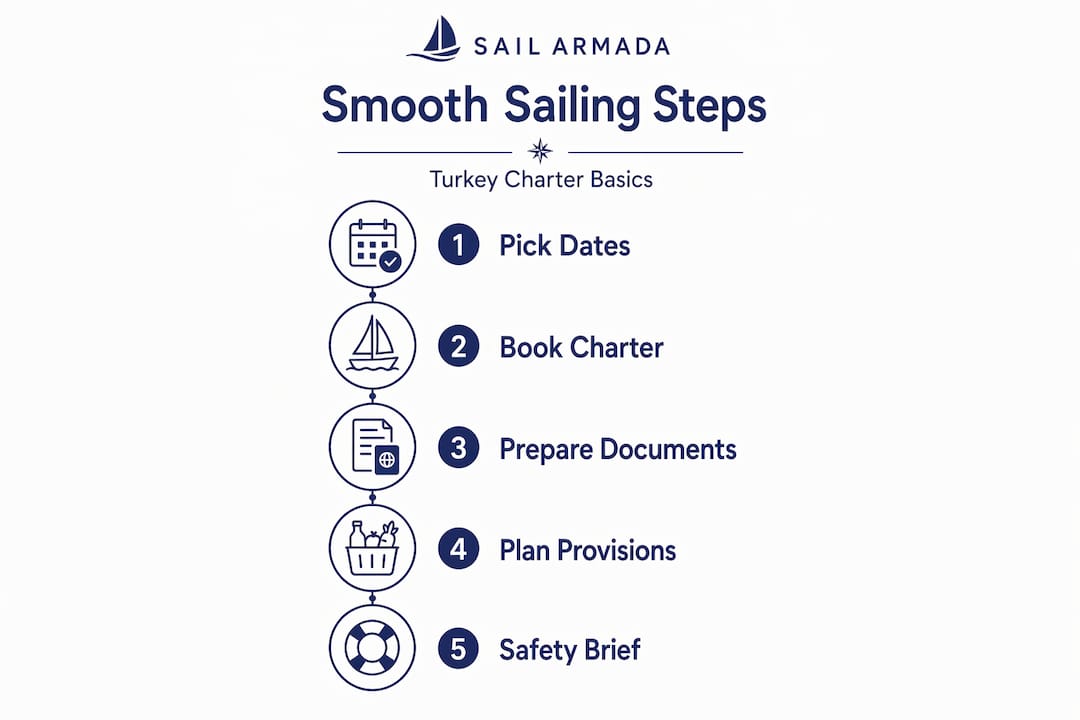
Here’s your core document checklist for a Turkish sailing holiday:
- Valid passports for every group member (check expiry dates, must usually be valid 6 months beyond travel dates)
- Travel visas if required (Turkey’s e-Visa system is quick, but don’t leave it to the last minute)
- Yacht charter contract and booking confirmation
- Skipper’s sailing license (for bareboat charters)
- Travel insurance policy documents, waterproofed
- Yacht insurance certificate
- Emergency contact list for every group member
- Any medical documents or prescriptions for the group
In terms of insurance, there are two layers you genuinely need:
- Travel insurance: Covers flights, cancellations, medical emergencies, and evacuation. Make sure it explicitly covers water sports and sailing activities because some policies exclude them.
- Yacht insurance: Usually included in your charter contract, but confirm what it covers, specifically for damage, third-party liability, and emergency assistance.
Your sailing essentials plan should also cover the arrival logistics in sequence. Here’s a simple numbered approach to your first day:
- Arrive at the marina with time to spare (aim for mid-afternoon to allow full provisioning before dark)
- Meet your skipper and crew for a relaxed introduction, not a rushed one
- Walk through the yacht together, every cabin, every hatch, every safety item
- Complete the safety briefing as a full group, kids included
- Go provisioning as a team so everyone feels ownership over the food and supplies
- Set a simple schedule for day two so the group starts with a shared plan
Following family sailing tips from experienced charter planners, that structured day one routine takes away almost all the anxiety that comes with starting a group trip.
Pro Tip: Store every document in a dedicated waterproof dry bag that never leaves the boat. Assign one person in your group as the “document keeper” so there’s no confusion about who has what.
Provisioning and planning your onboard experience
Once logistics are sorted, the final layer for a frictionless start is planning provisions and onboard routines that keep everyone happy and comfortable.
Provisioning is one of those things that sounds straightforward until you’re standing in a Turkish supermarket with nine people and zero consensus on what to eat for the next seven days. Do this right, and mealtimes become one of the most social, joyful parts of the trip. Do it badly, and you’ll be living on crackers by day four.
A well-documented example from a Turkey sailing package describes the ideal first day as: arriving at Göcek, meeting the crew, completing the safety briefing, then provisioning together, followed by day-by-day anchorages and swim-focused schedules. That rhythm works brilliantly because it combines structure with flexibility.
Here’s a step-by-step provisioning approach that experienced charter guests swear by:
- Agree on a meal plan before you arrive at the marina. Even a rough outline (seven dinners, seven lunches, breakfasts) prevents decision fatigue on the day.
- Assign provisioning roles so it’s not one person doing all the work. Split into teams: one for drinks and snacks, one for fresh produce, one for dry goods.
- Shop locally at Turkish markets where possible. Fresh bread, olives, tomatoes, and local cheeses are outstanding and cost very little.
- Stock double the snacks you think you need. Sailing is active, and appetites on the water are bigger than on land.
- Plan at least two meals out at waterfront restaurants so nobody gets galley fatigue.
Your shopping for yacht provisioning checklist should also cover non-food gear. Things people consistently forget include: a reef-safe sunscreen supply for every family member, a portable Bluetooth speaker for sundowners, extra charging cables (marine environments eat cables), and seasickness tablets even if you think you won’t need them.
For your private sailing trip planning, also set some basic onboard routines from the start. Agree on wake-up times, quiet hours, and who’s responsible for small tasks like rinsing dive gear or tidying the cockpit. These tiny agreements prevent the low-level friction that can build up over a week in close quarters.
A packing guide for sailing should inform your final kit check. Think light, compact, and quick-dry for everything clothing-related. Yacht cabins are small, and over-packers always regret it by day two.
Pro Tip: Create a shared grocery list on your phone’s notes app before departure and share it with the whole group. Let everyone add what they want in the days before the trip. It’s simple, it’s democratic, and it means no one feels left out of the planning.
What experienced crews wish families knew before boarding
Beyond lists and checkboxes, there’s expert wisdom gained only from seeing hundreds of group holidays play out in practice. Here’s what makes the difference.
The most experienced skippers and charter planners will tell you something that surprises first-time sailing families: the trips that go badly wrong rarely fail because of bad weather or equipment problems. They fail because of misaligned expectations and a reluctance to follow the crew’s lead.
Families who treat the skipper as a professional guide, rather than just a driver, have a dramatically better time. Experienced crew members on private sailing charters consistently say the same thing: the groups who listen, stay flexible, and trust the route suggestions always walk away with the best stories.
Here’s the honest truth about what separates great trips from frustrating ones. Enforcement matters. When the skipper says no swimming until the anchor is properly set, that rule exists for a real reason. When the crew recommends skipping a particular bay because winds are building, that’s local knowledge you can’t get from a guidebook. Flexibility is not weakness. It’s the skill that unlocks the best experiences.
Pre-trip preparation is also more valuable than perfect packing. Groups that arrive having discussed their expectations, agreed on daily rhythms, and talked honestly about individual comfort levels (especially around sailing confidence and sea sickness) have far fewer conflicts on board. A ten-minute group conversation before you fly beats an awkward conversation on day three when tensions are already simmering.
The Turkish coastline rewards the curious and the patient. The most breathtaking anchorages are often the ones you reach by following your skipper’s instinct rather than a rigid plan. Trust the process, stay open, and the sea has a way of delivering exactly what you came for.
Plan an unforgettable Turkish sailing holiday with expert support
If you’re ready to transform these insights into an actual trip, there are resources and expert teams ready to help plan every detail.
At Sail Armada, we’ve helped dozens of groups and families put together sailing weeks that go from “someday” to “best holiday we’ve ever had.” The difference is always in the planning, and that’s exactly where we come in.
Whether you’re looking at private yacht options for your family or want to explore curated sailing itineraries that take the guesswork out of routing, we have everything laid out and ready for you. Turkey’s coastline is waiting, and with the right preparation and the right charter behind you, it is genuinely one of the most rewarding sailing destinations on the planet. Get started with our group booking guide and let’s make this happen together.
Frequently asked questions
What should I pack for a family sailing holiday in Turkey?
Pack sun protection, quick-dry clothing, non-slip shoes, waterproof cases for documents, and basic medical supplies. Must-have items include non-slip footwear, waterproofed documents, and safety supplies for children.
When is the best month to sail in Turkey with kids?
May, June, and September are ideal, offering warm water, manageable winds, and fewer crowds than peak summer. Turkey’s best family-sailing months are May through June and September for warm water and well-balanced conditions.
Do I need special insurance for a group or family sailing trip?
Yes, both travel insurance and yacht insurance are essential, and you should keep all policy documents in waterproof form on board. Expert guidance recommends you require insurance in waterproof form and confirm your travel policy covers water sports and sailing activities before you depart.
How can I make yacht routines safe and fun for children?
Enforce no running or climbing rules from day one, supervise children continuously near water, and involve them in simple safety routines so they feel part of the crew. Children on yachts thrive when safety discussions are framed as fun responsibilities rather than restrictions.