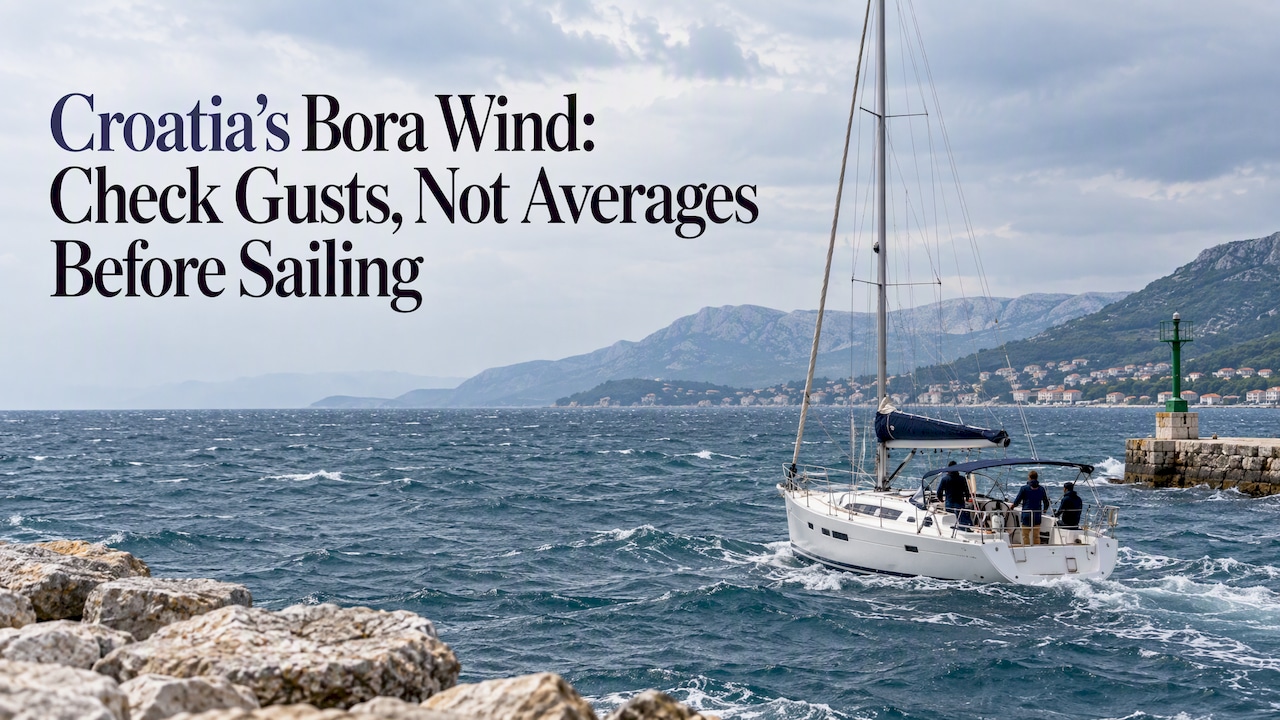
The bora is a cold, dry, gusty northeasterly wind that tumbles down from the Dinaric interior and can hit Croatia’s Adriatic coast with hurricane-force gusts. It peaks in winter and is strongest around the northern Adriatic and the Velebit range. If you plan to sail, check the official DHMZ forecast and watch the peak gust numbers, not the average wind.
Pe scurt:
- Bora conditions vary sharply between nearby bays: Senj, the Velebit Channel, and Kvarner face frequent intense events, while Zadar can remain sheltered.
- Bora is most frequent from late November through February; June and September are generally reliable for sailing only if forecasts remain favorable.
- Extreme cases can bring hourly mean winds above 20 m/s and gusts of 50–65 m/s, while 35 to 55 knots can disrupt small vessels.
- When bora is forecast, avoid exposed anchorages and seek a sheltered harbor early, since sudden gusts can push a disabled yacht toward rocks.
- Check DHMZ each morning and before crossings, confirm a berth early, reduce sail before gusts build, and keep a second harbor as a fallback.
Cuprins
- What causes the bora wind in Croatia?
- Where and when does the bora blow in Croatia?
- How does the bora change sea conditions and sailing?
- How do you check the forecast and stay safe?
- How we plan Croatia sailing weeks around the bora
- Sail Croatia with skippers who read the wind
- Întrebări frecvente
- Surse
What causes the bora wind in Croatia?
The bora is a katabatic wind, which simply means cold, dense air flowing downhill. When high pressure builds over the Balkan interior, that cold air is pushed over the Dinaric Alps and plunges down the coastal slopes) toward the lower pressure over the Adriatic. Along the way it speeds up as mountain passes and canyons squeeze it like a nozzle on a garden hose.
The mountains do the rest. Studies of the Velebit lee show strong local contrasts and extreme gusts, which is why one bay can be howling while the next one over is almost calm. Practitioners also stress that gusts can dramatically exceed the mean wind, so a harbor that feels fine at the average speed can become dangerous when gusts rise.
Here is the chain in short:
- High-pressure supply: cold continental air builds up behind the mountains.
- Funneling: the flow squeezes through passes and gaps in the range.
- Spillover: the air accelerates down the lee slopes and spills onto the sea.
- Violent gusts: short, sharp bursts hit the water far harder than the average suggests.
Where and when does the bora blow in Croatia?
The bora can show up in any month, but it has favorite places and a favorite season. The bora is especially frequent and intense in northern Adriatic regions such as Senj, the Velebit Channel and the Kvarner archipelago. Zadar, for example, can stay oddly calm in the shadow of high peaks while its neighbors get hammered.
Timing matters just as much as place:
- Peak season: the bora is most frequent and intense from late November to late February, especially around Senj, the Velebit Channel and Kvarner.
- Summer events: they tend to be shorter and can bring crisp visibility, but they remain hard to predict.
- Shoulder months: professionals describe June and September as generally reliable for sailing, as long as you keep reading the forecast.
Documented extremes: forecasters note that hourly mean bora winds can pass 20 m/s, with gusts of 50–65 m/s in extreme cases, and that is why the bora earns its respect.
If you are weighing dates for a group trip, our guide to the best time for a group sailing trip and our Mediterranean sailing seasons guide help you match the calendar to your comfort level.
How does the bora change sea conditions and sailing?
Out on the water, the bora has a signature look. Satellite imagery shows it clearly: a Copernicus Sentinel-2 image captured linear streaks and foam patterns across the Adriatic, on a day when the bora topped 100 km/h. The bora can create visible patterns on the Adriatic, reflecting strong wind–sea interaction.
For a skipper, that translates into a few very practical hazards:
- Gust overload: a sudden spike can overpower a yacht in seconds, long before the average wind looks scary on paper.
- Lee shore risk: a boat that loses control can be driven toward rocks, so anchoring in open water is a gamble.
- Rough harbors: exposed marinas and quays can turn into washing machines, with surge and chop at the dock.
- Odd currents and steep waves: forecasters note the bora affects currents and marine traffic, so even short hops feel different.
The bora can also arrive with little warning. When one is predicted, making for a safe harbor is a reliable strategy.
Sfat practic: Plan your harbor entry around the direction of the strongest wind forecast for the night, not the mean speed.
How do you check the forecast and stay safe?
Start with the source that matters most. The Croatian Meteorological and Hydrological Service, DHMZ, publishes the official marine forecast and color-coded coastal warnings, and the Croatian government’s weather guidance notes that bora winds of 35 to 55 knots can disrupt small vessels and catamaran traffic. Seasoned guides go further and treat the DHMZ marine forecast as the authority for navigating the Adriatic, reading it before every crossing.
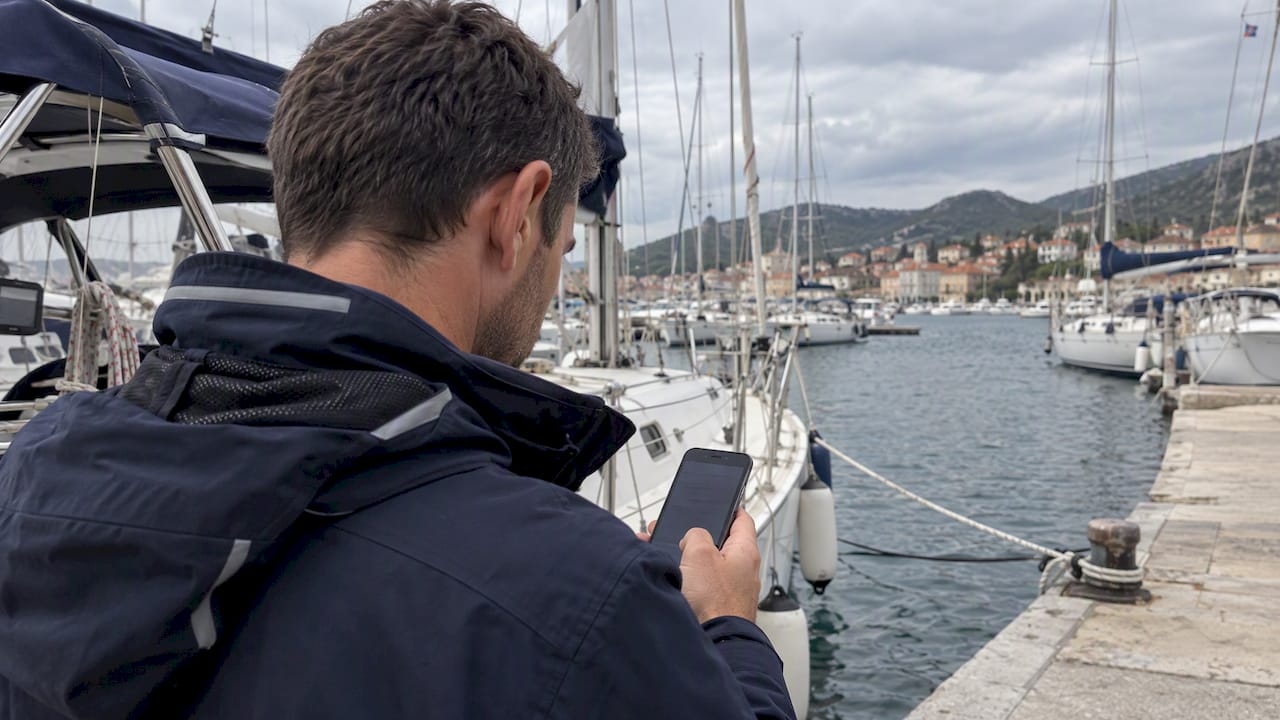
When you read it, look for the peak gust values first. Averages hide the punch.
A simple routine keeps you out of trouble:
- Read the DHMZ forecast every morning and again before any crossing, then compare it with what you see from the cockpit.
- Pick a sheltered harbor for the night, and book or confirm your berth early.
- Reduce sail early and skip exposed anchorages when gusts are forecast.
- Keep a clear Plan B, such as a second harbor on the other side of the headland.
A few extras help:
- Weather apps are handy for visualizing where gusts concentrate, but never let them replace DHMZ.
- Monitor the forecast for updates about changing wind conditions.
- Brief everyone on board about where the lifejackets and the plan are before the wind builds.
If you want to see where sheltered harbors and daily hops fall on a typical week, our day by day Croatia sailing routes lay it out, and our beginner’s guide to sailing in Croatia covers the basics.
How we plan Croatia sailing weeks around the bora
Our view is simple: the bora is not a reason to stay home, it is a reason to sail with a skipper who respects it. We let forecasts and local knowledge set each day’s route, and we build weeks with spare ports and flexible start and finish points. A skipper’s call to change course always wins. Before you book any trip, ask about the skipper’s local experience, the contingency plan, and the backup harbors.
- Sail
Sail Croatia with skippers who read the wind
We offer Croatia sailing weeks with itineraries that can adapt to weather conditions. Ask us about the skipper, safety decisions and route planning before booking. Private weeks start from 560 € per week per person, and you can see departures and ask us for route advice on our Croația – Pagina Go Private. Pick your dates, and we will help you pick the right bays.

Întrebări frecvente
Is the bora wind hot or cold?
The bora is cold and dry. It is a katabatic wind that carries chilly continental air down from the mountains to the Adriatic coast, so expect a sharp temperature drop when it arrives.
Which month is the windiest in Croatia?
The bora is most frequent and intense from late November to late February, so winter is the windiest period for this particular wind. Summer bora events tend to be shorter.
Which part of Croatia is the windiest?
The northern Adriatic takes the crown, especially Senj, the Velebit Channel and the Kvarner archipelago. The lee of southern Velebit has also recorded some of the highest bora values in Croatia.
Why is it so windy in Croatia?
Cold air from the Balkan interior is pushed over the Dinaric mountains and accelerates down toward the warmer, lower-pressure sea. Passes and canyons funnel the flow, which makes the gusts stronger and very local.
Surse
- Guvern
- Bora wind creates spectacular patterns on the Adriatic Sea | EU Space Policy
- The complex bora flow in the lee of southern Velebit