The best short Cyclades sailing itinerary is a 7-day central loop starting from Paros, hitting Mykonos, Tinos, and Naxos with roughly 150 to 170 nautical miles total. For 10 to 14 days, the classic route runs Santorini to Paros to Naxos to Mykonos. Lavrion, Paros, and Syros are commonly recommended as strong embarkation bases. Here’s how each leg actually breaks down.
Pe scurt:
- Keep daily sailing distances mostly under 30 nautical miles to allow time for exploration and prevent crew fatigue during a Cyclades trip.
- Favor early morning departures and build in buffer nights to account for unpredictable weather or delays, especially when crossing exposed channels.
- Choose Lavrion, Paros, or Syros as your embarkation base for better logistics, with early reservations recommended in peak season to secure moorings.
- Schedule sailing during shoulder seasons like late May, June, or September to avoid strong Meltemi winds and crowded marinas, ensuring a more comfortable experience.
- Opt for shorter daily legs and plan detours to protected harbors like Ios if wind conditions threaten safety, rather than pushing through Force 6 or higher for long stretches.
Cuprins
- Sample Cyclades Sailing Itinerary: 7-Day and 10 to 14-Day Routes
- How Do You Choose the Right Cyclades Embarkation Port?
- When Should You Sail the Cyclades? Meltemi and Season Guide
- How Many Nautical Miles Should You Sail Each Day?
- Provisioning, Berthing, and Anchoring: What You Need to Know
- Safety Checklist for Sailing the Cyclades
- How Sailarmada Thinks About Cyclades Itineraries
- Book a Curated Cyclades Charter With Sailarmada
- Ferry Timetables and Weather Tools for Final Planning
- Surse
Sample Cyclades Sailing Itinerary: 7-Day and 10 to 14-Day Routes
A good Cyclades sailing itinerary isn’t just a list of pretty islands strung together. It’s a route that respects wind direction, keeps daily sailing sessions comfortable, and leaves room to actually enjoy the places you stop. Below are the routes SailArmada’s planning team leans on most often, adjusted for the realities of chartering rather than the fantasy version you see in brochure photos.
The 7-day central loop from Paros
This is the itinerary most first-time charterers should copy. It starts and ends in the same place, which keeps logistics simple, and it stays within the central Cyclades where distances between islands are short enough that nobody spends a whole day just staring at the horizon.
- Day 1: Paros (Naoussa) to Mykonos — around 20 nm, roughly 3 to 4 hours under sail. Leave Naoussa in the morning to beat the afternoon breeze buildup and arrive with time to explore Mykonos Town before dinner.
- Day 2: Mykonos to Tinos — a short hop of about 10 nm, under 2 hours. This leaves the whole afternoon free for Tinos, which is quieter than Mykonos and worth the contrast.
- Day 3: Tinos (layover or short sail to Delos day trip) — Delos sits close to Mykonos, and it’s worth noting upfront that overnight stays there are prohibited, so treat it strictly as a daytime archaeological stop, not an anchorage.
- Day 4: Tinos to Naxos — around 35 nm, the longest leg of the week at roughly 5 to 6 hours. Naxos rewards the effort with some of the best beaches in the Cyclades and a genuinely walkable old town.
- Day 5: Naxos (layover day) — hire a car or just wander the Portara ruins and the mountain villages inland. Sailing every single day burns crews out faster than people expect.
- Day 6: Naxos to Paros — a gentle 20 nm return leg, about 3 hours, giving you an early arrival and a relaxed final night in Naoussa or Parikia.
- Day 7: Buffer day in Paros — reserved for weather, laundry, restocking, or simply not rushing your last morning before handover.
That structure keeps you inside roughly 150 to 170 nautical miles for the week, which is a manageable pace for a mixed-experience crew and still lets everyone get proper time ashore.
The 10 to 14-day classic: Santorini to Mykonos
If you have two weeks, the archipelago opens up considerably. The classic rhythm here is Santorini, Paros, Naxos, Mykonos, or the reverse, with three nights on the bigger islands and two on the mid-sized ones as a working template.
- Santorini (3 nights): Give yourself real time here. The caldera anchorages are dramatic but exposed, so plan on using the marina at Vlychada or Athinios rather than swinging on the hook overnight in poor holding.
- Sail to Paros (1 day, roughly 65 nm): This is a long open-water crossing, so pick a settled weather window and start early.
- Paros (2 nights): Use this as your central hub. From here, side trips to Antiparos are short and easy, and it’s a good place to restock before pushing north.
- Paros to Naxos (short hop, about 20 nm): Naxos deserves 3 nights given its size and the range of things to see, from the Tragaea olive groves to Apollo’s Temple.
- Naxos to Mykonos (roughly 35 to 40 nm): Close out the trip in Mykonos for 2 to 3 nights, timed so your final days coincide with easier ferry or flight connections home.
If you’re chartering for the full 14 days rather than 10, this route has natural room for detours. Folegandros and Amorgos both sit within reach of the Naxos to Santorini corridor and reward the extra mile with far fewer crowds than the headline islands. Four islands over 10 to 14 days is genuinely the sweet spot. Add a fifth only if you’re comfortable trimming a night somewhere else.
Two-week western Cyclades and Small Cyclades extensions
For repeat visitors or crews who want fewer tourists and more raw scenery, consider swapping the eastern legs for a western loop through Milos, Kimolos, and Sifnos. Milos alone is worth two nights for its volcanic coastline and Sarakiniko’s lunar rock formations. Kimolos is small enough to sail around in an afternoon, and Sifnos brings some of the best food in the Cyclades without the Mykonos price tag attached to it.
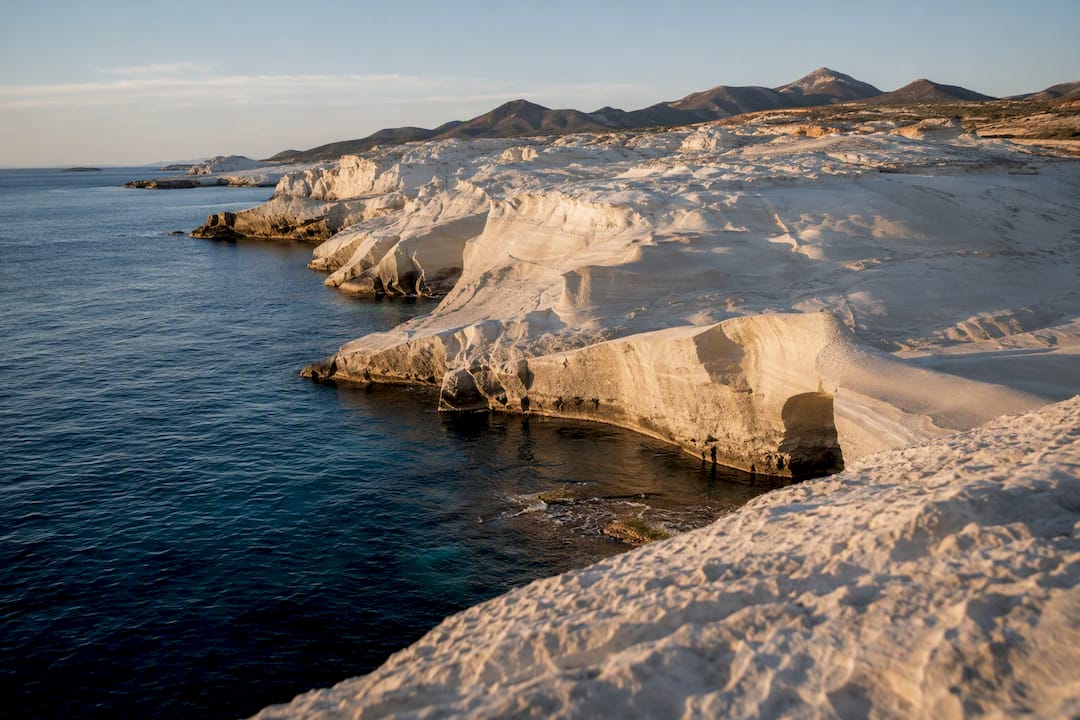
Groups with strong sailing experience and an extra few days can also bolt on the Small Cyclades: Koufonisia and Amorgos. These islands sit further southeast and add real mileage, but Koufonisia’s turquoise coves are the kind of thing people show off in photos for years afterward, and Amorgos has the added draw of the cliffside Monastery of Hozoviotissa.
One-way charters and handover logistics
One-way itineraries (starting in one base and finishing in another) are commonly available between Lavrion, Paros, and Athens area marinas, and they solve the backtracking problem neatly. If you’re flying into Athens and want to end your trip closer to Santorini for an onward ferry to Crete or a flight home from Thira, ask your charter company directly whether one-way positioning is offered for your dates, since availability is seasonal and boats need repositioning afterward. Expect a modest relocation fee, and confirm your final handover port and time well before departure so nobody’s scrambling on the last morning.
How Do You Choose the Right Cyclades Embarkation Port?
Your starting base shapes your entire route, so this decision deserves more thought than most people give it. Lavrion, Paros, and Syros are consistently the most practical charter bases for a Cyclades sailing itinerary, each solving a different logistical problem.
- Lavrion: About an hour from Athens International Airport by road, which makes it the easiest base if you’re flying in and want to minimize transfer time. It also puts you within a short first-day sail of Kea and Kythnos, useful if your route heads into the western Cyclades.
- Paros: Sits almost dead center in the archipelago, which is exactly why it anchors both sample itineraries above. A Paros start lets you build loops in any direction without one long transit leg eating your first or last day.
- Syros: Often overlooked, but it combines strong marina infrastructure with genuinely useful provisioning options, plus a central position that rivals Paros. Syros is underrated as a base precisely because its marinas are quieter than the tourist-heavy alternatives, and groups appreciate the extra space when loading provisions for a two-week trip.
- Mykonos: Workable as a start point, but berth costs run noticeably higher here than at the other three bases, and marina space is tighter in July and August. It makes sense mainly if your itinerary is weighted toward the eastern islands or you’re doing a one-way charter that ends there.
Whichever base you pick, lock in your marina reservation and any ferry or transfer bookings early if you’re sailing in peak season. Berths at popular bases fill months ahead once June arrives.
When Should You Sail the Cyclades? Meltemi and Season Guide
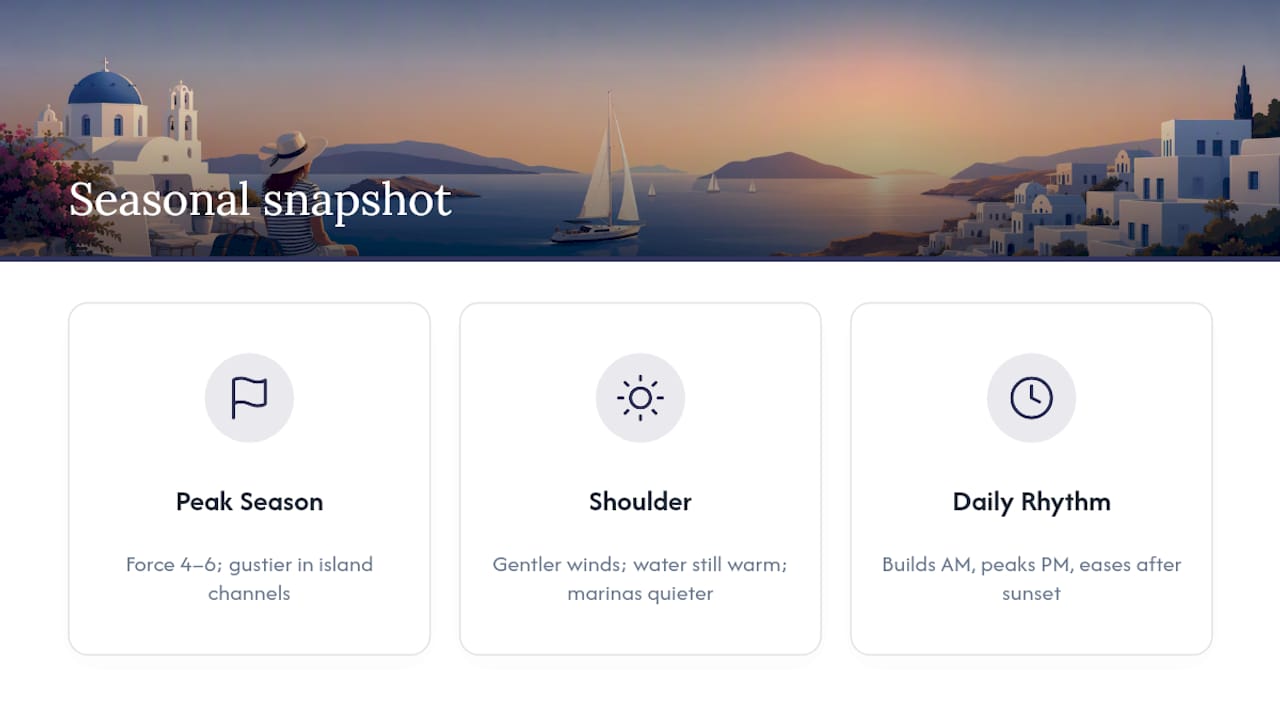
The Meltemi is the single biggest factor in how you should shape a Cyclades sailing itinerary, and it catches a lot of first-time charterers off guard. This dry, cooling north wind dominates the Aegean through July and August, typically running Force 4 to 6 with gusts stronger still in exposed channels between islands like Paros and Naxos.
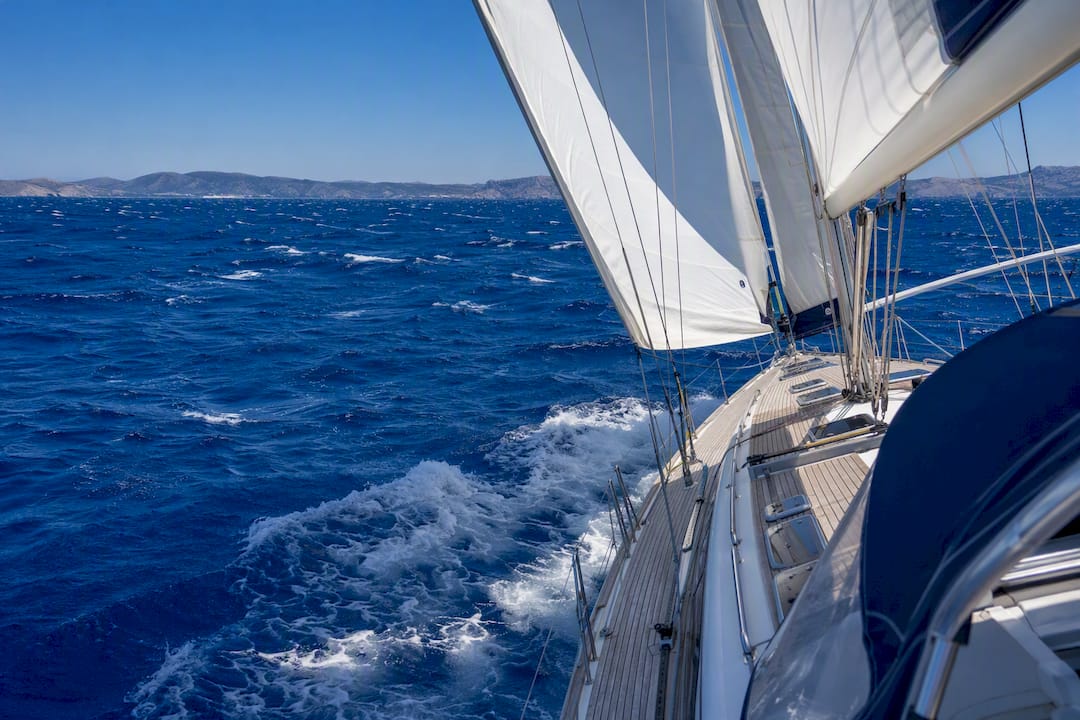
The wind tends to build through the morning and peak in the afternoon, then ease off after sunset. That daily pattern is worth building your whole schedule around: start sailing early, aim to be anchored or berthed by early afternoon, and treat any 1 PM departure as a mistake waiting to happen during Meltemi season.
Routing matters just as much as timing. Front-loading your windward legs and letting the wind push you home later in the trip is a smarter pattern than fighting a Force 6 headwind on your last day when everyone just wants to relax. A Paros-based loop works well for exactly this reason, since it lets you sail north against the wind early in the week and return south with it behind you.
Sfat profesional: If your forecast shows sustained Force 6 or higher for your planned crossing day, don’t force it. Swap in a shorter, more sheltered leg and push the longer passage to the next available weather window. One lost day beats one miserable, seasick crew.
For booking, reserve ferries and fast-catamaran legs 4 to 6 weeks ahead if you’re traveling in July or August; shoulder months need only one to two weeks of lead time. Speaking of which, shoulder season (late May through June, and September into early October) is genuinely the better call for anyone who values comfort over guaranteed sunshine. Winds are gentler, the water’s still warm, and marinas aren’t fighting over every last berth. If you want a deeper breakdown of how Mediterranean seasons shift month to month, SailArmada’s guide to sailing seasons covers it in more depth.
How Many Nautical Miles Should You Sail Each Day?
Building a workable daily schedule comes down to three numbers: distance, time, and how much buffer you’re leaving yourself. Get this part wrong and even a perfect route on paper turns into a stressful trip.
Most charter yachts in the Cyclades cruise comfortably at 5 to 6 knots under sail, sometimes faster with a strong Meltemi push behind you. A 20 nm leg at that pace takes roughly 3 to 4 hours, which is the sweet spot for a day that still leaves time to explore ashore. Anything over 35 nm should be treated as a “sailing day,” where the passage itself is the main event and shore time takes a back seat.
- Set a daily cap. Aim for 25 to 30 nm as your comfortable maximum on days when you also want beach time or a proper walk around a village.
- Start early, not late. An 8 or 9 AM departure beats a leisurely 11 AM start, especially once the Meltemi kicks in through midday.
- Build in one buffer night per week. A trip with zero slack falls apart the moment weather, a mechanical hiccup, or simply everyone wanting one more night somewhere throws off the schedule.
- Protect your last 48 hours. Never schedule a long, exposed crossing on your final full day. If a flight or ferry connection depends on being back at base, give yourself that buffer.
- Keep a fallback island for every major leg. If wind blocks your route to Santorini, Folegandros or Sikinos often sit closer and still deliver a memorable stop.
That last point matters more than people think. A workable contingency plan looks like this: if a Force 7 warning rules out your Naxos to Santorini crossing, divert to Ios instead, which sits roughly halfway and has a protected harbor that holds well in northerly wind. You lose the headline island for a day, but you don’t lose the trip.
Provisioning, Berthing, and Anchoring: What You Need to Know
Provisioning for a week is straightforward. Stock enough food and water for the first two or three days, then plan to restock in Naxos or Paros, both of which have proper supermarkets near the marina. For a two-week trip, build in at least two restocking stops and double your fresh water reserves, since smaller islands sometimes run tight on supply during peak season. Always carry a basic medical kit aboard, even on a skippered charter. SailArmada’s provisioning guide for a week of sailing walks through exactly what to pack and what to buy locally.
Berthing across the Cyclades is a mixed bag. Larger marinas at Paros, Naxos, and Syros commonly accept advance reservations, especially in peak season, and it’s worth locking those in ahead of time rather than gambling on availability. Smaller island harbors, by contrast, largely run on a first-come basis, which means arriving by early afternoon gives you the best shot at a decent spot before the fleet piles in.
A few practical points worth keeping in mind:
- Check holding ground before anchoring; sand holds well, weed does not, and several popular Cyclades bays have patchy bottom conditions.
- Use mooring buoys where they’re provided rather than dropping anchor nearby, since buoy fields are placed to protect sensitive seabed.
- Never plan an overnight anchorage at Delos; day visits only, given the site’s protected status.
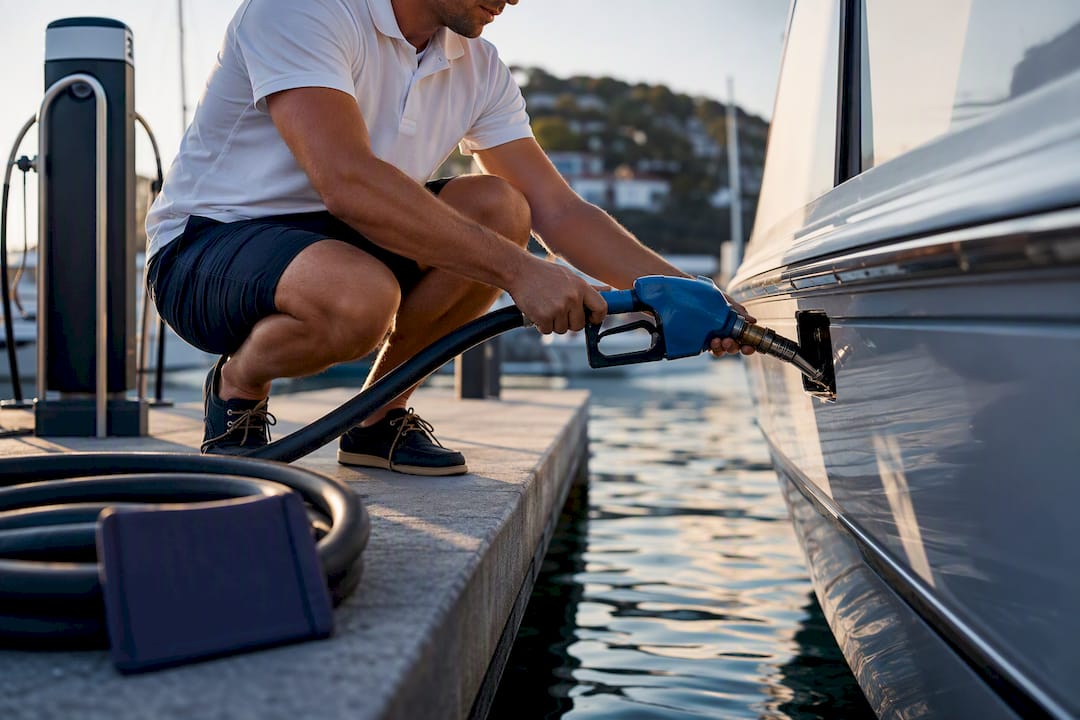
- On handover day, empty holding tanks, refuel if required by your contract, and do a walk-through with the base team to avoid disputed damage charges.
Safety Checklist for Sailing the Cyclades
Before you cast off, run through a proper safety briefing with everyone aboard, not just the experienced sailors. Cover life jacket locations, the VHF channel for the coast guard, man-overboard procedure, and where the first aid kit lives. It takes fifteen minutes and it’s the cheapest insurance you’ll ever buy on a charter.
When the Meltemi builds past Force 5, reef early rather than waiting until it’s already uncomfortable. A single reef in the main plus a partially furled headsail keeps most cruising catamarans and monohulls balanced and controllable without sacrificing much speed. Waiting until you’re overpowered to reduce sail makes the whole maneuver harder and riskier.
For short-handed crews, a simple watch rotation prevents fatigue from becoming a safety issue: two-hour blocks during daylight with overlapping handovers, stretching to three hours overnight if you’re doing any night passages, adjusted based on who aboard actually has offshore experience.
Sfat profesional: Set a firm decision point before you leave the dock: if wind exceeds a number you agree on as a crew, or sea state makes anyone uncomfortable, you divert to the nearest safe harbor. Deciding this in advance removes the ego and peer pressure that causes most bad calls at sea.
Know your nearest safe harbors for every leg of your route, and always tell someone ashore, whether that’s your charter base or a marina office, what your planned course and expected arrival time are.
How Sailarmada Thinks About Cyclades Itineraries
Planning a route for a family of six or a group of friends splitting two cabins is a different exercise than planning for a couple. Sailarmada’s approach to Cyclades routing starts from that reality: comfort for the least experienced sailor aboard, not the most ambitious one.
That means we lean toward shorter daily legs than a solo racer might choose, more layover days than a rushed itinerary allows, and bases like Paros or Syros that keep first and last-day transfers simple for groups traveling with kids, older parents, or a mix of skill levels. We’ve found that a route which looks slightly conservative on paper almost always produces the better trip in practice, because nobody spends day three exhausted and cranky from a passage that pushed too hard, too soon.
If your group has a specific mix of must-see islands, a fixed flight window, or particular sailing experience levels, Sailarmada can build a custom family sailing itinerary around those constraints rather than forcing you into a generic template.
- Sail
Book a Curated Cyclades Charter With Sailarmada
Planning every leg, berth reservation, and provisioning stop yourself takes real time, and getting the Meltemi timing wrong can cost you a day or more of your trip. Sailarmada builds curated Cyclades routes with vetted skippers and pre-checked marinas, so the itinerary work above is already done before you step aboard.
Our private charters let a group set its own pace across islands like Paros, Naxos, and Mykonos, with a skipper who already knows which anchorages hold well and which harbors fill up by noon in July. Group bookings work the same way, coordinated across multiple yachts so families and larger parties can sail in loose formation without losing the flexibility of separate boats. Every itinerary gets shaped around your crew’s experience level and the dates you already have booked, not a one-size-fits-all template.
If you’re ready to trade the spreadsheet planning for a route someone else has already tested, check available dates and request a custom Cyclades quote directly with our team.
Ferry Timetables and Weather Tools for Final Planning
Once your route is set, confirm connections through Greek ferry operator sites for Piraeus, Rafina, and Lavrion departures, since fast catamarans like SeaJets and Golden Star sell out quickly in peak season. Check an Aegean marine weather brief in the days before departure, and browse Sailarmada’s Greece destinations page for route ideas and booking help.
Surse
- Charterm
- Cyclades Island Hopping Itinerary: Santorini, Mykonos, Paros & More | BreezyRoutes
- How To Island Hop In The Cyclades In 2026 – Tips And Insights | RealGreekExperiences
- Greece Island Hopping Itinerary 2026: Best First Cyclades Route – Backpacking Is Life