

A yacht charter payment plan is almost always a short-term installment or Buy Now Pay Later arrangement that spreads out the cost of a single trip, not a loan for buying a boat. Before you sign anything, get the financed amount, the refund terms, and proof of insolvency protection in writing. Most reputable operators can walk you through all three before you commit a cent.
Pe scurt:
- Most yacht charter payment plans cover only the base fee and taxes, while additional costs like fuel, crew gratuity, port fees, and extras are usually billed separately.
- EU rules mandate insolvency protection and clear payment disclosures for package travel bookings, but deposit limits vary by country and are not standardized across Europe.
- Confirm whether the payment plan is interest-free or includes third-party fees, and always verify if extras and APA are included in the financed amount or billed upon arrival.
- Group payment methods include one person paying upfront with reimbursements, provider-assisted splits, or individual BNPL plans, but clarity on refunds and contract ownership is essential.
- Always request written proof of insolvency protection, detailed cost breakdowns, and clarify refund terms before signing any yacht charter payment agreement.
Cuprins
- How Yacht Charter Payment Plans Work
- What’s Included in a Yacht Rental Financing Plan — and What Isn’t
- Do EU Rules Protect Charter Payment Plans?
- Choosing a Payment Plan: Checklist and Questions to Ask
- Splitting Charter Payments Across a Group
- A Sailing Specialist’s Take on Payment Plans
- Book a Sailing Week with Clear, Flexible Payment Terms
- Surse
- FAQ
How Yacht Charter Payment Plans Work
The phrase “yacht charter payment plan” covers a few distinct arrangements, and mixing them up is where planners get burned. BNPL (Buy Now Pay Later) splits your charter fee into a handful of automatic installments, usually through a third-party checkout partner. Layaway-style plans hold your spot while you pay down the balance ahead of departure, with no interest if you hit the deadlines. Scheduled installments are simply the operator’s own deposit and balance structure, sometimes broken into three or four payments instead of two.
None of these are the same as ownership financing. Buying or leasing a yacht involves multi-year loan terms and down payments in the 20% to 50% range, collateralized against the vessel itself. A charter payment plan is short-term consumer credit or a payment schedule tied to one trip, and it disappears once you sail home.
Here’s a typical structure for a week-long private charter:
- Payment 1 (booking deposit): 20% to 30% due at reservation to secure the vessel and dates.
- Payment 2 (mid-term installment): a further portion of the charter fee, often due 60 to 90 days before departure, as set by the operator.
- Payment 3 (final balance): the remaining balance, due several weeks before boarding, sometimes alongside the APA.
Who actually issues the credit matters. Some operators partner with a dedicated BNPL provider, which means interest or service fees show up on a separate statement from your charter invoice. Others simply extend their own internal installment schedule with no financing fees at all, just a firmer deadline. Ask which one you’re signing up for before you commit.
What’s Included in a Yacht Rental Financing Plan — and What Isn’t
The number you see advertised almost never matches the number you’ll actually owe. Most charter payment plans finance the base charter fee and any taxes the operator discloses upfront, and that’s typically where the financed amount stops.
What usually gets billed separately:
- APA (Advance Provisioning Allowance) — fuel, food, dockage, and drinks on crewed charters
- Bacșișul pentru echipaj — customary but not automatically included in the financed total
- Fuel surcharges — especially on longer routes or motor-heavy itineraries
- Taxe portuare și de port de agrement — variable by destination and season
- Extras — water toys, special requests, private chefs, add-on excursions
Crewed charters carry these extra costs precisely because crew salaries and insurance are significant fixed overheads that operators need funded well ahead of departure, which is exactly why deposit schedules tend to be strict rather than casual. If you’re weighing a crewed option, it helps to understand what a crewed yacht charter actually includes before you compare quotes.
Sfat profesional: Ask for a written breakdown showing whether APA and extras get added to your existing financed balance or billed as a completely separate charge on arrival. This one question prevents most end-of-trip surprises.
Do EU Rules Protect Charter Payment Plans?
Yes, if your charter is sold as a package. Package travel covers any holiday bundled into a single contract combining two or more travel services, and organizers established in an EU member state must carry insolvency protection for the money you’ve paid in.
The rules that matter most to anyone paying in installments:
- Disclosure requirement: Under Directive (EU) 2026/1024, amending Directive (EU) 2015/2302, organizers must disclose payment arrangements, including down payment amounts and the full timetable to final balance.
- 14-day refund rule: In many covered cancellations, refunds must be processed within 14 days, and vouchers can only replace cash refunds if you give explicit consent.
- No universal deposit cap: Regulators originally proposed capping deposits at 25%, but the final directive left deposit limits to individual member states rather than setting one EU-wide figure.
That last point matters more than it seems. It means the size of your deposit is not standardized across Europe, so check what your specific country allows rather than assuming a cap exists. Before booking anywhere, it’s worth reviewing how asigurare de călătorie interacts with these refund and insolvency protections, since the two rarely cover identical situations.
Choosing a Payment Plan: Checklist and Questions to Ask
Run through this before signing anything, in order:
- Confirm the financed amount. Is it the advertised base price or the full invoice including likely add-ons?
- Check the deposit percentage and exact due date for each installment.
- Ask about fees or interest. Is the plan interest-free, or does a third-party provider add a service charge?
- Clarify APA and extras. Are they folded into the payment plan or billed separately at boarding?
- Read the cancellation terms. What happens to already-paid installments if you cancel, and does SailArmada’s cancellation policy or the operator’s own terms apply?
- Request proof of insolvency protection. A legitimate operator can produce this on request.
- Ask whether refunds default to cash or vouchers, and confirm you’d need to consent to a voucher.
- Confirm who holds the actual contract if multiple people are contributing payments.
Copy these two questions directly into your next email to an operator: “Can you send the exact payment schedule including any APA or extras?” and “Can you provide documentation of your insolvency protection?”
Sfat profesional: If an operator can’t answer either question clearly within one reply, treat that as a warning sign rather than a formality to chase down later.
Red flags worth walking away from: no insolvency protection disclosed anywhere, vague language about what extras “may” be included, and refund timelines that go unmentioned in the contract entirely.
Splitting Charter Payments Across a Group
Groups typically handle a shared charter cost one of three ways. One person pays the full amount upfront and collects reimbursements informally, which is simple but puts all the financial risk on a single traveler. Some operators offer provider-assisted split payments, letting each traveler pay their share directly into the same booking. Others let each person run their own portion through a separate BNPL plan, which keeps individual credit exposure separate but complicates refunds if the trip changes.

Whichever method you pick, confirm three things ahead of time: whether every payer is named on the contract, who actually receives a refund if one is issued, and how chargebacks get handled if a co-payer disputes a charge. Setting an internal group deadline a week before the operator’s actual balance date, and collecting a quick written confirmation from each contributor, saves a lot of last-minute chasing. For larger parties, it helps to read how group bookings are typically structured before you divide anything up.
A Sailing Specialist’s Take on Payment Plans
Most planners overthink the financing mechanics and underthink the budget gap between the advertised price and what actually lands on the final invoice. Some operators curate private and group sailing routes with transparent pricing and flexible booking terms, and the pattern we see most often isn’t a payment plan gone wrong. It’s a traveler who never built an APA budget alongside their installment schedule and got surprised at boarding.
Pair a realistic APA estimate with a clear, written payment timeline from day one. That combination, more than any specific financing product, is what keeps a charter budget from unraveling in its final week.
- Sail
Book a Sailing Week with Clear, Flexible Payment Terms
This company offers an alternative to guesswork booking for planners who want a payment schedule they can actually read before they sign. Some routes are curated by professionally trained skippers from CAPETAN.club, with transparent pricing and personalized support from team members.
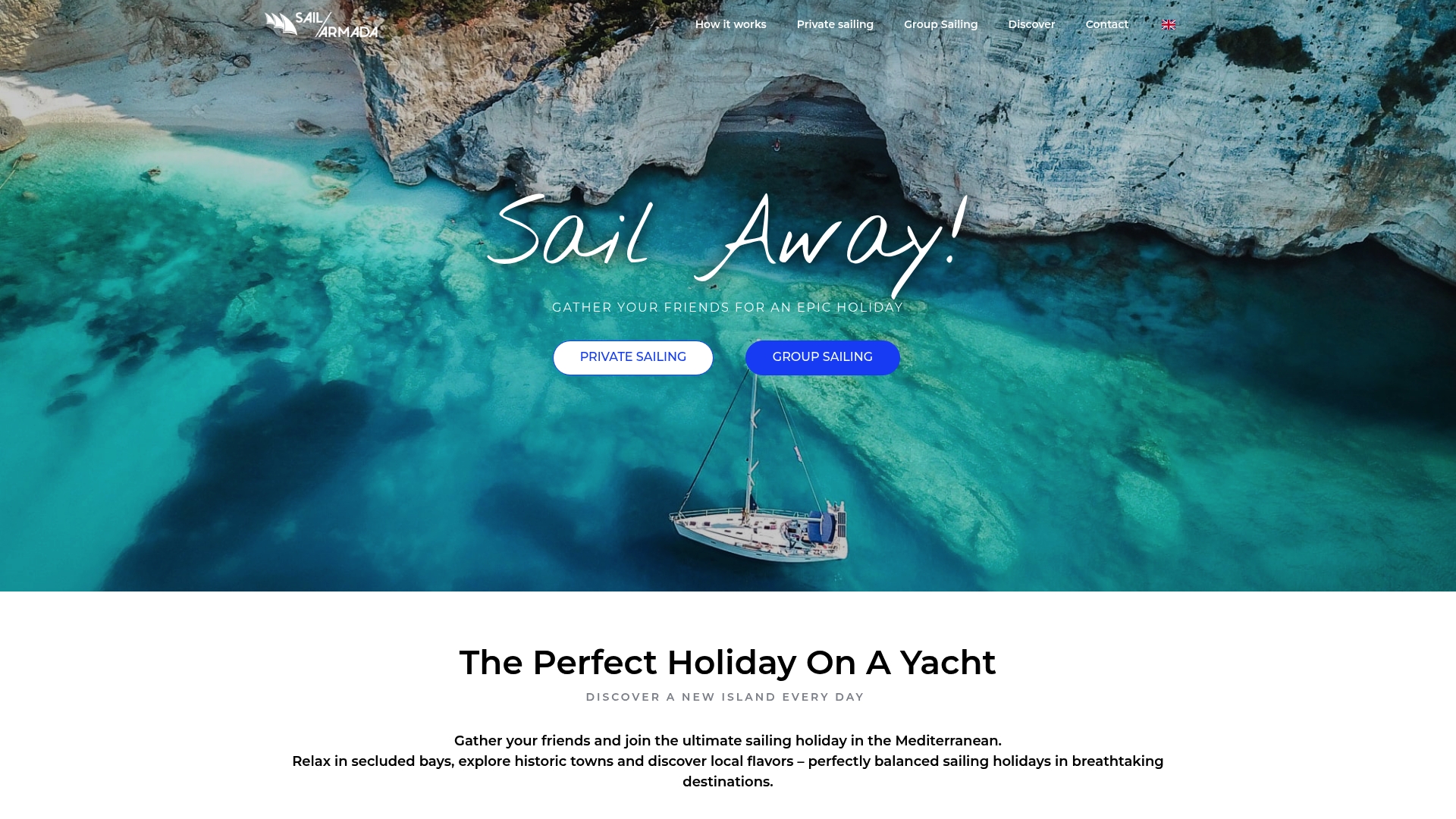
If you’re organizing a group trip, ask about payment-plan availability and request a full cost breakdown before you commit a deposit. Sailarmada’s Grecia - Go Private itineraries start from 560 € per week per person, and the team can walk you through exactly what’s financed, what’s billed separately, and when each installment is due. If your group is coordinating flights or airport pickups around the charter dates, a partner like Chauffyr’s group transport service can handle that logistics piece while you focus on the sailing schedule. Reach out to review your options and get a payment breakdown for your dates.
This article is general information, not a substitute for advice from a qualified financial advisor. Consult a qualified financial professional about your own circumstances before acting on anything here.
Surse
- The EU just overhauled package travel rules — summary (portal)
- Directive (EU) 2026/1024 amending Directive (EU) 2015/2302 (package travel)
- Superyacht crew salary guide
FAQ
How Much Does a 3-Day Yacht Charter Cost?
Costs vary widely by yacht size, crew, and destination, and most operators quote a base charter fee separate from APA, fuel, and gratuity. Sailarmada’s private week-long itineraries start from 560 € per week per person, so a shorter 3-day charter would be priced proportionally, with current rates listed directly on the booking pages.
What Is the 10% Rule for Yachts?
There’s no single, universally recognized “10% rule” that applies across yacht charters or ownership costs; the term shows up in different contexts depending on the source. If you’ve seen it referenced for annual maintenance budgeting on yacht ownership, that’s a separate calculation from charter payment plans and shouldn’t be confused with deposit percentages, which typically run 20% to 30% instead.
What Is the 12-Person Rule on a Yacht?
This generally refers to licensing and safety regulations that distinguish smaller charter vessels from larger commercial vessels requiring different crew certifications and inspections. The exact threshold and requirements depend on the vessel’s flag state and where it’s chartered, so confirm the specific rule with your operator rather than assuming one standard applies everywhere.
Do Yacht Crew Get Paid a Salary?
Yes, crew on crewed charters are paid salaries, and those costs are a major reason operators require structured deposits and firm payment schedules. This is also why crew gratuity typically sits outside the financed portion of your payment plan rather than folded into it.
Recomandate
- Ghid pentru rezervarea unui iaht în grup: Cum să vă organizați vacanța pe mare
- 20–40% APA: Bugetarea unei chartere de iahturi pentru organizatorii de chartere
- Cum se coordonează plecările iahturilor în cazul închirierilor de grup
- Planificați-vă călătoria privată de navigație: ghid pentru familii și grupuri