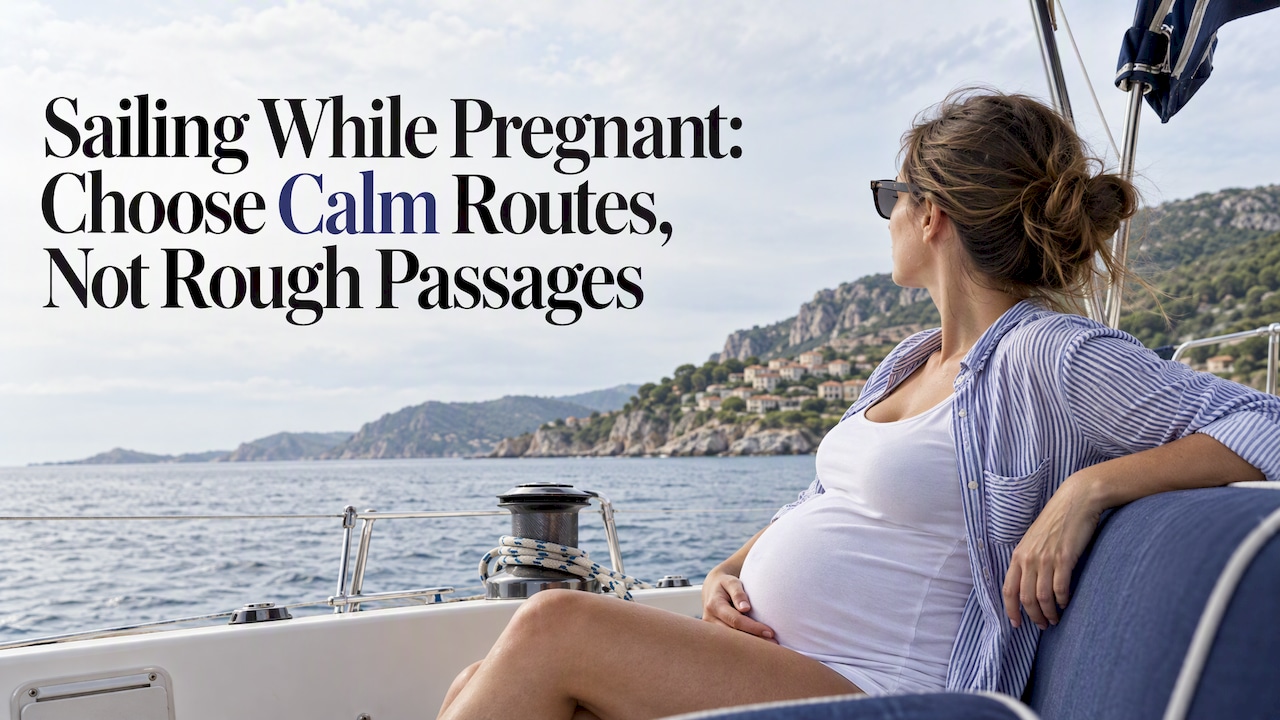
Sailing is usually safe for many healthy, uncomplicated pregnancies when you choose calm water, a stable boat, and a sensible pace. The main caveats: late-pregnancy trips and rough-weather passages may raise your risk, operator policies vary, and you should check with your clinician before you book. Below, we break down exactly what that means for your trip.
Pe scurt:
- The second trimester often suits shorter, sheltered trips best; first trimester nausea can compound seasickness, while third trimester raises fall risk and operator cutoffs vary.
- Choose a wide, stable catamaran and sheltered inshore routes, with short hops and rest breaks; private charters can avoid packed schedules and unnecessary transfers.
- Skip speedboats, watersports, rough weather, nighttime dinghy transfers, heavy lifting, and rushed boarding; ask the operator for safer alternatives before departure.
- Discuss bleeding, preterm labor risk, high blood pressure, or placental concerns with your clinician; check medication safety, nearby medical care, and evacuation coverage before booking.
- After about 19 weeks, limit prolonged time on your back, drink water regularly, and stop activity immediately if you feel unwell.
Cuprins
- Why pregnancy changes your risk on a moving boat
- Trimester-by-trimester: when sailing makes the most sense
- Safest boats and outings for expectant travelers
- What to avoid on the water: concrete red flags
- Managing seasickness, hydration, and medication on board
- Medical access and emergency planning before you set sail
- Packing and onboard comfort adjustments
- What to ask your clinician before you book
- A perspective on choosing the right kind of trip
- Consider a private, paced charter built around your pregnancy
- Întrebări frecvente
- Surse
Why pregnancy changes your risk on a moving boat
Pregnancy hormones relax your ligaments and loosen your joints, which is great for childbirth but not so great for balance on a heeling deck. Your center of gravity shifts as your belly grows, so the same step you’d take without a second thought on dry land becomes a genuine slip-and-fall risk on a boat that’s rocking underfoot.
This matters more than it might sound like at first. A moving deck asks more of your coordination exactly when your body is least equipped to deliver it, and fatigue sets in faster too.
Certain pregnancy conditions raise the stakes further, and these are worth a conversation with your clinician before you commit to a trip:
- Any history of vaginal bleeding or spotting during this pregnancy
- A diagnosed risk of preterm labor
- Preeclampsia or high blood pressure
- Placenta previa or other placental concerns
None of these automatically rule out a sailing holiday, but they change the calculus, and your clinician is the right person to weigh in on your specific case.
Trimester-by-trimester: when sailing makes the most sense
Not every stage of pregnancy carries the same risk on the water, and planning around your trimester makes a real difference.
- First trimester: Morning sickness and fatigue are often at their worst here, and they can overlap unpleasantly with seasickness. Short, calm outings tend to work better than full-day passages if your symptoms are manageable.
- Second trimester: This is often the sweet spot. Energy tends to return, nausea usually eases, and your balance hasn’t yet been affected by a late-stage belly. Rough offshore passages are still worth skipping.
- Third trimester: Fall risk climbs as your center of gravity shifts further forward, and many operators enforce their own cutoffs around this stage. Long offshore passages are best avoided, and it’s worth scaling back bookings as you approach your due date.
Public pregnancy guidance notes that mild to moderate activity is generally beneficial, and that resting in comfortable positions is fine in early pregnancy, but after about 19 weeks, prolonged time on your back should be limited, which is worth keeping in mind for long sunbathing sessions or extended lounging on deck. The same guidance advises drinking plenty of water and stopping any activity the moment you feel unwell.
Operator cutoffs vary, so always check the specific policy before you book rather than assuming a general rule applies.
Safest boats and outings for expectant travelers
The boat you choose and the route you sail matter as much as the trimester you’re in. Calm, inshore waters and sheltered bays are a far gentler experience than an open-ocean passage, and they cut down on the kind of pitching and rolling that makes anyone queasy, pregnant or not.
- Choose inshore routes and sheltered anchorages over open-water crossings.
- Pick a catamaran or another wide, stable platform rather than a small planing boat, since the extra beam reduces pitch and roll.
- Book a private charter so you can set your own pace, skip a stop if you’re tired, and avoid a packed schedule.
- Favor short hops between anchorages instead of long single-day passages.
- Avoid itineraries that are heavy on dinghy transfers or constant on-deck activity.
noastre family-friendly yacht features guide walks through the layout details that tend to matter most for stability and comfort, and the same logic that works well for sailing with infants on short catamaran hops applies just as well to an expectant traveler planning a gentler route.
What to avoid on the water: concrete red flags
Some activities carry enough risk that they’re worth ruling out entirely rather than weighing case by case.
- Speedboats, high-speed offshore runs, and watersports like wakeboarding or water-skiing.
- Rough-weather passages, nighttime dinghy transfers, and long stretches standing on a heeling deck.
- Heavy lifting, rushed boarding or disembarking, and anything your clinician has specifically advised against.
If an itinerary includes any of these, it’s worth asking your operator for an alternative rather than pushing through. A good charter team will have options.
Managing seasickness, hydration, and medication on board
Morning sickness and seasickness have an unfortunate habit of overlapping, and liveaboard mothers have described exactly this experience in their own accounts of pregnancy at sea. The same reporting notes that reliable medical care can feel harder to reach once you’re cruising, which is part of why planning ahead matters so much.
A few measures help more than you’d expect:
- Sit mid-ship where motion is gentlest, face forward, and keep your eyes on the horizon.
- Get fresh air rather than retreating below deck.
- Try ginger or acupressure wristbands, both common non-drug options.
- Drink water and electrolytes steadily, since pregnancy makes dehydration set in faster, and avoid overheating in direct sun.
Any antiemetic or motion-sickness medication, even an over-the-counter one, needs a green light from your clinician before you pack it.
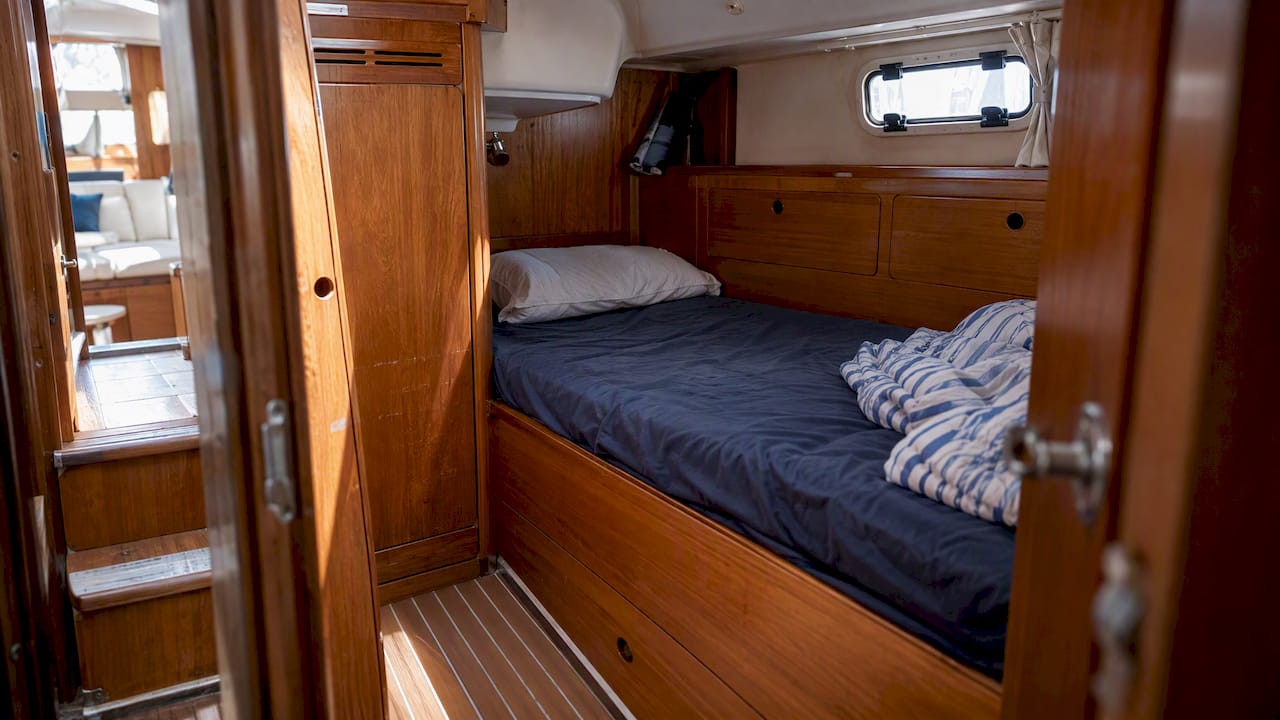
Sfat practic: Book a cabin close to the boat’s center, where motion is least pronounced, and ask to keep it as your rest spot for the trip.
Medical access and emergency planning before you set sail
A little groundwork before departure goes a long way if anything unexpected comes up.
- Confirm the nearest medical facilities and realistic evacuation options along your route.
- Carry your prenatal records, a current medication list, emergency contacts, and travel insurance that explicitly covers medical evacuation.
- Ask your skipper about first-aid training, onboard communication equipment, and whether the itinerary allows for unplanned stops if needed.
- Find out the plan if labor or a complication begins while you’re at sea.
- Check your operator’s pregnancy policy directly, since many cruise operators enforce cutoffs around certain weeks.
Packing and onboard comfort adjustments
A few extras in your bag make a real difference to how comfortable the trip feels day to day.
- Clinician-approved motion-sickness remedies
- A refillable water bottle and sun protection
- Supportive, non-slip shoes and compression socks
- A short written medical summary and emergency contact list
It’s worth requesting a cabin that doesn’t require awkward climbing, and asking for extra cushions or a step stool if boarding involves a tall step. Our full sailing trip checklist is a useful starting point to adapt for pregnancy. Build in rest periods between activities, keep shore excursions light, and split any heavy lifting among the group rather than doing it yourself.
What to ask your clinician before you book
Bring a short list to your next appointment so nothing gets missed in the conversation.
- Review any pregnancy complications you’ve had, bleeding, preterm labor risk, high blood pressure, or placental concerns, and how far along you’ll be during the trip.
- Ask whether any medications you might need on board are safe, and whether you should carry a note confirming you’re fit to travel.
- Ask your clinician what symptoms require urgent care. If you experience concerning symptoms, seek immediate emergency medical care.
A perspective on choosing the right kind of trip
Sailing during pregnancy isn’t a single yes-or-no question. It’s a series of smaller choices, the boat, the route, the pace, that add up to either a comfortable week or an exhausting one. A private charter can change the equation, because you’re not locked into someone else’s schedule: calmer routes, shorter hops, and marina-based nights all become easy to ask for. Telling your skipper about your pregnancy before departure means the whole itinerary gets built around what actually works for you.
- Sail
Consider a private, paced charter built around your pregnancy
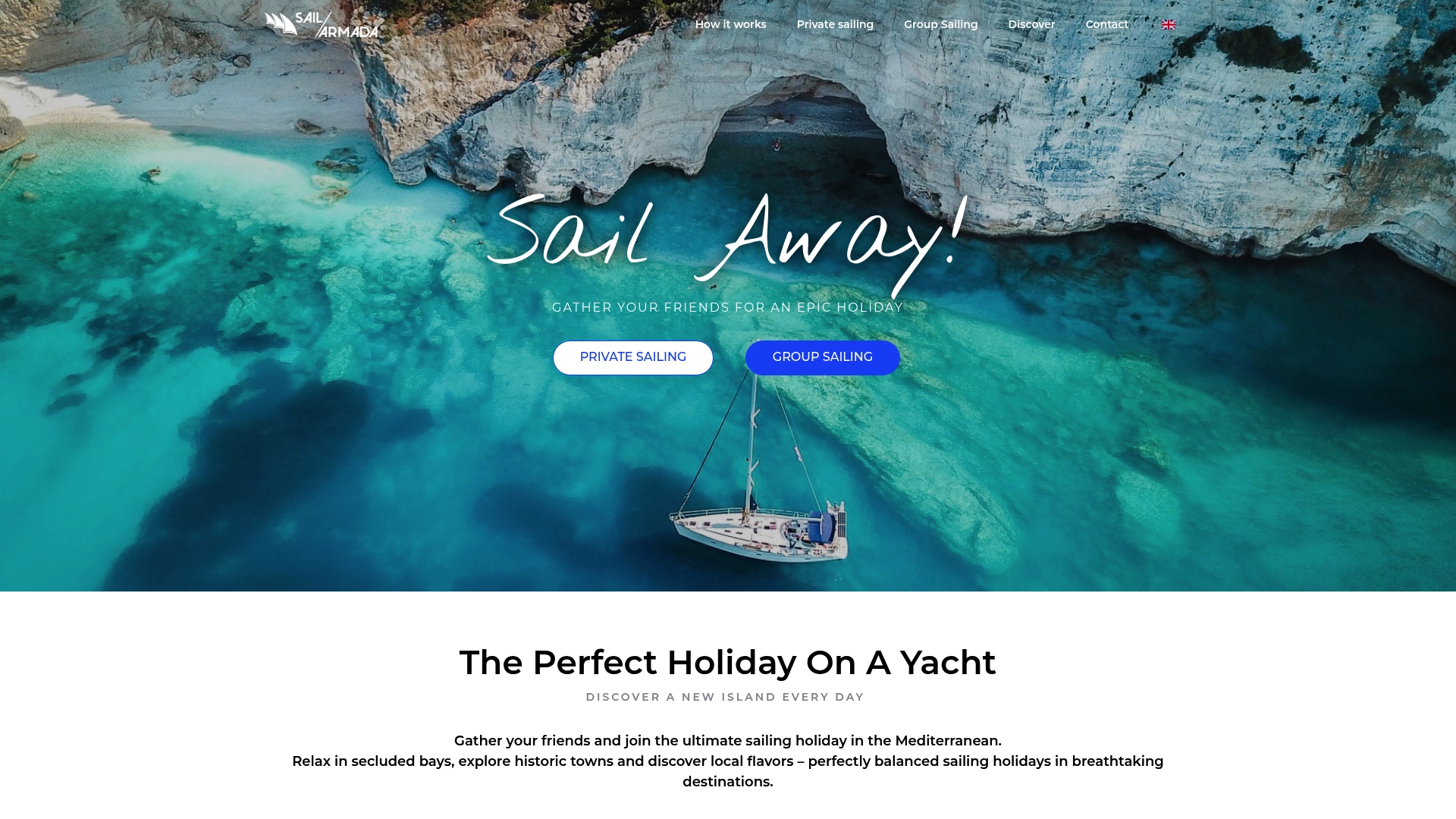
A private charter gives you something a group itinerary often can’t: full control over the pace, the vessel, and the route. You choose a stable catamaran over a small planing boat, request marina nights instead of open anchorages, and brief your skipper on your pregnancy before you ever leave the dock.
- Pick your vessel type and route with your skipper, including shorter hops and sheltered bays.
- Request marina-based overnights for easier access to facilities.
- Talk through your pregnancy with your skipper ahead of time so the whole week is planned around it.
noastre vacanțe private de navigatie let you set many of these details before you book, and our team is glad to talk through pregnancy-specific requests when you reach out. Take a look at our Greece private charter options to see how a calmer, curated week comes together.
This article is general information, not a substitute for advice from a qualified doctor. Consult a qualified healthcare professional about your own circumstances before acting on anything here.
Întrebări frecvente
Can a pregnant woman go on a boat?
Yes, for most healthy, uncomplicated pregnancies, boating is generally considered safe with sensible precautions around route, speed, and trimester. Check with your clinician first, especially if you have any pregnancy complications, and choose calm, inshore trips over rough or offshore passages.
How much motion or stress is too much in the third trimester?
There’s no single threshold, but rough seas, high-speed boats, and long periods standing on a moving deck all raise fall risk and fatigue in the third trimester. Many operators also apply their own cutoffs around this stage, so it’s worth confirming policy and discussing any travel plans with your clinician beforehand.
What activities should be avoided during pregnancy on a boat?
Speedboats, watersports like water-skiing or wakeboarding, rough-weather passages, and nighttime dinghy transfers are best avoided. Heavy lifting and rushed boarding or disembarking also carry unnecessary risk and are easy to plan around.
Can a bumpy ride affect pregnancy?
A bumpy, rough-water ride mainly raises your risk of losing balance and falling, since pregnancy already loosens your joints and shifts your center of gravity. Choosing a stable vessel like a catamaran and sticking to calmer, sheltered routes meaningfully reduces that motion.
Surse
- Fit for Pregnancy
- What to expect when you’re expecting at sea – three liveaboard mothers-to-be tell all – Yachting World