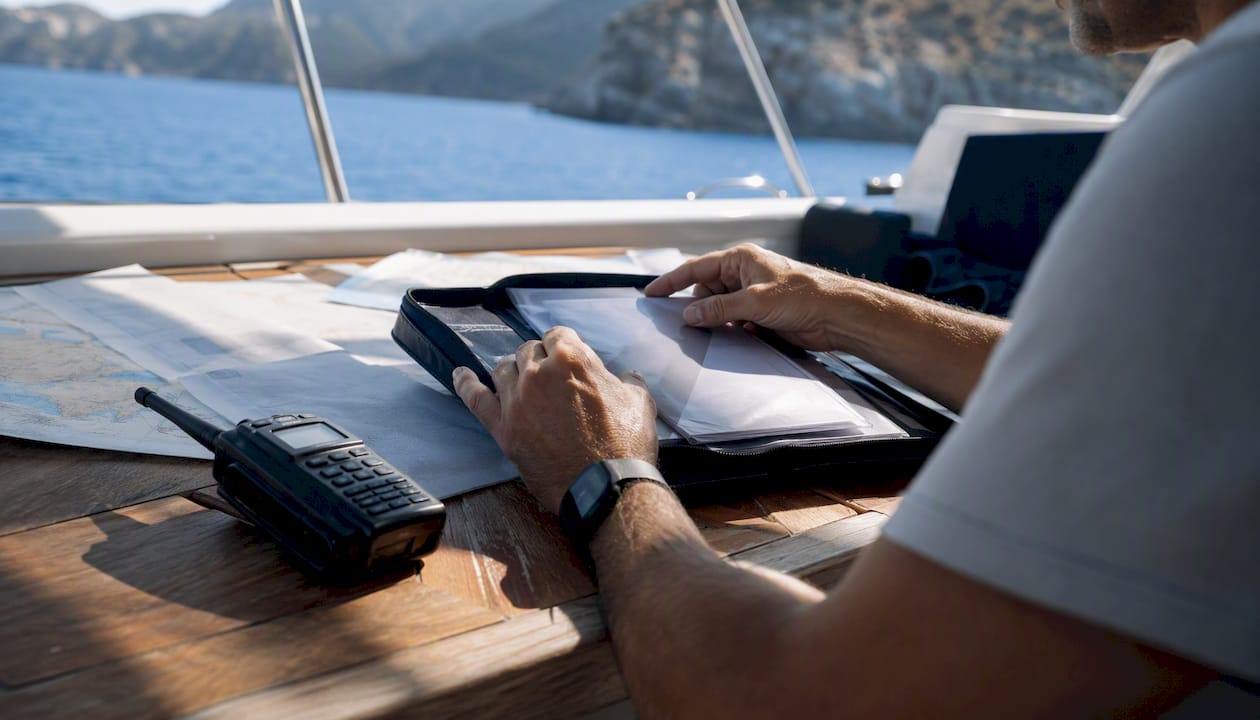
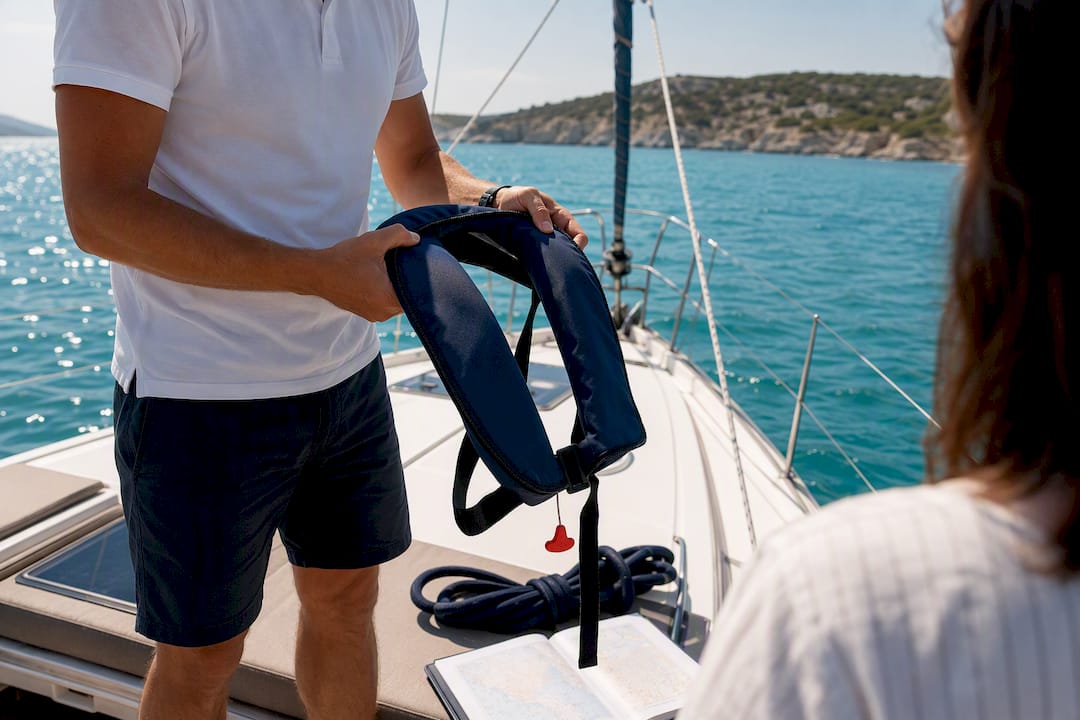
Tell your skipper your participation level and any language or skill limits before you leave the dock. Then listen closely to the mandatory safety briefing and ask how they want you to help. Once you’re underway, keep instructions short, whether you’re giving them or receiving them, and always wait for a clear “OK” or “roger” before moving. That’s the whole system in a nutshell, and it works because it removes guesswork at exactly the moments when guesswork is dangerous.
A few habits make this easy:
- Say what you can and can’t do before day one, not once you’re mid-maneuver.
- Treat the safety briefing as non-negotiable, even if you’ve sailed before.
- Confirm every instruction out loud so the skipper knows you heard it.
Pro Tip: If a command feels unclear in the moment, repeat back exactly what you think you heard (“cleat the port line, got it”) rather than asking “what?” It confirms understanding without slowing anyone down.
Key Takeaways
Clear communication with a skipper depends on setting expectations before departure, following the safety briefing closely, and confirming every instruction out loud.
| Point | Details |
|---|---|
| Set expectations early | Tell the skipper your participation level, language needs, and any skill limits before the trip starts. |
| Treat the briefing as mandatory | Confirm lifejacket locations, MOB procedures, and VHF Channel 16 use during boarding. |
| Keep deck language short | Use brief commands or reports, then wait for a clear acknowledgement before acting. |
| Match communication tools to conditions | Use arm signals when visible, headsets or VHF when out of sight or in noise. |
| Sailarmada matches guests with vetted skippers | Sailarmada pairs guests with experienced skippers who run structured briefings and support pre-trip questions. |
Table of Contents
- Pre-Trip Checklist: What to Ask Your Skipper Before You Sail
- What Happens During the Safety Briefing (and What to Remember)
- Talking and Listening on Deck Without the Static
- Docking, Close-Quarters Work, and Emergency Commands
- How to Volunteer for Tasks Without Creating a Hazard
- Handling Disagreements and Giving Feedback That Actually Helps
- The Sailarmada Checklist: Getting Trip-Ready Before You Board
- Ready to Put This Into Practice on Your Own Charter
- Frequently Asked Questions
- Sources
Pre-Trip Checklist: What to Ask Your Skipper Before You Sail
The best skipper relationships get sorted out on land, over coffee or a phone call, not on a rocking deck in a crosswind. Before you commit to a charter, ask directly about the skipper’s certifications, whether that’s an RYA qualification, an ASA credential, or a national maritime license, along with their experience in the specific waters you’re visiting. A pre-sail interview that covers responsibilities and living arrangements is one of the strongest predictors of a good match, and it costs you nothing but a conversation.
Beyond credentials, nail down the practical stuff:
- What’s the expected daily rhythm, meals, swim stops, and sailing hours?
- Are there health, mobility, or dietary details the skipper needs in advance?
- How does the skipper prefer to flag changes in plan, weather, or schedule?
Then get specific about communication mechanics. Ask which signal words they use for common maneuvers, whether headsets or VHF will be part of the setup, and what the emergency contact chain looks like if something goes wrong onshore. Choosing crew who mesh well with these routines matters too if you’re selecting sailing crew for a group trip.
Pro Tip: Ask the skipper this one question: “What’s the one thing guests usually get wrong on day one?” The answer tells you more about their communication style than any credential list.
What Happens During the Safety Briefing (and What to Remember)
Every skippered charter should open with a structured safety briefing before the lines come off the dock, and if it doesn’t happen, ask for it. This isn’t a formality. It’s the foundation of safe communication onboard, and a good briefing covers a specific set of items every time.
Expect the skipper to walk through:
- Where lifejackets, fire extinguishers, and emergency shutoffs are located.
- Man overboard procedures and how the boat will respond if someone goes in the water.
- How to call for help, including VHF Channel 16, and where the radio is.
- What guests might be asked to do, from lookout duty to helm relief to line handling.
Good skippers scale this briefing to the trip and the crew rather than dumping every detail at once, since overloading new guests with information tends to backfire. Note where vital instructions are posted, usually at the helm or nav station, and don’t be shy about asking for a quick repeat-back if something didn’t land. That one question saves confusion three days later.
Talking and Listening on Deck Without the Static
Deck communication works best when it sounds almost clipped: short, specific, numbers or single keywords instead of full sentences. “Ease two feet” beats “can you let a little more line out.” Brevity isn’t about being terse for its own sake; it’s about pushing the right information to the person who needs it, fast, without extra words to parse in a moment that matters.
The tone matters just as much as the content. A skipper who corrects mistakes calmly and factually, without turning it into a reprimand, tends to get a more responsive, less anxious crew, and that pattern holds up across good skippering practice generally. If you’re the one receiving a correction, take it the same way: as information, not criticism.
A few habits keep this loop working:
- Always acknowledge an instruction verbally, even a simple “got it” closes the loop.
- If the wind or engine noise drowns out your voice, switch to headsets, VHF, or an agreed hand signal instead of shouting louder.
- Match your skipper’s preferred tech setup rather than defaulting to your own habits.
Pro Tip: If you find yourself repeating a command twice because no one heard it, that’s your cue to switch tools, not raise your voice. A $20 arm signal costs nothing and works in 30 knots of wind.
Docking, Close-Quarters Work, and Emergency Commands
Docking is where communication either shines or falls apart, mostly because there’s no time to negotiate meaning once the boat is ten feet from a pier. Agree in advance on short, specific commands for common maneuvers, things like “stand by bow line” or “hold that fender,” and confirm you both mean the same thing by them before you’re actually approaching a dock in a crosswind.
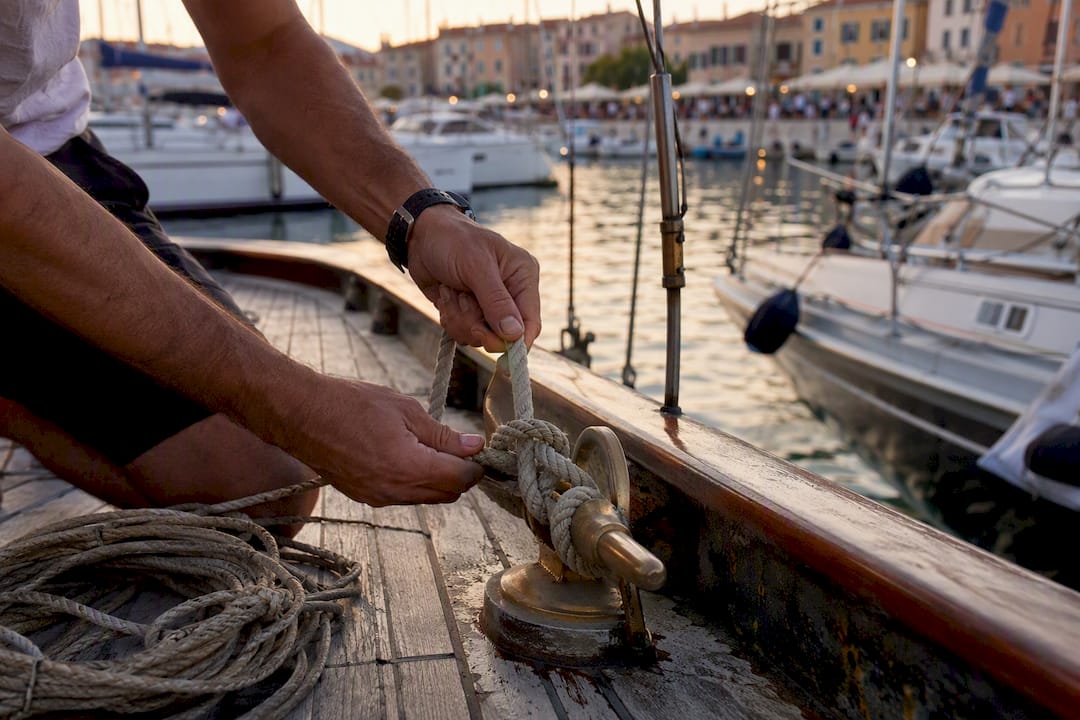
Visibility determines your method. When you can see the helmsman, arm signals work well and cut through engine noise instantly. When you can’t, whether you’re forward on a catamaran or below deck, headsets or VHF are the better call, and skippers increasingly prefer them because they eliminate the guessing game of hand signals at a distance.
Emergencies flip the usual boat party etiquette. Follow the skipper’s immediate commands without debate. In high-stress moments, a message needs to be understood the first time; if you don’t hear a clear acknowledgement, the standard practice is to repeat it once and save any clarifying questions until the situation is stable. It’s worth building a thicker skin here: a barked order during a real maneuver is about safety, not tone.
- Confirm maneuver commands during calm water, before you need them under pressure.
- Use arm signals for anything within sight, VHF or headsets for anything out of sight.
- Never debate an emergency instruction in the moment. Ask afterward.
How to Volunteer for Tasks Without Creating a Hazard
Good crew members are honest about what they actually know how to do. If a skipper hands you an unfamiliar line or asks you to take the helm and you’ve never done it, say so and ask for a thirty second demo instead of guessing. That single sentence prevents most of the mishaps that happen when eager guests overestimate their own skills.
When you do take on a task, close the loop twice: once to confirm you understood the instruction, and once to report it’s done. “Cleating the stern line now… stern line’s cleated” tells the skipper exactly what state the boat is in without them having to check.
- Confirm the instruction with a short repeat-back before you act.
- Report completion clearly, don’t assume it’s obvious.
- Ask before improvising on anything safety-critical.
Some tasks are simply off-limits without direct authorization, unassisted line releases, unscripted helm corrections, anything involving the anchor windlass. If you haven’t been specifically trained and told to do it, don’t. For guests coming from a more hands-off background, it helps to understand the skills expected on a skippered charter before you ever step aboard.
Handling Disagreements and Giving Feedback That Actually Helps
Urgent safety concerns get raised immediately, calmly, and directly to the skipper, full stop. Everything else can wait for a private moment. If something about the day’s plan or an interaction bothered you, use “I” statements (“I felt unsure when…”) rather than framing it as an accusation, and pick a quiet stretch of sailing rather than the middle of a maneuver.
If an order genuinely confused you, describe exactly what tripped you up rather than just saying “that wasn’t clear.” Specific feedback like “I didn’t know if ‘trim it’ meant the main or the jib” gives the skipper something they can actually fix next time.
On multi-day trips, a short end-of-day debrief pays off. Cover what worked, what didn’t, and any follow-up for tomorrow; surfacing small issues early prevents them from becoming bigger ones by day four.
Pro Tip: Keep the debrief to three minutes and three points. Longer than that, and it starts to feel like a performance review instead of a quick check-in.
The Sailarmada Checklist: Getting Trip-Ready Before You Board
Preparation is most of what separates a smooth week from a stressful one, and it starts well before you see the boat. Confirm your skipper’s credentials, working language, and your own participation level ahead of time, and exchange emergency contacts so everyone knows who to reach if plans change onshore.
Pack with communication in mind, not just clothes:
- Charged headsets or spare batteries if your charter uses them for docking.
- A small notepad and pen for jotting down radio channels, waypoints, or daily plans.
- A lightweight whistle or personal safety alarm if your skipper recommends one.
Once you arrive, treat the boarding process as the start of the working relationship, not just check-in paperwork.
- Attend the full safety briefing, even if you’ve chartered before.
- Post any allergy or health information somewhere visible, usually the galley or nav station.
- Ask how the skipper likes to run daily briefings, morning weather check, evening plan for tomorrow, or something more casual.
A trip built around this kind of upfront clarity tends to run itself, which is exactly why itinerary planning matters as much as the boat you choose.
A note from Sailarmada
We’ve placed hundreds of guests with experienced Mediterranean skippers, and the trips that go smoothest always share one trait: clear communication set up before anyone steps aboard. Use the checklist above as your starting point.
Ready to Put This Into Practice on Your Own Charter
Sailarmada exists to remove the guesswork from finding a skipper who communicates well in the first place. Rather than vetting captains yourself or hoping a listing photo tells you enough, you get matched with experienced skippers who already run structured safety briefings, welcome pre-trip questions about participation level and language, and follow the same short, confirmed communication style covered throughout this guide.
Every itinerary is built around real conversation with your skipper before departure, not a one-size-fits-all script, so the questions you just learned to ask actually get answered. If you’re weighing a group trip against a private one, our private sailing page walks through what a dedicated skipper and boat look like for your crew specifically. Browse available dates, tell us your group’s experience level, and we’ll match you with a skipper suited to it before you ever set foot on deck.
Frequently Asked Questions
How do I address a skipper on a charter boat?
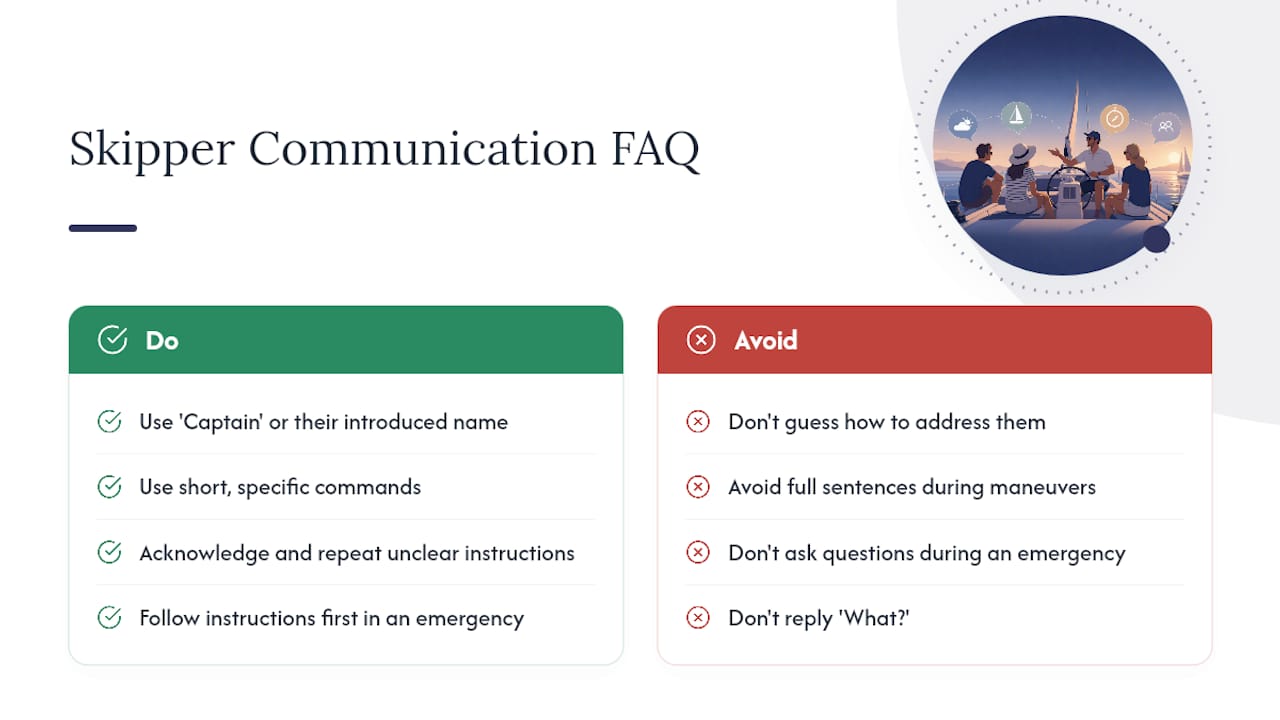
Most guests simply use “Captain” or the skipper’s first name, whichever they introduce themselves with. Follow their lead during the initial briefing rather than guessing.
What’s the fastest way to communicate with a skipper during a maneuver?
Short, specific words beat full sentences every time, “ease it,” “hold,” “cleat now,” paired with an immediate acknowledgement so the skipper knows you heard it.
Can I ask the skipper questions during an emergency?
Follow instructions first and ask afterward. In a real emergency, clarifying questions slow down a response that needs to happen immediately.
What if I don’t understand a skipper’s instruction?
Repeat back what you think you heard rather than asking “what?” It confirms or corrects understanding in one step instead of two.
Should I bring my own headset for communicating with the skipper?
It’s not required, most charters provide what’s needed, but confirming ahead of time whether headsets or VHF will be used helps you know what to expect on deck.
Sources
- Onboard Communications Between Sailing Skippers and Crews
- Boating Safety Starts With Clear Communication