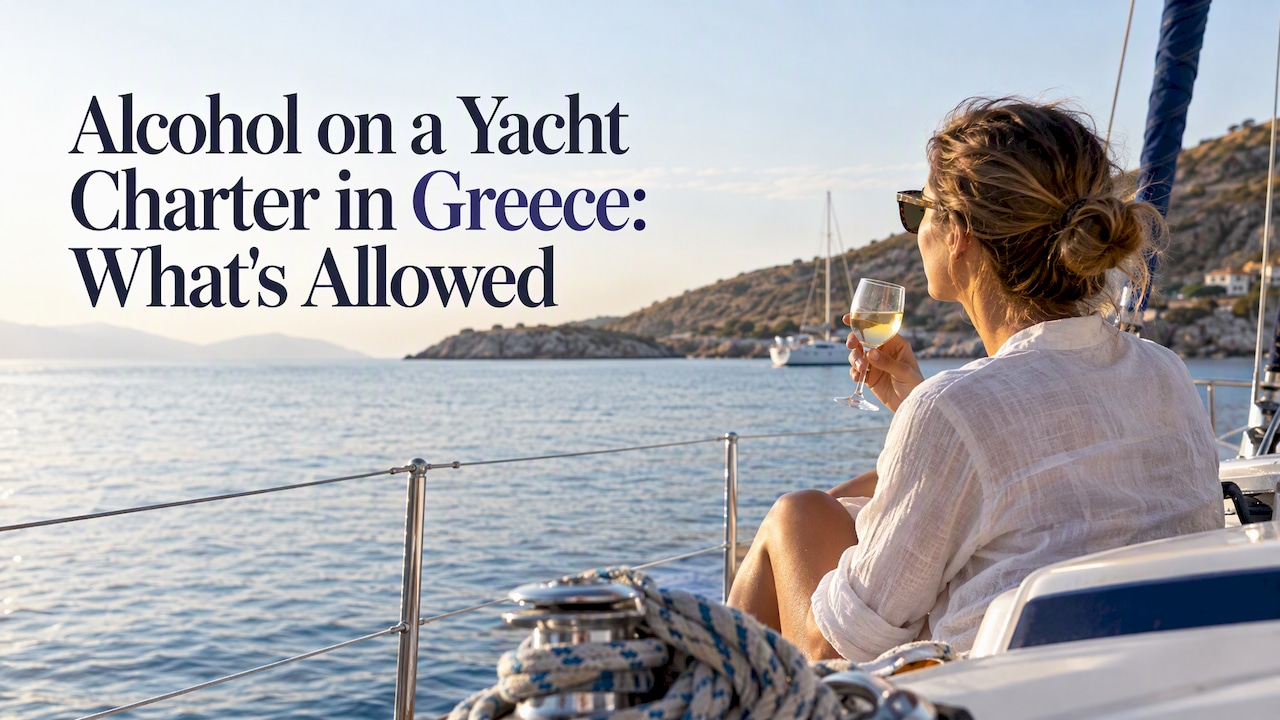
Yes, guests can enjoy a glass of wine at sunset on a yacht charter in Greece. The person at the helm cannot. That one line explains almost everything: the skipper stays sober while the boat is in their hands, and everyone else follows the common sense of a floating home that moves, tilts and has water all around it. Below you’ll find who can drink, what the law says about the skipper, whether you can bring your own bottles, and how to enjoy a sailing week without a headache, literally or legally.
TL;DR
- Passengers on a skippered charter can normally enjoy a drink on board. The skipper or anyone steering the boat must not drink.
- In Greece, the Port Authority runs breathalyzer checks at sea, and a captain found drunk on duty faces up to six months in prison.
- Food, drinks and provisions are usually paid on top of the charter price, so plan a shopping stop and check your charter terms before you pack bottles.
- Alcohol and swimming don’t mix, and an incident linked to heavy drinking may void your travel insurance.
- If your group wants to celebrate freely, a skippered holiday is the easiest way: someone sober is always in charge.
Table of Contents
- Can you drink alcohol as a passenger on a yacht charter in Greece?
- What the rules say about the skipper and crew
- Skippered or bareboat: does the alcohol policy change?
- Can you bring your own alcohol on board?
- Safety: how to drink well on a boat
- Rules of the road for a good shared week
- Our view: why a skipper makes the party better
- Choosing a holiday where nobody has to worry
- Before you go: paperwork and practicalities
- FAQ
- Sources
Can you drink alcohol as a passenger on a yacht charter in Greece?
In practice, yes. A sailing week in the Greek islands without a cold drink at anchor would be a strange week. Guests on a skippered charter or a group sailing holiday are on holiday, and a glass of wine over grilled fish in a quiet bay is part of the point.
What matters is the role you have on board. Greek rules focus on the people operating the vessel, not on guests relaxing on deck. The detail that varies is the individual charter contract: some operators set house rules about glassware, smoking in cabins, or how drinks are stocked, so read the terms you sign. We don’t want to promise a blanket policy for every boat in the country, because no such blanket exists.
Two practical limits apply to everyone:
- Moving boat, moving body. Decks are narrow, ladders are steep and the sea is rarely perfectly flat. Our advice is to keep the serious drinking for when the anchor is down and the boat is secure.
- Your skipper’s call. On any charter the skipper is responsible for the boat and the people on it. If conditions are tricky or someone is unsteady, the skipper can ask guests to stay seated, wear a life jacket or stay out of the water. Listen to them.
What the rules say about the skipper and crew
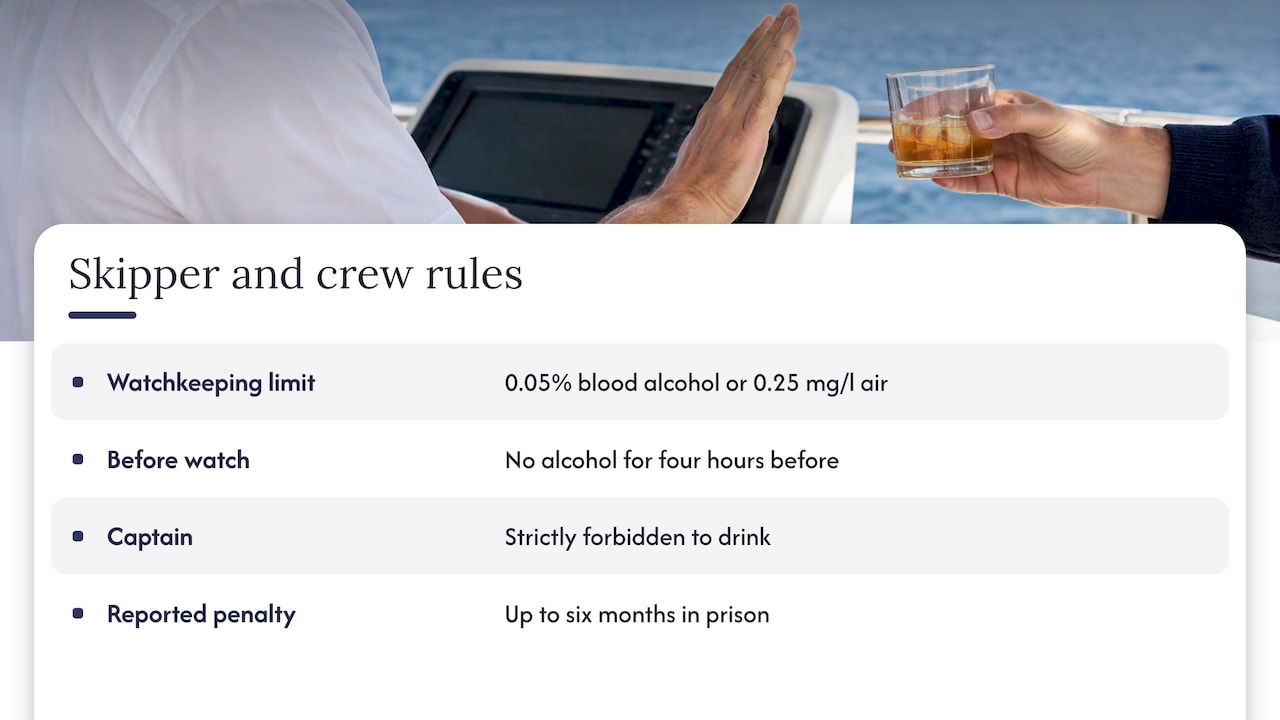
This is where Greece is strict. According to a Greek charter operator’s FAQ, the captain is strictly forbidden from drinking alcohol, the Port Authority performs regular breathalyzer checks at sea and fines are very severe.
The formal limits come from the Hellenic Ministry of Maritime Affairs and Insular Policy. A 2023 notice sets the threshold for watchkeeping at 0.05% blood alcohol or 0.25 mg/l in exhaled air, and it describes a ban on alcohol during watchkeeping and for four hours before it. That notice is written for professional seafarers, but it shows how seriously Greece treats alcohol and responsibility at sea.
The consequences are real. Greek media reported the arrest of a yacht skipper for alleged drunkenness, noting that a captain or crew member found drunk on duty can face up to six months in prison. It isn’t only professionals who get caught: in June 2026 a British man in Crete was arrested after allegedly crashing a rented boat into moored vessels, and he was charged under a road traffic provision that extends to the sea.
The short version for your group: whoever is responsible for the boat treats it like driving a car. No drinks before, none during.
A simple rule for the whole crew
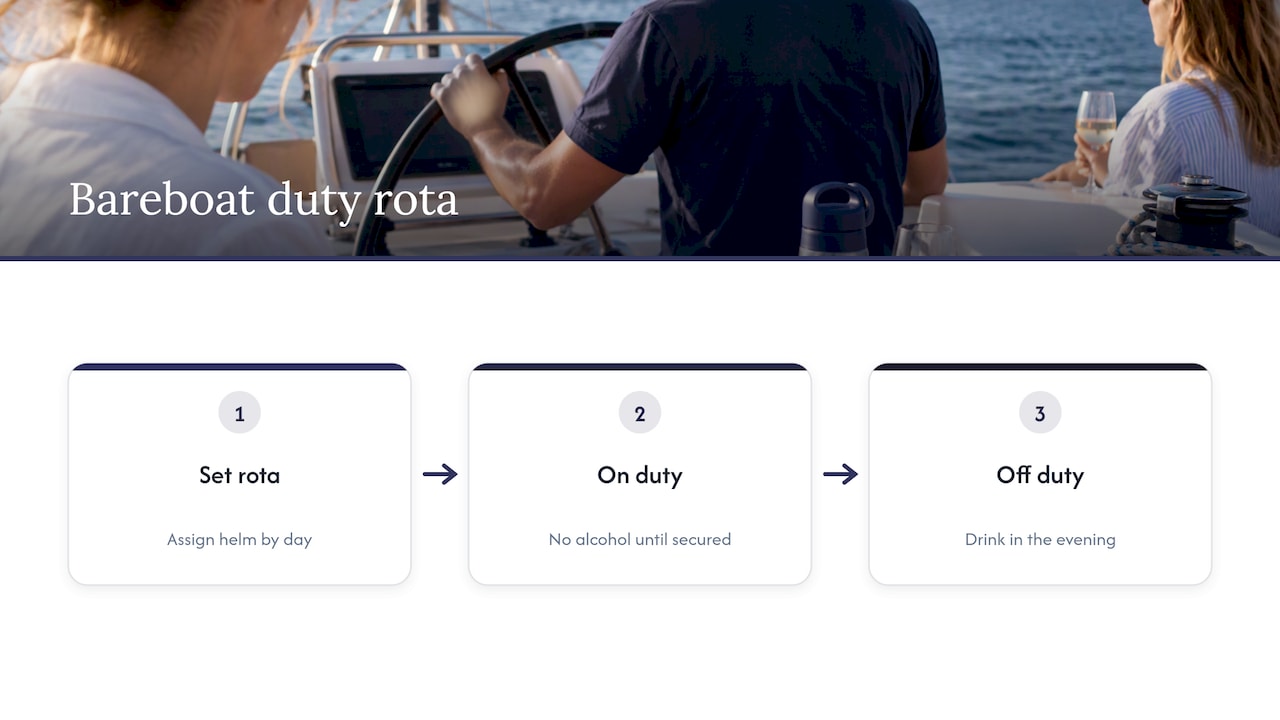
If your group is bareboat chartering and sharing the helm, agree before departure who is “on duty” each day. On duty means no alcohol, from the morning until the boat is tied up or anchored and secured. Off duty means the evening is yours. Write the rota on a piece of paper and stick it on the saloon wall. It sounds fussy and takes thirty seconds.
Skippered or bareboat: does the alcohol policy change?
The law is the same, but the day-to-day feels very different.
| Skippered charter | Bareboat charter | |
|---|---|---|
| Who is responsible for the boat | A professional skipper | Your group, usually a named skipper |
| Who can drink during the day | Guests, freely and sensibly | Only those not helming or on watch |
| Risk of a sober-rota mix-up | Very low | Higher, needs a plan |
| Licence needed | Not for guests | Required for whoever operates the yacht |
| Best for | Celebrations, mixed-experience groups, families | Experienced crews who want to run the boat |
On a bareboat, the charterer is the skipper and carries all the responsibility, including paperwork checks. If your crew doesn’t have enough sober sailing experience to rotate watches, drinking on a bareboat gets complicated fast. One Greek boat-hire company, for example, recommends hiring a skipper if your group is planning a celebration on the water, and we agree with the logic.
If you’re not sure which licence your trip needs, our guide to the 30 HP and 3 NM boat licence rules explains it. As a basic reference point, a Greek charter operator states that renting and captaining a boat requires you to be at least 18, and that a speedboat licence is mandatory for engines above 30 HP. Our practical Greece sailing regulations for skippers covers the rest of what a skipper has to handle.
Can you bring your own alcohol on board?
Usually you can bring drinks, but “usually” is the key word, and the answer is in your contract. Many Greek charter companies treat food and drinks as your own responsibility: the charter price covers the boat, and provisions come on top. The typical pattern is that you shop for drinks yourself, sometimes through a provisioning service ordered before arrival.
A few things to check before you fill a suitcase:
- Charter terms. Look for any clause on drinks, glass, parties or extra guests. Some boats ask you not to bring more people on board than the registered number.
- Where to buy. Greek supermarkets near marinas stock local wine, beer, ouzo and spirits at fair prices. Buying on arrival avoids the airline baggage fight and lets you try island labels.
- Storage. Fridge space on a yacht is small. Plan on warm bottles for the first evening and ice for the rest. Boat fridges don’t cool a whole week of beer in a day.
- Bottles versus cans. Glass is heavy, rattles in lockers and breaks on deck. Cans and boxed wine travel better.
- Duty-free allowances. If you’re flying in from outside the EU, customs limits apply to what you carry. Check the official limits for your own country of departure.
If you’re joining one of our group departures, ask us what’s included before you pack, so you’re not guessing.
Safety: how to drink well on a boat
Holidays on the water raise a few risks that ordinary beach holidays don’t. The UK government’s Greece travel guidance says not to swim after eating or drinking alcohol, warns that excess drinking reduces alertness and control, and notes that an incident involving alcohol may invalidate your insurance. Check your own policy wording before you go, especially if your group plans water sports.
Here’s what we tell guests:
- Swim first, sip later. The jump off the stern in a turquoise bay is one of the best parts of the week. Take it before the first drink.
- Night on deck needs care. Stepping from a dinghy or a dock onto a boat in the dark after a few drinks is the classic way to fall in. Use a torch and take someone with you.
- Water between rounds. Sun, wind and salt dry you out faster than you think. Keep a bottle of water next to every glass of wine.
- Seasickness. Alcohol makes nausea worse, so the first day with swell is no time for a big night.
- Know where the kit is. Greek law requires boats to carry safety equipment including life jackets for every passenger, fire extinguishers and flares. Ask your skipper to show you in the first briefing.
Rules of the road for a good shared week
On a group holiday, most alcohol-related problems aren’t legal: they’re social. Cabins are close, walls are thin and the boat is small. A few unwritten rules keep everyone happy:
- Keep the late-night volume down when you’re moored in a harbor, because other boats are a few feet away.
- Don’t let drinking turn into pressure. Some people on board will be sober for health or personal reasons, and a good group makes that easy.
- Respect the boat. Spilled wine and broken glass cost time and sometimes deposit money.
- Mind local customs. Greek tavernas pour generously and welcome you for long dinners, but public drunkenness in port towns isn’t appreciated.
- Smoking and drug rules are strict on most charters. Many operators ban smoking in cabins entirely, and drugs are never allowed.
Sometimes the best party isn’t the loudest one. A table of friends, a bottle of local white, a few salty snacks and the sun dropping behind a hill is hard to beat.
Our view: why a skipper makes the party better
We’ve sailed enough weeks with groups to know how a charter goes wrong, and it’s rarely the wind. It’s a group of six friends on a bareboat, one nominal skipper who’s also trying to enjoy the holiday, and nobody has agreed who is steering the next morning.
Our routes are curated by experienced, professionally trained skippers from CAPETAN.club. They handle the sailing, the harbor approaches and the paperwork, which means the rest of the crew can actually relax. If you want to read more about the trade-offs, our piece on the advantages of skippered sailing lays them out. A sober captain isn’t a limit on the party. It’s what allows it.
Our advice: decide early what kind of week you want. A quiet family week with early nights, a lively friends’ week with long dinners, or a mix of both with a flexible skipper who knows which bays suit which mood. Tell us when you book, and we’ll match the route and boat.
— Sail
Choosing a holiday where nobody has to worry
If you’re planning a week in Greece with friends or family and want the freedom to enjoy a drink without watching the helm, a private skippered charter is the simplest solution. Our Greece Go Private holiday starts from 560 € per week per person, and you pick the boat, the dates and the pace with a skipper on board. Prefer company? Take a look at our group sailing holidays, where you join other travelers on a curated route.
If you’re still weighing up the options, our overview of private and group sailing holidays compares them side by side.
Before you go: paperwork and practicalities
A few checks help the whole week run smoothly, drinks included:
- Check-in. The base handover takes time and is when you meet the boat, the safety equipment and the rules. Our guide to Greek yacht check-in explains the steps.
- Insurance. Read what your travel policy says about alcohol, water activities and boats. Don’t assume it’s covered.
- Provisioning. Decide whether to shop at a supermarket near the base or order in advance. Both work. Ordering saves time on day one.
- Documents. Passports and any licences must be on hand. Greek authorities do routine port checks, and Sigma Insurances notes that missing paperwork or safety gear can lead to penalties such as boat impoundment.
- Costs. Alcohol is rarely part of the charter fee, so budget for it. For taxes and deposits, see our explanation of VAT on yacht charters in Greece.
FAQ
Can the skipper have even one drink on a charter in Greece?
No. Greek authorities treat alcohol at the helm strictly, with breathalyzer checks at sea and possible prison for those found drunk on duty. The safest approach is no alcohol at all while you’re responsible for the boat, and that includes the morning after a heavy night.
Can I bring my own wine and beer on a yacht charter in Greece?
In most cases you can, but it depends on the operator’s terms, so check your contract before you pack. Provisions usually aren’t included in the charter price, so many guests buy drinks at a supermarket close to the marina. Cans and boxed wine are easier to store than glass.
Is it safe to swim after drinking on a yacht?
No. The UK government’s Greece guidance advises against swimming after eating or drinking alcohol. Swim first, then open the bottle once the boat is secure at anchor or in the harbor.
Does a skippered charter make drinking easier than a bareboat?
Yes. With a professional skipper in charge, guests don’t have to rotate sober duty or worry about steering. On a bareboat, whoever helms must stay sober, and your group needs a clear plan for who that is each day.
Do I need a licence to charter a yacht in Greece?
It depends on the boat and the type of charter. Operating a bareboat requires suitable qualifications, while on a skippered charter the professional skipper handles it. Our boat licence guide explains the thresholds for Greek waters.
Sources
- FAQ, Blue Lagoon Corfu
- Hellenic Ministry of Maritime Affairs and Insular Policy notice, 2023
- Yacht skipper arrested for drunken sailing, Kathimerini
- British man arrested in Chersonisos for drunk boating, Athens Times
- Holidaying in Greece, UK government guidance
- Boating Regulations in Greece, Sigma Insurances
- A Tourist’s Guide to Greek Maritime Laws, Boats in Chania