
An all-inclusive sailing charter bundles most onboard expenses into a single upfront price, giving you one clear number to plan around before you ever step on deck. The difference between an all-inclusive sailing charter and other charter types comes down to one thing: who manages the money and the logistics once you’re out on the water. Get this wrong and a dreamy week in Greece or Croatia can turn into a running tab that surprises you at the end. Get it right and you spend your days swimming in crystal clear coves instead of tracking receipts.
What does an all-inclusive sailing charter actually cover?
An all-inclusive sailing charter is a pricing model where the base hire fee covers most costs a guest would otherwise pay separately. Charter types in 2026 fall into three main categories: bareboat, skippered, and fully crewed. All-inclusive pricing applies almost exclusively to fully crewed charters, where a captain, chef, and steward handle everything from navigation to cooking to cleaning.
The contrast model is called APA, short for Advance Provisioning Allowance. APA is a prepaid fund of 20–40% of the base hire fee, held separately to cover variable running costs like fuel, food, and marina fees. Understanding both models is the foundation for choosing the right sailing vacation package.

What expenses are typically included in all-inclusive charters?
Most all-inclusive charters cover a defined set of costs in the headline price. Knowing exactly what is in that price prevents budget shock and helps you compare offers fairly.
Typical inclusions on a fully crewed all-inclusive charter:
- Crew salaries for the captain, chef, and one or more stewards
- All meals and non-alcoholic beverages prepared by the onboard chef
- Fuel for sailing and generator use
- Mooring and marina fees at planned stops
- Port taxes and cruising permits for the destination country
- Service charges that would otherwise appear as line items
Regional context matters here. Caribbean charters are more likely to offer true all-inclusive pricing, while Mediterranean charters face higher VAT and fuel costs that operators often keep outside the base rate. A charter advertised as all-inclusive in Greece may still exclude certain marina fees that a comparable Caribbean package absorbs.
One cost almost never included is crew gratuity. Crew gratuities run 10–20% of the base hire fee and are paid separately at the end of the trip. Budget for this from the start so it does not feel like a surprise.
Pro Tip: Ask your charter operator for a written inclusions list before signing. Request that they specify whether alcoholic beverages, water sports equipment, and airport transfers are in or out. These three items are the most common sources of unexpected costs on all-inclusive charters.
How do all-inclusive charters compare to APA charters?
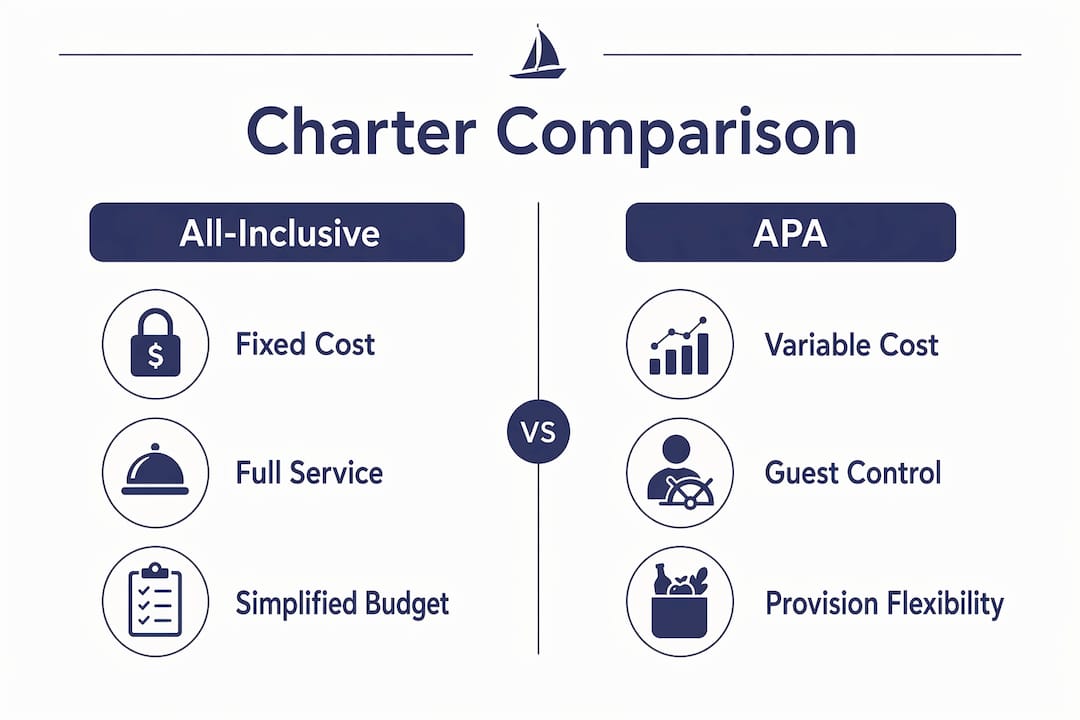
The core difference between all-inclusive and APA charters is who holds the budget and makes the spending decisions during the trip. On an all-inclusive charter, the operator absorbs cost variability. On an APA charter, the captain manages a prepaid fund on your behalf and presents receipts at the end.
APA charters offer more transparency and flexibility. You can choose premium provisioning, request specific wines, or decide to anchor in a secluded bay instead of paying a marina fee. Unused APA funds are refunded at the end of the trip. That fairness appeals to experienced sailors who know what they want and prefer to pay only for what they use.
All-inclusive charters offer simplicity. You pay once, you board, and you relax. First-time charterers and travelers who prefer fixed budgets consistently choose all-inclusive pricing because it removes daily financial decisions from the holiday entirely.
| Feature | All-inclusive charter | APA charter |
|---|---|---|
| Budgeting | Fixed upfront cost | Variable, based on actual spend |
| Flexibility | Lower, fixed menus and itineraries | Higher, customize provisioning and stops |
| Transparency | Less itemized | Full receipts provided |
| Refunds | None | Unused funds returned |
| Best for | First-timers, fixed budgets | Experienced sailors, custom preferences |
| Crew gratuity | Paid separately | Paid separately |
Pro Tip: If you are booking for a group of 8 or more, all-inclusive pricing often works out cheaper per person than APA because the operator spreads fixed costs across more guests. Run the numbers both ways before committing.
What sailing charter types offer all-inclusive options?
Fully crewed charters are the only charter type that routinely offers all-inclusive pricing. The crew handles all navigation, provisioning, cooking, and cleaning, so guests focus entirely on relaxation and entertainment. You wake up to breakfast ready, anchor in a gorgeous bay by noon, and return to a set dinner table by evening.
Bareboat charters sit at the opposite end of the spectrum. You rent the yacht and sail it yourself, which requires a valid sailing license. There is no crew, no chef, and no all-inclusive option. Every cost from fuel to food is your responsibility. Sailarmada’s bareboat charter guide covers what experience level you need and what to expect.
Skippered charters fall in the middle. A licensed skipper handles navigation while guests manage their own provisioning and meals. The experience is hands-on and social, but it is not all-inclusive.
A fourth option worth knowing:
- Skipper plus hostess: A bareboat with a hired skipper and a separate hostess for catering. Hostess rates run approximately €150–€230 per day in 2026. This setup gives you autonomy and some hospitality support at a lower cost than a fully crewed all-inclusive yacht.
- Cabin charter: You book individual cabins on a shared yacht rather than the whole vessel. This is a flexible, budget-friendly option for solo travelers or small groups. Sailarmada explains cabin charter options in detail for anyone considering this route.
Destination also shapes availability. All-inclusive fully crewed charters are most common in the British Virgin Islands, the Bahamas, and parts of the Eastern Mediterranean. In Croatia and Greece, skippered and bareboat options dominate the market, with fully crewed all-inclusive yachts representing a smaller, premium segment.
What are the benefits and trade-offs of all-inclusive sailing?
All-inclusive charters deliver real advantages for the right traveler. Guests on all-inclusive charters report less stress over day-to-day expenses and a higher sense of comfort and service throughout the trip. When a professional chef is cooking every meal and a steward is keeping the yacht spotless, the holiday genuinely feels like a floating luxury resort.
The benefits are clear:
- Budget certainty: One price covers the core experience. No daily decisions about spending.
- Effortless logistics: The crew manages provisioning, navigation, and cleaning.
- High comfort level: Fully crewed yachts typically carry more staff and better equipment than bareboat equivalents.
- Ideal for mixed groups: Guests with no sailing experience feel fully included and cared for.
The trade-offs are equally real. All-inclusive charters lock guests into fixed menus and itineraries, limiting spontaneity. If you want to spend an extra night at a secluded anchorage or swap the planned dinner for a local taverna, that flexibility costs extra or simply is not available. Premium pricing is another factor. All-inclusive rates reflect the full crew cost, and that adds up fast on a 7-night charter.
“The ‘who manages logistics’ factor defines the real difference between all-inclusive and APA charters. Responsibility shifts based on traveler preference, and neither model is universally better.” — Types of Caribbean Sailing Holidays
Travelers who love the idea of personalizing their yacht holiday with custom stops, specific cuisines, or flexible daily schedules often find APA charters more satisfying despite the added management. Travelers who want to switch off completely and let someone else handle everything tend to love all-inclusive from day one.
Key Takeaways
All-inclusive sailing charters suit travelers who want a fixed budget and full service, while APA charters suit those who prioritize flexibility and transparency over simplicity.
| Point | Details |
|---|---|
| All-inclusive definition | One upfront price covers crew, meals, fuel, mooring, and taxes on fully crewed charters. |
| APA is the alternative | APA is a prepaid fund of 20–40% of the base fee, with unused amounts refunded after the trip. |
| Crew gratuity is always extra | Budget 10–20% of the base hire fee for crew tips, regardless of charter type. |
| Charter type determines pricing model | Only fully crewed charters offer all-inclusive pricing; bareboat and skippered charters do not. |
| Match model to traveler profile | First-timers and fixed-budget travelers favor all-inclusive; experienced sailors often prefer APA. |
My honest take on choosing between charter styles
After spending years helping groups plan sailing holidays across Greece, Croatia, Italy, and the Caribbean, I have seen the same mistake repeated: travelers book all-inclusive because it sounds luxurious, then feel frustrated by the lack of freedom once they are on the water.
The real question is not which pricing model is better. The real question is how much control you want over your days. If you want to wake up, eat what the chef prepared, and trust the captain to take you somewhere beautiful, all-inclusive is genuinely wonderful. If you want to linger in a bay because the snorkeling is incredible, skip the planned marina stop, and pick up fresh fish from a local market for dinner, APA gives you that freedom.
Group size and experience level also matter more than most travelers realize. A group of 10 first-timers on a fully crewed catamaran in the BVI will have a spectacular time on an all-inclusive package. A group of experienced sailors who have chartered before in the Mediterranean will likely find APA more satisfying and often more cost-effective.
One underrated option: the skipper plus hostess setup. Adding a hostess to a bareboat charter at €150–€230 per day gives you catering support and some of the comfort of a crewed yacht without the full all-inclusive price tag. For groups who want a middle ground, this is worth serious consideration.
— Sail
Plan your sailing holiday with the right charter setup
Choosing the right charter style is the single most important decision you make before a sailing holiday. Sailarmada curates private sailing options across Greece, Croatia, Italy, Sardinia, and beyond, with flexible setups ranging from skippered weeks to fully crewed luxury experiences.
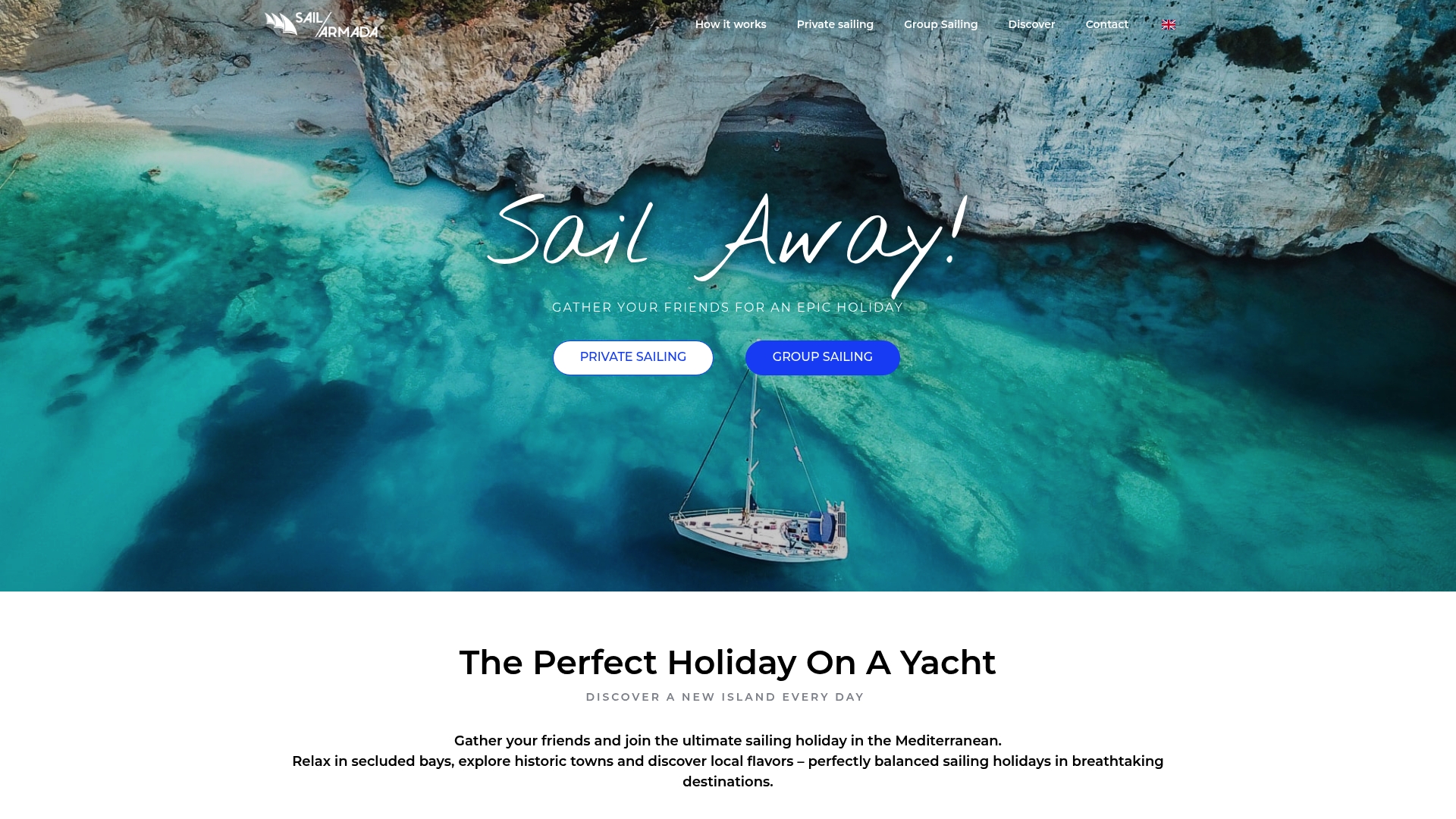
Whether you are planning a group trip and want to compare all-inclusive versus APA pricing, or you are a first-timer who wants expert guidance on which setup fits your style, the right agency makes the process straightforward. Sailarmada’s team has helped hundreds of groups find the right yacht, crew, and itinerary for their budget. Browse top charter agencies for 2026 to compare options and start planning your ideal week on the water.
FAQ
What is the main difference between all-inclusive and APA charters?
All-inclusive charters cover most costs in one fixed price, while APA charters use a prepaid fund of 20–40% of the base fee for variable expenses, with unused amounts refunded at the end.
Do all-inclusive sailing charters include crew gratuity?
No. Crew gratuities are paid separately and typically run 10–20% of the base hire fee, regardless of whether the charter is all-inclusive or APA.
Which charter type is best for first-time sailors?
Fully crewed all-inclusive charters are the best fit for first-timers. The crew handles all navigation, cooking, and cleaning, so no sailing experience is required.
Are all-inclusive charters available in the Mediterranean?
Yes, but they are less common than in the Caribbean. Mediterranean destinations like Greece and Croatia have higher VAT and fuel costs, so many operators there use APA pricing instead.
What is a skipper plus hostess charter?
A skipper plus hostess charter adds a licensed skipper and a catering hostess to a bareboat rental. Hostess rates run approximately €150–€230 per day and offer a cost-effective middle ground between bareboat and fully crewed all-inclusive charters.