
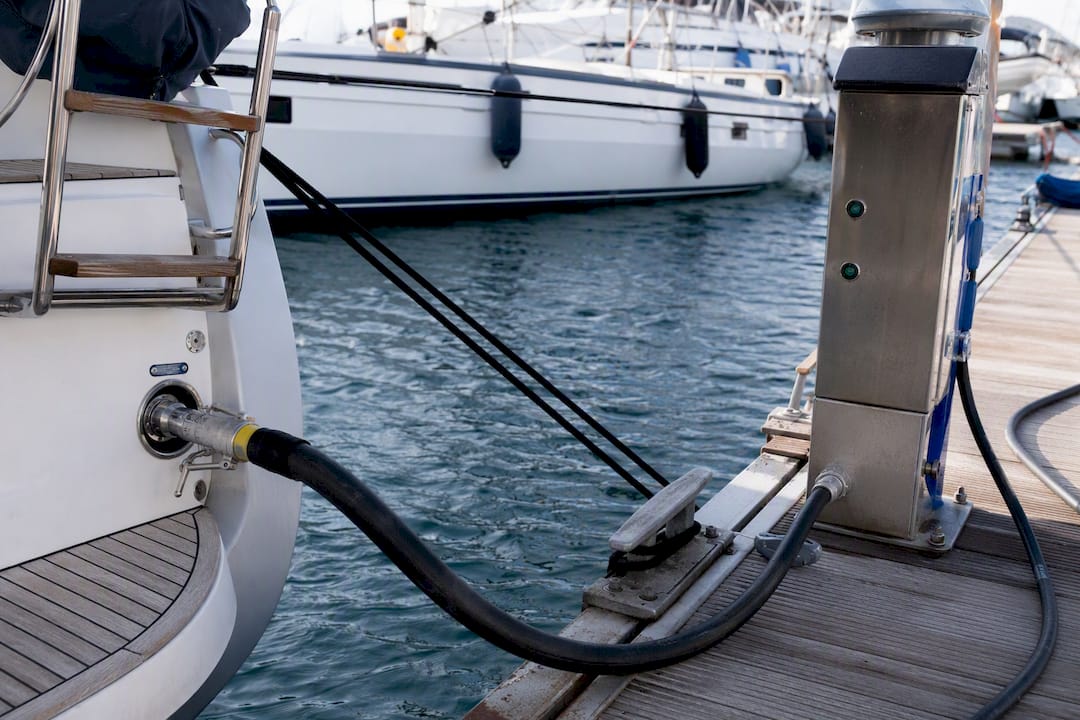
Yes: Turkey’s Blue Card system now lives inside the digital DAU (Deniz Araçları Uygulaması, or Maritime Waste Application), and your vessel needs a registered ID and QR code to prove it. Pump-outs get logged centrally, not stamped on a paper card, and inspectors check that digital trail first. If you’re heading into Turkish waters this season, three things matter more than anything else: confirm your boat’s DAU registration and QR before you leave the marina, pump out only at licensed reception facilities, and hold onto every Waste Transfer Form you’re handed.
Here’s what to sort before you cast off:
- Verify the DAU/QR ID is active for your vessel, whether it’s yours, chartered, or borrowed.
- Plan pump-outs at licensed reception stations, ideally at your starting base and again midweek.
- Keep Waste Transfer Forms and your Transit Log accessible, on paper or as a photo, in case a harbourmaster asks.
Pro Tip: Screenshot your DAU QR code the moment you get it. Phone signal near remote anchorages is unreliable, and a saved image beats scrambling for a live app connection during an inspection.
TL;DR:
- Verify your vessel’s DAU registration and QR code before departure, especially for chartered boats, to ensure compliance with Turkey’s digital tracking system.
- Plan at least two pump-outs: one at your starting marina and another midweek, at licensed stations with confirmed working equipment to avoid verification issues.
- Keep Waste Transfer Forms and your Transit Log accessible in case inspectors question the digital record during a check; physical proof is critical.
- Be aware that inspections focus on digital DAU records, Transit Logs, and transfer forms, with non-compliance risking fines or administrative notices.
- Sailarmada handles DAU registration, Transit Log, and compliance briefing for guests, reducing the paperwork burden during Turkish waters sailing trips.
Table of Contents
- What Is the Blue Card Turkey Sailing System Now Called?
- Who Needs a Blue Card or DAU Registration in Turkey?
- How Do You Register for the Blue Card DAU System?
- What Problems Do Sailors Actually Run Into With Pump-Outs?
- What Happens During a Blue Card Inspection in Turkey?
- How SailArmada Handles Blue Card Compliance for Guests
- Why the Digital Shift Is a Net Win, Even With Growing Pains
- Book a Turkey Sailing Week Without Handling the Paperwork Yourself
- Key Takeaways
- Sources
What Is the Blue Card Turkey Sailing System Now Called?
The Blue Card hasn’t disappeared. It’s been absorbed into the DAU, a centralized digital platform that tracks waste discharge for every private and charter vessel cruising Turkish waters. Where the old system relied on a physical card stamped at pump-out stations, the DAU assigns each boat a unique digital ID and QR code that ties directly into a national database. Harbourmasters and coastguard units pull records from that database rather than checking a laminated card in your ship’s folder.
The shift matters because it changes what “compliance” looks like in practice. A pump-out now generates a digital record: the date, the time, the volume discharged, and the identity of the receiving facility. Reception facilities also issue a physical or digital Waste Transfer Form as a receipt, and that paperwork becomes your backup evidence if the DAU record is ever questioned or if you’re cruising an area with patchy connectivity.
None of this exists for bureaucracy’s own sake. Turkey has banned the discharge of black water and grey water directly into the sea for decades, and the DAU is the enforcement mechanism, not the rule itself. The country’s coastline, from the Bodrum peninsula to the Turquoise Coast, carries heavy seasonal boat traffic, and uncontrolled discharge from thousands of yachts would degrade water quality fast. The legal framework embedding this system in Turkish yacht law treats waste tracking as a core condition of operating a private vessel in Turkish waters, not an optional add-on.
Here’s a simple breakdown of what changed between the old and new systems:
| Feature | Old Blue Card | Current DAU System |
|---|---|---|
| Format | Physical card, stamped at stations | Digital ID with QR code |
| Record keeping | Manual stamps, easy to lose | Centralized database entry per pump-out |
| Proof of pump-out | Card stamp only | Waste Transfer Form plus digital log |
| Inspection method | Physical card check | DAU record pull by authorities |
| Update frequency | Static once issued | Updated in real time per discharge |
The move to digital tracking follows a broader pattern in Turkish maritime policy. A regulation published in the Official Gazette in January 2026 tightens equipment and qualification standards for private vessel operators, and it leans hard on digital, audit-ready processes rather than paper trails that inspectors have to take on faith. If you’ve sailed Turkey before under the old card system, expect officials to ask for your phone or a printout, not a laminated card.
Who Needs a Blue Card or DAU Registration in Turkey?
Every private vessel spending time in Turkish territorial waters falls under the DAU requirement, regardless of flag state. That includes Turkish-flagged boats, foreign-flagged yachts on a cruising holiday, and charter vessels operated by a management company. There’s no exemption for smaller boats or short stays; if you’re anchoring, mooring, or cruising Turkish coastal waters, your vessel needs to be registered.

Charter arrangements add a layer of nuance. On a bareboat charter, the charter company typically pre-registers the vessel in the DAU system before handover, but responsibility for logging pump-outs during the charter period usually shifts to whoever is skippering the boat. On a skippered charter, that’s the professional skipper’s job, which is one of the practical advantages of booking with an operator who handles this routinely rather than learning it mid-holiday. Guests on either arrangement should still know what the paperwork looks like, since harbourmasters don’t distinguish between owner, renter, or guest when they ask to see records.
The DAU doesn’t operate in isolation. It runs alongside the Transit Log, sometimes called the Yacht Registration Form, which functions as your vessel’s cruising permit for Turkish waters. A few basics worth knowing:
- The Transit Log is typically valid for one year for foreign-flagged private vessels, and costs around €70 in some reported cases, though fees can shift with currency and port.
- You generally need to register in the DAU and finalize your Transit Log soon after arrival, typically within a few days, so this isn’t something to leave until midweek.
- A Transit Log gets canceled when you depart Turkish waters permanently or when a charter period ends, and you’ll want written confirmation of that cancellation if you plan to return later in the season.
Authorities expect these two documents, the DAU record and the Transit Log, to be presented together during a check. Carrying one without the other doesn’t satisfy an inspection, so treat them as a pair rather than separate errands.
How Do You Register for the Blue Card DAU System?
Getting compliant before you leave the dock is straightforward if you follow it in order. Skipping steps or assuming a charter company handled everything is the most common way sailors end up scrambling mid-trip.
- Confirm DAU registration status. If you’re on a charter, ask the company directly whether the vessel already has an active DAU ID and QR code. If you own or are borrowing a boat, you’ll need to register it yourself through the maritime waste application before departure.
- Save your QR code offline. Screenshot it, print it, or both. Coastal signal in Turkey is decent near major marinas but drops off around quieter anchorages, and you don’t want your only proof of registration locked behind a login screen with no connection.
- Plan your first pump-out at your departure base. Starting with an empty holding tank gives you the longest runway before your next stop, and most charter bases have functioning reception facilities right at the dock.
- Schedule a midweek pump-out. For a typical seven-day charter on a standard-sized catamaran or monohull, one pump-out at the start and one around day four keeps tank capacity manageable for most crew sizes. Larger groups or longer trips may need a third stop.
- Collect a Waste Transfer Form every time. Whether it’s a paper receipt or a digital confirmation sent to your phone, keep it. This is your fallback evidence if the DAU system shows a gap or an inspector questions the record.
- If a pump-out station isn’t working, don’t just leave. Ask the marina staff for written confirmation that you attempted the pump-out and the station was out of service. Contact the harbourmaster if staff aren’t available, and log the date, time, and location yourself as a backup note.
Cadence matters more than people expect. Tank capacity varies by vessel, but a general rule for charter-sized boats is to plan a pump-out roughly every three to four days of active use with a full guest count aboard. Ignoring this and hoping the tank holds until the end of the week is how sailors end up needing an emergency pump-out in a marina that doesn’t have one, or worse, feeling pressured to discharge illegally.
Pro Tip: Ask your charter base staff, before you leave, which marinas along your planned route have reliable, staffed pump-out stations. Word of mouth from people working the docks daily beats any app or guidebook for real-time accuracy.
Responsibility splits cleanly in most charter setups. The charter company handles initial DAU and Transit Log registration and typically briefs guests on procedure at handover. The skipper, whether a hired professional or the lead guest on a bareboat charter, owns the day-to-day task of scheduling pump-outs and collecting receipts. Guests aren’t usually expected to manage paperwork directly, but knowing what the documents look like means you can help if the skipper asks, or step in confidently if you’re skippering your own boat.
What Problems Do Sailors Actually Run Into With Pump-Outs?
The rules read cleanly on paper, but the infrastructure behind them doesn’t always keep pace. Sailors cruising Turkey have reported pump-out stations that are simply non-functional, particularly in smaller or less-trafficked marinas, and some have described paying a fee or receiving a Waste Transfer Form for a pump-out that, by their own account, never actually happened.
This isn’t universal, and larger, well-established marinas along popular routes tend to have working equipment and staff who take the process seriously. But it’s common enough that you shouldn’t assume every marina on your itinerary will deliver a smooth, verifiable pump-out. A few patterns worth knowing before you plan a route:
- Equipment failures cluster in smaller or seasonal marinas rather than major charter hubs, where higher traffic tends to justify better maintenance.
- Fees for a genuine pump-out are usually modest, and sailing guides describe them as a minor cost relative to the overall charter, not a significant budget line.
- Paperwork-only recordings happen when staff issue a form without physically completing the transfer, which is exactly why keeping your own written log of what actually occurred matters as much as the official form.
The practical fix isn’t complicated: route around known reliable stations where you can, and treat every pump-out interaction as something worth double-checking rather than assuming. If a staff member hands you a form quickly without connecting a hose, ask directly whether the transfer happened. It’s a slightly awkward question, but it’s far less awkward than an inspector later flagging a mismatch between your Waste Transfer Form and an actual discharge record. Building a short mental list of marinas with confirmed working stations, shared among sailing friends or picked up from your charter base, does more for your peace of mind than any amount of reading the regulation itself.
What Happens During a Blue Card Inspection in Turkey?
Inspections in Turkish waters focus on three documents: your DAU digital log, your Transit Log, and any Waste Transfer Forms you’re carrying. Coastguard and harbourmaster staff typically check the DAU record first since it’s centralized and quick to pull up, then cross-reference it against your paperwork if anything looks incomplete or inconsistent.
When a pump-out is disputed, meaning the DAU shows a gap or an inspector questions whether a discharge happened outside a licensed facility, a Waste Transfer Form or a marina-issued statement becomes your decisive piece of evidence. Verbal explanation alone rarely satisfies an inspection; written proof does.
Consequences for gaps in compliance range from a formal note in your file to administrative fines, depending on severity and whether it appears to be a genuine oversight versus repeated noncompliance. If you’re stopped for an inspection:
- Present your DAU QR code and Transit Log immediately, ideally from your saved offline copies rather than hunting for signal.
- Hand over any Waste Transfer Forms you’re carrying, even if they seem redundant with the digital record.
- If something is flagged, ask for a written statement of what the issue is rather than accepting a verbal warning with no documentation.
- Contact your charter operator or the local harbourmaster’s office if you’re unsure how to resolve a discrepancy on the spot.
Staying calm and organized during an inspection goes a long way. Officials are checking a process, not looking to catch honest sailors off guard, and a well-organized paperwork folder, digital or physical, resolves most questions in minutes.
How SailArmada Handles Blue Card Compliance for Guests
Sailarmada builds DAU and Transit Log verification into the pre-charter process rather than leaving it for guests to figure out on arrival. Before any Turkey sailing week departs, the vessel’s DAU registration and Transit Log status get confirmed, and routes are planned with an eye toward marinas known for reliable pump-out facilities rather than guesswork.
Once you’re on board, the experienced skipper assigned to your charter manages the day-to-day compliance tasks: scheduling pump-outs at sensible intervals, collecting and storing Waste Transfer Forms, and keeping the DAU records straight so guests can focus on the sailing itself. This is one of the clearer advantages of a skippered private sailing charter over a fully independent bareboat trip. Someone with route experience is handling the paperwork you’d otherwise need to learn from scratch.
Guests still have a short checklist worth running through before boarding:
- Bring your passport and any visa documentation required for entry, since port officials may ask for both alongside vessel paperwork.
- Ask for a copy of the Transit Log at the start of your charter so you know what it looks like if you’re asked to help locate it.
- Get a quick briefing on DAU procedure from your skipper, even a two-minute explanation removes most confusion if a pump-out or inspection comes up mid-week.
Why the Digital Shift Is a Net Win, Even With Growing Pains
I think the move from a physical Blue Card to the DAU is one of the more sensible regulatory updates Turkey has made for private sailing in years. Digital records are harder to fake, easier to audit, and they create a paper trail that protects honest sailors as much as it catches the careless ones. That’s a meaningful upgrade from a stamped card that could go missing or get filled out loosely.
The friction is real too. Infrastructure hasn’t fully caught up to the ambition of the system, and pump-out stations lagging behind the paperwork is a legitimate headache. But this is manageable with basic diligence: verify your QR code, keep every receipt, and treat marinas with known working equipment as a routing priority. Sailors who do that avoid nearly all the trouble reported by others, and they end up supporting genuinely cleaner water along one of the Mediterranean’s most beautiful coastlines.
— Sail
Book a Turkey Sailing Week Without Handling the Paperwork Yourself
If everything above sounds like a lot to manage on top of planning meals, routes, and who gets which cabin, that’s exactly the gap Sailarmada closes. Rather than researching DAU registration steps and Transit Log deadlines yourself, you book a charter where an experienced skipper already owns that process.
Every Turkey sailing week booked through Sailarmada comes with DAU and Transit Log handling built into the trip, route planning that favors marinas with dependable pump-out facilities, and a guest briefing so you know what’s happening without needing to read a regulation. Whether you’re planning a private sailing charter for close friends or coordinating a group sailing holiday with extended family, the compliance side stays with the crew running the boat, not with you. Check available dates for a Turkey sailing week and get a straightforward quote for your group size before you decide on cabins or catamaran versus monohull.
Key Takeaways
Turkey’s Blue Card compliance now runs through the digital DAU system, and sailors who verify their QR registration and keep Waste Transfer Forms avoid nearly all reported enforcement issues.
| Point | Details |
|---|---|
| Blue Card is now digital | The DAU replaced the physical card with a QR-based ID that logs pump-outs centrally. |
| Keep paper backup | Waste Transfer Forms serve as proof if the digital record is disputed during an inspection. |
| Pair with Transit Log | DAU records and your Transit Log (cruising permit) must be presented together, not separately. |
| Plan pump-outs strategically | Aim for one at your base and one midweek, targeting marinas with confirmed working stations. |
| Sailarmada handles the process | Skippered charters through Sailarmada manage DAU and Transit Log paperwork for you throughout the trip. |
Where to Verify Turkey’s Official Sailing and Waste Rules
For readers who want to check the underlying regulations directly rather than take a summary at face value, these sources cover the legal and practical detail behind this guide:
- Noonsite’s update on grey and black water disposal explains the DAU system’s structure and monitoring.
- The January 2026 Official Gazette regulation summary covers the latest equipment and qualification standards.
- Boataround’s Turkey sailing guide offers practical cadence advice for pump-out scheduling.
- Aksoy Law’s Blue Card summary details the statutory framework.
- All About Turkey’s boat regulations page covers Transit Log costs and validity.
For anything with real legal weight, confirm current status with the Official Gazette or your local harbourmaster before you rely on it.
Sources
- Turkey: Grey Water and Black Water Disposal Requirements – Noonsite
- Regulation on the equipment of private vessels and the qualifications of persons operating private vessels has been published – Mondaq
- Turkey Sailing Guide 2025 | Boataround
- Turkey Blue Card 2024 | YBW Forum
- BLUE CARD SYSTEM IN TURKISH YACHT LAW – Aksoy Law (April 2025)