Atunci când vă imaginați o vacanță de navigație în insulele grecești sau de-a lungul coastei croate, probabil vă imaginați soare, apă cristalină și relaxare totală. Ceea ce majoritatea oamenilor nu își imaginează este tipul specific de iaht care face posibil tot acest confort. Rolul tipului de iaht în confort este mult mai important decât își dau seama majoritatea călătorilor, iar presupunerea că toate iahturile se simt aproximativ la fel pe apă este o greșeală care duce la călătorii cu adevărat dezamăgitoare. Forma corpului, designul cabinei, sistemele de stabilizare și facilitățile de la bord variază dramatic de la un tip la altul, iar aceste diferențe influențează în mod direct cât de bine vă simțiți după opt ore pe mare.
Cuprins
- Principalele concluzii
- Cum afectează confortul tipul de iaht: imaginea de ansamblu
- Factori tehnici de proiectare care modelează călătoria
- Măsurarea confortului: raportul de confort și factorii din lumea reală
- Amenajări și design interior: unde confortul devine personal
- Alegerea iahtului potrivit în funcție de prioritățile dvs. de confort
- Părerea mea despre motivul pentru care confortul este trecut cu vederea
- Găsește-ți iahtul perfect cu Sailarmada
- FAQ
Principalele concluzii
| Punct | Detalii |
|---|---|
| Yacht tip conduce confort | Categoria iahtului dumneavoastră determină spațiul din cabină, stabilitatea în mișcare și zonele sociale mai mult decât marca sau prețul. |
| Designul și fizica contează | Confortul la bord combină stabilitatea și fizica mișcării cu amenajarea interioară și controlul zgomotului. |
| Raportul de confort are limite | CR este un instrument de screening util, dar trebuie asociat cu date reale privind încărcătura și plasarea pasagerilor pentru acuratețe. |
| Lungimea călătoriei este la alegerea dvs. | Călătoriile de o zi favorizează amenajările deschise, cum ar fi consolele centrale; croazierele de o noapte și cele prelungite necesită crucișătoare sau iahturi cu motor. |
| Designul interior nu este negociabil | Fluxul, înălțimea tavanului și dispunerea influențează confortul perceput la fel de mult ca metrajul pătrat. |
Cum afectează confortul tipul de iaht: imaginea de ansamblu
Nu toate iahturile sunt construite pentru aceeași experiență, iar această distincție începe în etapa de proiectare. Cele mai comune trei categorii pe care le veți întâlni atunci când planificați un charter sunt consolele centrale, croazierele și iahturile cu motor, iar fiecare dintre acestea face o promisiune fundamental diferită cu privire la confort.
Consola centrală este deschisă, sportivă și construită special pentru utilizarea zilnică. Acestea acordă prioritate vizibilității și accesibilității în detrimentul spațiului închis, ceea ce le face antrenante pentru câteva ore, dar epuizante pentru o zi întreagă pe mare. Nu există cabine, umbra este minimă, iar protecția împotriva intemperiilor este adesea limitată la un T-top sau un hard top. Pentru un salt rapid între insule? Excelent. Pentru o călătorie de o noapte cu patru persoane? Nici o șansă.
Croazierele se situează la mijlocul spectrului. Acestea variază de obicei între 25 și 45 de picioare și punte de zi-boat și sejururi de noapte cu cârma închisă și una sau două cabine. Aveți la dispoziție o bucătărie adecvată, un toaletă și un spațiu social protejat. Compromisul este că înălțimea cabinei și lățimea paturilor sunt adesea modeste, ceea ce contează foarte mult dacă petreceți trei nopți la bord.
Motoryacht-urile schimbă complet ecuația. De la 40 de picioare până la teritoriul superiahturilor, acestea oferă mai multe cabine, bucătării complete, saloane separate și adesea mai multe punți exterioare. Acestea sunt ambarcațiuni cu capacitate de liveaboard concepute astfel încât pasagerii abia observă că se deplasează. Dacă grupul dvs. plănuiește o vacanță de navigatie de o săptămână și prețuiește calitatea somnului, intimitatea și spațiul, un iaht cu motor sau un velier de croazieră mai mare este locul în care trăiește confortul.
| Tip iaht | Dimensiune tipică | Capacitatea de noapte | Principalele caracteristici de confort |
|---|---|---|---|
| Consolă centrală | 20-35 ft | Niciuna | Amenajare deschisă, acces ușor la apă |
| Cruiser | 25-45 ft | 2-4 persoane | Închis cârmă, 1-2 cabine, bucătărie de bază |
| Motoryacht | 40 ft+ | 4-12+ oaspeți | Multi-stateroom, bucătărie completă, salon, punți în aer liber |
| Catamaran cu vele | 38-55 ft | 6-10 oaspeți | Fascicul larg, mișcare stabilă, cockpit spațios |
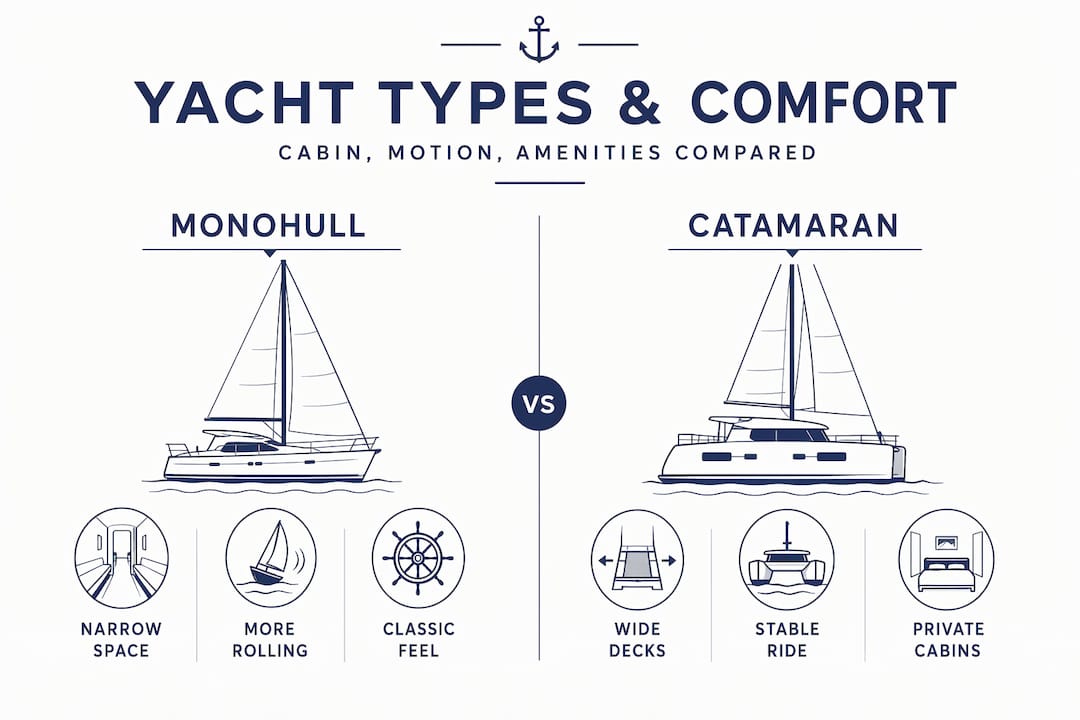
Catamaranul cu vele merită menționat aici deoarece este o alegere preferată pentru charterele din Marea Mediterană și Caraibe. Lărgimea sa mare creează o platformă care rezistă dramatic la rulare în comparație cu un monococă, iar aspectul cu două carene oferă un spațiu generos în cabină pentru lungimea bărcii. Pentru familii și grupuri care prioritizează confort pe vacanțe de navigatie, catamaranele se numără în mod constant printre cele mai satisfăcătoare opțiuni.
Factori tehnici de proiectare care modelează călătoria
Iată unde lucrurile devin cu adevărat interesante. Două iahturi de lungime și categorie identice se pot simți complet diferit pe drum, iar motivul este de natură tehnică. Calitatea călătoriei și stabilitatea sunt puternic influențate de distribuția greutății și de sistemele stabilizatoare care reduc înclinarea, ruliul și avântul. Acestea sunt cele trei axe de mișcare care îi fac pe pasageri să se simtă amețiți, obosiți sau neliniștiți, fără a ști întotdeauna de ce.
Coborârea centrului de greutate este una dintre cele mai eficiente tehnici folosite de inginerii iahturilor de lux. Atunci când greutatea se află mai jos în carenă, barca se balansează mai puțin agresiv ca răspuns la valuri. Sistemele de stabilizare, atât stabilizatoarele active cu aripioare, cât și versiunile giroscopice, au rolul de a absorbi ruliul lateral, astfel încât oaspeții să se poată deplasa prin salon fără să se încordeze.
Izolarea zgomotului și a vibrațiilor joacă, de asemenea, un rol mai important în confortul perceput decât se așteaptă majoritatea oamenilor. Ingineria confortului în iahturile de lux implică proiectarea corpului, distribuția greutății și stabilizarea în funcție de preferințe specifice, adesea finalizate numai după testele pe mare. Acest nivel de personalizare este ceea ce separă o călătorie cu adevărat relaxantă de una care vă lasă fără energie.
“Iahturile cu confort sporit permit pasagerilor să fie mai calmi și mai relaxați, având un impact asupra plăcerii generale și a luxului perceput al călătoriei.” - Echipa de ingineri Sanlorenzo
Sfat profesional: Atunci când evaluați un iaht charter, întrebați în special despre tipul stabilizatorului. Stabilizatoarele active cu aripioare funcționează bine în timpul mersului, în timp ce stabilizatoarele giroscopice funcționează și la ancoră, ceea ce contează enorm pentru confortul somnului în timpul unei valuri.
O evoluție modernă despre care merită să știți: sisteme de propulsie hibride permit o croazieră aproape silențioasă la viteză mică și nopți liniștite la ancoră, fără zgomot de motorină. Pentru oaspeții care sunt sensibili la zgomot, această tehnologie transformă experiența. Este din ce în ce mai disponibilă pe iahturile charter noi și merită să întrebați despre ea atunci când faceți rezervarea.
Măsurarea confortului: raportul de confort și factorii din lumea reală
Marinarii și arhitecții navale folosesc o măsură numită raport de confort (CR) pentru a compara confortul mișcării între nave. Acesta este calculat pe baza deplasării, a lungimii liniei de plutire și a lățimii, iar un CR mai mare indică o mișcare mai lentă și mai amortizantă în condiții de mare agitată. Un catamaran de croazieră sau o ambarcațiune de croazieră cu deplasare mare va avea un scor mult mai mare decât o ambarcațiune sport ușoară.
Dar iată ce nu vă spune CR. Confortul real experimentat la bord se modifică semnificativ în funcție de încărcătură și modul în care pasagerii sunt poziționați în raport cu balastul și punctele de sprijin ale ambarcațiunii. Șase persoane așezate la proră, la ancoră, creează un profil de mișcare complet diferit de cel al acelorași persoane răspândite în cabina de pilotaj. Măsura este utilă pentru comparații, dar nu reprezintă întreaga poveste.
Tiparele de utilizare din lumea reală contează la fel de mult ca specificațiile de proiectare. Iată cum tipul de călătorie se potrivește de obicei cu categoria de iaht:
- Excursie de o zi cu 4 până la 6 persoane - Consolă centrală sau croazieră entry-level; confortul de mișcare este scurt, astfel încât aspectul deschis și accesul la apă contează mai mult decât calitatea cabinei.
- Excursie de weekend cu înnoptare - Cruiser cu două cabine; doriți un pat adecvat, un cap, și o bucătărie care se poate ocupa de mese simple.
- Vacanță de navigatie de o săptămână - Catamaran cu vele sau iaht cu motor; aveți nevoie de confort pentru dormit, spațiu social și protecție împotriva intemperiilor pentru zilele în care condițiile se schimbă.
- Charter mediteranean extins - Motoryacht mai mare sau croazieră de performanță; intimitatea cabinei, aerul condiționat și bucătăria completă devin caracteristici de confort nenegociabile.
Sfat profesional: Atunci când citiți ratingurile CR, comparați navele în condiții de încărcare similare, mai degrabă decât specificațiile din fabrică. O ambarcațiune cu un scor CR bun, dar cu o încărcătură mare de pasageri în spate, se poate simți totuși dură la prova.
Amenajări și design interior: unde confortul devine personal
Specificațiile tehnice creează linia de bază, dar designul interior este ceea ce trăiești în realitate. Expertul în carting David Price spune clar: confortul se referă la senzație și aspect, nu doar dimensiunea vasului. Un design elegant și modest, care evită claustrofobia, îmbunătățește experiența oaspeților într-un mod mai fiabil decât simpla adăugare de metri pătrați.
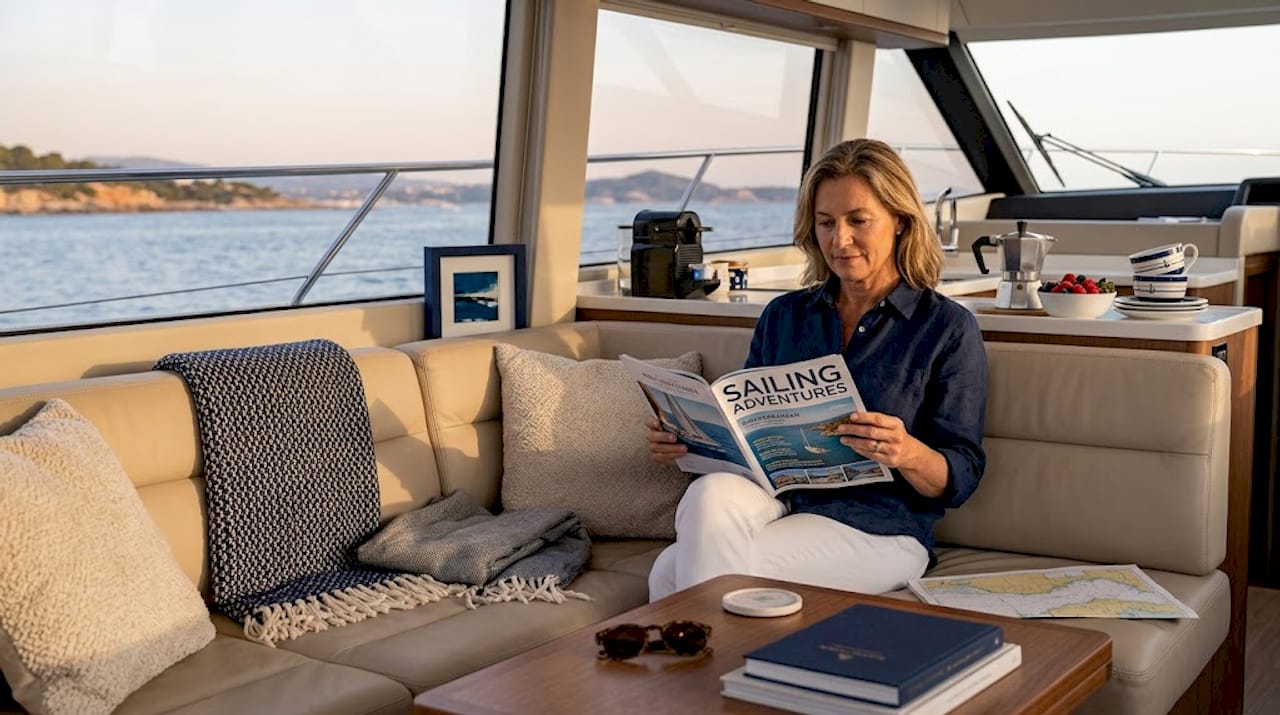
Cum arată acest lucru în practică? Plafoanele mai înalte din salonul principal previn senzația de subsol opresiv de care suferă unele croaziere. Ferestrele mari aduc lumină naturală și un sentiment de spațiu chiar și într-o cabină compactă. Pe partea exterioară, spații sociale adăpostite mari cu acces direct între punte și cabine face o diferență măsurabilă în modul în care oaspeții se simt atât în larg cât și la ancoră.
Iată cum se clasifică principalele facilități în funcție de tipul de iaht:
- Consolă centrală: Umbre minime, fără cabină, locuri limitate; cele mai bune caracteristici de confort sunt platformele de lansare și cuvele.
- Cruiser: Cârma închisă cu scaune, 1-2 paturi, cap compact, bucătărie mică; pilothouse protejat și opțiuni de ventilație adaugă confort semnificativ.
- Motoryacht: Mai multe cabine, de multe ori cu baie proprie, bucătărie completă, salon formal, aer condiționat pe tot parcursul și piscine spa pe modelele high-end.
- Catamaran cu vele: Cockpit larg pentru întâlniri sociale, carene separate pentru intimitatea cabinei, plase de trambulină și o opțiune flybridge pe modelele de performanță.
Pentru grupurile care rezervă un cabină charter pentru navigație comună, separarea cabinelor catamaranului este un avantaj real. Partenerii sau familiile au propria lor cocă, ceea ce înseamnă că sunetul nu circulă între cabine așa cum se întâmplă pe un croazieră cu monococă.
Alegerea iahtului potrivit în funcție de prioritățile dvs. de confort
Având în vedere toate acestea, cum luați decizia? Începeți prin a vă pune patru întrebări înainte de a vă uita la o singură listă de ambarcațiuni.
- Cât de lungă este călătoria dumneavoastră? Călătoriile sub 12 ore se orientează către opțiuni deschise, mai sportive. Orice călătorie de peste noapte necesită paturi adecvate și o bucătărie funcțională.
- Cine vine? Cuplurile tinere ar putea iubi o barcă cu pânze performantă. Familiile cu copii au nevoie de platforme stabile, umbră și șine de siguranță. Grupurile mixte cu experiență variabilă pe mare se descurcă cel mai bine pe catamarane sau croaziere mai mari cu mișcare previzibilă și stabilă.
- Care este climatul tău? Verile mediteraneene necesită umbră, ventilație și platforme de înot. Traversările Atlanticului necesită cârme închise, încălzire și protecție structurală împotriva intemperiilor.
- Ce activități sunt cele mai importante? Snorkelingul și sporturile nautice favorizează bărcile cu acces ușor la apă. Trecerile lungi la apus favorizează cabinele închise cu locuri bune.
De aici, potriviți răspunsurile dvs. la o categorie, apoi evaluați navele specifice din acea categorie în funcție de CR, stabilizare și aspectul interior. Consultându-vă cu un specialist în navlosire precum cei de la Sailarmada, care lucrează cu aceste nave în mod regulat, vă salvează de la a face o alegere care arată bine pe hârtie, dar se simte greșit pe mare. De asemenea, puteți explora opțiunile pentru o excursie de navigatie privat cu recomandări personalizate construite în funcție de nevoile specifice de confort ale grupului dumneavoastră.
Părerea mea despre motivul pentru care confortul este trecut cu vederea
Am văzut acest tipar repetându-se de mai multe ori decât pot număra. Cineva rezervă un iaht bazându-se pe cum arată în fotografii sau pentru că este cea mai accesibilă opțiune din flotă, iar în a doua zi se simte mizerabil pentru că ambarcațiunea este prea agitată, prea zgomotoasă sau pur și simplu prea înghesuită pentru grup.
Din experiența mea, greșeala nu este lipsa de cercetare. Este cercetarea lucrurilor greșite. Oamenii sunt obsedați de destinații și itinerarii, dar nu se gândesc aproape deloc la forma carenei, la stabilizare sau la aspectul cabinei. Factorii tehnici care combină stabilitatea și designul interior într-un confort real la bord nu sunt discutați aproape niciodată pe blogurile de călătorii, așa că sunt o surpriză atunci când contează cel mai mult.
Ceea ce am învățat este că confortul este cumulativ. O noapte grea, o bucătărie prea mică, o cabină care pare un dulap, și întreaga călătorie își schimbă tonul. În schimb, tipul potrivit de iaht face totul mai ușor. Pasagerii dorm bine, mănâncă bine și ajung la fiecare ancoraj pregătiți mai degrabă pentru aventură decât pentru recuperare. Acesta este adevăratul rol al tipului de iaht în ceea ce privește confortul și merită analizat înainte de a urca vreodată la bord.
- Sail
Găsește-ți iahtul perfect cu Sailarmada
La Sailarmada, potrivirea cu tipul de iaht potrivit este punctul de plecare al fiecărei vacanțe pe mare pe care o planificăm. Lucrăm în întreaga Mediterană, în Grecia, Croația, Italia și Sardinia, iar comandanții noștri știu la prima mână ce ambarcațiuni oferă confortul de care grupul dvs. are nevoie de fapt. Fie că explorați dacă navigatie privata sau de grup vi se potrivește cel mai bine, sau sunteți gata să vă angajați într-o barcă care vă oferă tot confortul, echipa noastră este aici pentru a vă ușura munca. Răsfoiți opțiuni charter yacht privat și descoperiți cum iahtul potrivit transformă o călătorie bună într-una cu adevărat de neuitat.
FAQ
Care este cel mai confortabil tip de iaht pentru o călătorie de o săptămână?
Catamaranele cu vele și iahturile cu motor oferă cel mai bun confort pentru călătoriile prelungite, oferind mișcare stabilă, mai multe cabine private și facilități complete la bord.
Cum afectează tipul de iaht confortul pe mare?
Forma corpului, sistemele de stabilizare și dispunerea cabinei influențează în mod direct mișcarea, nivelurile de zgomot și calitatea vieții, făcând din tipul de iaht unul dintre cei mai importanți factori de confort în orice călătorie cu barca.
Ce este raportul de confort și contează acesta?
Raportul de confort este o formulă care utilizează deplasarea, lungimea liniei de plutire și lățimea pentru a estima confortul de mișcare. Este un instrument de comparație util, dar trebuie luat în considerare alături de condițiile reale de încărcare și plasarea pasagerilor.
Sunt catamaranele mai confortabile decât monoculoarele?
Catamaranele oferă de obicei mai multă stabilitate și mai puțin ruliu decât monoculoarele, împreună cu un spațiu mai larg pe punte și cabine separate pentru intimitate, ceea ce le face o alegere de top pentru grupuri și familii în vacanțe charter.
Designul interior și facilitățile au într-adevăr un impact atât de mare asupra confortului?
Da. Înălțimea tavanului, dimensiunea ferestrelor, dispunerea cabinei și fluxul spațiului social influențează cât de spațioși și relaxați se simt oaspeții, uneori mai mult decât dimensiunile fizice ale ambarcațiunii.