Cea mai simplă și mai fiabilă strategie pentru mesele pe un catamaran este următoarea: aflați preferințele echipajului înainte de plecare, alegeți un singur traseu de aprovizionare și organizați-vă săptămâna în jurul unui meniu repetabil, bazat pe preparate dintr-o singură oală sau gătite în cantități mari, care să epuizeze produsele perisabile în primele două sau trei zile. Atât. Restul sunt doar detalii.
Pachetele charter sunt potrivite pentru grupurile care doresc să nu aibă de făcut niciun fel de comisioane și nu se deranjează să plătească un preț mai ridicat. Companiile care se ocupă de aprovizionare pe bază de comandă prealabilă sunt cea mai bună opțiune atunci când aterizați târziu sau nu vorbiți limba locală. Cumpărăturile pe cont propriu sunt avantajoase din punct de vedere al bugetului și al flexibilității dacă cineva din grupul vostru are timp și cunoaște piața. Indiferent de opțiunea aleasă, ritmul meselor rămâne același: alimente proaspete la început, produse de bază cu termen de valabilitate îndelungat ca pilon principal al călătoriei și o masă de rezervă de încredere pentru ziua în care nimeni nu vrea să gătească.
Lista de verificare pe care trebuie să o parcurgi imediat înainte de alocarea resurselor:
- Produse de bază: orez, paste, fasole la conservă, roșii, ulei de măsline, cafea
- Proteine: pește sau carne proaspătă în prima și a doua zi, congelate sau la conservă în restul zilelor
- Apă: o cantitate suficientă de apă potabilă prevăzută în buget pentru fiecare persoană, pe zi, de obicei între 3 și 4 litri
- Set de bucătărie: cleme pentru oale, un cuțit bun, o oală sub presiune, dacă barca are una
- Mâncare de rezervă: o cină cu termen de valabilitate îndelungat, de care nimeni nu trebuie să-și facă griji
Sfat profesional: Congelează bine câteva pachete cu proteine înainte de îmbarcare. Acestea vor servi drept pachete cu gheață în prima zi și se vor dezgheța, devenind cina din a doua zi.
Principalele concluzii
O gestionare eficientă a meselor pe un catamaran combină o singură metodă de aprovizionare, un meniu săptămânal repetabil și o rotație riguroasă a conținutului frigiderului, pentru a reduce la minimum atât risipa de alimente, cât și stresul zilnic legat de gătit.
| Punct | Detalii |
|---|---|
| Alegeți o cale de aprovizionare | Alegeți pachetul cu bilete și cazare, rezervați în avans sau cumpărați biletele pe cont propriu, în funcție de ora sosirii și de cât de bine stăpâniți limba respectivă. |
| Folosiți rețete de bază repetabile pentru mese | Pregătește cinele pe baza de cereale, proteine, legume și un sos care se schimbă periodic, pentru a simplifica cumpărăturile. |
| Așezați produsele perisabile în partea din față | Consumați peștele, carnea și legumele proaspete în primele două sau trei zile, înainte să se strice. |
| Folosiți apa cu chibzuință | Calculați între 3 și 4 litri pe persoană pe zi pentru apă potabilă și gătit. |
| Gătire în cantități mari și reîncălzire | Gătiți o singură dată cantități mari de tocănițe sau curry, apoi reîncălziți-le pe parcursul săptămânii pentru a economisi combustibil și a spăla mai puține vase. |
Cuprins
- Cum să organizezi mesele pe un catamaran: începe cu preferințele echipajului
- Ce tip de aprovizionare se potrivește cel mai bine charterului dumneavoastră?
- Cum transformi un meniu într-o listă de cumpărături?
- De ce echipamente de bucătărie ai nevoie, de fapt?
- Care sunt cele mai bune metode de gătit în timpul navigării?
- De câtă apă ai nevoie și este propanul sigur de utilizat?
- Cum arată un exemplu de meniu pentru o săptămână petrecută pe un catamaran?
- Ce obiceiuri de aprovizionare recomandă SailArmada la bord?
- Sunteți gata să rezervați un catamaran cu echipaj inclus?
- Unde puteți afla mai multe despre aprovizionare și siguranța în bucătărie?
- Ce greșesc majoritatea ghidurilor în ceea ce privește planificarea meselor pe catamaran
- Surse
Cum să organizezi mesele pe un catamaran: începe cu preferințele echipajului
Înainte de a întocmi vreo listă de cumpărături, află cine mănâncă de fapt. Trimite-le celor din grup un scurt chestionar cu cel puțin două săptămâni înainte de plecare, astfel încât meniul să reflecte poftele reale, nu presupuneri.
- Ce alergii sau restricții alimentare ai și cât de stricte sunt acestea?
- Există alimente pe care le detești sau pe care nu le-ai mânca de două ori într-o săptămână?
- Mănânci un mic dejun copios sau mănânci câte ceva pe parcursul dimineții?
- Ce gustări și băuturi doriți să avem în stoc, inclusiv preferințele în materie de băuturi alcoolice?
- Te simți în largul tău să gătești sau să faci curățenie, sau ai prefera să nu te implici de data asta?
Odată ce ai răspunsurile, desemnează un coordonator pentru mâncare. Nu trebuie să fie neapărat cel mai experimentat bucătar de la bord, ci doar persoana dispusă să se ocupe de lista de cumpărături și de program. Pe majoritatea catamaranelor, împărțirea sarcinilor pe cabine funcționează bine: o cabină pregătește micul dejun, alta se ocupă de cină, iar toată lumea participă la curățenie. Astfel, se evită ca o singură persoană să se epuizeze încă din a patra zi.
Concepeți meniul pe baza câtorva reguli simple. Folosiți în primele două zile produsele cele mai perisabile: pește proaspăt, verdețuri pentru salată și fructe moi. Pentru mijlocul săptămânii, mizați pe elemente de bază care se pot repeta: un cereale, o sursă de proteine, o legumă și un sos care se schimbă zilnic, astfel încât aceeași combinație de ingrediente nu devine niciodată monoton. Păstrați-vă una sau două seri libere pentru a lua masa pe uscat, atât pentru a reduce efortul de gătit, cât și pentru a consuma produsele proaspete înainte să se strice.
Nu subestimați importanța gustărilor. Navigația consumă mai multe calorii decât se așteaptă lumea: expunerea la soare, menținerea echilibrului în permanență, tragerea frânghiilor; așa că faceți provizii cu alimente bogate în energie, precum nuci, fructe uscate și biscuiți cu brânză, pentru momentul de oboseală de la mijlocul după-amiezii care îi afectează pe aproape toți în a doua sau a treia zi.
Ce tip de aprovizionare se potrivește cel mai bine charterului dumneavoastră?
Ai trei opțiuni reale, iar cea potrivită depinde mai mult de programul tău decât de bugetul tău.
Un pachet de închiriere prin intermediul companiei de iahturi este cea mai simplă opțiune; pentru mai multe detalii privind opțiunile de aprovizionare, consultați Explicații privind închirierea globală a ambarcațiunilor fără echipaj: Ce trebuie să știți. Plătești o taxă fixă, barca ajunge deja aprovizionată, iar tu nu mai trebuie să te duci deloc la cumpărături. Dezavantajul este costul. Pachete de aprovizionare pentru nave charter de obicei, prețul pe articol este mai mare decât dacă ai face cumpărăturile singur, iar flexibilitatea meniului se limitează la pachetele oferite de companie.
Aprovizionare prin comandă în avans aplicarea unei soluții intermediare prin intermediul unei companii locale. Trimiteți o listă de cumpărături înainte de sosire, iar aceasta vă așteaptă la bord în momentul check-in-ului. Această metodă vă economisește mult timp dacă aterizați târziu în cursul zilei sau dacă nu vorbiți limba locală suficient de bine pentru a vă descurca într-un supermarket din străinătate. Când folosești această opțiune, specifică clar regulile de înlocuire, decide dacă accepți o marcă similară sau nimic deloc și confirmă intervalul exact de livrare, astfel încât să nu rămâi pe cheu așteptând o dubă care a plecat deja.
Cumpărături pe cont propriu este cea mai ieftină și mai flexibilă variantă, dar îți ia timp și necesită cunoștințe locale. Este o opțiune potrivită pentru echipajele care au o după-amiază liberă înainte de plecare și pentru cineva căruia îi place să se plimbe prin piață.
Parcurge această listă de verificare înainte de a lua o decizie:
- La ce oră ajungi, de fapt, și magazinele vor fi deschise?
- Există cineva care să cunoască limba locală suficient de bine încât să poată face cumpărături fără griji?
- Cât de mare este grupul dumneavoastră și de câtă varietate aveți nevoie?
- Care este bugetul tău real pe persoană, pe zi?
- Cât de departe se află cel mai apropiat magazin alimentar decent de portul de agrement?
Sfat profesional: Indiferent de traseul pe care îl alegeți, asigurați-vă că aflați de la compania de închiriere dacă condimentele de bază și produsele de curățenie sunt incluse. Multe ambarcațiuni nici măcar nu au sare la bord.
Cum transformi un meniu într-o listă de cumpărături?
Un meniu fără o listă de cumpărături nu este decât o dorință. Procesul de conversie se desfășoară în cinci etape: colectarea preferințelor, planificarea din timp a săptămânii cu produse proaspete, defalcarea fiecărui fel de mâncare în ingrediente, însumarea cantităților pentru toate mesele și rotunjirea la unitățile de măsură în care magazinul vinde efectiv produsele.
- Enumerați toate felurile de mâncare pentru fiecare zi, de la micul dejun până la cină, inclusiv gustările.
- Descompune fiecare fel de mâncare în ingredientele sale de bază.
- Înmulțiți fiecare ingredient cu numărul de persoane care vor consuma acea masă.
- Sumați valorile totale pe întreaga săptămână pentru fiecare ingredient.
- Rotunjește la cel mai apropiat pachet disponibil spre vânzare: un litru de ulei, nu 850 de mililitri.
O foaie de calcul simplă, cu coloane pentru felul de mâncare, ingredient, cantitatea pe persoană și cantitatea totală, transformă această operațiune dintr-o chestiune de presupuneri într-una de calcul matematic. De asemenea, aceasta semnalează momentul în care cineva uită că, dacă șase persoane mănâncă cereale timp de o săptămână, sunt necesare trei cutii întregi, nu una singură.
Folosiți orientări aproximative privind porțiile pentru a verifica dacă totalurile sunt rezonabile: aproximativ 100–150 de grame de paste uscate sau orez pe persoană pentru o masă principală, două ouă pe persoană pentru un mic dejun consistent și, pentru un echipaj activ de navigație, aproximativ dublul cantității obișnuite de gustări față de o săptămână obișnuită acasă. Măriți cantitățile dacă grupul dumneavoastră înoată mult, face drumeții pe uscat sau are ture de veghe pe timp de noapte.
Nu te limita doar la alimente. Verifică dacă ai toate produsele esențiale nealimentare, comparându-le cu lista ta Lista de verificare pentru o excursie cu barca cu pânze, detergent de vase, bureți, saci de gunoi, cremă de protecție solară și verifică ce conține deja trusa de bază a bărcii, pentru a nu cumpăra de două ori aceleași lucruri, cum ar fi prosoapele de hârtie.
Odată ce te-ai întors la barcă, reîmpachetează totul în recipiente etanșe și etichetează-le în funcție de zi. Recipientele transparente marcate cu “Ziua 1”, “Ziua 2” și așa mai departe îl scutesc pe coordonator de a căuta prin șase pungi pentru a găsi pastele.
De ce echipamente de bucătărie ai nevoie, de fapt?
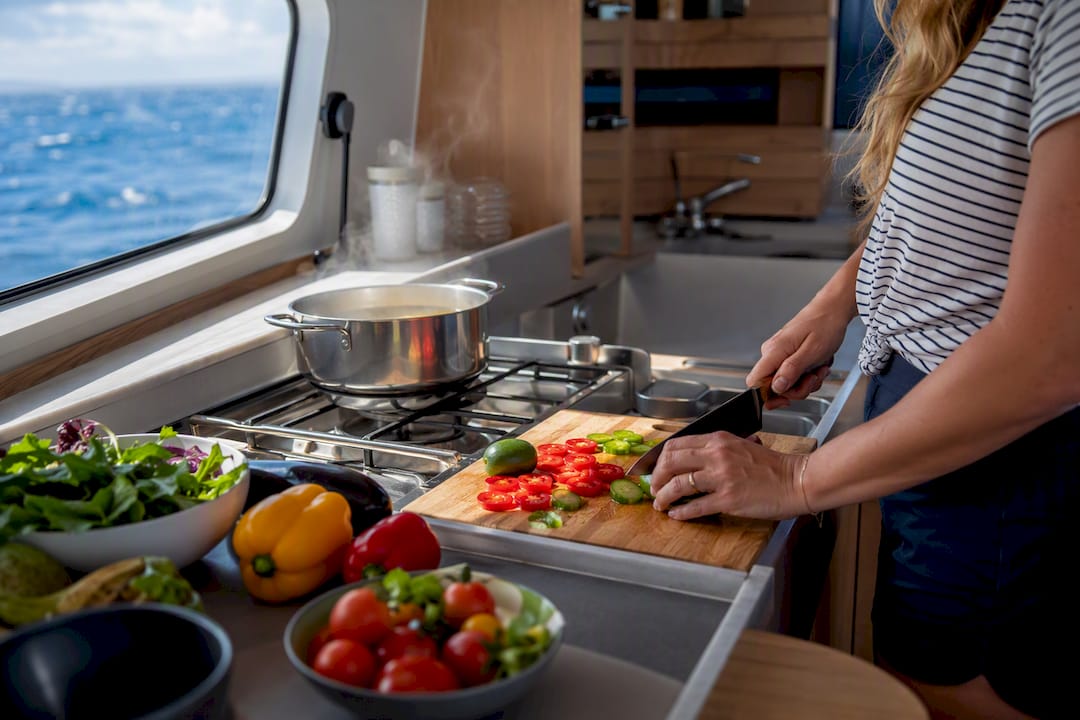
Bucătăria unui catamaran este mai spațioasă decât cea a unei ambarcațiuni cu un singur corp, dar spațiul de depozitare se umple totuși repede, iar câteva alegeri inteligente fac diferența între o săptămână fără probleme și una frustrantă.
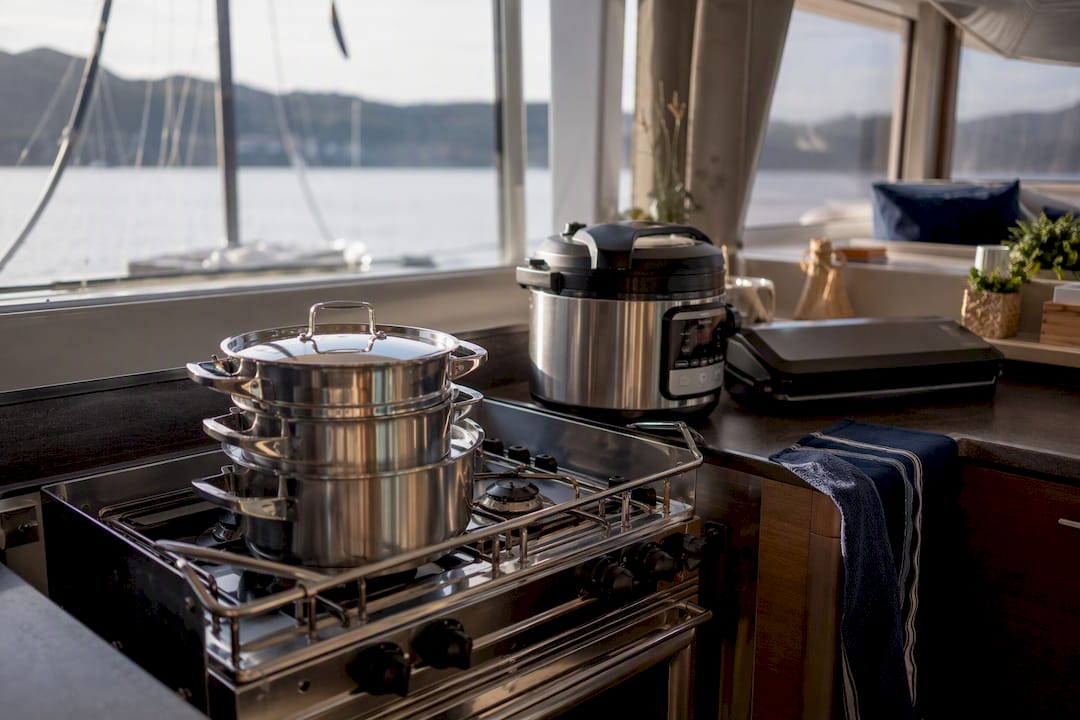
Începeți cu elementele esențiale: un aragaz cu sistem de stabilizare este dotare standard pe majoritatea ambarcațiunilor de charter, dar verificați-l înainte de a părăsi cheiul. Clemele pentru oale sau suporturile de fixare împiedică vasele să alunece atunci când barca se înclină. Tigăile care se potrivesc una în alta economisesc spațiu în dulapuri, iar o oală sub presiune reduce atât timpul de gătit, cât și consumul de gaz, ceea ce este util pe o barcă unde rezervorul de propan trebuie să țină pe toată durata închirierii. Un aparat de vidat este opțional, dar cu adevărat util pentru oricine își pregătește mesele din timp.
Modul în care îți organizezi frigiderul determină dacă alimentele tale vor rezista toată săptămâna. Respectă principiul „primul intrat, primul ieșit”: așează produsele pe care le vei folosi ultimele în fundul frigiderului și pune ingredientele de astăzi acolo unde le poți lua fără să trebuiască să sapi după ele. Rezervă zona cea mai rece pentru carne și pește. Congelarea proteinelor înainte de a le pune în frigider are un dublu rol, acestea pune restul la frigider în prima zi și se decongelează pentru cină în a doua sau a treia zi.
În dulapul uscat, transferă totul în recipiente etanșe și renunță la cutiile de carton. Aerul marin umed transformă cutiile de carton într-o mizerie udă și atrage dăunătorii în doar câteva zile. Depozitează conservele grele și sticlele cu apă în partea de jos și bine fixate, atât pentru stabilitate în timpul navigării, cât și pentru a evita ca acestea să zdrobească obiectele mai ușoare în timpul unei traversări agitate.
- Fixați borcanele și sticlele care nu stau bine pe loc cu ajutorul unei corzi elastice sau al unui covoraș antiderapant
- Păstrați ingredientele pentru mesele zilei într-un singur coș ușor accesibil, nu împrăștiate în trei dulapuri
- Păstrați o mică “pungă cu gustări” lângă cabina de comandă, astfel încât nimeni să nu fie nevoit să coboare sub punte în timpul unei traversări
Sfat profesional: Etichetează recipientele transparente în funcție de zi și așează-le pe rând, cu “Ziua 1” deasupra. Pare ceva evident până când te trezești că scormonești prin șase pungi identice, căutând cina de diseară într-o mare agitată.
Care sunt cele mai bune metode de gătit în timpul navigării?
Mâncărurile preparate într-o singură oală reprezintă coloana vertebrală a unei bucătării reușite pe un catamaran, iar în spatele acestui lucru se ascunde un motiv practic, dincolo de simpla comoditate: cu cât sunt mai puține vase care se mișcă prin bucătărie, cu atât sunt mai puține accidente atunci când barca se înclină sau se balansează pe valuri. Tocănele, preparatele cu curry și pastele la cuptor se încadrează toate în această categorie și pot fi transportate cu ușurință de pe aragaz la masă fără a fi nevoie de o a doua oală.
- Pregătește un fel de mâncare de bază – un curry, un chili sau o tocană – într-o cantitate mai mare decât cea necesară pentru o singură masă.
- Împărțiți cantitatea în plus în pungi sigilate sub vid sau în recipiente etanșe.
- Reîncălziți introducând punga sigilată în apă care fierbe la foc mic sau încălziți-o în cuptor, direct în tigaie, dacă bucătăria dumneavoastră dispune de unul.
- Păstrează la bord câteva tăvi de aluminiu de unică folosință pentru mesele după care nu vrei să speli o oală bună.
Această metodă de preparare în avans și reîncălzire înseamnă că cineva poate începe să pregătească cina în cincisprezece minute în loc de o oră, ceea ce contează atunci când vântul se oprește la ora 18:00 și toată lumea e flămândă și iritată.
Servirea mesei pe mare necesită anumite adaptări. Bolurile cu margini înalte sunt mai potrivite decât farfuriile plate atunci când există valuri, iar mâncarea cu o singură mână – cum ar fi rulourile, frigăruile sau supele consistente – permite tuturor să aibă cealaltă mână liberă pentru a se ține bine. Dacă condițiile devin dificile, amânați servirea până când ancorați sau vă aflați pe un curs mai stabil, în loc să vă luptați cu o farfurie care alunecă.
Schimburile de gardă creează o problemă legată de micul dejun. Un termos cu cafea preparată înainte de tura de dimineață sau un recipient izolat termic care menține căldura timp de ore întregi îi scutește pe cei care nu sunt de serviciu de a aprinde aragazul la ora 4 dimineața. Țineți la bord cafea instant și fulgi de ovăz care se prepară doar cu apă, ca rezervă pentru oricine are ghinionul să fie de serviciu.
De câtă apă ai nevoie și este propanul sigur de utilizat?
Siguranța alimentară pe un catamaran se rezumă la câteva reguli stricte: răciți rapid produsele perisabile, nu lăsați niciodată sucurile din carnea crudă să intre în contact cu ceva ce nu veți mai găti și nu vă faceți iluzii în privința resturilor care au stat la căldură mai mult de două ore. Dacă aveți îndoieli, aruncați-le.
Planificarea consumului de apă este mai simplă decât se așteaptă majoritatea celor care închiriază o barcă pentru prima dată. Calculați aproximativ 3–4 litri pe persoană pe zi pentru băut și gătit într-o excursie de o săptămână și păstrați apa din rezervorul bărcii pentru spălat, cu excepția cazului în care v-ați asigurat de calitatea acesteia.
| Resurse | Ghid |
|---|---|
| Apa potabilă și apa pentru gătit | 3–4 litri pe persoană pe zi |
| Rezervă de alimente proaspete | Este suficient doar pentru primele 2–3 zile |
| Verificarea nivelului de propan | Verificați conexiunile și mirosiți pentru a depista eventualele scurgeri înainte de fiecare călătorie |
Verificați dacă există scurgeri de gaz înainte de a găti ceva și asigurați-vă că știți unde se află robinetul de închidere. Aerisiți bucătăria când aragazul este pornit; propanul este mai greu decât aerul și, în cazul unei scurgeri, se poate acumula în spațiul de sub punte.
Pentru a economisi combustibil, folosiți o oală sub presiune pentru orice preparat care, în mod normal, ar trebui să fiarbă la foc mic timp de o oră, țineți capacele pe oale și reduceți la minimum frecvența cu care deschideți frigiderul; de fiecare dată când ușa este deschisă, aerul rece se pierde, iar compresorul este nevoit să funcționeze mai intens.
- Lăsați resturile să se răcească în decurs de două ore, apoi puneți-le imediat la frigider
- Separați întotdeauna carnea și peștele crude de alimentele gata de consum
- Verificați unde se află robinetul de închidere al buteliei de propan înainte de prima masă la bord
Cum arată un exemplu de meniu pentru o săptămână petrecută pe un catamaran?
Un meniu bine organizat elimină dezbaterea zilnică privind “ce mâncăm la cină” înainte chiar să înceapă. Iată un model conceput pentru un grup de patru până la șase persoane, în care produsele perisabile sunt programate în primul rând.
| Ziua | Mic dejun | Masa de prânz | Cina |
|---|---|---|---|
| 1 | Fructe proaspete, iaurt | Salată de pește proaspăt | Pește proaspăt la grătar, salată |
| 2 | Ouă, pâine prăjită | Mezeluri, brânză, pâine | Tocană de pui cu legume |
| 3 | Fulgi de ovăz | Salată de paste | Curry de pui într-o singură oală (porție) |
| 4 | Cereale | Rulouri cu ton în conservă | Curry reîncălzit, pâine proaspătă |
| 5 | Ouă, pâine prăjită | Salată de năut la conservă | Chili con carne (porție) |
| 6 | Fulgi de ovăz | Chili rămas | Paste la cuptor |
| — | Fructe, granola | Sandvișuri simple | Seară la restaurant pe uscat |
Pentru variante dietetice, înlocuiți peștele și puiul cu halloumi la grătar sau tofu marinat, în cazul vegetarienilor; folosiți carne tocată vegetală în chili, pentru vegani; iar pentru pescatarieni, care evită carnea roșie și păsările de curte, optați pentru ton sau creveți din conservă.
Păstrați un kit de urgență, indiferent de regimul alimentar: două cutii de paste, un borcan de sos, legume la conservă și ceva cu valabilitate îndelungată care să asigure proteine. Este masa pe care nimeni nu o planifică, dar toată lumea se bucură că există în seara în care vântul se oprește și echipajul este epuizat. Pentru mai multe idei de rețete pentru excursii de o zi, care pot fi adaptate cu ușurință pentru un număr mai mare de persoane, descoperă idei pentru mese pe iaht conceput special pentru acest tip de gătit.
Ce obiceiuri de aprovizionare recomandă SailArmada la bord?
Câteva obiceiuri mărunte fac diferența între o săptămână de charter fără probleme și una haotică, iar acestea reapar mereu în cadrul săptămânilor de navigație ghidate organizate de SailArmada.
- Pregătește un bufet de bun venit în prima seară, ceva simplu, cum ar fi pâine, brânză și măsline, ca nimeni să nu rămână flămând în timp ce tu încă cauți întrerupătoarele de lumină
- Verificați dacă trusa de bază a ambarcațiunii corespunde listei dvs. înainte de a face proviziile; nu presupuneți că sarea, piperul sau detergentul de vase sunt incluse
- Stabiliți, pentru fiecare cabină în parte, cine gătește ce masă, înainte de prima zi, nu abia când toată lumea este deja obosită și flămândă
Pentru o prezentare mai detaliată a aspectelor logistice, SailArmada’s ghid privind procesul de aprovizionare a iahturilor acoperă întregul flux de lucru, iar ghid de alocare a cabinelor ajută la stabilirea cui îi revine sarcina de a dormi și de a găti, și unde.
| Obicei | De ce este important |
|---|---|
| Bufet de bun venit la bord | Elimină presiunea de a pregăti o masă completă în seara sosirii |
| Verificarea kitului de pornire | Previne achizițiile în dublu și borcanele goale de condimente |
| Sarcina de gătit stabilită în prealabil | Previne epuizarea din a treia zi pentru cel care s-a oferit voluntar primul |
Sunteți gata să rezervați un catamaran cu echipaj inclus?
Planificarea meselor pentru o săptămână la bord este ușor de gestionat odată ce te-ai obișnuit cu sistemul, dar rămâne totuși o sarcină în plus pe lista de lucruri de făcut, care include deja traseele, prognoza meteo și aspectele logistice legate de acostare. Tocmai de aceea SailArmada integrează sprijinul pentru aprovizionare în serviciile sale vacanțe de navigație individuale și în grup, astfel încât echipajul tău să petreacă mai puțin timp discutând despre listele de cumpărături și mai mult timp navigând efectiv.
Fie că organizezi o excursie în familie sau coordonezi o excursie cu grupul întreg, o vacanță cu barca cu pânze cu ghid Cu un căpitan experimentat, nu mai trebuie să vă faceți griji nici în privința traseului, nici în privința bucătăriei. Răsfoiți Destinații mediteraneene de navigație și veți vedea cum un itinerar personalizat se ocupă de detaliile pe care ați prefera să nu le gestionați singuri.
Unde puteți afla mai multe despre aprovizionare și siguranța în bucătărie?
- Planificarea meselor pentru o vacanță cu barca închiriată pentru opțiuni de aprovizionare și liste de verificare
- Cum să aprovizionezi bucătăria unei bărci pentru o excursie cu barca cu pânze de o săptămână pentru recomandări privind apa și frigiderul
- Mai puțină gândire, mese mai bune în larg pentru strategia de gătit în serie
- Gătitul pe barcă privind practicile de depozitare și siguranța instalațiilor de gaz
Ce greșesc majoritatea ghidurilor în ceea ce privește planificarea meselor pe catamaran
Majoritatea sfaturilor privind aprovizionarea tratează fiecare masă ca și cum ar fi nevoie să mergi din nou la cumpărături, când, de fapt, adevărata abilitate constă în a concepe trei sau patru rețete de bază care pot fi repetate și în a alterna sosurile și ingredientele suplimentare în jurul acestora. Asta este ceea ce reduce cu adevărat timpul petrecut la cumpărături, nu o listă mai lungă de rețete ingenioase pe care nimeni nu le va mai găti până în a cincea zi.
Sfaturile obișnuite nu acordă suficientă importanță consumului de apă. Echipajele își planifică cu obsesie proviziile de mâncare, dar apoi rămân fără apă potabilă, deoarece nimeni nu a calculat cantitatea de apă necesară pe persoană înainte de plecare. Rezolvați mai întâi problema apei, iar restul planului de aprovizionare va deveni mai ușor.
Dacă trebuie să rețineți un singur lucru din acest ghid, acordați prioritate rolului coordonatorului de mese și sondajului privind preferințele echipajului, mai presus de lista de cumpărături în sine. O listă perfectă, întocmită pe baza unor presupuneri greșite despre cine mănâncă ce, va eșua oricum încă din a doua zi. Dacă alegeți corect oamenii, cumpărăturile vor veni de la sine.
Surse
- Planificarea meselor pentru o vacanță cu barca închiriată
- Cum să aprovizionezi bucătăria unei bărci pentru o excursie cu barca cu pânze de o săptămână?
- Mai puțină gândire, mese mai bune în larg
- Gătitul pe barcă
Recomandate
- Cele mai bune idei de mâncare pentru iahturi, pentru excursii de o zi și petreceri
- Procesul de aprovizionare a iahturilor: un ghid pentru organizatorii de charteruri
- Excursie cu barca cu pânze pentru întreaga familie: Ghidul tău complet
- Alocarea cabinelor pentru închirierea de catamarane: Ghidul grupului dumneavoastră