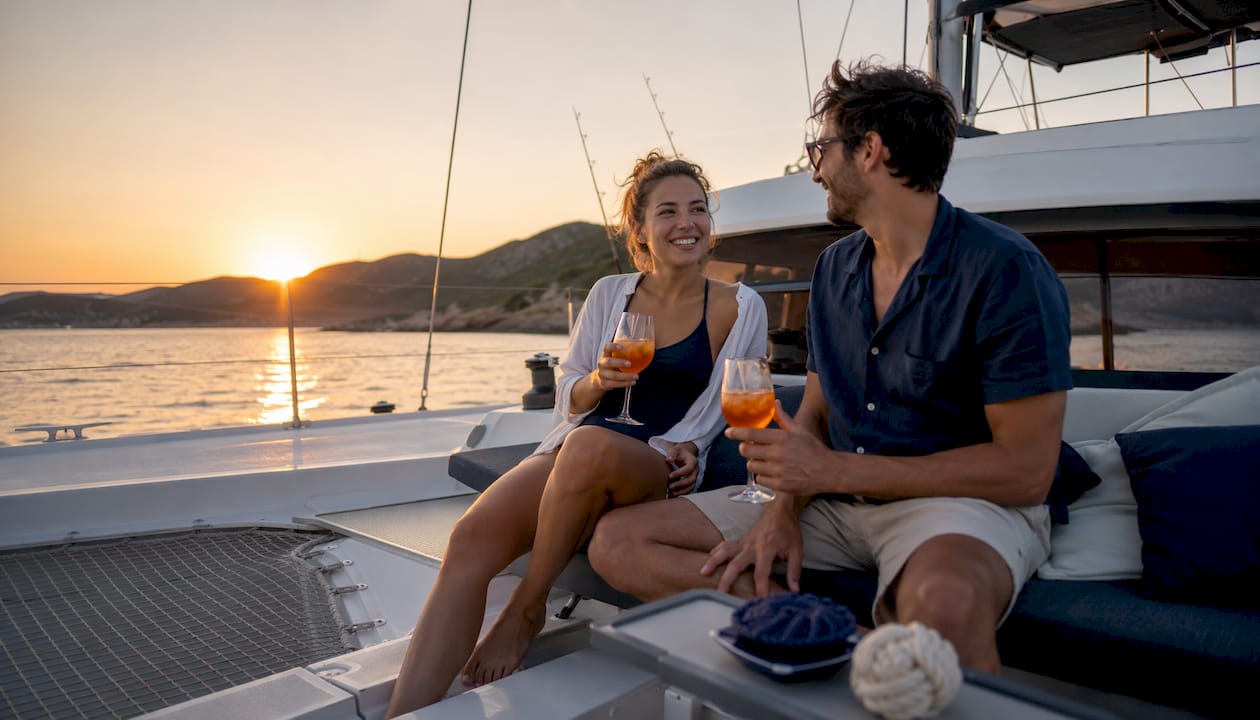
Grupurile aleg catamaranele deoarece acestea oferă aproximativ dublul spațiului de locuit față de o ambarcațiune cu un singur corp comparabilă, rămân aproape orizontale în timpul navigării și împart costul între mai multe cabine, astfel încât toată lumea beneficiază de o ofertă mai avantajoasă. Fie că plănuiești o aventură în Marea Mediterană cu prietenii sau o săptămână în familie în Insulele Virgine Britanice, combinația de spațiu, stabilitate și energie socială oferită de catamaran este cu adevărat greu de întrecut. Iată o scurtă prezentare a motivelor pentru care acestea sunt alegerea preferată a grupurilor în 2026:
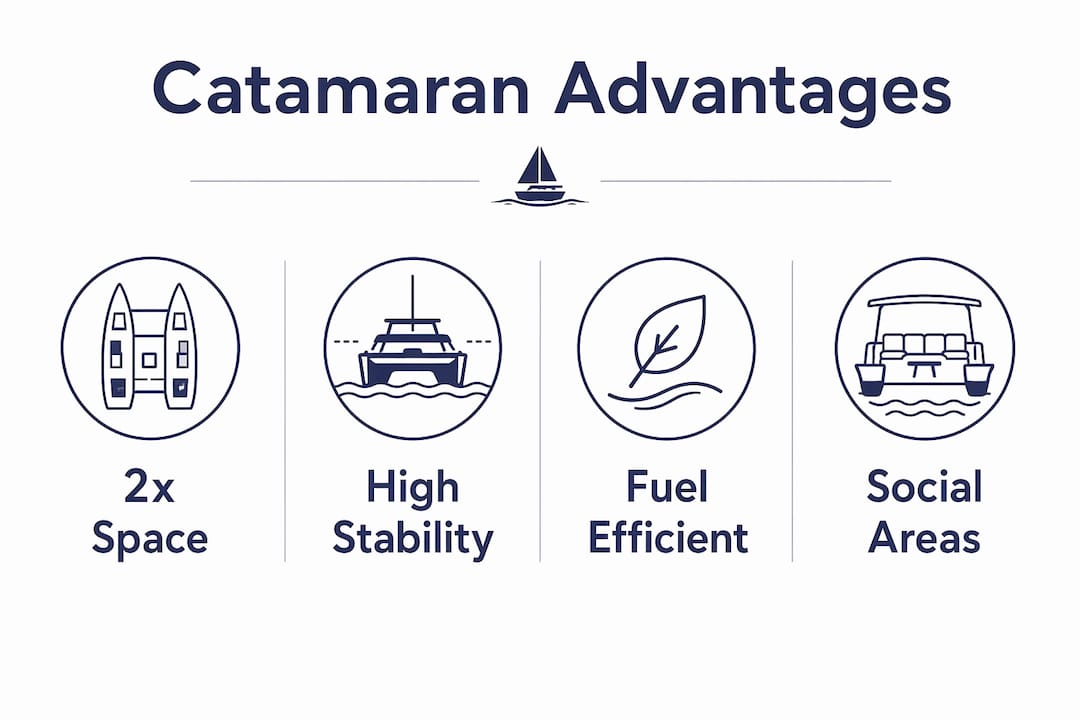
- Spațiu de locuit dublu: Un catamaran de 42 de picioare dispune, de obicei, de patru cabine duble private cu baie proprie, oferind cuplurilor și familiilor intimitate deplină.
- Stabilitate superioară: Catamaranele se înclină doar cu 3–10 grade, față de 20–45 de grade în cazul unei ambarcațiuni cu un singur corp, ceea ce înseamnă mult mai puțină rău de mare și oboseală.
- Spații comune generoase: Cabina spațioasă poate găzdui confortabil peste 8 persoane în jurul unei mese, iar trambulina de la prova devine locul preferat de relaxare al tuturor.
- O opțiune rentabilă pentru grupuri mai mari: Costurile de închiriere sunt semnificativ mai mari decât în cazul unei ambarcațiuni cu un singur corp comparabile, dar prețul pe persoană pentru grupuri de șase sau mai multe persoane se situează adesea la același nivel sau chiar sub cel al unei ambarcațiuni cu un singur corp.
- Pescaj redus: Majoritatea ambarcațiunilor de charter au un pescaj redus, de obicei de aproximativ un metru, ceea ce le permite să acosteze în locuri retrase, la care ambarcațiunile cu chilă mai adâncă pur și simplu nu pot ajunge.
- Eficiența consumului de combustibil și motoarele duble: Funcționarea unui singur motor la viteza de croazieră economisește combustibil, în timp ce ambele motoare funcționând simultan asigură o andocare precisă.
- Siguranță pentru toate vârstele: Platforma plană le permite copiilor, celor care nu au experiență în navigație și oricărei persoane cu probleme de mobilitate să se deplaseze în siguranță și în voie.
1. Spații de cazare spațioase și intimitate de care grupurile au cu adevărat nevoie
Spațiul este principalul motiv pentru care grupurile aleg un catamaran în locul unui monocorp sau al unui iaht tradițional. Un catamaran de 42 de picioare oferă un volum interior mult mai mare decât un monocorp de aceeași lungime, fiecare corp găzduind, de obicei, două cabine duble și o toaletă privată. Asta înseamnă că patru cupluri pot dormi, face duș și își pot depozita echipamentul fără să se întâlnească vreodată, dacă nu doresc acest lucru. Pe o ambarcațiune cu un singur corp de aceeași dimensiune, acest tip de intimitate pur și simplu nu există.
Salonul unui catamaran modern de croazieră este spațios, luminos și cu adevărat primitor. La masă pot lua cina opt persoane fără ca cineva să fie nevoit să stea pe o ladă frigorifică sau să-și țină farfuria în poală. Cockpitul extinde acest spațiu de socializare în aer liber, iar trambulina de la prova oferă grupului un loc superb unde să se relaxeze în timp ce ambarcațiunea străbate apele cristaline. Gândiți-vă la ea ca la o terasă plutitoare care, întâmplător, vă duce în fiecare dimineață într-un loc nou.
Pentru familiile care călătoresc cu copii, amenajarea este deosebit de practică. Părinții au la dispoziție propria secțiune a navei, copiii o împart pe cealaltă, iar fiecare are o ușă pe care o poate închide la sfârșitul zilei. Această separare este ceva ce nicio ambarcațiune cu un singur corp de lungime comparabilă nu poate oferi, iar după o zi întreagă petrecută la soare și înot, acest aspect contează mai mult decât v-ați aștepta. Puteți afla mai multe despre strategii de alocare a cabinelor pentru a valorifica la maximum spațiul în funcție de nevoile grupului dumneavoastră.
| Tipul navei | Cabine tipice (42 ft) | Capete de duș cu baie proprie | Scaune în cabina de pilotaj | Lățimea salonului |
|---|---|---|---|---|
| Catamaran | 4 cabine duble | Da, pe cabină | 8+ persoane | Lățime totală (7–8 m) |
| Monohull | 2–3 cabine | Partajat (1–2) | 4–6 persoane | Corp central îngust |
| Iaht cu echipaj | Variază (în funcție de amenajarea proprietarului) | De multe ori 1–2 partajări | 6–8 persoane | Depinde de model |
Sfat profesional: La repartizarea cabinelor, plasați pasagerii cu somnul cel mai ușor în cabinele din față, care tind să fie mai supuse mișcărilor pe mare. Cuplurile care doresc intimitate maximă se vor simți cel mai bine în cabinele din spate, care sunt mai liniștite și mai aproape de platforma de înot.
2. Stabilitate și confort care îi fac pe toți să se simtă în largul lor
Stabilitatea unui catamaran schimbă complet experiența de a fi pe mare, mai ales pentru grupurile care includ persoane fără experiență în navigație sau copii. În timp ce o barcă cu un singur corp se poate înclina între 20 și 45 de grade când navighează cu vele, un catamaran rămâne aproape orizontal, înclinându-se de obicei cu doar 3–10 grade chiar și la o briză puternică. Această diferență pare una pur tehnică până când încerci să torni un pahar de vin pe o barcă cu o singură carenă înclinată și vezi cum acesta alunecă pe masă.
Lățimea corpului unui catamaran asigură ceea ce marinarii numesc “stabilitate de formă”, ceea ce înseamnă că ambarcațiunea rezistă la rulare datorită geometriei sale, mai degrabă decât datorită balastului, ceea ce îi conferă o senzație mai apropiată de cea a unei apartament pe apă decât o barcă care se luptă cu marea. Rezultatul: o platformă care seamănă mai mult cu un apartament plutitor decât cu o barcă care se luptă cu marea.
Deoarece puntea rămâne orizontală, cabina de comandă și salonul rămân pe deplin funcționale în timpul navigării. Oamenii pot găti, mânca, juca cărți sau pur și simplu sta și admira țărmul care se derulează în fața ochilor, fără a fi nevoiți să se țină bine pentru a contracara înclinarea. Pentru grupurile care includ bunici, copii mici sau orice persoană care suferă de rău de mare pe o barcă care se leagănă, acest lucru reprezintă cu adevărat o schimbare care le schimbă viața. Răul de mare scade dramatic atunci când mișcarea este redusă, iar oboseala echipajului scade la rândul ei.
La ancoră, diferența este și mai evidentă. Monocorpurile se balansează pe valuri, ceea ce înseamnă nopți agitate și băuturi vărsate la apus. Catamaranele rămân stabile, așa că dormi bine și te trezești pregătit pentru o altă zi minunată. Iată ce înseamnă această stabilitate în termeni practici:
- Gătitul pe ambele ochiuri este simplu, fără riscul ca vasele fierbinți să alunece de pe aragaz.
- Paharele și farfuriile rămân acolo unde le-ai așezat, chiar și în timpul deplasării.
- Copiii se pot deplasa pe terasă în siguranță, fără a fi nevoie de supraveghere constantă.
- Cei care nu au experiență în navigație se simt încrezători și relaxați încă din prima zi.
- Riscul ca cineva să cadă peste bord scade semnificativ pe o platformă plană.
- Răul de mare este mult mai rar, ceea ce menține întregul grup într-o stare de spirit bună.
3. Performanțe de navigare care te duc mai repede în locurile cele mai interesante
Viteza s-ar putea să nu fie primul lucru la care se gândesc grupurile, dar contează mai mult decât te-ai aștepta odată ce te afli pe mare. Catamaranele de croazieră navighează, de obicei, mai repede decât monocochile de lungime comparabilă, ceea ce înseamnă traversări mai scurte și mai mult timp petrecut la ancoră în acel golf uluitor pe care l-ai zărit pe hartă. Într-o croazieră de o săptămână, această viteză suplimentară se poate traduce prin vizitarea uneia sau a două destinații în plus.
Avantajul în ceea ce privește performanța provine chiar de la corpurile navei. Două corpuri înguste care se deplasează prin apă creează mai puțină rezistență decât un singur corp lat, astfel încât velele pot funcționa mai eficient. Catamaranele moderne de croazieră de la constructori precum Lagoon, Fountaine Pajot și Leopard au perfecționat și mai mult acest aspect prin structuri mai ușoare și planuri de vele îmbunătățite, făcând din “rapid și confortabil” o combinație realistă, mai degrabă decât un compromis.
Iată cum se prezintă, în practică, pachetul de servicii pentru o excursie de grup:
- Pasaje mai rapide: Atinge o viteză medie de 7–10 noduri în timpul traversării, cu un efort mai mic decât în cazul unei ambarcațiuni monocarcasă comparabile.
- Acces pentru ambarcațiuni cu pescaj redus: Majoritatea ambarcațiunilor de charter au un pescaj redus, de obicei de aproximativ un metru, ceea ce le permite să acosteze pe plaje nisipoase și în golfuri izolate, la care ambarcațiunile cu chilă mai adâncă nu pot ajunge.
- Manevrabilitatea avioanelor bimotoare: Datorită distanței mari dintre motoare, poți roti nava pe loc sau te poți deplasa lateral, ceea ce face ca andocarea în spații înguste din port să fie mult mai puțin stresantă.
- Eficiența navigației cu motor și vele: Funcționarea cu un singur motor la o viteză de aproximativ 7 noduri permite economisirea combustibilului, fără a afecta ritmul de deplasare.
- Flexibilitate în ceea ce privește condițiile meteorologice: Viteza suplimentară înseamnă că, de multe ori, poți depăși sau evita sistemele meteorologice în formare mai ușor decât pe o ambarcațiune cu un singur corp mai lentă.
Un lucru pe care merită să-l știți: catamaranele sunt mai puțin confortabile atunci când navighează cu vântul din față, pe valuri abrupte, iar puntea de legătură poate lovi puternic de suprafața apei în condiții de mare agitată din lateral. Totuși, în condițiile tipice de charter din Marea Mediterană sau din Caraibe, astfel de momente sunt rare. Marea majoritate a navigării se va desfășura în condiții în care un catamaran se descurcă excelent.
4. Un raport cost-eficiență care dă rezultate concrete pentru grupuri de șase sau mai multe persoane
Da, închirierea unui catamaran costă mai mult la început. Închirierea unui catamaran costă cu 60–90% mai mult decât cea a unei ambarcațiuni cu un singur corp comparabile, pentru aceeași săptămână și în același port de plecare. Pentru un grup de două sau trei persoane, această diferență de preț este greu de justificat. Însă pentru grupuri de șase, opt sau mai multe persoane, ecuația se schimbă complet.
Motivul este simplu: un catamaran poate transporta mai multe persoane în condiții mai confortabile, astfel încât costul pe persoană se situează adesea la un nivel similar cu cel al unei ambarcațiuni cu o singură carenă, uneori chiar mai mic. Costul total mai ridicat se împarte între mai multe cabine, fiecare dotată cu baie privată, un cockpit mai spațios și un salon în care încap cu adevărat toți pasagerii. Dacă comparăm această situație cu înghesuirea a opt persoane într-o barcă cu un singur corp, unde două cupluri împart o singură baie și cineva doarme în salon, catamaranul începe să pară alegerea evidentă.
| Catamaran (42 ft) | Monococ (42 ft) | Iaht cu echipaj | |
|---|---|---|---|
| Spațiu pe oaspete | Categorie superioară (cabine duble, cu baie proprie) | Moderat (facilități comune) | Variază în funcție de navă |
| Stabilitate și confort | Excelent (înclinare de 3–10°) | Moderat (înclinare de 20–45°) | Depinde de tipul corpului navei |
| Viteză și performanță | 20–30% mai rapid decât o ambarcațiune cu un singur corp | Valoarea inițială | Variază |
| Costul pe persoană (6+ persoane) | Comparabil sau mai mic | Valoarea inițială | Mai mare |
| Dotări practice | Cabina de comandă spațioasă, trambulină, platformă de înot | Cockpit mai mic, spațiu limitat pe punte | Adesea, dotări suplimentare de lux |
Eficiența consumului de combustibil reprezintă un alt factor de economisire. Funcționarea unui singur motor la viteza de croazieră, în loc de două, reduce semnificativ consumul, iar carenele ușoare și înguste necesită mai puțină putere pentru a se deplasa decât o ambarcațiune monocarcă grea. Pentru grupurile care închiriază o ambarcațiune pentru o săptămână în Grecia sau Croația, acest lucru poate însemna o factură de combustibil vizibil mai mică la sfârșitul călătoriei. Vă puteți face o idee mai clară despre Poti sa compari cat costa o vacanță cu iaht pentru a vă planifica bugetul de grup înainte de a face rezervarea.
Totuși, există compromisuri reale. Taxele de port sunt mai mari, deoarece catamaranele ocupă mai mult spațiu, iar unele porturi mai mici sau istorice pur și simplu nu pot găzdui lățimea acestora. Grupurile ar trebui să țină cont de acest aspect atunci când își planifică itinerariul, mai ales dacă doresc să exploreze porturi înguste, pline de farmec.
5. Spații sociale și activități la bord care favorizează interacțiunea între grupuri
Un catamaran nu se limitează doar la a vă transporta grupul dintr-un loc în altul. El devine locul în care se petrec cele mai frumoase momente ale călătoriei. Cockpitul spațios, trambulina de la prova, platforma de înot de la pupa și salonul deschis se îmbină pentru a crea o atmosferă socială pe care o barcă cu un singur corp nu o poate egala. Grupul vostru se poate împrăștia, își poate găsi propriul colț și totuși să se simtă conectat.
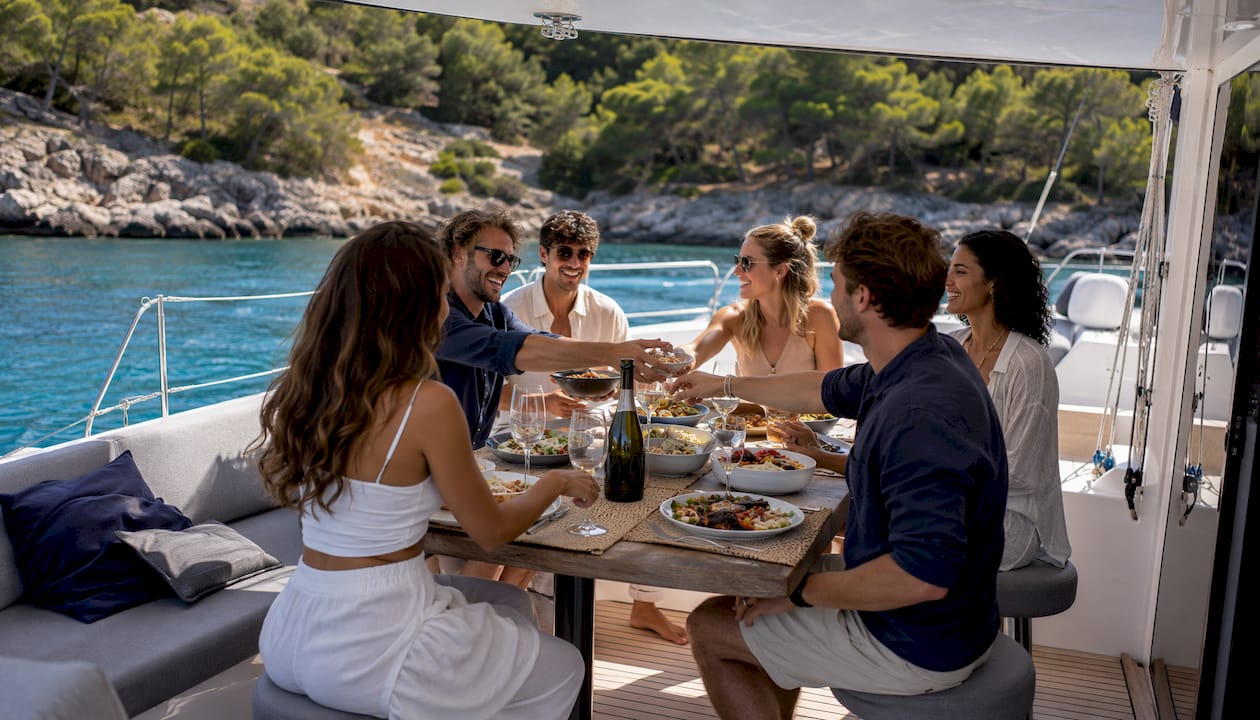
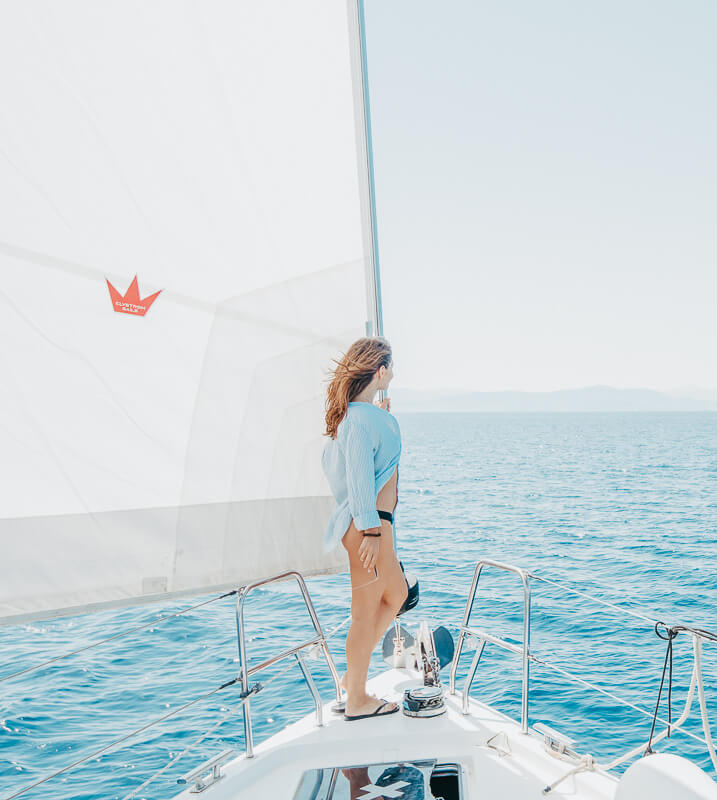
Trambulina de la prova este unul dintre acele elemente care pare un simplu bonus până în momentul în care te întinzi pe ea și privești apa curgând sub tine, în timp ce barca navighează prin apele turcoaz ale Mării Mediterane. În prima oră, devine locul cel mai popular de pe barcă. Platforma de înot de la pupa facilitează intrarea și ieșirea din apă pentru toată lumea, de la copii mici până la bunici, ceea ce înseamnă mai multe opriri spontane pentru snorkeling și mai puțină bătaie de cap cu scările.
Masa în comun este o adevărată plăcere pe un catamaran. Masa din cabină poate găzdui întregul grup deodată, iar, având în vedere că ambarcațiunea stă perfect echilibrată, bucătarul din grupul vostru poate pregăti o masă ca la carte fără să fie nevoit să se țină cu disperare de ceva. Cinele la apusul soarelui, cu barca ancorată, cu tot echipajul adunat în jurul unei singure mese și cu o priveliște superbă în toate direcțiile, sunt genul de momente care îi determină pe oameni să rezerve din nou în anul următor. Pentru grupurile care doresc să opțiuni de vacanță de navigație în grup, dimensiunea socială a unui catamaran este adesea factorul decisiv.
6. Eficiența consumului de combustibil și aspectele de mediu pentru contractele de navlosire din 2026
Eficiența consumului de combustibil a devenit un factor decisiv în alegerea unei ambarcațiuni de charter, iar catamaranele au un avantaj real în acest sens. Cele două corpuri înguste creează o rezistență mai mică decât un singur corp lat, astfel încât ambarcațiunea are nevoie de mai puțină putere pentru a atinge aceeași viteză. În practică, un singur motor la viteza de croazieră asigură o viteză de aproximativ 7 noduri, cu un consum de combustibil semnificativ mai redus decât în cazul în care ar funcționa ambele motoare, iar majoritatea căpitanilor folosesc această abordare cu un singur motor pe parcursul unei mari părți a călătoriei.
Pentru grupurile preocupate de amprenta lor ecologică, acest aspect contează. Un consum mai redus de combustibil pe milă înseamnă un impact mai mic al emisiilor de carbon pe persoană, iar atunci când se împarte acest impact între șase sau opt oaspeți, costul ecologic pe persoană al unei închirieri de catamaran se compară favorabil cu multe vacanțe la stațiuni terestre. Mai multe modele noi de catamarane de la constructori precum Bali și Fountaine Pajot oferă acum opțiuni de propulsie hibridă sau electrică, o tendință care se accelerează pe măsură ce industria de închiriere răspunde cererii de opțiuni mai ecologice.
Și pescajul redus joacă un rol important în acest sens. Posibilitatea de a ancora în golfuri protejate și puțin adânci, în loc să ne îndreptăm în fiecare seară către un port de agrement, economisește combustibil și ține grupul departe de porturile aglomerate și zgomotoase. Ancorarea lângă o plajă liniștită din Croația sau Grecia este gratuită, pașnică și mult mai memorabilă decât un loc de acostare într-un port de agrement. Este unul dintre acele avantaje practice care se dovedește a fi, totodată, și cea mai frumoasă alegere.
7. Avantajele în materie de siguranță care contează cel mai mult pentru familii și grupuri mixte
Siguranța este principalul atu al catamaranelor pentru familii și grupuri cu niveluri de experiență diferite. Platforma plană înseamnă că nu există înclinare care să facă pe cineva să se împiedice pe punte, iar lățimea mare a navei menține cabina la distanță suficientă de balustrade. Copiii se pot mișca liber, cei fără experiență în navigație se simt în siguranță, iar întregul grup se poate concentra pe bucuria călătoriei, mai degrabă decât pe manevrarea ambarcațiunii.
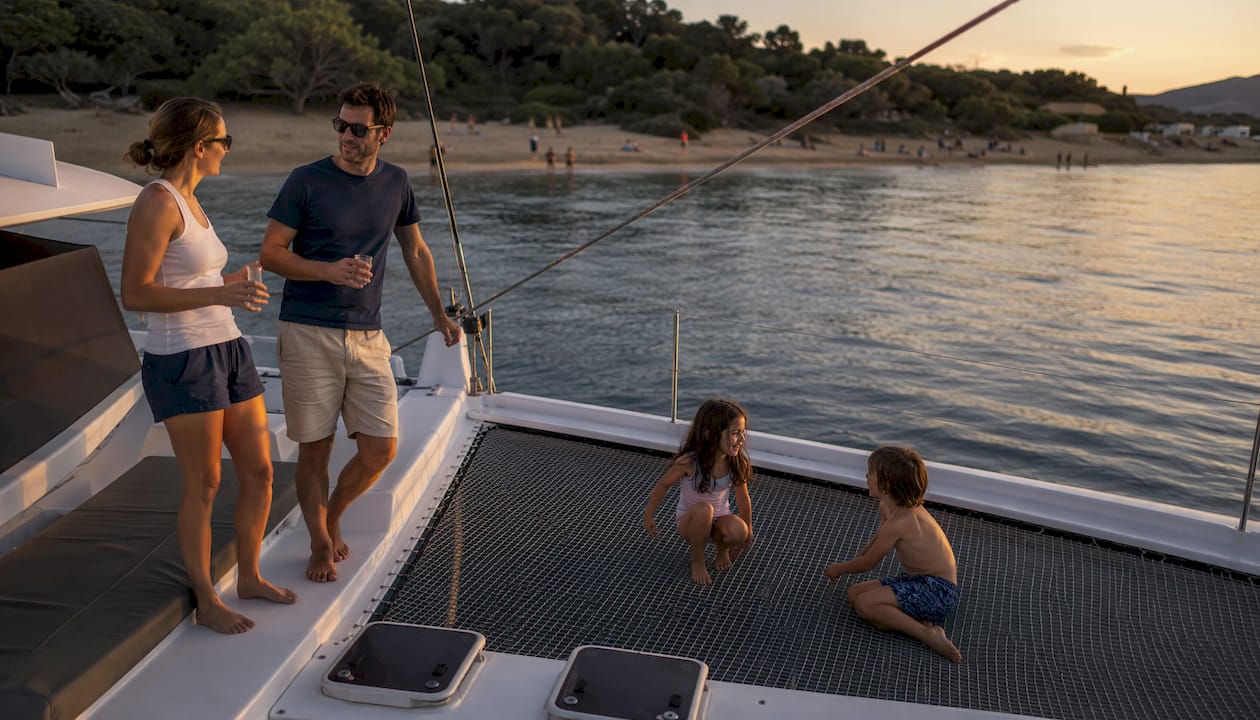
Configurația cu două motoare oferă un nivel de redundanță pe care monocochiliile nu îl pot egala. Dacă un motor are o problemă mecanică, mai ai unul care să te ducă în siguranță la port. Două cârme, două corpuri și flotabilitatea structurii corpului în sine înseamnă că, chiar și în cel mai rău scenariu, un catamaran modern de croazieră va rămâne la suprafață. Aceasta reprezintă o marjă de siguranță semnificativă pentru grupurile care nu au experiență în navigarea în larg.
La ancoră, avantajul stabilității devine și un element de siguranță. Un catamaran abia se mișcă pe valuri, așa că nu există riscul ca cineva să-și piardă echilibrul pe o punte care se balansează în miezul nopții. Pentru familiile cu copii mici, această liniște sufletească valorează foarte mult. Platforma de înot de la pupa asigură, de asemenea, o intrare și o ieșire controlată și sigură din apă, ceea ce contează enorm când ai copii care sar în apă și ies din ea toată ziua. Sailarmada’s Ghid privind contractele de închiriere în grup prezintă în detaliu aceste aspecte legate de siguranță pentru oricine își planifică prima excursie cu catamaranul.
8. Autonomia de navigație și accesul la ancore ascunse
Unul dintre cele mai subestimate avantaje ale catamaranelor pentru navigarea în grup este locul în care te pot duce. Cu un pescaj de doar 1,0–1,3 metri, un catamaran închiriat poate ancora în golfuri cu apă puțin adâncă, se poate apropia de plaje nisipoase și poate intra în locuri pe lângă care monohull-urile cu chile mai adânci sunt pur și simplu nevoite să treacă fără să oprească. În insulele grecești, Croația, Insulele Virgine Britanice sau Thailanda, aceste ancore neaglomerate sunt adesea cele mai frumoase de pe hartă.
Acest acces schimbă cu totul caracterul călătoriei. În loc să vă luptați pentru un loc într-un port aglomerat, grupul vostru se trezește într-un golf liniștit, fără nicio altă barcă la orizont, cu apa atât de limpede încât puteți vedea ancora pe fundul apei. Înotați de la pupa înainte de micul dejun, explorați plaja după prânz și navigați către următoarea destinație după-amiaza. Acest ritm este ceea ce vacanțe de navigatie de grup în jurul cărora se desfășoară activitatea, iar un catamaran permite acest lucru într-un mod mai constant decât orice altă ambarcațiune de închiriat.
Motoarele gemene îi oferă, de asemenea, căpitanului opțiuni pe care o ambarcațiune cu un singur motor și un singur corp nu le are. Rotirea ambarcațiunii pe loc, deplasarea laterală într-un loc de acostare îngust sau menținerea poziției în fața unui vânt lateral sunt toate manevre ușor de realizat pe un catamaran. Într-un loc de ancorare aglomerat în timpul verii, unde spațiul este limitat, această manevrabilitate este cu adevărat utilă.
9. Sfaturi de la experți privind alegerea catamaranelor pentru vacanțe de navigație în grup
Căpitanii experimentați și profesioniștii din domeniul închirierilor menționează în mod constant aceiași factori atunci când grupurile întreabă de ce catamaranele reprezintă alegerea potrivită. Confortul, intimitatea, stabilitatea și ușurința în utilizare se află de fiecare dată în fruntea listei, în special pentru grupurile care includ persoane fără experiență în navigație, copii sau oricine a avut o experiență neplăcută în trecut pe o ambarcațiune monocarcasă care se înclină.
Grupurile de șase sau mai multe persoane preferă în mod constant catamaranele atunci când confortul comun, spațiul social și intimitatea contează mai mult decât performanța pură de navigare. Sincer, aceasta reprezintă majoritatea grupurilor care închiriază ambarcațiuni. Majoritatea celor care își rezervă o vacanță pe un velier o fac pentru destinații, apusuri de soare, înot și experiența împărtășită, nu pentru a-și testa viteza medie de avans (VMG) contra vântului. Un catamaran oferă toate aceste lucruri în mod superb.
Pentru familiile cu copii, catamaranul este aproape întotdeauna alegerea potrivită. Platforma plană elimină riscul ca copiii să alunece sau să cadă din cauza înclinării, cabina spațioasă le oferă spațiu pentru a se mișca în siguranță, iar platforma de înot face ca timpul petrecut în apă să fie ușor și distractiv. Părinții au la dispoziție propria cabină și propria toaletă, ceea ce contează mai mult decât ai crede după a treia zi. Pentru grupurile care includ membri mai în vârstă sau cu mobilitate redusă, configurația stabilă și accesibilă a unui catamaran face diferența între o călătorie de care se pot bucura pe deplin și una în care își petrec jumătate din timp simțindu-se anxioși.
Iată ce recomandă marinarii și căpitanii experimentați atunci când aleg un catamaran pentru o excursie în grup:
- Alegeți dimensiunea ambarcațiunii în funcție de mărimea grupului dumneavoastră: O barcă cu două corpuri de 42–45 de picioare poate găzdui confortabil 6–8 oaspeți. Nu încercați să înghesuiți zece persoane pe o barcă concepută pentru opt.
- Acordați prioritate vizitării podului în itinerariul dumneavoastră: Înainte de a face rezervarea, verificați dacă porturile și locurile de ancorare pe care le-ați ales pot găzdui o ambarcațiune cu lățimea de 7–8 metri.
- Reef devreme: Catamaranele nu se înclină prea mult ca semnal de avertizare, așa că skipperii trebuie să fie atenți la viteza vântului aparent și să reducă suprafața velelor în mod proactiv.
- Folosiți un singur motor pentru pasaje: Navigarea cu un singur motor la o viteză de croazieră de 7 noduri economisește combustibil și reduce uzura, fără a încetini în mod semnificativ călătoria.
- Alegeți destinații de charter protejate: Insulele ionice din Grecia, insulele croate, Caraibe și Insulele Virgine Britanice oferă toate condiții moderate și stabile, în care catamaranele își demonstrează cel mai bine potențialul.
- Rezervați un căpitan dacă grupul vostru nu are experiență în navigație: Un căpitan profesionist se ocupă de conducerea ambarcațiunii, în timp ce grupul vostru se concentrează pe a se distra de minune.
Industria de închiriere de ambarcațiuni a adoptat cu entuziasm catamaranele tocmai din aceste motive. În destinații precum Insulele Virgine Britanice (BVI), ambarcațiunile cu mai multe corpuri reprezintă acum aproximativ două treimi din flota de charter, o schimbare radicală față de situația de acum câteva decenii, când dominau ambarcațiunile cu un singur corp. Această schimbare reflectă feedback-ul real al miilor de oaspeți care au descoperit că un catamaran oferă pur și simplu o vacanță de grup mai plăcută. Comparație între catamaran și barcă cu pânze Pe site-ul Sailarmada găsiți informații mai detaliate, dacă doriți să aflați mai multe detalii despre destinația dumneavoastră.
O observație practică din partea căpitanilor: manevrele în porturile înguste sau istorice pot fi cu adevărat dificile cu un catamaran lat. Planificați-vă itinerariul ținând cont de acest aspect și nu vă mirați dacă unele porturi mai mici nu sunt accesibile. Compromisul merită aproape întotdeauna, având în vedere avantajele pe care le obțineți în ceea ce privește opțiunile de ancorare și confortul la bord.
Ești gata să rezervi aventura ta de grup cu catamaranul?
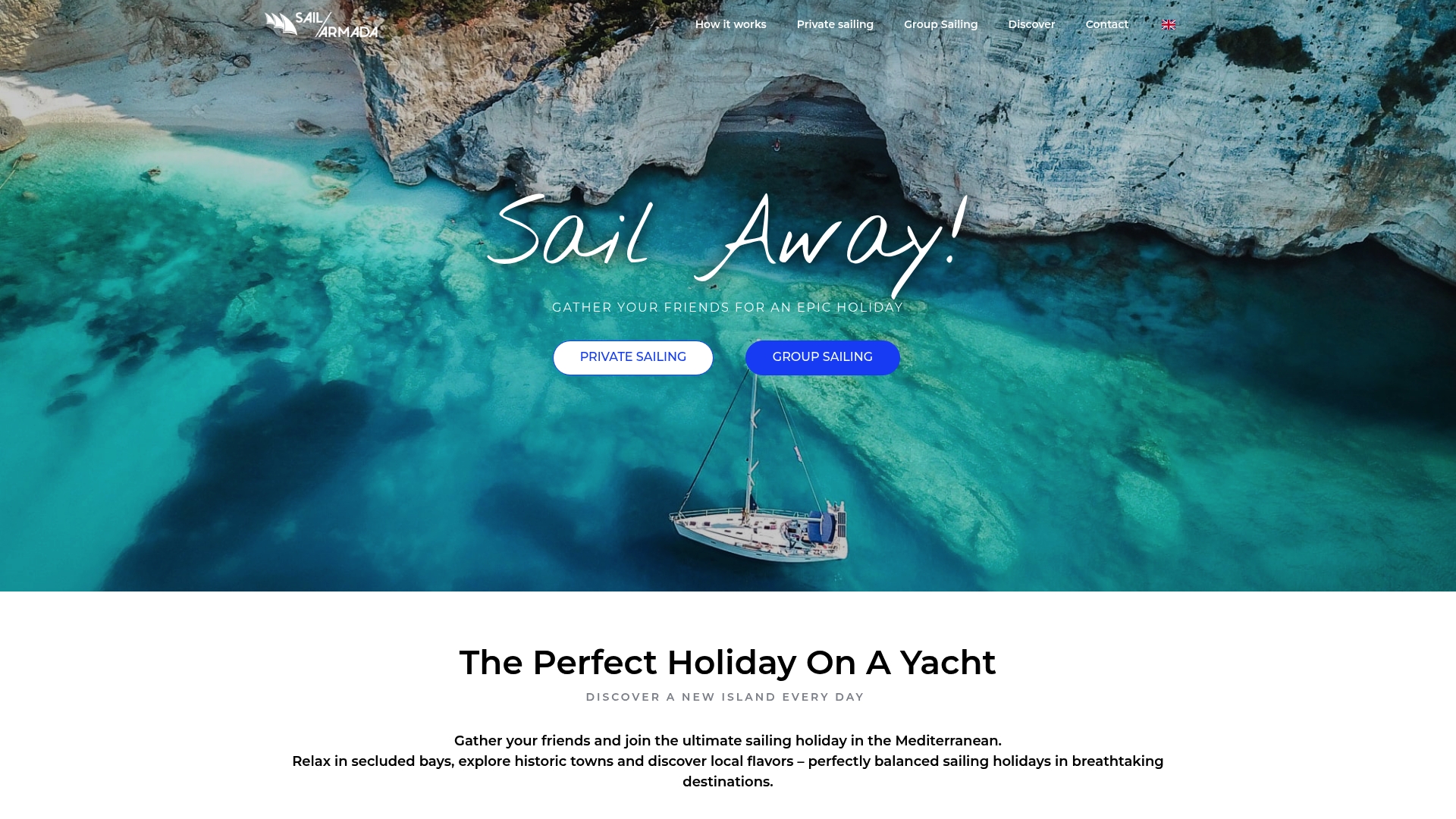
Dacă tot ce am menționat mai sus corespunde exact cu ceea ce caută grupul vostru, Sailarmada vă ajută să găsiți cu ușurință catamaranul potrivit pentru echipajul vostru. Fie că plănuiți o săptămână în Grecia, Croația, Italia sau mai departe, în Insulele Virgine Britanice sau Thailanda, echipa de la Sailarmada vă selectează cu grijă vacanțe private de navigatie cu căpitani experimentați care cunosc aceste ape pe de rost. Veți avea la dispoziție barca, traseul și cunoștințele locale, așa că nu trebuie decât să veniți și să vă bucurați de experiență.
Descoperă vacanțele de navigație în grup cu Sailarmada și găsește catamaranul perfect pentru tine în 2026.
Principalele concluzii
Catamaranele reprezintă cea mai bună alegere pentru grupuri de șase sau mai multe persoane, deoarece oferă de două ori mai mult spațiu, o stabilitate mult mai bună și un cost pe persoană care rivalizează cu cel al ambarcațiunilor cu un singur corp, odată ce cabinele sunt ocupate.
| Punct | Detalii |
|---|---|
| Avantajul spațial este decisiv | Un catamaran de 42 de picioare oferă aproximativ dublul spațiului de locuit al unei ambarcațiuni cu un singur corp de dimensiuni comparabile, având patru cabine private cu baie proprie. |
| Stabilitatea reduce răul de mare | Catamaranele se înclină cu doar 3–10 grade, față de 20–45 de grade în cazul monocochilor, asigurând confortul întregului grup pe durata navigării. |
| Costul este avantajos pentru grupurile mai mari | Costurile de închiriere sunt cu 60–90% mai mari decât în cazul unei ambarcațiuni cu un singur corp, dar prețul pe persoană pentru grupuri de șase sau mai multe persoane este adesea comparabil sau mai mic. |
| Viteza deschide calea către mai multe destinații | Catamaranele de croazieră navighează cu o viteză cu 20–30% mai mare decât monohull-urile de aceeași lungime, ceea ce înseamnă traversări mai scurte și mai mult timp petrecut în ancore frumoase. |
| Un pescaj redus îți permite să descoperi locuri ascunse | Datorită pescajului de 1,0–1,3 metri, catamaranele de charter pot accesa golfuri și plaje izolate, la care ambarcațiunile cu chilă mai adâncă nu pot ajunge. |