
A sailing trip checklist is a curated set of essentials and preparatory actions designed to guarantee a smooth, safe, and genuinely enjoyable time on the water. Whether you’re planning a bareboat adventure in Croatia or a crewed catamaran week in Greece, the difference between a stressful trip and a breathtaking one often comes down to preparation. This guide covers everything from what to pack in your duffel bag to how to budget for the Advance Provisioning Allowance (APA), a standard cost structure in yacht charter planning. Get these fundamentals right, and you’ll spend less time worrying and more time watching the sun dip into crystal clear Mediterranean waters.
1. What are the essential items on a sailing trip checklist?
The foundation of any yacht vacation checklist starts with clothing and personal gear. Mediterranean day temperatures typically run between 25–32°C, so lightweight, quick-dry fabrics are your best friends. Pack at least three swimsuits so you always have a dry one ready. Add a lightweight wind breaker for cooler evenings at anchor.
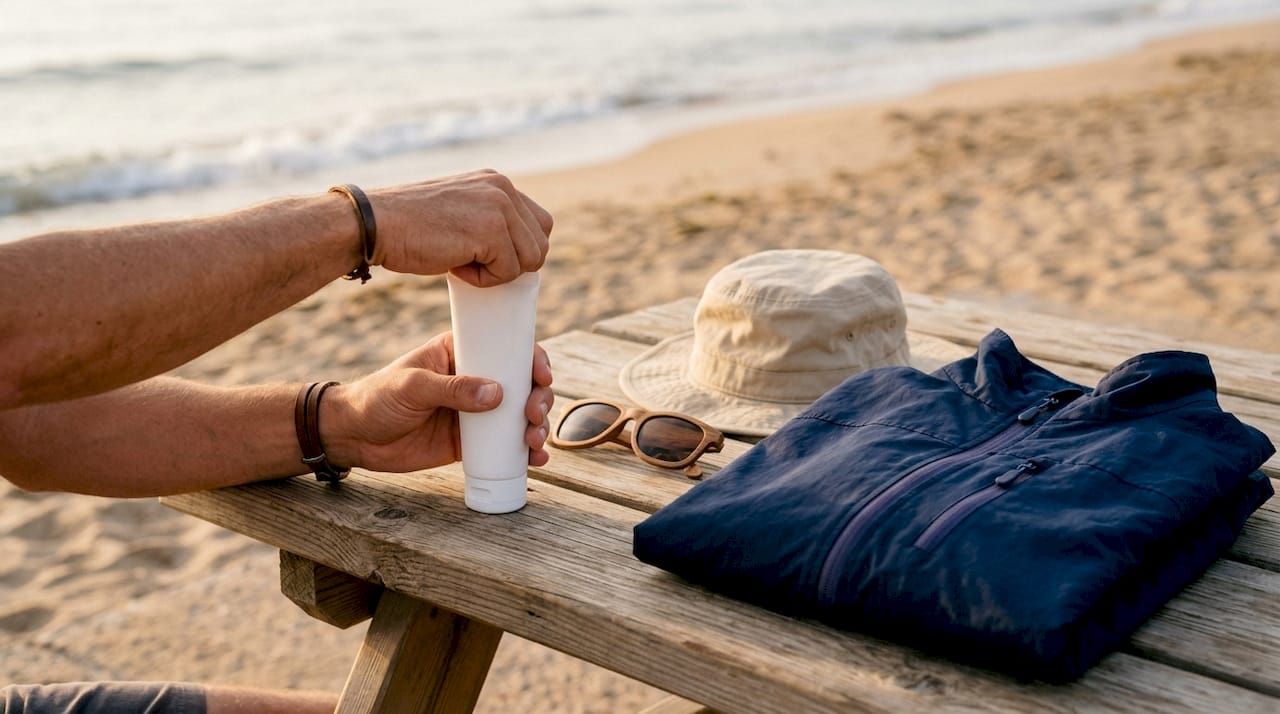
Sun protection is non-negotiable on the water. Reef-safe sunscreen protects both your skin and the marine ecosystems you’ll be sailing through. Pair it with a wide-brim hat and polarized sunglasses to cut the glare off the water. Your eyes will thank you after a full day at sea.
Footwear matters more than most people realize. Non-marking deck shoes with rubber soles grip wet surfaces and protect the boat’s teak decking. Bring a pair of water sandals for shore excursions and swimming. Leave your flip-flops at home since they slide on wet decks and offer zero grip.
Electronics need protection too. IPX8-rated waterproof cases prevent splash and submersion damage to your phone. Bring a portable power bank, a universal adapter, and a waterproof dry bag for your camera. Losing a phone overboard on day two is a vacation memory nobody wants.
- 3+ swimsuits and quick-dry shorts or pants
- Reef-safe sunscreen (SPF 30 or higher), hat, and polarized sunglasses
- Non-marking deck shoes and water sandals
- IPX8-rated waterproof phone case and portable power bank
- Lightweight windbreaker or fleece for evenings
- Motion sickness medication (Dramamine or Bonine) and a basic first-aid kit
- Reusable water bottle and a headlamp for nighttime navigation on deck
Sfat profesional: Pack your elemente esențiale pentru navigație into labeled, clear pouches by category. When you need your seasickness tablets at 6:00 AM in choppy water, you will not want to dig through a full bag.
2. How to pack efficiently for limited yacht storage
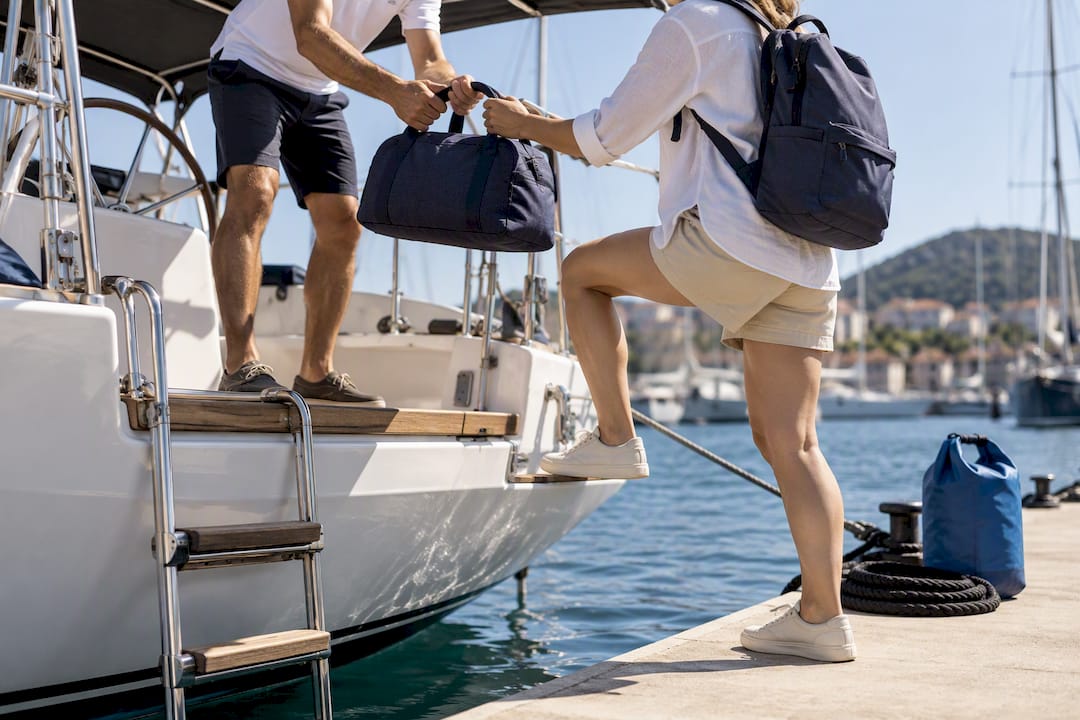
Soft-sided bags are mandatory on most yachts. Hard-shell suitcases simply do not fit into the curved, irregular lockers found in most cabin layouts. A soft duffel bag compresses, bends, and slides into spaces that a rigid case never could. This is not a preference. It is a practical requirement.
Think of yacht storage like a three-dimensional puzzle. Every locker, shelf, and under-bunk space has a specific shape, and your gear needs to conform to it. Clear, labeled pouches for toiletries, chargers, and swimwear let you grab what you need without unpacking everything. This system saves time and keeps shared spaces tidy.
Here is a simple packing system that works well onboard:
- Toiletries pouch: Travel-size products only. Decant shampoo and conditioner into small bottles. Full-size products waste precious space.
- Electronics pouch: Chargers, cables, power bank, and earbuds in one clear bag. No more tangled cords at the bottom of your duffel.
- Swimwear pouch: Wet swimsuits go into a separate dry bag to keep everything else dry.
- Daywear roll: Roll your clothes instead of folding them. Rolled items compress better and resist wrinkles.
- Night kit: Pajamas, a light layer, and your toiletry pouch go on top for easy access after sunset.
Sfat profesional: Limit yourself to one medium duffel bag per person. If you cannot carry it comfortably in one hand, you have packed too much. Marinas often require you to carry your luggage down narrow docks.
3. What safety equipment and documentation you need onboard
Safety gear is the part of a sailing checklist most people skip because they assume the boat has it covered. On a crewed charter, the professional crew manages life jackets, flares, and fire extinguishers. On a bareboat charter, you are responsible for verifying that all safety equipment meets local maritime standards before you leave the marina.
Personal flotation devices (PFDs) and safety harnesses are the top priority. Check that the PFDs onboard are properly sized for every guest, including children. Safety tethers clip to jacklines on deck and prevent crew from going overboard in rough conditions. A personal whistle and a waterproof flashlight round out your individual safety kit.
Documentation is equally critical. Bring your passport, travel insurance policy, and any relevant sailing certifications if you are bareboating. Store everything in a waterproof document pouch. Carry some local cash for marina fees, as many smaller marinas in Greece, Croatia, and Turkey do not accept cards.
- Valid passport (check expiry dates well before departure)
- Travel insurance with medical evacuation coverage
- Sailing certification (RYA Day Skipper or equivalent) if bareboating
- Waterproof document pouch for all paperwork
- Personal whistle and waterproof flashlight
- Motion sickness medication for the first 24–48 hours at sea
- Cash in local currency for marina fees and small port markets
4. How to budget and handle yacht charter costs effectively
The base charter fee is only the starting point of your total cost. Yacht charter planning typically begins 10–12 months in advance, with a 50% deposit due at contract signing and the remaining balance plus APA due 30 days before embarkation. Understanding this timeline prevents last-minute financial stress.
The Advance Provisioning Allowance (APA) is the most misunderstood cost in yacht charter budgeting. APA covers fuel, food, marina fees, and other running costs and typically runs 25–40% of the base charter rate. Any unspent APA is refunded at the end of the trip. Any overage is charged to you. Budget conservatively and you will likely get money back.
| Categorie de costuri | Typical Range | Note |
|---|---|---|
| Taxă charter de bază | Varies by yacht and season | Book early for best rates |
| Advance Provisioning Allowance (APA) | 25–40% of base fee | Covers fuel, food, marina fees |
| Bacșișul pentru echipaj | 15–20% of base fee | Standard for crewed charters |
| Asigurare de călătorie | Variază | Medical evacuation coverage recommended |
| Transfers and flights | Variază | Budget separately from charter costs |
Crew gratuity on a crewed charter runs 15–20% of the base charter fee. This is a standard in the industry, not optional. Underbudgeting gratuity is one of the most common mistakes first-time charterers make. A professional crew works long hours to make your trip exceptional, and the gratuity reflects that.
Sfat profesional: Traveling in shoulder season (may or october in the Mediterranean) cuts charter rates significantly compared to peak July and August weeks. You also get calmer anchorages and fewer crowds at the best spots.
5. Expert tips and common mistakes to avoid
Overpacking and overplanning are the two most common mistakes that reduce enjoyment on a sailing holiday. Stuffing your bag with “just in case” items creates clutter that frustrates everyone sharing the cabin. Locking yourself into a rigid daily itinerary removes the spontaneity that makes sailing special. Pack light, plan loosely, and let the wind and your skipper guide the day.
“Order onboard is mandatory. Treat your cabin space like a puzzle. Organized belongings improve the experience significantly for everyone on board, and clutter causes real frustration in a shared space.” — Experienced sailing guide
The pre-boarding briefing is one of the most valuable moments of your entire trip. This briefing covers safety protocols, toilet use, galley operations, and engine basics. Ask every question you have during this session. There are no silly questions when you are about to spend a week on the open water.
- Respect shared spaces: rinse your gear before bringing it below deck
- Ask the skipper before adjusting sails, anchors, or any equipment
- Ignore the weather forecast at your peril. Check it every morning
- Do not underestimate seasickness. Take medication before symptoms start
- Coordinate group packing lists with your crew to avoid duplicate items and wasted space
Crewed charters allow guests to relax fully without any sailing knowledge. The professional crew handles all navigation and operations, so your only job is to enjoy the experience. That said, showing respect for the crew’s workspace and routines makes the trip better for everyone on board.
Principalele concluzii
A complete sailing trip checklist covers packing, safety, documentation, and budgeting before you ever step on the dock.
| Punct | Detalii |
|---|---|
| Pack soft-sided bags only | Hard-shell suitcases do not fit yacht lockers; use a medium duffel and labeled pouches. |
| Budget beyond the base fee | Add 25–40% APA and 15–20% crew gratuity to your total charter cost estimate. |
| Prioritize safety documentation | Bring a waterproof pouch with passport, insurance, certifications, and local cash. |
| Book and pay early | A 50% deposit is due at signing; full payment plus APA is due 30 days before departure. |
| Pack light and plan flexibly | Overpacking and rigid itineraries are the top two mistakes that reduce sailing enjoyment. |
What I have learned after years of sailing holidays
The checklist is not just a packing tool. It is a mindset shift. When you board a yacht with everything organized and your budget fully understood, you stop managing logistics and start actually living the trip.
The single biggest thing I have seen change a sailing holiday is communication. Talk to your skipper before you leave the marina. Tell them your group’s preferences, your comfort level with rough water, and any dietary needs for provisioning. A good skipper adjusts the itinerary around you, not the other way around. That conversation is worth more than any item on your packing list.
I have also watched guests arrive with enormous hard-shell suitcases and spend the first day frustrated because nothing fits. The boat trip packing list is not about restriction. It is about freedom. When your gear is organized and your space is tidy, the boat feels bigger, the days feel longer, and the whole experience opens up.
My honest advice: resist the urge to bring everything. Bring what you need, know what you are paying for, and stay curious about wherever the wind takes you. The Mediterranean, the BVI, Tahiti, and the Aegean all reward the traveler who shows up prepared but stays flexible.
- Sail
Planning your next sailing holiday with Sailarmada
Ready to put your checklist to work on a real sailing adventure? Sailarmada specializes in curated yacht charters across Greece, Croatia, Italy, Sardinia, and Turkey, with options for both private and group sailing holidays.
Whether you are organizing a group of friends or a family week on the water, Sailarmada’s experienced skippers and vacanțe personalizate pe iaht take the guesswork out of planning. Every itinerary is built around your group’s pace, interests, and comfort level. You can also explore opțiuni private de navigație to find the right yacht, destination, and departure date for your trip. The crystal clear waters are waiting, and your checklist is ready.
FAQ
What should I pack for a sailing trip?
Pack a soft-sided duffel bag with at least three swimsuits, non-marking deck shoes, reef-safe sunscreen, a windbreaker, and an IPX8-rated waterproof case for your phone. Add motion sickness medication and a basic first-aid kit for safety.
What is the Advance Provisioning Allowance on a yacht charter?
The APA is a prepaid fund covering fuel, food, marina fees, and running costs during the charter. It typically equals 25–40% of the base charter rate, with any unspent amount refunded at the end of the trip.
How far in advance should I book a yacht charter?
Yacht charter planning starts 10–12 months before departure, with a 50% deposit due at contract signing. Full payment and APA are due 30 days before embarkation.
Do I need sailing experience for a crewed charter?
No sailing experience is required for a crewed charter. The professional crew handles all navigation and operations, so guests focus entirely on relaxing and enjoying the destination.
What documents do I need for a sailing holiday?
Bring your passport, travel insurance with medical evacuation coverage, and local cash for marina fees. If you are bareboating, carry your sailing certification such as an RYA Day Skipper qualification or equivalent.