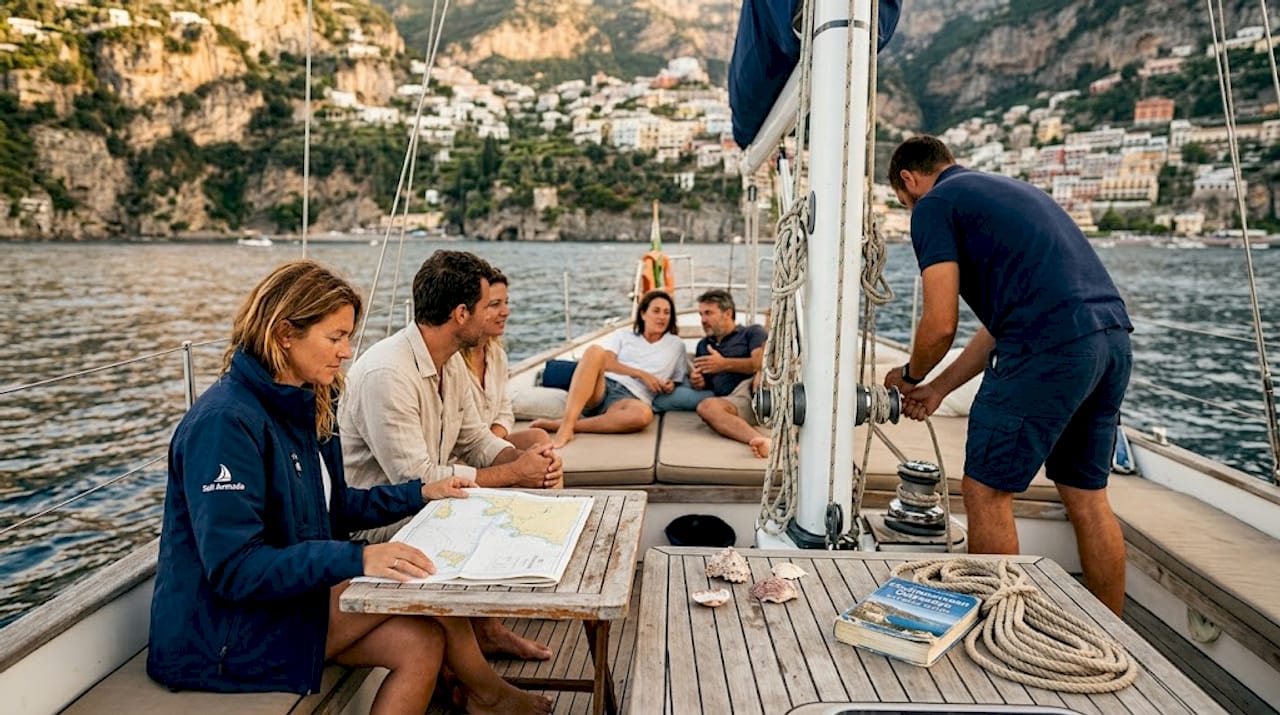
You could spend a week on a yacht ticking off famous ports, snapping photos, and never once feeling like you truly arrived somewhere. That’s the quiet frustration behind most generic sailing tours. The Mediterranean is one of the richest cultural regions on earth, and the travelers who get the most out of it are the ones who find real sailing cultural experiences — the kind where you share a meal with a local fisherman, learn to tie a traditional knot from a skipper whose family has sailed these waters for generations, and wake up in a quiet cove with nowhere to rush to.
Table of Contents
- Key takeaways
- What makes sailing cultural experiences genuinely authentic
- Top 10 Mediterranean sailing cultural experiences
- 1. Croatian coastline slow sailing with local hospitality
- 2. Greek island sailing with artisan village visits
- 3. Italian coastal sailing and regional food traditions
- 4. Spanish Mediterranean sailing with flamenco and local festivals
- 5. Turkish Aegean cultural itineraries
- 6. Moroccan coastal sailing with market immersion
- 7. Small-group sailing in hidden coves for nature and culture
- 8. Skipper-led cultural storytelling on private charters
- 9. Sailing festivals and regattas open to traveler participation
- 10. Day sailing excursions focused on maritime history
- Comparing the top sailing cultural experiences at a glance
- How to choose the right sailing cultural experience for your style
- My take on why sailing cultural experiences change how you travel
- Plan your Mediterranean sailing cultural adventure with Sailarmada
- FAQ
Key takeaways
| Point | Details |
|---|---|
| Small groups unlock deeper access | Groups capped around 11 travelers give you genuine skipper attention and real community interaction. |
| Slow travel is the method | Unhurried coves and local village stops produce far more cultural depth than busy port-hopping. |
| Active participation transforms the trip | Learning sailing skills and joining onshore workshops turns you from a tourist into a participant. |
| Match your interest to the itinerary | Food lovers, history fans, and festival seekers all have distinct Mediterranean routes built for them. |
| Operator ethics shape your experience | Operators with long-term local partnerships create genuine cultural connections and support local providers. |
What makes sailing cultural experiences genuinely authentic
Not every trip sold as a “cultural sailing tour” actually delivers cultural depth. There’s a real difference between sailing past a beautiful village and sitting down to eat in it, talking to the people who actually live there. Here’s what separates a meaningful experiential sailing trip from a scenic cruise with better marketing.
Group size matters more than you’d think. Small group sailing tours cap at around 11 passengers to keep interactions personal and give the skipper real time to teach, share stories, and tailor the route. The moment a group grows too large, community visits become logistics exercises rather than genuine encounters.
Active participation over passive observation. The most memorable trips are the ones where you do something. Whether that’s learning to handle the sails, joining a cooking class in a seaside village, or helping a local artisan for an afternoon, teaching sailing skills onboard transforms passive travelers into engaged participants. The depth of connection you feel afterward is completely different.
Here are the criteria worth applying before you book any cultural sailing tour:
- Time ashore with locals, not just time docked at a marina
- Operator relationships with local providers — guides, restaurants, artisans, and festivals — rather than generic tourist stops
- Onboard cultural programming like cooking demonstrations, knot-tying lessons, or storytelling from your skipper
- Slow travel philosophy that favors unhurried stops in quiet hidden coves over a rushed list of famous landmarks
- Beginner-friendly access, since no prior experience is needed on well-run sailing heritage programs
Pro Tip: Ask any operator directly: “Do you have ongoing relationships with local guides and food providers at each stop?” A confident, specific answer tells you everything about their commitment to authentic cultural engagement.
Operators committed to slow travel consistently earn higher guest satisfaction and produce a measurable positive impact on the communities they visit. That’s not marketing language. It’s what happens when travel is treated as a force for good.
Top 10 Mediterranean sailing cultural experiences
The Mediterranean offers centuries-old sailing heritage across dozens of coastlines, each with its own traditions, food, and ways of being on the water. These ten experiences represent the best of what’s available for travelers who want more than beautiful scenery.
1. Croatian coastline slow sailing with local hospitality
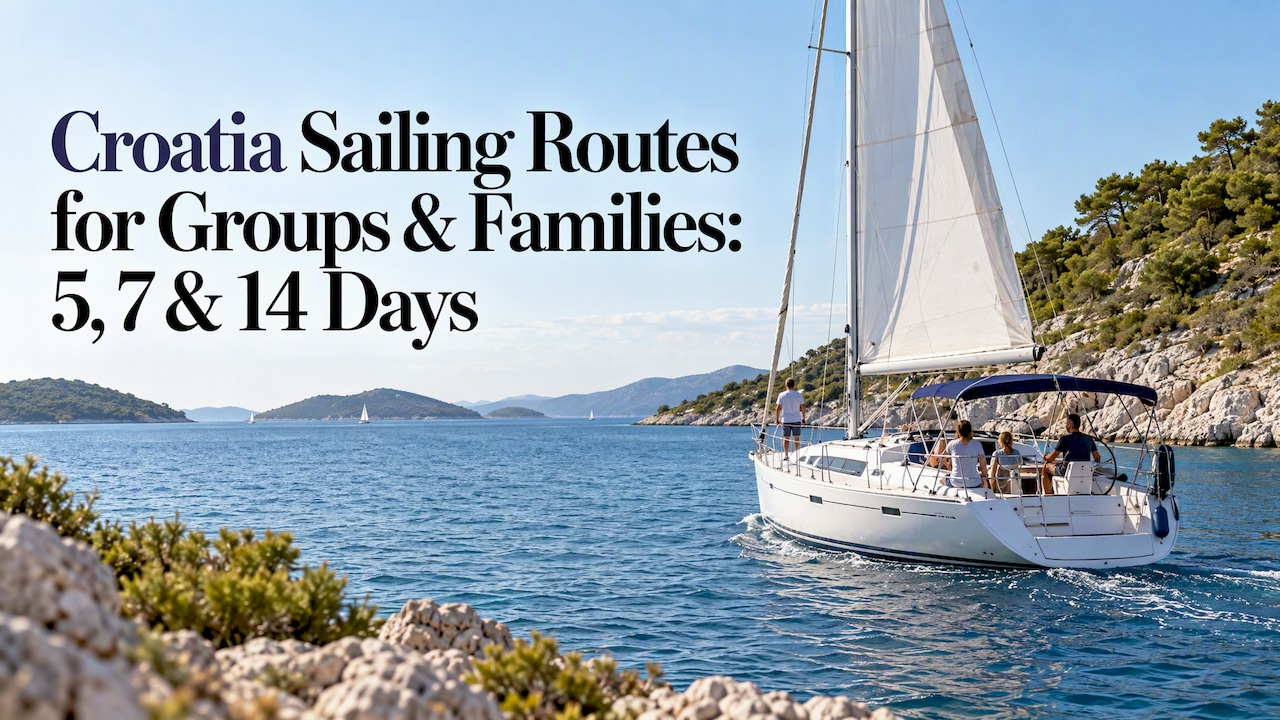
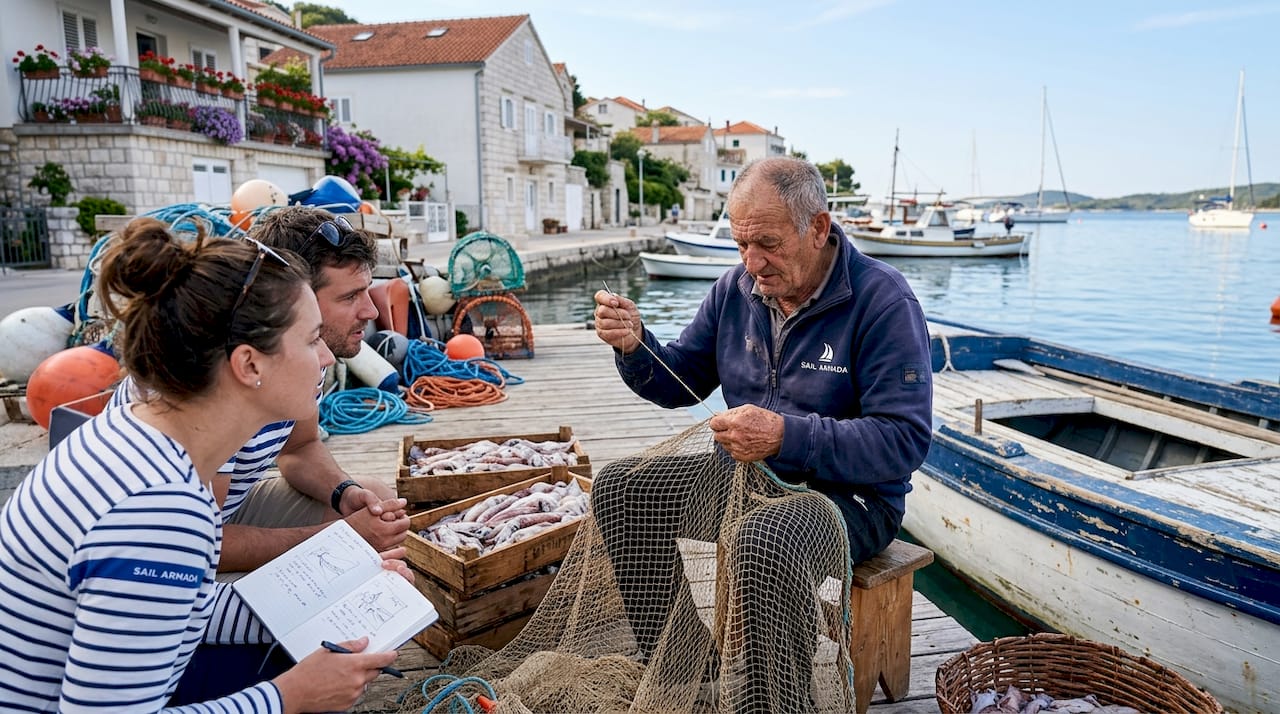
Croatia’s Dalmatian coast is purpose-built for slow travel. You move between fishing villages where families still make their own prosciutto and olive oil, and the pace on the water matches the pace ashore. Skippered family sailing in Croatia gives you access to hidden bays, local konobas (family-run taverns), and the kind of warm hospitality that feels nothing like a restaurant booking back home.
2. Greek island sailing with artisan village visits
Greece is where sailing and culture have been inseparable since antiquity. The best Greek island routes weave between the Cyclades or the Ionian islands, stopping at villages where potters, winemakers, and textile weavers still practice traditional crafts. You get to watch, try, and buy directly from the maker. Evenings on the boat, watching the sun sink over whitewashed walls, feel earned in a way that’s hard to describe.
3. Italian coastal sailing and regional food traditions
Southern Italy and Sicily offer a sailing experience that is as much about food as it is about the sea. Think morning markets in Syracuse, fresh catch grilled on deck, and a pasta lesson from a nonna in a hillside village. Mediterranean sailing itineraries built around Italy put regional cuisine front and center, treating food as a living record of local history and identity.
4. Spanish Mediterranean sailing with flamenco and local festivals
The Spanish coast, particularly around Andalusia and the Balearic Islands, pulses with music, color, and centuries of layered culture. Timing your sailing route to coincide with a local feria or festival gives you access to events that most tourists never find. Flamenco in a village courtyard, shared with the locals who actually live there, is a different experience entirely from a ticketed show in Seville.
5. Turkish Aegean cultural itineraries
Turkey’s Aegean coastline is one of the most historically dense sailing routes in the world. Ancient ruins sit directly on the shore. You can anchor near Ephesus or Bodrum, wander through sites that date back thousands of years, and then join a spice market tour or a hands-on culinary workshop in a nearby town. The combination of archaeology and living culture makes this route genuinely exceptional for curious travelers.
6. Moroccan coastal sailing with market immersion
Morocco offers something no other Mediterranean destination quite matches: the sensory contrast between the calm blue sea and the vivid chaos of a medina market. Coastal sailing along northern Morocco lets you drop anchor, take a short transfer, and spend hours getting lost in souks filled with ceramics, leather goods, and the sound of traditional Gnawa music drifting between stalls.
7. Small-group sailing in hidden coves for nature and culture
Some of the most powerful sailing cultural experiences happen in places that have no name on a tourist map. Slow travel sailing that prioritizes quiet coves away from busy ports creates the conditions for encounters that can’t be scheduled. A local fisherman who invites you to try his catch. A family picnicking on a deserted beach who share their homemade wine. These are the moments travelers remember for decades.
8. Skipper-led cultural storytelling on private charters
Your skipper knows things no guidebook covers. On a private sailing charter, you have hours of open water conversations where an experienced local skipper shares the real history of a coastline, points out ruins that don’t appear in apps, and explains the sailing and local customs that have shaped the region. Mediterranean sailing traditions passed down through hands-on experience are a living education, and your skipper is the teacher.
“Sailing is not just a sport or leisure activity. It is a school of life that teaches decision-making under pressure, responsibility, and practical knowledge.” SLAM Sailing Culture
9. Sailing festivals and regattas open to traveler participation
Several Mediterranean ports host annual regattas and sailing festivals where traveling sailors are welcomed as participants rather than spectators. Joining one of these events puts you inside the culture of the sea in a way that few other experiences can. You race alongside local sailors, share meals at the dock, and walk away understanding the maritime heritage of a place from the inside.
10. Day sailing excursions focused on maritime history
Not every sailing cultural experience requires a full week on the water. Shorter day excursions focused on maritime history and ecology are an excellent entry point, especially for families or first-time sailors. Inspired by programs like the Schooner Woodwind in Annapolis, which runs 120-minute themed cultural cruises, Mediterranean operators are building similar itineraries around local geology, fishing heritage, and navigation history.
Pro Tip: For families with children, a day sailing excursion with a maritime history theme is a great first step. Kids who learn to tie knots and hear real seafaring stories from a skipper tend to become the most enthusiastic sailors on any future trip.
Comparing the top sailing cultural experiences at a glance
| Experience | Cultural focus | Group size | Activity level | Best for |
|---|---|---|---|---|
| Croatian slow sailing | Food, hospitality | Small, private | Relaxed | Families, couples |
| Greek island artisan visits | Crafts, history | Small group | Moderate | Culture enthusiasts |
| Italian coastal food sailing | Cuisine, fishing heritage | Small group | Relaxed | Food lovers |
| Spanish festivals sailing | Music, festivals | Flexible | Moderate | Social travelers |
| Turkish Aegean itineraries | Archaeology, culinary | Small group | Moderate to active | History fans |
| Moroccan coastal sailing | Markets, music | Small group | Moderate | Adventurous travelers |
| Hidden cove slow travel | Nature, spontaneous culture | Private | Relaxed | Couples, free spirits |
| Skipper-led storytelling | Living maritime heritage | Private | Relaxed | All levels |
| Regattas and sailing festivals | Maritime community | Varies | Active | Sailing enthusiasts |
| Day sailing maritime history | History, ecology | Small group | Low | Families, beginners |
The table above gives you a fast read on which experience fits your travel style. Families with younger children tend to gravitate toward relaxed, food-focused routes like Croatia or Italy. History-obsessed travelers almost always fall hardest for Turkey. If spontaneity is your thing, the hidden cove approach gives you complete freedom.
How to choose the right sailing cultural experience for your style
Finding the right fit takes a bit of honest self-reflection. Here are the steps worth taking before you book.
- Define your cultural priority. Food, history, festivals, and maritime crafts are all valid focuses, but your trip will be better if you pick one or two and find an itinerary built around them.
- Decide between private and group sailing. A private charter gives you maximum flexibility and personalization. A small-group tour gives you built-in social energy and a lower price point. Both can deliver genuinely immersive experiences.
- Think about your activity comfort level. Some routes involve daily hikes, market walks, and workshop participation. Others are almost entirely relaxed. Be honest about what excites you versus what will exhaust you.
- Consider seasonality carefully. Late spring and early fall are the sweet spots for the Mediterranean. Summer is beautiful but crowded, and the most authentic community interactions happen when tourists are fewer.
- Check the operator’s local credentials. Look for community-focused operators with named local partners, not just vague claims about “authentic experiences.”
- Plan for your experience level. Sailing heritage programs and experiential sailing trips are designed to welcome complete beginners. You don’t need to know how to sail to participate fully and meaningfully.
Pro Tip: If you’re unsure whether a one-week trip is right, start with a long weekend sailing excursion in a culturally rich area like the Dalmatian coast or the Greek Ionian islands. You’ll know after three days whether you want more.
My take on why sailing cultural experiences change how you travel
I’ve spoken to hundreds of travelers who describe their first real sailing cultural experience as a turning point. Not just a good holiday, but a shift in how they think about travel itself.
What I’ve found is that the water does something unusual. When you’re sailing between destinations, you’re in a kind of suspended state. There’s no city noise, no phone signal, no tourist infrastructure. You arrive at a village having genuinely traveled to get there, and that physical act of arrival changes how you receive what’s waiting. You’re more present. More curious. More willing to sit with someone over coffee and actually listen.
In my experience, the travelers who engage most deeply are the ones who resist filling every moment. The ones who let a skipper’s story about a particular cape take longer than expected. Who wander into a workshop without a plan and end up spending two hours learning how a particular type of fishing net is made.
The Mediterranean is not short on beautiful places. What it is genuinely short on is travelers who slow down enough to meet it properly. Sailing, done right, solves that problem in a way no land-based itinerary ever quite manages.
— Sail
Plan your Mediterranean sailing cultural adventure with Sailarmada
Sailarmada offers curated sailing holidays across Greece, Croatia, Italy, and Turkey, built for travelers who want more than a postcard view. Whether you’re drawn to private yacht charters with a skipper who doubles as a cultural guide, or a small-group sailing week where every stop has a story, Sailarmada puts you in the right boat. Explore private yacht charters designed for groups and families who want flexibility, authenticity, and genuine connection to the places they visit. Or check out the group sailing booking guide to understand exactly how a cultural sailing week comes together.
FAQ
What are sailing cultural experiences?
Sailing cultural experiences are sailing trips designed around deep engagement with local traditions, cuisine, history, and communities rather than simple sightseeing. They combine time on the water with genuine onshore cultural immersion.
Do I need sailing experience for a cultural sailing tour?
No prior experience is needed. Most cultural sailing tours include skill-building as part of the experience, with professional skippers who teach basic seamanship along the way.
What is the best Mediterranean destination for cultural sailing?
Croatia, Greece, and Turkey are consistently top picks, each offering distinct food traditions, history, and community hospitality. Your best destination depends on whether your primary interest is cuisine, archaeology, or local festivals.
How small should a group be for authentic cultural sailing?
Groups capped at around 11 travelers are the sweet spot for genuine skipper interaction and authentic local community access without the logistics of a large tour group.
What is slow travel sailing?
Slow travel sailing prioritizes unhurried stops in quiet coves and local villages over busy port-hopping, creating the right conditions for spontaneous cultural encounters and genuine community connections.