Sailing exploration is one of those phrases that sounds self-explanatory until you actually try to define it. Most people picture a boat, open water, and a destination. But what is sailing exploration, really? It’s something far richer than that. It’s an immersive pursuit that blends seamanship, discovery, cultural connection, and genuine personal challenge into a single experience. Unlike leisure cruising, where comfort is the goal, or yacht racing, where speed is everything, sailing exploration puts the journey itself at the center. The destination matters, but so does every nautical mile in between.
Table of Contents
- Key takeaways
- The history and significance of sailing exploration
- Core sailing techniques for exploration
- Planning and provisioning your expedition
- Where sailing exploration takes you
- The personal transformation at the heart of it all
- My honest take on what sailing exploration actually gives you
- Ready to start your own sailing adventure?
- FAQ
Key takeaways
| Point | Details |
|---|---|
| More than travel | Sailing exploration combines navigation skills, self-reliance, and discovery in ways that typical vacations simply cannot replicate. |
| History shapes the practice | From Polynesian wayfinders to modern bluewater cruisers, centuries of maritime tradition inform every technique used today. |
| Preparation is non-negotiable | Provisioning, boat systems, and safety training are just as critical as choosing a destination. |
| Destinations vary widely | From the crystal-clear Mediterranean to remote Pacific atolls, each region offers a different level of challenge and reward. |
| It changes you | Managing real uncertainty at sea builds a kind of resilience and clarity you rarely find on land. |
The history and significance of sailing exploration
Human beings have been pushing their boats into the unknown for thousands of years. Long before GPS or weather satellites, Polynesian navigators were crossing vast stretches of the Pacific using star patterns, ocean swells, and the behavior of birds. Their maritime knowledge was passed down through generations and forms one of the most impressive bodies of navigational tradition the world has ever seen.
European exploration in the 15th and 16th centuries carried that spirit into new waters. Portuguese and Spanish sailors mapped coastlines that connected continents, opened trade routes, and fundamentally changed the global flow of goods, ideas, and culture. These voyages were brutal, risky, and often fatal. But they also gave the world an understanding of its own geography that simply was not possible any other way.
The importance of sailing exploration goes well beyond historical achievement. It shaped language, culture, and even the way people think about risk. Consider how deeply nautical terms have entered everyday speech, “knowing the ropes,” “learning the ropes,” “keeping a weather eye.” Sailing culture has influenced everything from literature to leadership philosophy.
Today, the tradition continues with a modern twist. Bluewater cruisers circumnavigate the globe every year. Families spend seasons hopping between Mediterranean islands. Adventurous sailors push into the Arctic or the Southern Ocean. The tools have changed dramatically, but the core spirit of sailing exploration, that desire to see what is beyond the horizon, remains exactly the same.
Key moments that shaped sailing exploration history include:
- Polynesian navigation across the Pacific, which predates European ocean voyaging by centuries
- Ferdinand Magellan’s circumnavigation (1519 to 1522), proving the Earth could be sailed around
- James Cook’s expeditions to the Pacific and Antarctic waters, combining exploration with scientific mapping
- Joshua Slocum’s solo circumnavigation in 1895 to 1898, the first ever completed by one person
- The rise of the modern bluewater cruising community in the 1970s and 1980s, making ocean voyaging accessible to non-professionals
Core sailing techniques for exploration
Knowing how to sail a boat around a harbor is a great start. But sailing exploration demands a significantly higher level of skill and situational awareness. The good news is that these skills are learnable, and every passage you complete adds to your competence in real, measurable ways.
Here are the foundational skills and techniques every aspiring sailing explorer should develop:
-
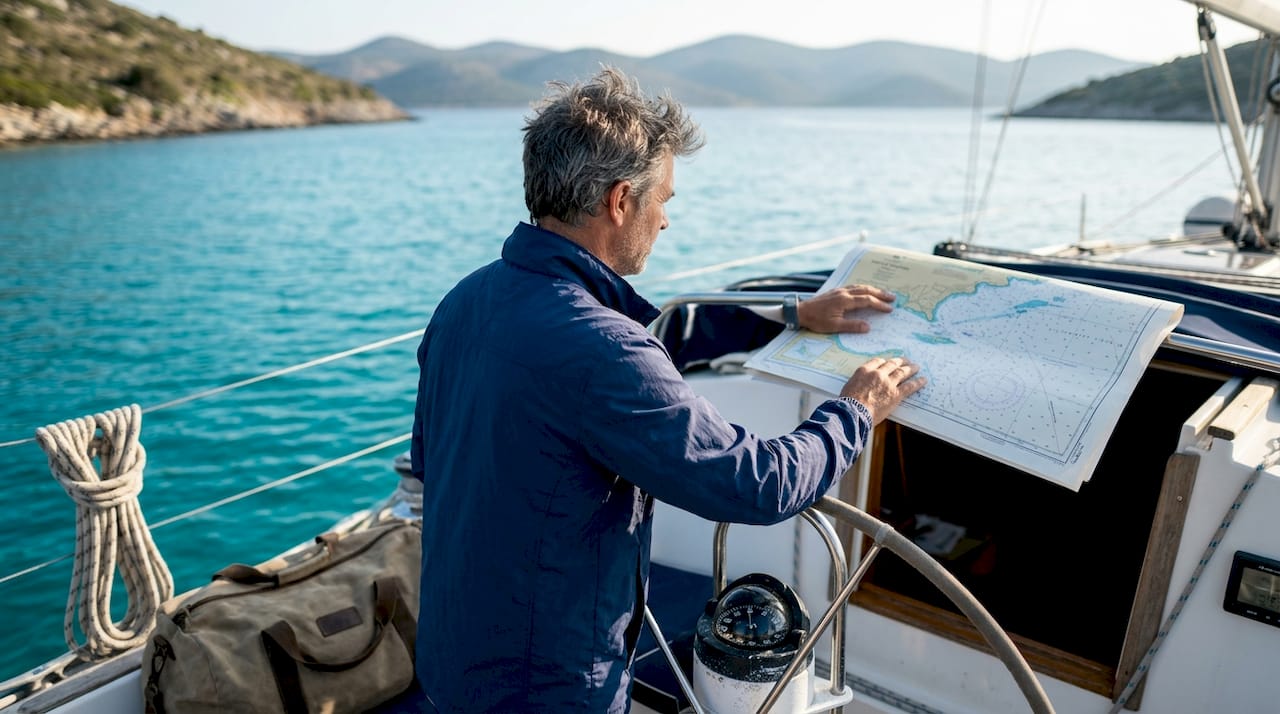
Open-sea navigation. Before you rely entirely on chart plotters, learn to read paper charts and understand tides, currents, and waypoints. Electronics fail. A solid grasp of traditional navigation never does.
-
Sail trim and heavy-weather sailing. Knowing how to depower your sails when the wind builds unexpectedly is critical. Reefing early, rather than waiting until conditions are alarming, is a lesson experienced sailors learn quickly.
-
Offshore watch systems. On longer passages, a rotating watch schedule keeps everyone reasonably rested. Common systems like three-hour watches prevent crew fatigue, which is one of the leading causes of poor decisions at sea.
-
Man-overboard recovery. You need to practice this until it becomes muscle memory. Emergency drills like man-overboard recovery must be rehearsed regularly because fatigue and adrenaline at sea make improvisation dangerous.
-
Anchoring and mooring in unfamiliar waters. Every new anchorage has its own quirks. Checking holding ground, understanding swing radius, and setting a proper anchor watch are skills you will use on almost every exploration voyage.
-
Offshore safety certification. Offshore personal safety courses are mandatory for many skippers and crew and are valid for five years. They cover survival suits, life rafts, fire suppression, and emergency communication in ways that could genuinely save your life.
Pro Tip: Before any offshore passage, spend time actually locating and handling your safety gear. Knowing where your ditch bag is in calm conditions is very different from finding it in rough seas at 2 a.m.
Comfort matters for safety too. A seaworthy, comfortable boat directly improves crew safety on long passages because well-rested crews make far better decisions. When evaluating any vessel for exploration, consider how livable it is underway, not just at anchor.
Planning and provisioning your expedition
The most thrilling sailing exploration journeys share one thing in common: serious preparation. The romanticized image of casting off on a whim with minimal supplies is a quick way to end an adventure badly. Good planning is what actually sets you free at sea.
Here is a practical overview of what experienced cruisers focus on before any major passage:
| Planning area | What to prepare | Key guideline |
|---|---|---|
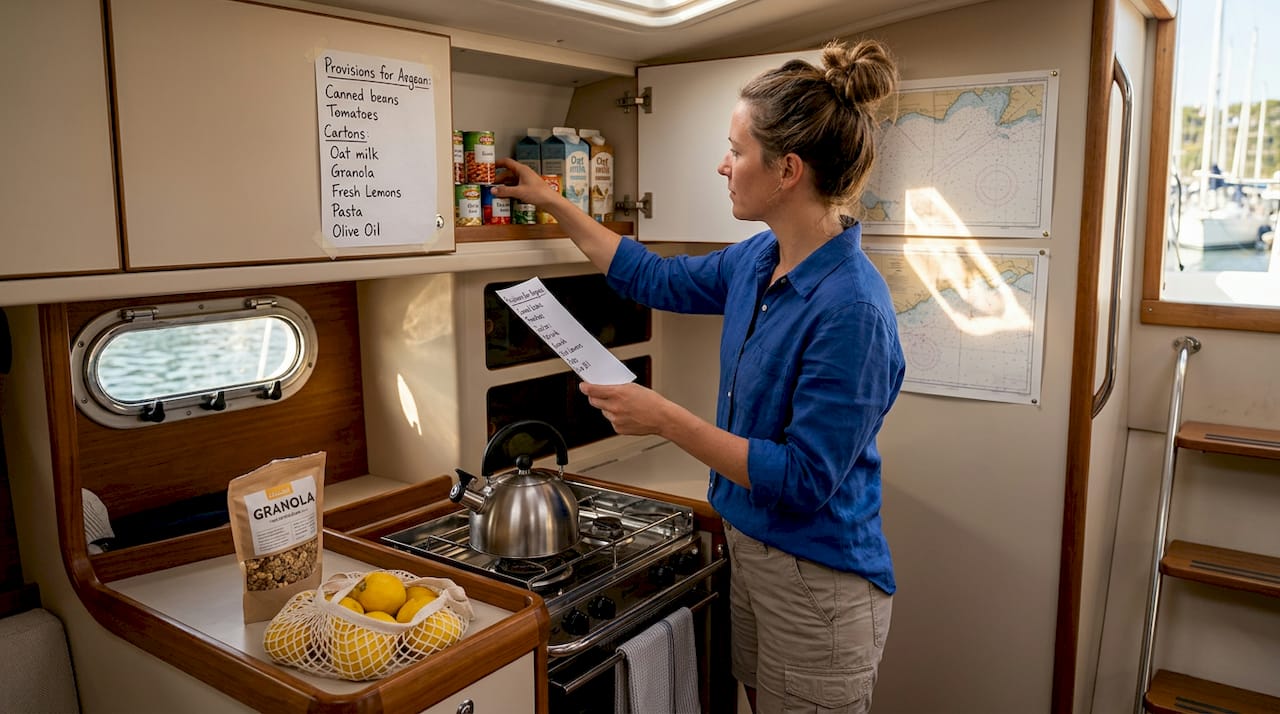
| Food provisioning | Non-perishables, snacks, fresh produce | Stock 1.5 to 2x your planned passage duration |
| Water supply | Main tanks, watermaker, emergency reserve | Keep a 3-day emergency reserve jug separate from main tanks |
| Fuel filtration | Primary, secondary, and engine fine filter | Use a layered three-filter setup for reliability |
| Navigation tools | Chart plotter, paper charts, handheld GPS | Always carry a backup in case electronics fail |
| Safety gear | Life raft, ditch bag, EPIRB, flares | Check expiry dates and practice accessing everything fast |
A 21-day Atlantic crossing, for example, should have 30 to 35 days of food aboard. Weather delays, unexpected detours, and the simple pleasure of staying somewhere beautiful longer than planned all eat into your provisions faster than you expect. The margin is not paranoia. It is smart seamanship.
Your diesel engine deserves as much attention as your food stores. Running diesel engines under load regularly prevents carbon buildup and keeps them reliable on long passages. Many sailors neglect engine maintenance because the sails are doing the work, but in a calm or an emergency, that engine could be the most important piece of equipment on board.
Pro Tip: Create a pre-departure checklist that covers safety gear, engine systems, provisioning, and navigation tools. Run through it 48 hours before you leave, not on departure morning. That extra day gives you time to fix anything unexpected.
For practical guidance on what to bring aboard for a week-long sailing trip, Sailarmada’s guide to sailing trip provisions is a genuinely useful starting point.
Where sailing exploration takes you
One of the most exciting parts of understanding sailing exploration is realizing just how varied the destinations are. The world’s oceans are enormous, and every region offers something different in terms of scenery, culture, and challenge level.
The Mediterranean is the natural starting point for most European and American explorers. Greece offers crystal-clear turquoise water, unspoiled island villages, and some of the most satisfying sailing conditions on the planet. Croatia delivers dramatic limestone coastlines and hidden coves that feel like secrets even in high summer. Italy and Sardinia add world-class food, baroque architecture, and a sailing culture that goes back to ancient Rome. Sailing in Greece in particular offers a combination of privacy, value, and breathtaking scenery that is genuinely hard to beat.
Beyond the Mediterranean, the options open up dramatically:
- British Virgin Islands. Warm trade winds, calm protected sailing channels, and white sand beaches make the BVI one of the friendliest bluewater destinations in the world for first-time exploration sailors.
- French Polynesia. Tahiti and the Society Islands offer remote atolls, extraordinary marine life, and a level of beauty that feels almost unreal. The passages between islands are longer and more demanding, which makes the rewards feel earned.
- Thailand and Southeast Asia. The Andaman Sea around Phuket and the Mergui Archipelago offer limestone karst scenery, warm water, and cultural depth that few sailing regions can match.
There is also a dimension to modern sailing exploration that goes beyond personal adventure. Private expedition yachts are increasingly deploying scientific instruments in remote waters, contributing real data to oceanographic research. Sailing exploration, in its most ambitious form, is actively contributing to our understanding of the planet.
The personal transformation at the heart of it all
Ask anyone who has completed a serious ocean passage what surprised them most, and they rarely talk about the scenery first. They talk about the experience of managing themselves under pressure.
Sailing exploration builds resilience by forcing you to make real decisions with real consequences, often when you are tired, uncomfortable, and uncertain. There is no customer service line, no contingency plan written by someone else. You figure it out, or you don’t. That kind of clarity is rare in modern life.
“The sea does not care about your feelings. It teaches you to prepare carefully, act decisively, and trust the skills you have actually built rather than the ones you imagine you have.”
The connection to nature is profound and constant. You develop an instinct for wind shifts, a sensitivity to barometric changes, and a respect for weather that no landlocked experience can replicate. You also meet people: fishermen in remote villages, fellow sailors with fascinating stories, local families who share food and knowledge that no guidebook contains. This is the real texture of sailing exploration journeys. It is not a checklist. It is a way of seeing.
My honest take on what sailing exploration actually gives you
I’ve talked with hundreds of sailors at different stages of their exploration lives, from nervous beginners planning their first overnight passage to experienced circumnavigators on their second lap of the globe. What strikes me consistently is this: the people who get the most out of sailing exploration are not the ones with the fanciest boats or the longest passage records. They are the ones who showed up prepared, stayed humble, and let the sea teach them.
In my experience, the biggest mistake new exploration sailors make is underestimating how much preparation matters compared to natural ability. The sea doesn’t reward talent as much as it rewards thoroughness. The skipper who meticulously checks their fuel filters, drills their crew on man-overboard procedures, and provisions with a real weather margin will almost always have a better voyage than the gifted natural sailor who wings it.
What I find genuinely moving about sailing exploration is the way it reorders your priorities. After two weeks offshore, a hot meal, a calm anchorage, and a good night’s sleep feel like genuine luxuries. That recalibration stays with you. It changes how you spend your time and what you choose to worry about, long after you’ve stepped back ashore.
— Sail
Ready to start your own sailing adventure?
If reading about sailing exploration has you picturing yourself at the helm with the Mediterranean stretching out ahead, you are closer to making that real than you might think. Sailarmada curates private sailing holidays across Greece, Croatia, Italy, Sardinia, Turkey, and beyond, with experienced skippers who know these waters intimately and itineraries that balance discovery, relaxation, and genuine adventure.
Whether you want to explore the island-hopping routes of the Aegean, discover hidden coves along the Dalmatian Coast, or bring a group of friends together for something far more memorable than a standard resort holiday, Sailarmada has the yacht and the route for you. You can also explore group sailing holiday options if you’re planning with friends or family. The only question is where you want to go first.
FAQ
What is the sailing exploration definition?
Sailing exploration is the practice of using a sailboat to discover new or remote places, combining navigation skills, seamanship, and a spirit of discovery. It goes beyond leisure cruising by emphasizing the journey, the challenges of open-sea passages, and the deep engagement with unfamiliar coastlines and cultures.
Why does the history of sailing exploration matter today?
The history of sailing exploration established the techniques, traditions, and safety principles that modern sailors still use. Understanding that history helps today’s sailors appreciate why practices like careful provisioning, watch systems, and navigation redundancy exist and why they still work.
What skills do you need for sailing exploration?
Core skills include open-sea navigation, heavy-weather sail handling, man-overboard recovery, offshore watch keeping, and emergency safety procedures. Offshore personal safety certification is mandatory for crew on many voyages and provides critical training in life raft use, survival suits, and emergency communication.
How do you provision for a long sailing exploration voyage?
Experienced cruisers provision 1.5 to 2 times their planned passage duration to account for weather delays and unexpected stops. For a 21-day Atlantic crossing, that means stocking 30 to 35 days of food, along with a separate 3-day emergency water reserve kept apart from main tanks.
Can beginners take part in sailing exploration?
Absolutely. Many first-time sailors discover the world of exploration through guided flotillas or crewed charters in accessible regions like the Mediterranean. Sailing with an experienced skipper is an excellent way to build real skills and confidence before taking on longer, more independent passages.