Greece gets all the attention. For years, it’s been the go-to answer whenever someone mentions a sailing vacation in the Mediterranean. But Croatia has quietly earned its place at the very top, and many seasoned sailors now say it’s the better pick for groups and families. Croatia rivals Greece as one of the world’s most sought-after sailing destinations, and once you understand why, you’ll wonder why it took you so long to notice. With more than 1,200 islands, crystal clear water, and a charter industry built for comfort and safety, Croatia offers something genuinely special.
Table of Contents
- Why Croatia makes an ideal charter destination
- Comparing Croatia to other Mediterranean sailing destinations
- Season, weather, and planning tips for Croatia charters
- Insider insights: Costs and value of chartering in Croatia
- What most travelers miss when chartering in Croatia
- Ready to plan your Croatia charter adventure?
- Frequently asked questions
Key Takeaways
| Point | Details |
|---|---|
| Beginner-friendly waters | Croatia’s short hops, calm seas, and top-notch marinas make it perfect for groups and families new to sailing. |
| Best value in shoulder season | Late spring and early fall offer fewer crowds and better prices while maintaining great sailing conditions. |
| Competitive group pricing | Chartering in Croatia is surprisingly affordable when split among friends or family. |
| Unique adventures beyond hotspots | Venture off the tourist trail for hidden anchorages and authentic local experiences. |
Why Croatia makes an ideal charter destination
The first thing that strikes most first-time visitors to Croatia’s coastline is how well everything works. Marinas are modern and clean, harbor facilities are reliable, and the routes between islands are manageable even for beginners. If you’re organizing a group trip and you’ve got friends with little or no sailing experience on board, that matters enormously.
Croatia’s yacht infrastructure is excellent, and safety standards are among the highest in the Mediterranean. The country has invested seriously in its charter industry, which means well-maintained vessels, properly certified skippers, and clear regulations that protect both sailors and the natural environment. For families especially, that peace of mind is priceless.
Here’s what makes Croatia stand out as a charter destination:
- Over 1,200 islands and islets, giving you endless options for each day’s route
- Short inter-island passages, most under two hours, perfect for families with kids or less experienced sailors
- Stunning national parks like Kornati and Mljet, accessible directly by yacht
- Buzzing towns like Hvar, Split, and Dubrovnik mixed with totally unspoiled hidden coves
- Warm, welcoming locals who are genuinely proud of their coastline
- Beginner-friendly sailing for first-timers on the water
The variety is what really sets Croatia apart. You can spend a morning kayaking through sea caves, anchor in a sheltered bay for lunch, and be sipping local wine in a harbor-side restaurant by evening. Every day feels different, and that keeps energy high across the whole group.
“Croatia isn’t just a sailing destination, it’s a lifestyle for a week. The combination of nature, culture, food, and incredibly clear water makes it unlike anything else in Europe.”
Pro Tip: In regulated bays and national parks, always use the official mooring buoys rather than dropping anchor. It protects the seabed, keeps you compliant with local rules, and avoids fines that can otherwise catch groups off guard.
For those wanting flexibility between guided and independent adventures, private yacht charters give your group the freedom to design your own pace while still having professional support on hand.
Comparing Croatia to other Mediterranean sailing destinations
Now that you know what Croatia brings to the table, it helps to see how it stacks up against other popular options. Greece and Italy are the obvious comparisons, and both are wonderful in their own right. But the differences matter when you’re planning for a group.
| Feature | Croatia | Greece | Italy |
|---|---|---|---|
| Ease for beginners | Excellent | Moderate | Moderate |
| Island variety | 1,200+ islands | 6,000+ islands | Limited |
| Passage lengths | Short (1 to 3 hrs) | Can be long | Variable |
| Marina quality | Very high | Mixed | High |
| Crowd levels (peak) | Busy but manageable | Very crowded | Very crowded |
| Overall cost | Mid-range | Lower onshore | Higher overall |
| Regulation clarity | High | Moderate | Moderate |
Greece offers more islands and cheaper onshore costs overall, but Croatia is generally more beginner-friendly, with safer, shorter hops between stops. That’s a huge deal when your crew includes non-sailors or families with young children.
Italy is gorgeous but tends to cost more across the board, and the passages can be longer and more exposed. Croatia hits a sweet spot between accessibility and adventure that few destinations can match.
A few standout reasons groups consistently choose Croatia over alternatives:
- Calm waters in most conditions, especially in the central Dalmatian islands
- Clear, transparent sea that practically invites you in at every stop
- A culture that genuinely loves hosting visitors without feeling over-touristed
- The ability to combine Croatia for beginners and expert sailors on the same trip without anyone feeling out of place
If you’ve been considering Greece sailing holidays and haven’t looked at Croatia yet, it’s worth a proper side-by-side comparison. For many groups, especially those mixing experience levels, Croatia ends up winning.
Season, weather, and planning tips for Croatia charters
Timing your charter well makes a real difference, both in what you experience and what you spend. Croatia’s sailing season runs from roughly May through October, but not all months are created equal.
Here’s a quick look at how the main sailing months compare:
| Month | Wind conditions | Crowds | Value |
|---|---|---|---|
| May to June | Light to moderate, ideal | Low to moderate | Great |
| July to August | Reliable but hot | High | Peak pricing |
| September | Settled, warm sea | Low | Excellent |
| October | Changeable, cooler | Very low | Budget-friendly |
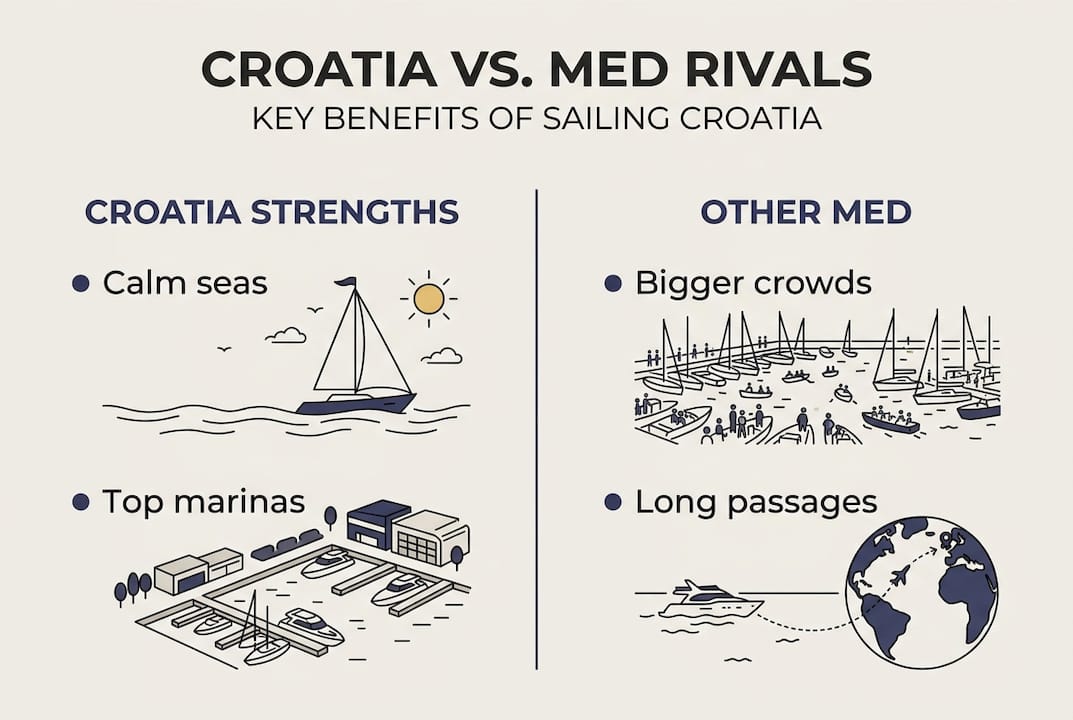
Peak months like July and August are crowded in popular spots like Hvar and Dubrovnik, while shoulder seasons deliver more privacy and noticeably better value. If you want the best of Croatia without fighting for a mooring spot every evening, late May through June or September are your sweet spots.
Croatia has two main wind systems worth knowing before you sail:
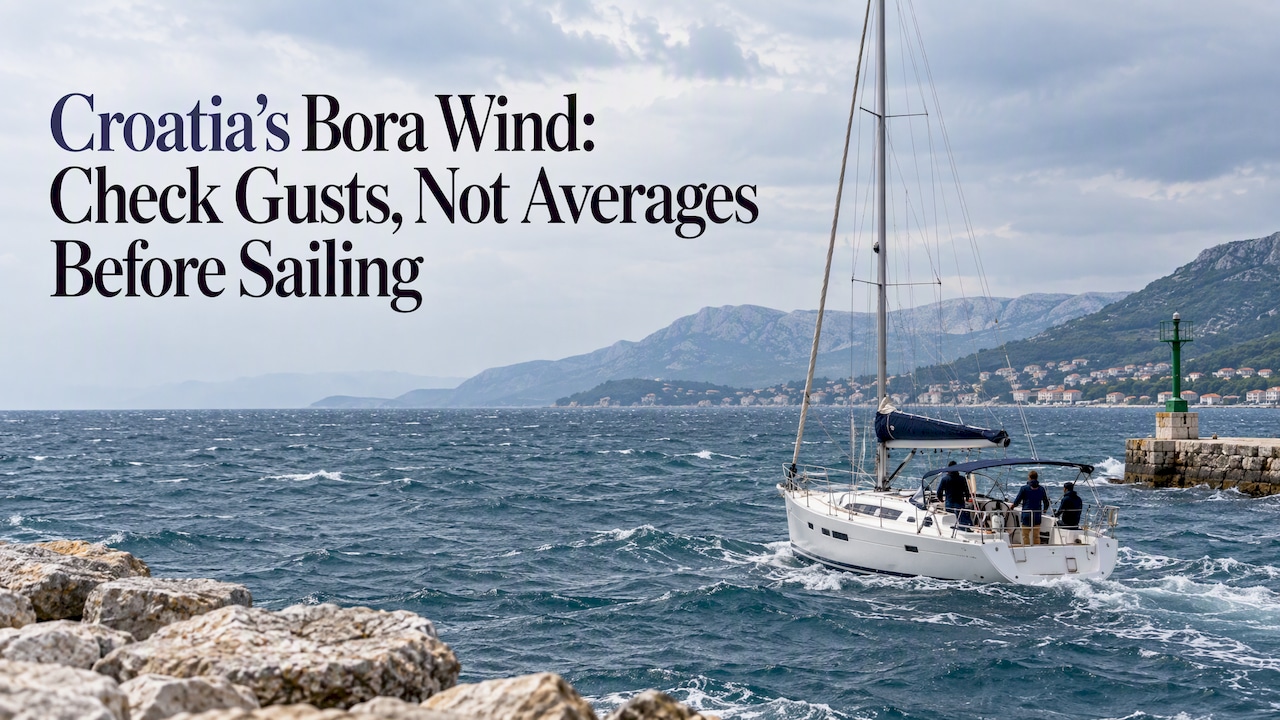
- Bora (coming from the northeast): A strong, gusty wind that can arrive quickly, especially in winter and early spring. In summer it usually brings clear skies.
- Jugo (coming from the southeast): A warmer, more humid wind that can build waves and make sailing uncomfortable if it lingers.
- Keep a flexible itinerary: Wind can shift your plans, and that’s OK. Build in buffer days so you’re not stressed about making a specific stop.
- Book marinas and popular bays early: In peak season, mooring in sought-after spots like Hvar town fills up fast.
For group booking tips and help organizing larger parties, it pays to plan at least three to four months ahead for peak season, and at least six weeks out for shoulder season.
Pro Tip: In national parks like Kornati, anchoring is restricted. Use official buoys, which you can often pre-book. It protects the stunning seabed and keeps your group on the right side of the rules.
Insider insights: Costs and value of chartering in Croatia
One of the biggest surprises for first-time charter groups is how affordable a yacht vacation in Croatia can actually be. People hear “private yacht” and immediately imagine a price tag that’s out of reach. The reality is very different, especially when you split costs across a group.
Croatian charter prices are genuinely competitive given the quality of infrastructure on offer, and shoulder season delivers outstanding value compared to peak weeks. Here’s what influences the final price:
- Boat type and size: A catamaran fits more people and is more comfortable but costs more than a sailing yacht. Bigger boat shared between eight people can be surprisingly affordable per head.
- Season: July and August carry peak rates. Spring and fall can be significantly cheaper, sometimes by 20 to 30%.
- Skipper and crew: A professional skipper adds a daily cost but removes the need for anyone in your group to hold a sailing license. Many groups find it well worth it.
- Extras to budget for: Fuel, port fees, provisioning (food and drinks onboard), and mooring buoy fees in national parks.
“Splitting a yacht between six to eight friends often works out less per person than a week in a mid-range hotel. And the experience doesn’t even compare.”
For a full breakdown of what’s included and how to plan your private yacht rental, it helps to look at options across boat types and departure weeks side by side. You can also explore charter pricing directly to get a feel for what fits your group’s budget before committing.
The value equation in Croatia is genuinely strong. You’re getting world-class scenery, excellent infrastructure, and a once-in-a-lifetime experience for a price that, split across a group, often undercuts a standard resort holiday.
What most travelers miss when chartering in Croatia
Here’s something we’ve noticed after working with hundreds of charter groups: the ones who have the best trips are almost never the ones who planned the most famous stops. They’re the ones who stayed flexible and listened to their skipper.
Most groups arrive with a highlight reel in mind. Hvar. Dubrovnik. Korčula. These places are spectacular, absolutely worth visiting. But Croatia’s magic is also hiding in places that don’t make the Instagram feeds: tiny fishing villages with a single konoba (a local tavern) serving grilled fish caught that morning, uninhabited islands where your boat is the only one anchored in the bay.
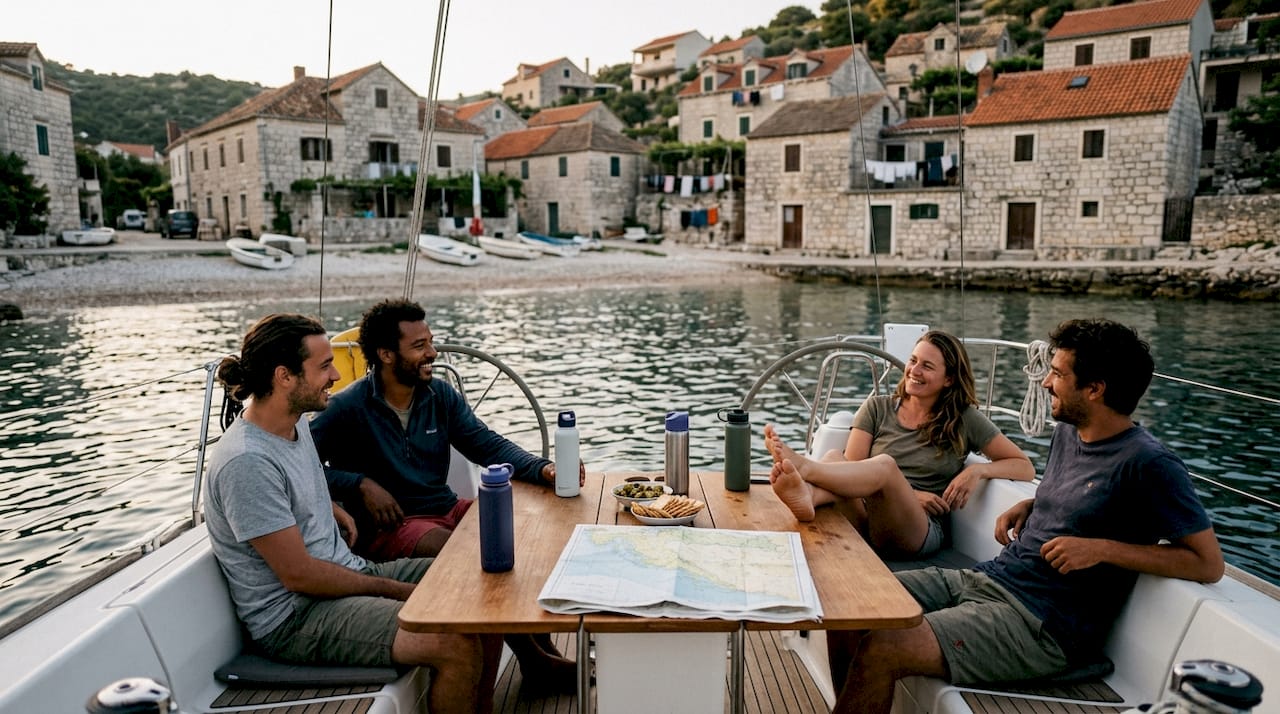
When you’re open to detours, Croatia rewards you generously. Ask your skipper where they’d anchor if they had a day off. The answer is usually not the tourist hotspot. For more on the hidden reasons to book a sailing holiday, the camaraderie alone is worth it. There’s something about being on a boat together, making decisions as a crew, sharing a meal at anchor, that creates memories no hotel ever could.
Pro Tip: Resist the urge to over-schedule. Some of the best moments on a Croatia charter happen when you simply drift into an unknown cove and decide to stay.
Ready to plan your Croatia charter adventure?
If Croatia has been on your radar, now is the perfect time to make it real. Whether you’re organizing a group of friends or planning a family vacation unlike any other, Sail Armada makes the process straightforward and genuinely exciting.
We help groups and families find the right boat, plan a route that fits their pace, and handle the details so you can focus on enjoying every moment. From group sailing holidays to private charters, there’s a setup for every crew. Check out our yacht group booking guide to understand how it all comes together, or browse holiday pricing to see what’s possible for your budget. Croatia is waiting. Your adventure starts here.
Frequently asked questions
Is Croatia suitable for first-time yacht charters?
Absolutely. Croatia’s infrastructure and safety standards are excellent for beginners, with calm waters, short island passages, and modern marina facilities making it one of the most accessible sailing destinations in the Mediterranean.
When is the best time to charter a yacht in Croatia?
Late May through June and September are ideal. Shoulder seasons offer fewer crowds, more privacy, and noticeably better value compared to the busy peak summer months of July and August.
How do Croatian charter costs compare to Greece and Italy?
Croatia sits in the mid-range, with competitive pricing given infrastructure quality. When split across a group of six to eight, the per-person cost often rivals or beats a standard resort holiday.
What should I know about Croatian sailing regulations?
In many regulated bays and national parks, using official mooring buoys is mandatory. Anchoring is restricted in these areas, and ignoring the rules can result in fines, so always check local requirements before dropping anchor.