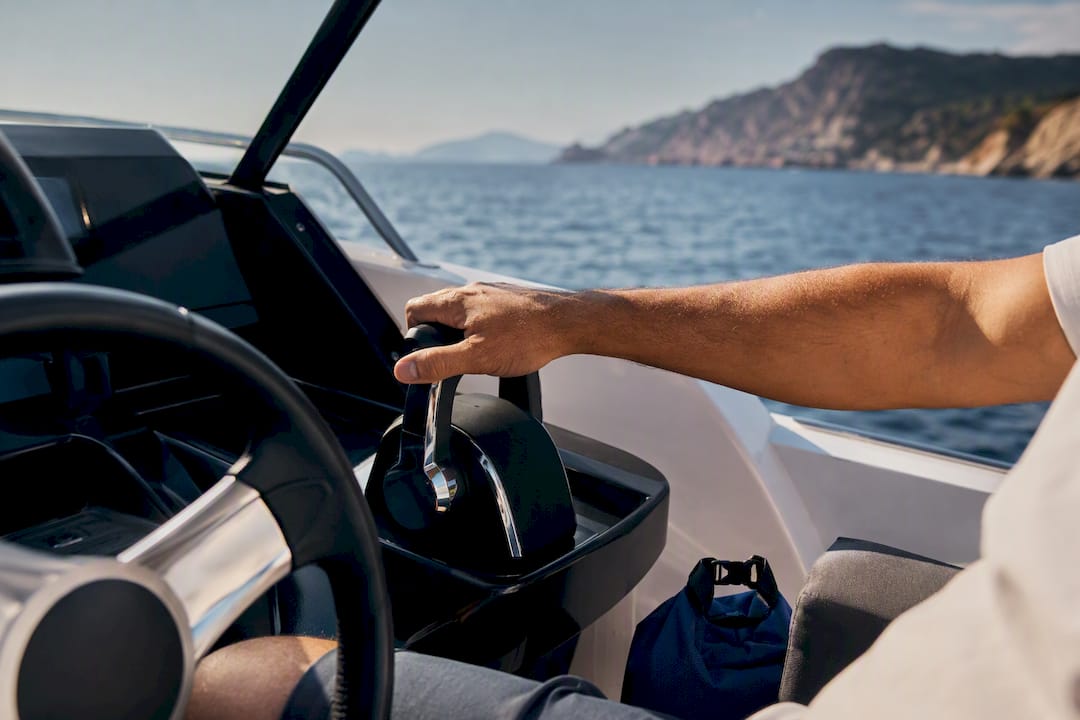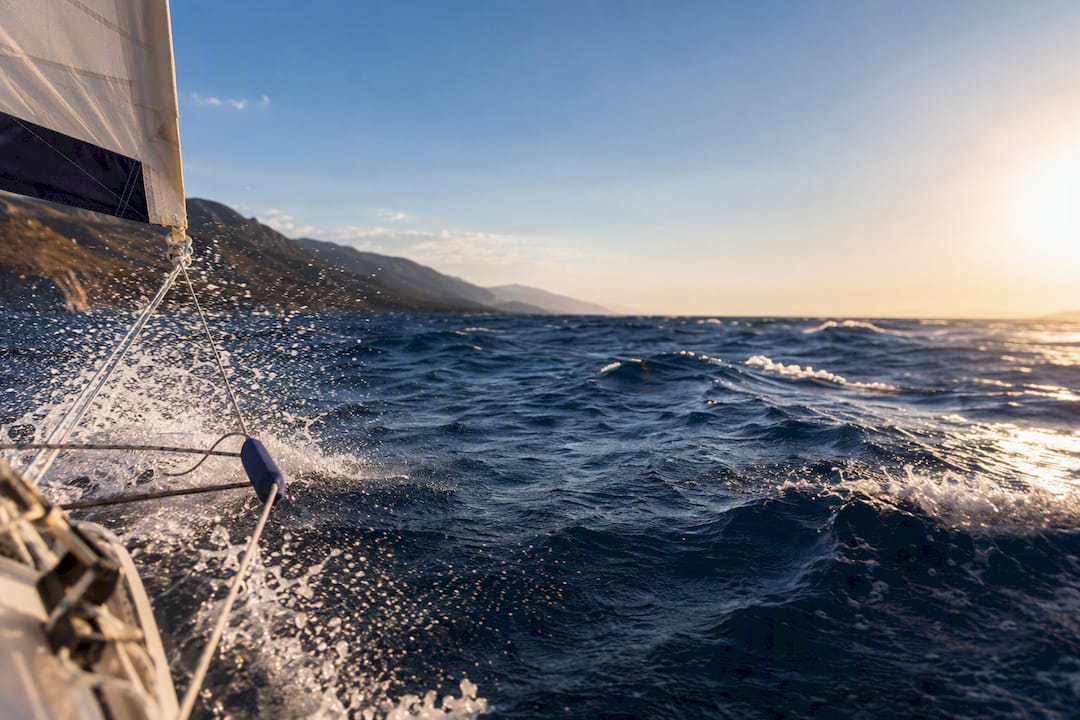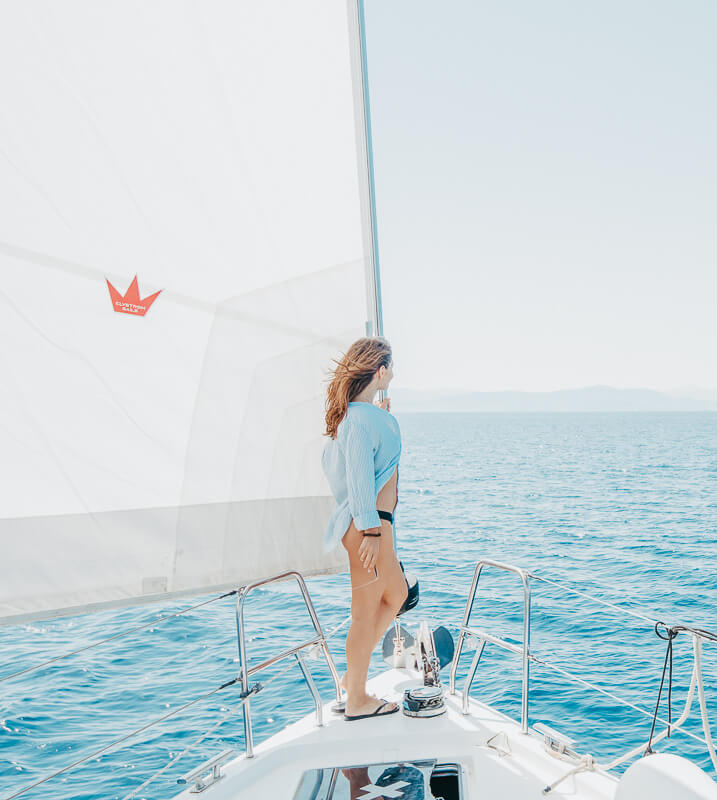
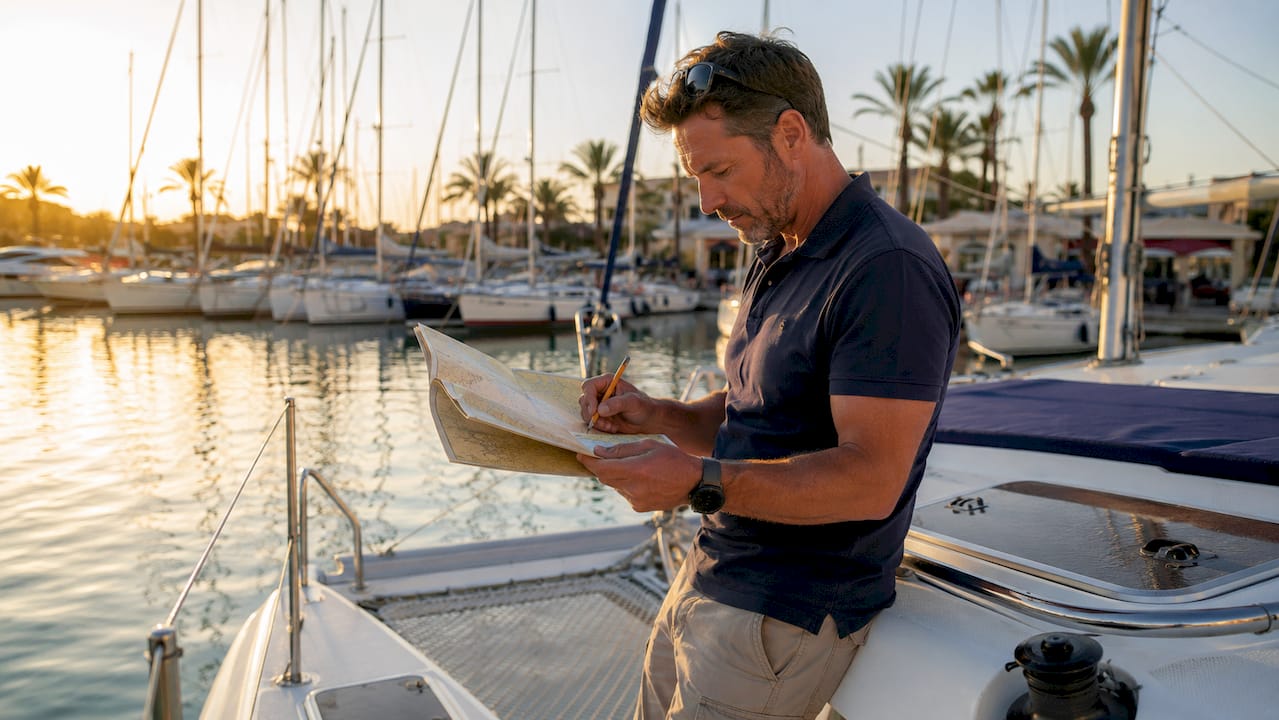
Flotilla sailing is defined as a format where you skipper your own yacht independently while traveling as part of a coordinated group, supported by a professional lead crew. This is exactly why skippers enjoy flotilla holidays: you keep full control of the helm, but you never sail alone. A typical flotilla includes 5–12 yachts led by a boat crewed by a skipper, engineer, and social host. That setup removes the loneliness of solo bareboat sailing and the frustration of handing your wheel to someone else. Popular destinations like the Ionian Sea in Greece, Croatia, and Turkey make this format even more appealing, with crystal clear water, secluded anchorages, and breathtaking scenery at every stop.
Why skippers enjoy flotilla holidays more than other charter types
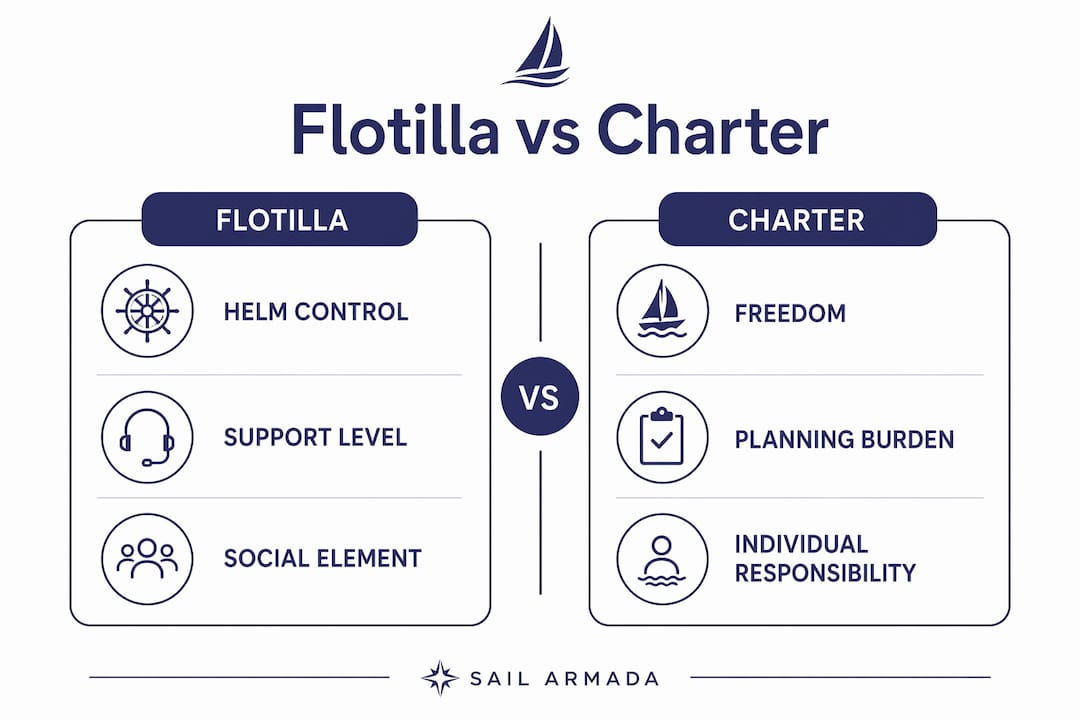
Flotilla sailing sits squarely between two extremes. A bareboat charter gives you total freedom but also total responsibility for navigation, weather routing, and logistics in unfamiliar waters. A skippered charter hands all of that to someone else, but you lose the joy of actually sailing. Flotilla holidays keep you in the captain’s seat while a lead crew handles daily routes and safety coordination.
Experienced sailors choose flotillas to explore new destinations without the research burden. That means you spend your energy on sailing and discovery, not on studying pilot books at midnight. The lead boat broadcasts daily briefings, weather updates, and port entry instructions by radio, so you arrive at each anchorage informed and confident.
| Charter type | Helm control | Planning required | Social element | Support level |
|---|---|---|---|---|
| Bareboat | Full | High | Low | None |
| Flotilla | Full | Low | High | Strong |
| Skippered charter | None | None | Variable | Full |
The table makes the case clearly. Flotilla sailing is the only format that gives you full helm control and strong professional support at the same time. That combination is rare in any form of travel.
Pro Tip: If you are a Day Skipper or hold an ICC license, you already meet the qualification threshold for most flotilla operators. You do not need an offshore certificate to join.
How flotilla holidays build friendships and shared adventures
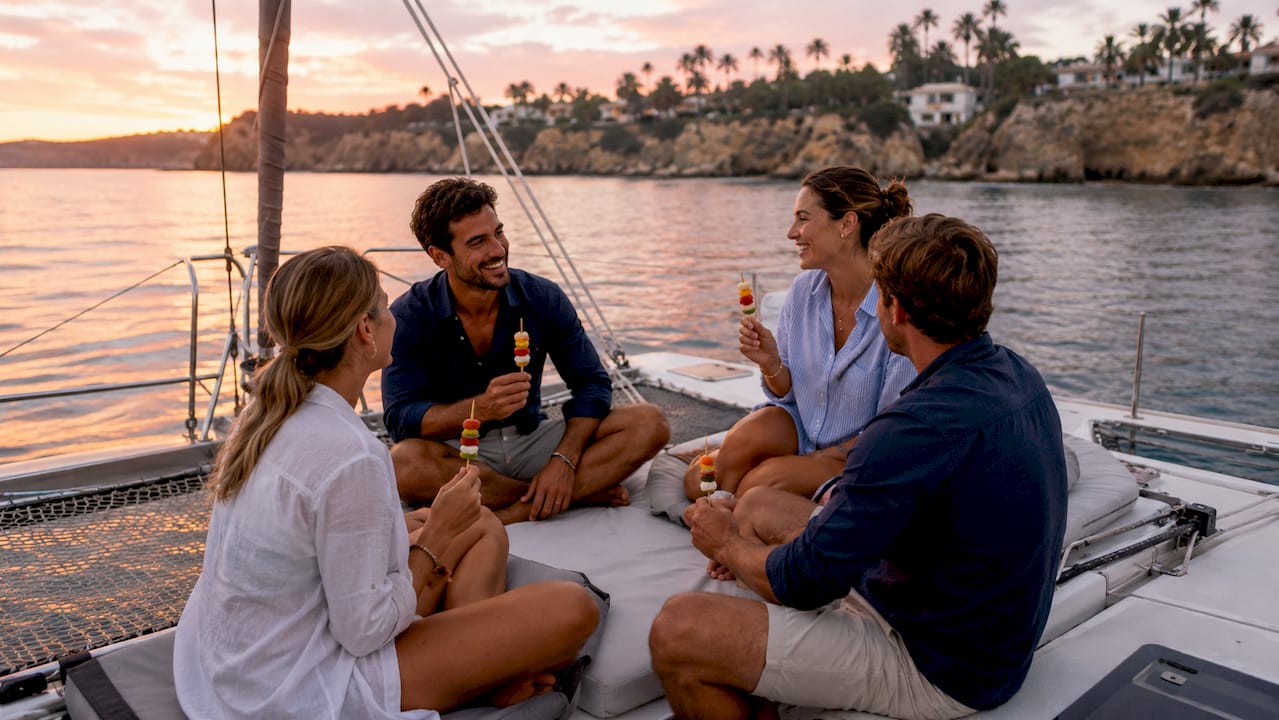
Camaraderie is a core reason why skippers return year after year to flotilla holidays. The social structure is built into the format itself. You sail independently during the day, then converge at the same anchorage each evening for group dinners, sundowners, and spontaneous raft-ups. That rhythm creates genuine friendships fast.
Solo skippers and small crews especially benefit from this setup. Arriving at a new port alone can feel isolating. Arriving as part of a flotilla means you already know the faces at the next boat, and the social host on the lead boat actively organizes activities to bring everyone together.
Here is what a typical flotilla social week looks like:
- Group dinners ashore at local tavernas, often organized by the social host
- Raft-ups where boats tie together in a calm bay for swimming and drinks
- Shared exploration of coastal villages, markets, and hidden beaches
- Evening gatherings on the lead boat or at a harbor-side bar
- Friendly competition through informal races or navigation challenges between yachts
The social element is flexible. You choose how much you participate. If you want a quiet evening anchored in a secluded cove, nobody forces you to attend the group dinner. That balance of community and personal space is something skippers genuinely value.
What safety, support, and learning do flotillas offer skippers?
The professional backup on a flotilla is one of its strongest advantages. The lead crew plans every route, monitors weather, and stays on VHF radio throughout the day. If you struggle with a tight marina berth or need mooring advice, help is one radio call away. That safety net reduces anxiety dramatically, especially in unfamiliar waters.
Flotilla cruising typically happens in sheltered, well-charted waters with predictable weather patterns. The Ionian Sea, for example, offers consistent summer winds and calm anchorages that are ideal for building confidence without unnecessary risk. You get real sailing conditions without the exposure of an offshore passage.
The learning opportunities are structured and practical:
- Daily briefings from the lead skipper cover navigation, tides, and local hazards specific to that day’s route.
- On-the-water coaching is available informally from the lead crew during passages.
- Tuition skipper programs let you earn an ICC certificate during the holiday, typically for about €50 per day extra.
- Mooring practice in real ports builds skills that no classroom course replicates.
- Weather reading becomes intuitive when you discuss conditions daily with an experienced lead skipper.
Most reputable charter companies allow you to select your lead skipper based on reviews, prioritizing knowledge and flexibility over pure sailing credentials. That personalization matters. A lead skipper who communicates well and reads group dynamics makes the whole week run smoothly.
Pro Tip: Ask your flotilla operator specifically about the lead skipper’s teaching style before you book. A good match between your skill level and the lead crew’s approach makes a measurable difference to your enjoyment.
What logistical and cost benefits make flotilla trips worth it?
Pre-planned routes eliminate the single biggest stress of independent sailing in a foreign country: figuring out where to go. The lead crew has already scouted the anchorages, checked port availability, and built a route that balances sailing time with exploration. You show up, sail, and enjoy.
Flotilla holidays typically cost €1,200–1,800 per person per week for a 36-foot monohull at peak Ionian season. That price includes the boat, basic insurance, and flotilla fees. Compared to a skippered charter, where you pay for a professional skipper on top of the boat cost, flotillas deliver strong value for qualified sailors.
| Destination | Peak season | Typical flotilla size | Key appeal |
|---|---|---|---|
| Ionian Sea, Greece | june–september | 8–12 yachts | Calm waters, ancient history |
| Dalmatian Coast, Croatia | june–august | 6–10 yachts | Walled cities, clear bays |
| Turkish Aegean | may–october | 5–10 yachts | Secluded coves, rich culture |
| Sardinia, Italy | july–august | 6–8 yachts | Dramatic scenery, local cuisine |
Group planning also reduces individual effort in ways that are easy to underestimate. Ferry bookings, restaurant reservations, and port berthing are coordinated at the flotilla level. You handle your own boat. Everything else is managed for you. For skippers who want adventure without administrative overhead, that trade is an easy yes.
The role of itinerary planning in a successful charter cannot be overstated. Flotillas solve this problem by design, giving you a tested route with built-in flexibility to adapt when conditions change.
Key Takeaways
Flotilla sailing gives skippers the rare combination of full helm control, professional support, and genuine social connection that no other charter format delivers.
| Point | Details |
|---|---|
| Helm control stays with you | Flotillas give full sailing autonomy while a lead crew handles logistics and safety. |
| Social bonds form naturally | Group dinners, raft-ups, and shared anchorages build real friendships over one week. |
| Learning happens on the water | Daily briefings, ICC tuition options, and mooring practice build skills in real conditions. |
| Cost is competitive | At €1,200–1,800 per person per week, flotillas offer strong value versus skippered charters. |
| Pre-planned routes save time | Lead crews design tested itineraries, removing research burden from individual skippers. |
My honest take on what makes flotilla sailing special
I have watched skippers arrive at the start of a flotilla week looking slightly nervous and leave at the end already planning next year’s trip. The transformation is real, and it is not just about the sailing. It is about the combination of freedom and belonging that flotilla holidays create in a way that is genuinely hard to find elsewhere.
What surprises most skippers is how much they learn without feeling like they are in a classroom. The daily briefings feel like a conversation, not a lecture. The lead skipper shares local knowledge that no chart or pilot book captures. You absorb it naturally because you are relaxed and engaged.
The one thing I would tell any skipper considering a flotilla: stay flexible. Weather changes. Plans shift. The anchorage you planned to reach might be full, and the alternative turns out to be even better. Skippers who hold their itinerary loosely and communicate openly with the lead crew consistently have the best weeks. The ones who fight the group dynamic spend energy on frustration instead of on the gorgeous water around them.
Flotilla veterans are not beginners who never graduated to bareboat sailing. Many are highly experienced sailors who simply prefer the social richness and logistical ease of the flotilla format. That is not a compromise. That is a preference worth owning.
— Sail
Explore flotilla sailing holidays with Sailarmada
Sailarmada curates group sailing holidays across Greece, Croatia, Italy, and Turkey, designed specifically for skippers who want the freedom of their own boat with the warmth of a shared adventure. Whether you are joining as a solo skipper, bringing a small crew, or organizing a group of friends, Sailarmada matches you with the right yacht and the right flotilla for your skill level and travel style.
Every Sailarmada flotilla includes a professional lead crew, pre-planned routes through the most beautiful Mediterranean waters, and a social program that makes evenings as memorable as the sailing. If you prefer to sail on your own terms within a group setting, explore private sailing options that give you even more flexibility. Your next flotilla adventure is ready when you are.
FAQ
What qualifications do you need for a flotilla holiday?
Most flotilla operators require at least a Day Skipper certificate or an ICC license. Some operators offer tuition skipper programs where you can earn your ICC during the holiday for approximately €50 per day extra.
Are flotilla holidays only for beginners?
Flotilla holidays attract skippers of all experience levels. Many veterans return specifically for the social atmosphere, pre-planned routes, and the freedom to explore new destinations without independent research.
How many boats are in a typical flotilla?
A typical flotilla includes 5–12 yachts, led by a professional crew on a dedicated lead boat that coordinates daily routes, safety, and social activities.
Can you sail independently within a flotilla?
Yes. Each boat is independently sailed, and you set your own pace within the group’s daily framework. You can choose to participate in group activities or anchor privately whenever you prefer.
What are the best destinations for flotilla sailing?
The Ionian Sea in Greece, the Dalmatian Coast in Croatia, and the Turkish Aegean are the most popular flotilla destinations. All three offer sheltered, well-charted waters with predictable summer conditions ideal for flotilla sailing.