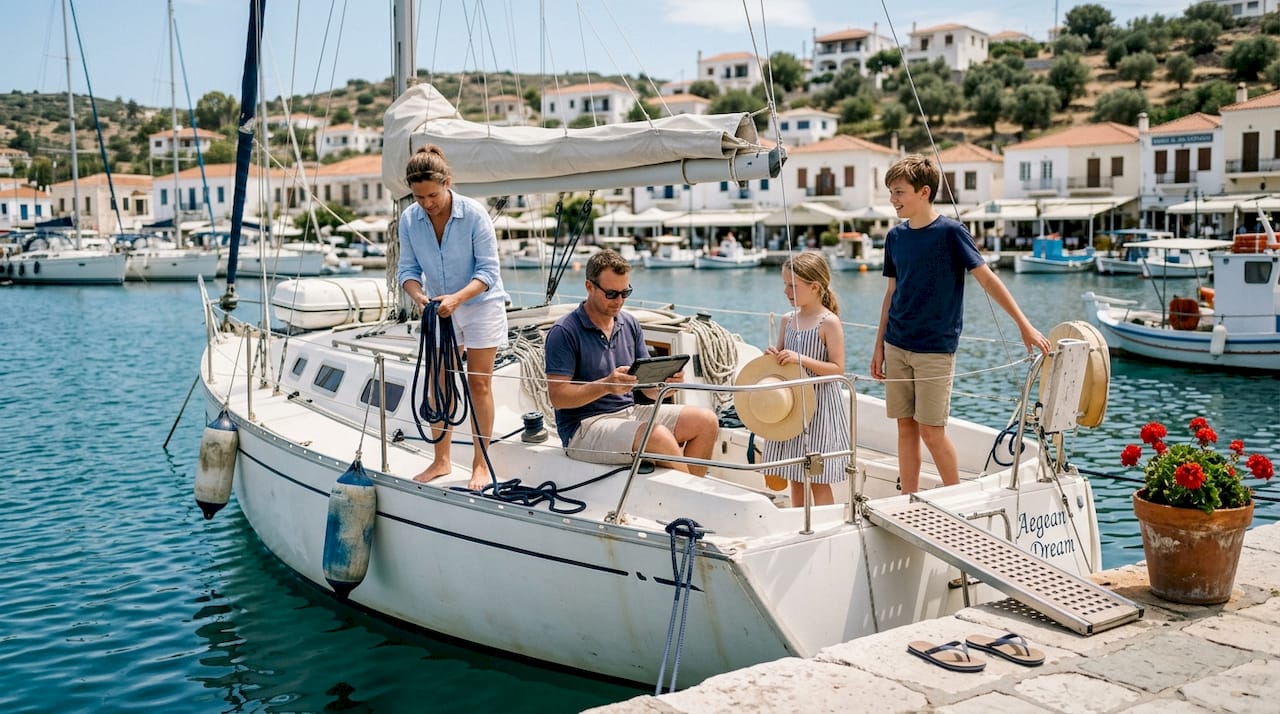
Most people picture sailing as either a solitary escape or a rigidly scheduled tour. Mediterranean flotilla sailing is neither. It’s a style of holiday that gives you real freedom on the water while wrapping you in a safety net of experienced crew support and lively social evenings. For families juggling nervous first-timers and for groups wanting shared adventure without losing their independence, flotillas offer something genuinely special. This guide breaks down exactly what a flotilla is, how your days unfold, whether it suits your crew, where to go, and what it really costs.
Table of Contents
- What is a flotilla? The basics explained
- How flotilla sailing works: A day in the life
- Is a flotilla right for you? Family & group suitability
- Popular flotilla routes and costs in the Mediterranean
- What most flotilla guides miss: The real experience
- Ready to start your flotilla adventure?
- Frequently asked questions
Key Takeaways
| Point | Details |
|---|---|
| Blends independence and support | Flotilla sailing lets you skipper your own yacht with expert backup from a lead crew. |
| Ideal for families and groups | Short passages, social evenings, and a built-in safety net make flotillas especially family-friendly. |
| Costs and routes explained | Expect €1,200-1,800 per person per week, with top destinations in Greece, Croatia, and Italy. |
| Flexible and sociable travel | Each day offers freedom on the water and lively shared activities ashore. |
What is a flotilla? The basics explained
A flotilla is one of the most sociable ways to explore the Mediterranean by sea. Simply put, a flotilla is a group of 8 to 12 yachts sailing together with a support crew providing guidance and safety. Each yacht travels at its own pace and carries its own crew, but you’re never truly alone out there.
The heart of the flotilla is the lead boat. This vessel carries an experienced skipper, a hostess, and a mechanic. Every morning, they host a briefing covering weather, the day’s route, and mooring tips. Throughout the day, they’re reachable by radio, ready to assist with tricky docking or any unexpected situation. In the evenings, the lead crew often organizes group dinners or beach barbecues.
Here’s what makes flotilla sailing stand out:
- Expert support available whenever you need it, invisible when you don’t
- Independence to sail at your own speed and take detours
- Social events built into the itinerary, from group meals to swim stops
- Safety net that’s especially reassuring for families and newer sailors
- Pre-planned routes with local knowledge baked in
To understand the format, here’s a quick comparison:
| Feature | Flotilla | Bareboat charter | Skippered holiday |
|---|---|---|---|
| Support crew | Yes (lead boat) | None | Yes (on your yacht) |
| Independence | High | Full | Low |
| Social component | Strong | Minimal | Minimal |
| Best for | Families, groups, beginners | Experienced sailors | Beginners wanting full guidance |
| Cost | Mid-range | Variable | Higher |
“Expert support is invisible unless needed,” making flotillas the perfect format for families and groups who want to build confidence without sacrificing fun.
You get the thrill of skippering your own yacht while enjoying the reassurance of professionals nearby. If you’re curious about group sailing holidays, this structure is one of the most popular formats for a reason.
How flotilla sailing works: A day in the life
Now that you know what a flotilla is, let’s look at what your daily experience actually feels like. Spoiler: it’s far more relaxed than most people expect.
The daily routine starts with briefings each morning, participants sail independently through the day, the lead crew provides assistance when needed, and group social events fill the evenings. That structure creates a wonderful rhythm.
Here’s how a typical flotilla day flows:
- Morning briefing (8:30 am): The lead crew presents the day’s weather, recommended route, and highlights, like a hidden bay for swimming.
- Set sail (10:00 am): Your yacht leaves the marina at your own pace. Most days cover 12 to 20 nautical miles, which means roughly 2 to 3 hours of actual sailing.
- Swimming stop (midday): Anchor in a crystal-clear cove. Jump in, float around, have lunch on deck.
- Arrive at the next port (2:00 to 4:00 pm): The lead crew helps guide you into the marina or anchorage.
- Explore and relax (afternoon): Wander the local village, grab coffee, let the kids run along the waterfront.
- Group dinner or social event (evening): Meet up with other flotilla crews for a meal, drinks, or a beach barbecue.
Here’s a snapshot of how the day is structured:
| Activity | Approximate time | Purpose |
|---|---|---|
| Morning briefing | 8:30 to 9:30 am | Route planning, safety update |
| Sailing | 10:00 am to 1:00 pm | Main passage to next destination |
| Swimming stop | 11:30 am to 12:30 pm | Relaxation, family fun |
| Arrival and mooring | 2:00 to 4:00 pm | Settle in, explore |
| Evening social | 7:00 pm onward | Group connection, local dining |
For a deeper feel of the experience, check out a day on a sailing holiday to see how these moments string together.
Pro Tip: Always keep a VHF radio on and tuned to Channel 72 (the standard flotilla channel). If weather shifts mid-passage, the lead boat will broadcast updates. Staying flexible with your timeline means you can duck into a sheltered bay if the wind picks up unexpectedly.
Is a flotilla right for you? Family & group suitability
Understanding a typical day is useful, but is this style for your crew? Let’s weigh up who thrives on these trips.
Flotillas are ideal for families due to the safety net, short passages, and stable conditions, with over 80% of guests returning for a second trip. That number speaks volumes. Short, predictable sailing days mean kids stay comfortable and parents stay calm.
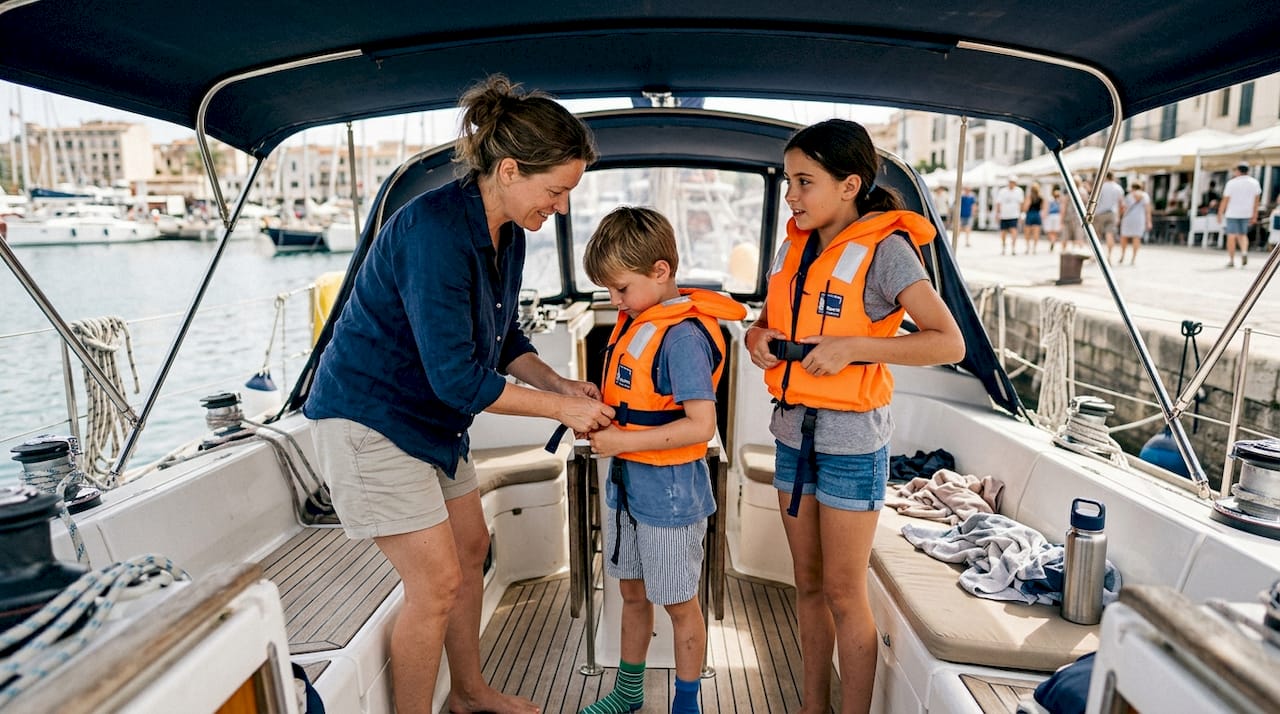
For the skipper, you’ll typically need an RYA Day Skipper or ICC equivalent certification, but beginners and families are absolutely welcome with basic qualifications. Many operators offer introductory briefings and extra support for first-timers.
Here’s a quick breakdown of who finds flotillas a perfect match:
- Families with children: Short passages, calm waters, swimming stops, and kid-friendly anchorages
- Groups of friends: Built-in social life with other yachts, plus space for your own crew to bond
- Novice sailors: Lead crew support fills confidence gaps without taking over
- Mixed-ability crews: Experienced sailors can push further; newcomers stay close to the lead boat
- Single parents: Community feel onboard means you’re never managing everything alone
For practical planning, our Mediterranean yacht rental tips walk you through what to look for when choosing a yacht for your group size. And if you’re bringing little ones along, our sailing with kids page has everything you need.
Pro Tip: Before booking, ask your operator specifically about child-size life jackets and whether family-focused events are included in the itinerary. Some flotilla weeks run dedicated kids’ activities, which can make a huge difference for younger travelers.
Popular flotilla routes and costs in the Mediterranean
Now, let’s explore where you can experience flotilla sailing at its best, and what you’ll need to budget for.
Popular Mediterranean flotilla routes include Greece (Ionian, Sporades, Saronic), Croatia (Dalmatia), and Italy (Ischia), with costs ranging from €1,200 to €1,800 per person per week, excluding provisioning. Each destination has its own personality.
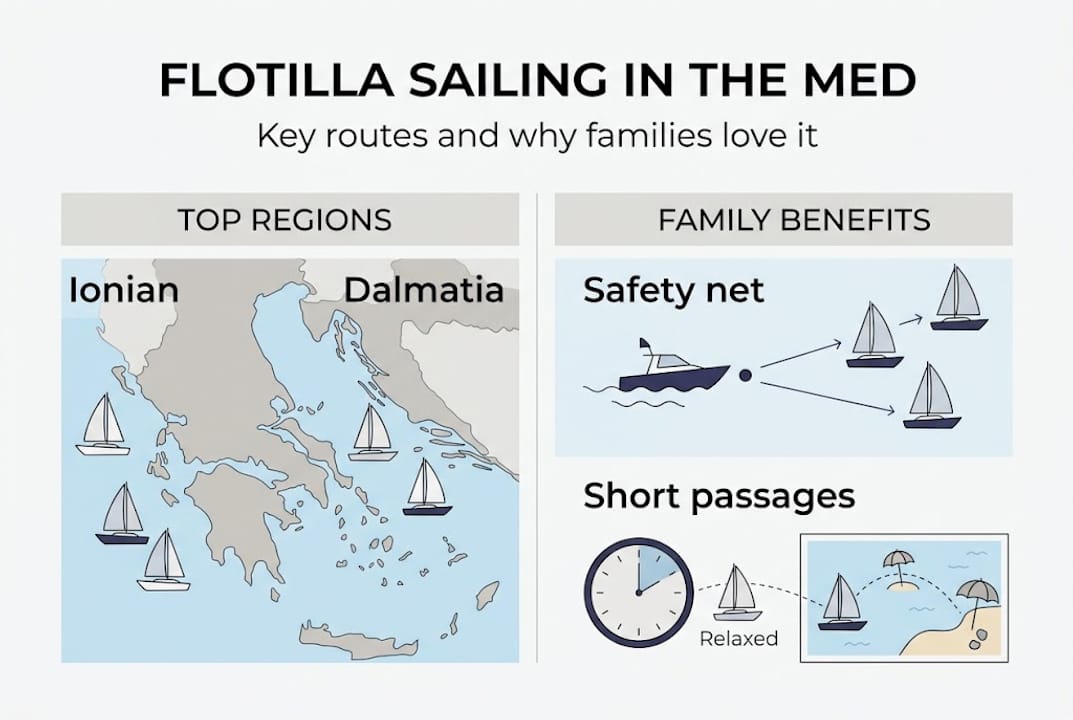
| Route | Key features | Ideal for | Season highlights |
|---|---|---|---|
| Ionian, Greece | Calm waters, lush islands, easy passages | First-timers, families | May to September |
| Sporades, Greece | More wind, dramatic scenery | Intermediate sailors | June to August |
| Dalmatia, Croatia | Historic ports, island-hopping | Groups, culture lovers | June to September |
| Ischia, Italy | Volcanic scenery, thermal springs | Couples, small groups | May to July |
| Saronic, Greece | Close to Athens, varied anchorages | Weekend crews, families | April to October |
The Ionian is consistently rated as the ideal first flotilla experience, thanks to its calm conditions, short daily passages, and consistently high guest reviews averaging 4.5 to 4.6 out of 5.
Your base price typically covers the yacht charter and lead crew support. Here’s what’s usually extra:
- Food and provisioning (budget roughly €100 to €150 per person per week)
- Marina fees (€15 to €40 per night depending on the port)
- Fuel for motoring in calm conditions
- Personal expenses and excursions
Ways to keep costs sensible:
- Book earlier in the season (May or early June) for better rates
- Provision at local supermarkets rather than marina shops
- Choose a shorter route if your group prefers relaxed days over covering distance
Explore all our Mediterranean flotilla destinations and get a feel for what each region offers. When you’re ready to check availability and pricing, our yacht holiday prices page gives you transparent options by departure date.
What most flotilla guides miss: The real experience
With routes and costs in mind, let’s be honest about what you’ll really get from a flotilla, beyond the marketing.
First, the support system genuinely works. For first-time skippers, having the lead crew just one radio call away feels like having a wise friend with local knowledge in the next room. You make the decisions; they catch you if you slip.
But here’s what most brochures gloss over. The social evenings can be a strong pro or a con depending entirely on your group’s dynamics. If your family craves quiet anchorages and solo sundowners, a flotilla’s group culture might occasionally feel like too much togetherness. On the other hand, many guests arrive as strangers to other boats and leave with friendships that last years.
Our honest take? A flotilla works best when you go in knowing you can opt out of group dinners on the nights you want privacy. Most lead crews respect that completely. The spirit of the flotilla is freedom, not obligation.
If your group is very independent and experienced, you might eventually prefer private sailing options for full autonomy. But for first trips, mixed groups, and families, the flotilla format is genuinely hard to beat. The safety, the scenery, and the spirit of shared adventure create something most people want to repeat, which is exactly why so many guests come back.
Ready to start your flotilla adventure?
If the unique mix of freedom, fun, and support sounds right for your family or group, getting started is simpler than you might think. A flotilla holiday doesn’t require years of sailing experience or a perfectly coordinated group of experts. It just takes a bit of planning and an appetite for something memorable.
At SailArmada, we specialize in helping families and groups find their perfect sailing week in the Mediterranean. Whether you’re booking as a group of friends, planning a multi-family adventure, or stepping onto a yacht for the first time, we’ve got itineraries and support to match. Browse our Mediterranean group flotilla holidays to see upcoming departures, or read our step-by-step guide on how to charter a flotilla if you want to understand the full process before committing.
Frequently asked questions
Do you need sailing qualifications to join a flotilla?
Yes, the skipper usually needs an RYA Day Skipper or ICC equivalent, but beginners can still participate with basic certifications and extra lead crew support.
Can families with young children join a flotilla holiday?
Absolutely. Flotillas are well-suited to families, with no strict minimum age, short daily passages, and a safety-first approach that keeps both parents and kids comfortable.
What is included in the price of a flotilla holiday?
Most packages cover the yacht and lead crew support, while food, fuel, and marinas are paid separately, typically adding €100 to €200 per person per week.
How social are flotilla holidays?
Very social by design, with group dinners and evening events built in, but opting out is always fine if your crew prefers a quieter night anchored in a private bay.
What happens if there’s bad weather on a flotilla trip?
The lead crew adapts the route and broadcasts updates via VHF radio, ensuring your group finds shelter and stays safe until conditions improve.
Recommended
- Step-by-step sailing holiday guide for families and friends
- How to charter a yacht in the Mediterranean: step-by-step guide
- Your complete guide to sailing week experiences in the Mediterranean
- Private yacht rental guide: plan your Mediterranean escape
- Hvorfor ferie ved søer styrker familielivet – Rejs i Danmark