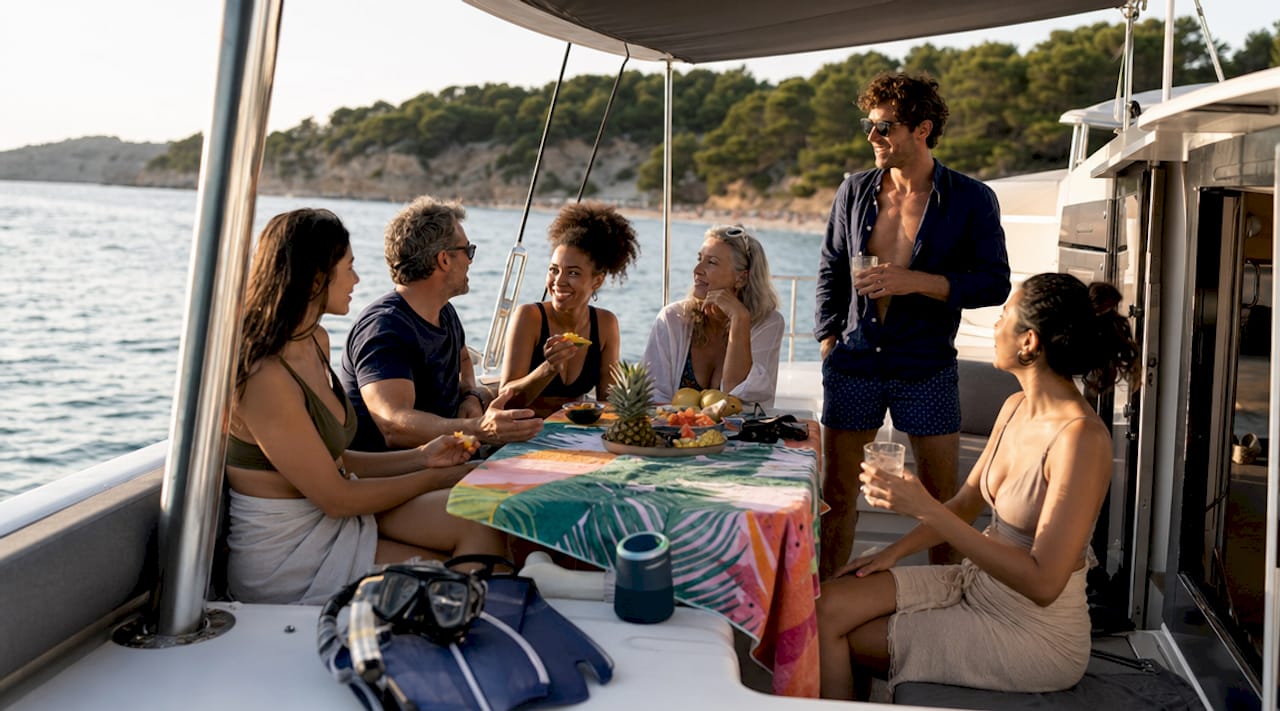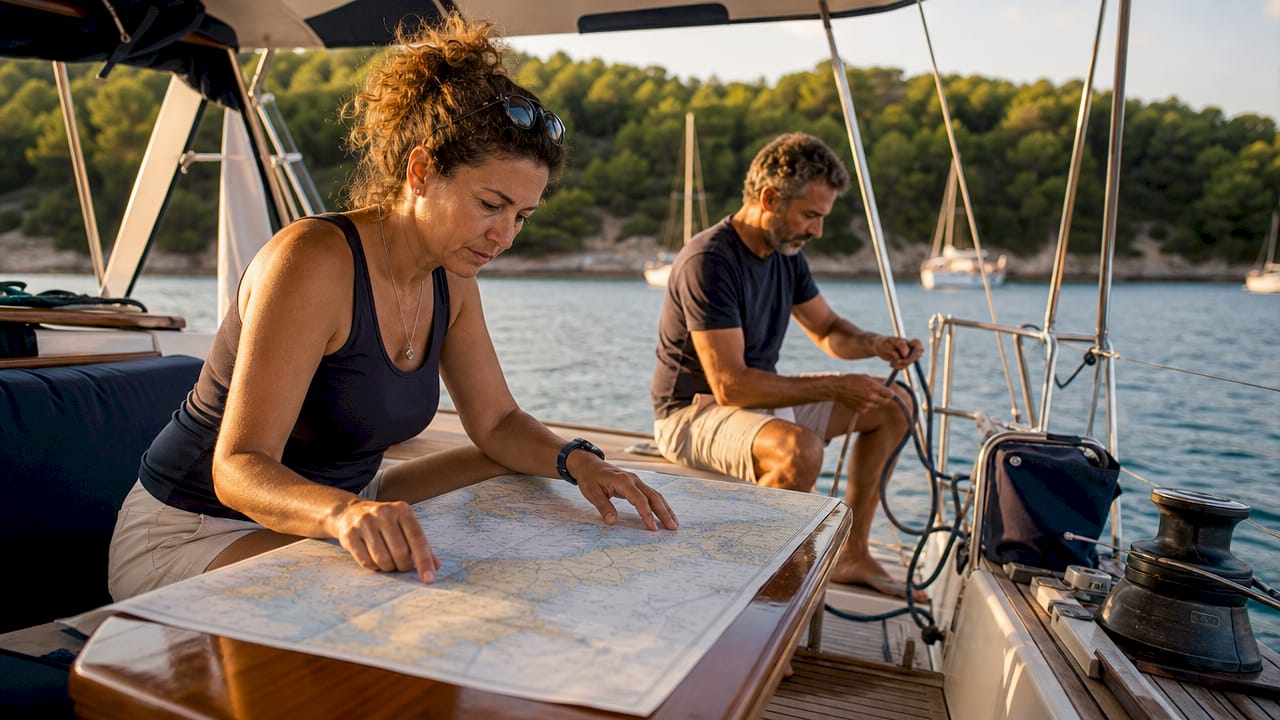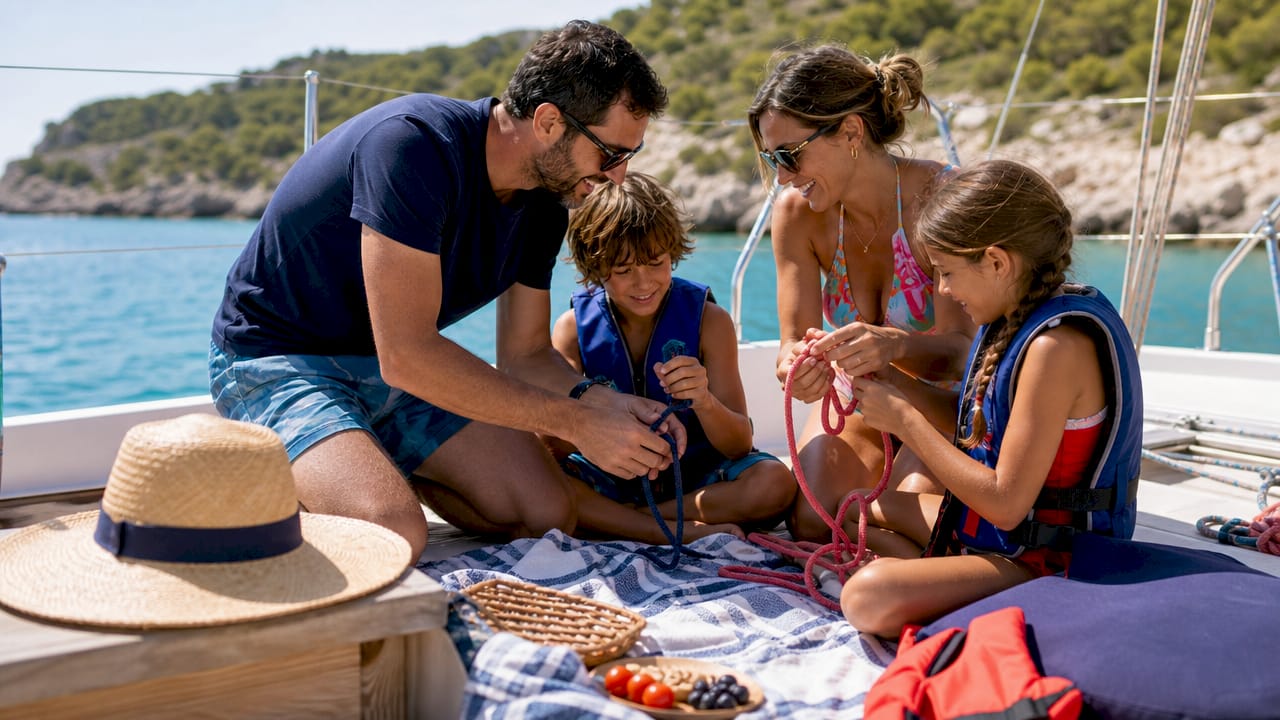
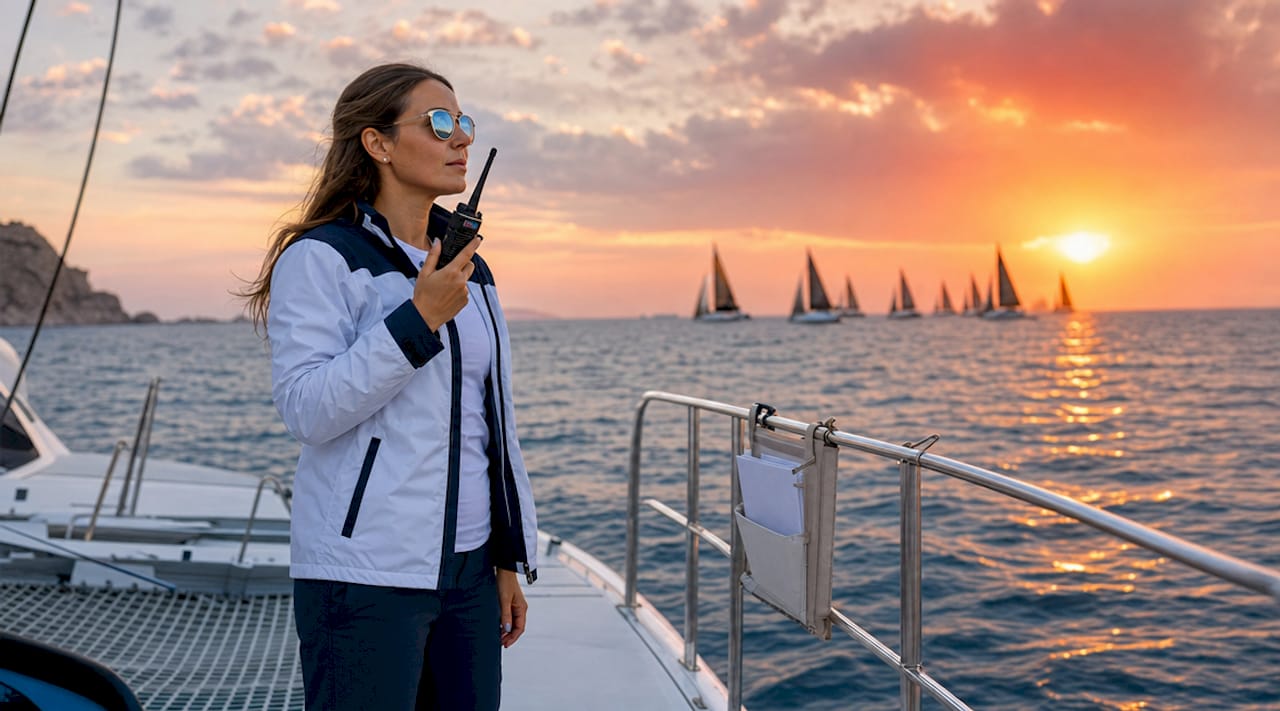
Coordinating multi-yacht charters means organizing communication, routes, timing, and guest experiences across multiple vessels to create one smooth, shared sailing adventure. The industry term for this style of sailing is a flotilla, where a group of yachts travels together along a shared route, often with a lead boat setting the pace. Whether you’re planning a flotilla through the Greek islands, a corporate sailing event off Croatia, or a family reunion on the Adriatic, the principles are the same: clear roles, reliable communication, and a plan flexible enough to handle the unexpected. Get these three things right, and the whole group sails happy.
How to coordinate multi-yacht charters: communication tools that actually work
The backbone of any successful flotilla is radio communication, and the RYA recommends VHF radios as the standard for on-water contact between vessels. Fixed VHF units mounted below deck offer a range of 20 to 40 miles and include DSC (Digital Selective Calling) functionality, which lets you send a distress alert or direct call to a specific vessel at the push of a button. Handheld VHF units are shorter in range but invaluable when crew members are away from the main radio, such as when tendering ashore or working on deck. Every yacht in your flotilla should carry at least one of each.
DSC-equipped radios allow you to send targeted safety alerts to nearby vessels, which is a game-changer when one boat in your group needs urgent assistance. AIS (Automatic Identification System) integration adds another layer, letting skippers see the position of every vessel in the flotilla on a chart plotter in real time. These tools are not optional extras. They are the foundation of safe multi-yacht trip coordination.
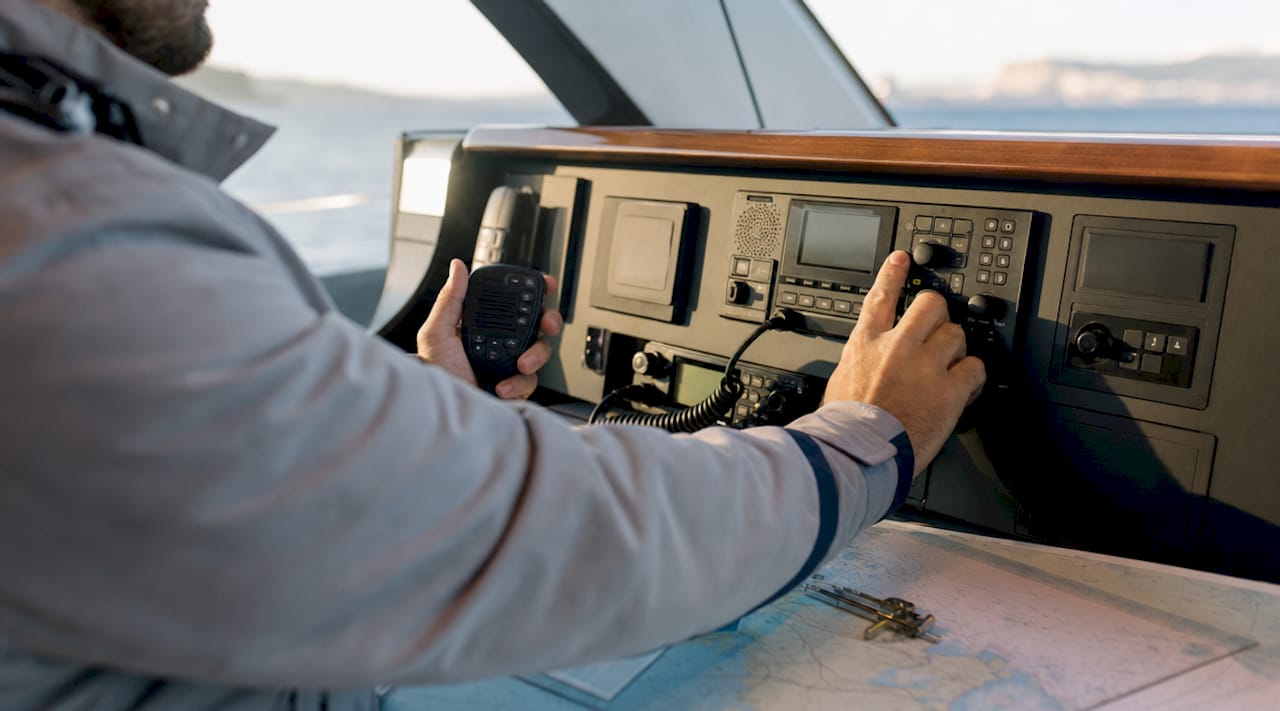
Apps like WhatsApp are genuinely useful for coordinating guest experiences, sharing photos, and sending informal updates between boats. But VHF remains vital for operational safety and should never be replaced by a chat app. Cell coverage disappears the moment you round a headland in the Ionian or anchor in a remote bay in the BVI. Plan accordingly.
| Tool | Range | Best use | Limitation |
|---|---|---|---|
| Fixed VHF radio | 20–40 miles | Skipper-to-skipper coordination, safety | Requires installation |
| Handheld VHF | 5–8 miles | Crew ashore, tender ops | Shorter range, battery dependent |
| WhatsApp / messaging apps | Cell coverage only | Guest updates, social coordination | Unreliable offshore |
| AIS / chart plotter | Line of sight | Real-time fleet positioning | Requires compatible hardware |
| Satellite communicator (e.g., Garmin inReach) | Global | Emergency backup | Cost, subscription required |
Pro Tip: Agree on a shared VHF working channel before departure, separate from Channel 16 (the international distress and calling channel). Channel 72 is a popular choice for inter-yacht communication in European waters.
How to plan routes, timing, and rendezvous points for your flotilla
Logistics are where most multi-yacht charters either come together or fall apart. Experienced coordinators stress mapping the full experience from start to finish, including every anchor spot, marina stop, and group meet-up point. A well-planned itinerary is not a rigid timetable. It is a shared framework that keeps the group connected while giving each boat the freedom to explore.
Here is a practical step-by-step process for planning your flotilla logistics:
- Choose a lead boat and a sweep boat. The lead boat sets the pace and navigates first into new anchorages. The sweep boat follows last and checks that no one is left behind. This structure alone prevents most timing disasters.
- Map daily waypoints, not just destinations. Identify specific anchorages, fuel stops, and lunch spots for each day. Share these as GPS coordinates, not just place names, so every skipper has identical information.
- Set departure windows, not exact times. Agree on a departure window of 30 to 60 minutes each morning. This accounts for different crew wake-up routines without creating stress or conflict.
- Pre-book marinas and anchorages for peak nights. In Croatia, Greece, and Sardinia, popular anchorages fill up fast in July and August. The lead boat coordinator should call ahead the day before to reserve space for the full flotilla.
- Plan at least one group rendezvous per day. This could be a shared lunch at anchor, a sundowner on the lead boat, or a group dinner ashore. These moments are what make a flotilla feel like a shared adventure rather than a convoy.
- Build in a buffer day. Weather changes. Someone gets seasick. A boat needs a minor repair. A buffer day mid-trip lets the group absorb delays without losing the overall plan.
Pro Tip: Share the full route plan, including waypoints and emergency contacts, with every skipper before departure. A shared Google Doc or a printed briefing sheet works perfectly. If one boat loses radio contact, every skipper still knows where the group is heading.
What roles and responsibilities make multi-yacht coordination work?
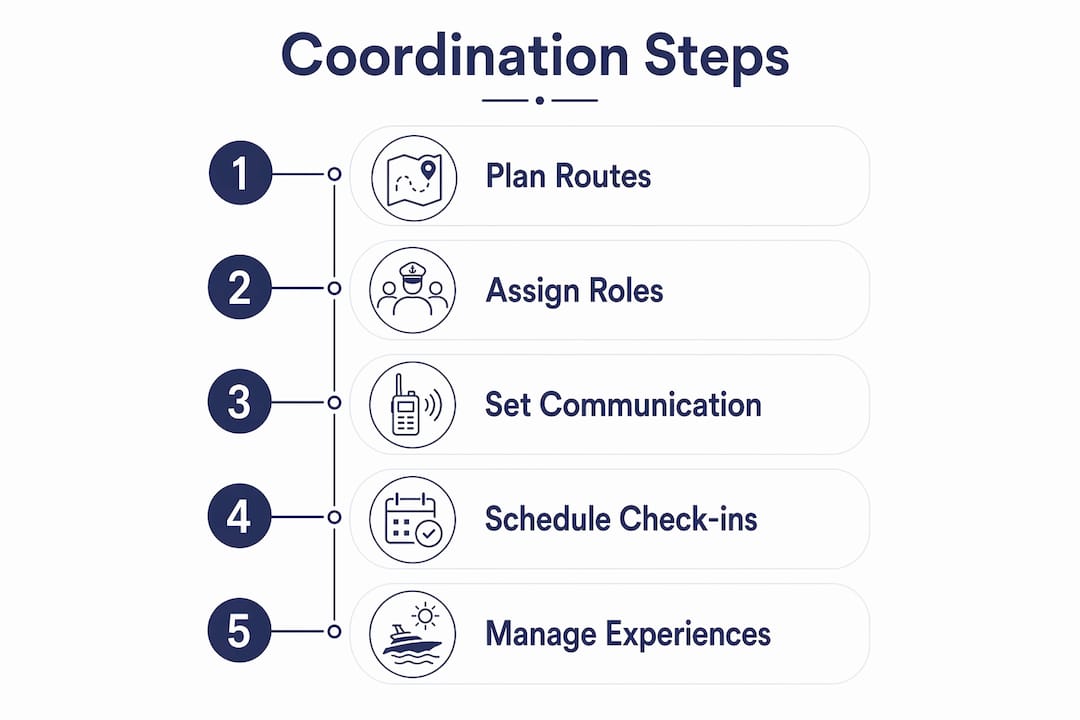
Assigning distinct roles is the single most effective way to prevent confusion and keep the guest experience consistent across every yacht. When everyone knows who is responsible for what, decisions get made faster and problems get solved before guests even notice them.
The core roles for any flotilla look like this:
- Fleet coordinator. This person owns the big picture. They manage the overall schedule, communicate with marinas, handle any changes to the route, and serve as the single point of contact for all skippers. Ideally, the fleet coordinator sails on the lead boat.
- Individual skippers. Each skipper is responsible for the safety and navigation of their own vessel. They follow the agreed route but have full authority over their boat. Skippers communicate directly with the fleet coordinator via VHF.
- Liaison host (one per yacht). This is a guest or crew member on each boat who handles communication between their yacht and the fleet coordinator. They relay updates to their group, collect dietary needs and activity preferences, and flag any issues early.
- Event or experience manager. For corporate events or larger flotillas, an event manager coordinates group activities, shore excursions, and catering across all yachts. Effective event teams work across functions to handle bookings, guest relations, and on-site service simultaneously.
- Safety officer. On larger flotillas, one person should be designated to monitor weather forecasts, track all vessels on AIS, and manage emergency protocols. This role can overlap with the fleet coordinator on smaller groups.
Clear communication flow matters as much as the roles themselves. Skippers talk to the fleet coordinator. Liaison hosts talk to their skipper. Guests talk to their liaison host. This hierarchy keeps the VHF channel clean and prevents information overload.
How to manage and personalize group experiences across multiple yachts
One of the real joys of a flotilla is that each yacht can have its own character while still being part of the same adventure. Sharing guest preferences in advance with every crew member, including dietary requirements, activity interests, and mobility considerations, is the most direct way to deliver a consistent and personal experience across the fleet.
Practical ways to personalize the experience across boats include:
- Collect a preferences form before departure. Ask every guest about dietary needs, preferred activities (snorkeling, hiking, paddleboarding), and any physical limitations. Share this with every skipper and liaison host.
- Vary the activity menu by boat. Not every guest wants the same thing. One yacht might anchor near a dive site while another heads to a beach bar. Coordinating different activities for different boats, while reuniting the group for shared meals, keeps everyone genuinely happy.
- Coordinate catering across the fleet. If you are provisioning multiple yachts, use a shared shopping list to avoid duplication and cover all dietary needs. For group dinners ashore, book restaurants that can accommodate the full party with advance notice.
- Create shared moments that feel special. A synchronized sunset toast across all yachts, a group swim at a secluded bay, or a shared barbecue on the beach are the memories guests talk about for years. These moments do not happen by accident. They require planning.
- Use personalization strategies to handle surprises gracefully. When a guest has an unexpected need, a well-briefed crew can respond without drama because the information was shared in advance.
What common mistakes should you avoid in multi-yacht charters?
Poor timing and coordination failures are the most common reasons multi-yacht charters go sideways. Missed rendezvous points, delayed departures, and communication blackouts create a ripple effect that ruins the group experience for everyone. The good news is that most of these problems are entirely preventable.
The most frequent mistakes and how to fix them:
“Marine radio practice and VHF are essential for safety communication, beyond chat apps.” — RYA onboard communications
Relying solely on WhatsApp for coordination is the number one error. When cell coverage drops, the group loses its communication thread entirely. Always treat VHF as the primary channel and apps as a supplement.
Skipping the pre-departure briefing is the second most common mistake. Every skipper and liaison host should meet in person or on a video call before the first day to align on routes, roles, emergency contacts, and the shared VHF channel. This 30-minute investment prevents hours of confusion on the water.
Overloading the schedule is another trap. Groups often try to pack too many stops into each day, which means the flotilla is always running late and skippers feel pressure to push through deteriorating weather. Build breathing room into every day and let the sea set the pace.
Pro Tip: Establish a daily check-in time, for example 0800 each morning on the agreed VHF channel, where every skipper confirms their position and plan for the day. This one habit keeps the whole fleet connected and surfaces problems before they escalate.
Key takeaways
Successful multi-yacht charter coordination requires reliable VHF communication, clear role assignments, and a detailed but flexible route plan shared across every vessel before departure.
| Point | Details |
|---|---|
| VHF radio is non-negotiable | Fixed and handheld VHF units are the safety backbone; apps are a supplement, not a replacement. |
| Assign a fleet coordinator | One person owning the big picture prevents confusion and keeps all skippers aligned. |
| Map waypoints, not just destinations | Share GPS coordinates for every stop so every skipper has identical, actionable information. |
| Personalize by boat, unite for shared moments | Collect guest preferences in advance and plan both individual activities and group experiences. |
| Build in buffer time | A flexible schedule absorbs weather delays and repairs without derailing the whole flotilla. |
What I’ve learned from years of watching flotillas succeed and fail
The groups that have the most fun on multi-yacht charters are almost never the ones with the most elaborate plans. They are the ones with the clearest communication and the most relaxed attitude toward the unexpected. I have seen beautifully detailed itineraries fall apart because one skipper did not know which VHF channel the group was using. I have also seen loose, informal flotillas in Greece produce genuinely magical weeks because one person took ownership of the daily briefing and kept everyone informed.
The thing most first-time flotilla organizers underestimate is how much energy goes into the human side of coordination, not the nautical side. Getting twelve people across three yachts to agree on a dinner spot is harder than navigating a tricky anchorage. Assigning a liaison host on each boat, someone who is socially confident and genuinely enjoys organizing people, solves this problem almost completely.
My honest advice: invest your planning time in communication protocols and role clarity before you spend a single hour on route optimization. A great route with poor communication produces a stressful trip. A simple route with excellent communication produces an unforgettable one. And if you want to understand the full charter process before committing to a flotilla, that knowledge pays dividends on the water.
— Sail
Plan your multi-yacht adventure with Sailarmada
Sailarmada specializes in exactly this kind of group sailing experience, from intimate flotillas of two or three yachts to larger fleet adventures across Greece, Croatia, Sardinia, and beyond. The team handles route planning, skipper coordination, and provisioning so you can focus on enjoying the trip rather than managing the logistics. Every booking comes with experienced skippers who know the waters and the anchorages, and the platform makes it straightforward to book your group sailing holiday with flexible options for different yacht types and departure dates. If you want to understand why a private flotilla beats a resort holiday for groups, the answer is on the private charter benefits page. Your flotilla is waiting.
FAQ
What is the best communication tool for multi-yacht charters?
VHF radio is the most reliable communication tool for coordinating multiple yachts at sea, with fixed units covering 20 to 40 miles and DSC functionality for targeted safety alerts. Messaging apps like WhatsApp are useful for guest coordination but should never replace VHF for operational and safety communication.
How many people should coordinate a flotilla?
Every flotilla needs at least one fleet coordinator on the lead boat, plus a liaison host on each individual yacht. For groups of four or more yachts, adding a dedicated event or experience manager significantly improves guest satisfaction and reduces pressure on the skippers.
How do you keep multiple yachts on the same schedule?
Set departure windows rather than fixed times, agree on a daily VHF check-in, and pre-book anchorages so the lead boat always has a confirmed destination. Detailed flow planning with shared GPS waypoints keeps every skipper aligned without removing flexibility.
What is a flotilla sailing holiday?
A flotilla is a group of yachts sailing together along a shared route, typically with a lead boat carrying an experienced skipper or coordinator who guides the fleet. It combines the freedom of a private yacht with the social energy of a group trip, and it is the standard format for organizing group yacht trips in the Mediterranean.
How far in advance should you plan a multi-yacht charter?
Book at least six months ahead for peak summer season in Greece, Croatia, or Sardinia, where popular anchorages and marinas fill up quickly. This lead time also gives you space to collect guest preferences, assign roles, and brief every skipper before departure day.