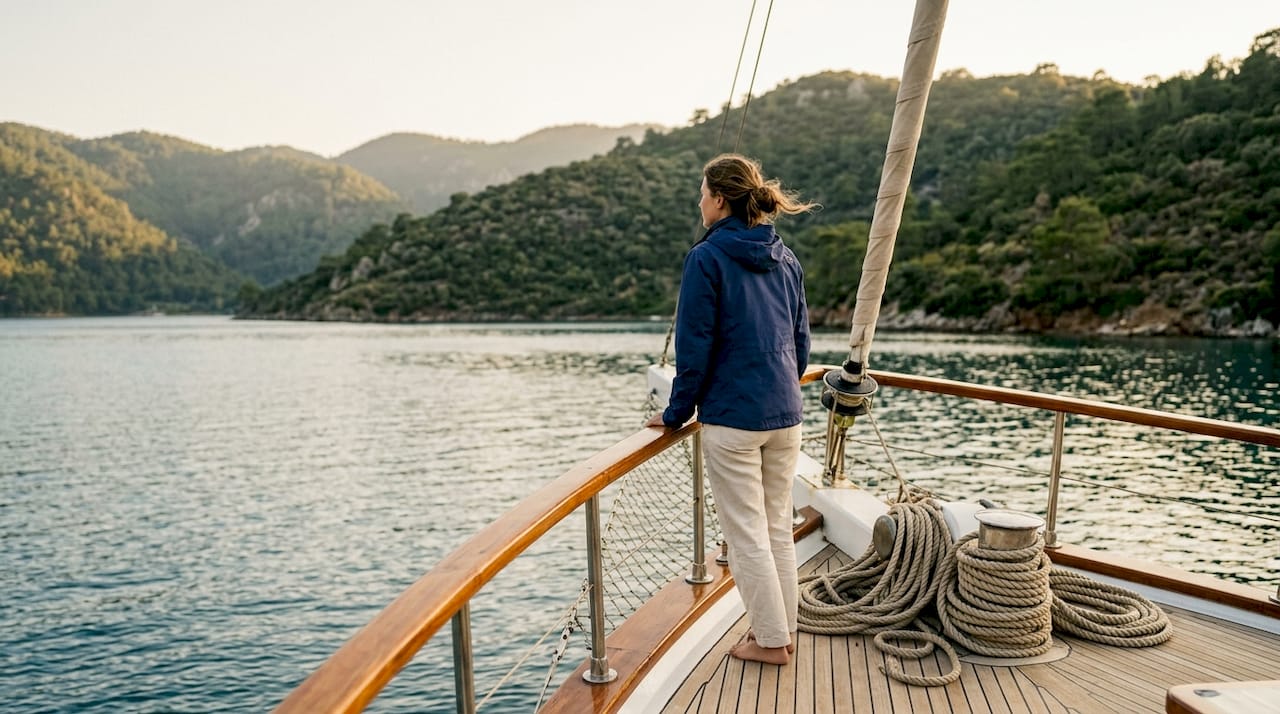
Turkey is the Mediterranean’s most compelling sailing destination in 2026, combining an 8,000 km coastline along the Aegean and Mediterranean seas with ancient ruins, crystal clear coves, and a traditional gulet sailing culture found nowhere else. The Turquoise Coast stretches from Bodrum to Antalya, offering sheltered bays, modern marinas, and a swim-anchor-relax rhythm that feels genuinely different from any other sailing holiday. Whether you are a seasoned sailor or stepping aboard for the first time, Turkey delivers a rare mix of adventure, history, and pure serenity on the water.
Why Turkey is the top sailing destination in 2026
Turkey’s southwest coast is purpose-built for sailing holidays. The Turquoise Coast runs from Bodrum in the north down through Marmaris, Göcek, and Fethiye to Antalya, and every stretch of it rewards exploration. Protected bays appear around nearly every headland, many of them reachable only by boat. That kind of exclusivity is hard to find anywhere else in the Mediterranean.
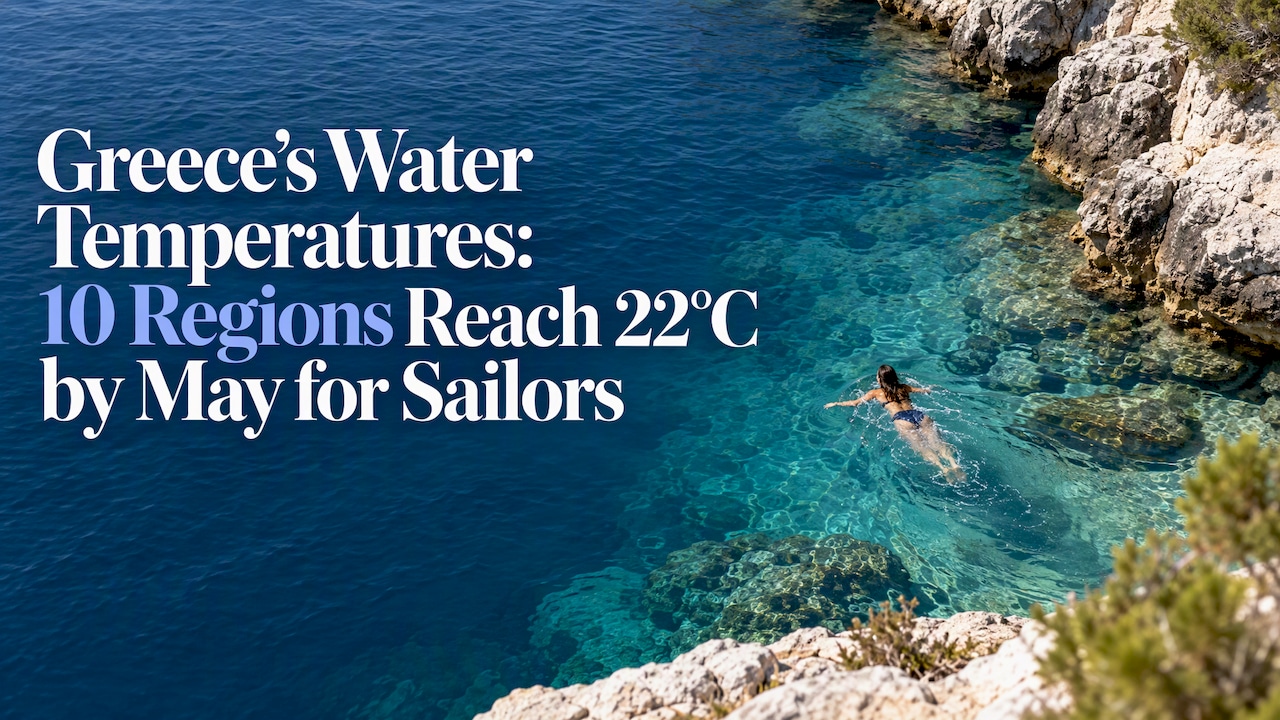
The climate is another major draw. The region enjoys a classic Mediterranean pattern with warm, dry summers and mild shoulder seasons. The sailing season runs from late april through late october, giving you a generous window to plan. Sea temperatures stay comfortable from may onward, and the light in the early morning over limestone cliffs is genuinely breathtaking.
Modern marina infrastructure at Bodrum, Marmaris, Göcek, and Fethiye means provisioning, repairs, and charter services are all within easy reach. You are never far from a well-stocked port, yet you can still drop anchor in a bay where your boat is the only one in sight. That balance of comfort and wildness is exactly what adventure travelers want.
- Bodrum: Lively charter hub with excellent provisioning, nightlife, and a stunning crusader castle
- Marmaris: Large marina with easy access to the Gökova Gulf and its remote anchorages
- Göcek: Quieter, upscale base popular with gulet charters heading toward the Lycian Coast
- Fethiye: Gateway to the 12 Islands and the classic Blue Cruise route south to Olympos
Pro Tip: Book your charter base in Göcek or Fethiye if you want to spend more time at anchor and less time motoring between ports. Both towns sit right at the entrance to the most scenic stretches of the Lycian Coast.
What is the Blue Cruise and what routes can you sail?
The Blue Cruise is Turkey’s signature sailing experience, and it is unlike anything else in the Mediterranean. You board a traditional wooden gulet, a two-masted motor-sailor built for comfort rather than speed, and spend 4–7 nights moving between anchorages at a pace that feels almost meditative. The gulet crew handles everything. Your job is to swim, eat, and watch the coastline change.
Daily transfers typically run 30 minutes to 2 hours, mostly under motor rather than full sail. Gulets are heavy boats and sailing is weather dependent, so actual time under canvas varies. If you are expecting racing-style sailing, a gulet cruise will surprise you. If you want a nature-first holiday with the sea as your constant companion, it will exceed every expectation.
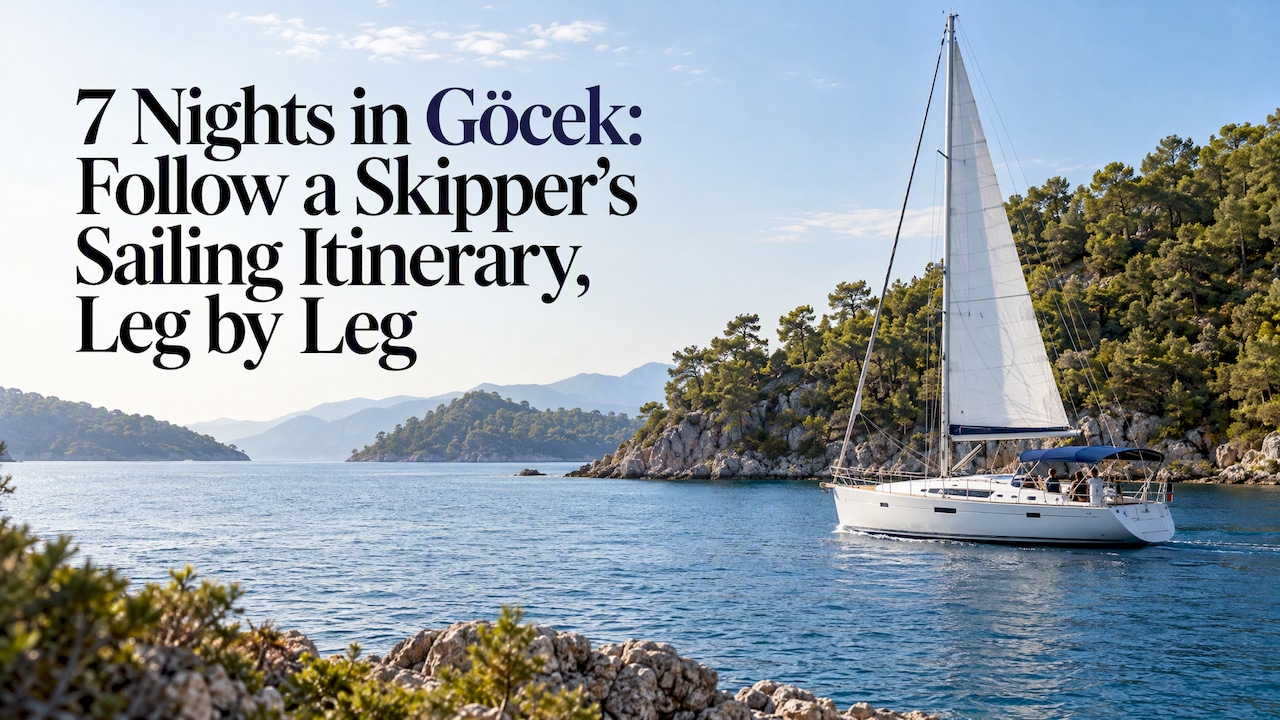
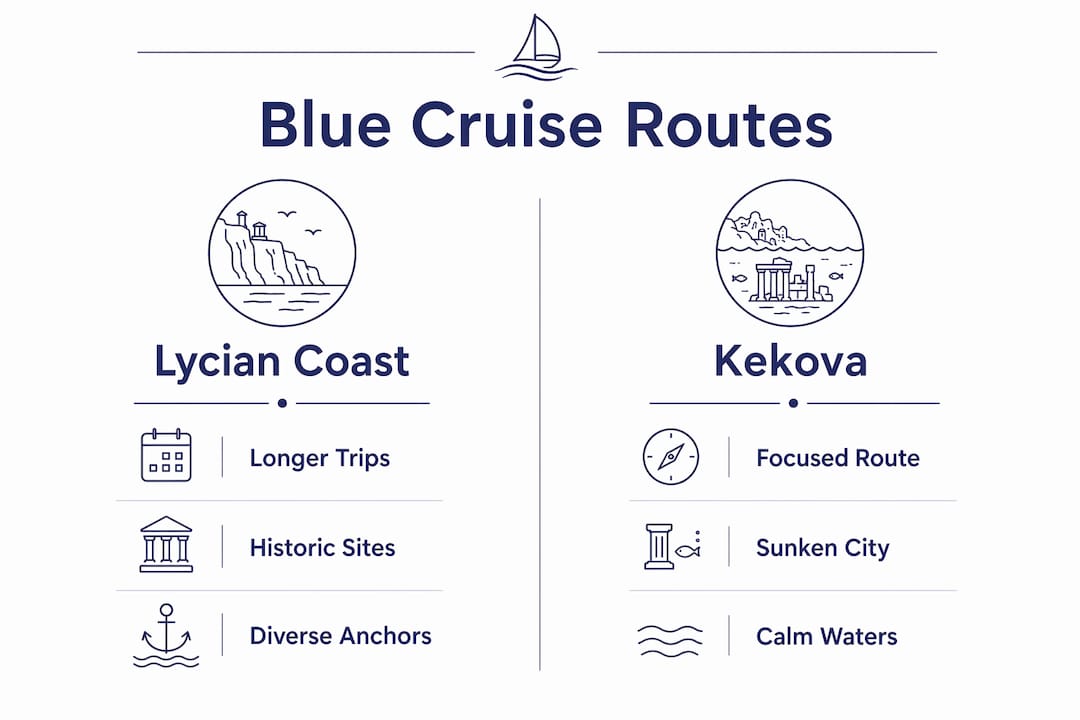
The most iconic route is the 7-night Lycian Coast itinerary. A popular Blue Cruise route covers Fethiye, the 12 Islands, Gemiler Island, Kalkan, Kaş, the sunken city of Kekova, and Olympos, with transfer service from Antalya airport commonly arranged at the end. Each stop adds a new layer, from ancient Lycian tombs carved into sea cliffs to Roman ruins half-submerged in turquoise water.
- Day 1 – Fethiye: Board your gulet, explore the old town, and anchor in the 12 Islands bay for your first swim
- Day 2 – Gemiler Island: Snorkel over Byzantine ruins and walk the ancient path to a hilltop church
- Day 3 – Kalkan: Anchor off a whitewashed hillside town and dine at a rooftop seafood restaurant
- Day 4 – Kaş: Explore a charming harbor town with Lycian sarcophagi sitting right on the streets
- Day 5 – Kekova: Drift over the sunken city by kayak or glass-bottom boat, one of the most surreal sights in Turkey
- Day 6 – Olympos: Anchor in a wild bay backed by forested mountains and visit the ancient Lycian city on shore
- Day 7 – Finike or Antalya: Final morning swim before disembarking and transferring to the airport
“The swim-anchor-eat-rest rhythm is the core event of a Blue Cruise. The sea is not the backdrop. It is the whole point.”
Pro Tip: Longer Lycian Coast routes deliver a fuller history immersion, while a focused Kekova route gives you concentrated ruins in fewer days. Match your itinerary length to how much history versus pure relaxation you want.
When is the best time to sail Turkey in 2026?
Timing shapes your entire Turkey sailing experience. The sailing season runs from late april to late october, with warmest seas in july through october. Peak season in july and august brings the most reliable warmth but also the most boats, the highest prices, and the busiest anchorages.
May, june, september, and early october offer a genuinely better balance for most adventure travelers. Seas are warm, anchorages are quieter, and charter prices drop noticeably. You can drop anchor in a bay that feels completely private, which is rare in peak summer.
The meltemi wind is worth knowing about. This strong northerly blows across the Aegean in july and august, which can make sailing conditions choppy on exposed stretches. Experienced skippers route around it, but it does affect daily plans. Shoulder season sailing sidesteps most of the meltemi’s intensity.
- May and june: Warm but not hot, fewer boats, excellent value, wildflowers still on the hillsides
- July and august: Peak warmth, livelier ports, higher prices, meltemi wind a factor on Aegean routes
- September and early october: Warm seas, golden light, harvest season in coastal villages, the best overall balance
Choosing your dates well is one of the most impactful decisions you make when planning a Turkey sailing trip. A guide to choosing sailing holiday dates can help groups align on the right window for their priorities.
What cultural and historical experiences make Turkey unique?
No other Mediterranean sailing destination layers history this densely onto a coastline. Turkey’s Turquoise Coast holds ancient Lycian tombs, sunken cities, Roman ruins, and Ottoman influences all within a single week’s sailing. Sites like Ephesus, Kekova, and the rock tombs above Dalyan are accessible directly from the water. You anchor, swim ashore, and walk into a 2,000-year-old city.
The cultural texture extends beyond ruins. Remote villages along the coast still serve freshly caught fish at waterfront restaurants where the menu depends on what came in that morning. Local bazaars in Kaş and Fethiye sell handmade textiles, spices, and ceramics at prices that feel refreshingly honest. A traditional hammam in any coastal town rounds out the experience in a way that no beach resort can replicate.
Turkey also holds a unique position as a crossroads of Ottoman, Roman, and Greek heritage. That layering creates a depth of experience that destinations like Croatia or Sardinia, beautiful as they are, simply cannot match. Sailing Turkey is as much a cultural education as it is a water sport.
| Experience | Turkey | Other Mediterranean destinations |
|---|---|---|
| Sunken cities from the boat | Yes (Kekova) | Rare |
| Lycian rock tombs above anchorages | Yes | No equivalent |
| Roman ruins walkable from anchor | Yes (Olympos, Ephesus nearby) | Limited |
| Ottoman bazaars in port towns | Yes | No |
| Traditional gulet sailing culture | Unique to Turkey | No equivalent |
For travelers who want to go deeper into how sailing cultural experiences compare across the Mediterranean, the contrast with Turkey is striking every time.
How does Turkey’s geography support both adventure and comfort?
Turkey’s geography creates a sailing experience that genuinely balances wildness with hospitality. Sheltered gulfs like Gökova offer authentic remoteness that is hard to find elsewhere in the Mediterranean. In Gökova, you can anchor mid-afternoon and have the entire bay to yourself, surrounded by pine-covered mountains dropping straight into the sea. That kind of solitude is rare and precious.
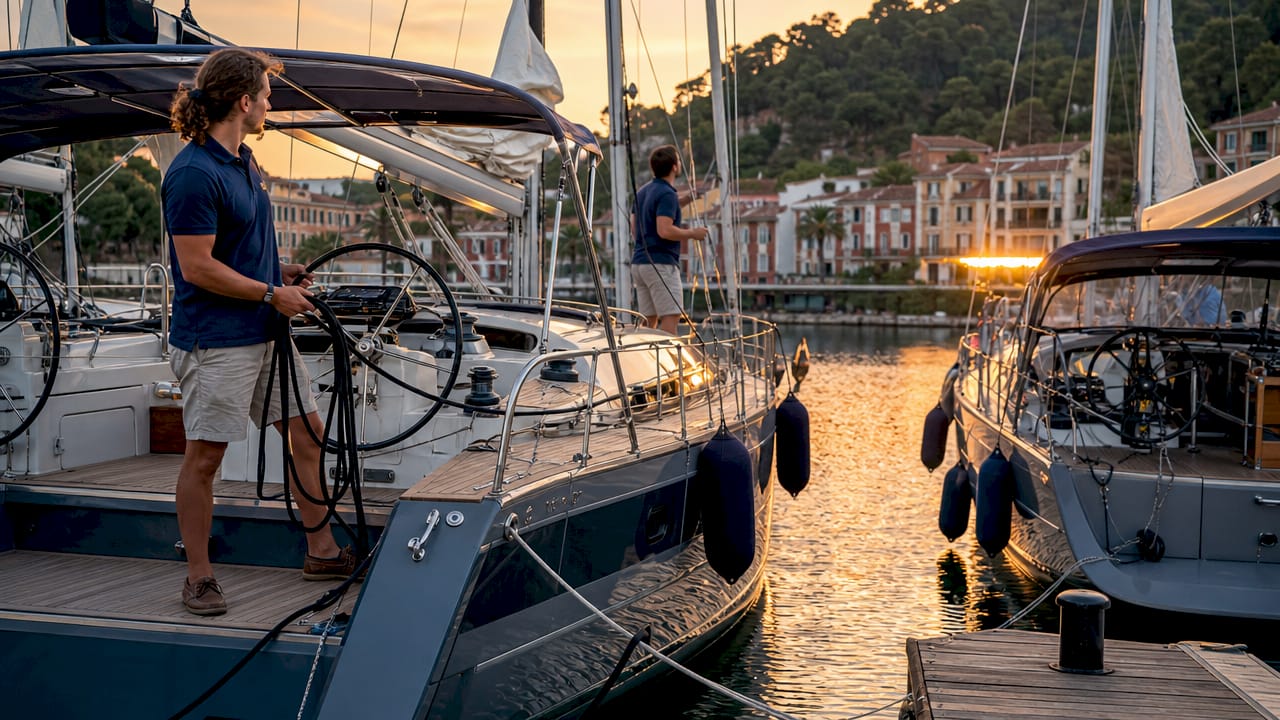
At the same time, the modern marina network means you are never stranded. Bodrum, Marmaris, Göcek, and Fethiye all offer full provisioning, fuel, repairs, and professional charter services. Crewed gulets come with a cook, a skipper, and a deckhand, so the experience is genuinely comfortable even in remote anchorages. You get the adventure without sacrificing the good food and cold drinks.
| Location | Type | Best for |
|---|---|---|
| Bodrum | Lively marina hub | Charter base, nightlife, provisioning |
| Gökova Gulf | Remote, sheltered gulf | Solitude, nature, wild anchorages |
| Göcek | Quiet upscale marina | Gulet charters, calm sailing |
| Kekova | Historic anchorage | Ruins, snorkeling, photography |
| Olympos | Wild bay with ruins | Adventure, hiking, history |
The contrast between remote gulfs and accessible hubs is what makes Turkey work for such a wide range of travelers. You can spend three days in complete solitude and then pull into Bodrum for a proper dinner ashore. Very few destinations in the world offer that range within a single week’s sailing.
Pro Tip: If your group includes first-time sailors, start your charter in Göcek rather than Bodrum. The calmer waters of the Göcek bays build confidence quickly, and the scenery rewards you from day one.
Key Takeaways
Turkey’s Turquoise Coast is the best sailing destination in 2026 because it combines 8,000 km of coastline, authentic Blue Cruise culture, rich Lycian history, and a geography that delivers both wild solitude and modern comfort within a single itinerary.
| Point | Details |
|---|---|
| Turquoise Coast geography | Bodrum to Antalya offers sheltered bays, modern marinas, and remote anchorages in one route. |
| Blue Cruise rhythm | Gulet sailing is a slow, swim-anchor-eat-rest experience, not a racing or port-hopping holiday. |
| Best timing | May, june, september, and early october deliver warm water, fewer boats, and better value. |
| Cultural depth | Lycian tombs, sunken cities, and Ottoman bazaars are accessible directly from the water. |
| Adventure and comfort balance | Remote gulfs like Gökova sit alongside fully equipped marinas for a flexible sailing week. |
My honest take on sailing Turkey in 2026
I have watched a lot of travelers arrive in Turkey expecting a sailing holiday and leave having had something closer to a life experience. The Lycian Coast does that to people. The moment you drift over the sunken city at Kekova in the early morning light, with no other boats around and the ruins visible through crystal clear water below your hull, you understand why this coastline keeps pulling people back.
The swim-anchor-relax rhythm takes a day to settle into, especially if you are used to covering ground on holiday. By day two, most people stop checking their phones and start paying attention to the color of the water. That shift is the whole point of a Blue Cruise, and Turkey delivers it better than anywhere else I know.
My practical advice: do not try to see everything on one trip. Choose between a history-focused Lycian Coast route and a scenery-first Gökova itinerary, and commit to it fully. Trying to combine both in a week leaves you feeling rushed in a place that rewards slowness. Also, go in september if you can. The light is golden, the anchorages are quiet, and the sea is still warm from a full summer of sun. It is the best version of Turkey on the water.
If you are comparing Turkey to Greece for your 2026 sailing trip, both are excellent but they offer genuinely different experiences. Greece wins on sailing conditions and island variety. Turkey wins on cultural depth, historical access, and the unique gulet experience. The right choice depends entirely on what you want from your week on the water.
— Sail
Plan your Turkey sailing holiday with Sailarmada
Sailarmada curates sailing holidays along Turkey’s Turquoise Coast for groups and families who want the full experience without the planning headache. From crewed gulet charters on the Lycian Coast to private sailing holidays tailored to your group’s pace and interests, the options are genuinely flexible.
Whether you are a group of friends chasing secluded anchorages or a family wanting a skipper-led week with history and swimming built in, Sailarmada matches you to the right yacht, route, and departure date. The team knows Turkey’s coastline well and can point you toward the anchorages that do not show up in generic travel guides. Browse Turkey sailing holiday options and find your perfect week on the Turquoise Coast.
FAQ
What makes Turkey a good sailing destination in 2026?
Turkey offers an 8,000 km coastline along the Aegean and Mediterranean, with sheltered bays, modern marinas, ancient ruins accessible from the water, and a unique gulet sailing culture. The combination of natural beauty, historical depth, and practical infrastructure makes it one of the strongest sailing destinations in the Mediterranean.
What is a gulet and is it right for me?
A gulet is a traditional Turkish wooden motor-sailor with two masts, built for comfort and slow coastal cruising rather than speed. It suits travelers who want a relaxed, swim-anchor-eat-rest holiday rather than active racing-style sailing.
When is the best time to sail Turkey?
May, june, september, and early october offer the best balance of warm water, fewer crowds, and lower prices. July and august are warmest but busiest, with the meltemi wind affecting Aegean routes.
How long should a Blue Cruise itinerary be?
Most Blue Cruise itineraries run 4–7 nights. A 7-night Lycian Coast route from Fethiye to Olympos gives you the fullest combination of history, scenery, and relaxed sailing time.
Do I need sailing experience to charter in Turkey?
No prior sailing experience is needed for a crewed gulet charter. The skipper and crew handle all navigation and boat management, so you can focus entirely on enjoying the coastline, the swimming, and the food.