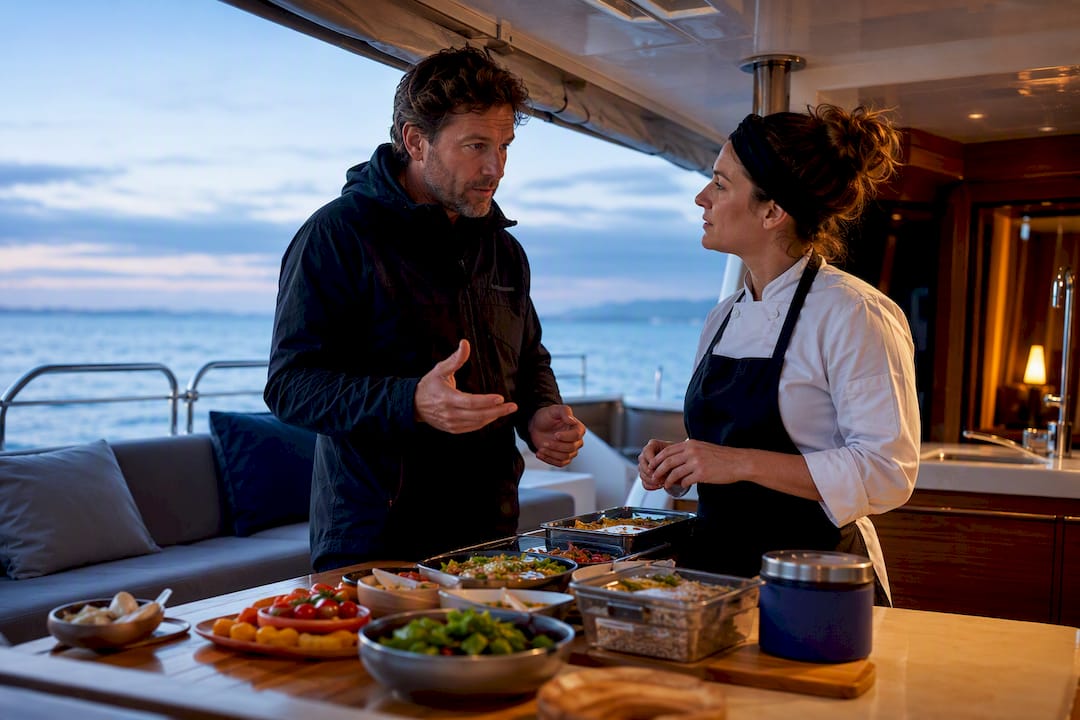
Most crewed yacht charters can accommodate common dietary needs when you give the crew clear details before provisioning begins. Vegetarian, vegan, gluten-free, and nut-free requests are usually straightforward. Severe allergies need explicit confirmation from the chef and a documented emergency plan, not just a note in a booking form. Start by filling out your preference sheet now, then schedule a direct call with the chef to confirm.
TL;DR:
- Most common dietary requests like vegetarian, vegan, gluten-free, and nut-free are straightforward to accommodate with proper communication and advance notice.
- Severe allergies require explicit confirmation, detailed documentation, and a safety plan including emergency medication and evacuation procedures.
- Chefs run disciplined systems such as dedicated prep zones and color-coded tools to prevent allergen cross-contact in small galley kitchens.
- Proper handling of complex restrictions like kosher or multiple overlapping diets depends on sufficient lead time and reliable ingredient sourcing, especially on remote islands.
- Vague requests increase risk; detailed, written communication specifying allergens, severity, and dietary laws ensures nothing is overlooked during provisioning and meal preparation.
Table of Contents
- Getting Your Dietary Needs on Charter Right From the Start
- Inside the Galley: How Chefs Actually Manage Special Diets
- Which Dietary Needs Charters Handle Well (and Which Take More Planning)
- Managing Severe Allergies and Building a Safety Plan
- What Provisioning Realistically Looks Like Once You’re Aboard
- How to Word Your Dietary Requests So Nothing Gets Missed
- SailArmada’s Copyable Checklist for Embarkation Day
- Why a Crewed Charter Often Simplifies Mixed-Diet Travel
- Let SailArmada Handle the Dietary Coordination for You
- Where to Learn More
- Sources
Getting Your Dietary Needs on Charter Right From the Start
Timing decides whether your meals go smoothly or your chef ends up scrambling in a foreign port with no substitute ingredients in sight. Provisioning for a private charter typically happens once, before departure, so the crew needs your full picture early rather than a last-minute email.
A workable timeline looks like this:
- Well in advance: submit a detailed preference sheet covering every guest, not just the person with the allergy.
- A few weeks before: get written or verbal confirmation from the chef that each request is understood and plannable.
- Just before boarding: do a final check, especially if anyone’s needs changed or new guests joined the trip.
The preference sheet itself needs more than “no nuts.” Separate a true allergy from an intolerance and from a simple preference, since a crew treats each one differently. Note severity (mild discomfort versus anaphylaxis), the usual reaction, and any medication the guest carries. Crew-focused galley guidance treats this documentation as a safety matter, not a courtesy, and that framing should shape how carefully you fill out the form. Send the sheet to your broker, then follow up directly with the chef or captain for acknowledgment. A form sitting in an inbox helps nobody.
Inside the Galley: How Chefs Actually Manage Special Diets
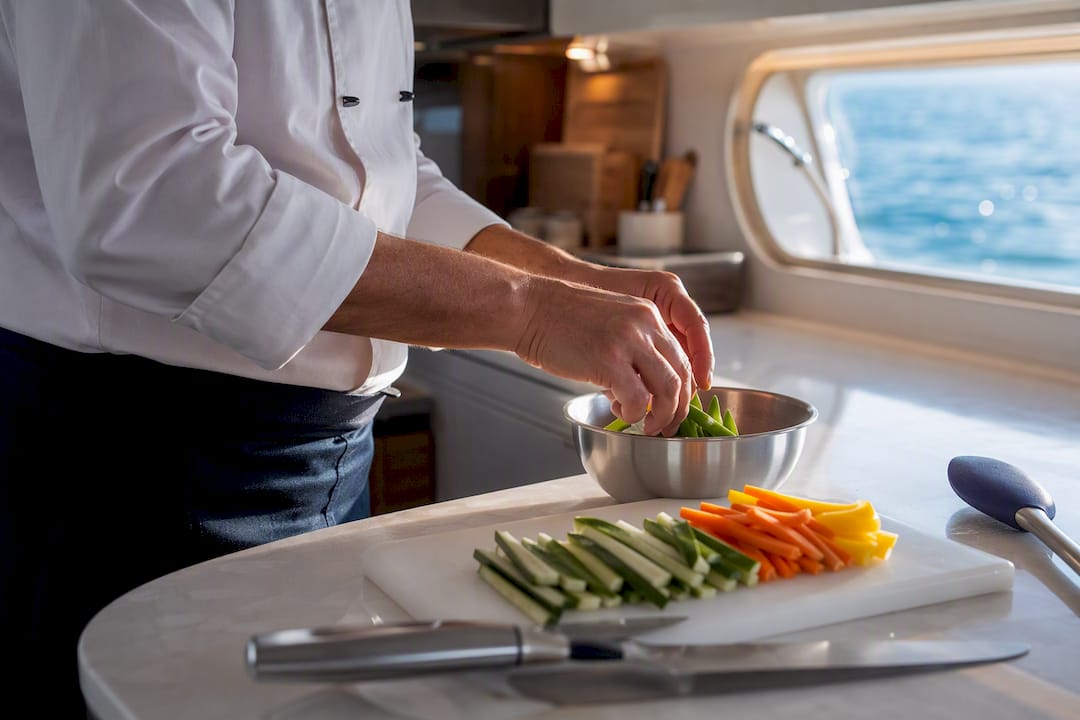
A charter galley is small, often no bigger than a home kitchen, which makes cross-contact prevention a matter of discipline rather than square footage. Experienced chefs run informal but consistent systems to keep allergen-free meals genuinely allergen-free.
Common practices include:
- Dedicated prep zones or staggered prep times for allergen-free dishes, done first before any allergen touches the galley.
- Color-coded cutting boards and utensils reserved solely for gluten-free, dairy-free, or nut-free meals.
- Sealed, separately stored ingredients so a shared pantry doesn’t become a contamination risk.
- Labeled plates during service, especially on nights with a mixed menu for a group with varied needs.
Menu design matters too. A skilled chef builds one cohesive menu with modular swaps (a different sauce, a grain substitute) rather than cooking two entirely separate meals every night, which keeps the experience feeling shared rather than split. It’s also worth knowing chefs sometimes decline a request outright, not out of stubbornness but because a specific allergen (shellfish residue in a tight galley, say) can’t be fully isolated on a small boat.
Pro Tip: Ask your chef directly whether they’ve prepared for your specific allergen before, not just “dietary restrictions” in general. A chef confident with gluten-free cooking may have never handled a tree-nut allergy, and that gap is worth surfacing before you’re at sea.
Which Dietary Needs Charters Handle Well (and Which Take More Planning)
Vegetarian, vegan, gluten-free, dairy-free, and nut-free requests are now routine on most charters. Halal is usually manageable with advance notice on protein sourcing. Kosher is the outlier: proper certification and dedicated cookware often aren’t available on a private yacht, so it typically requires extra lead time, and in some cases a guest may need to supplement with pre-packaged kosher-certified items.
Medical and lifestyle diets sit in a middle category:
- Low-FODMAP, keto, and paleo are workable but depend on the chef having specific specialty items on hand, not just general willingness.
- Diabetic or low-sodium diets are common enough that most chefs plan for them without issue.
- Multiple overlapping restrictions (vegan and gluten-free and nut-free, for one guest) require the longest notice, since every substitution needs its own substitution.
Island provisioning plays a bigger role than people expect. A chef stocking up in a small port with limited grocery options may not find the exact almond-milk brand you use at home, so expect close equivalents rather than identical products. Reviewing how meal planning works on smaller galleys gives a clearer sense of what’s realistic before you set expectations too high.
Managing Severe Allergies and Building a Safety Plan
Anaphylaxis and food intolerance are not the same emergency, and treating them the same way is where real risk creeps in. An intolerance causes discomfort; anaphylaxis can be fatal within minutes, which changes how the crew needs to prepare.
- Confirm the crew carries and knows how to use an epinephrine auto-injector if a guest has a history of anaphylaxis, and confirm the guest also brings their own as backup.
- Ask about antihistamines on board and whether the captain or chef has any first-aid or allergy-response training.
- Get a clear evacuation plan before departure: nearest hospital access from each anchorage, and who (captain or charter company) makes the call in an emergency.
- Bring documentation with you, including a written allergy action plan, relevant medical notes, and ideally a medical ID bracelet.
Airline special-meal policies offer a useful comparison here: even with advance requests and marked orders, providers routinely advise confirming every meal on delivery, because no kitchen can guarantee a zero-risk environment. A charter galley deserves the same scrutiny, not blind trust.
What Provisioning Realistically Looks Like Once You’re Aboard
Provisioning happens within a defined window before departure, and what’s available depends heavily on where the boat is docked. A marina near a major city offers far more specialty options than a small island port.
- Specific brands (a particular vegan cheese, a gluten-free pasta line) may not exist locally, so expect close substitutes rather than exact matches.
- Guests can bring their own specialty items, but label them clearly and hand them to the chef directly rather than leaving them in a shared fridge.
- Frozen and shelf-stable alternatives often fill gaps fresh product can’t, particularly for longer itineraries between provisioning stops.
Browsing practical food ideas for charter groups helps set realistic expectations for what a chef can source on short notice versus what needs to be requested weeks ahead.
How to Word Your Dietary Requests So Nothing Gets Missed
Vague language is the single biggest cause of dietary mishaps on charter. “I’m mostly vegan” tells a chef nothing useful; “I eat no animal products, but I can tolerate small amounts of dairy in cooked dishes” gives them a plan.
- For a true allergy: state the allergen, the reaction severity, and whether trace exposure is dangerous.
- For an intolerance: clarify the discomfort level and whether occasional small amounts are fine.
- For religious dietary law: name the standard (halal, kosher) and flag if certification matters to you specifically.
- For a lifestyle preference: say so plainly, since preferences get more flexibility than medical restrictions.
Ask the broker directly about cross-contact policies, request a chef confirmation call, and ask how meals get labeled during service. In mixed groups, frame requests around safety rather than personal taste, since that framing keeps the crew focused on what actually matters.
Pro Tip: Send your preference sheet as a written document, not a verbal mention during the booking call. Verbal details get lost between broker, chef, and captain; written details survive the chain.
SailArmada’s Copyable Checklist for Embarkation Day
Before boarding, confirm four things: the final preference sheet reached the chef, the chef confirmation call happened, any guest-supplied items are logged and labeled, and emergency medications are packed and known to the crew.
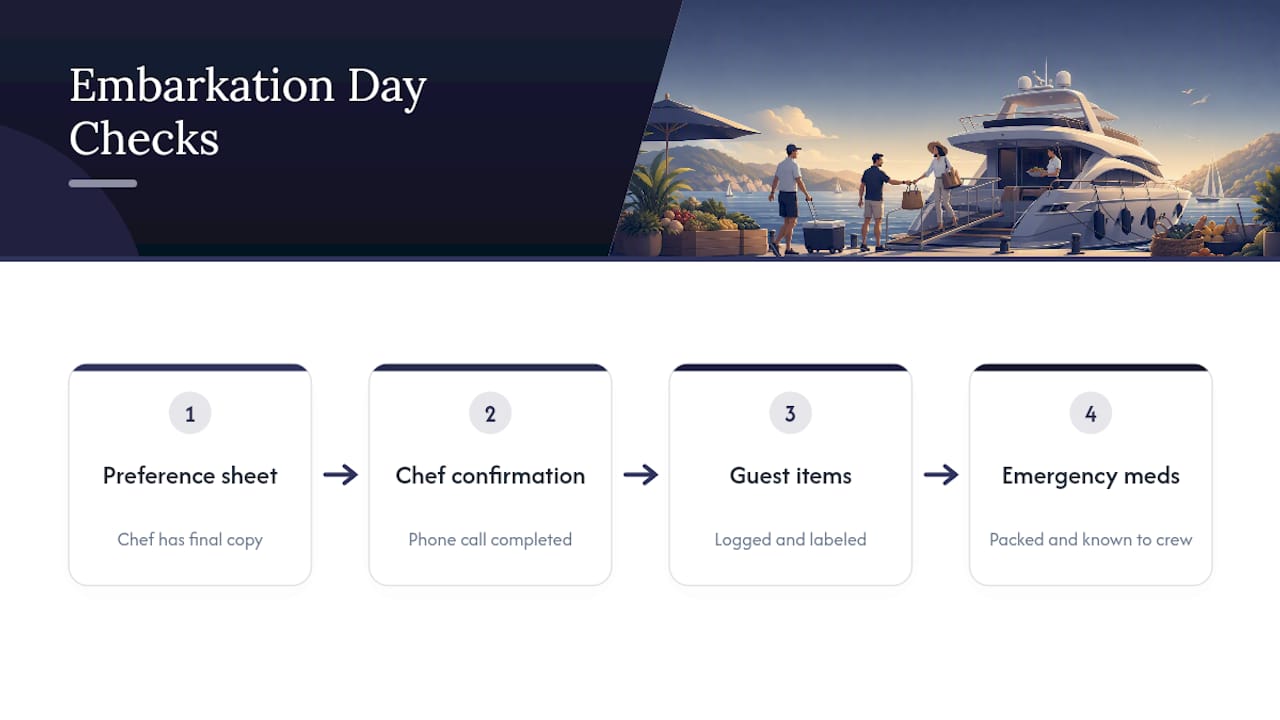
On embarkation morning, a short briefing works best. The captain or chef states plainly: “Here’s what we know about dietary needs on board, here’s how meals will be labeled, and here’s the emergency plan if anyone reacts.” Reviewing SailArmada’s provisioning process beforehand shows exactly how preference-sheet data flows into the actual grocery list.
Why a Crewed Charter Often Simplifies Mixed-Diet Travel
A single chef managing one galley for a week beats juggling different restaurants every night with a group of mixed diets. Continuity reduces the odds of miscommunication, since the same person cooking every meal remembers every restriction without a fresh explanation each time. The real limits are certified religious meals and remote provisioning stops, where specialty items simply aren’t available locally. SailArmada’s private charter approach leans into that continuity rather than fighting it.
— Sail
Let SailArmada Handle the Dietary Coordination for You
SailArmada is the alternative to piecing together restaurant reservations for a group with different dietary needs. One chef, one galley, one preference sheet, and every meal built around what your group can actually eat together. Provisioning gets coordinated directly with the chef before you arrive, special requests get flagged during booking rather than discovered on day one, and menus stay flexible enough for vegan, gluten-free, or halal guests to eat well alongside everyone else.
If your group has a mix of allergies, preferences, or a guest who eats seasonally and plant-based, browsing seasonal vegan menu ideas beforehand can help you brief the chef with specifics rather than generalities. When you’re ready, include your full dietary details when you inquire about a private sailing charter, and the provisioning conversation starts before you even step aboard.
Where to Learn More
For further reading, see Yachtly Crew’s galley dietary guidance, Royal Caribbean’s special dietary FAQ, and Walt Disney World’s special dietary requests page.