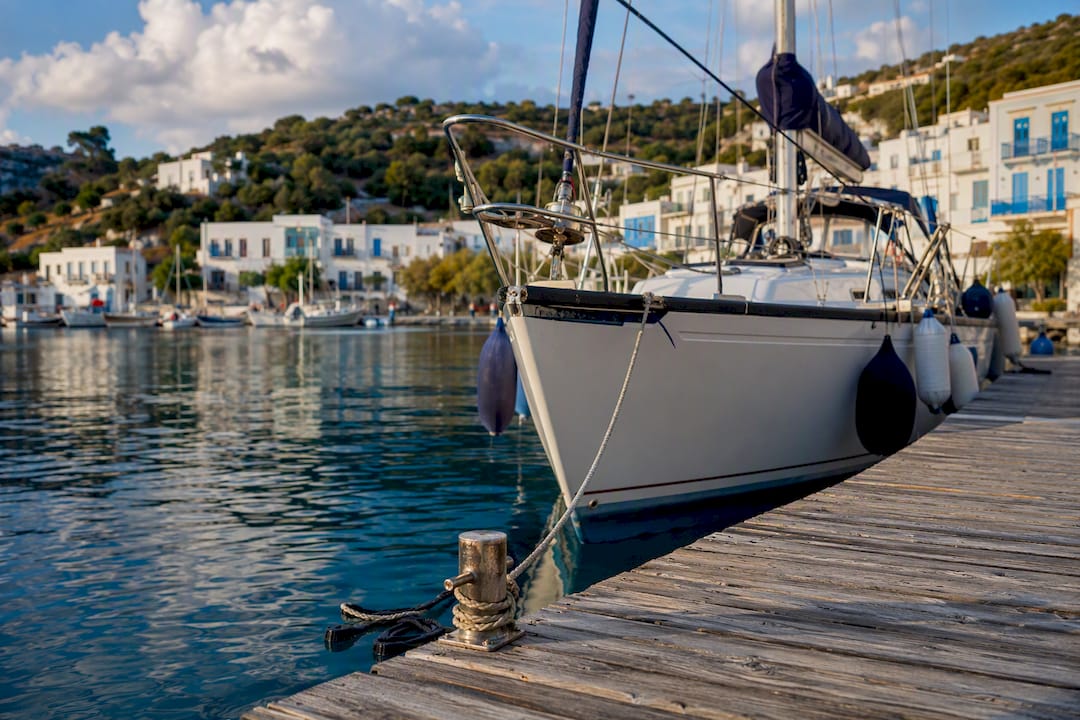
The single best Mediterranean island-hopping route for Greek-focused travelers is the Cyclades loop: fly into Athens, catch a ferry to Santorini, then work your way north through Paros and Naxos before finishing on Mykonos. This itinerary nicely covers the region with frequent ferry connections, and every stop delivers something different — volcanic drama, marble-paved villages, crystal-clear swimming coves. For a luxury upgrade, swap the ferry legs for a private crewed yacht and you wake up in a different secluded bay every morning.
Quick picks for other travel styles:
- Couples can enjoy a short trip from Santorini to Paros by high-speed ferry, with two iconic stops and enough time to relax.
- The Ionian relaxed route links Corfu to Kefalonia to Zakynthos, known for calmer seas, lush green hills, and fewer crowds than the Cyclades in summer.
- A Balearics short loop includes Mallorca, Ibiza, and Menorca, popular among nightlife lovers and beach seekers.
- A luxury yacht loop through the Cyclades or Saronic Gulf offers private coves and a flexible itinerary; for expert assistance, consult the Amalfi Coast Proposal Planner for bespoke shore experiences.
Table of Contents
- Which Mediterranean island group is right for your trip?
- Ready-made itineraries you can actually use
- How do you actually get between islands?
- What does a luxury charter actually look like?
- When is the best time to go island hopping?
- What does island hopping cost?
- How to plan and book a smooth island-hopping trip
- What to pack and how to stay safe on the water
- Sailarmada makes Greek island hopping genuinely easy
- Key Takeaways
- Why curated charters change the island-hopping experience
Which Mediterranean island group is right for your trip?
Focusing on one island cluster rather than jumping between distant regions keeps ferry schedules manageable and gives you more actual beach time. Here is how the main groups stack up.
Cyclades (Greece)
The Cyclades are the postcard version of Greece: whitewashed houses, blue-domed churches, and some of the most photographed sunsets on the planet. Santorini anchors the south, Mykonos delivers the nightlife in the north, and Paros and Naxos sit in the middle offering the best of both worlds. Ferry crossings between islands typically last several hours on conventional boats, or less time on high-speed catamarans. This group suits first-timers, couples, and anyone who wants iconic scenery without complicated logistics.

Ionian Islands (Greece)
The Ionians sit off Greece’s western coast and feel genuinely different from the Cyclades. Corfu has Venetian architecture and lush interior villages. Kefalonia offers dramatic sea caves and some of the clearest water in the Mediterranean. Zakynthos is home to the famous Shipwreck Beach. Seas here tend to be calmer than the Aegean, making the Ionians a favorite for families and first-time sailors. Ferry connections between islands are reliable, though less frequent than in the Cyclades.
Saronic Gulf (Greece)
The Saronic islands sit just south of Athens, making them the easiest group to reach from the Greek capital. Hydra is the standout: no cars, no motorbikes, just donkeys and cobblestone paths. Spetses and Aegina round out a relaxed three-island loop you can complete in five days. The Saronic is ideal for travelers short on time or those who want a quieter, more authentic Greek experience without flying to another island.
Dodecanese (Greece)
Rhodes and Kos are the big names here, but the Dodecanese chain stretches all the way to the Turkish coast and includes gems like Patmos and Symi. History runs deep: medieval castles, Byzantine churches, and ancient ruins share space with turquoise harbors. Crossings can be longer than in the Cyclades, so this group rewards travelers with at least ten days to spare.
Balearic Islands (Spain)
Mallorca, Ibiza, Menorca, and Formentera form Spain’s Mediterranean island-hopping circuit. Ibiza draws the party crowd; Menorca is a UNESCO Biosphere Reserve with quiet coves and almost no nightlife. Mallorca sits comfortably in the middle. Ferry connections between the four islands are solid, and the Balearics pair well with a few days in Barcelona if you are flying through.
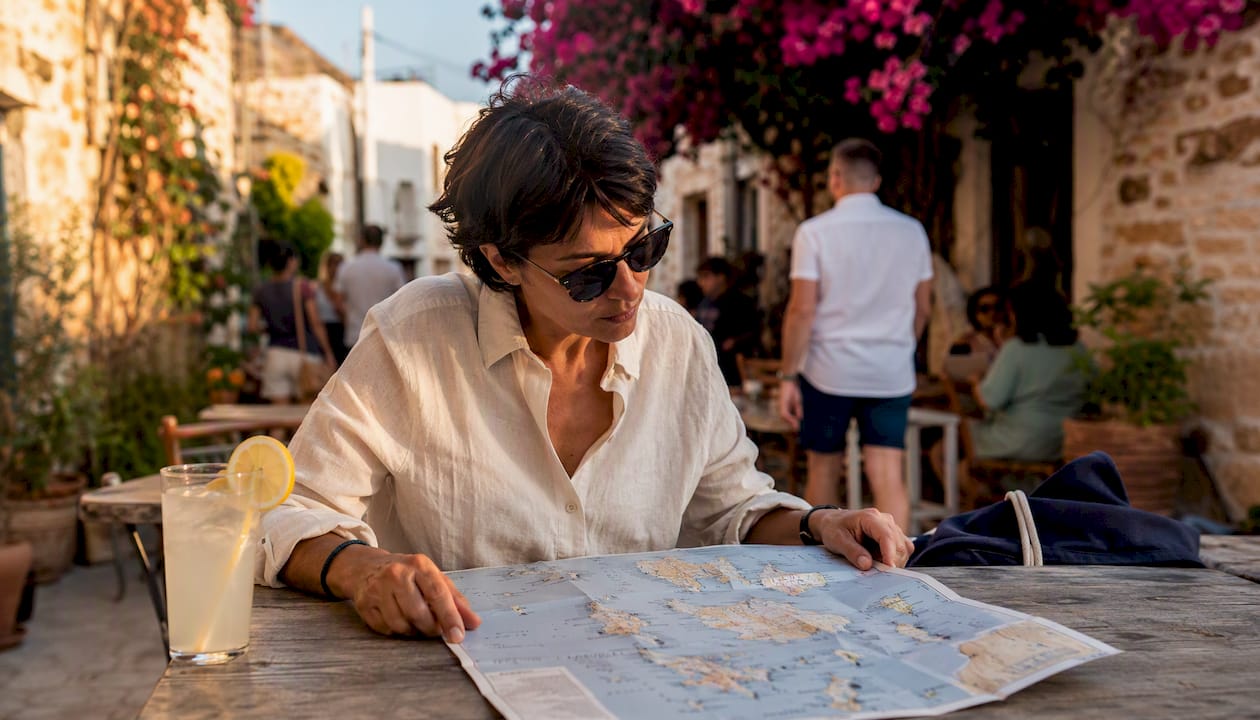
Pro Tip: Draw your route on a map before booking anything. If the islands you want to visit form a rough line or loop within one group, your logistics will be smooth. If they are scattered across two or three groups, you will spend more time on ferries than on beaches.
Ready-made itineraries you can actually use
A 7–14 day trip is the sweet spot for seeing multiple islands without spending your vacation in transit. Here are four templates you can adapt and book.
Quick Cyclades escape (3–5 days)
Perfect for a long weekend or a first taste of Greece.
- Day 1: Fly into Athens, transfer to Piraeus port, overnight ferry to Santorini.
- Day 2: Explore Oia at sunrise, hike the caldera rim, sunset cocktails in Fira.
- Day 3: Morning ferry to Paros (roughly 2 hours on a high-speed boat). Afternoon in Parikia’s old town, swim at Kolymbithres beach.
- Day 4: Day trip to Antiparos or a lazy beach day on Paros. Evening ferry back toward Athens or fly home from Paros airport.
- Day 5 (optional): Stop in Naxos on the way back for a half-day visit to the Portara and the old market.
Swap suggestion: Replace Paros with Naxos if you prefer calmer beaches and a more local feel.
Classic Cyclades loop (7–10 days)
The route most travelers dream about, and for good reason.
- Days 1–2: Arrive Santorini. Caldera views, wine tasting, sunset at Oia.
- Days 3–4: Ferry to Naxos. Rent a scooter, visit the Temple of Apollo, swim at Agios Prokopios.
- Days 5–6: Ferry to Paros. Explore Naoussa’s fishing harbor, paddleboard in the bay.
- Days 7–8: Ferry to Mykonos. Little Venice, beach clubs, nightlife.
- Days 9–10: Day trip to Delos (ancient ruins, UNESCO World Heritage Site), then fly home from Mykonos.
Who it suits: Couples, friend groups, and solo travelers who want a mix of history, beaches, and nightlife.
Extended Greek island adventure (10–14 days)
Add the Saronic Gulf or the Ionians to the classic loop for a richer, more varied trip.
- Days 1–2: Athens. Acropolis, Plaka neighborhood, fresh seafood at the port.
- Days 3–4: Ferry to Hydra (Saronic Gulf). No vehicles, gorgeous harbor, swimming off the rocks.
- Days 5–6: Ferry to Santorini via Piraeus or a direct seasonal connection.
- Days 7–8: Naxos for beaches and inland villages.
- Days 9–10: Paros for watersports and the old town.
- Days 11–12: Mykonos for nightlife and Delos day trip.
- Days 13–14: Fly home from Mykonos or return to Athens for a final night.
Luxury crewed yacht itinerary (7–10 days)
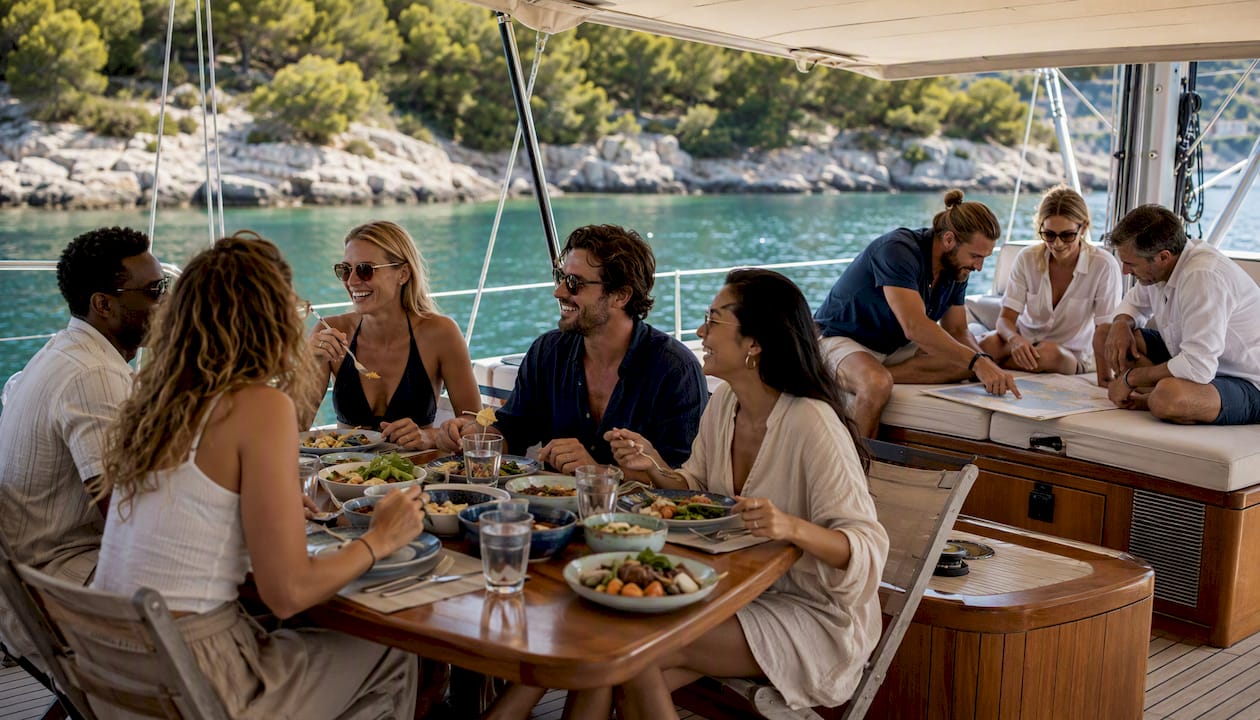
This is where island hopping becomes something else entirely. A crewed yacht charter lets you moor in secluded coves and anchor in private bays that cruise ships and ferries never reach.
- Day 1: Board in Athens (Lavrion or Piraeus marina). Sail toward the Saronic Gulf.
- Day 2: Anchor off Hydra. Morning swim in a private cove, afternoon walk into town.
- Day 3: Sail to Spetses. Lunch on deck, afternoon snorkeling, evening dinner ashore.
- Days 4–5: Cross to the Cyclades. Overnight at anchor near Milos or Folegandros.
- Days 6–7: Santorini. Moor in the caldera, watch the sunset from the boat with a glass of local wine.
- Days 8–9: Paros and Naxos. Chef prepares fresh catch on board; water toys deployed in the afternoon.
- Day 10: Return to Athens. Disembark, fly home.
Who it suits: Groups of 6–12, couples celebrating a milestone, families who want flexibility and privacy without hotel check-in stress.
How do you actually get between islands?
Your transport choice shapes the entire trip. Here is a clear breakdown of your options.
| Transport | Best for | Typical crossing time | Cost signal | Booking tip |
|---|---|---|---|---|
| Conventional ferry | Budget travelers, bikes, heavy luggage | 3–8 hours | $ | Book 4–8 weeks ahead in peak season |
| High-speed catamaran | Faster hops, day-trippers | 1–3 hours | $$ | Book 2–4 weeks ahead; sells out fast |
| Internal flight | Long island-to-island jumps | — | $$ | Useful for Dodecanese or Crete connections |
| Private yacht charter | Groups, luxury, flexibility | Varies by wind and route | $$$$ | Book 3–6 months ahead for summer |
High-speed ferries run frequently between the main Cyclades islands and are the most practical choice for most travelers. The Piraeus to Santorini high-speed crossing takes several hours; Santorini to Mykonos is a shorter trip by fast boat. Conventional ferries cost less but take longer and can feel rough in summer swells.
Internal flights make sense when you are jumping from, say, Athens to Rhodes or Santorini to Heraklion (Crete). They save half a day of travel but add airport hassle and limit luggage.
Weather disruptions are real, especially in July and August when the Meltemi wind picks up in the Aegean. It is advisable to build at least one buffer day into itineraries longer than a few days. Staying in harbor-front accommodation means you can check ferry status and board quickly without a long transfer from an inland hotel.
What does a luxury charter actually look like?
There are three main charter models, and the differences matter more than most first-timers expect.
| Charter type | What’s included | Best for | Cost signal | Flexibility |
|---|---|---|---|---|
| Crewed charter | Skipper + chef + crew, provisioning, water toys | Groups wanting full service | $$$$ | High — route adapts daily |
| Bareboat | Vessel only, you skipper it | Certified sailors, budget-conscious | $$ | Very high — total freedom |
| Flotilla | Group of boats sailing together, lead boat with guide | First-time sailors, social travelers | $$–$$$ | Moderate — shared route |
A crewed charter is the closest thing to a floating boutique hotel. Your skipper handles navigation and weather decisions; your chef sources local ingredients at each port and cooks on board. Water toys (paddleboards, snorkeling gear, kayaks) come standard on most crewed vessels. The flexibility to anchor in secluded bays that large cruise ships cannot reach is the defining advantage.
Bareboat charters hand you the keys and let you go. You need a recognized sailing qualification (RYA Day Skipper or equivalent) and ideally some logged sea miles. The cost is significantly lower than a crewed option, and you set your own pace entirely.
Flotillas are the social middle ground. You sail your own boat but follow a lead vessel with an experienced skipper and guide. Evening meals are often shared ashore, and the group dynamic makes flotillas popular with friend groups and couples who want some independence without full solo responsibility.
Catamaran vs. monohull: Catamarans offer more deck space, a stable platform, and shallower draft for getting close to beaches. Monohulls are more maneuverable in tight marinas and often feel more “sailing” to purists. For groups of six or more, a catamaran usually wins on comfort.
Pro Tip: A good luxury itinerary balances sailing time and shore time roughly 50/50. If your skipper is pushing for long passages every day, you are seeing the sea more than the islands. Aim for morning sails of three to four hours, then anchor by early afternoon.
When is the best time to go island hopping?
The shoulder seasons are the clear winners. May through June and September through October offer warm temperatures, calm seas, and far fewer crowds than the peak summer rush. Water temperatures in May are refreshing rather than warm, but by June they are perfect for swimming. September is arguably the best single month: the sea is at its warmest, the crowds have thinned, and prices drop noticeably from their August peak.
High summer (July–August) brings the Meltemi, a strong northerly wind that sweeps across the Aegean and can ground ferries and complicate sailing routes for days at a time. The weather is reliably sunny, but the crowds on Santorini and Mykonos are intense, prices hit their ceiling, and accommodation books out months in advance. Experienced skippers can work around the Meltemi, but it requires itinerary flexibility.
Off-season (November–March) is a different world. Many smaller islands shut down almost entirely: restaurants close, ferry schedules shrink to a few runs per week, and some hotels go dark until April. Crete and Rhodes stay more active year-round, but they are the exceptions.
Seasonal checklist:
- May–June: Book ferries and hotels 6–8 weeks ahead. Pack a light layer for evenings. Water shoes useful for rocky beaches.
- July–August: Reserve everything 3–4 months in advance. Build weather buffer days. Expect Meltemi disruptions in the Aegean.
- September–October: Best value window. Some smaller businesses close after mid-October. Water stays warm through September.
- Year-round: Travel insurance covering weather disruptions and medical evacuation is non-negotiable for island hopping.
For group sailing trips, May and early June are particularly good because charter availability is higher and the social atmosphere on the water is relaxed.
What does island hopping cost?
Costs vary enormously depending on your travel style, but here is a realistic picture.
| Budget category | Ferry-based (per person) | Mixed midrange (per person) | Luxury charter (per person) |
|---|---|---|---|
| Ferries / transport | — | — | Included in charter |
| Accommodation (7 nights) | — | — | Included in charter |
| Meals (7 days) | — | — | Partial (provisioning) |
Charter prices vary based on vessel size, season, and whether a crew is included. A crewed catamaran for a group of eight in the Cyclades in June can run anywhere from $6,000 to $20,000 for the week, split across the group. Per-person, that often compares favorably to a midrange hotel-based trip once you factor in meals, transfers, and activities. For a detailed look at yacht holiday pricing, Sailarmada’s pricing page breaks down what is typically included.
Money-saving tips: book ferries as soon as your dates are confirmed (early booking discounts exist on most routes), eat at locally run tavernas rather than harbor-front tourist spots, and travel in May or September to avoid peak-season surcharges on both accommodation and charters.
How to plan and book a smooth island-hopping trip
Good planning is what separates a trip that flows from one that feels like a series of near-misses. Work through these steps in order.
- Choose your island group first. Commit to one cluster (Cyclades, Ionian, Saronic, Dodecanese, or Balearics) before booking anything else. Mixing groups adds transit days and logistical risk.
- Book your international flights. Athens, Santorini, Mykonos, Corfu, and Rhodes all have direct connections from major US cities (usually via a European hub). Lock in flights before ferry or charter availability disappears.
- Reserve your yacht charter or key ferry legs. For peak season (July–August), book ferries and accommodation at least three to four months in advance. For shoulder season, six to eight weeks is usually enough.
- Book harbor-front accommodation. Staying close to the port cuts transfer time and lets you check ferry status easily. A two-night stay on your first island gives you a buffer if your flight is delayed.
- Arrange airport transfers in advance. On smaller islands, taxis are limited. Pre-book transfers or confirm your accommodation offers a pickup.
- Check ETIAS requirements. U.S. travelers visiting Greece and other Schengen countries will need to register with the European Travel Information and Authorization System before travel. It is a straightforward online process, but do it well before your departure date.
- Ask your charter provider the right questions. Confirm cancellation policies, what harbor fees are included, provisioning options, and whether the skipper handles cruising permits. A planning guide for private sailing trips covers the key questions to ask before you sign anything.
- Pack light and use soft bags. Hard-shell suitcases are awkward on boats and in small island taxis. A soft duffel or backpack fits into yacht storage far more easily.
What to pack and how to stay safe on the water
Island hopping rewards light packers. Here is what actually earns its place in your bag.
- Clothing: Versatile layers (a light fleece for evening sails), one smart outfit for nicer restaurants, and quick-dry fabrics for everything else. Linen works well ashore; avoid heavy denim.
- Footwear: Water shoes for rocky beaches and boat boarding, one pair of sandals, one pair of comfortable walking shoes for cobblestone villages.
- Sun and sea: High-SPF reef-safe sunscreen, polarized sunglasses, a rash guard for long days on deck.
- Health: Seasickness patches or wristbands (the Meltemi can make for choppy crossings), any prescription medication in carry-on luggage, and a basic first-aid kit.
- Connectivity: A local SIM or international plan. Coverage on small islands can be patchy; download offline maps (Google Maps or Maps.me) before you leave each port.
- Documents: Passport valid for at least six months beyond your travel dates, travel insurance documents, and ETIAS registration confirmation.
Medical facilities on the smaller Greek islands range from a single clinic to nothing at all. Santorini, Mykonos, Rhodes, and Corfu have hospitals, but a remote Cyclades island like Folegandros has only basic care. Travel insurance that covers medical evacuation is not optional here. It is the one thing you genuinely do not want to skip.
On a charter, tip your crew. Tipping the crew is customary and appreciated, often a percentage of the charter fee shared among skipper and crew. It is not mandatory, but it is expected and very much appreciated. Dress modestly when visiting churches or monasteries ashore: shoulders and knees covered, no swimwear.
Pro Tip: Book accommodation within a short walk of the harbor whenever possible to save time on each departure day, which adds up across a multi-island trip.
Sailarmada makes Greek island hopping genuinely easy
Planning a Greek island-hopping trip from scratch takes real effort: ferry schedules, charter contracts, skipper vetting, provisioning lists, harbor permits. Sailarmada handles all of it so you can spend your energy deciding which beach to swim at first.
Sailarmada’s curated Mediterranean sailing itineraries are built around the Cyclades, Ionian, and Saronic routes covered in this article, with experienced skippers who know exactly when to push through and when to drop anchor in a quiet bay and let the afternoon unfold. Private and group charters are both available, and every itinerary is flexible enough to swap an island or extend a stop if the mood calls for it. For groups and families who want to personalize every detail — a private chef, specific water toys, a family-friendly catamaran layout — Sailarmada builds that in from the start. Ready to stop planning and start sailing? Browse available dates and routes at sailarmada.com/private-sailing.
Key Takeaways
The Cyclades loop (Santorini, Paros, Naxos, Mykonos) is the single best starting point for Mediterranean island hopping, and May through June or September through October are the ideal months to go.
| Point | Details |
|---|---|
| Best route for first-timers | The Cyclades loop covers Santorini, Paros, Naxos, and Mykonos with easy ferry links and iconic stops. |
| Ideal trip length | A 7–14 day itinerary lets you see multiple islands without spending the trip in transit. |
| Best season to travel | May–June and September–October offer warm weather, calmer seas, and fewer crowds than peak summer. |
| Pick one island group | Staying within one cluster (Cyclades, Ionian, Saronic) keeps ferry schedules manageable and maximizes shore time. |
| Sailarmada for charters | Sailarmada offers curated private and group yacht charters across the Cyclades, Ionian, and Saronic with experienced skippers. |
Why curated charters change the island-hopping experience
There is a version of island hopping that most travel articles describe: ferry queues, heavy bags, checking in and out of hotels every two days, and spending a surprising amount of time waiting. And then there is the version where you wake up already at your next destination, the water is right there, and the only decision before breakfast is whether to swim first or eat first.
The difference is not just comfort. It is pace. A curated charter with an experienced skipper removes the logistical friction that quietly drains energy from a trip. When the Meltemi picks up unexpectedly in the Aegean, a good skipper reroutes to a sheltered bay on the lee side of an island and turns a potential disruption into an unexpected highlight. That kind of adaptability is impossible to replicate on a fixed ferry schedule.
What I find genuinely underappreciated is how much more of an island you see when you arrive by yacht. You anchor in a cove that has no road access, swim ashore, and spend the morning somewhere that the tour buses will never reach. Then you sail into the main harbor for lunch and the afternoon market. You get both versions of the island in one day. That is the real case for a charter, and it is why Sailarmada’s approach of combining curated routes with flexible skippers consistently produces trips that travelers describe as the best they have ever taken.
Useful sources and official references
- ETIAS — European Travel Information and Authorization System: The official EU portal for U.S. travelers to check ETIAS registration requirements before visiting Greece or any Schengen country.
- Sailarmada Destinations: Sailarmada’s curated destination pages covering Greece, Italy, Croatia, and beyond — useful for comparing routes and charter options.
- Sailarmada Curated Itineraries: Ready-made group sailing itineraries across the Cyclades, Ionian, and Saronic Gulf.
- A Luxury Guide to Mediterranean Island-Hopping by Yacht: — Detailed guide covering crewed charter logistics, Meltemi wind patterns, and shoulder-season recommendations.