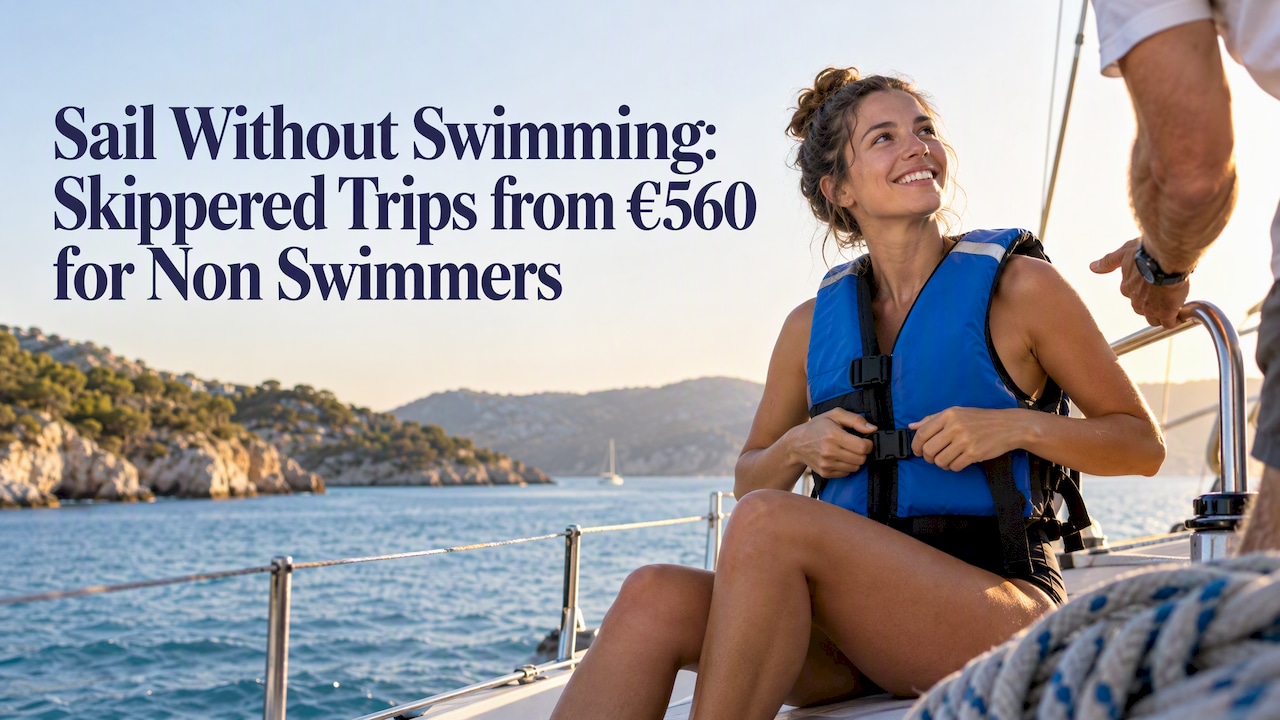
Yes, non-swimmers can absolutely go sailing, and plenty do it every season without a hitch. The trick is choosing skippered trips over solo dinghy sailing, wearing a properly fitted lifejacket the whole time you’re on deck, and steering clear of unsupervised swimming or snorkeling stops. Before you book, ask about passenger limits, safety briefings, and the crew’s emergency plan.
TL;DR:
- Non-swimmers should choose skippered trips on stable catamarans or boats with easy boarding methods to reduce the risk of falling or injury.
- A properly fitted bright lifejacket worn at all times on deck significantly lowers drowning risk and should be checked for a snug, secure fit before departure.
- Safety briefings, rescue gear, and clear emergency plans from experienced crews are essential for non-swimmers to feel secure and prepared during the trip.
- Asking detailed questions about the skipper’s experience, safety procedures, and boat features helps ensure the trip is suitable for non-swimmers and other physical limitations.
- Proper pre-trip preparation, including familiarization with gear and clear communication of needs, enhances confidence and safety for non-swimmers on sailing trips.
Table of Contents
- Which trip types work best if you can’t swim
- Lifejackets, flotation gear, and what the crew must handle
- Questions to ask before you book a trip
- Getting ready: what to pack and how to calm your nerves
- What to do if someone goes overboard
- How SailArmada keeps non-swimmers safe and comfortable on board
- Health conditions and physical limits worth thinking through
- Building confidence before the trip
- Traveling with kids or other non-swimmers in your group
- Insurance details that matter for non-swimmers
- A quick word of reassurance from the water
- Ready to book a skippered trip that works for you
- Where to check the safety details yourself
- Sources
- FAQ
Which trip types work best if you can’t swim
Not all sailing trips carry the same risk, and picking the right format matters more than any gear you pack. A wide, stable catamaran with a skipper at the helm is a world away from a small dinghy you’re expected to handle yourself.
Catamarans are the friendliest option for nervous non-swimmers. Their twin hulls mean less rocking, more deck space, and none of the tipping risk that comes with a single-hull sailboat leaning into the wind. Skippered private charters and day-boat tours are the next best thing: someone qualified is steering, watching the weather, and managing the boat while you relax. Structured instruction and skippered options let novices enjoy sailing without first becoming competent swimmers, which is exactly the setup a non-swimmer should look for.
Beach-walk stops, where the boat anchors close to shore and you wade in on a shallow sandbar, are another low-risk way to enjoy the water without ever needing to swim. Compare that to solo dinghy sailing or unsupervised snorkeling off the back of the boat, both of which put you in the water with far less backup if something goes wrong.
Before booking, look at these practical details:
- Boarding method: a boarding ladder, swim platform, or gangway is easier and safer than climbing over a rail.
- Passenger numbers: a smaller group means more attention from the crew if you need help.
- Deck layout: wide, flat decks with handrails reduce the chance of a slip or fall.
A boat that’s built for comfort and stability, not speed and thrills, is almost always the better match for someone who can’t swim.
Lifejackets, flotation gear, and what the crew must handle
A properly worn lifejacket is the single biggest safety factor for a non-swimmer on a boat, and fit matters just as much as whether you’re wearing one at all. A lifejacket that rides up around your ears or leaves slack between the strap and your chest can fail exactly when you need it most. Do a quick check before you leave the dock: the jacket should sit snug across your chest, the chin strap or collar should stay close without choking you, and the buckles should be tight enough that the jacket doesn’t ride up when you raise your arms.
Non-swimmers should keep a PFD on any time they’re on deck, not just when the boat is moving fast or the water looks rough. Good habits to build in from the start of the trip:
- Wear the lifejacket zipped or buckled the entire time you’re outside the cabin.
- Ask the crew to double check the fit once you’ve put it on yourself.
- Choose a bright-colored PFD with a whistle attached, since visibility matters if you ever end up in the water.
Drowning is a leading cause of death worldwide, with the World Health Organization estimating approximately hundreds of thousands of deaths each year, a figure that puts the value of a properly worn lifejacket in perspective.
The operator carries real responsibility here too. A reputable crew gives a safety briefing before departure covering lifejacket locations, emergency exits, and what to do if someone falls overboard. They should carry rescue gear such as a throw rope or horseshoe buoy, keep working communication equipment like a VHF radio on board, and have at least one crew member trained in first aid and CPR. WHO’s implementation guide on drowning prevention points to supervision and regulated boating practices as some of the most effective layers of protection, right alongside personal flotation gear.
Questions to ask before you book a trip
A five-minute phone call or email exchange before booking can tell you almost everything you need to know about whether a trip suits a non-swimmer. Keep this checklist handy when you’re comparing operators:
- What safety training does the skipper hold, and how many years have they been running trips?
- How many passengers does the boat carry, and is there a safety briefing before departure?
- What size lifejackets are available, and can the crew help you fit one properly?
- How do guests board and exit the boat, including at beach stops?
- What’s the emergency plan if someone falls overboard, and how far is the nearest port?
- What communication equipment is on board, and does the trip include any insurance or cancellation policy?
A good operator answers these without hesitation. Understanding how a skipper manages navigation and onboard safety before you go gives you a clearer sense of what a well-run trip actually looks like on the water.
Pro Tip: Write down your itinerary, departure time, and expected return, then share it with someone on shore. Sailing schools call this a float plan, and it’s one of the simplest ways to speed up help if plans change.
Getting ready: what to pack and how to calm your nerves
The right prep work goes a long way toward turning a nervous non-swimmer into a relaxed passenger. Start with what you pack:
- Non-slip shoes with good grip for wet decks.
- Layered, quick-dry clothing plus a change of clothes in a dry bag.
- Any regular medications, along with seasickness remedies if you’re prone to motion sickness.
- A dry bag for your phone, wallet, and anything else you don’t want soaked.
If you can, try on a lifejacket at home or in a store before the trip so the sensation feels familiar rather than alarming on the day. If you have access to a pool, even a supervised session of floating on your back in a lifejacket can build real confidence, since the feeling of buoyancy is often what surprises non-swimmers most.
Tell the crew about any mobility issues, medical conditions, or anxiety around water before you set off. A good skipper will adjust the briefing, point out handholds, and check in with you more often once they know. Communicating clearly with your skipper about accessibility needs makes the whole day smoother for everyone on board.
Finally, keep your bags and gear stowed and secured. Loose items on deck are one of the most common tripping hazards, and a stumble near the edge of a moving boat is exactly the kind of thing good prep avoids.
What to do if someone goes overboard
Knowing the basic sequence of an overboard emergency ahead of time means you won’t be figuring it out under pressure. Here’s the short version to keep in mind:
- Shout “man overboard” immediately and point continuously at the person in the water.
- Stay calm and follow the skipper’s instructions without exception.
- If you’re the one in the water, keep your head up, try to float on your back, and stay still to conserve energy.
- Stay with the boat if at all possible rather than attempting to swim toward shore, since the boat is almost always closer and easier to reach than land.
- Let the crew handle the recovery: they will maneuver the boat, throw a flotation device, and pull the person back aboard using the boarding ladder or a rescue sling.
From the passenger seat, this looks less dramatic than it sounds. A well-drilled crew turns the boat, cuts the engine near the person, and tosses a buoy or rope well before getting close. Your job as a passenger is mostly to stay out of the way, keep watching, and follow instructions. Trips run by operators with clear safety systems, rescue gear, and working radios put far less pressure on a non-swimmer to save themselves, which is the whole point of choosing a skippered trip in the first place.
How SailArmada keeps non-swimmers safe and comfortable on board
Some sailing routes are run by professionally trained skippers who manage navigation, safety briefings, and emergency procedures from the first day. Boats can be chosen with comfort and stability in mind, and guests may request calm-route days or easier boarding arrangements when they book.
Details such as lifejacket sizing, boarding assistance, and beach-access stops are important considerations for ensuring guest comfort and safety. Reading through what a private or group sailing holiday with SailArmada actually includes gives a clear picture of how the structure supports guests who aren’t confident swimmers.
Health conditions and physical limits worth thinking through
Not being able to swim is only one part of the picture. Mobility issues, balance problems, heart conditions, or a fear of open water can all affect how comfortable someone feels on a moving boat, and it’s worth thinking through these honestly before you book.
If you use a mobility aid, have joint or balance issues, or manage a condition like vertigo, mention it when you book so the operator can plan boarding and seating accordingly. Boats with wide, flat decks and sturdy handrails are easier to move around on than boats with narrow walkways or high steps between sections.
Anxiety around water is common and worth naming out loud to the crew rather than pushing through silently. A skipper who knows a guest is nervous can adjust pacing, choose calmer anchorages, and check in more often. None of this requires a medical exam, but a short, honest conversation with the operator before departure lets them match the trip to what you can handle comfortably.
Building confidence before the trip
A short familiarization session can take a lot of the edge off for a first-time non-swimmer sailor. Some sailing schools and clubs offer beginner sessions on calm water specifically aimed at people who’ve never been on a small boat, and these often include time simply sitting, moving around, and wearing a lifejacket before the boat even leaves the dock.
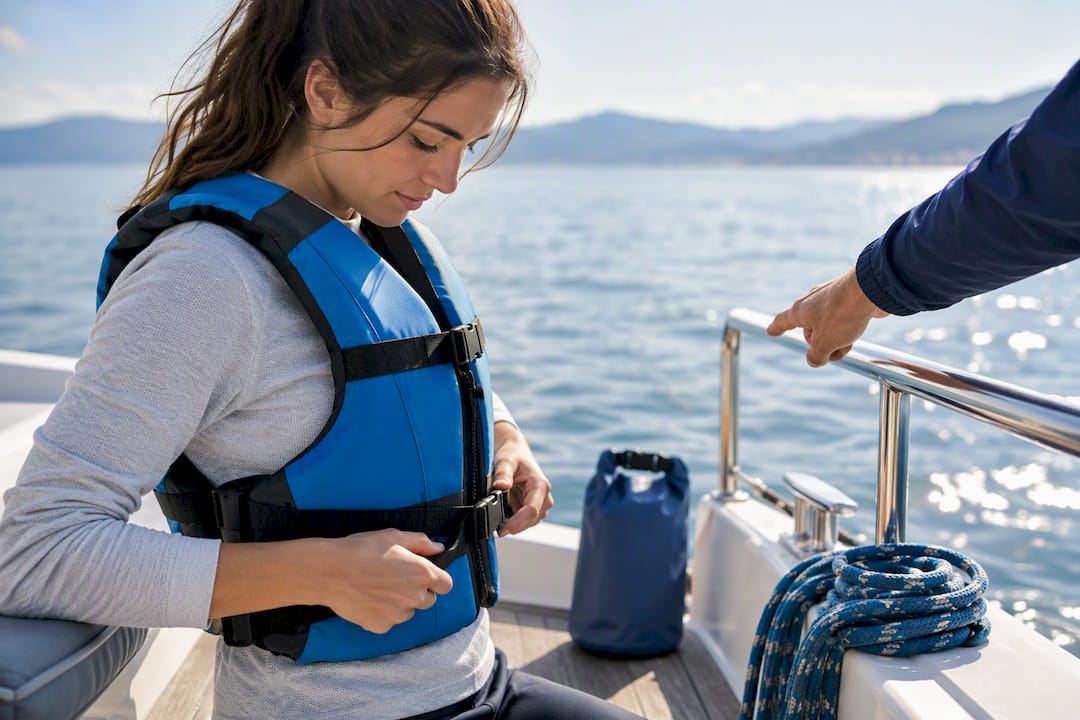
If a formal class isn’t available where you live, even an hour on a local lake with a rental pontoon or a friend’s boat can help you get used to the motion and the feel of a PFD. Beginner-friendly sailing programs are built around exactly this kind of gradual exposure, and they don’t assume any swimming ability going in.
Trying on your lifejacket at home, watching a short video on how boarding ladders work, or simply talking through the day’s plan with your travel companions can also lower anxiety more than people expect. Confidence on the water usually comes from familiarity with the gear and the routine, not from suddenly becoming a strong swimmer.
Traveling with kids or other non-swimmers in your group
Adult non-swimmers traveling with children or other non-swimmers need a slightly more careful plan, since attention gets divided fast once everyone’s on deck. Assign one adult to watch each child directly rather than assuming general supervision will cover it, especially near the boarding ladder or during beach stops.
Make sure lifejackets are properly sized for every non-swimmer in the group, adults and children alike, since a jacket sized for an adult won’t protect a child properly and vice versa. Family-friendly sailing options that include easy boarding and calmer routes tend to work better for mixed groups where confidence levels vary widely.
Talk through the plan with the whole group before you leave the dock: where lifejackets are stored, who’s watching whom, and what the meeting point is if anyone gets separated during a beach stop. A few extra minutes of planning goes a long way when you’ve got more than one non-swimmer to keep an eye on.
Insurance details that matter for non-swimmers
Standard travel insurance doesn’t always cover water activities the same way, so it’s worth checking the fine print before you sail. Some policies exclude water sports entirely, while others cover sailing as a passenger but not activities like snorkeling or paddleboarding done from the boat.
Ask specifically whether the policy covers you as a non-swimmer passenger on a skippered trip, since some insurers treat that differently from active water sports participation. If the trip includes optional add-ons like snorkeling, check whether those are covered separately or excluded altogether.
Cancellation coverage is worth a second look too. If anxiety, illness, or a change in conditions means you need to back out, a policy with flexible cancellation terms protects the cost of the trip. Ask the operator directly what their own cancellation policy covers before you rely on travel insurance to fill the gaps.
A quick word of reassurance from the water
Plenty of guests who can’t swim have sailed with us and had a great week without ever needing to. A properly fitted lifejacket and a skipper who knows what they’re doing cover far more of the risk than most people expect.
If you’re nervous, say so before you book. Ask the operator directly how they handle non-swimmers, and let their answer guide your decision.
— Sail
Ready to book a skippered trip that works for you
Choosing a private, skippered sailing week takes the guesswork out of the safety side, since someone experienced is running the boat from start to finish while you enjoy the ride. SailArmada’s Greece – Go Private route starts from €560 per week per person, and the Croatia – Go Private route runs at the same starting price, both with a professional skipper handling navigation and safety throughout.
A few next steps if you’re ready to look further:
- Browse private and group sailing holidays to compare boats and routes.
- Reach out to ask about lifejacket sizes, boarding setup, and calm-route options for your trip.
- Check sample itineraries across destinations before choosing your week.
Where to check the safety details yourself
- The World Health Organization’s drowning fact sheet covers global drowning statistics and prevention layers.
- A float plan template from sailing safety course material shows what details to share with a shore contact.
- US Sailing’s beginner guide outlines beginner-friendly programs and skippered options.
This article is general information, not a substitute for advice from a qualified doctor. Consult a qualified healthcare professional about your own circumstances before acting on anything here.
Sources
- World Health Organization — Drowning
- About Sailing Safely — Float plans (MIT/Bluewater Skippers material)
- Sailing for beginners: Your step-by-step guide — US Sailing
- Preventing drowning: an implementation guide — WHO
FAQ
What is considered a non-swimmer?
A non-swimmer is generally someone who can’t stay afloat, tread water, or swim a short distance unaided in open water. This includes people who’ve never learned to swim as well as those with limited or rusty swimming skills who wouldn’t feel confident without a flotation device.
Can a non-swimmer do snorkeling?
Snorkeling as a non-swimmer is possible with a well-fitted lifejacket or tow-float, guided supervision, and shallow, calm water, but it does carry more risk than staying on the boat. Guides on snorkeling safety for non-swimmers recommend treating it strictly as a supervised activity rather than an independent swim.
Do navy sailors have to know how to swim?
Naval service members are generally required to pass swim qualification tests as part of basic training, since their roles involve regular time at sea and emergency water survival scenarios. This differs from recreational sailing, where skippered trips let passengers enjoy the water without needing to meet any swim standard themselves.
Are there people who just can’t swim?
Yes, plenty of adults never learned to swim due to lack of access to lessons, fear of water, or simply never needing the skill growing up, and this is far more common than most people assume. WHO’s drowning prevention guidance focuses on supervision and safe boating practices precisely because swim skills alone can’t be relied on to keep everyone safe on the water.