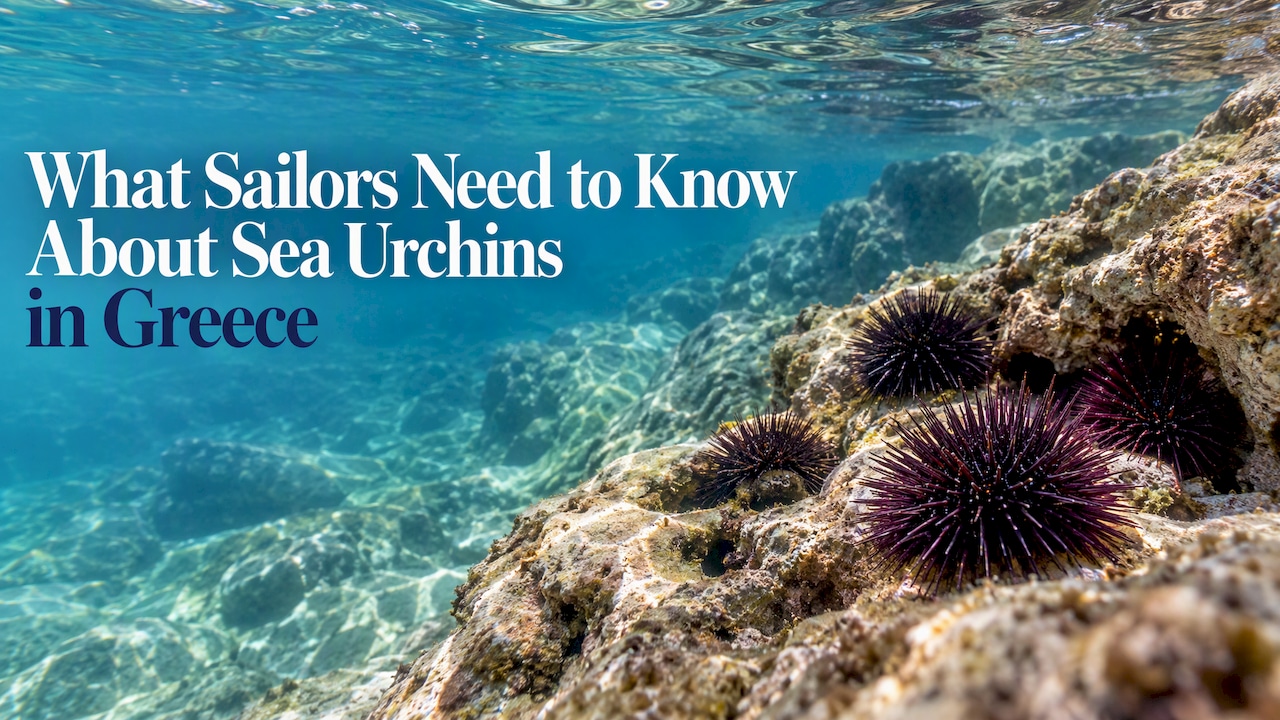
Greece’s rocky coasts hold two common species, the purple Paracentrotus lividus and the black Arbacia lixula. Neither is aggressive, but both can injure you if you step on them. The roe is a prized delicacy, yet harvesting is tightly limited and amateurs may not sell what they catch. If you get stung, leave the water, soak the spot in hot water, and disinfect it.
TL;DR:
- Wear thick soled water shoes, enter rocky shallows slowly, avoid flipping stones, and step from dinghies onto sand or a ladder rather than dark rock.
- After a sting, leave the water and soak the area in hot water, up to 45°C, for 30 to 90 minutes; then wash and disinfect it.
- Remove visible spines with tweezers only if they come out easily; do not dig for fragments, and seek urgent care for concerning symptoms or deep spines.
- Harvest only in January, February, March, July, August, or December, with daily limits of 20 per person or 30 per boat; selling the catch is prohibited.
Table of Contents
- 1. Which sea urchin species you will see in Greek waters
- 2. Where and when you are most likely to meet them
- 3. What a sea urchin sting does and how to treat it
- 4. Eating sea urchins in Greece and the rules you need to know
- 5. Why sea urchin populations are shrinking and why restraint matters
- 6. How to avoid stings while swimming, snorkeling and sailing
- 7. How we handle sea urchin safety on our sailing holidays
- 8. See Greece’s best snorkel coves with a skipper who knows the water
- FAQ
- Sources
1. Which sea urchin species you will see in Greek waters
Two species do almost all the work along our shores, and a quick look tells them apart.
- Purple urchin (Paracentrotus lividus): this is the edible one. It is usually purple, brownish or olive, with relatively short, sturdy spines, and it likes to wedge itself into crevices.
- Black urchin (Arbacia lixula): dark, almost jet black, with longer and more needle-like spines. It is the one that tends to find your heel.
- Size: both are roughly palm-sized at most, so a single urchin is small, but they often sit in clusters.
Two parts of the animal matter for swimmers. The big spines cause the puncture wounds, and they are brittle, so they snap off in skin. The tiny pincer-like pedicellariae between the spines are the sneaky part: they can deliver a toxin, which is why some stings hurt more than the spine size suggests.
When you snorkel or hop from a dinghy onto rocks, scan the stone for dark or purple dots tucked into holes. Look before you put a hand or foot down.
2. Where and when you are most likely to meet them
Think rocky, shallow and sheltered. Sea urchins settle on the rocky seabed close to shore, hide in cracks, and graze among the algae that cover the stones. Sandy bays are much safer, though a rocky edge at either end of the beach is fair game.
- Rocky shallows and ledges: the classic spot for a stray step.
- Crevices and undersides of stones: urchins tuck in here, which is why flipping rocks is a bad idea.
- Algae-covered reefs: where they feed, and where you often can’t see them until you’re close.
- Crystal-clear water: this does not mean “urchin-free.” Clarity helps you spot them, nothing more.
You will notice them most when the sea is calm and the light is good, which is why summer swimmers meet them so often. Warm seas also shape where they thrive. A 2025 monitoring study found that temperature anomalies and rocky substrates were key predictors of where Paracentrotus lividus finds suitable habitat. Experimental work suggests survival drops sharply above about 30.5 °C, so marine heatwaves can thin out populations in the warmest southern areas.
Planning an outing? Check water temperatures by region in Greece so you know what the sea is doing before you pick a cove.
3. What a sea urchin sting does and how to treat it
Most injuries happen the same way: a bare foot lands on a rock, or a hand grabs one. Spines break off under the skin. Expect sharp pain, local swelling and a dark spot where the spine entered. Pedicellariae toxins can add to the pain, and any broken skin can get infected.
Here is the sequence that medical guidance backs:
- Get out of the water calmly, and don’t press on the spot.
- Soak the area in hot water for 30–90 minutes. It should be hot but safe, up to about 45°C, and it eases pain.
- Wash with warm soapy water and apply an antiseptic.
- Pull out visible, protruding spines with tweezers, only if they come easily.
- Leave deep or stubborn fragments to a doctor.
- Seek immediate emergency medical care for any concerning symptoms or if you cannot remove the spines.
Don’t dig. Spines are brittle and fragment, so forceful digging pushes pieces deeper and raises infection risk. Pain can also climb 15–30 minutes after contact, so don’t panic if it gets worse before it improves. And if the skin was broken, think about whether your tetanus shot is up to date.
Pro Tip: Keep a small kit with tweezers, antiseptic wipes and a thermos of hot water in your beach bag or on the boat, so you can start soaking within minutes.
4. Eating sea urchins in Greece and the rules you need to know
Sea urchin roe is the orange tongue-like part inside the shell. Greeks enjoy it fresh, scooped straight from the shell with bread, or dressed with lemon and olive oil as a meze. Its briny, creamy flavor is exactly why restaurants love it, and why demand stays high.
That demand has a cost. According to Euronews, the delicacy status of the roe fuels illegal markets, and restaurant demand drives black-market fishing, which has prompted tighter enforcement. As reported, the recreational rules for 2026 are:
- Open months: January, February, March, July, August and December only.
- Daily limit: 20 per person, or 30 per boat.
- No selling: amateurs are strictly prohibited from selling any sea urchins they harvest.
The Greek Coast Guard’s amateur-fishing guidance also lists 20 sea urchins per person or 30 per boat per day within the permitted seasons, and Greek law defines recreational fishing as sport or leisure, limited to permitted tools and places.
Authorities, including the Coast Guard, enforce fishing rules. Check official guidance for current restrictions and penalties.
If you’re unsure whether a rule applies to you, don’t harvest. Enjoy the roe in a licensed restaurant instead.
5. Why sea urchin populations are shrinking and why restraint matters
The picture is sobering. Marine biologists report that Paracentrotus lividus populations are in sharp decline across the Mediterranean, driven by overfishing and thermal stress from marine heatwaves. The 2025 monitoring study backs this up, reporting declines in large and medium urchins at many monitored sites.
Why should a swimmer care? Urchins are grazers. They keep algae growth in check and help hold the rocky reef in balance. Take too many away and the whole coastal system tips.
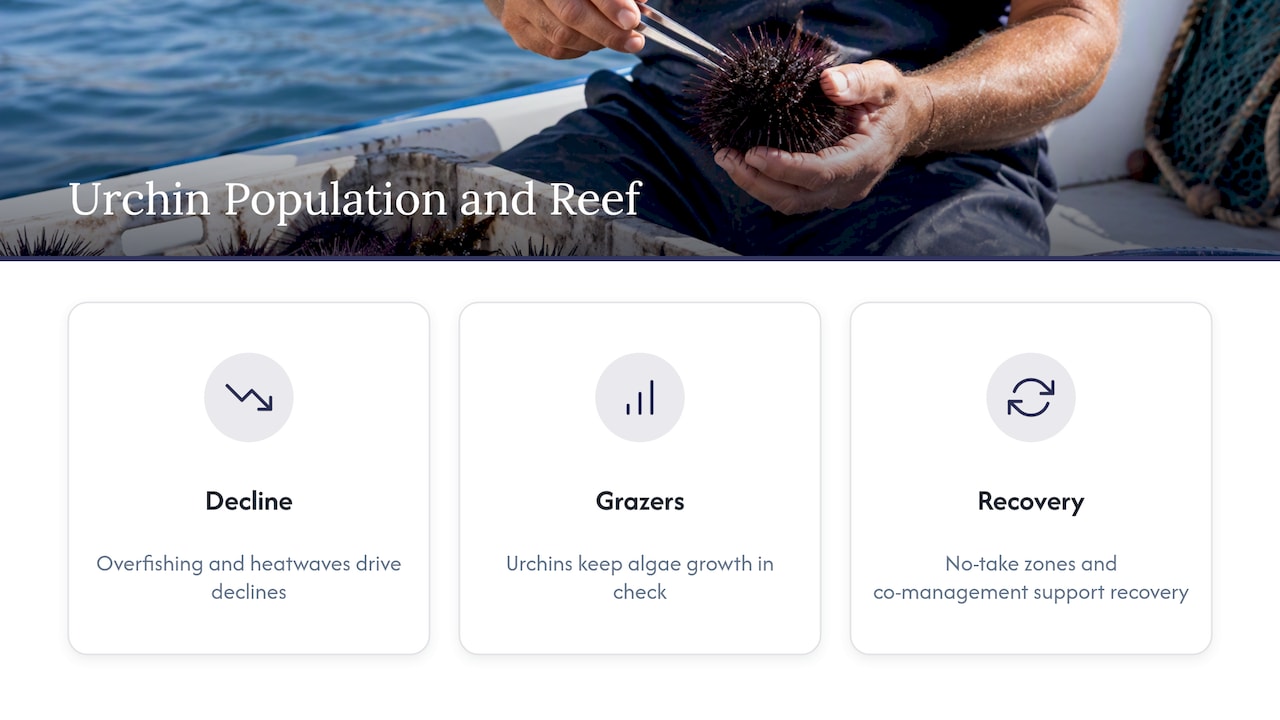
Illegal trade makes it worse, because it removes animals out of season and in bulk. Enforcement helps, but it works best alongside local co-management and no-take zones, where the reef gets a chance to recover. As visitors, our part is simple: look, don’t collect, and stick to the limits if you do harvest legally. Our guide to sustainable yacht travel in the Mediterranean covers more ways to keep the sea healthy while you enjoy it.
6. How to avoid stings while swimming, snorkeling and sailing
Most stings are preventable, and the cheapest fix is on your feet.
- Wear thick-soled water shoes. Local guidance calls them the most effective protection in rocky coves.
- Enter slowly. Shuffle in, test each step, and don’t jump into murky shallows.
- Leave rocks alone. Don’t flip stones or poke into crevices.
- Watch children. Keep them in shoes and away from rocky edges.
- Never handle urchins, even to take a photo.
- Choose landings carefully on a boat. Pick anchorages and dinghy spots away from dense rocky beds, and brief everyone before they step off.
- Harvesting? Only within the legal limits and seasons, with clean handling. If in doubt, skip it, and report suspicious sales of urchins to the authorities.
Jellyfish can also spoil a swim, so it helps to read these beach checks for Mediterranean jellyfish before you go.
Pro Tip: Step off the dinghy onto sand or the ladder, never straight onto dark rock, and let the water settle so you can see what’s below.
7. How we handle sea urchin safety on our sailing holidays
On our trips, safety starts before anyone gets wet. Our skippers brief guests on rocky coves, how to enter the water safely, and what to do if someone gets stung. We keep the focus on watching wildlife rather than collecting it, and we follow Greek rules to the letter. If you’re booking a Greece trip, ask us about local hazards and protected species. We’re happy to talk it through.
— Sail
8. See Greece’s best snorkel coves with a skipper who knows the water
Rocky coves are where the best snorkeling is, and also where urchins live. A guided charter gets you to offshore spots with a briefing first. Many of the best are reachable only by boat, as our guide to offshore snorkel spots in Greece shows.
- Private and group Greece sailing holidays
- Experienced skippers who know local hazards and conservation habits
- Safety briefings before every landing
Take a look at our Greece – Go Private trips, from 560 € per week per person, and pick your dates.
FAQ
Is it safe to touch sea urchins?
No, it’s best not to. Their spines break off in skin, and the tiny pedicellariae between them can add toxins and pain. Look from a distance and leave them where they are.
Is it safe to swim in the sea in Greece?
Yes, swimming is generally fine, and most problems come from stepping on rocky seabeds. Water shoes and a slow entry into rocky shallows cut the risk of urchin stings a lot.
What happens if I get stung by a sea urchin?
You’ll feel sharp pain and swelling, sometimes with spines stuck in the skin. Get out of the water, soak the spot in hot water for 30–90 minutes, and disinfect. See a doctor for severe symptoms or embedded spines.
Are sea urchins aggressive to humans?
No. They don’t chase or attack. They only injure you when you step on them or grab them, so the answer is to watch your footing.
Can I collect sea urchins in Greece?
Only in the open months and within the daily limits, and you can’t sell what you catch. The current rules are summarized above.
Sources
- Greece clamps down on black market fishing as endangered sea urchins pushed towards extinction | Euronews
- Stepped on a sea urchin? Here’s what to do straight away – ProtoThema English
- Pubmed