A security deposit is money the charter base holds on your card and gives back if the boat returns undamaged. A damage waiver is a smaller, non-refundable fee you pay instead, which caps what you owe if something gets scratched, bent or broken. Both protect the yacht owner. They just move the risk onto you in different ways, and the right one depends on how much cash you want parked on your card and how much you trust your crew’s docking skills.
This guide is written for charterers in Greece, where most of our guests sail. Rules differ in other countries, so check the contract for wherever you sail.
TL;DR
- Security deposit: refundable, held on a credit card at pickup, released after check-out if the yacht is fine. Repair costs are deducted if it is not.
- Damage waiver: a non-refundable fee that replaces the deposit or shrinks it a lot. It covers minor accidental damage, not negligence.
- Neither is full insurance. Reckless handling, sailing outside your zone or alcohol-related damage can leave you liable for far more.
- A third option exists: independent deposit insurance, where you pay the full deposit but get reimbursed afterward.
- Before you sign: read the exclusions, ask what the deposit is when the waiver is bought, and photograph the boat at check-in.
Table of Contents
- What a security deposit actually is
- What a damage waiver actually is
- Security deposit vs damage waiver: side by side
- The third option: independent deposit insurance
- Who pays for damage to other people’s boats?
- How to choose: a quick decision guide
- What to check in your Greek charter contract
- Deposits and the rest of your charter budget
- Our perspective
- Sail with clear terms
- FAQ
- Sources
What a security deposit actually is
Think of the deposit as a hold, not a fee. At the base, before you take the keys, the charter company reserves an amount on your credit card (sometimes taken in cash or by transfer, depending on the company). If you bring the boat back in the condition you found it, the money is released. Digicare Insurance’s 2026 guide puts typical Greek deposits at roughly €1,000 to €5,000, so the exact figure depends on the size and value of the yacht. Catamarans, being bigger and pricier, tend to sit at the higher end.
If something is damaged, the base assesses the repair and deducts it from the deposit, then returns whatever is left. Most releases take a few days, which can feel long when you are staring at a card statement. If you have ever waited for a hold to clear after renting something else, you know the feeling; this explanation of how rental deposit holds clear shows the same logic on a much smaller scale.
Two practical points:
- The hold reduces your available credit. A €3,000 deposit on a card with a €4,000 limit leaves little for fuel, groceries and dinner in port. Check your limit before you fly.
- Debit cards often fail. Many bases require a credit card with a real limit. Ask in advance.
What a damage waiver actually is
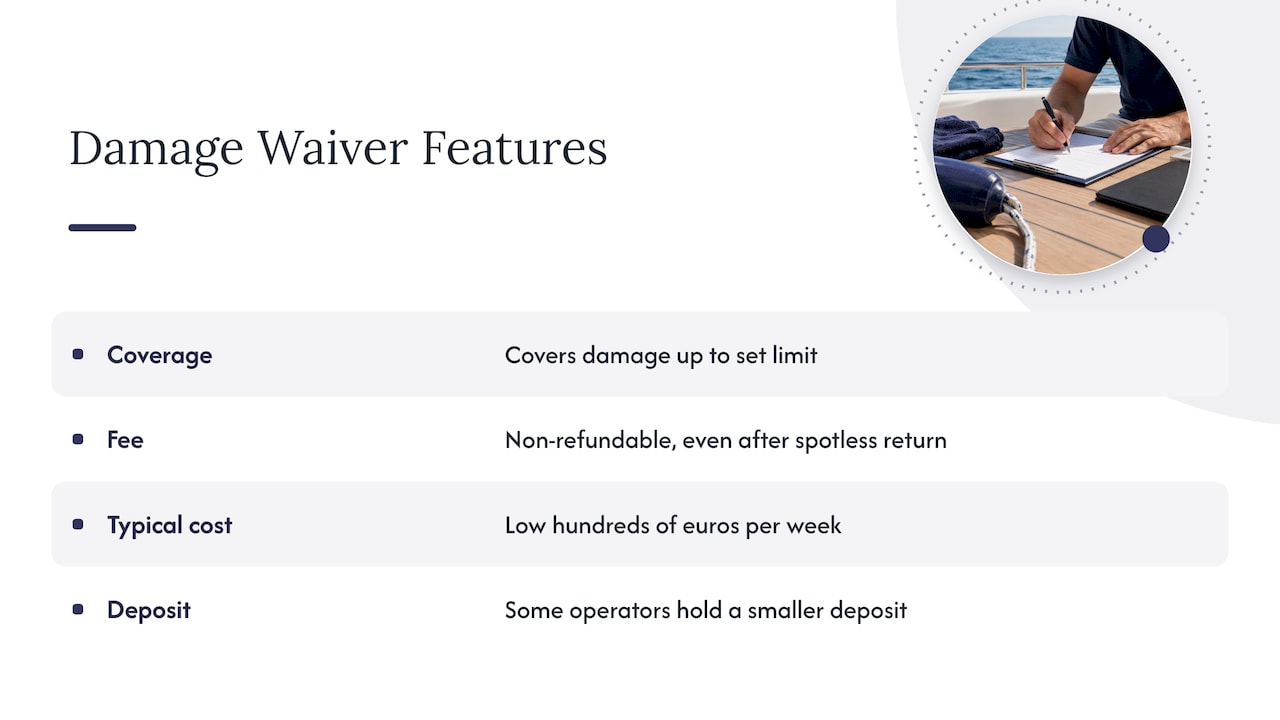
A damage waiver is a fee you pay to the charter company so that you are not charged for covered damage up to a set limit. Costas Matheou of Digicare compares it to the collision damage waiver you buy with a rental car: it works to cap your maximum financial loss. Some Greek operators let you choose a waiver instead of a deposit. Others make the waiver mandatory and still hold a smaller deposit on top. That second setup is common enough that you should never assume which one you are signing.
The fee is non-refundable, even if you return the boat spotless. You are paying for certainty, the same way you pay for any insurance you hope not to use. Typical Greek waivers run in the low hundreds of euros per week, but the figure varies by yacht size and operator, so get the exact number in writing.
What it usually covers
In general, a waiver deals with the ordinary bumps of a sailing week:
- Scratches and scuffs on the hull or deck
- Broken or bent fittings
- Lost fenders and basic equipment
- Minor damage from an awkward berthing
What it usually does not cover
This is where holidays get expensive. Waivers commonly exclude:
- Negligence or reckless behavior
- Sailing outside the permitted cruising area
- Damage linked to alcohol
- A lost or damaged tender (dinghy) and outboard
- Torn sails from misuse
- Ignoring official weather warnings
The exact list is in your contract, and operators differ. A waiver that sounds generous in the brochure can have a long exclusions paragraph in the terms.
Security deposit vs damage waiver: side by side
| Security deposit | Damage waiver | |
|---|---|---|
| Refundable? | Yes, if no deductible damage | No, the fee is spent |
| Upfront cost | Large hold on your card | Smaller fee, paid once |
| Cash flow | Ties up credit for the week and a few days after | Frees your card limit |
| Your maximum loss on covered damage | Up to the full deposit | Usually capped at a smaller excess, or nothing |
| Best for | Careful, experienced crews who rarely scratch anything | Larger groups, first-timers, busy harbors |
| Risk of dispute | Deductions argued after you leave | Fewer arguments, but exclusions still apply |
| Covers negligence? | No | No |
The honest summary: if you are a confident skipper on a calm itinerary, the deposit is cheaper in expectation, because you will most likely get all of it back. If you have a crew of eight friends, a 45-foot catamaran and a few tight marinas ahead, the waiver’s fixed fee buys peace of mind.
The third option: independent deposit insurance
Specialist insurers offer a policy in which you pay the full deposit at the base, as usual, and the insurer reimburses you for whatever the base keeps after a damage claim. Digicare says these premiums typically run from 2% to 15% of the deposit, often around 10%. Because the premium is a share of the deposit, a larger deposit costs more to insure, and a cheap policy may come with its own exclusions.
This route has trade-offs:
- You still need the card limit for the full deposit.
- You claim afterward. You are reimbursed after the base has deducted, so you front the money for a while.
- It does not replace your operator’s rules. If the contract forbids something, the insurer can too.
It can work well when a base insists on a high deposit and does not offer a waiver you like. Compare the policy wording line by line with your charter contract.
Who pays for damage to other people’s boats?
This question confuses many first-time charterers. Under Greek law, third-party liability is the owner’s legal duty rather than yours, under Law 4926/2022, and reputable operators include that cover in the base price. So if you bump a neighbor’s yacht in port, the third-party policy deals with their claim. Your deposit or waiver is about the charter yacht itself.
The catch is that negligence changes the picture. Careless or reckless conduct can leave the charterer liable for the full loss, whether you paid a deposit or bought a waiver. Neither is a license to be careless.
How to choose: a quick decision guide
Ask yourself five things:
- How experienced is the skipper? If the person at the helm docks a lot, the deposit is a sensible gamble. If it is your first big boat, take the waiver.
- How many tight berths are on your route? Med-style mooring, stern-to with anchor down, with a crosswind and an audience, is where fenders and fittings get hurt. Our practical Greece sailing rules for skippers cover what to expect at ports.
- What is your card limit? If a big hold would leave you short, a waiver or a lower deposit solves it.
- What do your travel or credit card policies already cover? Some cards and policies exclude boating, so read the wording rather than assume.
- Do you prefer a known cost or a possible refund? A waiver is a known cost. A deposit is a probable refund with a tail risk.
A worked example
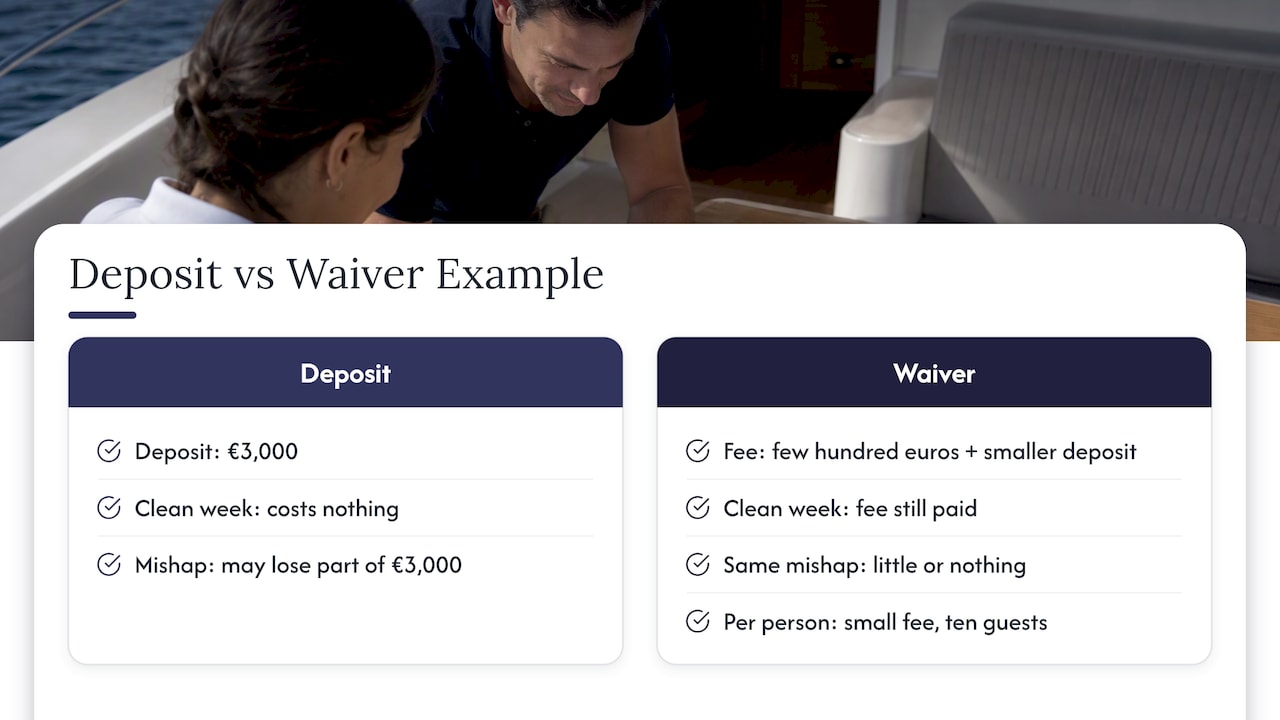
Say a base offers two choices for a catamaran: a deposit of €3,000, or a waiver of a few hundred euros plus a much smaller deposit. On the deposit route, a clean week costs you nothing, but a broken fitting and a lost fender could take a slice of the €3,000. On the waiver route you pay the fee for sure, and the same mishap costs you little or nothing. Split between ten guests, the waiver comes to a small per-person amount, which many groups decide is worth it. These figures are an illustration, so always use the numbers in your own contract.
What to check in your Greek charter contract
Before you pay the balance, read the contract and ask the operator to confirm in writing:
- Is the waiver mandatory or optional? And if you buy it, is there still a deposit, and how much?
- What is the excess? Some waivers cover everything up to a limit; others leave you a fixed share.
- Which items are excluded? Dinghy, outboard, sails, electronics, underwater damage and keel damage are the usual suspects.
- What is your cruising area? Leave it and your cover can vanish.
- How and when is the deposit released? Ask for the number of days and how you will be told.
- How does the damage claim process work? Who inspects, who prices repairs, and can you see invoices?
- Is there a skipper or hostess clause? If you hire a professional skipper, ask whether it changes who is liable.
It also helps to know what happens on arrival. Our guide to getting through Greek yacht check-in walks through the paperwork and the walk-around, and that walk-around is where you protect your deposit.
Your check-in and check-out habits
- Photograph and film everything at pickup: hull, deck, sails, dinghy, cushions, galley. Date-stamped files help in any dispute.
- Make sure existing damage is written on the check-in form before you sign.
- Be present at check-out. A signed form with no new damage is your best evidence.
- Report incidents the same day. A small knock reported honestly is far easier than a surprise at the end.
- Keep your receipts for anything you replace, such as a lost fender.
Deposits and the rest of your charter budget
The deposit is not part of the charter price, but it affects your wallet in the same week. Other costs to keep in view include VAT, fuel, marina fees and the tip for your crew. If you want the tax side, we explain VAT on yacht charters in Greece in a separate guide. For a sense of where the money goes, our catamaran charter cost breakdown shows a realistic weekly budget, and the payment plan for group charters explains how the booking deposit and balance work, which is a different thing from the security deposit on the boat.
Our perspective
We have watched plenty of crews step off a boat at the end of a week, and the happiest ones are rarely the luckiest. They are the ones who understood the paperwork on day one. Here is how we think about this choice.
First, the best protection is a good plan. Our itineraries are curated by experienced skippers from CAPETAN.club, who know which harbors are tight, which anchorages are exposed to the meltemi and when to stay put. That knowledge lowers your odds of a claim far more than any fee does.
Second, we favor transparency. Boat options, prices and terms should be clear before you book, and you should talk to actual sailors, not a call script. If a clause in your charter terms confuses you, ask us. That is what the support is for.
Third, match the cover to the crew. A group of friends with one confident skipper might happily hold a deposit. A family on its first catamaran will usually sleep better with a waiver, because the point of a sailing week is to relax, not to calculate the cost of a scratched hull while reversing into a quay.
— Sail
Sail with clear terms
If you want a private week on the Aegean or Ionian with a skipper who knows the water, our Greece Go Private sailing holidays start from 560 € per week per person. You choose the yacht or catamaran, your dates and your pace, and we walk you through the deposit and waiver options before you commit.
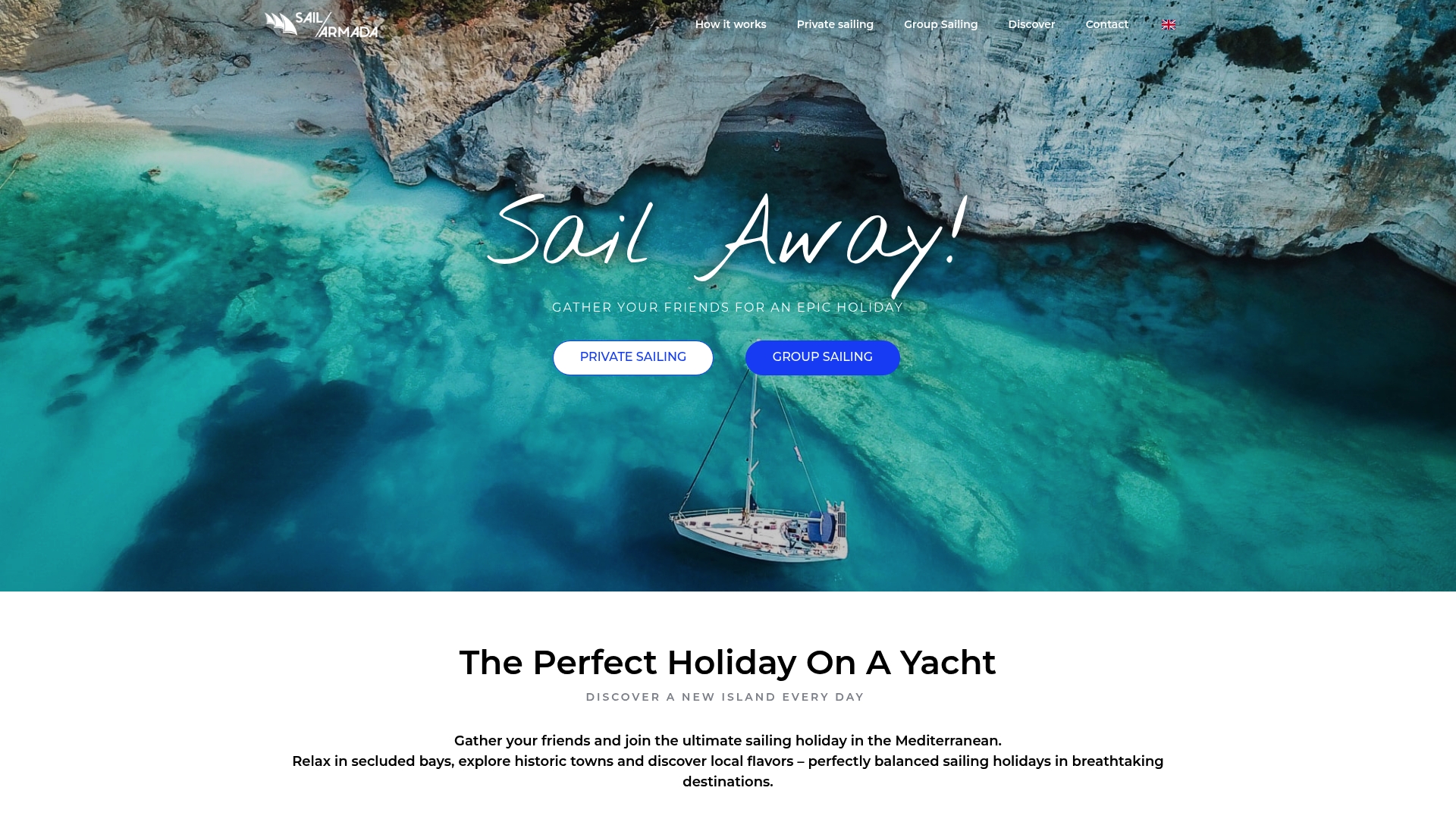
Prefer company on board? Our group sailing holidays let you join a flotilla of like-minded travelers, and you can compare the two styles in our guide to private or group sailing holidays.
FAQ
What is a damage waiver on a yacht rental?
It is a non-refundable fee that limits your liability for accidental damage to the charter yacht. Depending on the operator, it either replaces the security deposit or reduces it. It usually excludes negligence, damage outside your cruising area and a lost or damaged dinghy.
Will my security deposit be refunded?
Yes, if the yacht comes back without deductible damage, and the release normally takes a few days. If there is damage, the base deducts the repair cost and returns the rest. Ask your operator for its exact release time and inspection process.
Is a damage waiver better than a deposit?
Not always. A waiver gives you a fixed cost and frees up your card limit, which suits larger groups and less experienced skippers. A deposit costs nothing if nothing goes wrong, which suits a careful, confident crew.
Can I buy deposit insurance instead of a waiver?
Yes, independent insurers sell policies that reimburse the deposit amount the base retains. Premiums are often quoted at around 2% to 15% of the deposit. You still pay the full deposit at the base, then claim it back, so check the policy wording against your charter contract.
Does a waiver cover everything I might damage?
No. Waivers cover minor accidental damage, while reckless handling, alcohol-related incidents and weather-warning breaches are commonly excluded. Read the exclusions list in your contract before you pay.
Sources
- Yacht Charter Insurance for Greece: Deposit, Skipper Liability and the Law (Digicare Insurance)
- Bike Rental Deposits in Lake Como: when holds clear