Yes, a solo traveler can absolutely join a sailing trip, and it happens all the time. The three fastest routes are booking a single cabin on a shared yacht (by-the-cabin), joining a flotilla or yacht-week style group event, or signing up for a crew-placement program where you earn your berth by helping sail the boat. Pick the option that matches your social energy and activity level, then start browsing by-the-cabin listings or Sailarmada’s curated group weeks.
Your three booking routes at a glance:
- By-the-cabin / cabin-share: You pay for one berth on a shared yacht, no sailing experience needed, and the operator fills the remaining cabins with other solo guests or small groups.
- Flotilla / yacht-week events: Multiple yachts sail a route together with organized onshore meetups, parties, and daily raft-ups. Very social, very fun.
- Crew-placement / sail-for-a-berth: You join as a working crew member, taking watch shifts and helping with sails in exchange for your cabin. More physical, more seamanship.
Pro Tip: If you’re new to sailing and mainly want the social experience, start with a by-the-cabin or flotilla booking. Save the crew-placement route for when you want to actually learn to sail.
Table of Contents
- What are the main ways a solo traveler can join a sailing trip?
- What can you expect on a group sailing trip as a solo traveler?
- Do you need sailing experience, and is this trip right for you?
- How do you pick the right trip and avoid booking mistakes?
- What does a solo sailing trip typically cost?
- How does the booking process actually work?
- What should you pack and how do you make friends onboard?
- How Sailarmada curates solo-friendly group sailing weeks
- Key Takeaways
- Why solo travelers tend to love group sailing weeks
- Sailarmada’s curated group weeks are built for solo travelers
- Useful sources and further reading
What are the main ways a solo traveler can join a sailing trip?
The most popular option for solo travelers is the by-the-cabin booking, sometimes called a cabin-share. You reserve a single berth on a yacht that holds six to twelve guests total, pay for your spot, and the operator handles the rest. Trips typically run seven to ten days, and you’ll share a bunk cabin or a small double with one other guest of the same gender. The social setup is built in from day one.
Flotilla and yacht-week style events take the social element even further. Instead of one yacht, you join a fleet of four to twelve boats sailing the same route through destinations like the Greek islands or Croatia. Each day ends with the whole group gathering ashore for dinner or drinks, and organized activities keep the energy high throughout the week. These trips are designed for connection.
Crew-placement programs work differently. You join as a working crew member on a passage, sharing watch duties and helping with sails and navigation. No experience is usually required on entry-level voyages, but you should be physically fit and comfortable with disrupted sleep. The payoff is genuine seamanship skills and a tight-knit crew bond.
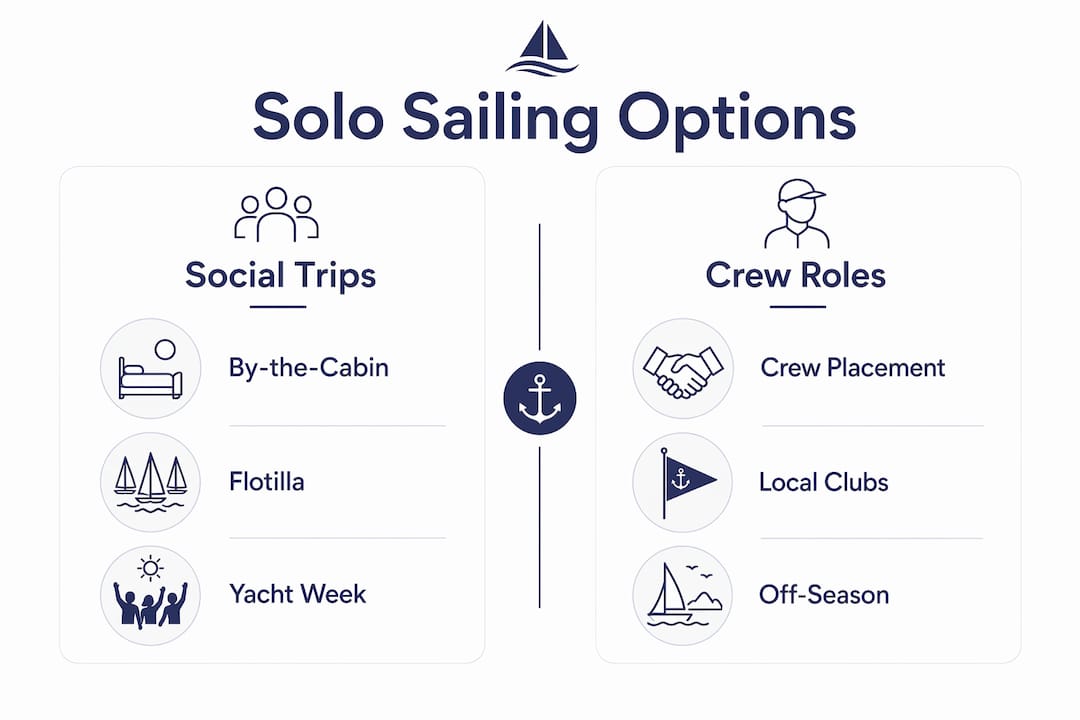
Finally, local sailing clubs and crew boards (like those listed on community-boating.org) offer lower-cost or off-season options. You post your availability, a skipper picks you up for a weekend sail or a coastal passage, and you go. Less structured, more spontaneous.
| Option | Social ease | Price | Physical demand | Itinerary flexibility |
|---|---|---|---|---|
| By-the-cabin | High | $$ | Low | Moderate |
| Flotilla / yacht-week | Very high | $$–$$$ | Low | Low (set route) |
| Crew-placement | Medium | $ | High | Low (passage-driven) |
| Sailing club / crew board | Variable | $ | Variable | High |
What can you expect on a group sailing trip as a solo traveler?
Up to 70% of guests book solo on some adventure-focused sailing trips, making solo travelers the norm rather than the exception — which means the social dynamic is built around you, not around couples or pre-formed groups.

The first 24 hours follow a predictable and genuinely fun arc. You arrive at the marina, meet your skipper and fellow guests at a welcome briefing, and get shown to your cabin. By the first evening ashore, most groups have already found their rhythm. Solo travelers often become the core of the social dynamic by day two, which makes the initial nerves fade fast.
Cabin-sharing norms are straightforward. Operators typically pair solo guests in same-gender bunk cabins or small doubles, and many provide same-gender cabin matching alongside staffed meet-and-greets to ease introductions. The skipper acts as host, safety officer, and route planner rolled into one. Their word is final on weather and daily stops, and experienced travelers accept that as part of the adventure.
A typical day on a group sailing trip looks like this:
- Morning: cast off after breakfast, sail two to four hours to the next anchorage or marina
- Midday: swim stop in crystal-clear water, snorkeling, or a beach lunch
- Afternoon: explore a coastal town, get lost in narrow streets, or simply relax on deck
- Evening: the whole group gathers ashore for dinner and drinks at a local taverna
The social pressure is genuinely low. You can opt into every group activity or take a solo afternoon walk. Both extroverts and introverts find these trips comfortable because the structure is there when you want it and easy to step away from when you don’t.
Do you need sailing experience, and is this trip right for you?
Most by-the-cabin and flotilla trips require zero prior sailing experience. The skipper handles all navigation and sail handling, so your only job is to enjoy the ride. Expedition-style voyages and tall-ship passages are different: party weeks emphasize social events and raft-ups, while expedition trips emphasize watch systems and participant work duties. Know which one you’re signing up for before you book.
You’re a great fit for a group sailing trip if you:
- Are comfortable sharing a small cabin with one other person
- Enjoy meeting new people in an informal, outdoor setting
- Can handle a flexible itinerary where weather drives daily decisions
- Are reasonably fit (you’ll be climbing on and off boats, swimming, and walking)
- Don’t need a rigid schedule or private space at all times
Seasickness is the most common concern for first-timers, and it’s worth taking seriously. Catamarans are significantly more stable than monohull sailboats because of their wide beam, and calmer-season routes (May, June, or September in the Mediterranean) mean gentler seas.
Pro Tip: If you’re seasickness-prone, specifically request a catamaran berth and choose a Mediterranean route in May or September. The combination of stable hull and calm seas makes a real difference for first-timers.
How do you pick the right trip and avoid booking mistakes?
A little due diligence before you book saves a lot of frustration on the water. Work through this checklist before committing to any trip.
Selection checklist:
- Does the social vibe match yours? (party-focused vs. relaxed and scenic)
- What’s the cabin setup? (bunk vs. double, same-gender matching policy)
- How many guests total? (six to twelve is the sweet spot for social trips)
- Is the itinerary fixed or flexible? (flexible is normal; fully rigid is a red flag)
- Are skipper credentials listed? (look for RYA, USCG, or equivalent certification)
- What’s the cancellation and refund policy? (clear terms in writing, always)
- What’s included in the price? (meals, fuel, marina fees, or extras?)
Questions to ask the operator before you pay a deposit:
- What is your cabin-matching policy for solo guests, and can I state a gender preference?
- What percentage is the deposit, and what are the refund terms if I cancel?
- What medical or emergency protocols do you have onboard?
- Is there a minimum age or a particular social vibe you’d describe for this trip?
- Can I see the skipper’s certification and the vessel’s last safety inspection date?
Red flags to walk away from:
- No skipper credentials listed anywhere on the site
- Vague or missing cabin policy for solo travelers
- Unusually low deposits with no written refund terms
- No mention of safety equipment, emergency procedures, or vessel inspections
- Reviews that mention poor communication before departure
Reading reviews carefully is worth the time. Look for comments about pre-trip communication, cabin comfort, and how the skipper handled unexpected weather changes. A skipper who makes calm, clear decisions when plans change is worth more than a perfect itinerary.
What does a solo sailing trip typically cost?
Prices vary by destination, season, and yacht type, but here are realistic ballpark ranges for 7–10 day trips in USD.
| Trip type | Typical price range (7–10 days) | Usually included | Common extras |
|---|---|---|---|
| By-the-cabin (shared yacht) | — | Berth, skipper, some breakfasts, fuel | Alcohol, port taxes, tips, flights |
| Flotilla / yacht-week event | — | Berth, skipper, organized events, some meals | Alcohol, excursions, flights, tips |
| Crew-placement / passage | — | Berth, basic provisions | Personal gear, flights, insurance |
Deposits typically run around a quarter of the total trip cost, with the final balance due well in advance of departure. That window matters: it’s when operators finalize cabin pairings and send pre-trip forms. For a full breakdown of what goes into yacht holiday pricing, Sailarmada’s pricing guide walks through the variables clearly.
Budget extra funds per week for port taxes, tips for the skipper and crew, alcohol, and any onshore excursions. These extras are predictable once you know to plan for them.
How does the booking process actually work?
The timeline from inquiry to boarding follows a fairly standard sequence across most reputable operators.
- Step 1 — Inquiry and selection: Browse trips, confirm availability, and ask your pre-booking questions (see the checklist above).
- Step 2 — Deposit: Pay 20–30% to secure your berth. Get the cancellation terms in writing before you pay.
- Step 3 — Pre-trip forms: Complete a guest profile (dietary needs, cabin preferences, experience level, emergency contacts). Stating your cabin gender preference at this stage leads to better matches and smoother check-ins.
- Step 4 — Cabin matching: The operator pairs you with a cabin mate, usually 4–6 weeks before departure. Some operators share contact details so you can introduce yourselves beforehand.
- Step 5 — Final balance: Due 30–90 days before departure. This is also when you should confirm travel insurance.
- Step 6 — Pre-departure briefing: Most operators send a detailed info pack covering marina location, arrival time, what to bring, and onboard rules.
Travel insurance is non-negotiable for offshore trips. A policy that covers trip cancellation, medical evacuation, and sailing activities is the standard recommendation. Planning your solo trip safely includes setting up shared cloud access to your passport, insurance documents, and emergency contacts before you leave home.
What should you pack and how do you make friends onboard?
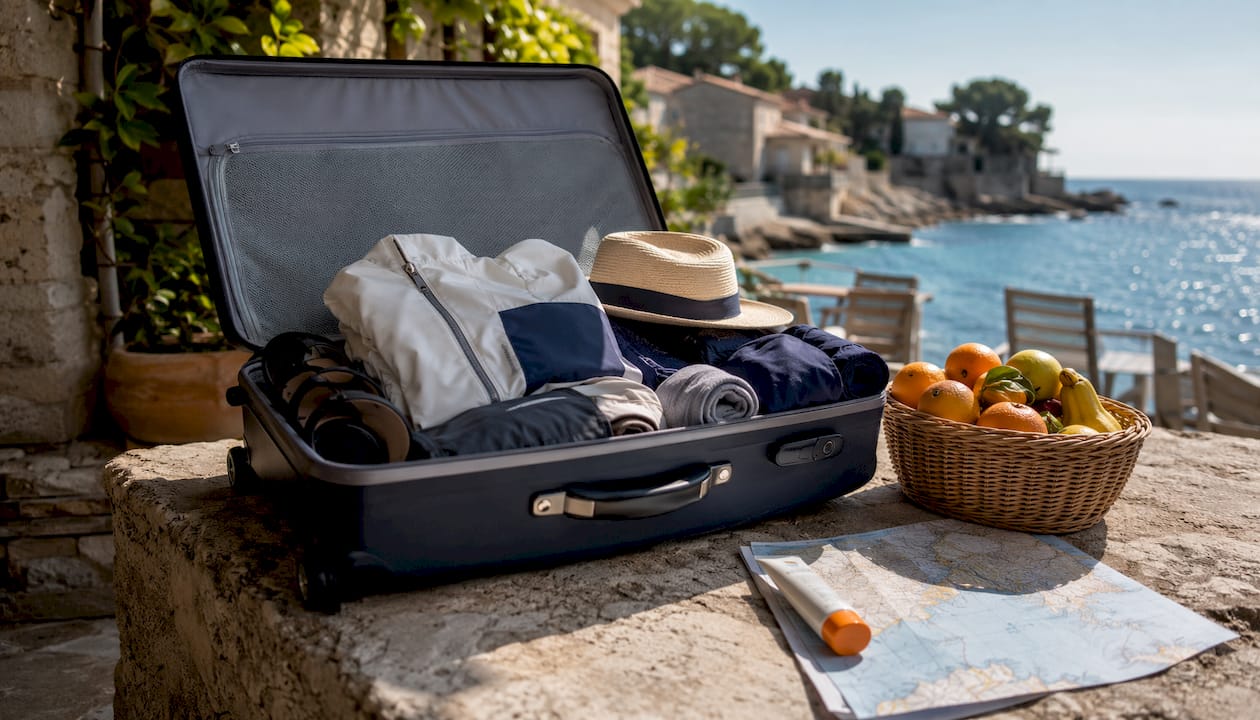
Cabin space on a sailing yacht is genuinely small. A soft duffel bag (not a hard-shell suitcase) is the single most important packing decision you’ll make.
Packing essentials for a cabin-share sailing trip:
- Soft duffel bag (60L maximum)
- Seasickness medication (start taking it the day before departure)
- Quick-dry swimwear and a light rash guard
- Layered clothing: a fleece and a waterproof jacket for night sails
- Reef-safe sunscreen and a wide-brim hat
- Small combination lock for your cabin storage
- Power bank and universal adapter
- Flip-flops for the deck and walking shoes for shore
Socially, the easiest thing you can do is show up to the welcome meet. That first group gathering sets the tone for the whole week, and the people who skip it often feel behind the social curve for days. Shared meal times are the other golden opportunity: offer to help with breakfast prep or washing up, and you’ll have a conversation going before the coffee is ready.
Pro Tip: Store digital copies of your passport, insurance policy, and emergency contacts in a cloud folder (Google Drive or iCloud) and share access with one trusted person at home. If your bag goes overboard, you’ll still have everything you need.
How Sailarmada curates solo-friendly group sailing weeks
Sailarmada’s group sailing holidays are built around the exact pain points solo travelers face: not knowing anyone, worrying about cabin comfort, and wondering whether the skipper actually knows what they’re doing. The answer to all three is built into how Sailarmada structures its trips.
Every Sailarmada trip runs with a vetted, credentialed skipper who knows the route, handles safety decisions, and keeps the group dynamic positive. Yacht and catamaran options cover a range of budgets and comfort levels, and curated itineraries across Greece, Croatia, and Italy mean you’re sailing routes that have been tested and refined. Cabin-share options are available for solo travelers who want to keep costs down without sacrificing the experience.
Trust signals Sailarmada publishes:
- Skipper credentials and vessel safety checks on file
- Transparent booking and cancellation policy with clear deposit terms
- Cabin-matching support for solo guests
- Customer reviews and testimonials from past group sailing weeks
- Dedicated solo traveler guidance covering safety, packing, and what to expect
Pro Tip: When you inquire with Sailarmada, mention upfront that you’re traveling solo and state your cabin preference. The team can match you with the right group week and the right cabin setup from the start.
Key Takeaways
Booking a solo sailing trip is straightforward when you match your social style to the right trip type and confirm the practical details before you pay a deposit.
| Point | Details |
|---|---|
| Match your style to the trip type | Flotillas suit social travelers; crew-placement suits those who want hands-on sailing skills. |
| Confirm the cabin policy early | State your gender preference on pre-trip forms for a smoother cabin match on arrival. |
| Check skipper credentials | Look for RYA, USCG, or equivalent certification and ask for the vessel’s last safety inspection date. |
| Budget for extras | Port taxes, tips, alcohol, and excursions typically add $200–$400 to a 7–10 day trip. |
| Sailarmada for curated group weeks | Sailarmada offers vetted skippers, cabin-share options, and group sailing weeks across Greece, Croatia, and Italy. |
Why solo travelers tend to love group sailing weeks
There’s something that happens on the water that doesn’t happen in a hotel or on a tour bus. You’re in a small space with a small group, the scenery changes every morning, and the shared experience of watching a sunset from the deck of a yacht somewhere in the Aegean creates a kind of instant closeness that takes months to build in ordinary life. Solo travelers who arrive nervous about not knowing anyone almost always leave with people they genuinely want to see again. The combination of freedom and structure is the thing: you have your own cabin, your own pace, and your own choices, but the group is always there when you want it. That balance is rare in travel, and it’s why so many people who do one sailing week end up booking another.
Sailarmada’s curated group weeks are built for solo travelers
Solo travelers who want the Mediterranean sailing experience without the friction of piecing it together themselves have a clear option: Sailarmada’s curated group sailing weeks. You get a vetted skipper, a well-maintained yacht or catamaran, a tested route through Greece, Croatia, or Italy, and a cabin-share setup designed for solo guests. No agency fees, no mystery skippers, no vague cancellation terms.
Booking is straightforward: browse available group weeks, pick your destination and dates, and request a cabin-share spot. The Sailarmada team handles matching, pre-trip communication, and onboard logistics so you can focus on what actually matters: showing up at the marina, meeting your crew, and sailing somewhere breathtaking. View available group sailing weeks and request your cabin today.
Useful sources and further reading
Sailarmada pages:
- Solo traveler yacht holidays: your Mediterranean guide — dedicated planning guide for solo guests, covering routes, cabin options, and what to expect
- Group sailing holidays and flotillas — overview of Sailarmada’s group week formats and destinations
- Safety guide for solo sailing holidays — onboard safety protocols, emergency prep, and what to ask your operator
- Why solo travelers love flotillas — the social mechanics of flotilla sailing explained
Partner resources:
- How to plan a solo trip safely abroad — practical pre-trip safety checklist covering insurance, emergency contacts, and document backup
- Tips for a cruise vacation: your 2026 planning guide — packing, medical prep, and holiday planning tips that apply equally well to group sailing trips