
Most people picture a sailing trip as sun, sea, and pure relaxation. And yes, you get all of that. But the travelers who come back genuinely transformed, who talk about their trip for years afterward, are almost always the ones who threw themselves into what was happening on deck, in the water, and around the table. The role of activities on sailing trips goes far beyond keeping everyone entertained. Activities shape your mood, strengthen your relationships, and turn a beautiful week at sea into something you actually carry home with you. Here’s what most sailing articles skip entirely.
Table of Contents
- Key takeaways
- The role of activities on sailing trips for your wellbeing
- Activity types and what each one actually does
- How to plan and balance your sailing activities
- Family and group bonding through shared activities
- My honest take on activities at sea
- Discover activity-rich sailing holidays with Sailarmada
- FAQ
Key takeaways
| Point | Details |
|---|---|
| Activities reshape the experience | Onboard and water activities shift sailing from passive travel to active, memorable adventure. |
| Blue space boosts mental health | Being near and in the water measurably reduces stress, lifts mood, and restores focus. |
| Variety keeps groups connected | Mixing water sports, games, cooking, and navigation tasks caters to every age and personality type. |
| Planning balance is everything | Blending active and restful activities prevents fatigue and keeps the whole group engaged. |
| Shared activities build lasting bonds | Cooperative challenges and group experiences onboard create memories that outlast the trip. |
The role of activities on sailing trips for your wellbeing
There is actual science behind why you feel so good on the water. Researchers call it “blue space,” and its effects on health are striking. Living near blue space is linked to a 3% reduction in annual mortality and a 10 to 12% lower risk of obesity and diabetes. On a sailing trip, you are not just near water. You are surrounded by it, 24 hours a day.
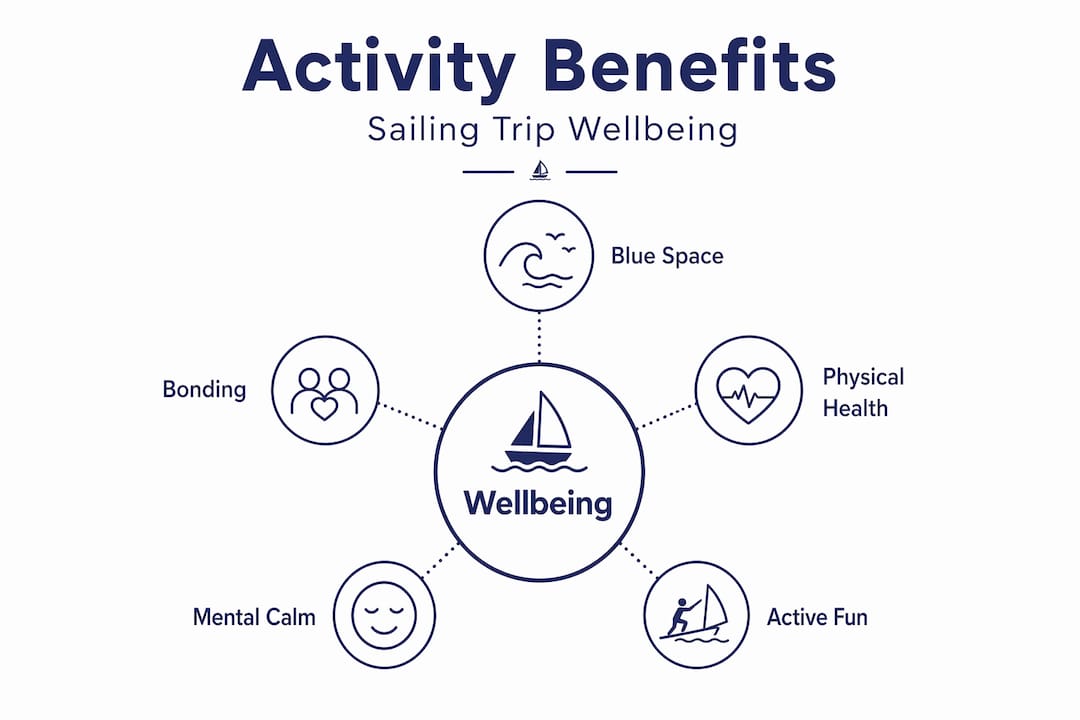
The psychological piece is equally fascinating. Water triggers what neuroscientists call the “Blue Mind” state: a gentle, meditative shift in your nervous system that moves you into a calmer, more restorative mode. According to research on how water affects the brain, this parasympathetic shift lowers cortisol and promotes relaxation that land-based environments simply cannot replicate. You are not imagining that you feel better at sea. Your biology is responding.
Now add movement into that blue environment, and the benefits compound. Aquatic exercise shows superior antidepressant effects compared to land-based activities, with a standardized mean difference of -0.92, particularly for water-based movement. That means snorkeling off the back of the catamaran, swimming to a secluded cove, or even paddleboarding at anchor is doing something measurable for your mental state. It is not just fun. It is genuinely good for you.
“The ocean stirs the heart, inspires the imagination, and brings eternal joy to the soul.” The science simply confirms what sailors have known for centuries.
Physical benefits layer on top. Sailing itself demands balance, coordination, and light muscular effort throughout the day. Hauling lines, adjusting sails, moving around the deck, and climbing in and out of the dinghy all add up. When you combine that with intentional aquatic and sailing activities, you are getting a genuinely active week without it ever feeling like a workout.
Activity types and what each one actually does
Not all sailing trip activities serve the same purpose, and understanding the difference helps you build a week that satisfies everyone on board. Here is a breakdown of the main categories and why each one matters.
-
Water sports and recreational activities. Snorkeling, kayaking, paddleboarding, cliff jumping, and swimming are the obvious crowd-pleasers. These activities provide the physical engagement that varies by age and energy level, so younger kids might spend three hours in the water while adults drift on paddleboards in a quiet bay. Everyone participates at their own pace, and that inclusivity is a significant part of their value.
-
Onboard games and social activities. Card games, storytelling around the cockpit, group cooking, and sunset cocktail rituals create the glue moments of a sailing trip. These are the times when conversations go deeper than they would in a hotel bar. The boat is small, the sky is enormous, and you are not going anywhere. That natural container makes connection happen faster and more genuinely.
-
Educational and STEAMS-focused activities. This is especially powerful for families. Sailing voyages are ideal settings for hands-on learning in science, technology, engineering, arts, mathematics, and sustainability. Identifying marine life, tracking weather patterns with the skipper, or learning about the geography of the Greek islands turns the trip into something educationally rich. Yachting New Zealand’s RŪNĀ program proved the model works: it engaged over 21,000 children in hands-on sailing and marine science across 10 regions.
-
Practical sailing tasks. Letting guests help with navigation, trimming sails, or reading the wind builds real confidence and investment in the trip. When you understand what the boat is doing and why, you stop being a passenger and start being part of the crew. That shift in identity changes how you feel about the entire experience.
-
Shore excursions and cultural exploration. Every port stop is an activity in itself. Getting lost in the winding streets of a Croatian island town, bargaining at a Turkish market, or eating fresh seafood at a waterfront taverna in Greece. These moments anchor the sailing trip in real place and culture, so it never feels like you are just drifting in beautiful scenery.
Pro Tip: Before you leave the dock, ask your skipper which onboard tasks are open to guests. Most experienced skippers love sharing navigation and sail trimming with willing crew members, and that participation pays off in genuine satisfaction for everyone on board.
How to plan and balance your sailing activities
Good sailing trip planning tips are not just about what to pack or where to anchor. They are about designing a rhythm for your days that keeps the group energized without wearing anyone out. Getting this balance right is one of the biggest differences between a good sailing trip and a great one.
Here is what actually works:
- Know your group before you go. A flotilla of close friends in their thirties wants something different from a multi-generational family trip with grandparents and teenagers. Map out the energy levels, interests, and physical abilities in your group before you plan any activities. Do not default to the most active option and hope everyone keeps up.
- Mix intensity levels deliberately. Alternate high-energy days with gentler ones. A morning of windsurfing followed by a slow afternoon anchored in a quiet bay with books and a swim. An active shore excursion paired with a calm evening cooking dinner together on deck. The contrast makes both experiences better.
- Learn the technical basics before you board. Pre-boarding preparation on anchoring, electricity systems, and navigation reduces stress at sea and frees up mental space for actual enjoyment. When you are not anxious about how things work, you engage more fully with everything happening around you.
- Use the local environment as your activity guide. The best activities for sailing adventures are often the ones you did not plan. A school of dolphins leading the boat, a hidden beach your skipper knows, a local fisherman willing to sell you the morning catch. Stay loose enough to follow those moments when they appear.
Pro Tip: Check digital tools like Windy or PredictWind for wind and weather forecasts each morning. Knowing what conditions to expect helps you schedule water sports on calmer days and sail-focused activities when the breeze is up, making the most of your time on the water.
Here is a quick comparison to help you balance activity planning:
| Activity type | Best for | Energy required | When to schedule |
|---|---|---|---|
| Snorkeling and swimming | All ages and skill levels | Low to moderate | Mid-morning or afternoon at anchor |
| Sailing tasks (navigation, trimming) | Adults and older teens | Low | Underway, any time |
| Water sports (kayak, paddleboard) | Older kids and adults | Moderate | Calm mornings before wind picks up |
| Shore excursions | Everyone | Moderate | Port days, early afternoon |
| Onboard games and cooking | All ages | Very low | Evenings or weather days |
Family and group bonding through shared activities
The importance of sailing activities for group bonding is something you feel before you fully understand it. There is something about being on a boat together that accelerates connection. The shared space, the shared meals, the shared uncertainty of the sea. Activities simply give that connection a structure to grow around.
Here are some of the ways that works in practice:
- Cooperative sailing tasks build trust fast. When everyone on deck has a role during a sail change or a tricky anchorage, the group operates as a team. That kind of shared challenge creates the same bond you would expect from a team-building retreat, but in a far more beautiful setting.
- Cooking together onboard is surprisingly powerful. Grocery shopping at a port market, dividing up prep tasks in a small galley, and eating a meal you all made together while anchored in a turquoise bay. That ritual repeats every day of the trip, and it builds a warmth between people that formal activities rarely achieve.
- Educational programs bring adults and kids onto the same level. When a skipper explains how to read the stars or identify a species of fish, everyone is learning. Children feel respected, and adults remember what it feels like to be genuinely curious. That shared learning environment is rare in everyday life and precious on a trip.
- Movement and social connection act as a buffer against low moods. Research on Blue Zone communities shows that natural movement combined with strong social ties actively guards against depression. A sailing trip delivers both in abundance, and the combination is a real gift for any group.
The memories that people describe years after a sailing trip are almost never about the scenery alone. They are about the game that went on until midnight, the fish someone caught on a line off the stern, the afternoon everyone piled into the dinghy for an impromptu island landing. Activities are the mechanism through which those memories get made.
My honest take on activities at sea
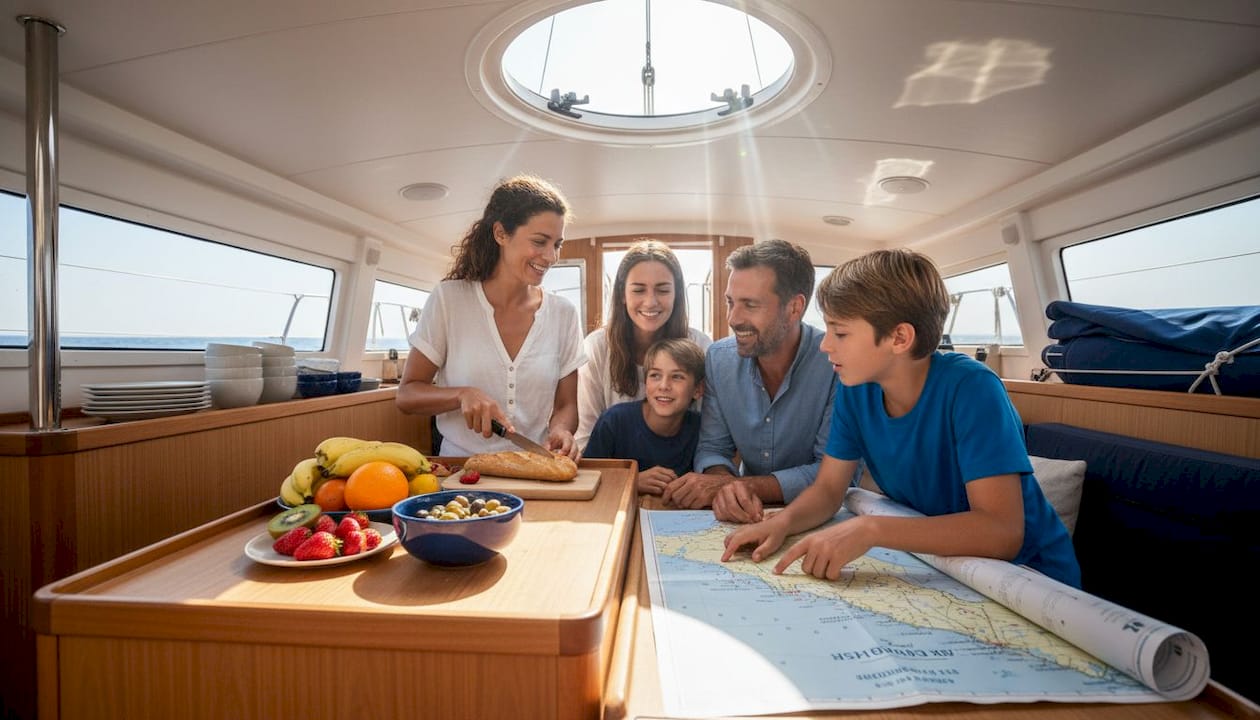
I’ve watched a lot of groups board a boat with the same plan: relax, drink wine, enjoy the views. And look, that is genuinely wonderful. But the trips where I’ve seen real transformation happen are the ones where people leaned into the activity side of sailing, even the activities they felt skeptical about at first.
What surprises most people is how quickly participation changes the feeling of a trip. Someone who spent the first morning reading in the cockpit gets pulled into a snorkel session and ends up leading the group to a cave no one else spotted. A teenager who was “too cool” for card games becomes the reigning champion by day three. The boat creates this environment where normal social defenses come down, and activities give people permission to actually play.
My honest advice is this: say yes to more things than you normally would. Try the paddleboard even if you fall off. Help the skipper with the anchor watch. Join the cooking rotation. The sailing experience is genuinely richer when you are active in it rather than observing it. And the connections you build through those shared moments are the ones you will still be talking about when you are back at your desk on a gray Tuesday morning.
— Sail
Discover activity-rich sailing holidays with Sailarmada
If this article has you thinking about what your ideal sailing week would actually look like, Sailarmada has designed their trips with exactly this kind of experience in mind.
From private sailing holidays where your group sets the pace and activities to curated group sailing weeks that blend water sports, cultural excursions, and genuine crew bonding, Sailarmada’s Mediterranean routes across Greece, Croatia, Italy, and beyond are built for people who want more than a floating hotel. Their experienced skippers actively involve guests in sailing tasks, know the best hidden anchorages for snorkeling, and help you create a week that feels genuinely alive. If you are traveling with kids, their dedicated family sailing programs include educational activities that keep younger guests engaged and learning throughout the trip. Ready to go further? Explore your options and start planning a sailing holiday where every day has something worth remembering.
FAQ
What is the role of activities on sailing trips?
Activities on sailing trips turn passive travel into active, memorable experiences. They enhance mental wellbeing, build group bonds, and give every day a sense of purpose and fun beyond simply moving between destinations.
What are the best activities for a sailing trip with family?
Snorkeling, paddleboarding, onboard cooking, and skipper-led navigation lessons work well for families. Educational activities that mix marine science and local culture, like those used in Yachting New Zealand’s RŪNĀ program, are especially effective at engaging children and adults together.
How do sailing activities improve mental health?
Being near and in the water activates what researchers call the “Blue Mind” state, lowering cortisol and promoting calm. Aquatic exercise also shows measurably stronger antidepressant effects than equivalent land-based activity, making water sports on sailing trips genuinely restorative.
How do I plan the right mix of activities for my sailing group?
Start by mapping your group’s energy levels and interests before departure. Alternate high-activity days with relaxed ones, involve everyone in at least some practical sailing tasks, and stay flexible enough to follow unexpected opportunities your skipper or local environment offers.
Do I need sailing experience to participate in onboard activities?
No prior experience is needed for most sailing trip activities. Skippers welcome guest participation in navigation and sail handling at whatever level feels comfortable, and water sports like snorkeling or kayaking require no technical knowledge at all.
Recommended
- Just a regular day on a sailing holiday | Sail Armada – Top Sailing Holidays in Greece, Italy and Croatia
- Family sailing holidays: Adventures, comfort, and curated fun
- Discover sailing adventures: your Mediterranean guide
- 4 Reasons why to go on a sailing holiday | Sail Armada – Top Sailing Holidays in Greece, Italy and Croatia