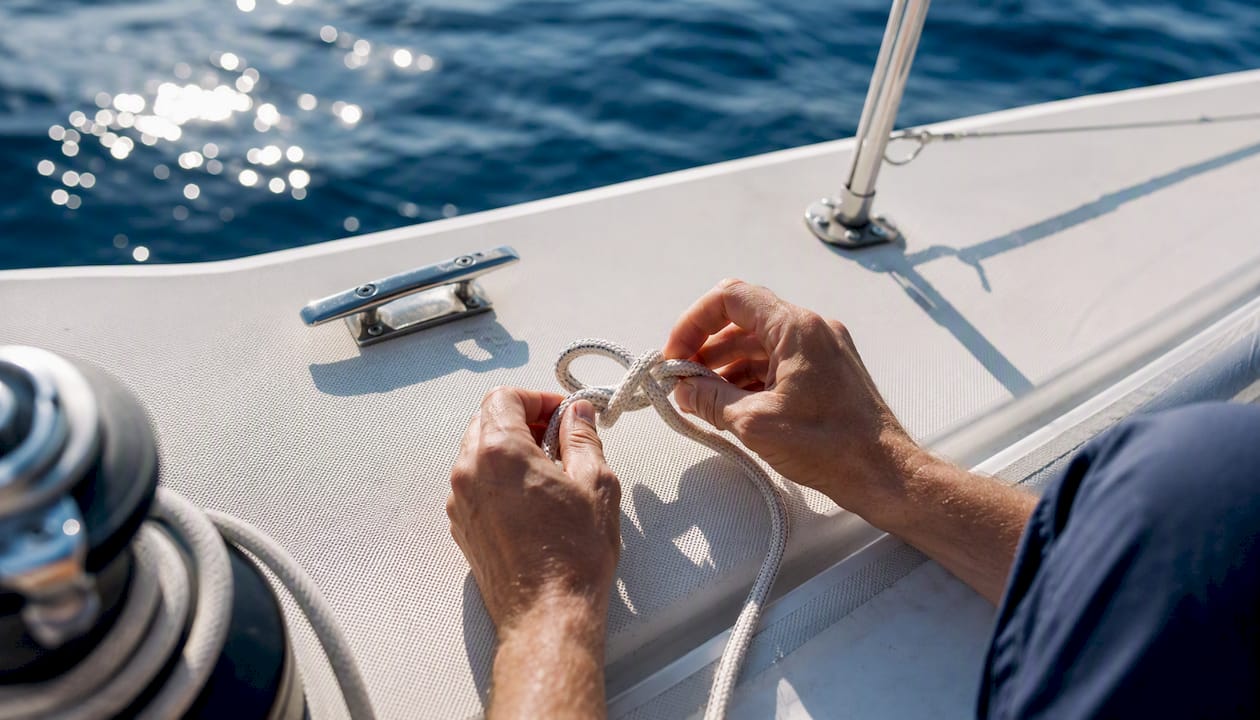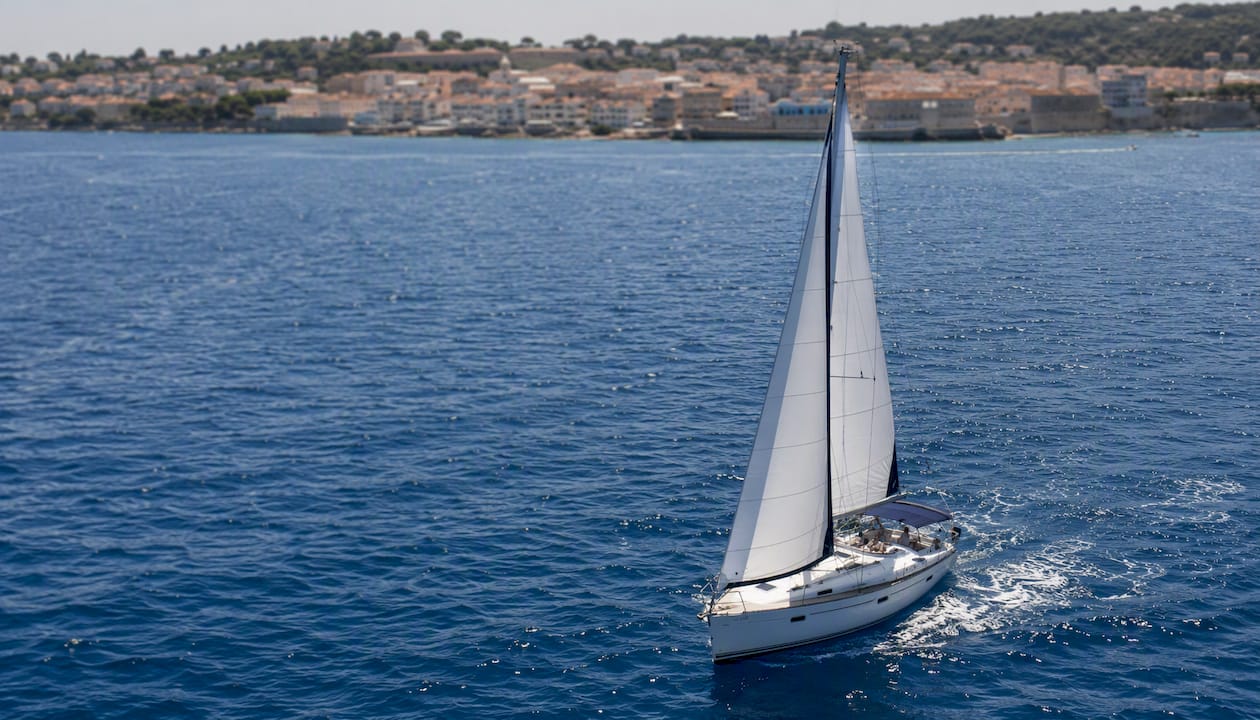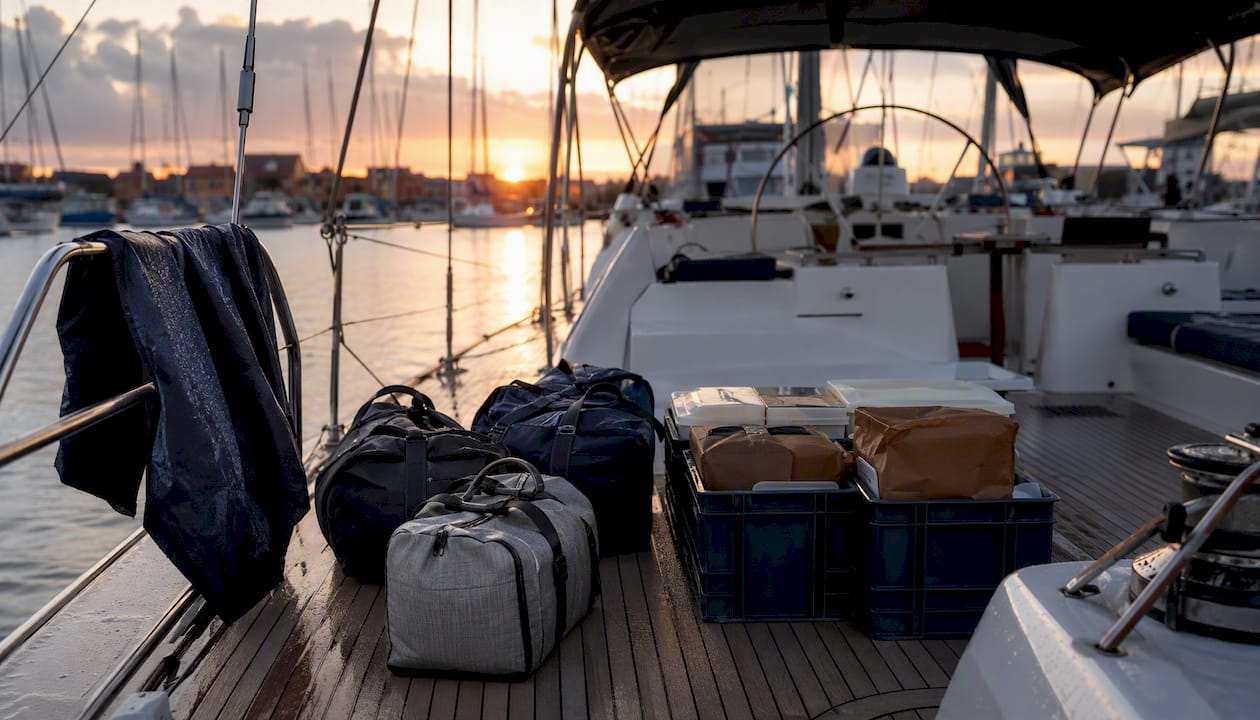
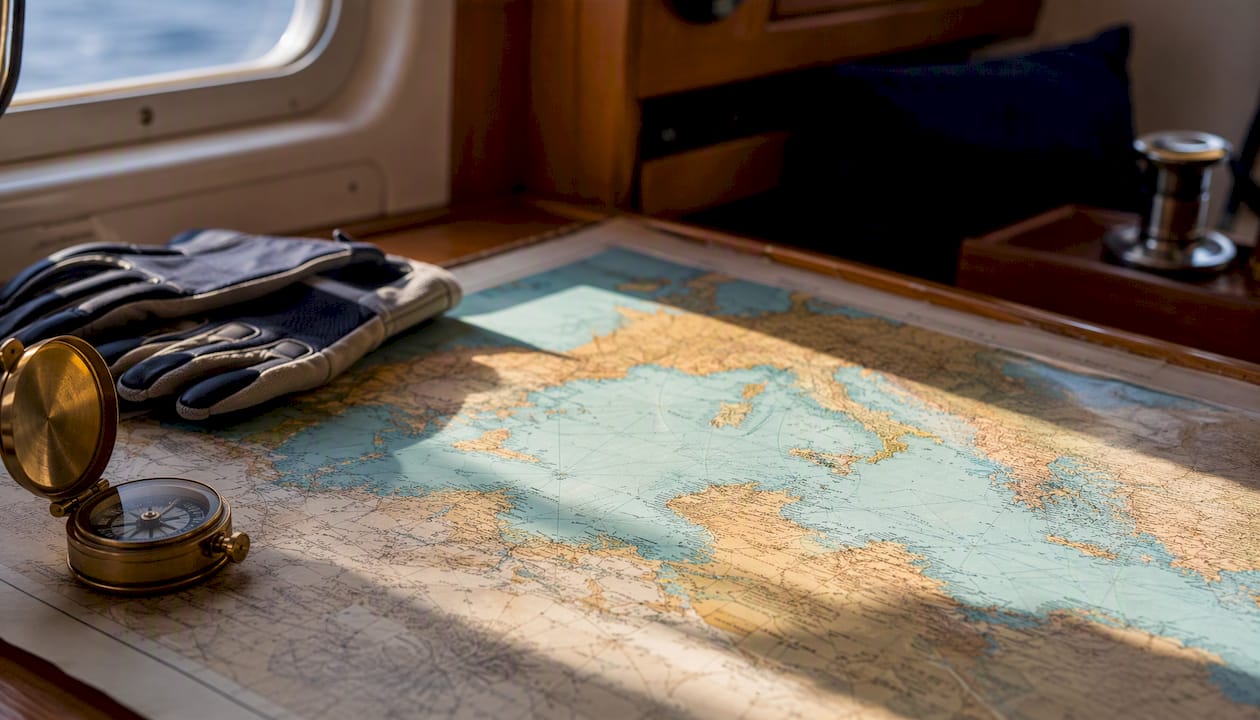
Here is the exact order to follow: pick your region, lock your travel dates and season, set a budget and trip length, choose your travel format (land, rail, ferry, or sailing), build a paced route, then book the highest-demand items first. For timing, book flights 3–6 months out, accommodation and ferries 2–4 months ahead, and tours or attraction tickets 1–2 months before you go. That sequence is the whole game. Everything else is just filling in the details.
Your 6-step planning checklist:
- Choose your Mediterranean region or country cluster
- Pick your travel dates and season (shoulder, peak, or off-season)
- Set your budget and decide how many days you have
- Choose your travel format: land-based, rail, ferry-hopping, or sailing
- Build a paced, day-by-day route with realistic travel days factored in
- Book flights first, then high-demand accommodation and ferries, then tours
Principalele concluzii
Step-by-step Mediterranean travel planning works best when you lock the region and flights first, then build the route and book accommodation and ferries before tours or day trips.
| Punct | Detalii |
|---|---|
| Lock region and dates first | Choose one Mediterranean cluster for trips under 14 days to avoid transit overload. |
| Shoulder season is the sweet spot | May–June and September–October offer warm weather, swimmable seas, and lower prices than peak. |
| Book in the right order | Flights at 6+ months, ferries and hotels at 2–4 months, tours and tickets at 1–2 months. |
| Match trip length to ambition | 7–10 days for one country or island focus; 10–14 days for two countries without rushing. |
| Sailarmada for group and sailing trips | Curated sailing itineraries with experienced skippers remove logistics stress for groups and families. |
Cuprins
- How to plan your Mediterranean trip step by step
- When should you go? Season tradeoffs and major events
- What does a Mediterranean trip actually cost, and when do you book?
- Where to stay: hotels, apartments, villas, and boats
- How do you get there and get around the Mediterranean?
- How to build a day-by-day Mediterranean itinerary
- When does a sailing holiday make more sense than a land trip?
- A planner’s honest take on Mediterranean travel
- Ready to swap the hotel shuffle for something better?
- Useful planning resources
- Sources
How to plan your Mediterranean trip step by step
The Mediterranean covers 21 countries across Europe, Asia, and Africa, which means your first real decision is not “where do I want to go” but “which slice of this enormous region fits my trip length and travel style?” That distinction matters because a 10-day trip that tries to cover Spain, Italy, Greece, and Turkey will feel like an airport marathon. A 10-day trip focused on the Greek islands or the Amalfi Coast will feel like a vacation.
The five practical clusters most U.S. travelers work with are:
- Western Mediterranean: Spain, southern France, and Italy’s Ligurian coast. Best for food, cities, and art.
- Central Mediterranean: Sicily, Malta, and Tunisia. Underrated, fewer crowds, rich history.
- Adriatic: Croatia, Montenegro, and Slovenia’s coast. Gorgeous for sailing and old-town culture.
- Eastern Mediterranean / Greek Islands: Greece, the Cyclades, Dodecanese, and Ionian islands. The classic island-hopping zone.
- Eastern Med extension: Turkey’s Aegean and Turquoise coasts, plus Cyprus. Adds depth for 14-day trips.
Which region fits your travel style?
| Travel style | Best-fit region | Three example destinations |
|---|---|---|
| Beach + island freedom | Greek Islands / Adriatic | Santorini, Mykonos, Hvar |
| Food, cities, and culture | Western Med (Spain/Italy) | Barcelona, Rome, Marseille |
| Active / adventure | Adriatic / Turkey | Dubrovnik, Kotor, Bodrum |
| Family-friendly mix | Western Med / Sicily | Palma de Mallorca, Taormina, Nice |
| Off-the-beaten-path | Central Med | Malta, Gozo, Trapani |
First-time visitors consistently do better when they pick one area and do it well rather than trying to sample the whole sea in one go. Choose a region, then pick your hub cities. The rest of the route builds itself.
When should you go? Season tradeoffs and major events
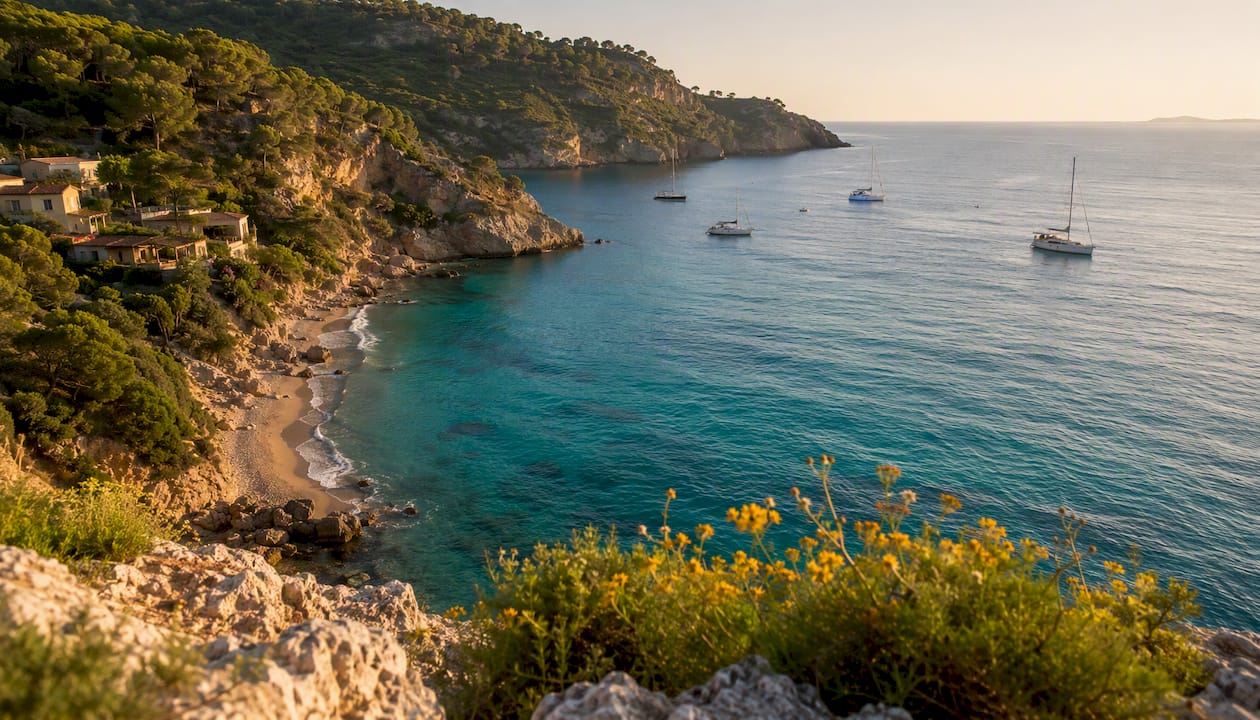
Shoulder seasons — May through early June and September through early October — offer the best overall balance of warm weather, swimmable water, and manageable crowds for most U.S. travelers. That said, shoulder season is not a universal answer. If you want the full Greek island party atmosphere, peak July and August is the point. If you are traveling with kids on a school calendar, you may not have a choice.
| Sezonul | Typical weather | Nivelul mulțimii | Price direction | Cel mai bun pentru |
|---|---|---|---|---|
| Peak (July–August) | Hot temperatures | Foarte ridicat | Cel mai înalt | Beach lovers, nightlife seekers |
| Shoulder (May–June, Sept–Oct) | Warm | Moderat | Gamă medie | Most travelers, couples, foodies |
| Low (Nov–April) | Mild to cool | Scăzut | Cel mai scăzut | City breaks, budget travelers |
One factor that catches travelers off guard: major regional events. The Mediterranean’s event calendar includes festivals, sporting events, and cultural gatherings that create sharp local spikes in accommodation demand. In 2026, check event calendars for your specific destination before locking dates, because a festival weekend in a small coastal town can wipe out affordable rooms weeks in advance.
Sfat profesional: Book accommodation in event-heavy cities at least 3–4 months ahead if your dates overlap with a major local festival or sporting event. Prices can double overnight once a festival is announced and the word spreads.
A short note on heat: the Eastern Mediterranean in August regularly hits temperatures that make midday sightseeing genuinely uncomfortable. If you are sensitive to heat, shoulder season is not just a crowd-avoidance tactic — it is a comfort call. Sea temperatures in September are often warmer than in June, so late shoulder season can actually be the sweet spot for swimming.
What does a Mediterranean trip actually cost, and when do you book?
Start with a rough allocation model. For a typical 10-day U.S., season is the single biggest cost driver: a peak-week hotel in Santorini or Positano can run three to four times what the same room costs in May or October.
Calendarul rezervărilor:
- 6+ months out: Book international flights, especially open-jaw tickets (fly into one city, out of another). This is where the biggest savings live.
- 3–6 months out: Reserve high-demand hotels, villas, and summer ferry crossings. Popular island ferries in Greece and Croatia sell out fast.
- 1–3 months out: Lock guided tours, cooking classes, skip-the-line tickets for major sites (the Colosseum, Uffizi, Acropolis Museum), and private transfers.
- 0–30 days out: Fill in flexible day trips, restaurant reservations, and any remaining logistics.
Prioritized booking checklist:
- Flights first, always — and scan flexible dates. Flexible-date searches using a +/- 3-day calendar can meaningfully reduce airfare; set fare alerts and a buying threshold so you can move quickly when prices dip.
- Reserve accommodation in island destinations and coastal towns before city hotels — supply is tighter.
- Book summer ferries (especially Greece and Croatia) as soon as your dates are confirmed.
- Secure skip-the-line tickets for the Colosseum, Uffizi, and Acropolis Museum at least 6–8 weeks ahead in peak season.
- Leave some budget unallocated for spontaneous meals, market finds, and day trips you discover on the ground.
Where to stay: hotels, apartments, villas, and boats
The right accommodation type depends almost entirely on your trip goal. For city-culture itineraries, a centrally located hotel or short-term apartment puts you walking distance from the action and keeps logistics simple. For slow beach trips, a villa or resort with a pool gives you a base to decompress between day trips. For island hopping, small guesthouses or a private yacht charter remove the daily-packing headache entirely.
Hotels work best when you are moving every 2–3 nights and want consistent service, easy check-in, and no surprises. The tradeoff is cost, especially in peak season on popular islands.
Short-term apartments (booked through platforms like Airbnb or Vrbo) give you a kitchen, more space, and a local neighborhood feel. They tend to save money on longer stays of 4+ nights. Always check the exact location on a map — “5 minutes from the beach” can mean a steep cliff walk — and read the cancellation policy carefully before paying.
Villas suit groups and families well. The per-person cost drops significantly when you split a 4–6 bedroom property, and you get privacy, a pool, and a shared base. Villas typically require a deposit and have strict cancellation terms, so travel insurance is worth having.
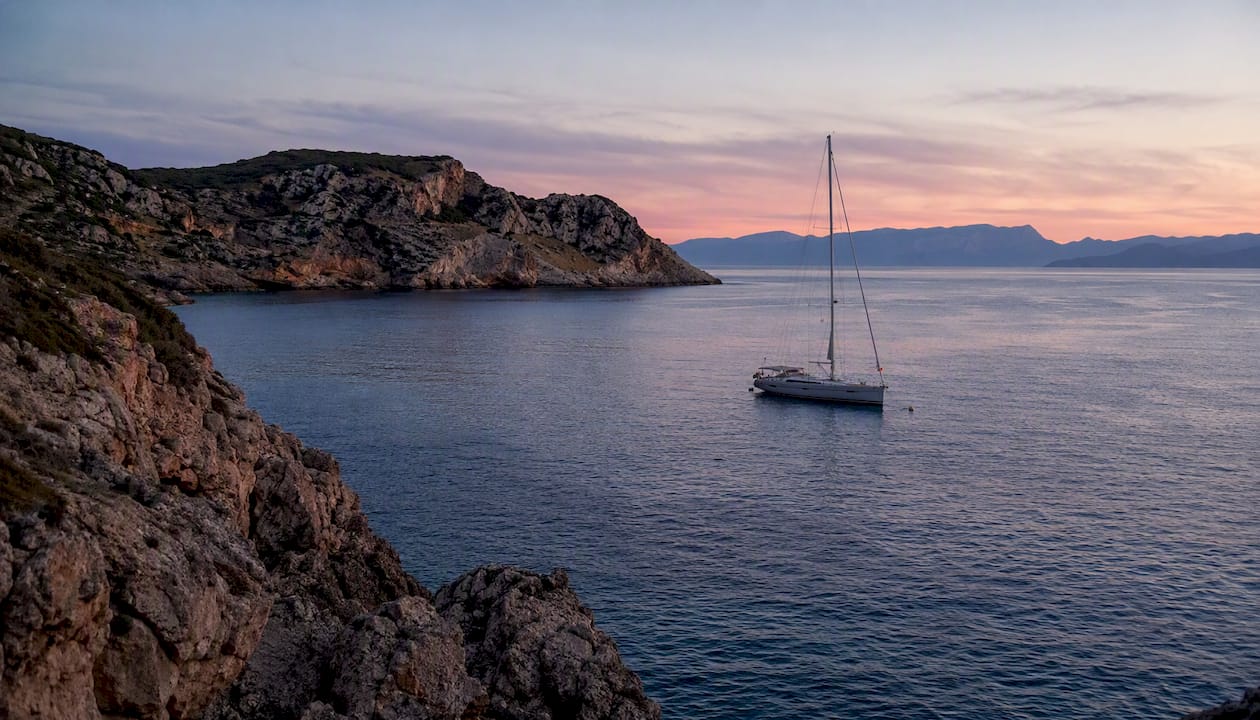
Private yacht charters and flotilla sailing are a different category altogether. You unpack once, wake up in a new cove every morning, and your accommodation moves with you. For groups of 6–12, the per-person cost of a vacanță privată de navigatie can be surprisingly competitive with a villa plus ferry costs, especially when you factor in the experience value.
If either of those conditions is uncertain, pay the small premium for the refundable option — one itinerary change can cost far more than the rate difference.*
How do you get there and get around the Mediterranean?
Fly into the hub that puts you closest to your first stop. Rome (FCO/CIA), Athens (ATH), Barcelona (BCN), and Split (SPU) are the four most useful entry points for U.S. travelers, depending on region. Choosing the right hub can save you a full travel day compared to landing in a major hub and then transferring across the country.
Good multi-city routing avoids backtracking: plan a logical loop or an open-jaw itinerary (fly in to one city, out of another) so you are always moving forward rather than retracing your steps.
| Transport mode | Cel mai bun pentru | Practical notes |
|---|---|---|
| Budget short-haul flights | Legs over 4 hours or island hops | Watch baggage fees; book direct when possible |
| Train | Legs under 4–5 hours (Italy, France, Spain) | Often faster door-to-door; Eurail passes help on multi-leg rail trips |
| Ferry | Island hopping, coastal routes | Book early for summer; overnight ferries save a hotel night |
| Car hire | Rural areas, Tuscany, Provence, coastal drives | Not useful in city centers; check insurance coverage carefully |
Gateway airports and when to use secondary options:
- Rome Fiumicino (FCO): Best for central Italy and connections south. Ciampino (CIA) is cheaper for budget airlines but farther from the city.
- Athens (ATH): Gateway to all Greek islands via ferry from Piraeus or short domestic flights.
- Barcelona (BCN): Best Western Med entry; connects easily to Valencia, the Balearics, and southern France.
- Split (SPU): The smartest entry point for Dalmatian Coast and Croatian island sailing itineraries.
- Naples (NAP): Cuts transfer time significantly if your first stop is the Amalfi Coast or Sicily.
Sfat profesional: Summer ferry timetables add capacity but also sell out early. Book your key ferry legs the moment your flights are confirmed, and always have a backup crossing in mind. Overnight ferries between Athens and Crete or Italy and Greece are a smart contingency — they save a hotel night and keep you moving.
How to build a day-by-day Mediterranean itinerary
The core pacing rule is simple: 7–10 days suits a single-country or island-focused trip; 10–14 days lets you cover two countries without feeling rushed. Trying to do three countries in 10 days means you spend more time in transit than in the places you came to see.
Sample 7-day Greek Islands route
Days 1–2: Athens. Acropolis, Plaka neighborhood, Monastiraki market. Two nights minimum — Athens rewards slow exploration.
Ziua 3: Ferry to Mykonos (2.5 hours from Piraeus). Afternoon beach, evening in the old town.
Days 4–5: Mykonos. Day trip to Delos, beach time, sunset at Little Venice.
Ziua 6: Ferry to Santorini (2 hours). Arrive, settle in Fira or Oia.
Ziua 7: Santorini. Caldera hike or boat tour, sunset in Oia, evening flight back to Athens or direct home.
Sample 10-day Croatia and Montenegro route
Days 1–2: Dubrovnik. Old city walls, Lokrum island, cable car views.
Days 3–4: Hvar by ferry. Lavender fields, Pakleni islands by water taxi, nightlife if that is your thing.
Ziua 5: Split. Diocletian’s Palace, Riva promenade. One night.
Days 6–7: Plitvice Lakes day trip or Krka waterfalls. Return to Split.
Days 8–9: Kotor, Montenegro. Ferry or drive south. Old town, fortress hike.
Day 10: Return to Dubrovnik for departure flight.
Sample 14-day Italy, Greece, and Turkey route
Un 14-day Italy–Greece–Turkey itinerary works well when you limit stops to 3–4 cities and give each one at least two nights. A practical route: Rome (3 nights) → Athens (2 nights) → Santorini or Crete (3 nights) → Istanbul (3 nights) → fly home. That leaves one buffer day for travel delays or a spontaneous detour. For a Western Med alternative, a classic coastal rail route from Valencia through Marseille, Nice, Genoa, and Pisa to Rome works beautifully in 2–3 weeks by Eurail pass.
The pacing principle that makes or breaks any Mediterranean itinerary: plan one major activity per day and leave afternoons unstructured. The best moments — a perfect lunch found by accident, a hidden beach spotted from a cliff path — happen when you are not racing to the next museum.
Cruises offer easy multi-destination sampling without the daily hotel shuffle, but land-based travel gives you more time in each place and deeper local experiences. The right choice depends on whether you want breadth or depth.
When does a sailing holiday make more sense than a land trip?
Sailing makes the most sense when your priority is island-to-island freedom, group privacy, or moving between destinations without repacking every morning. If your group wants to wake up in a crystal-clear cove, swim off the back of the boat, and sail to a new village for dinner, no land-based itinerary can replicate that.
Step-by-step sailing planning checklist:
- Choose your sailing region. Greece (Cyclades, Ionian, Dodecanese), Croatia (Dalmatian Coast), Italy (Sardinia, Amalfi), and Turkey (Turquoise Coast) are the four main options for U.S. travelers.
- Decide: private charter or flotilla. Un charter privat gives your group full control of the route and schedule. A shared yacht or flotilla is a great social format for solo travelers or smaller groups who want built-in company.
- Book your yacht and skipper. Lock the boat 4–6 months ahead for peak summer weeks. Confirm the skipper’s experience with your chosen route.
- Match your flight to the nearest port hub. Flying into Split for a Dalmatian itinerary, or Athens for a Cyclades route, saves a full travel day compared to landing in a distant hub and transferring.
- Plan provisioning and port logistics. Decide whether you want a catered charter (meals included) or self-catering. Confirm marina berths for your first and last nights.
Sfat profesional: Build at least one buffer day at the start and end of a sailing week. Weather delays and ferry timing can shift your departure by a few hours, and arriving the night before your charter begins means you board relaxed rather than frantic.
Sailarmada oferă itinerarii de navigatie curatate pentru grupuri across Greece, Croatia, Italy, and Turkey, with experienced skippers who know the routes and the anchorages. If you want to explore what a sailing week looks like before committing, their family and group planning guide is a good place to start.
A planner’s honest take on Mediterranean travel
The step-by-step approach works because it forces you to make the big decisions before the small ones. Most planning stress comes from trying to book a hotel before you have confirmed your dates, or choosing a route before you know your budget. Get the sequence right and everything else slots in.
One habit that consistently pays off: hold refundable options on your top two or three accommodation choices while you finalize flights. Once the flights are locked, commit to the accommodation and release the others. Keep 5–10% of your total budget unallocated as a contingency — not for emergencies, but for the spontaneous dinner, the boat trip you did not plan, or the extra night in a town that surprised you.
For sailing holidays and curated group trips, Sailarmada’s approach of pairing an experienced skipper with a pre-built route removes most of the logistics stress. You still get flexibility on the water, but the hard decisions are already made.
Ready to swap the hotel shuffle for something better?
Planning a Mediterranean trip land-side is deeply rewarding, and this guide gives you everything you need to do it well. But if you are traveling with a group or family and the idea of waking up in a new crystal-clear bay every morning sounds better than repacking your suitcase, a curated sailing holiday might be exactly what you are looking for.
Sailarmada specializes in private and group sailing holidays across Greece, Croatia, Italy, and Turkey, with experienced skippers, flexible itineraries, and a choice of catamaran or sailing yacht. It is a genuinely different kind of Mediterranean trip — one where the boat is your hotel, your transport, and your front-row seat to some of the most breathtaking coastline in the world. Groups of friends, families, and solo travelers who want to join a flotilla all find a format that fits. Check out the private sailing options and request a quote for your dates.
Useful planning resources
These are the sources and tools referenced throughout this guide, organized by what each one is best used for:
- TravelPulse Canada — 2026 Mediterranean Travel Guide: Overview of all 21 Mediterranean countries, regional highlights, and 2026 event calendar notes.
- Resident: Shoulder season guidance, booking timing, and practical trip-planning advice.
- Scan: Open-jaw routing tactics, flexible-date fare scanning, ferry and transport mode comparisons.
- Exploration Junkie — 14-Day Italy, Greece & Turkey Itinerary: Day-by-day sample route and pacing advice for multi-country trips.
- Travelopod — How to Plan a Mediterranean Trip: Trip-length guidance and itinerary design principles.
- TripSavvy — Perfect Mediterranean Coast Itinerary: Cruise vs. land-based travel tradeoffs and coastal route inspiration.
- Eurail — Mediterranean Itinerary: Western Med rail routes and pass guidance for multi-leg train journeys.
- Wild Foodz — Family Travel Planning Guide 2026: Practical checklists and stress-reduction tips for families planning international trips.
Sources
- 2026 Travel Guide to the Mediterranean | TravelPulse Canada
- Plan and Book Your Dream Mediterranean Vacation
- Scan
- Best Mediterranean destinations to visit: a 14-day Italy, Greece & Turkey itinerary | Exploration Junkie
- How to Plan a Mediterranean Trip | Travelopod