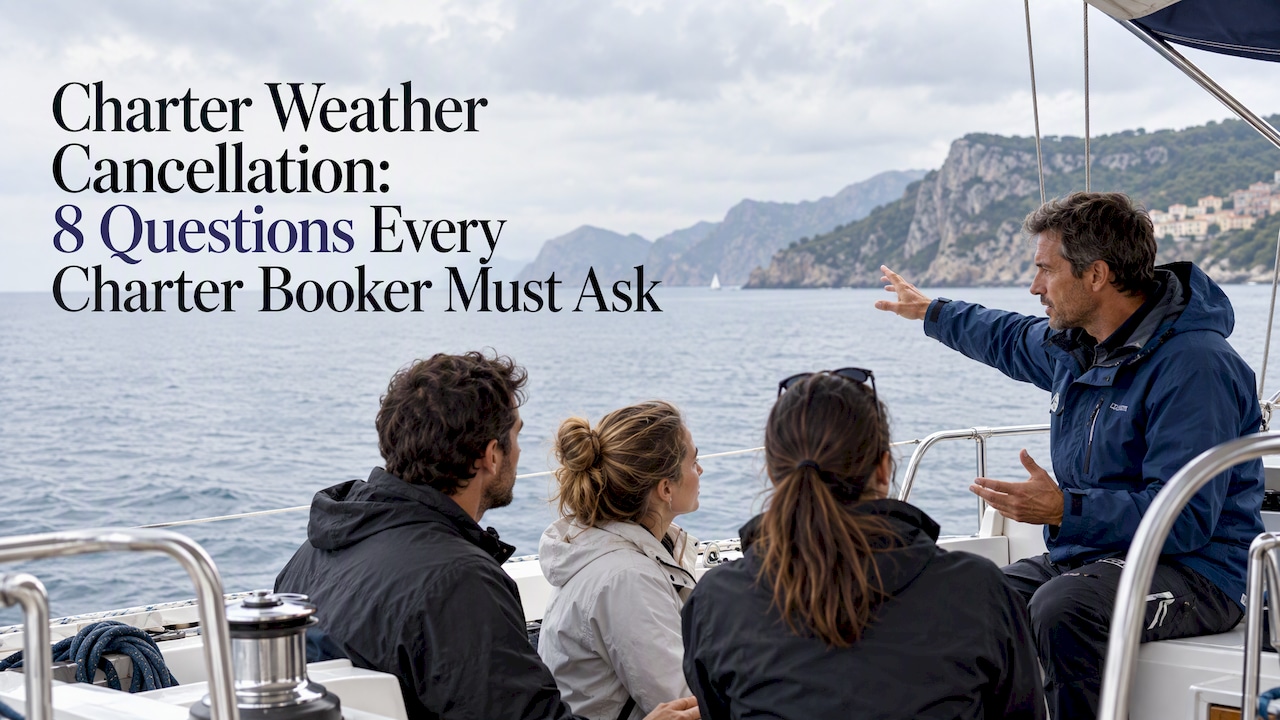
Weather is usually treated as force majeure, which means the captain decides whether a charter sails, and operators typically offer rescheduling, credit, or a prorated refund. You are rarely entitled to extra compensation for things like missed flights or hotel nights, so travel insurance matters. Check your booking terms early, and if you booked through SailArmada, reach out directly for clarity before your departure date.
TL;DR:
- Captains base their sailing decisions on measurable conditions such as wind, waves, and visibility, not on gut feeling or booking policies.
- Weather-related cancellations typically fall under force majeure clauses, limiting refunds unless a prorated refund or rescheduling option is specified in the contract.
- Asking the captain for specific weather thresholds behind go or no-go decisions helps clarify safety protocols and creates a record for potential disputes.
- Travel insurance with marine endorsements and cancel-for-any-reason coverage can cover non-refundable expenses that the charter contract excludes, especially when weather causes trip disruptions.
- Guests should document all communications, questions, and responses with operators to strengthen their position if disputes over refunds or cancellations escalate.
Table of Contents
- How captains and operators make the call on sailing days
- What your charter contract usually allows
- Questions to ask your operator before you set sail
- Why travel insurance matters more than the contract does
- Escalating a denied refund and your EU passenger rights
- What a canceled sailing day means for the crew behind the scenes
- How operators should notify you when a cancellation happens
- Where your legal rights actually stand
- Why clear terms protect guests better than guesswork
- How SailArmada supports you when weather changes the plan
- FAQ
- Sources
How captains and operators make the call on sailing days
The captain has final authority over whether a charter sails, and that call rests on measurable conditions rather than gut feeling. Wind speed and direction, wave period, visibility, and the experience level of guests and crew all factor into the decision, and maritime consumer-rights guidance confirms this authority sits with the captain, not the booking office.
Most operators would rather adjust a trip than cancel one outright. Before pulling the plug entirely, a good crew will usually try:
- Swapping the day’s route for a sheltered bay or protected channel.
- Delaying departure by a few hours until a front passes.
- Rearranging the week’s itinerary so the rough day lands on an already-planned rest day.
That reschedule-first instinct isn’t just about pleasing guests. Canceling outright means refund paperwork, lost revenue, and a disappointed group going home with nothing. Shifting the plan keeps everyone on the water, just on a different course than originally mapped.
Pro Tip: Ask your skipper for the specific wind and wave numbers behind any go or no-go decision. It helps you understand the call and gives you a paper trail if you need one later.
What your charter contract usually allows
Your contract, not the weather itself, determines what you’re owed when a sailing day gets scrapped. Before you book, or at the very least before you panic mid-trip, read these sections closely:
- Force majeure clause. This defines weather and other acts of nature as events outside anyone’s control, which usually limits the operator’s liability for cancellations caused by storms or gale warnings.
- Captain’s authority clause. Most agreements state plainly that the captain’s on-the-day decision is final and cannot be overridden by guests or the booking agent.
- Refund and deposit scale. Many operators apply a sliding scale, where canceling closer to departure forfeits more of your deposit, though this scale often doesn’t apply the same way when weather forces the change.
- Prorated refund terms. If three days of a seven-day charter get cut short by weather, some operators refund a portion of the unused days; others reserve the right not to, especially if most of the week still happened.
Broker-style agreements, including those following MYBA conventions common in yacht chartering, tend to lean hard on the captain’s authority clause and keep refund entitlements narrow by design. That’s not a hidden trick, it’s the industry’s way of keeping safety decisions separate from financial pressure. Understanding terms like these before you sign makes a real difference, and SailArmada’s sailing holiday terminology guide is a useful place to get comfortable with the language before you need it.
Questions to ask your operator before you set sail
A few direct questions before departure can save you a frustrating conversation later. Build your checklist around these items:
- What exactly counts as force majeure under this contract?
- Who makes the final call if weather turns mid-trip, and based on what criteria?
- What’s the rescheduling policy, and does it come with a time limit?
- Is any refund prorated, and if so, how is that percentage calculated?
- What written confirmation will I get if my trip is changed or shortened?
- Is travel insurance required, recommended, or neither?
- How are itinerary amendments documented?
- Who do I contact if I disagree with a decision made on the day?
Keep every email, text, and confirmation tied to these answers in one folder. If a dispute comes up later, written evidence of what you were told and when beats memory every time.
Pro Tip: Request written confirmation of any reschedule or credit offer the same day it’s given. A verbal promise from a dockside conversation is hard to prove weeks later.
Why travel insurance matters more than the contract does
Here’s the gap most charter guests don’t see coming: your operator’s force majeure clause protects the operator, not your flight home or the hotel you already paid for. If your sailing week gets cut short by weather, you might get a credit or partial refund from the charter company, but your nonrefundable airfare, prepaid lodging, and any connecting travel are generally your problem.
That’s exactly where travel insurance earns its cost. When shopping for a policy, prioritize:
- Cancel-for-any-reason coverage where it’s available, since it offers the broadest protection beyond standard weather exclusions.
- Marine-activity endorsements that specifically cover sailing or yacht charter activities, not just generic trip interruption.
- Missed-connection and nonrefundable prepaid expense coverage, which fills the exact gap your charter contract leaves open.
Buy your policy when you book, not after a storm warning appears on the forecast. A guide to cancel-for-any-reason insurance breaks down when this type of coverage makes sense for higher-value trips like a week-long charter. SailArmada’s own travel insurance page walks through the marine-specific endorsements worth confirming before you pay your deposit.
Escalating a denied refund and your EU passenger rights
If your refund request gets denied and you believe it shouldn’t have been, there’s a formal path, especially for ferry and cruise crossings within EU waters. Here’s how it generally works:
- Know your baseline rights. Under EU Regulation 1177/2010, a cancelled ferry or ship crossing entitles you to reimbursement of the ticket price or re-routing to your destination.
- Understand the weather exclusion. That same regulation excludes cancellation compensation when the cause is severe weather or other extraordinary circumstances, which covers most storm-related cancellations.
- File a written complaint. National Greek passenger-rights guidance sets a two-month window for submitting a written complaint to the carrier.
- Escalate if needed. The maritime passenger complaints procedure outlines how to submit evidence to carriers, ticket agents, or port authorities when a direct complaint doesn’t resolve things.
Reimbursement for a cancelled crossing is generally due within seven days of the refund request being approved, which gives you a concrete timeline to hold carriers to.
Keep every ticket, cancellation notice, and dated communication. Those documents are what turn a complaint into a resolved claim.
What a canceled sailing day means for the crew behind the scenes
A weather cancellation doesn’t just disrupt your week, it sets off a logistics scramble most guests never see. The crew has to rework provisioning schedules, since food and supplies bought for a planned route may need to shift with the itinerary. Mooring reservations at the next port often need rebooking or canceling, sometimes with penalty fees the crew absorbs rather than the guest.

Crew scheduling takes a hit too. A delayed departure or shortened week can push back the turnaround before the next group boards, which means the captain and crew are juggling your changed plans against someone else’s upcoming trip. Fuel planning, water taxi coordination for the Mediterranean, and even laundry services between charters all ripple outward from a single weather call.
None of this is the guest’s problem to solve, but it explains why operators lean toward rescheduling rather than outright cancellation whenever conditions allow it. A canceled week means idle boats, idle crew, and lost income on both ends, while a rearranged week keeps the operation moving and your holiday mostly intact. Good operators treat this logistics juggling as part of the job, not an excuse to shortchange guests on communication.
How operators should notify you when a cancellation happens
The moment weather forces a change, clear and timely communication is what separates a well-run operation from a frustrating one. You should expect to hear from the captain or operator directly, not through a general booking platform, as soon as a decision is made, not the morning you’re supposed to board.
A solid communication protocol typically includes a specific reason for the change tied to actual conditions, such as a small craft advisory or a defined wind threshold being exceeded. It should also spell out the proposed alternative, whether that’s a delayed departure, a different route, or a rescheduled date, along with a clear next step for you to confirm or ask questions.
Written confirmation matters here more than a phone call. A text or email that states the decision, the reason, and the proposed fix gives you something to reference if plans shift again or if you need to file an insurance claim later. If you’re chartering as part of a group, ask who the single point of contact is, so instructions don’t get garbled across multiple people relaying the same message differently.
Where your legal rights actually stand
Your legal footing depends heavily on what kind of trip you booked and where. For ferry and cruise crossings within the EU, Regulation 1177/2010 guarantees reimbursement or re-routing when a crossing is cancelled, though compensation for the inconvenience itself is excluded when severe weather is the cause.
For private yacht charters, your rights live almost entirely in the contract you signed. There’s no equivalent regulation granting automatic refund rights the way there is for scheduled ferry service, which is exactly why reading the force majeure and refund clauses before you sign matters so much. Disputes typically get resolved through the complaint channels your contract specifies rather than through consumer protection law, since weather-driven decisions are generally treated as operational, not contractual breaches.

If you disagree with how a cancellation was handled, your first step is a written complaint to the operator, followed by escalation to the relevant maritime authority if you booked within Greek waters or another EU jurisdiction with a formal complaints process. Keep your documentation organized from day one. A clear paper trail showing what you were told, when, and by whom is the single biggest factor in whether a dispute gets resolved in your favor.
Why clear terms protect guests better than guesswork
The charter operators who handle weather well aren’t the ones who never cancel, they’re the ones who explain their decisions clearly and reschedule before refunding. A safety-first call that rearranges your week still gets you on the water, just on a different course than planned. Clear contract language and a recommended insurance policy turn a stressful day into a manageable one, which is a better outcome for everyone than a guest left guessing.
— Sail
How SailArmada supports you when weather changes the plan
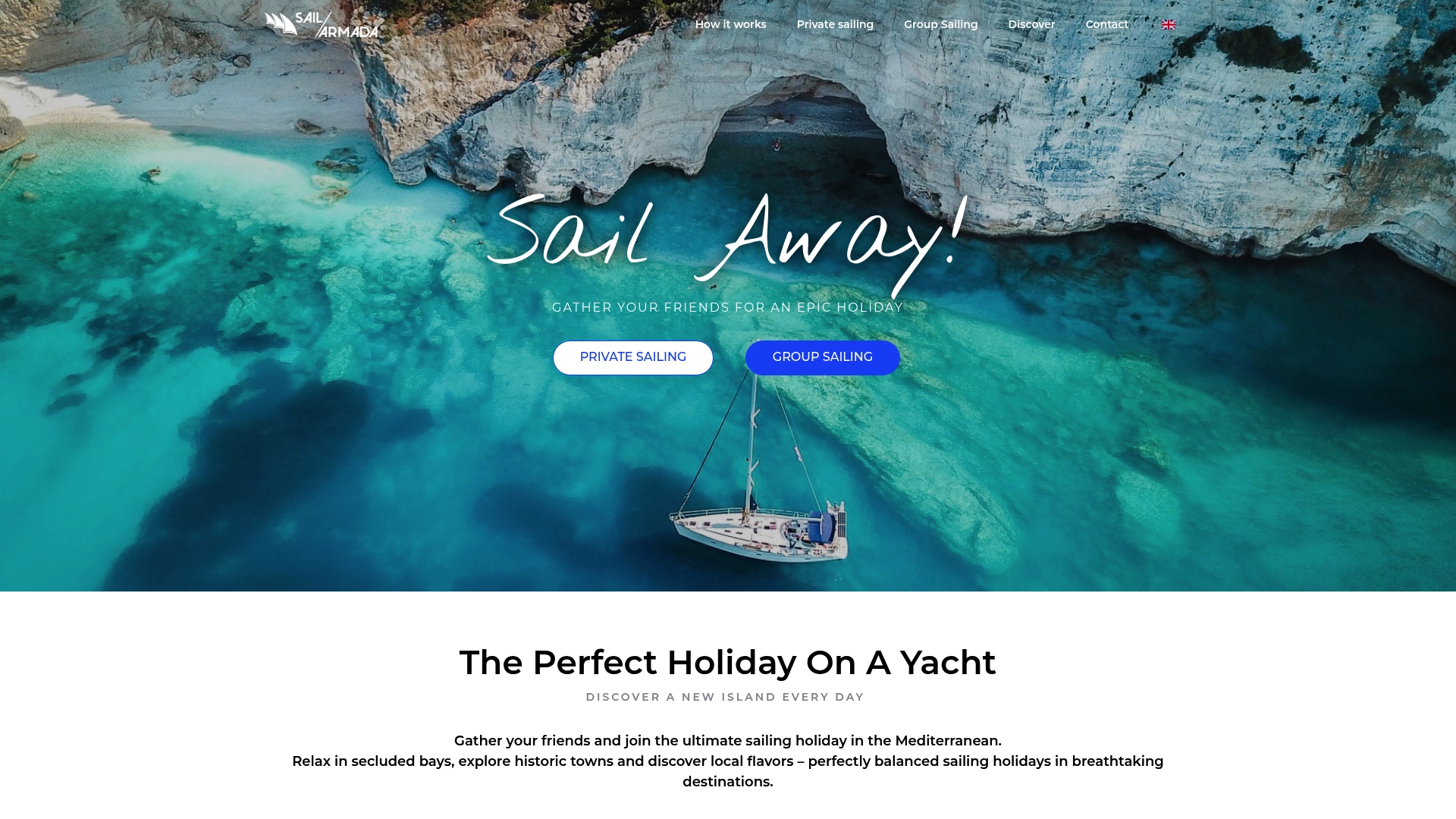
A canceled sailing day shouldn’t mean a canceled holiday. SailArmada’s approach favors rescheduling and clear communication over last-minute surprises, backed by a charter cancellation policy that spells out deposit rules and credit options before you ever need them. Pair that with the travel insurance guidance on marine-specific endorsements, and you’re covered on both ends: the charter itself and the flights and hotels around it.
Before you book, it helps to:
- Read the cancellation and rebooking terms for your chosen route.
- Add travel insurance with marine-activity coverage at the time of booking.
- Contact your charter operator directly if a forecast concern comes up before departure.
Ready to plan your week on the water? Check available dates for Greece sailing holidays and get clear terms from the start.
FAQ
What happens if my flight is cancelled because of weather?
Airlines typically rebook you on the next available flight or offer a refund for the cancelled segment, depending on the fare rules and the airline’s own weather policy. This is separate from charter or ferry rules, so check your airline’s specific cancellation terms rather than assuming charter policies apply.
What happens if my ferry is cancelled due to bad weather?
Under EU Regulation 1177/2010, you’re entitled to reimbursement of your ticket or re-routing to your destination. Compensation for the disruption itself is excluded when the cancellation is caused by severe weather or other extraordinary circumstances.
What happens if your cruise is cancelled due to weather?
Cruise lines generally follow similar reimbursement or re-routing principles under the same EU passenger-rights framework when the sailing falls within EU jurisdiction. As with ferries, additional compensation for the inconvenience is typically excluded when weather is the documented cause.
Will I get a refund if my private charter is cancelled for weather?
It depends on your contract’s force majeure and refund clauses, since most operators offer rescheduling, credit, or a prorated refund rather than a full cash refund. Reading your specific agreement, such as SailArmada’s charter cancellation policy, tells you exactly what applies to your booking.
Does travel insurance cover a weather-cancelled sailing trip?
A standard policy with marine-activity coverage can reimburse nonrefundable costs like flights and hotels that your charter contract won’t cover. Buying insurance at the time of booking, rather than after a forecast turns worrying, gives you the broadest protection.
Sources
- Your Europe — Ship passenger rights (Regulation 1177/2010)
- ΥΝΑΝΠ — Passenger rights with one click (Greek national passenger-rights portal)
- Passenger complaints procedure for maritime transport — MITOS (Greek registry)