
Dacă ai șapte zile, navighează în bucla Phuket: din Golful Phang Nga spre Railay sau Krabi, mai departe spre Koh Phi Phi, apoi spre Insula Racha sau Coral, înainte de a te întoarce în Phuket. Ai cinci zile? Redu-l la circuitul sudic. Ai paisprezece? Adaugă Insulele Similan și Surin. Navighează între noiembrie și aprilie și ia un skipper dacă aceasta este prima ta închiriere de barcă în Thailanda.
Pe scurt:
- Circuitul de 7 zile în Phuket este cel mai recomandat itinerariu, deoarece echilibrează timpul de navigație cu suficiente locuri de ancorare pentru înot și explorare.
- Cele mai multe rute acoperi aproximativ 100 până la 130 de mile marine pe parcursul a șase zile, cu etape zilnice care depășesc rar 30 de mile și cele mai bune condiții de vânt din noiembrie până în aprilie.
- Rezervarea unei chartere cu skipper este puternic recomandată vizitatorilor aflați la prima experiență, din cauza curenților de mareea locali, a golfurilor protejate și a restricțiilor sezoniere de acces care nu sunt evidente doar din hărți.
- Extinderea unei călătorii la 14 zile permite vizitarea insulelor izolate Similan și Surin, dar necesită planificare pentru traversări în ape deschise și închideri sezoniere în afara ferestrei noiembrie - aprilie.
- Este crucial să urmezi un itinerar stabilit în prealabil, în loc să improvizezi, deoarece reglementările în schimbare și condițiile meteorologice pot face ca planurile de ultim moment să fie costisitoare și ineficiente.
Cuprins
- Care este cel mai bun itinerariu de navigație în Thailanda pentru durata călătoriei tale?
- Un itinerariu de 7 zile, zi de zi, în Phuket și Marea Andaman
- Cum să prelungești călătoria la 10 sau 14 zile
- Cum să alegi între o navlosire fără echipaj (bareboat) și una cu comandant (skippered)
- Cum construiește Sailarmada o Săptămână a Navigației în Thailanda
- Ce zici mai degrabă de o croazieră cu vele în Golful Thailandei?
- Sfaturi culturale pe care orice navigator ar trebui să le știe înainte de a vizita insulele thailandeze
- De ce un itinerar planificat bate un plan vag
- Rezervă-ți săptămâna de navigație în Thailanda cu Sailarmada
- Surse
- FAQ
Care este cel mai bun itinerariu de navigație în Thailanda pentru durata călătoriei tale?
Alegerea unui șablon se rezumă la două lucruri: câte zile aveți la dispoziție și câtă apă deschisă doriți să parcurgeți, comparativ cu timpul petrecut la ancore într-un golf liniștit. Iată cum se prezintă cele mai comune trei formate de itinerarii de navigație în Thailanda.
- Circuitul de 5 zile din sud: Phuket, Phi Phi, Racha, Coral Island și retur. Etapele zilnice acoperă distanțe nautice moderate, care necesită de obicei câteva ore de navigație, lăsând după-amiezi lungi pentru snorkelling.
- Circuit complet de 7 zile: Combină traseul din nordul Phang Nga cu zona din sud, Phi Phi și Racha. Acesta este punctul ideal pe care majoritatea operatorilor îl recomandă, deoarece zece zile par grăbite pentru a fi comprimate în șapte, dar șapte zile rareori par grăbite în sine.
- Buclă extinsă de 14 zile: Tot ce este inclus în traseul de 7 zile, plus o extindere către insulele Similan sau Surin pentru traversări în ape deschise și scufundări serioase.
Majoritatea charterelor începe și se termină într-una dintre cele trei baze din Phuket: Ao Po Grand Marina, Golful Chalong sau Yacht Haven Marina. Fiecare gestionează aprovizionarea și check-in-ul puțin diferit, ceea ce contează mai mult decât se așteaptă majoritatea celor care închiriază pentru prima dată.
Un itinerariu de 7 zile, zi de zi, în Phuket și Marea Andaman
Acesta este șablonul de rută pe care se bazează Sailarmada atunci când organizează o săptămână în Thailanda: suficientă navigație pentru a simți că este o adevărată călătorie, suficient timp de ancorare pentru a te bucura cu adevărat de ea. O buclă tipică de acest gen acoperă aproximativ 100 până la 130 de mile marine în total, cu segmente individuale rareori depășind 30 NM.
Sfat profesional: Întreabă-ți baza de ambarcațiuni despre prognoza actuală a vântului înainte de a-ți stabili direcția. Parcurgerea traseului în sensul acelor de ceasornic față de cel invers poate face diferența între o traversură confortabilă și o luptă dificilă împotriva vântului.
- Ziua 1: Predare în Phuket → Golful Phang Nga / Koh Hong. Provizionarea și instructajul de siguranță au loc în marină înainte de a ridica ancora. Vă puteți aștepta ca skipperul sau echipa de predare să vă prezinte sistemele bărcii, capacitatea de apă și combustibil, precum și echipamentul de urgență.
- Ziua 2: Explorează Golful Phang Nga. Fără pasaje lungi astăzi, aceasta este o zi de caiac și carst calcaros. Vâsliți în lagunele ascunse (hongs) care se deschid doar la anumite niveluri ale mareei și ancorați devreme, deoarece locurile bune se ocupă până la jumătatea după-amiezii.
- Ziua 3: Phang Nga → Railay / Krabi. Plajele din Railay sunt accesibile doar cu barca, ceea ce le menține mai liniștite decât majoritatea porțiunilor de pe continent. Vei arunca ancoră sau vei prelua o geamandură de amorfare, în funcție de condiții.
- Ziua 4: Krabi → Koh Phi Phi Don. Aceasta este cea mai lungă zi de navigație a săptămânii. Insulele Phi Phi au reguli privind vizitatorii și acostarea care pot varia în funcție de sezon, așa că confirmați disponibilitatea locurilor de acostare cu baza dumneavoastră înainte de a sosi.
- Ziua 5: Explorarea insulei Phi Phi. Vizitați Phi Phi Leh și Bamboo Island. Accesul la Golful Maya s-a schimbat de-a lungul anilor, odată cu restricțiile sezoniere și limitele de debarcare, așa că verificați regulile actuale cu căpitanul ambarcațiunii, în loc să presupuneți că accesul de anul trecut este încă valabil.
- Ziua 6: Phi Phi → Insula Racha sau Insula Coral. Ambele insule oferă unele dintre cele mai limpezi ape din regiune, ideale pentru o ultimă oprire de snorkeling sau scufundări înainte de întoarcere.
- Ziua 7: Întoarcere în Phuket. Predarea, alimentarea cu combustibil și documentele finale închid cercul.
Rutele publicate eșantion confirmă același nucleu de bază: Phang Nga, Koh Hong, Railay, Phi Phi, Racha, Coral. A devenit opțiunea implicită dintr-un motiv întemeiat.
Cum să prelungești călătoria la 10 sau 14 zile
Paisprezece zile îți permit să depășești circuitul standard spre Insulele Similan și Surin, două dintre cele mai bune zone de scufundări din Marea Andaman și în mare măsură neatinse de mulțimile de turiști de o zi care vizitează Phi Phi.
- Adaugă nopțile în plus după Ziua 3 sau 4, înainte de a te întoarce spre circuitul sudic, astfel încât să nu revii pe ape deja parcurse.
- Planificați segmentele Similan și Surin cu o marjă largă de siguranță pentru combustibil și vreme. Acestea sunt traversări mai expuse, în larg, comparativ cu etapele adăpostite din apropierea coastei, mai aproape de Phuket.
- Ambele grupuri de insule se află în parcuri marine naționale cu închideri sezoniere și cerințe de permise, fiind de obicei închise în afara ferestrei noiembrie-aprilie, așa că confirmați statutul înainte de a vă rezerva acele zile pentru plan.
Cum să alegi între o navlosire fără echipaj (bareboat) și una cu comandant (skippered)
Vizitatorii aflați la prima experiență în apele Thailandei sunt de obicei îndrumați către o închiriere cu schepper, mai degrabă decât în regim "bareboat", iar acest sfat se justifică. Cunoașterea locală a curenților mareici, a traficului de bărci cu coadă lungă și a ancorării reglementate în interiorul golfurilor protejate nu este ceva ce poți înțelege doar dintr-o hartă.
Cele trei puncte principale de predare din Phuket au fiecare propriul său ritm. Marina Ao Po se află mai aproape de ruta nordică și de Golful Phang Nga, ceea ce reduce timpul din Ziua 1, dacă acesta este planul tău. Golful Chalong este cel mai aglomerat și mai central, cu cea mai variată gamă de magazine de aprovizionare în apropiere. Marina Yacht Haven inclină spre iahturi mai mari și check-in-uri cu servicii complete.
Aprovizionarea ar trebui să înceapă cu o zi înainte de plecare: completarea cu apă proaspătă, o rezervă de combustibil care să depășească kilometrajul planificat, piese de schimb de bază și suficientă hrană pentru cel puțin două zile după itinerar, în caz contrar conditiile meteorologice provocând o întârziere.
- Cele mai bune luni pentru navigație: în general din noiembrie până în aprilie, când coasta Mării Andaman are mări mai calme și modele meteorologice mai previzibile.
- Dincolo de acea fereastră, condițiile meteorologice pot fi mai instabile și mările agitate sunt comune, așa că mulți operatori de chartere recomandă să se evite navigația în acele luni.
- Taxele pentru parcurile marine și restricțiile de ancorare se aplică în jurul insulelor Phi Phi și Similan. Confirmați regulile actuale cu baza dumneavoastră în loc să presupuneți că se aplică o regulă generală peste tot.
Fă-ți bagajele inteligent înainte de a pleca folosind un/o Lista de verificare pentru o excursie cu barca cu pânze construit pentru exact acest tip de închiriere de o săptămână.
Cum construiește Sailarmada o Săptămână a Navigației în Thailanda
Sailarmada organizează trasee pe baza unui echilibru simplu: suficiente mile în fiecare zi pentru a simți că navighezi cu adevărat, suficient timp la ancoră pentru a înota, a mânca și a explora țărmul. De aceea, bucla de 7 zile din Phuket este concepută din segmente de 3 până la 5 ore, în loc de traversări lungi în larg.
Pentru prima lor charter în Thailanda, Sailarmada înclină spre opțiuni cu skipper. Cunoștințele locale despre recife și reglementările parcurilor se schimbă suficient de des încât prezența la bord a unei persoane care navighează regulat în aceste ape elimină majoritatea incertitudinilor. Grupurile care decid între o monohull și o catamaran pentru o săptămână ca asta de obicei, spațiul suplimentar din puntea superioară își dovedește utilitatea odată ce șase sau opt persoane locuiesc la bord timp de o săptămână.
Ce zici mai degrabă de o croazieră cu vele în Golful Thailandei?
Marea Andaman atrage cea mai mare parte a atenției, dar zona din Golful Thailandei, care se întinde de la Pattaya până la Koh Samui, Koh Phangan și Koh Tao, oferă o săptămână cu totul diferită. În timp ce coasta Andamanului este caracterizată de formațiuni carstice calcaroase și ancore înguste, partea dinspre Golful Thailandei se remarcă prin întinderi mai lungi de apă deschisă între insule și o viață socială mai animată odată ce ajungi pe uscat.
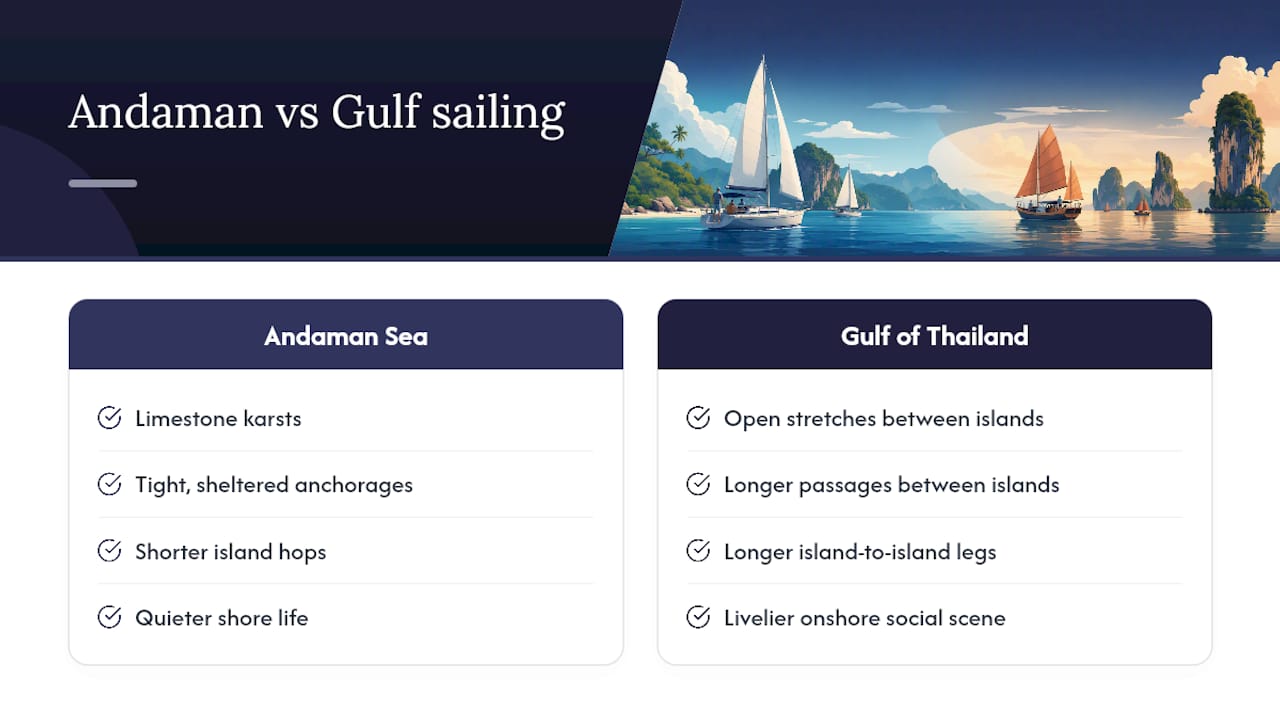
O rută tipică din Golf pornește dintr-o bază din apropiere de Samui și se strecoară printre Koh Phangan și Koh Tao, ambele cunoscute pentru o apă mai limpede și o vizibilitate mai bună pentru snorkeling decât mare parte din coasta Andaman în anumite luni. Compromisul este sezonalitatea: perioada cea mai calmă din Golf ține aproximativ din decembrie până în aprilie, dar are și o perioadă secundară uscată la mijlocul anului pe care partea Andaman nu o împărtășește, deoarece cele două coaste se află de părți opuse ale peninsulei și sunt influențate de musoni diferiți.
Mai puțini operatori de chartere au flote pe partea Golfului comparativ cu Phuket, așa că disponibilitatea bărcilor este mai redusă și merită rezervată cu mai mult timp înainte. De asemenea, insule sunt mai îndepărtate unele de altele decât lanțul strâns grupat Andaman, ceea ce înseamnă traversări mai lungi și mai puțină flexibilitate de a schimba planurile în mijlocul săptămânii dacă vremea se înrăutățește.
Pentru navigatorii care au făcut deja un tur al Phuketului și își doresc o a doua călătorie în Thailanda, fără a repeta aceleași locuri de ancorare, partea Golfului este următorul itinerar natural de explorat.
Sfaturi culturale pe care orice navigator ar trebui să le știe înainte de a vizita insulele thailandeze
Câteva obiceiuri locale sunt de mare ajutor pentru interacțiuni mai line odată ce ați coborât de pe barcă și ați ajuns pe pământ thailandez. Thailanda este o țară cu majoritate budistă, iar vestimentația modestă contează la temple, chiar și la micile altare insulare: acoperiți-vă umerii și genunchii înainte de a păși înăuntru.

Nu atinge niciodată capul nimănui, nici măcar pe cel al copiilor, deoarece este considerat cea mai sacră parte a corpului în cultura thailandeză. Picioarele au sensul opus: evitați să le îndreptați spre oameni, imagini ale lui Buddha sau mâncare și scoateți-vă încălțămintea înainte de a intra în case, în unele magazine și în orice clădire a unui templu.
Salutul tradițional, numit wai, implică unirea palmelor la nivelul pieptului, însoțită de o ușoară înclinație a corpului. Nu trebuie să îl stăpânești la perfecție, dar este apreciat să răspunzi cu un wai atunci când ți se oferă unul. Bacșișul nu este obligatoriu în Thailanda așa cum este în alte țări, însă rotunjirea sumei pentru echipajul ambarcațiunilor, ghizii de scufundări sau personalul restaurantelor este comună și binevenită.
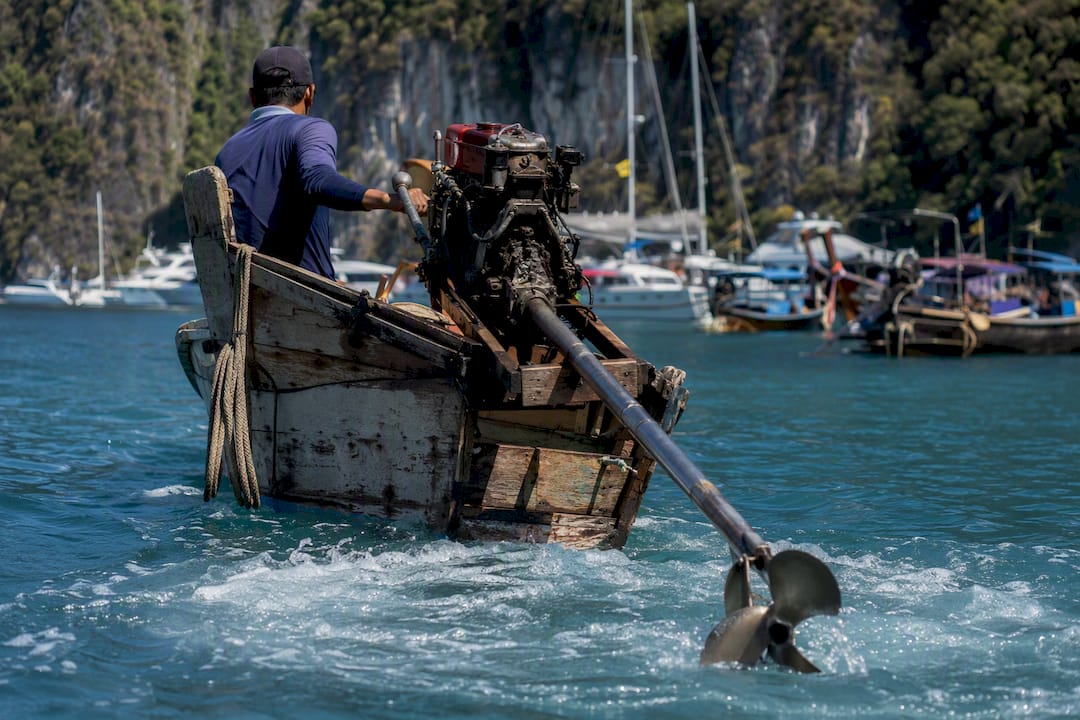
Bărcile cu coadă lungă împart aceleași ape pe care va trece iahtul tău, în special în apropiere de Phi Phi și Railay. Se deplasează repede și nu urmează întotdeauna tipare previzibile, așa că fii foarte atent în zonele de ancorare aglomerate. Iar dacă un ranger de la parcul marin îți cere să te îndepărtezi de o zonă de corali sau de un liman restricționat, aceea nu este o sugestie. Amenzile există și sunt puse în aplicare, în special în jurul zonelor de recif mai sensibile.
De ce un itinerar planificat bate un plan vag
Cele mai multe ghiduri de navigație îți dau o listă cu insule și te lasă să afli singur ordinea. Asta e valabil pe dos pentru Thailanda. Coasta Mării Andaman răsplătește o anumită succesiune, bucla de nord înainte de bucla de sud, deoarece curenții, programul parcurilor și disponibilitatea locurilor de acostare din Phi Phi înclină balanța într-o direcție sau alta în anumite săptămâni.
Sfatul convențional “descurcă-te cum poți când ajungi” funcționează bine în zone de croazieră fără limitări și cu puține reglementări. Funcționează prost aici, unde regulile de acces în Golful Maya se pot schimba de la un sezon la altul și unde a aștepta până în a patra zi pentru a-ți stabili strategia de acostare în Phi Phi te poate costa o după-amiază întreagă.
Ceea ce cercetarea privind această rută susține în mod constant este combinarea circuitului nordic cu cel sudic, în loc să alegeți unul singur. Navigatorii care încearcă să le înghesuie pe amândouă în cinci zile raportează că se simt grăbiți. Cei cu zece sau mai multe zile la dispoziție aproape că nu regretă niciodată adăugarea nopților suplimentare spre Insulele Similan. Dacă vă planificați prima închiriere de ambarcațiune în Thailanda, acordați prioritate asigurării unei rezervări cu skipper și a datelor de sezon înainte de a vă atașa de o anumită secvență zilnică. Insulele nu pleacă nicăieri. Ferestrele cu vreme bună și locurile disponibile în marinele mai bune sunt cele care se epuizează de fapt primele.
- Sail
Rezervă-ți săptămâna de navigație în Thailanda cu Sailarmada
Sailarmada organizează săptămâni de navigație selectate cu atenție, în colaborare cu baze de charter locale și skipperi cu experiență care se ocupă de logistică, astfel încât să ai parte de un traseu precum cel de mai sus fără să pierzi săptămâni coordonând aprovizionarea, formalitățile din marine și întrebările legate de permise. Fiecare traseu este pus cap la cap de skipperi formați prin CAPETAN.club, ceea ce înseamnă că etapele zilnice, alegerile locurilor de ancorare și ritmul provin de la oameni care chiar navighează în aceste ape, nu dintr-un șablon generic.
Sailarmada organizează logistica în jurul unor parteneri de charter locali de încredere pentru săptămânile de navigație în Thailanda, fie că rezervați o barcă privată pentru propriul grup, fie că vă alăturați unei plecări organizate. Dacă cântăriți o săptămână privată pentru familie sau prieteni, Grecia - Go Private programul ilustrează modul în care poate fi structurată o săptămână de charter privat, de la rezervare până la predare. Pentru detalii actualizate privind prețurile, vă rugăm să vizitați site-ul web Sailarmada. Răsfoiți întregul gamă de destinații pentru a compara săptămânile atent selecționate sau pentru a ne contacta direct pentru a întreba despre o rezervare în Thailanda cu skiper și pentru a primi o ofertă personalizată în funcție de datele dumneavoastră.
Surse
FAQ
Care sunt cele mai bune luni pentru a naviga în Thailanda?
Perioada noiembrie - aprilie este fereastra principală pentru coasta Andaman, când mările rămân mai calme și vremea este mai predictibilă. În afara acelor luni, condițiile musonice fac ca cei mai mulți operatori să descurajeze navigația.
Este Thailanda o destinație bună pentru navigație?
Da. Marea Andaman combină zone de ancoraj adăpostite, traversări scurte între insule și un peisaj dramatic, cum ar fi formațiunile calcaroase din Phang Nga, ceea ce o face accesibilă atât celor care închiriază o navă pentru prima dată, cât și navigatorilor experimentați.
Câte zile în Thailanda sunt suficiente pentru navigație?
Șapte zile acoperă în mod lejer întregul traseu din Phuket, combinând ruta nordică spre Phang Nga cu sectorul sudic spre Phi Phi și Racha. Cinci zile sunt suficiente pentru un circuit mai scurt, doar în sud, în timp ce paisprezece zile deschid calea spre Insulele Similan și Surin.
Pot închiria un iaht fără echipaj (bareboat) în Phuket, Thailanda?
Închirierile de nave fără echipaj sunt disponibile, dar închirierile cu skipper sunt în general recomandate vizitatorilor aflați la prima experiență, deoarece cunoașterea locală a mareelor, a traficului de ambarcațiuni și a reglementărilor parcului contează mai mult aici decât în multe alte zone de croazieră.
Cât costă o săptămână de navigație în Thailanda cu Sailarmada?
Prețul depinde de destinație și de ambarcațiune, iar tarifele actuale sunt afișate pe site-ul Sailarmada pentru fiecare plecare, incluzând opțiuni private începând de la 560 € de persoană pentru un format similar de charter privat de o săptămână.
Recomandate
- Itinerariu de 7 zile cu familia în Sporade, 130–155 nmi, testat de skipper
- Skipper a testat itinerariul de navigație în Ciclade cu planuri gata de făcut zi de zi
- Itinerar de 7 zile de navigație pe Coasta Amalfi cu Skipper pentru grupuri
- Circuit de 7 zile în Lefkada: ITINERARIU DE NAVIGAȚIE ÎN IONIAN PENTRU AMBARCAȚIUNI ÎNCHIRIATE